Loudspeakers
Bowers & Wilkins Nautilus Review: A 31-Year-Old Icon Still in Production
The Bowers & Wilkins Nautilus has been built for 31 years without an acoustic change. Here is what its four-way active design, taper tubes and craftsmanship deliver, and what it asks of an owner.
Introduction
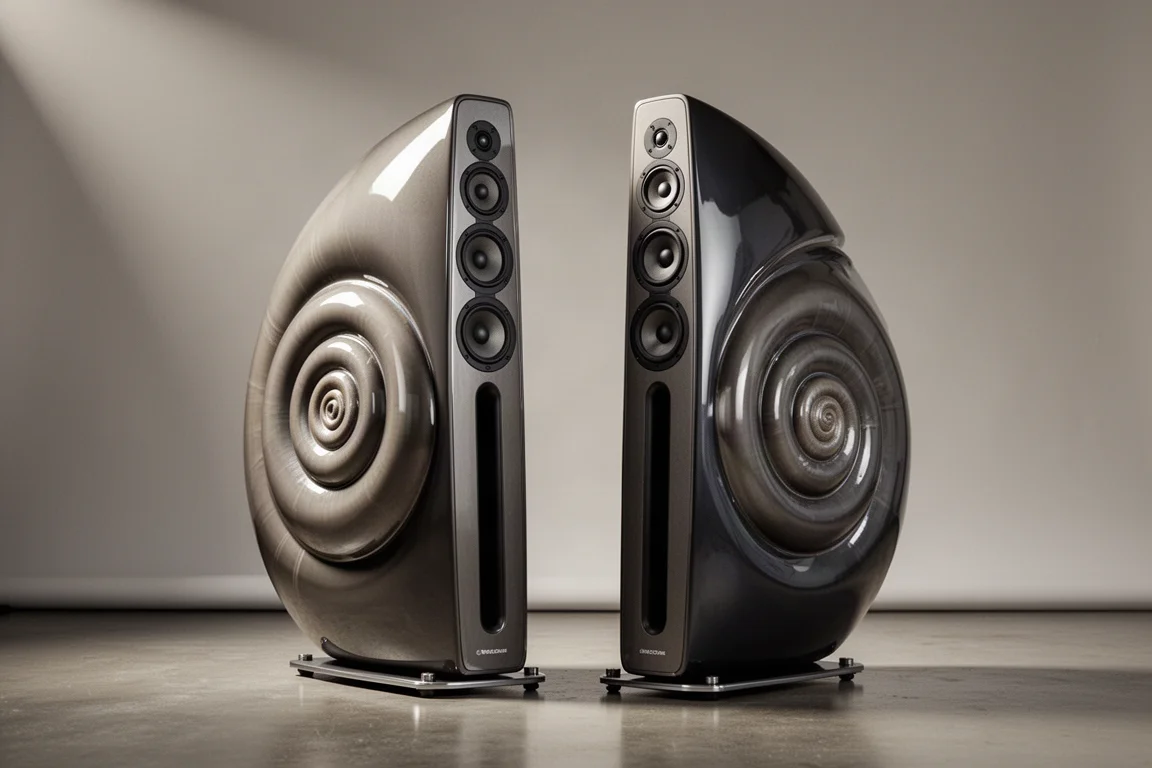
The Bowers & Wilkins Nautilus has been in continuous production for 31 years, and in that time its acoustics have not changed at all. What began as a brief from company founder John Bowers, who asked his engineering team to create the perfect loudspeaker, became one of the most recognisable shapes in high-end audio: a true four-way active design whose drivers sit in free space, each one driven by its own amplifier channel through a completely analog crossover.
It remains a current product rather than a heritage piece, still hand-built in the UK and still sold at around $100,000 per pair. This review covers what the Nautilus does exceptionally well, what it asks of an owner, and who should realistically consider it.
Who This Speaker Is For
This is a statement loudspeaker in every sense. At roughly $100,000 a pair, it is not a sensible first step into high-end audio, and it was never intended to be.
The Nautilus suits listeners who already have a dedicated room, a serious front end, and the patience for a setup process that involves specialist attention rather than a plug-and-play install. It also appeals to buyers who treat the system as sculpture and furniture as much as a sound source.

Owners are not choosing the Nautilus as a value proposition. They choose it because the design is unlike anything else on the market, and because the presentation has a character that more conventional cabinets struggle to match.
Main Strengths
The defining quality of the Nautilus is transparency. With such a narrow baffle and drivers operating in free space, there is very little cabinet surface for the ear to lock onto, so the speaker tends to disappear and leave the performance in front of you.
Dynamic range and openness belong to the same story. The system plays at high levels without sounding strained or compressed, which is a direct result of the active architecture. Each driver has its own dedicated channel of amplification, and the amplification itself is a substantial linear design with generous power supplies and tight control.
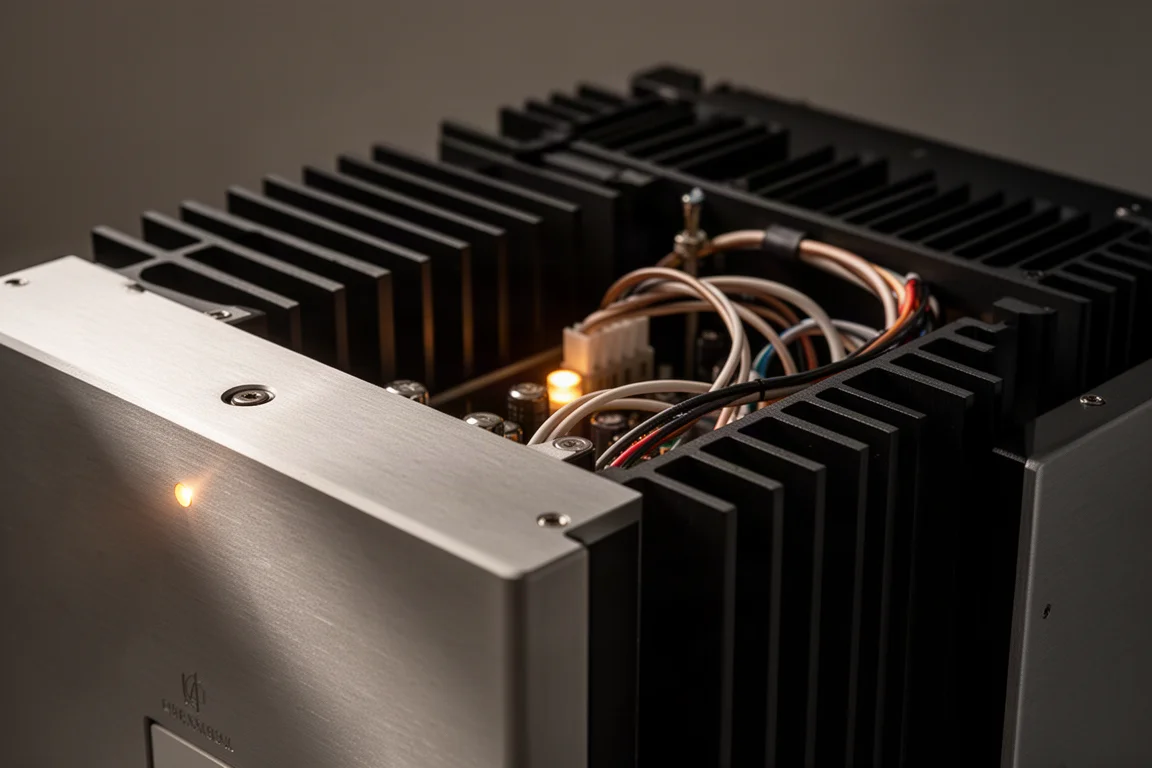
Because the crossover never has to divide power between drivers, and because everything in the signal path is analog with no digital processing, the chain stays short, clean and consistent from source to transducer.
Transparency That Makes the Speaker Disappear
Listeners tend to describe the effect in the same way: the sound appears to arrive without a speaker attached to it. Vocals in particular come across as direct and unforced, and on well-recorded material the system can make a familiar track feel newly exposed.
That transparency is a function of the enclosure as much as of the drivers. A track engineered and mastered in a studio that uses Bowers & Wilkins loudspeakers can be replayed here in a way that gets unusually close to how it was heard during the session. Removing the box, or rather replacing it with a tapered tube, removes the colouration a conventional cabinet adds.
Reverse Taper Technology and the Snail-Inspired Shape
Every driver is pistonic, which means it radiates from the front and from the back. In a closed box, those rear waves bounce around inside and return as standing waves that add colouration and distortion.
The Nautilus solves this with a reverse taper tube attached to the back of each individual driver, dissipating those rear waves and attenuating them as they travel outward. Scaling the idea to bass frequencies created the design problem that gave the speaker its silhouette: a low-frequency taper tube would need to be around 13 feet 8 inches long, which would never fit in a normal room. The engineering team’s solution, inspired by the conical spiral of a snail shell, folded that length into the curved cabinet. A wooden prototype followed, and the resulting shape has not needed to change since.

The same taper-tube thinking has since been carried down through the rest of the range, including the company’s headphones, where a swirl taper tube serves a comparable purpose in a far smaller space.
Craftsmanship and Finish Options
Each pair is hand-built in the UK, and the painters are certified through Rolls-Royce, whose facility sits nearby. That background shows in the finish options: automotive paints associated with Lamborghini, Ferrari, Aston Martin and Rolls-Royce are available, and in principle almost any colour can be specified.
Serviceability is genuinely unusual for a product this old. Drivers are serialized, and if one fails, the company looks up the original frequency response, finds a driver that measures identically, and supplies a matching resistor pack to be changed in the crossover network. A technician then unsolders the failed driver and fits the replacement on site. Three decades on, the speaker is still supported.
Things to Consider Before Buying
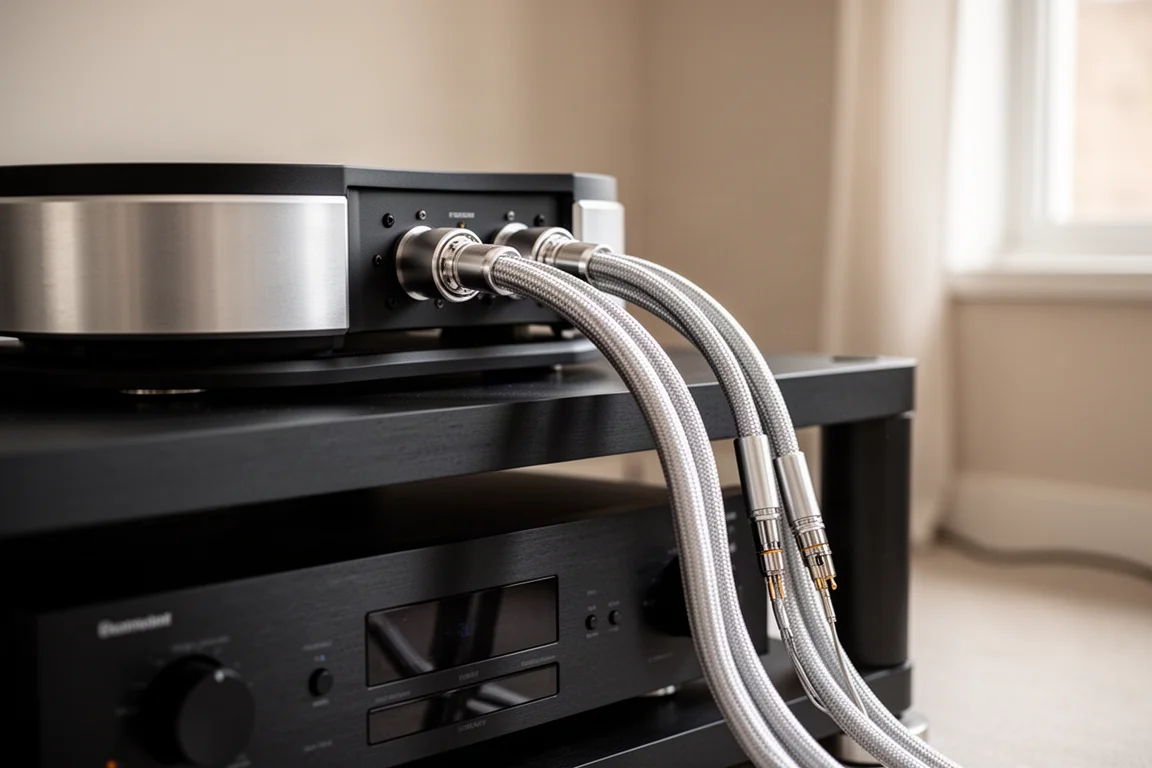
The Nautilus is an active loudspeaker, so the system is considerably more involved than a conventional passive pair. Each speaker ships with its own proprietary solid silver cable, hardwired directly to the drivers, and the setup runs through an outboard external crossover. A preamplifier feeds that crossover, which then distributes the appropriate frequency band to each amplifier channel.
That means the room and the front end matter a great deal. In an untreated space with rigid walls, bass control will be limited by the room rather than the speaker, and the difference is clearly audible. Buyers should budget for proper room treatment and professional setup, not just the loudspeakers.
It is also worth knowing that the acoustic design has been fixed for 31 years. The only changes over that period have been to internal connection points and to some crossover components required by power standards. If you want the newest thinking from the company, the 800 Series Diamond is the more current performance option. If you want the icon, the Nautilus is the icon.
Buying Advice
Treat the Nautilus as a system purchase rather than a speaker purchase. The outboard crossover, the amplification channels, the proprietary cabling and the installation all belong to the same package, and getting them right is what allows the transparency the design is known for to come through.
For buyers weighing it against the company’s modern flagship, the honest framing is that they do different things. The newer model performs in a more contemporary way; the Nautilus offers a presentation, a history and a physical presence that no other loudspeaker replicates. It is a conversation piece that also happens to sound remarkable, and the decision comes down to which experience you actually want in the room.
Conclusion
The Bowers & Wilkins Nautilus is a rare thing: a 31-year-old active loudspeaker still in production, still hand-built, still fully supported, and still selling at around $100,000 a pair. Its four-way active design, fully analog crossover and reverse taper tubes give it a transparency few speakers approach, while its snail-derived silhouette makes it a piece of furniture in its own right. For the right buyer, with the right room and the right support, it remains an extraordinary proposition.
Product link
View more details for Bowers & Wilkins Nautilus
This product is mentioned in the review. Check the specifications, options, and compatibility before buying.
View more details for Bowers & Wilkins NautilusFurther reading
Related Reviews
Loudspeakers
Borresen X2 Review: Deep Bass and a Warm Balance From a Slim Floorstander
A close look at the Borresen X2 loudspeaker: ribbon tweeter and carbon fiber drivers, bass below 30 Hz without a subwoofer, and how it behaves with solid state, integrated and tube amplification.
Loudspeakers
Borresen X3 Review: A Danish Floorstander Built Around Soundstaging
The Borresen X3 pairs a true ribbon tweeter and a slim Danish cabinet with remarkable imaging, fast transients, and a few practical trade-offs worth knowing before you buy.
Loudspeakers
Bowers & Wilkins 705 S3 vs Wharfedale Linton vs Zu Audio DWX: Three Standmount Speakers Compared
A three-way standmount loudspeaker comparison covering the detail-led Bowers & Wilkins 705 S3, the value-focused Wharfedale Linton, and the dynamic Zu Audio DWX.