Road Bikes
BMC Teammachine R Review: The Swiss Aero Race Bike Built With F1 Input
A close look at the BMC Teammachine R, the fastest Teammachine yet, covering its Halo fork, real-world speed, ride character, and the compromises that come with the price tag.
Introduction
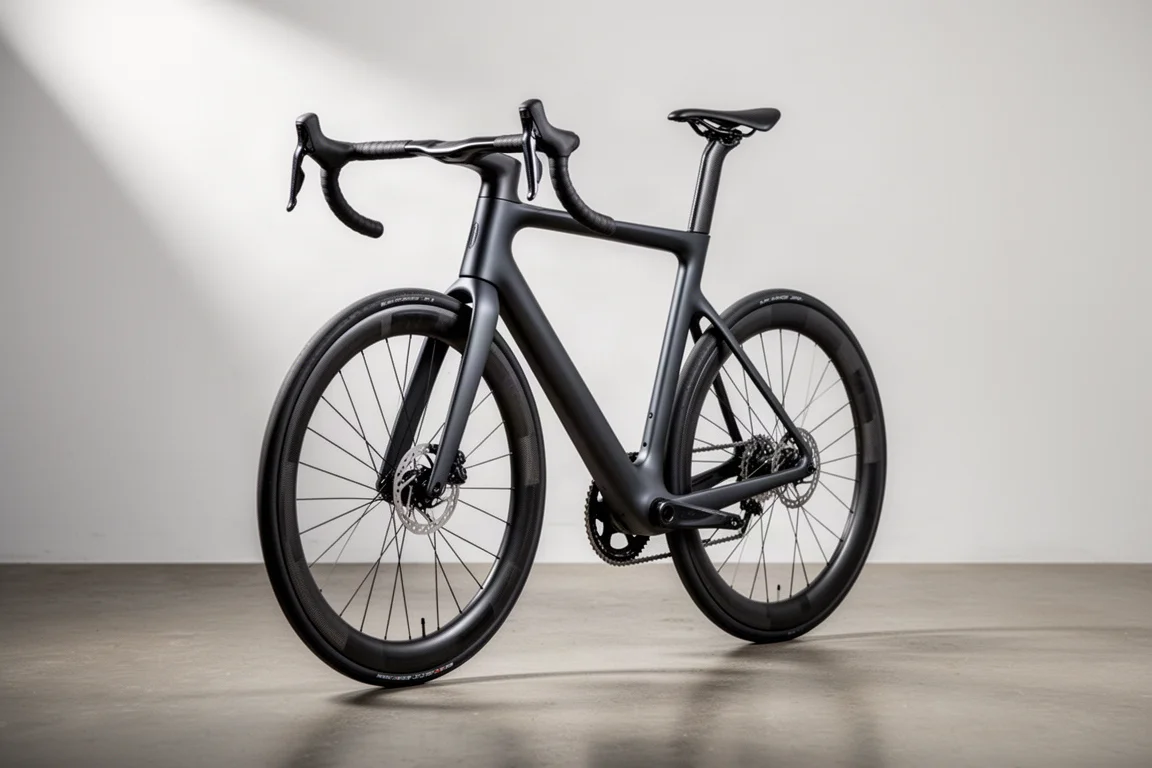
The BMC Teammachine R is the fastest Teammachine the Swiss brand has produced, and it comes with an unusual development story. BMC worked with Red Bull Advanced Technologies, the division of the Red Bull Formula 1 operation that makes its computing power and computational fluid dynamics expertise available to partner companies. The collaboration fed aerodynamic analysis into a frame that still reads clearly as a Teammachine, just pushed further in one direction than any version before it.
The detail that gets noticed first is the fork, which BMC calls the Halo, a nod to the safety structure on a Formula 1 car. It looks unlike anything else currently on sale, and it sets the tone for a frame that has been shaped around airflow at almost every junction.
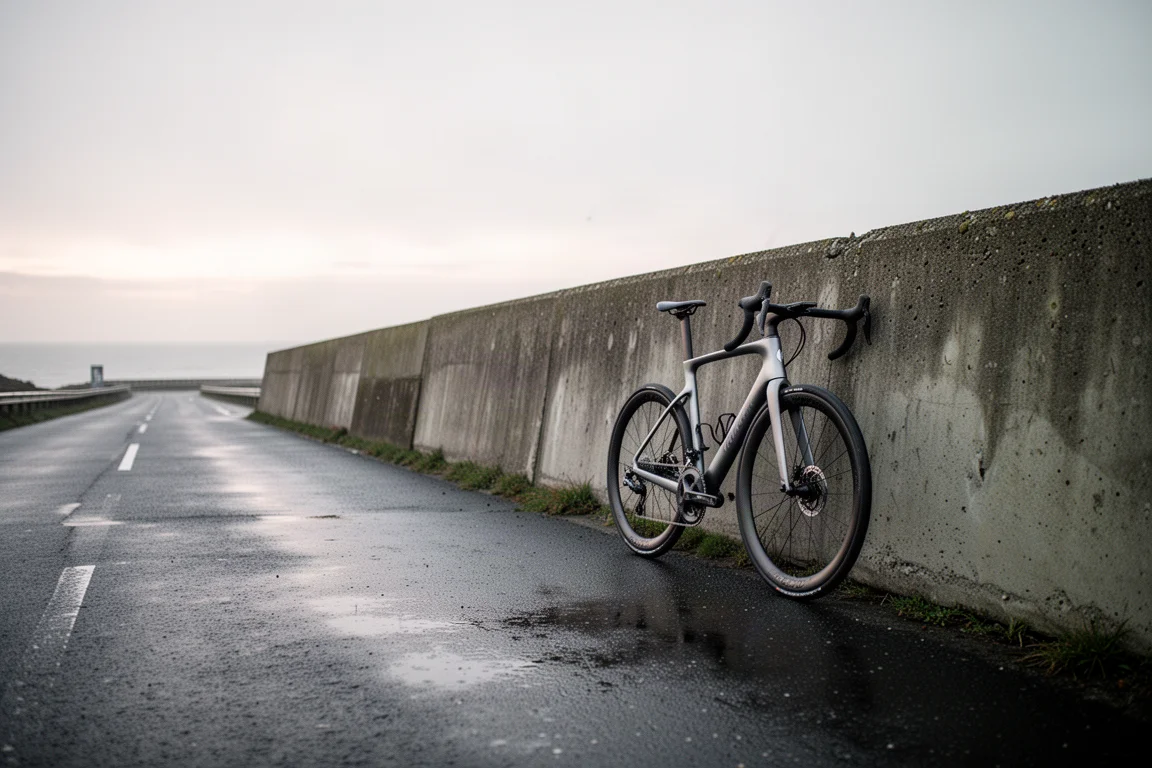
BMC does not describe the Teammachine R as an aero bike in so many words, but the priorities are obvious. This review covers how the bike rides, where it is genuinely quick, what it gives up in pursuit of that speed, and how the price sits against the alternatives.
Who This Bike Is For
This is a race bike in the traditional sense. It is built for riders who want to go fast on smooth roads, whether that means racing, fast group rides, or hard solo efforts where holding a high speed matters more than comfort or versatility.
It suits riders who are comfortable on a firm, stiff platform and who value aerodynamic efficiency over plush ride quality. The narrow handlebar, deep tube shapes, and low overall drag profile reward a rider who is willing to spend time in an aerodynamic position. The frame is disc brake only and electronic groupset only, so it also assumes a buyer who has no interest in mechanical shifting or rim brakes.
It is a less obvious fit for riders who want one bike to cover long endurance days, rough surfaces, and wide tires. The Teammachine R is at its best when the road is smooth and the pace is high.
Main Strengths
Aero Design and the Halo Fork
The Halo fork is the centrepiece. BMC’s approach was to move the fork blades further away from the front wheel rather than hugging it as closely as possible, with the goal of reducing turbulent air between fork and wheel and allowing cleaner airflow over the down tube and the rest of the frame. Whether that works better than a more conventional design is a question only wind tunnel data could settle, but it is a genuinely distinctive piece of engineering.
Up front, a one piece carbon handlebar runs full internal routing. It measures 36 cm at the hoods, which is as narrow as the rules allow, and it uses flared drops to keep control through corners. The same handlebar is used across every size and every build, so a rider on the smallest frame and a rider on the largest both get the same narrow front end.
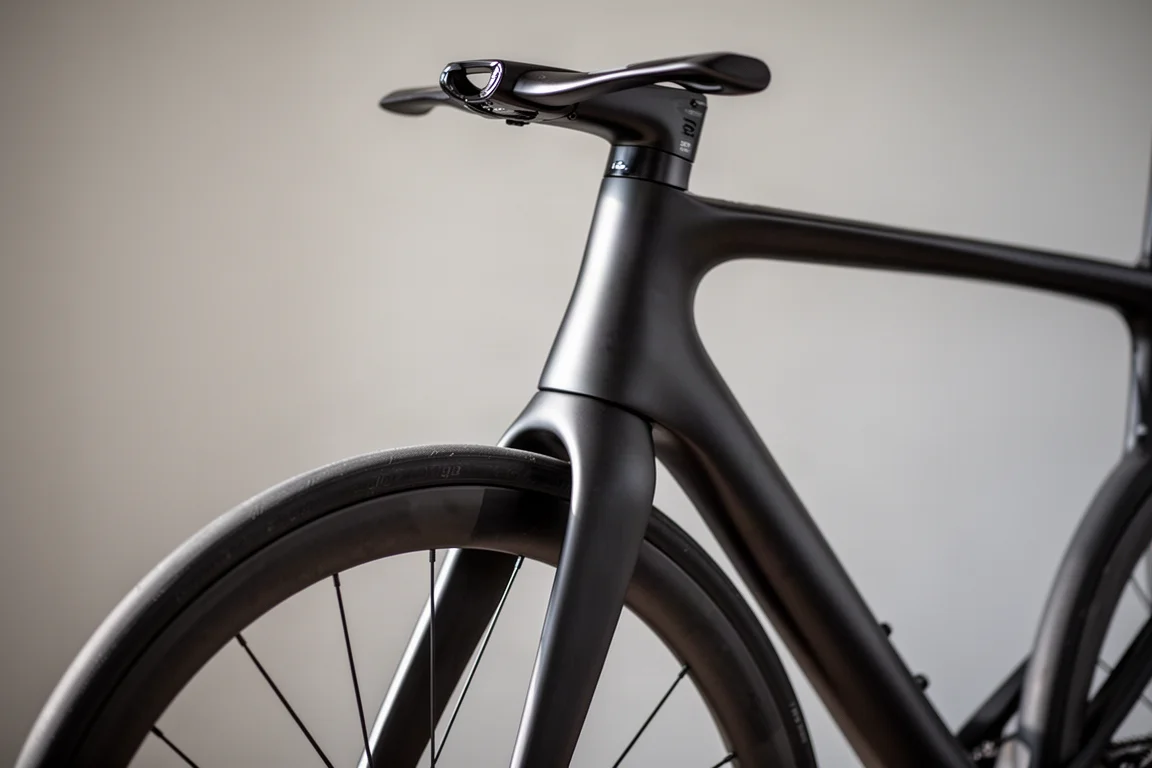
Further back, the head tube is narrow but very deep, the down tube is pinched in around the bottle cage and flares around it to manage airflow with a round bottle fitted, and the bottom bracket junction is enormous, a shape that has become common on aero race frames in recent years and that exists for stiffness under sprinting and climbing loads. There is even a small aero tab under the bottom bracket to manage airflow around the rear wheel. The chainstays are chunky, the seat stays are slender and dropped, and the aero seat tube hugs the rear wheel, finished with an aero seat post and stealth dropouts.
Ride Quality and Speed
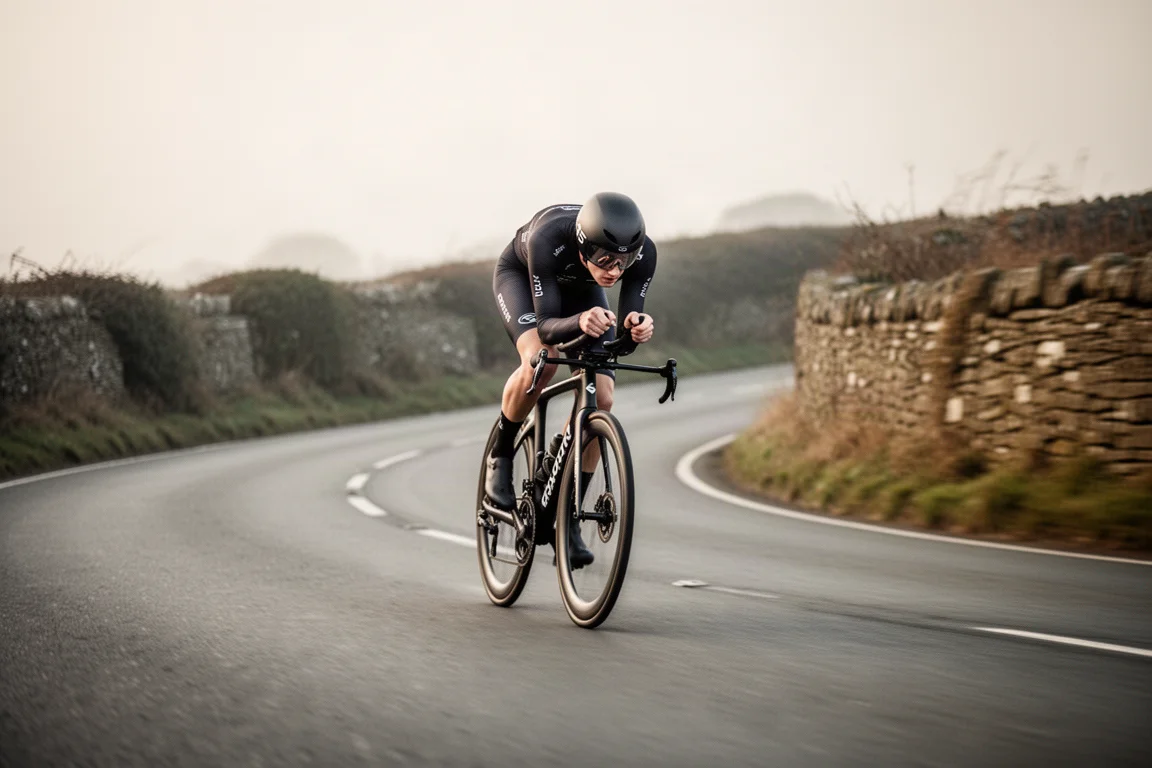
The overwhelming impression is speed. The Teammachine R feels like the quickest aero bike tested this year, and it gets up to speed with an ease that makes fast riding feel almost effortless. On an 11 km test loop ridden at 32 km/h, it required less power than a Canyon Aeroad to hold the same pace. At 35 to 40 km/h, the power needed to sustain speed is low enough that going fast stops feeling like hard work.
It is not just a straight line bike. The steering geometry tracks neatly through bends and corners, and despite the firm front end the handling is easy and predictable, with a character that still feels like a Teammachine.
Stiffness sits in a useful middle ground. It feels stiffer than a Specialized Tarmac SL8 and less stiff than a Pinarello Dogma F, broadly comparable to a Cannondale SuperSix Evo. You are always aware you are on a stiff race frame, whether sprinting out of a corner or simply feeling feedback through the contact points, but on smooth tarmac that firmness translates into directness rather than harshness.
Component Highlights
The range topping build pairs a SRAM Red AXS groupset with DT Swiss wheels, and the groupset is a highlight in its own right. The new hoods have excellent ergonomics and a shape that is genuinely pleasant to hold, the brake lever action is light, and the braking itself is powerful. It is an expensive group, and it will be interesting to see the same hood design arrive at lower price points.
The bike ships tubeless, which is a real plus, and the Pirelli P Zero Race SL tires are fast rolling, high quality, and durable in practice, even if the width is narrower than many riders would choose.
Small details also land well. The handlebar is colour matched to the top tube, and even the spacers match, which makes the front end look considered rather than assembled from parts. The saddle uses carbon rails and is genuinely comfortable, though it is not the 3D printed top version of the same model.
Things to Consider Before Buying
Speed is only part of the story with a bike at this price. There are several areas where the Teammachine R asks for a compromise, and they are worth weighing carefully before committing.
Tire Clearance and Tire Width
Official tire clearance is 30 mm, which is modest given how wide the Halo fork looks in person. Many race bikes now accept 32, 34, or even 35 mm, so 30 mm places this frame at the conservative end of the market. The bike also arrives with 26 mm tires, a width that makes sense for racing on good tarmac but that sits behind the current trend toward wider rubber and wider rims. Riders who are not racing will likely find a 28 mm or 30 mm tire a better choice, and the narrow stock fitment may date the bike as tire trends continue to move wider.
Comfort and Crosswind Stability
This is not the smoothest bike in its class. The front end is firm, and the narrow stock tires do not help. Fitting 28 mm tires on a different wheelset noticeably improved comfort, which suggests the frame has more to give with wider rubber. Riders who are not racing but still want a fast bike for weekend efforts may find the ride quality harder to live with than they expect.
Crosswind stability is the bigger concern. In windy conditions the bike is noticeably more affected by crosswinds than a Canyon Aeroad or a Specialized Tarmac SL8, particularly at the front. Whether that comes from the fork, the wheel, or the combination is hard to pin down, but as a complete package it is a real consideration for riders who spend time on exposed roads.
Seat Clamp, Bottom Bracket and Weight
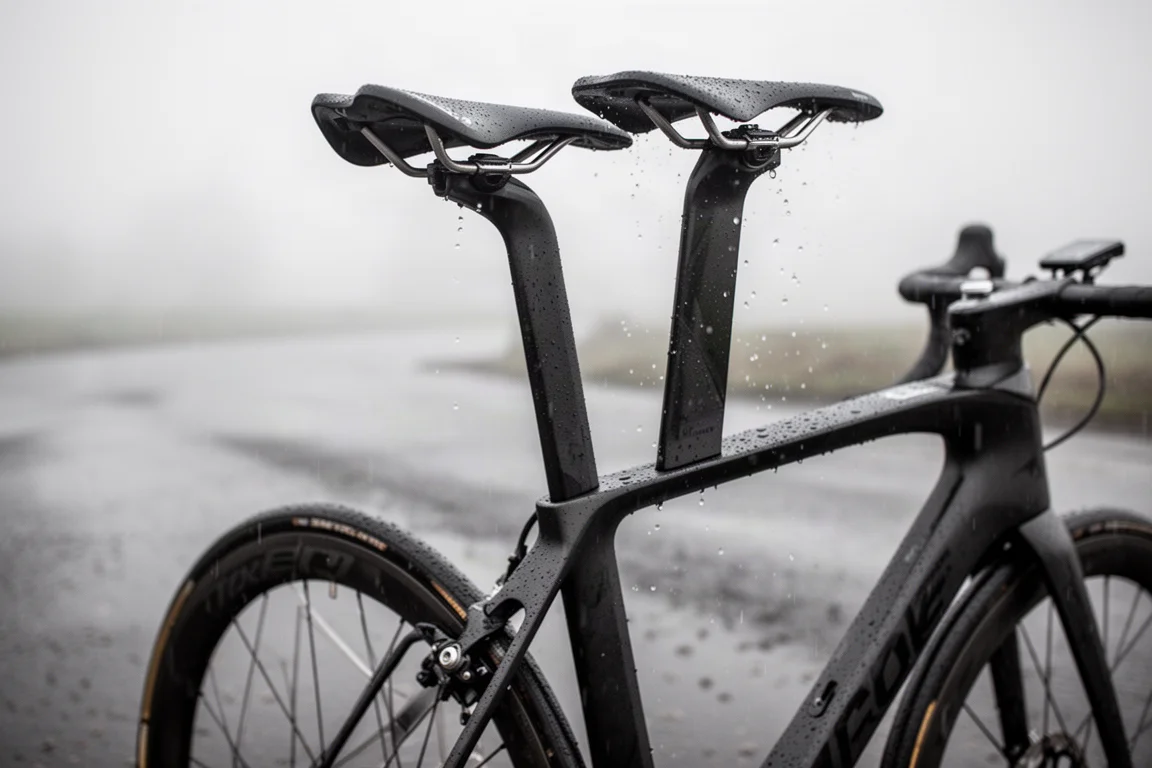
The seat clamp uses two very small bolts at the back of the seat tube, with a low torque setting, positioned directly in the path of rear wheel spray. Over two months of riding in poor weather they held up fine, but they are a long term durability question mark on a bike at this price, and covering them with tape is not something a buyer should feel obliged to do. A more conventional seat clamp design would be preferable.
The bottom bracket is press fit PF86. It works without complaint, but many brands have moved to threaded designs and many riders now prefer them, so this counts as a missed opportunity rather than a flaw.
Weight is worth noting too. BMC claims a 991 g frame, and a size 56 build with SRAM Red AXS and DT Swiss wheels weighed 7.3 kg without pedals. That is competitive with a top tier Canyon Aeroad CFR but noticeably heavier than a lightweight aero race bike such as a Specialized S-Works Tarmac SL8, which confirms the Teammachine R sits firmly on the aero side of the aero versus lightweight divide.
Buying Advice
The range topping Teammachine R with SRAM Red AXS and DT Swiss wheels costs around $15,000, and the range starts from roughly $7,000. That is a significant outlay, and value is the hardest part of this bike to defend. Range topping Canyon Aeroad CFR and Van Rysel RCR models come in below £10,000, so the BMC is asking a clear premium over established rivals with similar intentions.
If outright speed is the goal and the budget is not the deciding factor, the Teammachine R delivers something genuinely special: it is one of the fastest bikes available and it makes high speed feel easy. Buyers who are racing, or who ride smooth roads at pace and want every watt to count, will find the performance justifies a serious look.
Everyone else should weigh the trade offs honestly. Limited tire clearance, firm comfort, crosswind sensitivity, and the price premium are real considerations, and a rider who wants a fast bike for mixed conditions may be better served by a slightly less extreme option. Because this is the first year of the new model, the range and pricing may also evolve in future seasons, which is worth keeping in mind if the current line up feels out of reach.
Conclusion
The BMC Teammachine R is a remarkable race bike. The collaboration behind its aerodynamics produced a distinctive machine with a fork that has no real equivalent on the market, and the speed it delivers is among the best available. It is quick to accelerate, easy to hold at high pace, and composed through corners.
It is also a bike with compromises, and they are not small: narrow stock tires, limited clearance, a firm ride, crosswind sensitivity, and a price that sits above close rivals. If you want maximum speed and can accept those trade offs, the Teammachine R earns its place on a shortlist. If you want one fast bike that covers more ground more comfortably, the compromises deserve a long test ride before you commit.
Product link
View more details for BMC Teammachine R
This product is mentioned in the review. Check the specifications, options, and compatibility before buying.
View more details for BMC Teammachine RFurther reading
Related Reviews

Road Bikes
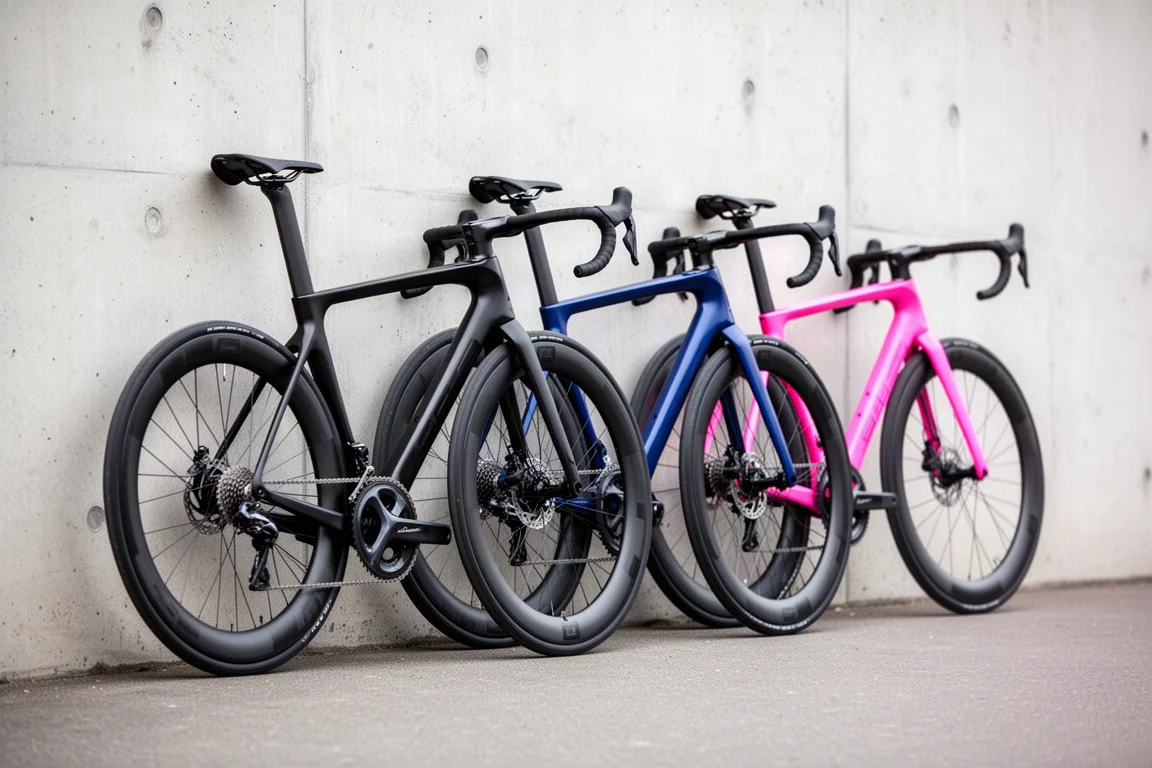
10 New Road Bikes Worth Watching: Aero, Titanium, Steel and Endurance Standouts
A practical roundup of 10 new road bikes, from aero flagships chasing single-watt gains to titanium, steel and endurance platforms built for real roads.
Road Bikes
2026 Tour de France Road Bikes: Six Race Machines Worth a Closer Look
Six race bikes from the 2026 Tour de France grid, reviewed for paint, silhouette, wheels and the specification details that matter to buyers.
Road Bikes
3T Strada Italia Review: A Radical Aero Road Bike That Rides Smooth
A made in Italy carbon aero road bike with a deep head tube, wide tire clearance and a genuinely comfortable ride. Here is what to know before buying.