Off-Grid Power
Bluetti RV5 Power Hub and B4810 Battery Review: A Modular 5kW Off-Grid System
A detailed look at the Bluetti RV5 5kW inverter charger and B4810 battery, covering performance, installation, and real-world test results.
Introduction
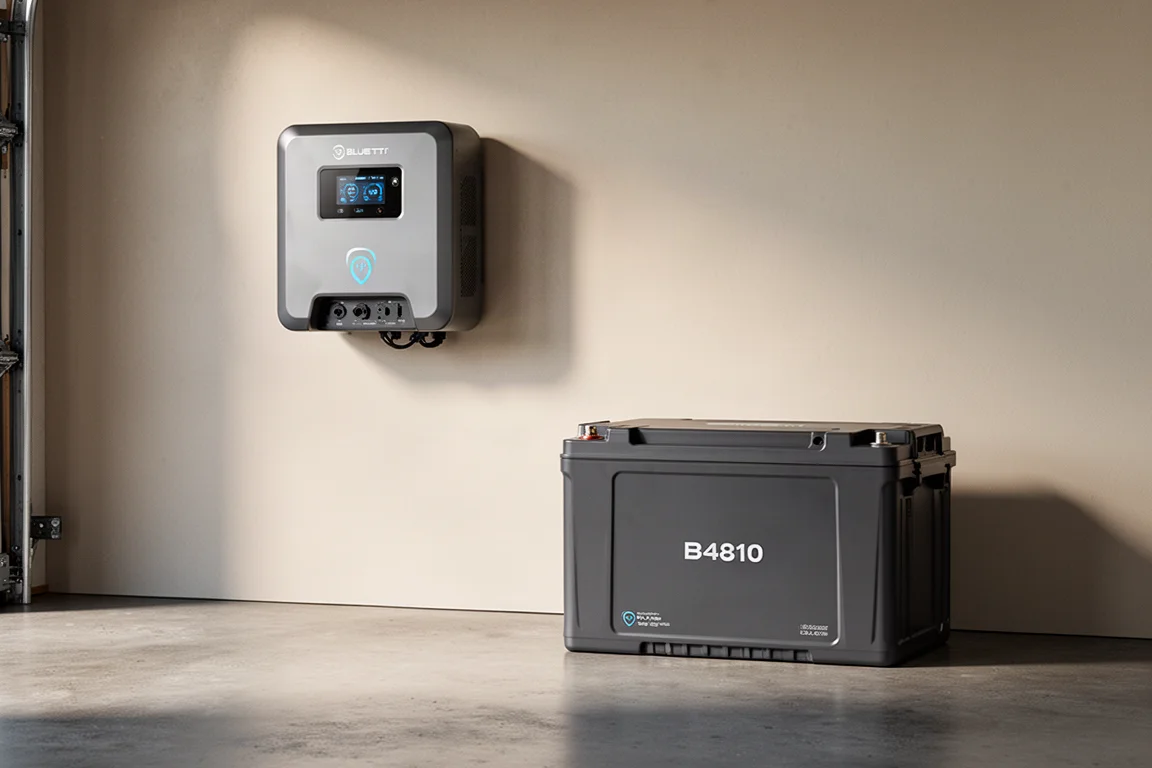
Bluetti has entered the DIY solar inverter market with the RV5 power hub, a dual MPPT 5kW inverter charger designed for installation in an RV, van, boat, or off-grid system. It can be paired with any 48-volt battery of your choice, though Bluetti also offers its own IP65 water-resistant and heated 100Ah batteries that share BMS battery data with the inverter right out of the box. This is a bold product for Bluetti, and it raises the question of whether it delivers on its promises.
What the RV5 and B4810 Combo Does
For those new to DIY battery and solar inverter systems, the RV5 inverter and B4810 battery combo functions as a 5,000W solar generator with a 5kWh battery split into two parts. This design lets you install the inverter in a dry location close to your breaker and fuse box, as it is not outdoor rated, while installing the sealed and heated batteries in a separate wet or cold environment. Since the batteries are modular, you can install as many as you have room for, up to 24 batteries.
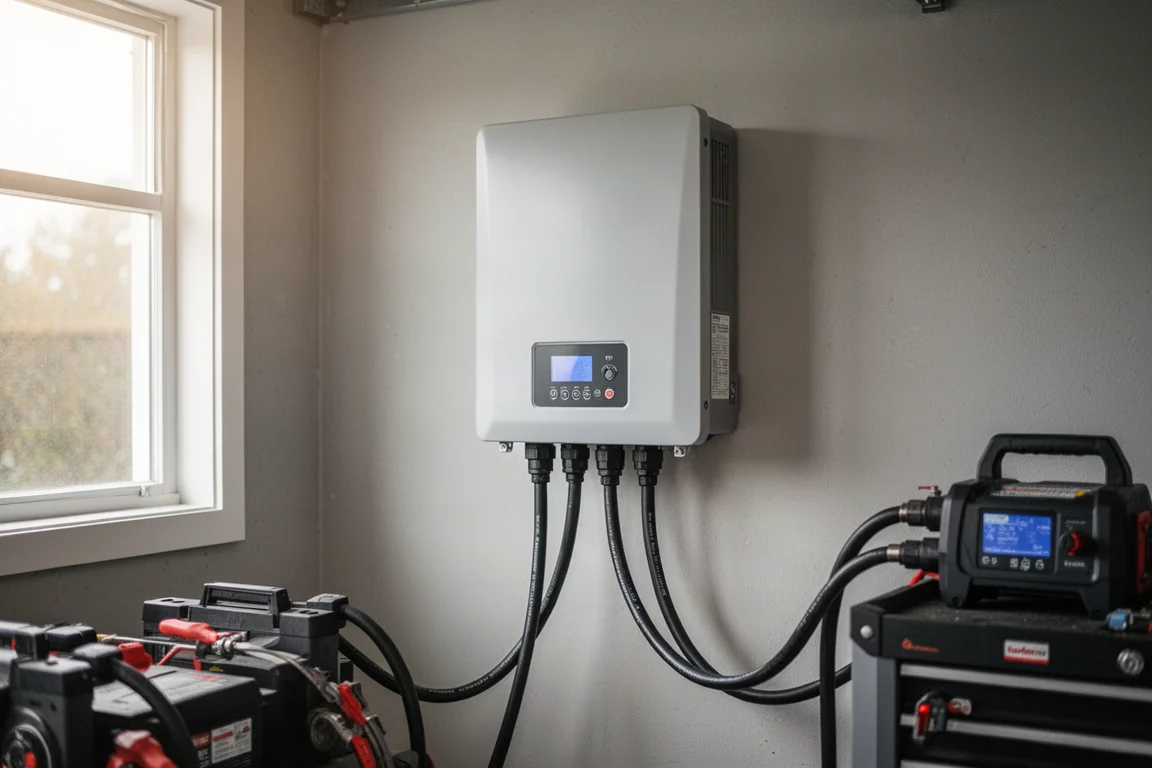
The batteries and inverter communicate through a single Ethernet data cable, and you can install an optional screen in a different location for remote monitoring. Essentially, this system lets you build a larger setup in a smaller, more limited environment.
Design and Build
The RV5 power hub inverter houses the brains of the system: two MPPT solar controllers, the 5,000W AC inverter which also doubles as the battery charger, and a dedicated 100-amp 12-volt regulated DC output. One of the two MPPT controllers can be switched from solar PV mode to vehicle mode, allowing 12 or 24-volt alternator or external battery bank charging. This leaves one MPPT free for solar use up to 1,800 watts of panels.
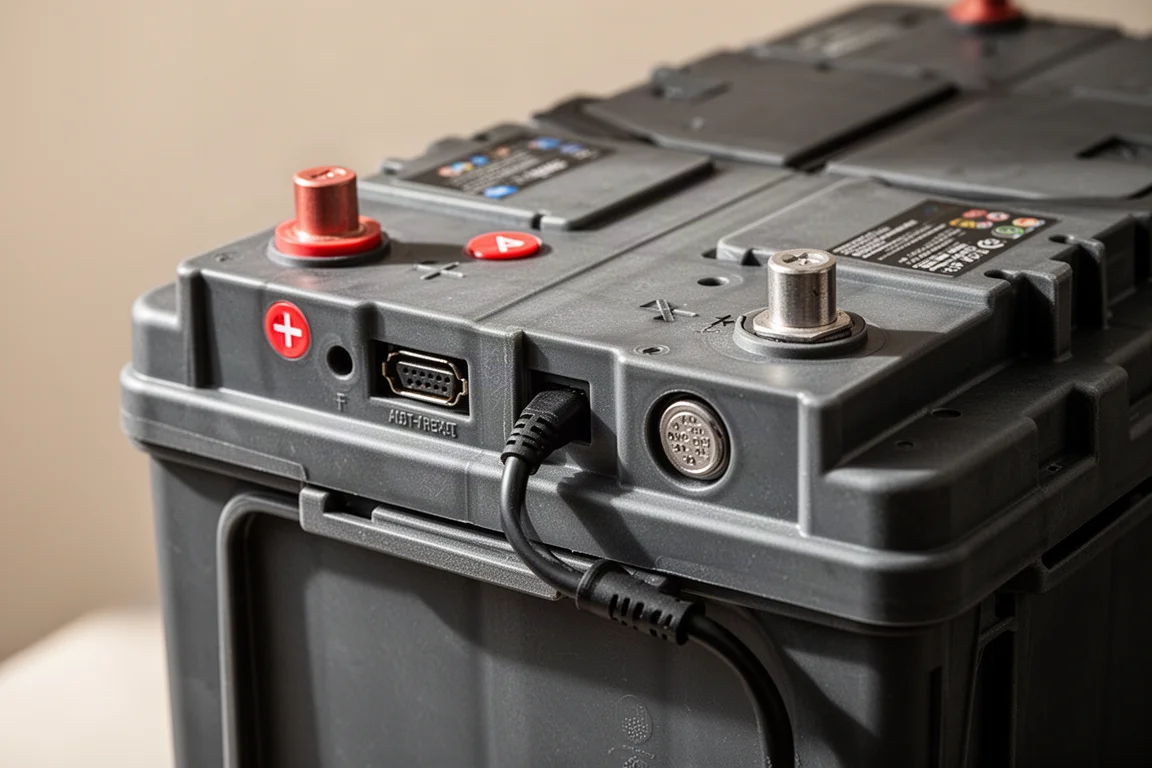
The B4810 LFP batteries are 51.2-volt, 100Ah units providing 5,120 watt-hours each. They are heated and IP65 water-resistant for placement outdoors or in uninsulated compartments. Each battery has a 100-amp BMS on board and is rated for 6,000 cycles. They weigh approximately 101 pounds each and measure about 24 by 15 by 6 inches.
Installation Considerations
The RV5 inverter unit is compact and light for its size, measuring approximately 20 by 18 by 6 inches and weighing around 30 pounds. It can be wall or floor mounted, but must be mounted upright so that cold air flows up through the bottom and out of the top. There are no built-in plugs, sockets, or outlets. You get bare wire terminals that you need to screw wires into, either into Bluetti’s E-Panel breaker box or into your own breaker box or set of outlets. All AC and DC connections must be hardwired yourself.
The quick start guide is dense and may be overwhelming for first-time installers. It covers mounting solar panels, running multiple glands for parallel solar connections, and lists required tools, including an electric chainsaw. The included manual is fairly basic, so downloading the full user manual from Bluetti’s website is recommended for detailed installation procedures.
The Optional E-Pad Screen
The only built-in display on the RV5 inverter is very small, showing standard data with recycled buttons from Bluetti’s parts bin. Both Bluetooth and Wi-Fi are built in and can be manually disabled. You can control the unit from a remote app, but Bluetti also offers an add-on product called the E-Pad, a large touchscreen tablet that can be mounted at your choice of location via its included lengthy Ethernet cable.
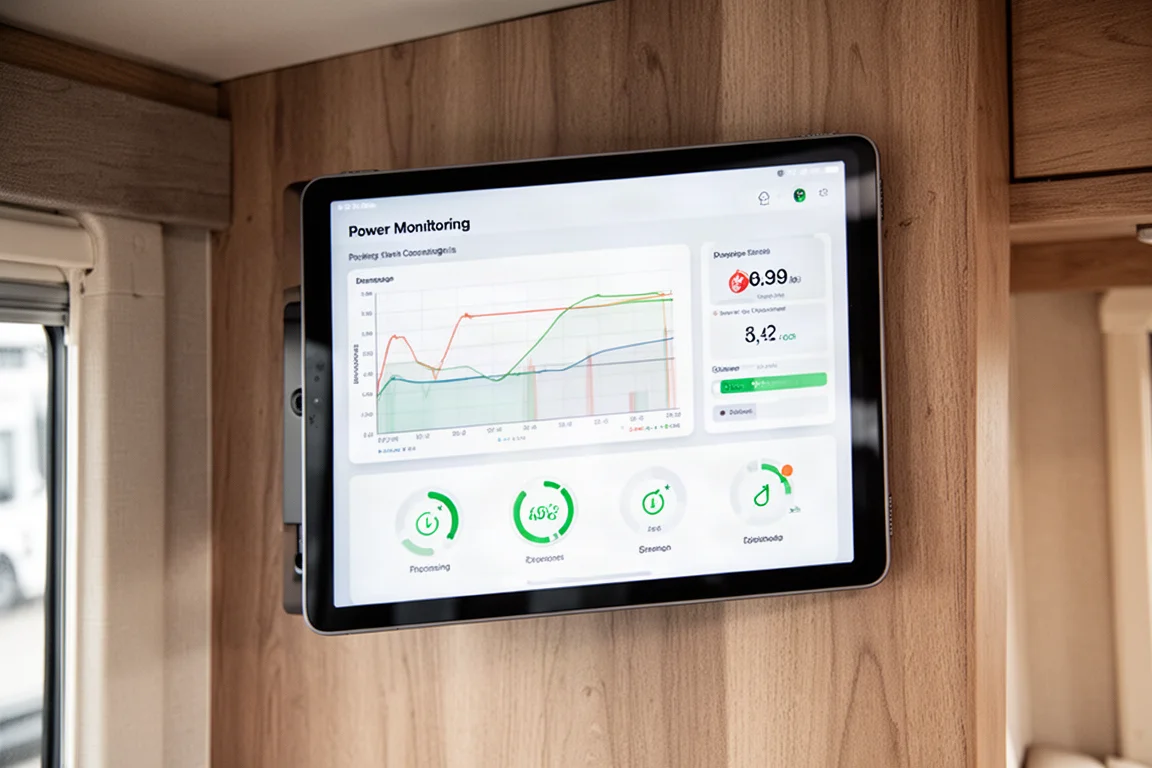
The E-Pad is powered through that Ethernet cable, so no separate power run is needed, though it does accept separate power through USB. This add-on gives you full control over the unit without needing a wireless connection. It can also track additional sensors such as freshwater tank levels in your RV.
Solar Input and Charging
The two MPPT controllers aboard support 12 to 50 volts at 50 amps each. This unusual combination of low voltage and high amperage means you need substantial cabling to handle the current. With enough large cables and Y adapters running to recommended Bluetti 200W solar panels at the right voltage, you can almost manage 3,600 watts of total solar input, though real-world results will be lower.

If you want to alternator charge, you can switch the second solar input into 12 or 24-volt mode and charge at a maximum of 600 watts at 12 volts or 1,200 watts at 24 volts. For AC charging, you can take advantage of 50-amp hookups at RV parks or boat docks and charge at either 120 or 240-volt split phase at up to 42 amps or 5,000 watts. At that rate, you can top up the battery in just over one hour.
Performance Testing
In testing, the RV5 scored 120 volts at 60 hertz under load, which is a pass. The inverter capacity test at maximum load was able to pull 6,400 watts for 5 seconds. The cooling ability heat soak test was run three times, with the unit completing the full 5 minutes at 4,800 watts. Bluetti states in the user manual that two batteries are required for sustained 5,000-watt rates, so this limitation was expected with a single battery attached.
The AC battery capacity test scored 4,300 watt-hours out of 5,120, or 84%. This was the better of two results after two full cycles of the battery. The test was done at a 0.2 to 0.25 C discharge rate, consistent with how manufacturers rate cells. The battery itself delivered 88.5 amp-hours out of 100 and 4.6 out of 5.1 kilowatt-hours of usable capacity. The inverter only wasted about 300 watt-hours, or around 6% of the usable capacity, which is quite good.
Idle Power Consumption
Idle consumption was measured directly using a Victron shunt installed between the battery and inverter. With the system powered on and nothing else running, it consumed 6 watts. Adding the E-Pad screen brought that to 12 watts. Turning on just the DC side used 10 watts, while the AC inverter alone hovered around 18 watts. With both AC and DC enabled, consumption rose to about 21 watts, and with everything on including the E-Pad, it reached 28 watts.
These numbers translate to excellent idle run times with a single B4810 battery. The unit powered on with nothing else would run for about 32 days. Adding just the DC side drops that to 19 days. With both AC and DC, it runs about 8.5 days, and at maximum with everything enabled, it lives for about a week.
DC Output Capability
The RV5 offers a 100-amp 12-volt DC output regulated at 13.8 volts, providing almost 1,400 watts of DC output support at 12 volts. When switched to 24-volt mode, it can deliver over 60 amps or 1,600 watts. This requires seriously beefy cables, but it means you can power every 12 or 24-volt DC appliance in your RV, boat, or off-grid cabin. In testing, the DC output ran at 5 minutes at 1,200 watts without issues.
Clean Power and Low Interference
The inverter produced whisper-quiet output with no audible interference, making it suitable for running amplifiers, PA systems, and ham radios. The EMF test showed remarkably low electromagnetic interference, registering only about 8 with the AC inverter on. This makes the RV5 a very clean inverter for environments where electromagnetic interference cannot be tolerated.
Solar Input Limitations
The 50-volt limit on the MPPT controllers is a notable limitation. MPPT controllers thrive on higher voltage, and with a 48-volt battery bank, a 50-volt MPPT controller leaves little headroom for efficient operation. Bluetti offers a solution in the form of the Solar X4K product, which supports 150 to 500 volts of MPPT and converts that down to the 50-volt, 50-amp input the RV5 can use. However, that box costs an additional $700.
Battery Capacity Observations
The B4810 battery delivered 88.5 amp-hours out of 100 in testing, which is lower than the advertised capacity. This could mean Bluetti is being conservative with the BMS settings, holding back 11 to 12% of the battery in reserve. The battery only discharged down to 49.2 volts, suggesting only the center 80% or so of the battery is being used. While this conservative approach protects the battery and allows remote shutdown, it means you are only getting about 89% of the available capacity.
Price and Value
The RV5 unit by itself is priced competitively at $1,299, directly competing with the $1,600 EG4 6000XP. The EG4 supports 240-volt split phase and 8,000 watts of high-voltage solar, but it is significantly larger, almost double the weight, and louder at 58 dB. The Bluetti RV5 wins on size, features, noise, and price for mobile applications.
The B4810 batteries are listed at $1,699 each. The 12-volt version is $399, so wiring four of those together for 48 volts works out to $1,600, about $100 cheaper. The best deal is the RV5 and B4810 bundle at $2,799, which saves $200 compared to buying separately.
Buying Advice
The RV5 power hub is best suited for those who are comfortable with DIY electrical installation. All connections require stripping and crimping wires, and there is real potential for mistakes that could cause damage or safety issues. If you are experienced with 12-volt and AC electrical systems, this is a solid option for a mobile or off-grid setup.
For those who already own B300 series batteries, adapters from Bluetti allow pairing those with the RV5 inverter, potentially cutting costs if you do not need heated, water-resistant batteries. The heated and IP65-rated batteries are a significant advantage for winter camping in cold climates.
The optional E-Pad screen is strongly recommended, as it provides full control over the unit without needing a wireless connection and can track additional sensors. The 5-year manufacturer’s warranty on both the RV5 and B4810 components adds peace of mind.
Conclusion
The Bluetti RV5 power hub and B4810 battery combo delivers strong performance in a compact, modular package. The low idle consumption, clean power output, and 100-amp DC output are standout features for mobile applications. The 50-volt solar input limit and conservative battery capacity settings are the main drawbacks, but the RV5 remains a compelling option for RV, van, and boat owners who want a permanent, integrated power system.
Product link
View more details for Bluetti RV5 Power Hub
This product is mentioned in the review. Check the specifications, options, and compatibility before buying.
View more details for Bluetti RV5 Power HubFurther reading
Related Reviews

Power Stations
Bluetti Elite 30 v2 Review: A Compact Power Station With Big Upgrades
The Bluetti Elite 30 v2 brings a larger battery, faster charging, and a quieter UPS mode to the budget micro power station segment.

Power Stations
Bluetti FridgePower Review: A Slim Backup Battery Built for Your Refrigerator
The Bluetti FridgePower is a slim, wall-mountable battery backup designed to keep your refrigerator running for days during an outage. Here is how it performs.

Power Stations
BLUETTI Handsfree Backpack Power Stations: Portable Power for the Trail
BLUETTI's Handsfree backpack power stations combine weather-resistant backpacks with built-in power stations, offering a unique solution for carrying power on foot.