Portable Power Stations
Bluetti AC200P Review: A 2,000Wh Power Station for Overlanding and Off-Grid Power
A field-tested look at the Bluetti AC200P, a 2,000Wh lithium iron phosphate power station with a 4,800W surge, six AC outlets, wireless charging, and several ways to recharge.
Introduction
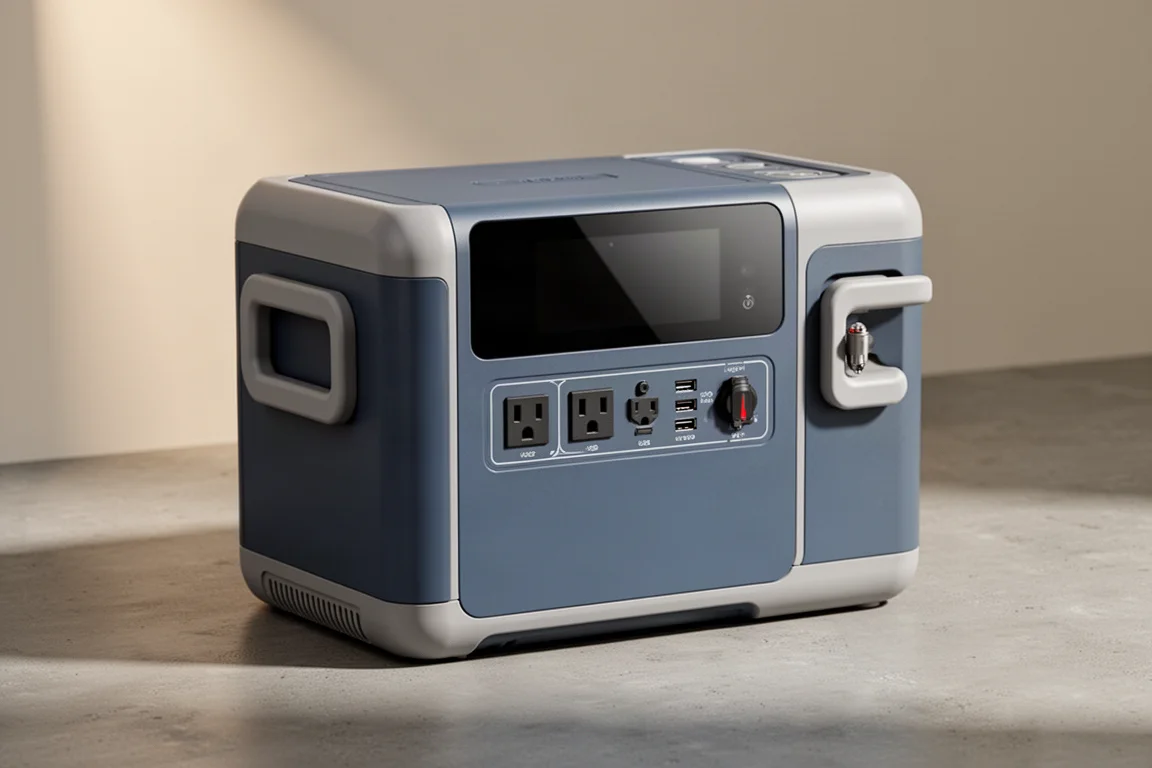
The Bluetti AC200P is a 2,000Wh portable power station built around a lithium iron phosphate battery, and it sits firmly at the large end of what most people would call portable. It weighs 60 pounds and measures 16.5 inches tall, 15.2 inches wide, and 11 inches deep, with a two-year warranty attached. Those numbers set expectations immediately: this is a unit designed to be parked somewhere useful rather than carried on your back.

The practical case for the AC200P is best understood through extended field use rather than a specification sheet. It has spent months in service, including a 4,000 mile road trip spread across 10 days. Every evening on that trip it powered two LED strips, charged phones and a smartwatch, and topped up camera batteries, and it finished the journey with roughly half of its capacity still in reserve. An electric blanket ran nightly as well, warming up and then shutting off as the occupants slept.
Who This Product Is For
This is a power station for people who need serious capacity in places without a wall socket. Overlanders, truck campers, and RV owners are the most obvious audience, along with campers who spend multiple nights off grid and households that want a large reserve for emergency power at home.
The deciding factor is not the capacity, it is the handling. At 60 pounds, the AC200P is manageable when you are sliding it around a truck bed, but it becomes genuinely difficult if you have to bend over and lift it out of a low car boot. Anyone who expects to move it frequently should think carefully about their own strength and the space they will be working in. For stationary or semi-stationary setups, the weight stops being a real issue.
Design, Build Quality, and Port Selection
Build quality and fit and finish are excellent. The housing feels solid, the metal switchgear feels premium, and the blue-grey and light grey finish looks considered rather than industrial. Moulded grab handles on both sides are essential for muscling a unit of this size into position, and there is a fan port on each side as well. The AC charging port, solar port, and DC port sit together on the side panel, and rubber pads on the underside keep the unit stable on hard surfaces.
Port selection is where this unit separates itself from similarly sized alternatives. There are six AC outlets rated 100 to 120 volts at 2,000 watts, with three-prong sockets and sine wave output. Four USB-A ports run at 5 volts and 3 amps in two separate sections, and a single USB-C port supports up to 60 watts of power delivery. A 12 volt 10 amp cigarette lighter output and two 5.5mm ports at 12 volts 3 amps handle lower-draw accessories, while a dedicated 25 amp DC output covers devices above 300 watts and can be wired directly into a fuse box with a cable purchased separately.
On top, two wireless charging pads deliver 15 watts each. Turning on the DC circuit activates those pads along with the rest of the DC side, so a phone can simply be dropped onto the lid and left to charge. It is a small convenience that turns out to matter more than expected on a long trip, because it keeps the front USB ports free for camera and drone batteries.
Charging Options and Battery Technology
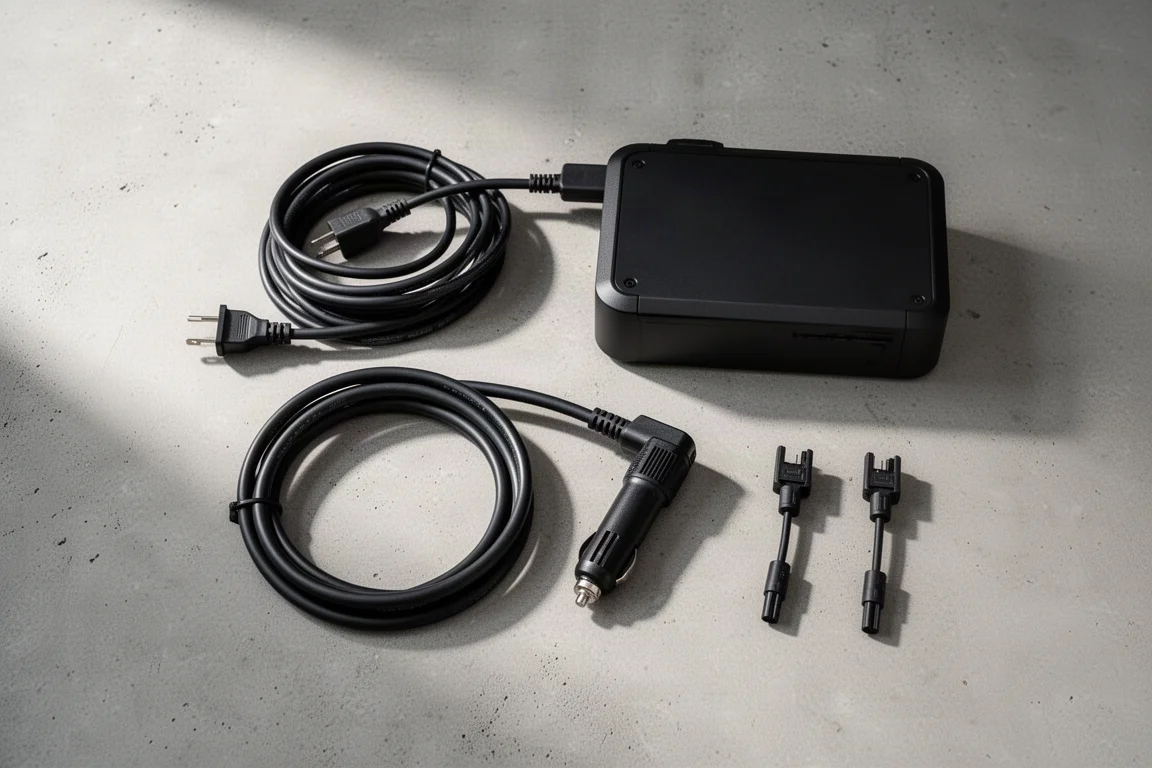
The AC200P accepts power from several sources, which is a large part of its appeal. The included power brick is rated at 411 watts and can take the unit from empty to full in about four and a half hours. Two bricks can be connected at once, cutting that to roughly two hours. On 12 volt DC power the charge takes about 14 hours, and on 24 volt power roughly seven hours. Solar input is supported up to 700 watts.
The battery itself is lithium iron phosphate, rated for more than 3,500 cycles before capacity begins to fade. That figure matters, because some battery technologies manage only around 800 cycles before the same decline sets in. Realistically, a cell rated this way can serve for well over a decade of regular use. The unit also includes a broad set of protections, covering low voltage, over voltage, and regulated ports.
One detail is worth knowing before you plan a vehicle installation. The AC200P needs a genuine 12 volt supply to charge from a car outlet. A port that delivers only about six volts will not start the charging process, while a proper 12 volt outlet will. It is a useful reminder to check what your vehicle is actually supplying before assuming the power station is at fault. The on-screen settings also allow the DC input source to be switched between solar and car or DC, which makes it easier to match the unit to whatever you have available.
Main Strengths
The headline figures are 2,000 watts of continuous output and a 4,800 watt surge. In practice that means there is very little in a normal home or campsite that this unit cannot run. A television, an air conditioner, a coffee pot, a CPAP machine, game consoles, and even a vacuum cleaner are all within reach. You may not be able to run several high-draw appliances simultaneously, but individually they are not a problem. With an inverter of this class, the usual compromises around which devices are safe to plug in largely disappear.

Real world consumption is just as persuasive as the output rating. Across nine nights of camping, the AC200P ran LED strips, charged phones, a watch, and camera batteries, and still returned home at about 50 percent. That is the kind of margin that lets you stop thinking about power management and simply use your gear.
The touchscreen is fast and responsive, which is not always true of touch interfaces on power stations. It handles AC and DC switching, output voltage and frequency, eco mode, data readouts, and fault history without noticeable lag. Combined with the port count, the fast charging options, the 700 watt solar ceiling, and the long cycle life, the AC200P delivers a lot for the money. Compared with assembling a comparable DIY system of battery, inverter, and wiring, a plug-and-play unit like this is simpler and typically cheaper.
Things to Consider Before Buying
The screen is the main weakness. In cloudy conditions it is barely legible, and in full sun it is effectively unreadable. Because there are no physical buttons anywhere on the unit, every function depends on that screen, so protecting it is genuinely important. A simple sheet of plexiglass cut to size and placed over the top is a sensible precaution, particularly if the unit travels loose in a vehicle.
The USB-A ports are not quick charging ports, which is a slightly surprising omission at this level. The USB-C power delivery port partly compensates, and it is well suited to charging a laptop.
The included bag is also underwhelming. It is small, the components do not sit tightly inside it, and there is a noticeable gap at the front where items can work loose. A neoprene case or a more structured bag would suit the accessory set better.
Finally, the battery percentage reading fluctuates with temperature. During a 10 day trip it dropped to roughly 39 percent and later climbed to 55 percent in the warmest part of the day. The screen also does not display an estimate of how long the battery will last at the current draw, so you are working from a percentage that is not always a precise picture of remaining energy.
Buying Advice
For most buyers, the decision comes down to how the unit will be charged and how often it will be moved. If you live somewhere with reliable sunshine, solar is the most attractive route, and the AC200P accepts up to 700 watts of it. If your travels take you through cloudier regions, AC charging is the practical default, and a second power brick, available separately for around $130, is a worthwhile addition for anyone covering long distances. Stopping for lunch and recharging in a couple of hours is a real advantage.

Vehicle charging is another option worth weighing. Charging from a 12 volt outlet takes about 14 hours, which is slower, but on a long driving day it happens without any effort at all. Not every power station in this class accepts a 12 volt charge, so the capability is a meaningful point in the AC200P’s favour for overlanding use.
If you are comparing this against a home backup setup, think about what you actually need to keep running. A 2,000Wh capacity with a 4,800 watt surge covers a broad range of household appliances one at a time. For buyers who want a single, self-contained unit rather than a permanent installation with panels, mounting hardware, and wiring, this is the simpler path.
Conclusion
The Bluetti AC200P is an impressive power station, and its strengths comfortably outweigh its drawbacks. The capacity, the surge capability, the port selection, the lithium iron phosphate battery, and the range of charging methods all point to a product that has been thought through properly. The issues that remain are minor: a screen that struggles in bright light, USB-A ports without quick charging, a modest carry bag, and a percentage readout that shifts with temperature.
Anyone weighing up a purchase should focus on two questions. Can you lift and move 60 pounds when you need to, and will you protect the screen that controls everything? Answer those honestly and the AC200P makes sense for overlanding, RV travel, off-grid camping, and home emergency power alike.
Product link
View more details for Bluetti AC200P Power Station
This product is mentioned in the review. Check the specifications, options, and compatibility before buying.
View more details for Bluetti AC200P Power StationFurther reading
Related Reviews

Portable Power Stations
Anker SOLIX F3000 Review: A Powerful Portable Power Station With a Few Design Quirks
The Anker SOLIX F3000 delivers strong performance, fast charging, and a competitive price, but a few design choices may give you pause.

Portable Power Stations
EcoFlow Delta 3 Series: Five New Power Stations Previewed
EcoFlow expands the Delta 3 lineup with five models, from the compact Classic to the flagship Ultra Plus. Here is what each one offers.
Portable Power Stations
Oscal Power Max 6000 Review: A Large Solar Generator With Real Trade-Offs
A week of off-grid use shows what the Oscal Power Max 6000 handles well, where it falls short, and when a fuel generator still makes more sense.