Portable Power Stations
Bluetti AC180 Review: A Portable Power Station Tested at the Campsite
We took the Bluetti AC180 on a solo overland camping trip and ran a fridge, laptop editing session, camera charging, and even an electric griddle off it. Here is how it held up.
Introduction
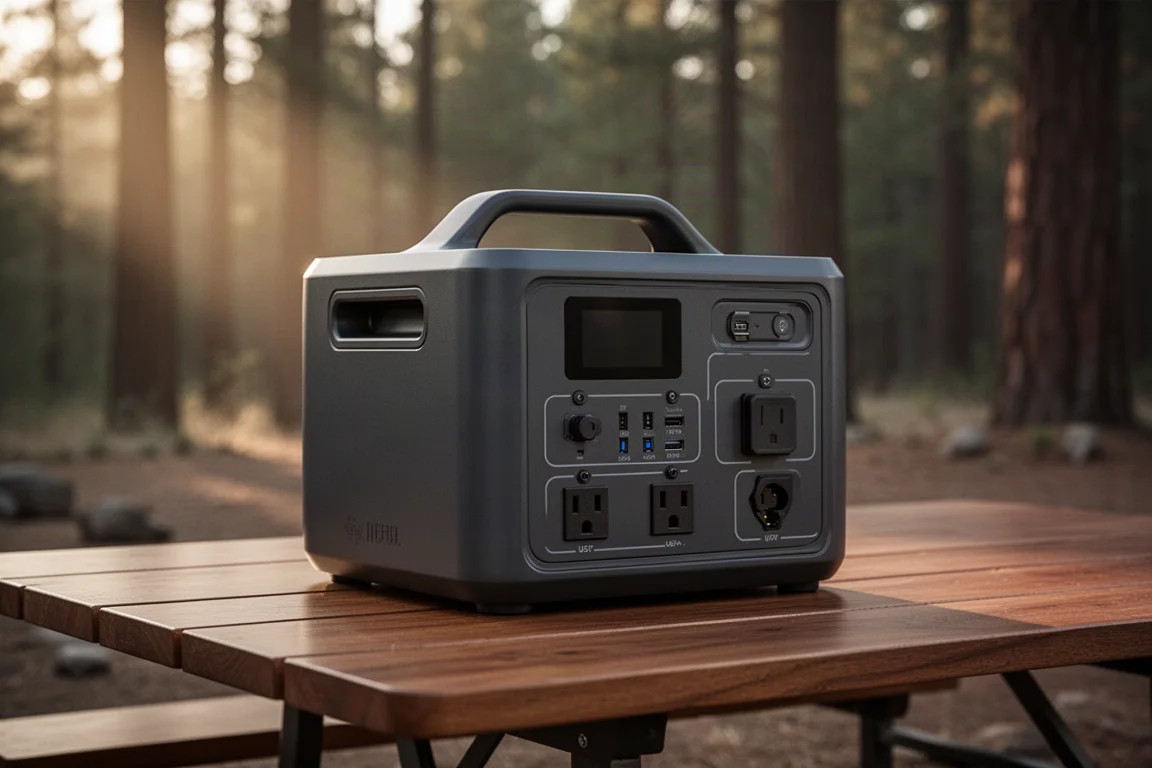
Portable power stations have quietly become one of the most useful pieces of camping and overlanding gear you can throw in a truck bed. We spent a full solo camping trip with the Bluetti AC180, running a portable refrigerator, charging camera batteries and a laptop for an editing session, powering a fan, and even cooking dinner on an electric griddle. The goal was simple: find out whether one portable battery could realistically carry a working campsite for a day and a night without needing a permanently installed dual-battery setup.
Why a Portable Power Station Instead of a Dual Battery Setup
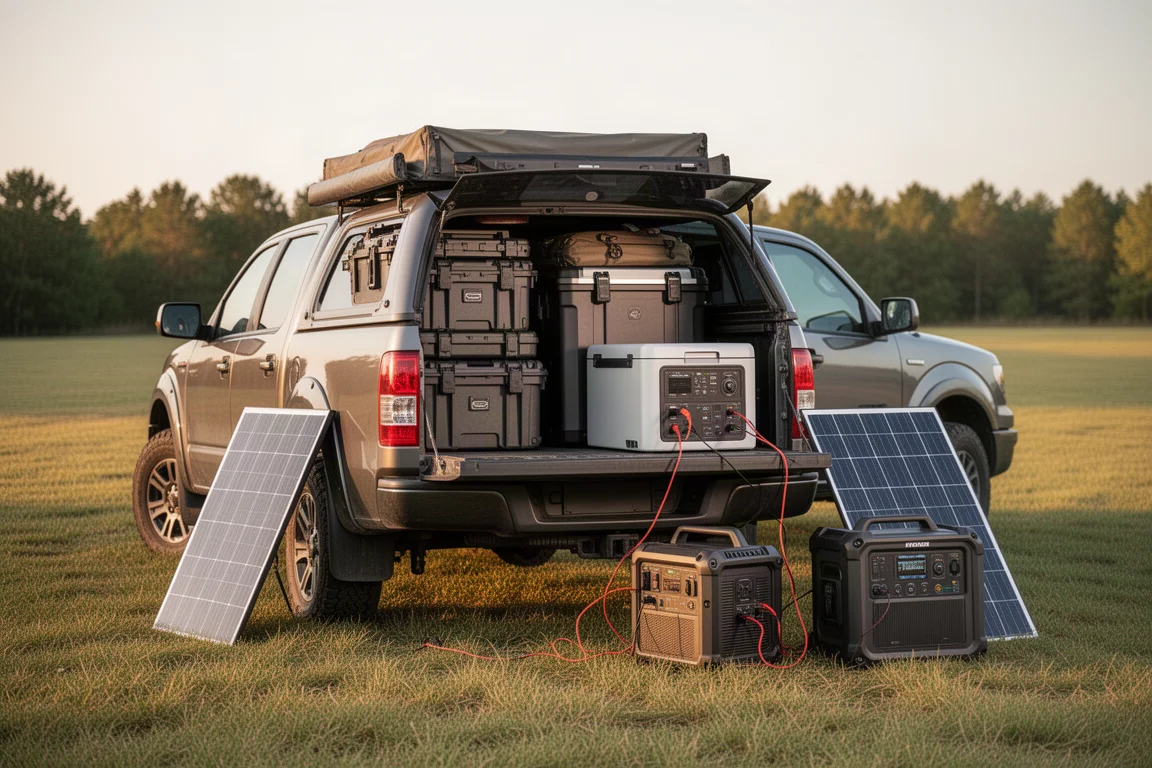
For anyone building out a truck for camping, the obvious alternative is a second battery wired into the vehicle. That makes sense for a dedicated trail rig, but it locks you into a permanent installation. A portable unit like the AC180 is far more adaptable: it rides in the bed, powers the campsite, and comes back out when you need the truck for hauling lumber or running errands. For a daily driver that doubles as a weekend camp rig, that flexibility is the whole point. Packing for this trip took roughly 20 minutes, and the power station slots straight into that routine: fill a water jug, load the fridge, charge the battery, go.
Key Specs and Features
The AC180 is a LiFePO4 power station with a 1,152Wh capacity, roughly 36Ah, and a continuous output of up to 1,800 watts. That is enough headroom for serious appliances, including TVs and even AC-powered refrigerators, not just smaller DC units. The inverter is rated at around 85 percent efficiency, which is impressive for this class, and a power-lifting mode pushes surge handling to 2,700 watts so hard-starting appliances will not trip it.
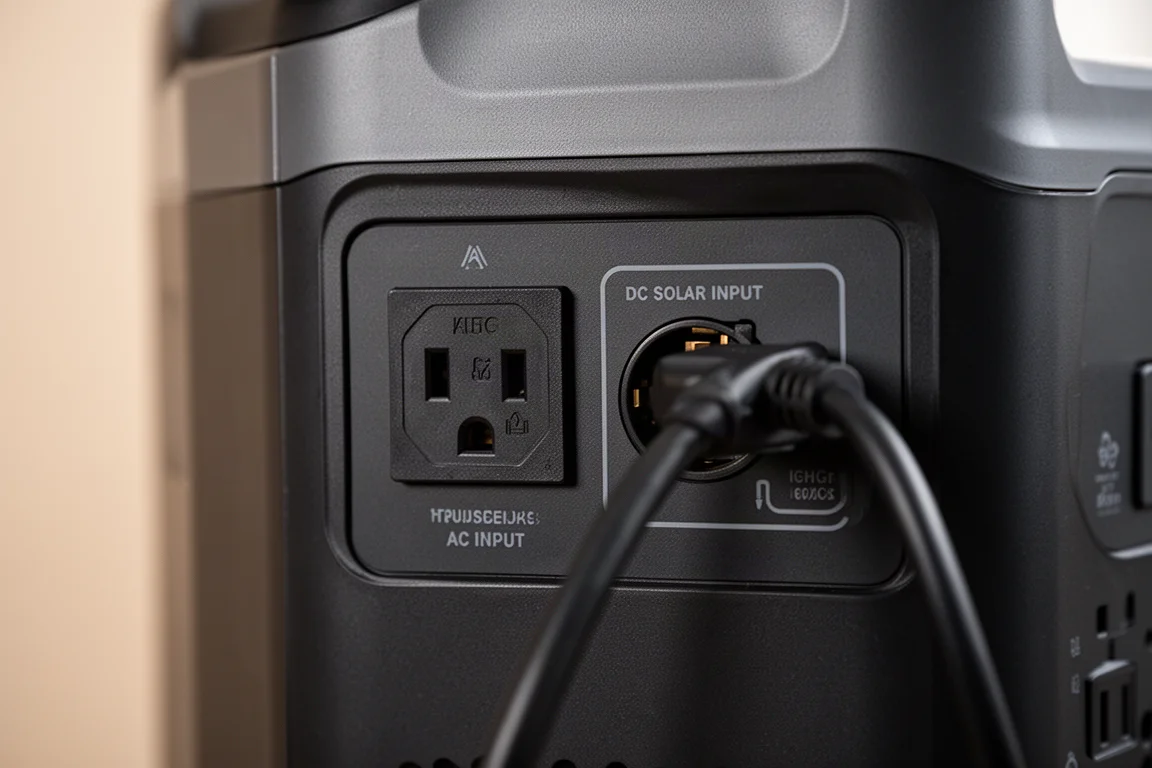
The feature that stands out most is the built-in AC charging input. Instead of a proprietary port and an external brick, there is a standard plug housed inside the unit, and it accepts up to 1,400 watts of input. That translates to 80 percent charge in about 45 minutes, which is genuinely fast for a battery this size. Watching it refill from 69 percent to full in roughly 12 to 15 minutes is the kind of thing you have to see to believe.
Solar input tops out at 500 watts over the DC port. With the 120-watt panel used on this trip, the battery was pulling around 100 watts in good sun, and a full solar-only charge would take about three hours with a larger 500W panel. Charging noise stays around 40 decibels. The unit weighs 38 pounds, which is hefty but reasonable given the capacity. Connectivity comes via a Bluetooth app that shows state of charge, input and output wattage in real time, and lets you toggle AC and DC output remotely. Four USB ports and a 100-watt USB-C port round out the outputs, which is enough to charge a laptop directly while editing.
A Real-World Test: Editing, Charging, and Cooling
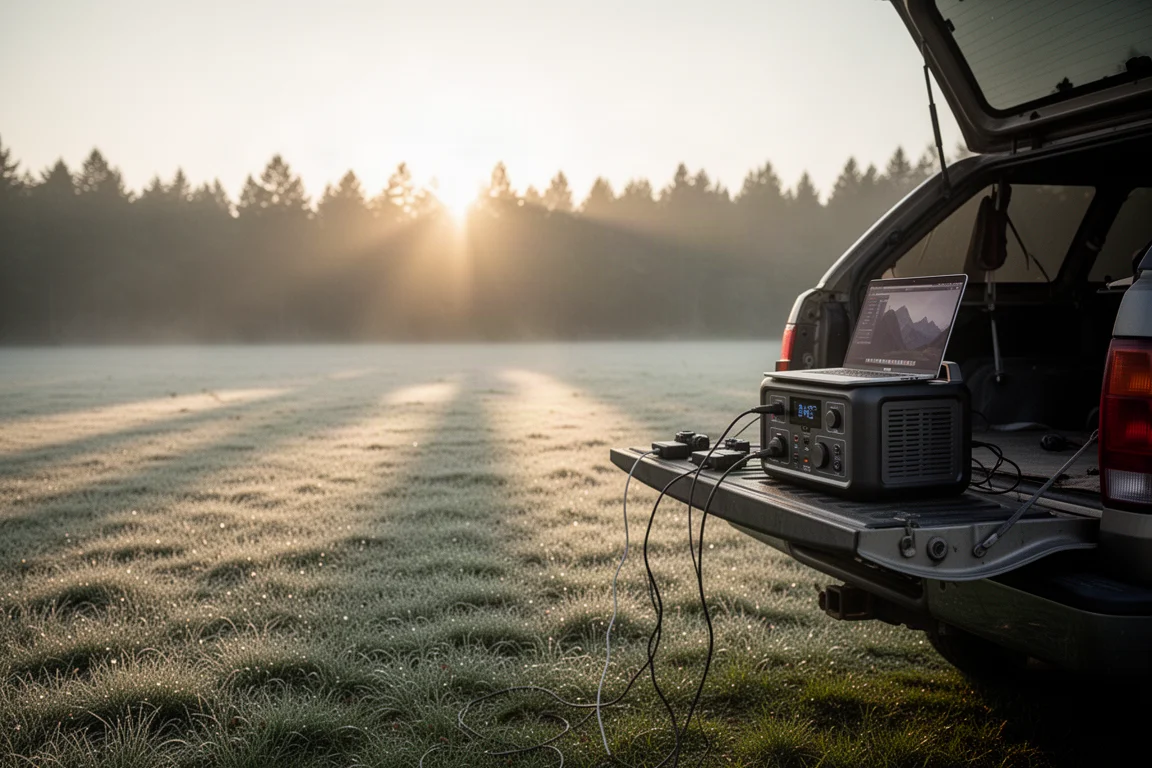
The main loads on this trip were a portable refrigerator and a laptop editing session. With the fridge running, the app estimated somewhere between 9 and 12 hours of remaining runtime, since the compressor cycles rather than running continuously. Plugging in the 120-watt solar panel roughly doubled that estimate, and once the fridge cycled off, projections jumped to 40 to 50 hours. Solar offset turned out to be essential: without it, the fridge alone would not have stretched across the full trip.
Camera batteries, a handheld gaming console, and later a MacBook for video editing all drew modest, manageable amounts of power. During a 20-minute charging session for the laptop, the power station gave up only about 4 percent of its capacity while gaining 15 to 20 percent on the laptop battery, even with the fridge cycling once or twice in between.
The Electric Griddle Stress Test
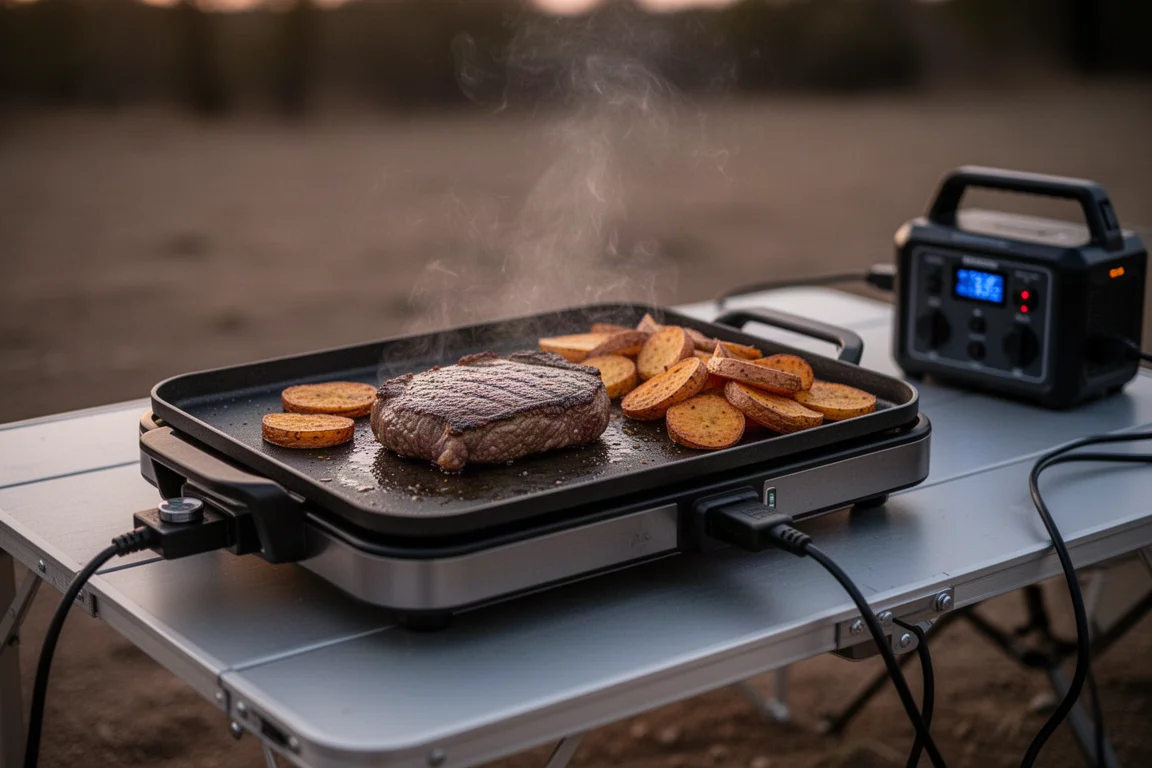
Cooking was the wild card. Most camp cooking relies on isobutane or propane, but this trip swapped in an electric griddle to see whether the AC180 could sustain it. The answer: yes, but barely. At full heat the griddle pulled a consistent 1,480 watts, right at the edge of the inverter’s continuous rating, and in about 10 minutes of cooking it consumed roughly 40 percent of the total battery capacity.
The steak cooked in seven minutes with an excellent sear, and the sweet potatoes finished on residual heat after the AC output was cut. If flat-top cooking at camp is the dream, this battery can technically deliver it, but anything generating sustained heat at that level will drain capacity fast, and a 120-watt solar panel cannot keep pace with it. For most campers, gas cooking remains the practical choice, with the AC180 reserved for the fridge, electronics, and smaller loads.
Overnight Performance and Morning Wrap-Up
Overnight, the refrigerator’s eco mode caused an unexpected hiccup. As temperatures dropped, the fridge cycled less often, and the power station eventually shut off its output because it detected no draw. A two-minute restart brought everything back, and the fridge had held temperature fine, sitting at 47 percent battery by morning. Topping off camera batteries and finishing the video edit cost only a handful of additional percent, with solar contributing a modest 12 to 20 watts through the morning.
By the end of the trip, roughly 40 percent capacity remained despite the griddle surprise, the fridge keeping food cold the entire time, an editing session, and constant device charging. That is a strong result for a single portable unit, and it confirms the AC180 as a practical foundation for a flexible camp setup rather than a permanent vehicle installation.
Things to Consider Before Buying
- At 38 pounds, it is portable but not light, so plan where it lives in your vehicle.
- Eco mode can cut output if connected loads go quiet, so it is worth learning the toggle before a cold night.
- High-draw appliances like electric griddles will chew through capacity quickly; pair them with generous solar input or skip them.
- Charging speed is a genuine highlight, but the fast 1,400W AC input assumes you have access to wall power between trips.
Buying Advice
The AC180 makes the most sense for campers and overlanders who want serious appliance capability without committing to a hardwired dual-battery system. Its 1,152Wh capacity, 1,800W output, and unusually fast recharge suit anyone running a fridge, charging laptops and cameras, or working remotely from camp. If your trips are short and load-light, a smaller unit may suffice; if you plan to run heat-generating appliances for long stretches, budget for additional solar. For a daily-driver truck that turns into a camp rig on a whim, though, this is a well-matched piece of gear.
Conclusion
Across a full camp trip, the Bluetti AC180 powered a refrigerator, an editing workstation, camera gear, and an unplanned 1,500-watt cooking experiment, and still finished with meaningful charge in hand. The fast AC charging, quiet operation, and handy Bluetooth app make it easy to live with, and its portability keeps your vehicle versatile. For campers who want capable, adaptable power without a permanent install, it earns its place in the truck bed.
Product link
View more details for Bluetti AC180
This product is mentioned in the review. Check the specifications, options, and compatibility before buying.
View more details for Bluetti AC180Further reading
Related Reviews

Portable Power Stations
Anker SOLIX F3000 Review: A Powerful Portable Power Station With a Few Design Quirks
The Anker SOLIX F3000 delivers strong performance, fast charging, and a competitive price, but a few design choices may give you pause.

Portable Power Stations
EcoFlow Delta 3 Series: Five New Power Stations Previewed
EcoFlow expands the Delta 3 lineup with five models, from the compact Classic to the flagship Ultra Plus. Here is what each one offers.
Portable Power Stations
Oscal Power Max 6000 Review: A Large Solar Generator With Real Trade-Offs
A week of off-grid use shows what the Oscal Power Max 6000 handles well, where it falls short, and when a fuel generator still makes more sense.