Portable Power Stations
Blue Yeti AC200P Power Station Review: 2,000Wh of Capability in a 60-Pound Package
A practical look at the Blue Yeti AC200P power station, covering its 2,000Wh lithium iron phosphate battery, 4,800W surge inverter, port selection, charging options, and the trade-offs worth weighing before buying.
Introduction
Portable power stations have become genuinely useful for overlanding, truck camping, RV travel, and home backup, but a capacity figure on its own tells you very little. The Blue Yeti AC200P is a 2,000 watt hour unit built around a lithium iron phosphate battery, and it has been in regular use over several months, including a 4,000 mile road trip. Time with a product like this tends to surface the details a spec sheet hides.
This review covers what the AC200P offers, how it behaves in practice, and the trade-offs worth understanding before committing to a 60 pound power station.
What the AC200P Delivers
The headline number is 2,000 watt hours of capacity. The unit measures 16.5 inches tall, 15.2 inches wide, and 11 inches deep, and it weighs 60 pounds. That weight is reasonable for the capacity on offer, but it shapes how the unit gets used.
Power delivery runs at 2,000 continuous watts with a surge rating up to 4,800 watts. The battery is lithium iron phosphate, rated for more than 3,500 charge cycles before capacity begins to drop. For context, some battery technologies manage around 800 cycles before the same decline. The unit carries a two year warranty.
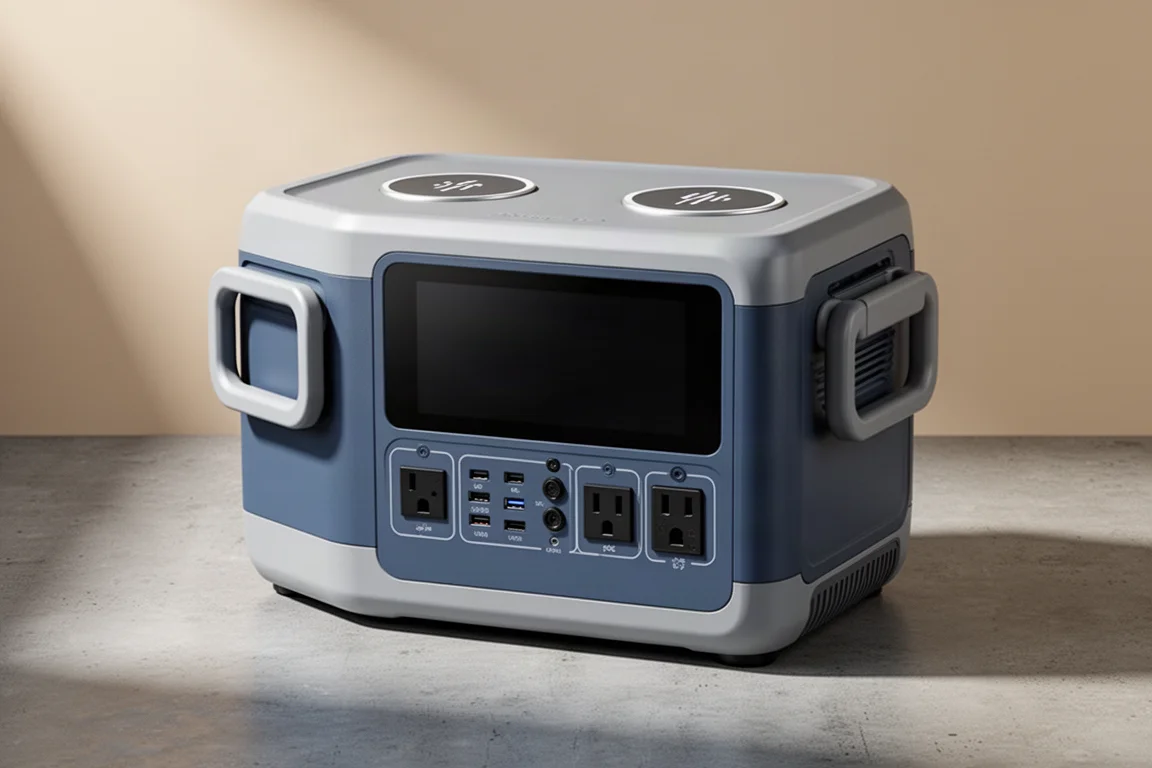
Port selection is where the AC200P stands apart. There are six AC outputs rated at 100 to 120 volts and 2,000 watts, all three-prong sine wave. USB coverage includes four 5 volt 3 amp ports and one USB-C power delivery port rated up to 60 watts. On the DC side there is a 12 volt 10 amp cigarette lighter output, two 5.5 millimeter ports at 12 volt 3 amps, and a 25 amp DC output intended for devices drawing over 300 watts, which can be wired directly into a fuse box using a cable purchased separately. Two 15 watt wireless charging pads sit on top of the unit.
Everything is controlled through a touchscreen, and there are no physical buttons anywhere on the housing.
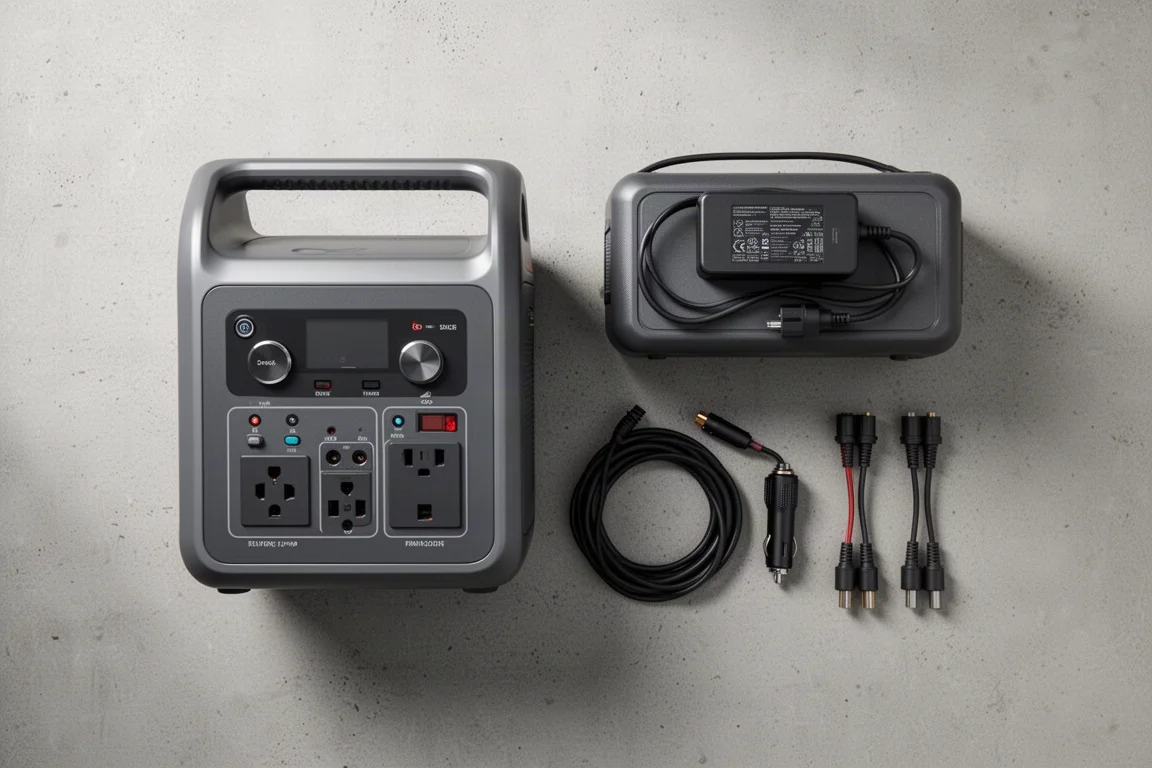
Included in the box are the unit, a warranty card, an instruction manual, and a bag containing the charger and cables. The power brick is rated at 411 watts, and there is a power cord, a 12 volt and 24 volt cigarette lighter cable that connects to the aviation port, and an MC4 cable.
Who This Power Station Is For
The AC200P makes the most sense in situations where it stays put or lives in a vehicle. Overlanding setups, truck camping, RV travel, and off-grid base camps are natural fits, and the same capacity makes it a credible option for emergency power at home. The surge rating means it can run a television, an air conditioner, a coffee pot, a CPAP machine, a game console, or a vacuum cleaner. High draw devices generally need to be run one at a time rather than all at once.
Where it fits less comfortably is any scenario requiring frequent lifting and repositioning. Moving it in and out of a truck bed is straightforward. Bending into a car to shift it is considerably harder.
In real world use across a 4,000 mile trip, the unit powered two LED strips every evening, charged phones, a watch, and camera batteries across nine nights, and finished the trip at roughly 50 percent remaining. That is a useful illustration of how far 2,000 watt hours stretches when the loads are modest and consistent.
Main Strengths
Build Quality and Everyday Handling
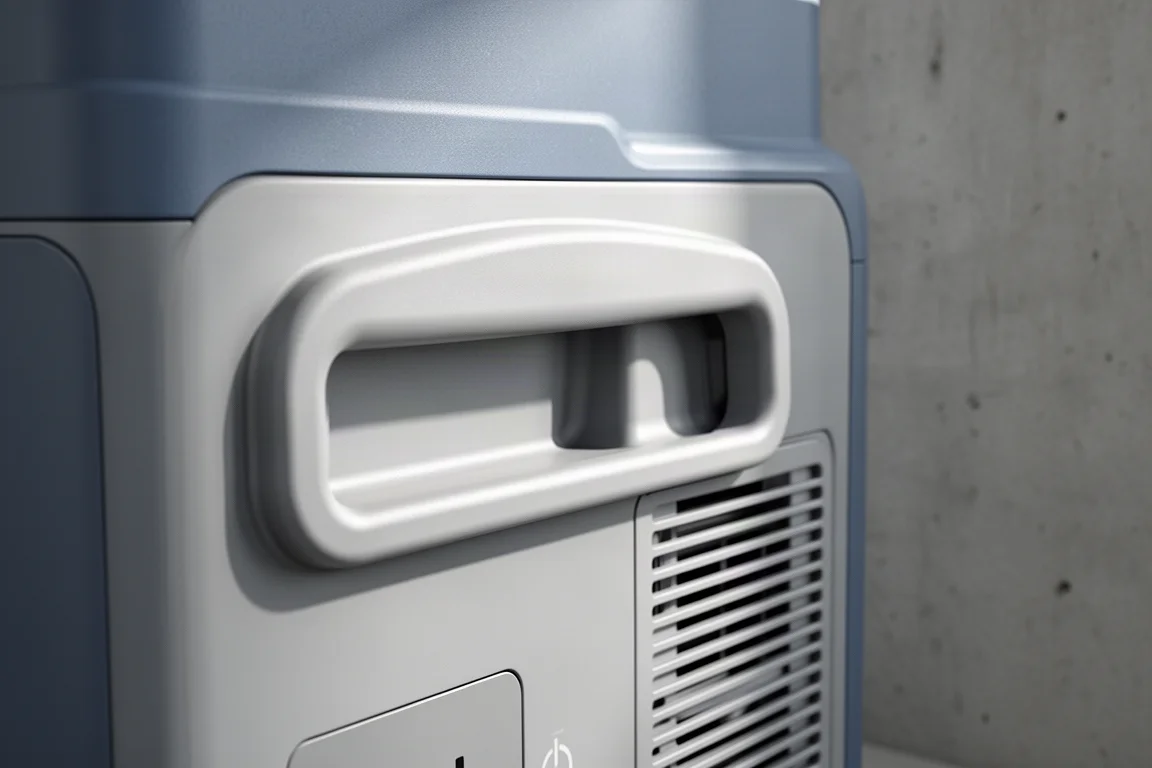
Fit and finish are excellent. The housing feels premium, the power switch has a solid action, and the blue-gray and light gray color combination looks considered rather than purely industrial. Grab handles on each side are genuinely necessary given the weight, and rubber pads on the base keep the unit stable. Fan ports sit on both sides, alongside the AC, solar, and DC charging inputs.
The touchscreen is responsive and quick, which was not a given. Settings cover AC output voltage, AC output frequency, DC input source selection between PV, car, solar, and DC, and an eco mode. Data screens show inverter and charger information including solar and DC adapter charge, DC and AC output figures, and a fault history log.
The two 15 watt wireless charging pads on top turned out to be more useful than expected. Dropping a phone onto the lid at night is faster than reaching for a cable, and it leaves the front USB ports free for camera and drone batteries.
Battery Technology and Inverter Output
The lithium iron phosphate chemistry is the most consequential specification here. A rating of over 3,500 cycles means the unit can be cycled regularly for well over a decade before meaningful capacity loss, which changes the economics of the purchase compared with shorter lived alternatives.
The 4,800 watt surge capability is equally significant. It removes much of the guesswork about whether a particular device will start, because the unit can absorb the brief spike that motors and compressors demand. Protection systems cover low voltage, over voltage, and regulated ports, which reduces the risk of damaging connected devices.
Charging Options and Speed
Charging flexibility is one of the AC200P’s strongest attributes. With the included 411 watt power brick, a full charge takes about four and a half hours. Adding a second power brick, available separately, cuts that to roughly two hours. On 12 volt DC power the unit charges in around 14 hours, and on 24 volt power in about seven. Solar input is accepted up to 700 watts.
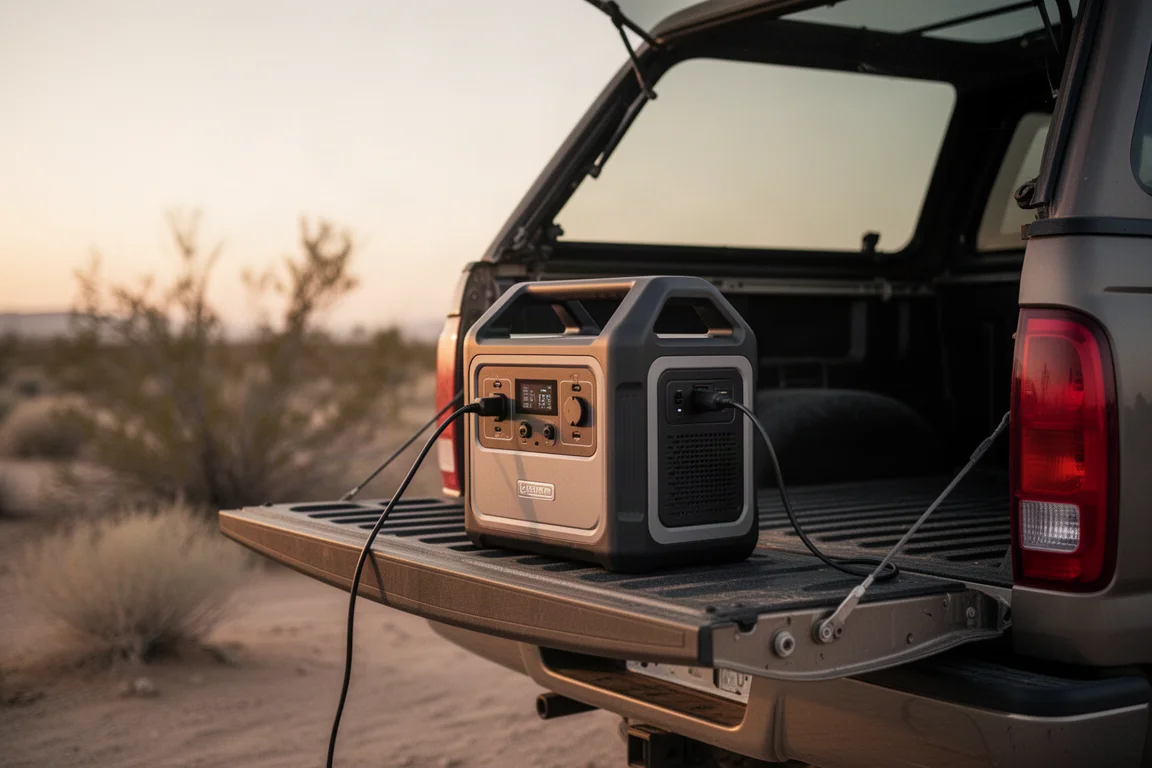
The 12 volt DC charging path matters for vehicle based use. Long drives become charging sessions, and a unit that will not accept a cigarette lighter feed is far less practical for overlanding. One caveat worth knowing is that the AC200P needs a full 12 volt supply. A port delivering roughly half that, around 6 volts, will not charge it. That is a vehicle side limitation rather than a fault with the station, but it is worth checking your own outlets before relying on them.
Solar charge times depend heavily on location, time of year, cloud cover, and temperature, so no single estimate applies to everyone. In regions with frequent weather changes, solar may work better as a supplement, while in consistently sunny areas it can carry most of the charging load.
Things to Consider Before Buying
Weight and Portability
Sixty pounds is the number to sit with. It is reasonable for a 2,000 watt hour station, but it determines the use case. If the unit will live in a vehicle or a fixed location, the weight is a non-issue. If it needs to move regularly, or be lifted from awkward positions, that changes the calculation considerably.
Screen Visibility and Protection
The touchscreen is difficult to read in bright, well-lit conditions and effectively unreadable in full sun. More importantly, because there are no physical buttons, the screen is the only way to switch the AC and DC outputs on and off. A damaged display would leave the unit unusable. Covering it with a protective sheet or a piece of plexiglass when the unit travels is a sensible precaution.
Port and Accessory Details
The four 5 volt 3 amp USB ports are not quick charging, which is a notable omission at this level. The USB-C power delivery port at up to 60 watts handles laptop charging well.
The battery percentage readout can fluctuate with temperature, so the remaining capacity figure is not always precise. During a trip the reading moved between roughly 39 and 55 percent as conditions changed.
The included bag is small and leaves a gap at the front, so contents can shift or fall out. A more secure case would better match a unit in this class.
Buying Advice
For anyone weighing a plug and play power station against building a custom system, the AC200P sits firmly on the convenient side of that decision. There is no drilling, no wiring runs, and no panel mounting. You charge it, move it, and use it.
The main questions to answer before buying are practical ones. Will the unit stay in one place or in a vehicle? Is solar realistic where you live and travel? Do you need a second power brick for faster top-ups? For truck based travel where the unit stays with the vehicle, the answers tend to point toward a straightforward recommendation.
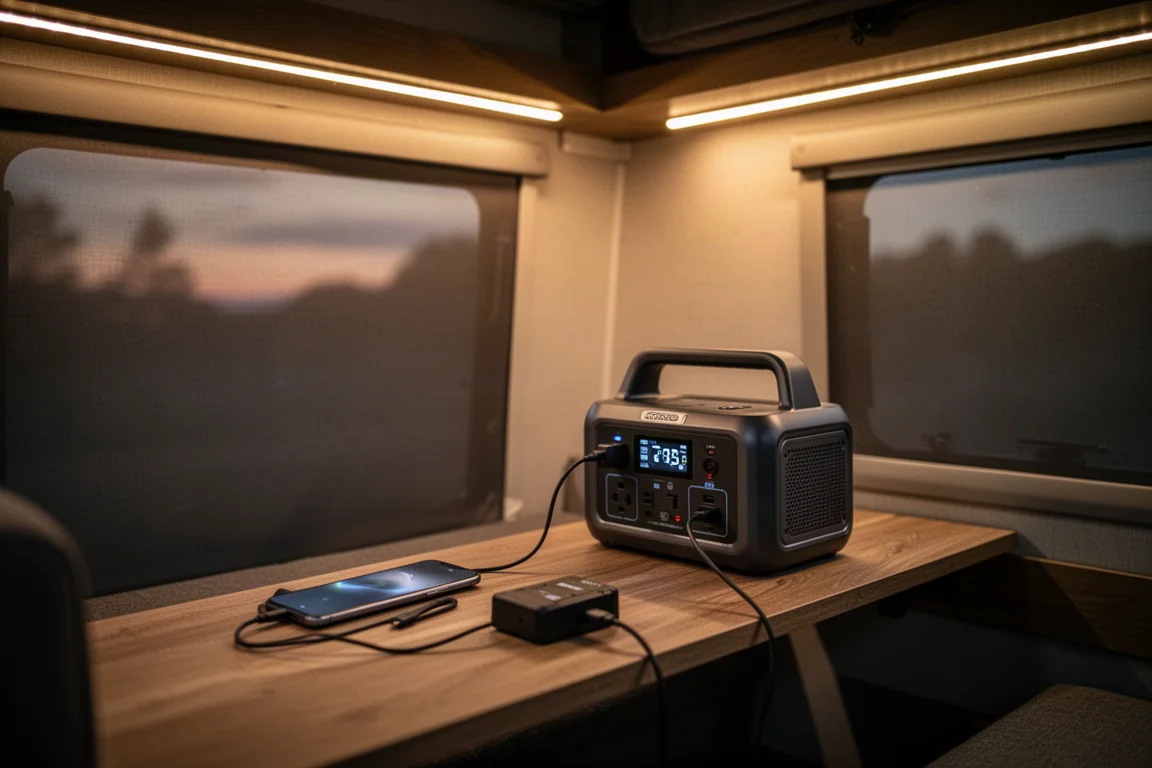
For home backup, the capacity and surge rating cover most household essentials when run individually. For overlanding, RV use, and off-grid camping, the combination of capacity, port count, and charging options is difficult to argue with. The weight and the screen are the two details that deserve the most thought, and both are manageable with the right setup.
Conclusion
The Blue Yeti AC200P is a capable, well-built power station with an excellent port selection, a long life battery, and a strong inverter. The trade-offs are real but narrow: it is heavy, the screen needs protection, and the USB-A ports are not quick charging. For overlanding, RV travel, off-grid camping, and emergency power at home, it earns its place.
Product link
View more details for Blue Yeti AC200P Power Station
This product is mentioned in the review. Check the specifications, options, and compatibility before buying.
View more details for Blue Yeti AC200P Power StationFurther reading
Related Reviews

Portable Power Stations
Anker SOLIX F3000 Review: A Powerful Portable Power Station With a Few Design Quirks
The Anker SOLIX F3000 delivers strong performance, fast charging, and a competitive price, but a few design choices may give you pause.

Portable Power Stations
EcoFlow Delta 3 Series: Five New Power Stations Previewed
EcoFlow expands the Delta 3 lineup with five models, from the compact Classic to the flagship Ultra Plus. Here is what each one offers.
Portable Power Stations
Oscal Power Max 6000 Review: A Large Solar Generator With Real Trade-Offs
A week of off-grid use shows what the Oscal Power Max 6000 handles well, where it falls short, and when a fuel generator still makes more sense.