Camping Lanterns
Black Diamond Apollo Review: A Reliable Camping Lantern With Two Power Sources
A long-term look at the Black Diamond Apollo, covering measured light output, run time, build quality, and the trade-offs worth knowing before you buy.
Introduction
Camping lanterns are usually chosen from a specification sheet: a lumen figure, a run time, a beam distance. The Black Diamond Apollo has been in steady use for more than three years, which makes it possible to check those claims against how the lantern actually behaves inside a tent, in the rain, and on a bedside table at home.
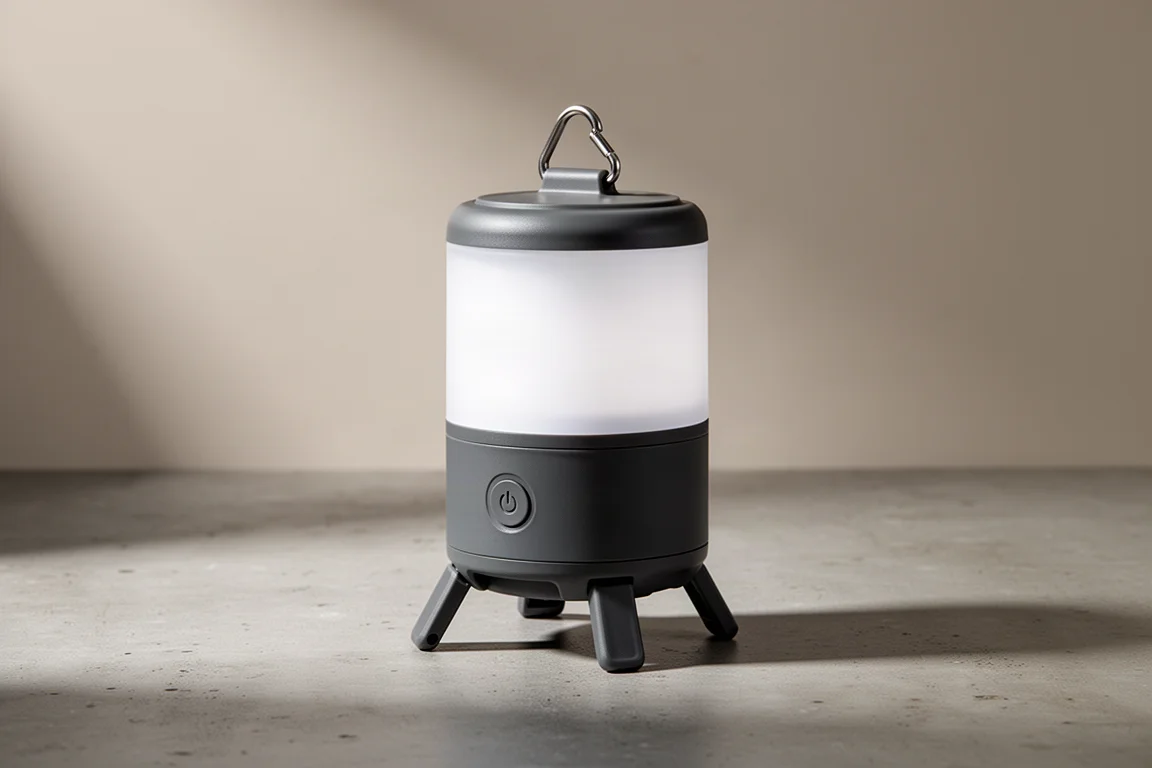
The Apollo is a compact rechargeable lantern with a frosted diffuser globe, a single front power button, three folding legs and a top hook. Its most distinctive feature is that it accepts two power sources: an internal lithium-ion battery and three external AA batteries. It carries an IPX4 rating, which means splash proof rather than submersible, and it is covered by a three-year warranty.
This review covers measured light output, run time on both power sources, build quality, and the handful of details that are worth weighing before you decide.
Who This Lantern Is For
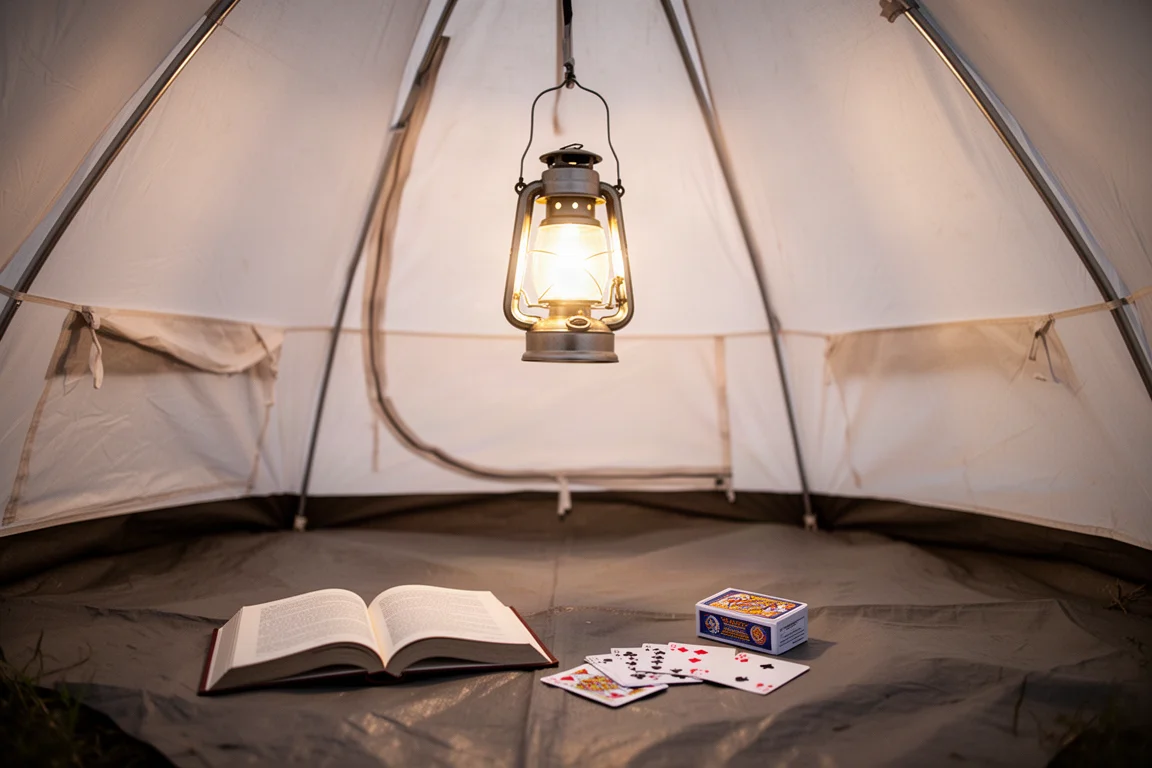
The Apollo suits campers who want one light that covers a tent interior without fuss. At its brightest setting it fills a six-person dome tent evenly, so reading, cooking at the vestibule or sorting gear after dark is comfortable. At its dimmest setting it works as a low night light, though it is not bright enough for reading or card games.
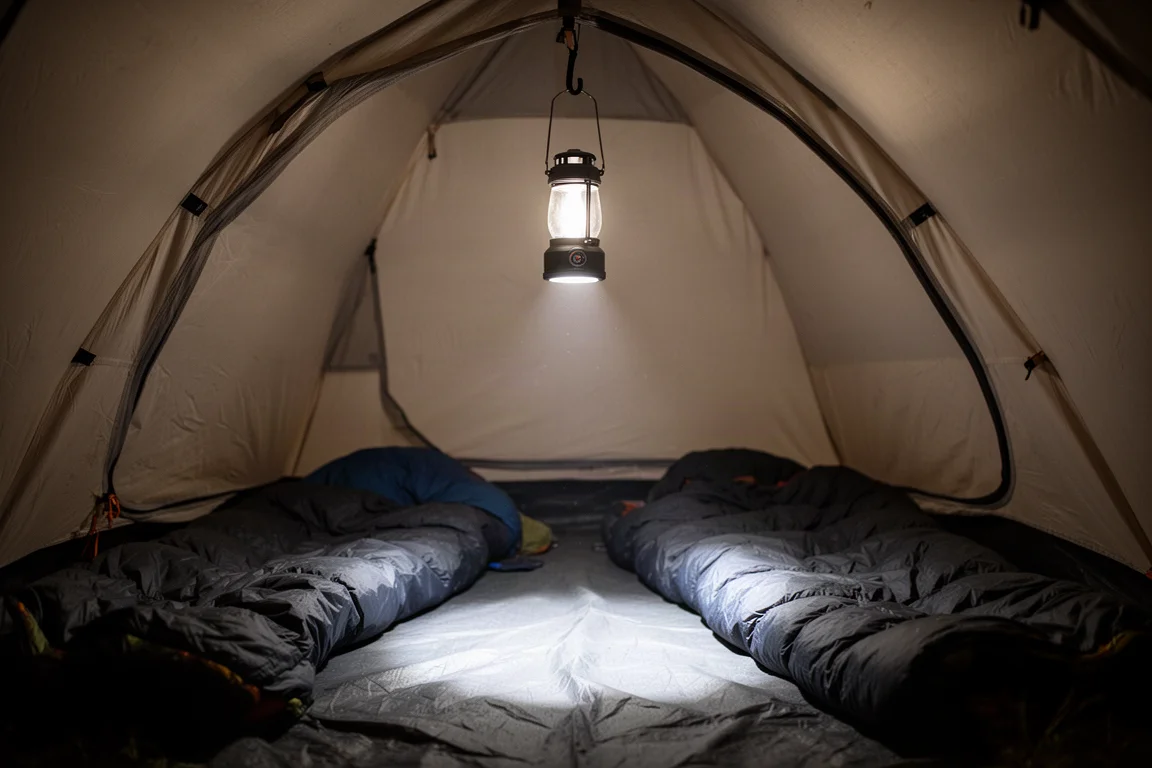
It is also a sensible choice for emergency kits. Because it runs on either its internal battery or standard AA batteries, it can keep producing light as long as spare AA cells are on hand. That flexibility is uncommon among rechargeable lanterns, most of which rely on a single internal battery and become useless once it is flat.
Riders of long trips, car campers and anyone who wants a single dependable light for a tent will get the most from it. Buyers who want coloured modes, an SOS function or a warm red light for winding down at night should look elsewhere.
Main Strengths
The Apollo is not overloaded with features, but the ones it has are genuinely useful in camp.
Light Output That Beats the Rating
Black Diamond rates the Apollo at a maximum of 250 lumens and a minimum of 10 lumens. A lux meter reading at the brightest setting came in at 362 lumens, roughly 45 percent above the stated maximum. The dimmest setting measured 23 lumens, again higher than the published figure.
The bright setting lights an entire six-person tent comfortably, and even sitting at the edge of the tent, a book stays well lit. From outside, the lantern visibly illuminates the whole tent, which is useful when returning to a pitch after dark.
Beam distance is a different story. Black Diamond states that the brightest setting throws light up to 14 meters, close to 46 feet. In testing, the light fell below the threshold a lux meter could detect at roughly 2.2 meters, or 7.3 feet. That is far shorter than the marketed figure, although it matters less than it sounds for a lantern designed to light a small enclosed space rather than a wide area.
Light quality itself is strong. The output is a white light rather than a warm yellow tone, and the frosted, matte diffuser globe spreads it evenly without glare. Even directly overhead, it stays easy on the eyes.
Two Battery Sources and Long Run Time
The internal lithium-ion battery is the default power source, and the lantern switches to the external AA batteries only once the internal charge runs out. A small button inside the battery compartment lets you change which source is treated as default, and both battery indicators flash to confirm the change.
At the dimmest setting, Black Diamond claims 30 hours from the internal battery, 120 hours from external batteries, and 150 hours combined. The internal battery ran for 68 hours in testing, more than double the claim. With well-used AA batteries, the external source ran for 97 hours; those cells were no longer at full capacity, and at full capacity the figure would work out close to the claimed 121 hours.
At the brightest setting, the claimed figures are six hours on the internal battery, 18 hours on external batteries, and 24 hours combined. The internal battery delivered its six hours even after several years of use. Fresh AA batteries managed around 14 hours rather than 18, giving roughly 20 hours of bright light in total. For a lantern this size, that is a strong result.
The battery indicator lights also proved accurate. During a six-hour run at maximum brightness, the display moved from three lights to two at around the 25 percent mark, and down to one light at around 75 percent before the lantern went out close to the six-hour point.
Build Quality, Hooks, and Legs
The top hook is one of the better designs on a camping lantern. It consists of two overlapping hooks that form a closed loop, so the lantern will not slip off a tent ceiling loop even when it is knocked. The lantern hung without issue in every tent it was used in.
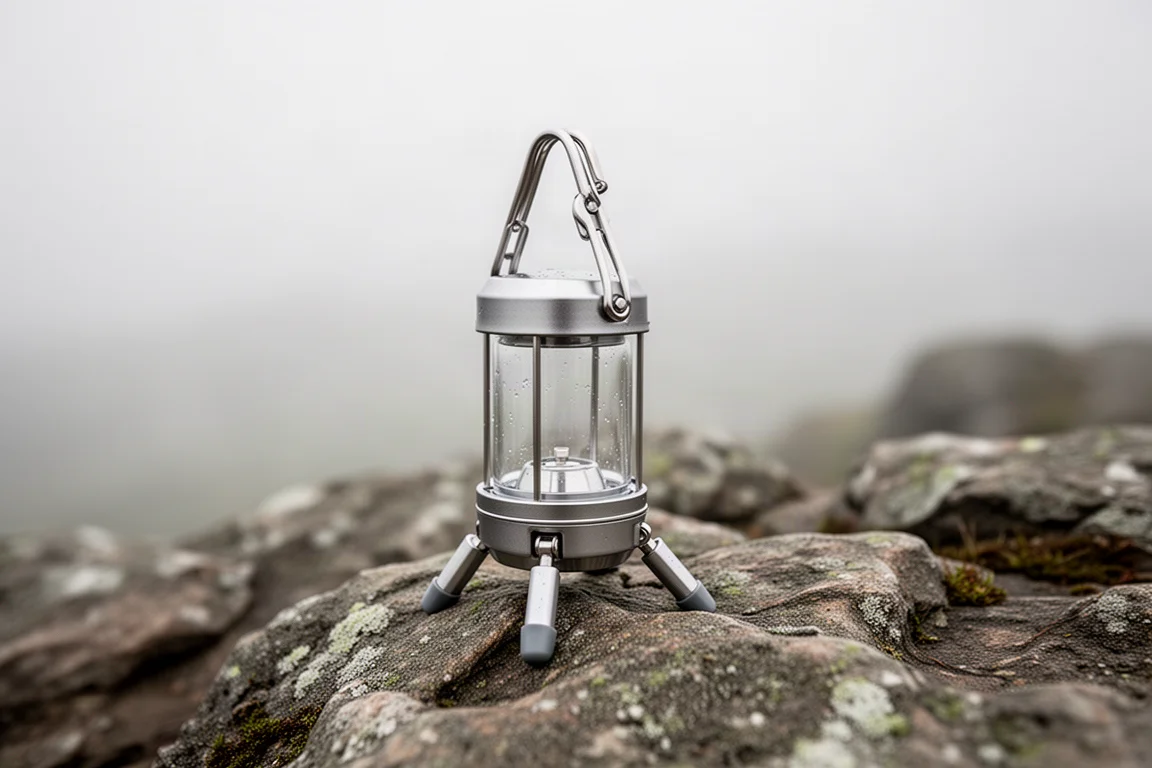
The three adjustable legs let it stand on uneven ground, which most rechargeable lanterns in this class cannot do. The body is a comfortable size to hold, the power button is large enough to find in the dark, and the lantern remembers the last brightness setting, so it returns to the same level when switched on. The lock mode, activated by holding the power button for about three seconds while the lantern is off, prevents accidental activation in a pack; without it, the lantern can switch on inside a bag and drain the battery unnoticed.
At 3.25 by 3.25 by 4.5 inches (8.3 by 8.3 by 11.4 centimetres), it packs down small. It weighs about 10.23 ounces (290 grams) without batteries and about 13 ounces (369 grams) with three AA cells installed. It has survived repeated drops from hand height without damage.
Things to Consider Before Buying
The feature set is deliberately simple. There are no coloured modes, no SOS mode and no warm or red light option, so anyone who likes a gentle amber light at night will need to accept a white output instead.
The battery indicator is harder to read than it should be. From some angles two lights can look like one, and the level is only displayed when the lantern is switched off and on again, rather than staying visible while it runs.
Charging uses a micro-USB port and an included USB-A to micro-USB cable. The cable began to fray after three years of use, though replacements are inexpensive and widely available. A full charge is quoted at eight hours; a three-year-old unit took around five hours, likely because the internal battery has lost some capacity over time.
The charge-out function, which uses a separate standard USB port to top up a phone, has a 2600 mAh capacity, roughly one full charge of an iPhone 12. On this unit it stopped working after more than three years, cutting out partway through a phone charge despite the lantern still holding plenty of light.
Water resistance deserves attention. The IPX4 rating covers splashes, and the lantern has handled years of light rain without issue. After 20 minutes of heavy rain, however, water droplets were found inside both port covers and around the rim of the battery compartment. The seals could be better, and the lantern should not be submerged.
Run time at the dimmest setting is another point to weigh. Although the internal battery exceeded its claim, the combined dim-setting run time is lower than several other rechargeable lanterns in the same category.
Buying Advice
The Apollo makes the most sense for buyers who value reliability and flexibility over a long list of lighting modes. Its strongest arguments are the dual power design, the accurate and generous battery life at high brightness, and the hook and leg hardware, which is better thought out than most of the competition.

If your priority is a simple, hardy lantern for tent camping, car camping or a home emergency kit, the Apollo is easy to recommend. Pair it with a set of quality AA batteries and you effectively have an unlimited supply of light for as long as those cells last.
If you want coloured lighting, an SOS mode, a warm night-time tone or a guaranteed phone-charging feature, look at lanterns that offer those modes instead. The Apollo is at its best when it is asked to do one job well.
Conclusion
After more than three years of use, the Black Diamond Apollo remains a dependable camping light. Its measured output exceeds the published figures, its run time at high brightness is strong for the size, and the dual battery system gives it a resilience that most rechargeable lanterns lack. The white light is even and glare-free, the hook and legs are genuinely well designed, and the lock mode solves a real problem for anyone who carries a lantern in a pack.
The caveats are clear rather than hidden: a simple mode set, a fiddly battery indicator, a beam distance well short of the marketing claim, and port seals that let water in during sustained heavy rain. The charge-out function on this unit failed after three years, which is worth knowing if phone charging is a deciding factor for you. For buyers who want a reliable, straightforward lantern that keeps working, the Apollo still earns a confident recommendation.
Product link
View more details for Black Diamond Apollo
This product is mentioned in the review. Check the specifications, options, and compatibility before buying.
View more details for Black Diamond ApolloFurther reading
Related Reviews
Camping Lanterns
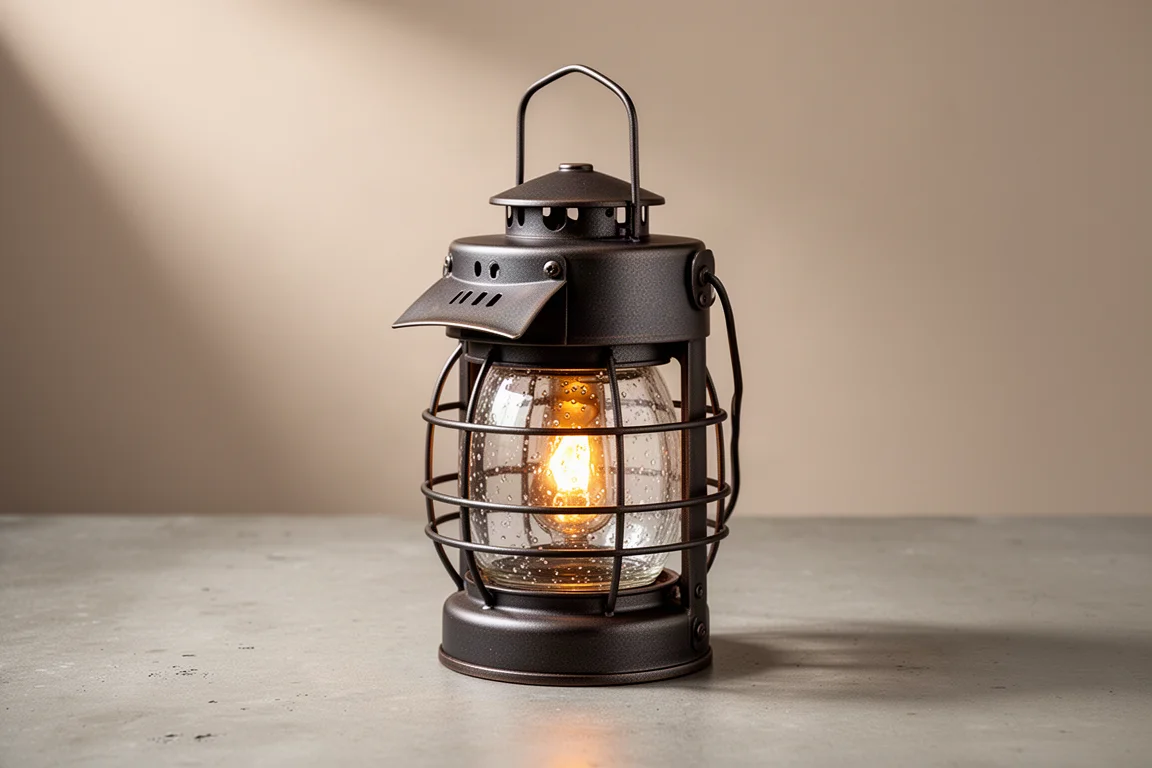
Barebones Railroad Lantern Review: A Vintage-Style Lantern That Beats Its Own Specs
A detailed look at the Barebones Railroad Lantern, covering measured brightness and runtime, charging behavior, weather resistance, and what to know before buying.
Camping Lanterns
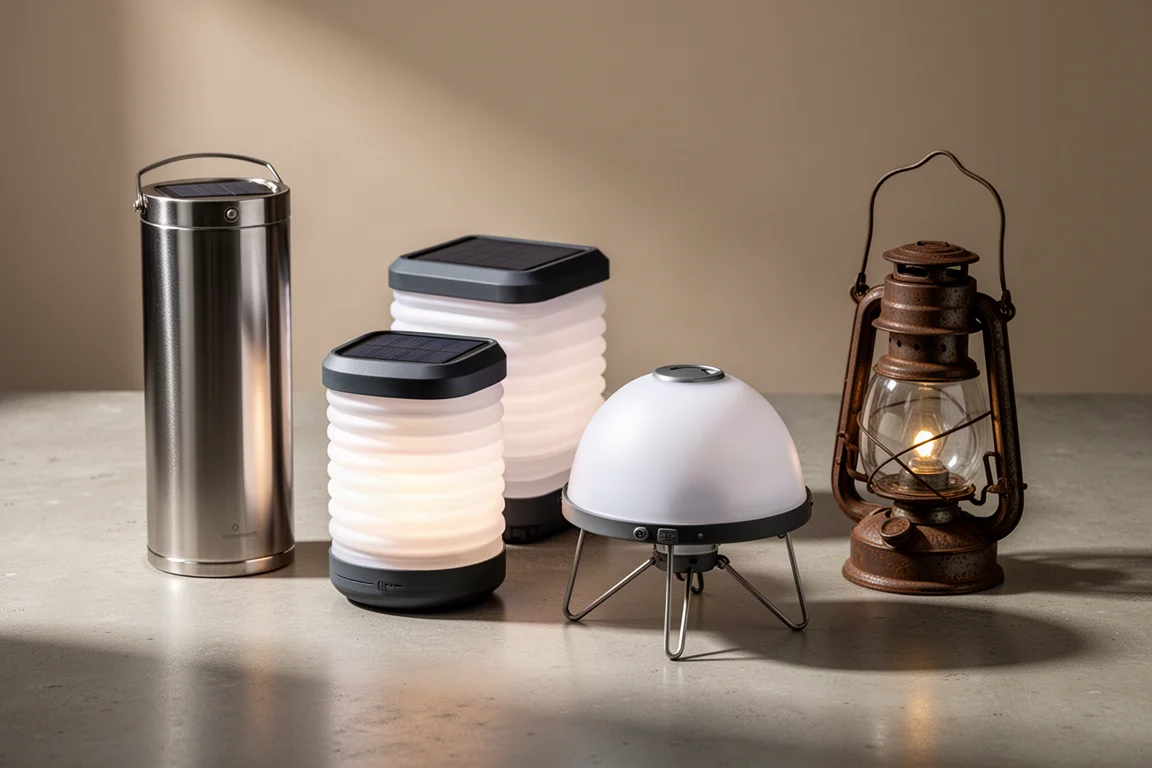
Best Rechargeable LED Camping Lanterns 2026: 12 Lanterns Compared
Twelve rechargeable LED camping lanterns measured for brightness, run time, features, ease of use, durability, and portability, with clear picks for every kind of camper.
Camping Lanterns
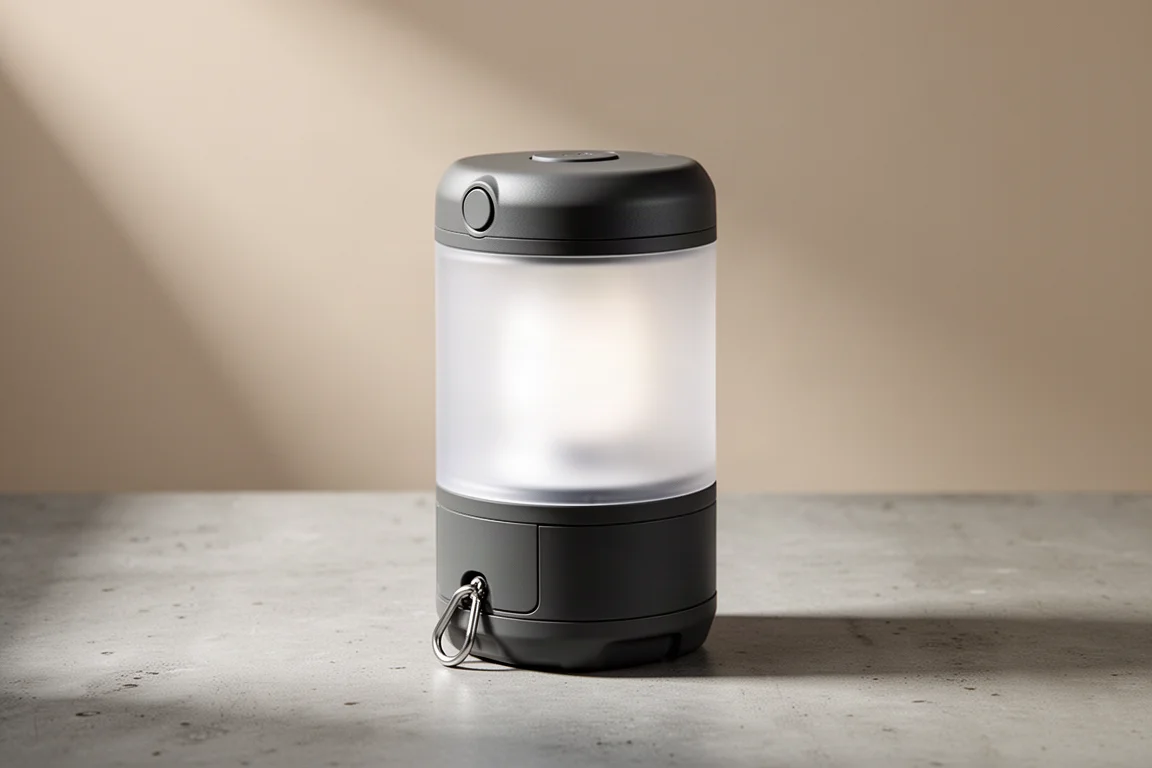
BioLite AlpenGlow 500 Review: A Versatile Rechargeable Camping Lantern
A rechargeable camping lantern with thirteen lighting modes, a 6,400 mAh power bank, and long measured runtimes, plus the warranty and safety trade-offs worth weighing first.