Bikepacking Gear
10 Bikepacking Picks That Earn Their Place on Long Rides
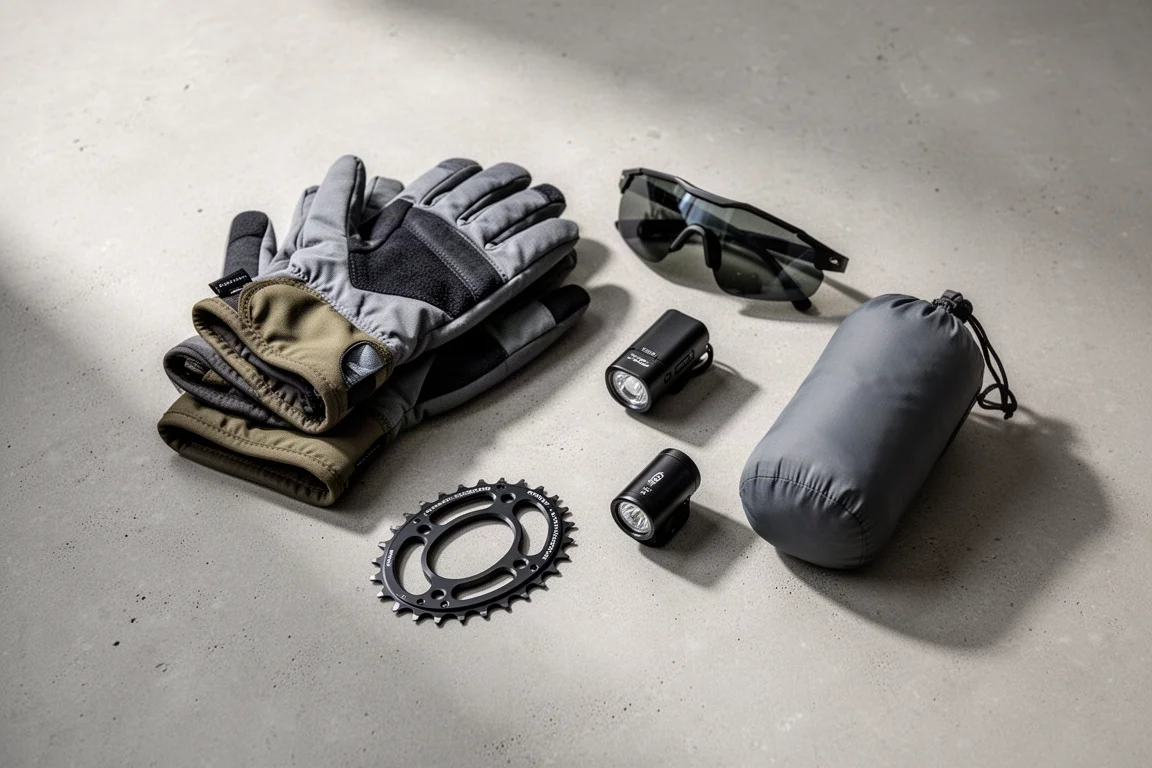
A long-distance rider's most trusted bikepacking gear, from a steel gravel frame and an oval chainring to a compact tent, a full-length sleeping mat and a helmet light.
Introduction
Bikepacking gear only earns its place after a few thousand kilometres of use. The list below comes from more than 20,000 km of loaded riding across remote routes, from desert crossings to high mountain passes, and every item has survived being packed, strapped, dropped, cleaned and repaired at the roadside.
The picks cover the whole setup: the frame itself, a drivetrain change that alters how a loaded bike climbs, a shelter and sleeping system, storage, lighting, eye protection and gloves. Most of them prioritise durability, packability and repairability over shaving the last gram, and that is deliberate.
How These Picks Were Chosen
Four things mattered more than anything else: whether a product survives being packed and transported again and again, how small it packs, whether it can be adjusted or repaired in the field, and how much it reduces daily friction on a long tour.
Sleep and shelter received extra scrutiny. A bad night’s sleep pushes riders toward hotels, and hotel nights add up far faster than the price difference between a cheap tent and a good one. Tents, mats and pillows were judged on how reliably they deliver rest rather than on paper specifications alone.
For transparency, the sunglasses in this list were supplied for a desert crossing. Everything else was bought outright, and the notes below reflect long-term use rather than a first impression.
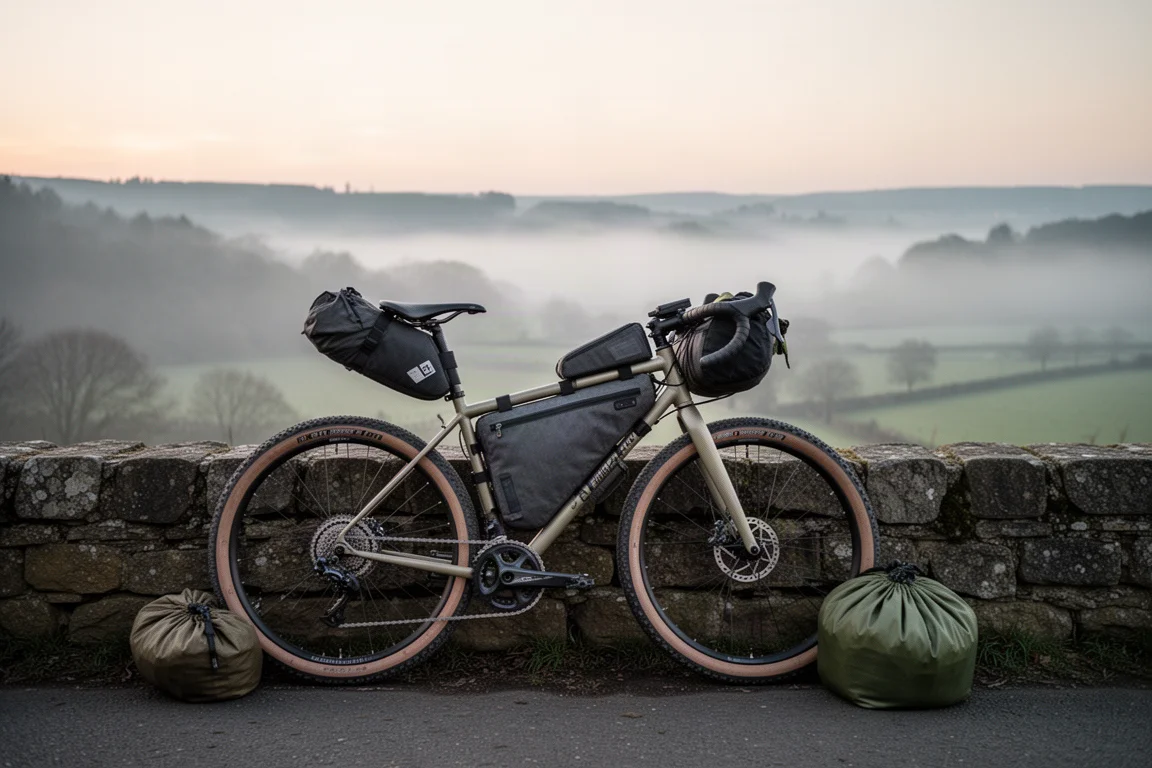
That mix of criteria also explains what is missing. There is no featherweight racing kit here, because racing kit rarely survives months of dust, ferries, bike boxes and improvised repairs. The bias is toward equipment that keeps working when the trip runs longer than planned.
Mason Exposure: A Steel Frame Built for Loaded Miles
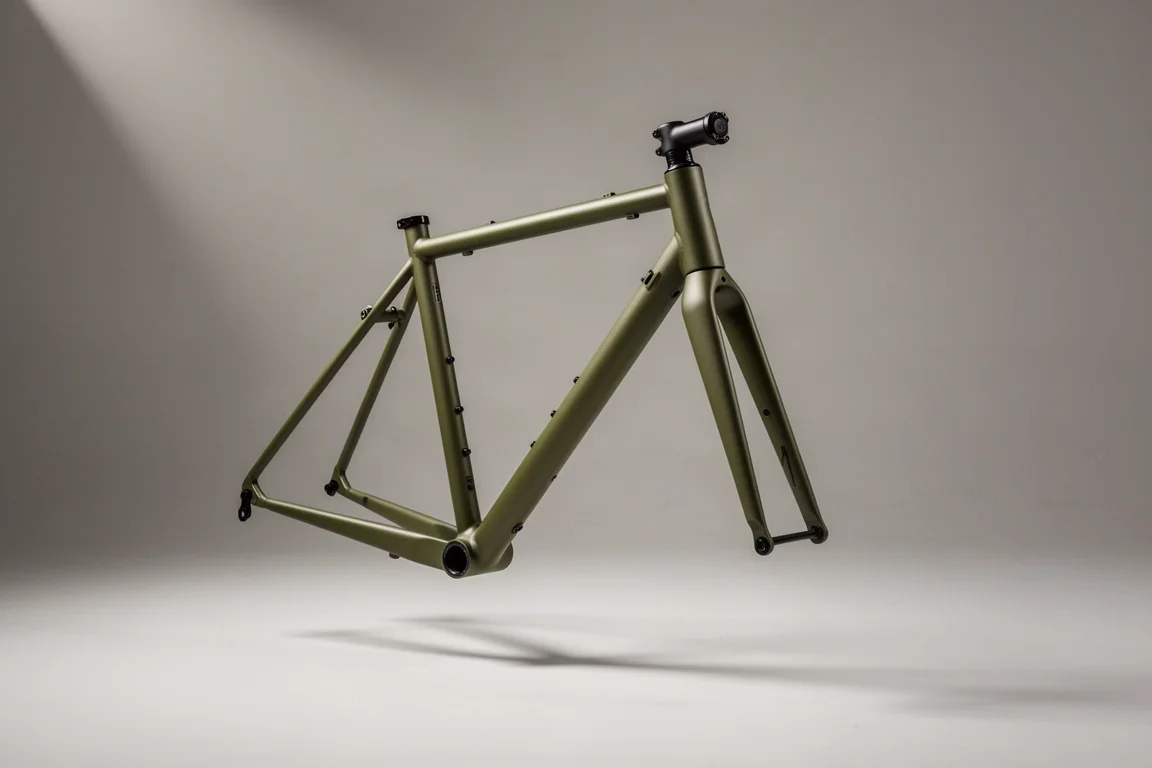
Everything starts with the frame, and this one is steel. The Mason Exposure is positioned as a fast, long-distance gravel frame, and steel is the reason it can be packed into a bike box, strapped to a rack or loaded into the back of a truck without a second thought about the integrity of the tubes.
Storage is the other argument. There are mounts almost everywhere, and the seat stay mounts are the most useful of the lot: they take a bottle, a mini pump, or anything else you want within reach without adding another bag. The seat tube and down tube mounts open up further options, including bolting a frame bag directly to the frame.
Clearance is generous. The frame takes up to 2.35 in tyres on 650b wheels and around 50 mm on 700c, and it has been run in practice with a 2.4 in mountain bike tyre up front on 650b. That is enough room for whatever surface the route throws at you.
Garbaruk Oval Chainring: Smoother Power on Loose Climbs
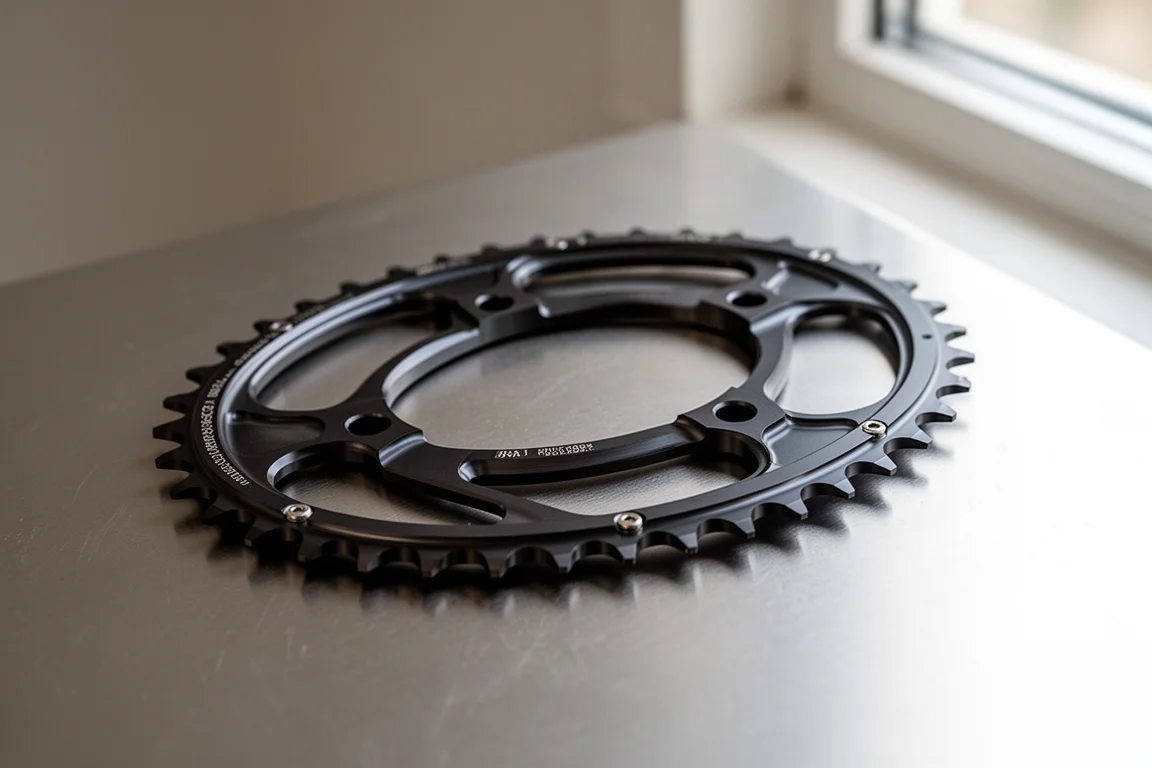
Oval chainrings divide opinion, and it is fair to call them a niche choice. What is not in doubt is that the difference is immediately noticeable if you have spent years on round rings.
The idea is that an oval ring smooths out the pedal stroke and converts effort into more consistent torque at the rear wheel. On a loaded bike that shows up in two ways: climbing feels a little easier, and the rear tyre is less likely to break traction when you stamp on the pedals on a loose surface.
The setup used here is a Garbaruk ring in a 38-tooth size on a five-bolt spider, and direct mount versions are also available. A 38-tooth oval ring gives roughly the climbing feel of a 36-tooth round ring without giving up the top end, which is a useful trade for anyone hauling weight up rough gradients.
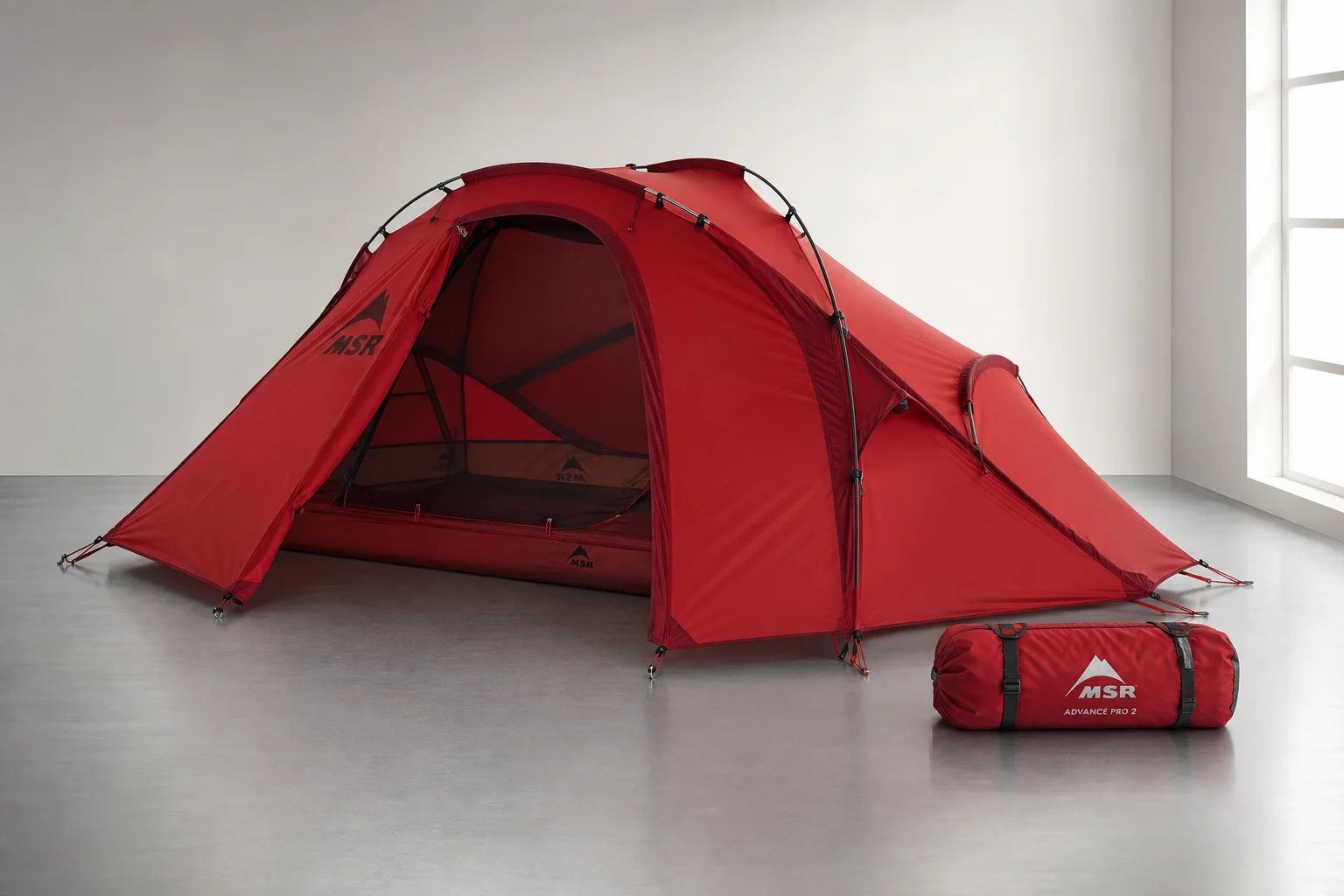
MSR Hubba Hubba NX: Small Packed, Roomy Inside
Shelter is where a lot of bikepacking budgets go wrong. The MSR Hubba Hubba NX is a two-person tent that packs small enough to disappear into a seat pack, which is why it travels on solo trips as well as paired ones.
Interior volume is the selling point. Instead of the usual tapering shape, the tent pegs out so the crossbar holds the walls in something closer to a cube. That matters for tall riders in particular, who can otherwise spend a night folded into a sleeping bag with their head pressed against wet fabric.
It is worth adding a footprint or ground sheet underneath. A sheet protects the floor from sharp rocks, adds another waterproof layer in bad weather, and provides a barrier against insects, which is not a theoretical concern when you are sleeping on warm ground.
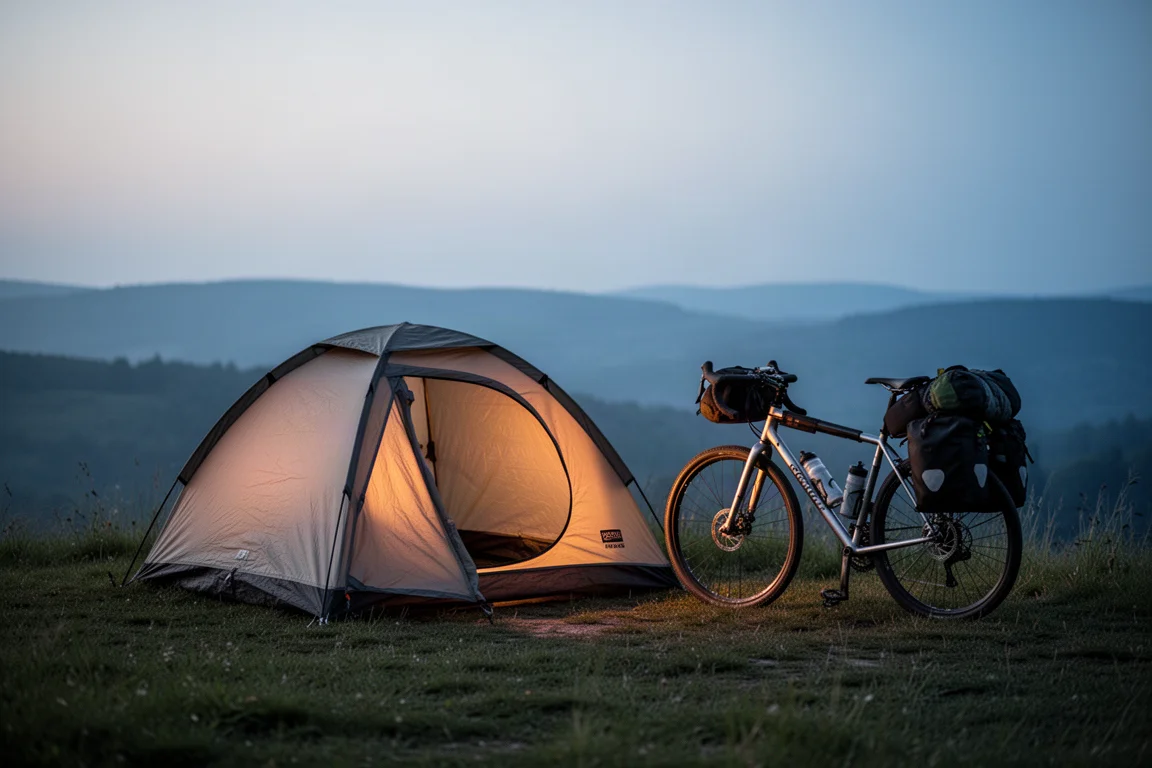
Poles are the one awkward part of the pack. They do not always fit inside a seat pack alongside the tent body, so many riders carry them strapped to the outside of the bag.
Therm-a-Rest NeoAir XTherm: Full-Length Comfort That Packs Down
Sleeping kit is the last place to save weight or money. A mat that leaves you cold or uncomfortable at two in the morning is a mat that eventually sends you to a guesthouse, and those nights quickly cost more than the difference in price.
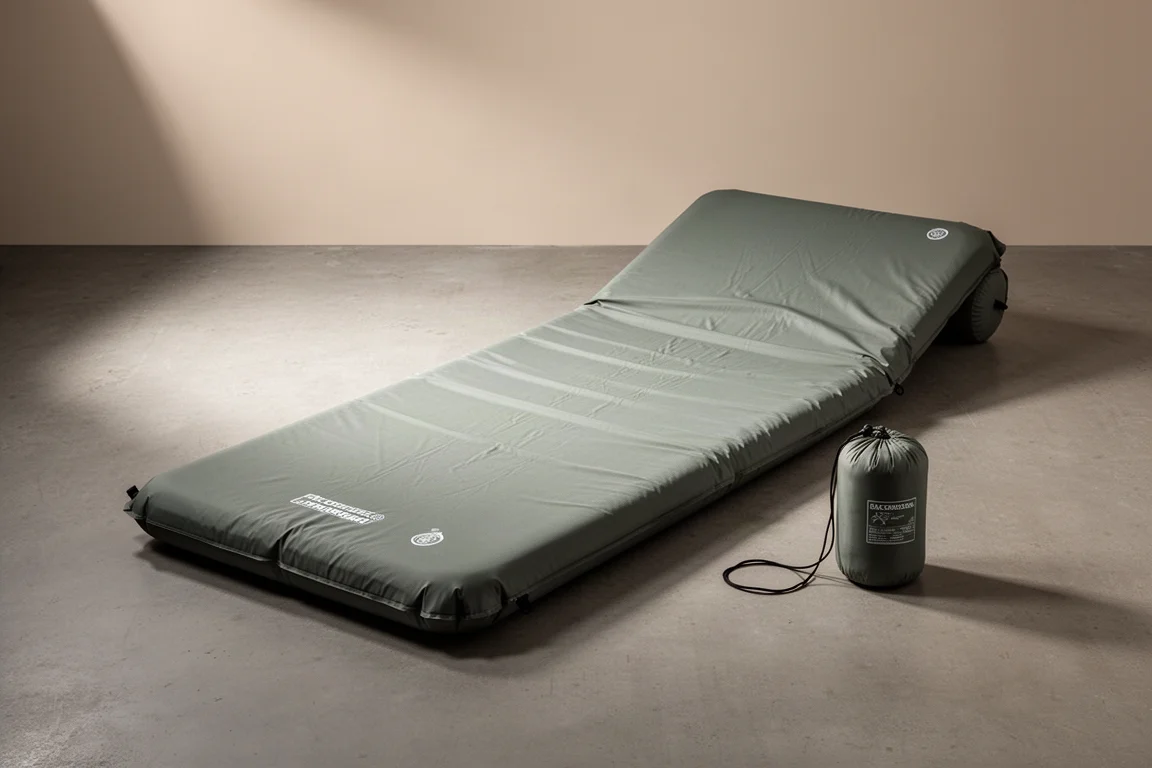
The Therm-a-Rest NeoAir XTherm is the mat used here, in a full-length, full-width rectangular version rather than a tapered mummy cut. For taller riders, the extra length and width at the shoulders and feet make a genuine difference over weeks of use, and the mat still packs down small enough to live inside the tent.
Sea to Summit Aeros Down Pillow: The Small Luxury That Pays Off
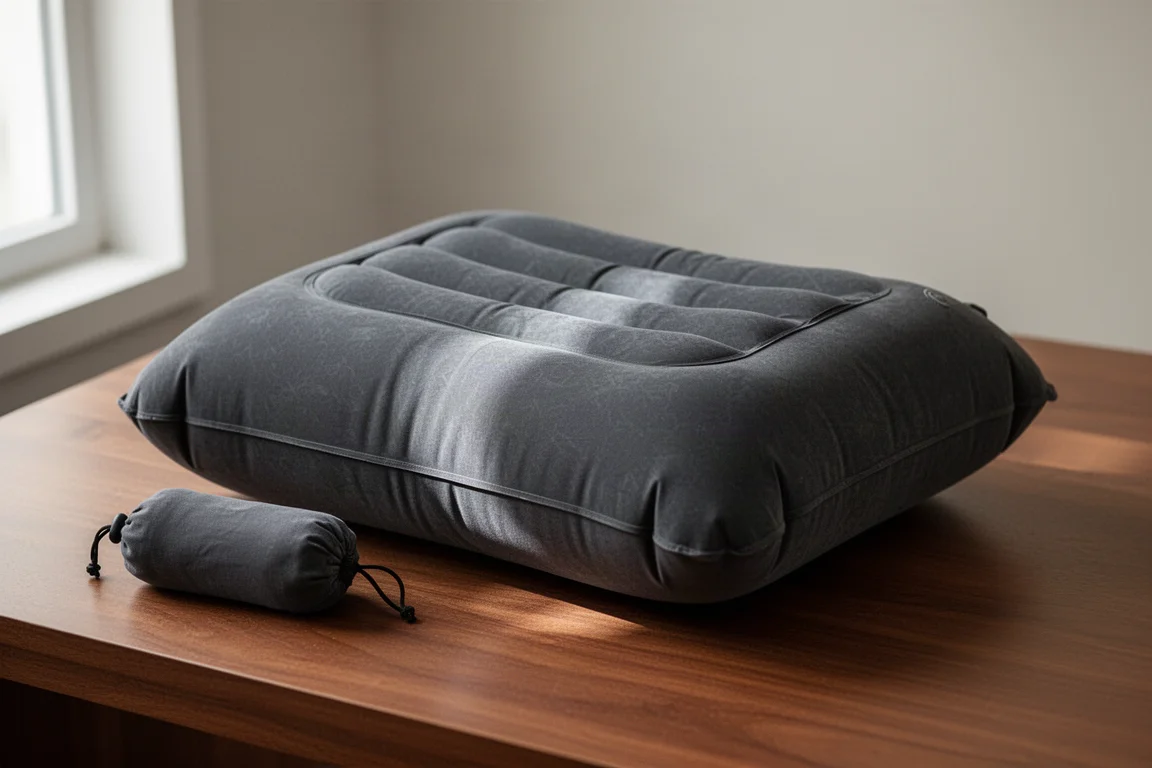
A pillow is the easiest thing to leave at home and the easiest thing to regret leaving at home. The Sea to Summit Aeros Down Pillow is an inflatable design, chosen in the large size to pair with a full-length mat.
It packs down small enough to disappear into the same bag as the rest of the sleeping kit, and it turns a sleeping mat into something closer to a bed. Combined with a good mat, it is the difference between waking up rested and waking up stiff.
Alpkit Stingray Frame Bag: Custom Fit, Real Storage
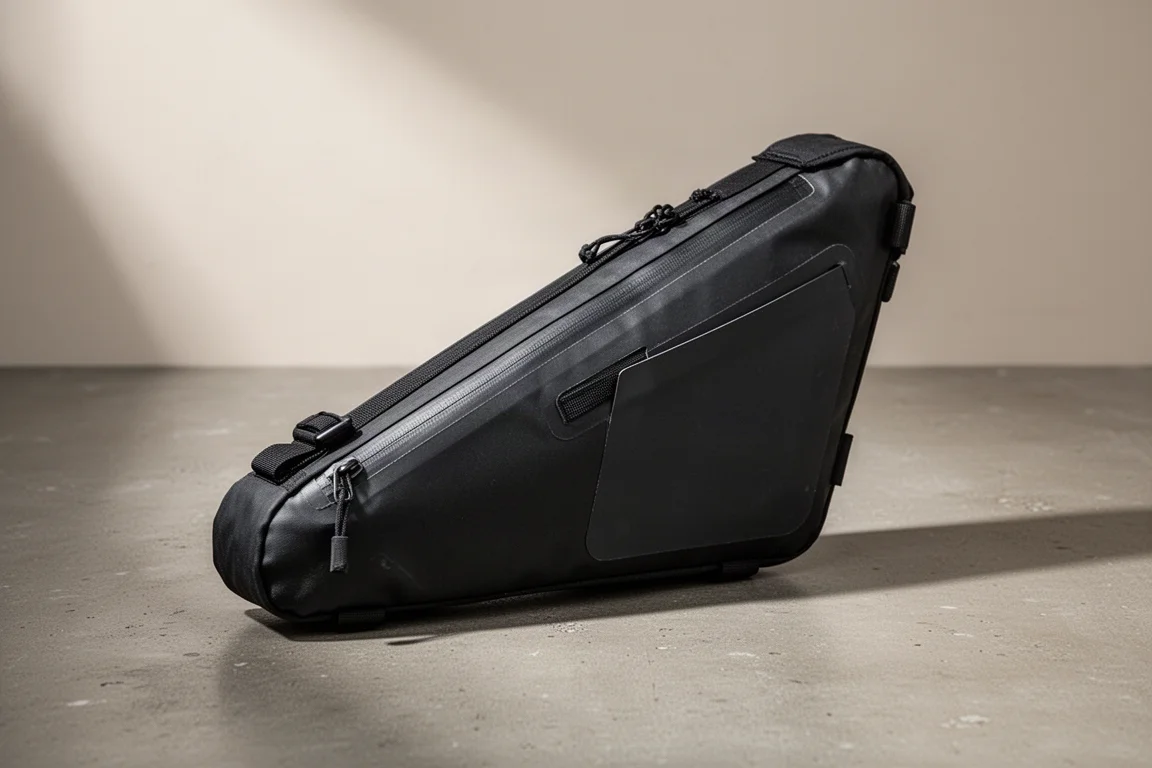
A full frame bag is the most efficient way to use the dead space in the middle of a bike, and the Alpkit Stingray is a made-to-measure option: you supply the measurements and the bag is built to fit your frame.
Getting those measurements right matters, and three details make the biggest difference. First, specify the narrowest width you can live with, because a bag that rubs your knees will drive you mad within a day. Second, ask for a zip positioned midway down the bag, which cinches the fabric in and stops it bulging outward. Third, keep the bottom of the bag well clear of the cranks and bottom bracket, because a bag that sits too low collects grit and rubs against the crank arms.
Because the bag is custom, you also choose where the straps and bolt holes go. Bolting it to the frame mounts keeps it secure, and it is even possible to bolt bottle cages inside the bag so bottles stay clean in dusty conditions. A document sleeve on the outside adds capacity for flat items.
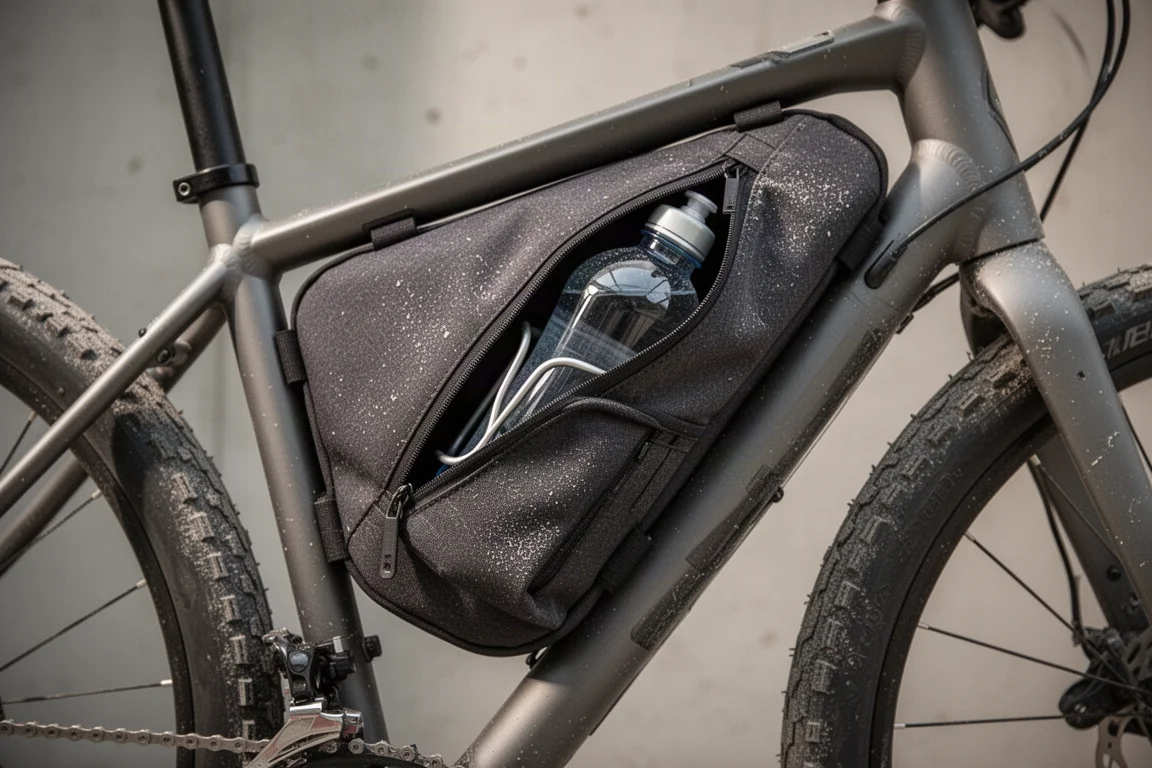
Weight distribution is the hidden benefit. Carrying the bulk of your load in the centre of the bike helps it handle closer to an unloaded bike and reduces the chance of shimmy at speed.
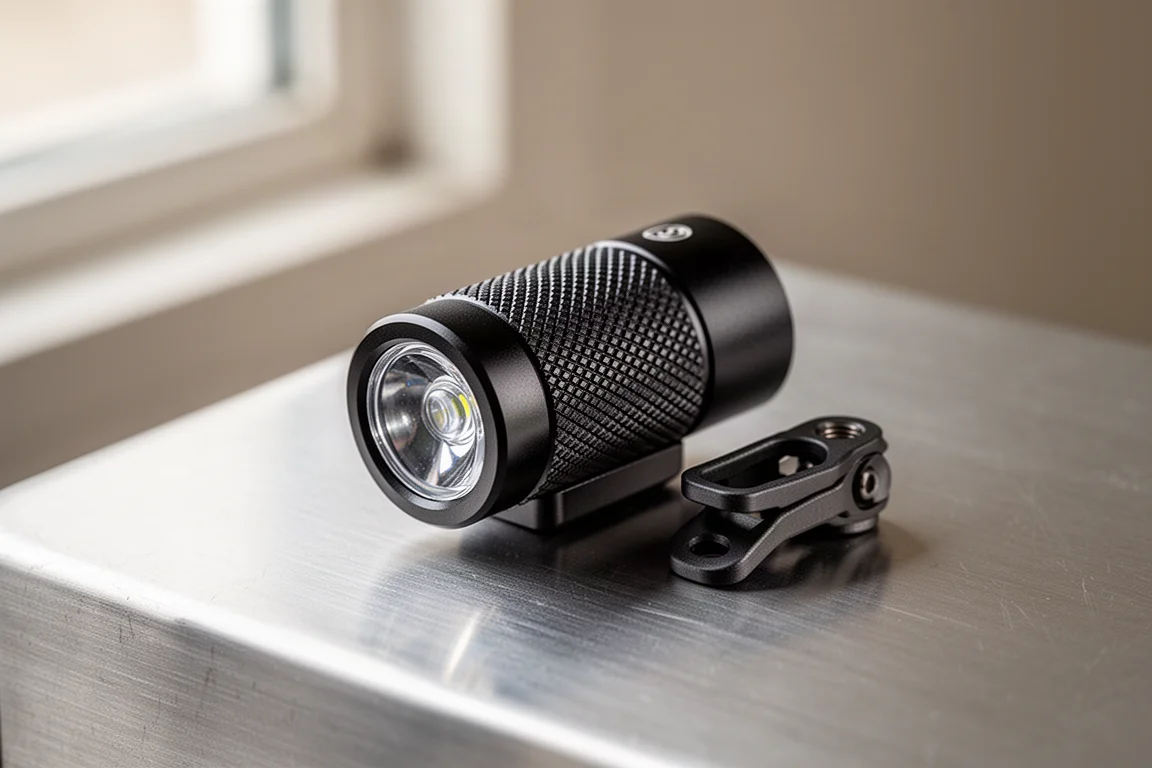
Exposure Joystick MK10: A Helmet Light That Does Double Duty
A helmet light is one of those upgrades that is hard to explain until you ride with one. The Exposure Joystick MK10 mounts on a helmet, and it also works on the bars if you would rather run a conventional setup.
Mounted on a helmet, the beam goes wherever you look. On a dark road that means you can see around a corner before the bike gets there, and it makes spotting a possible camp spot from the saddle far easier. It also removes the fumbling that comes with arriving somewhere after dark.
The second benefit arrives when you stop. Instead of holding a bike light at an awkward angle, or digging a head torch out of a bag, the light is already pointed at whatever you are working on: a repair, a mechanical, or a bag you cannot find anything in.
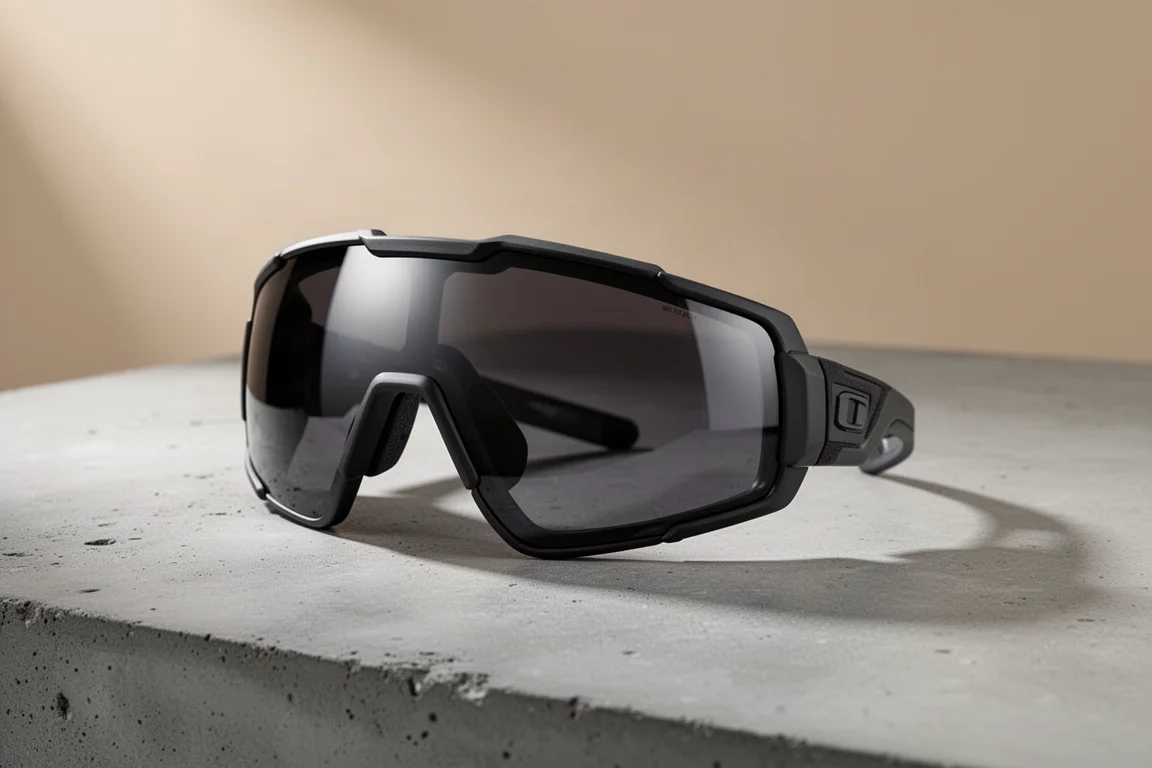
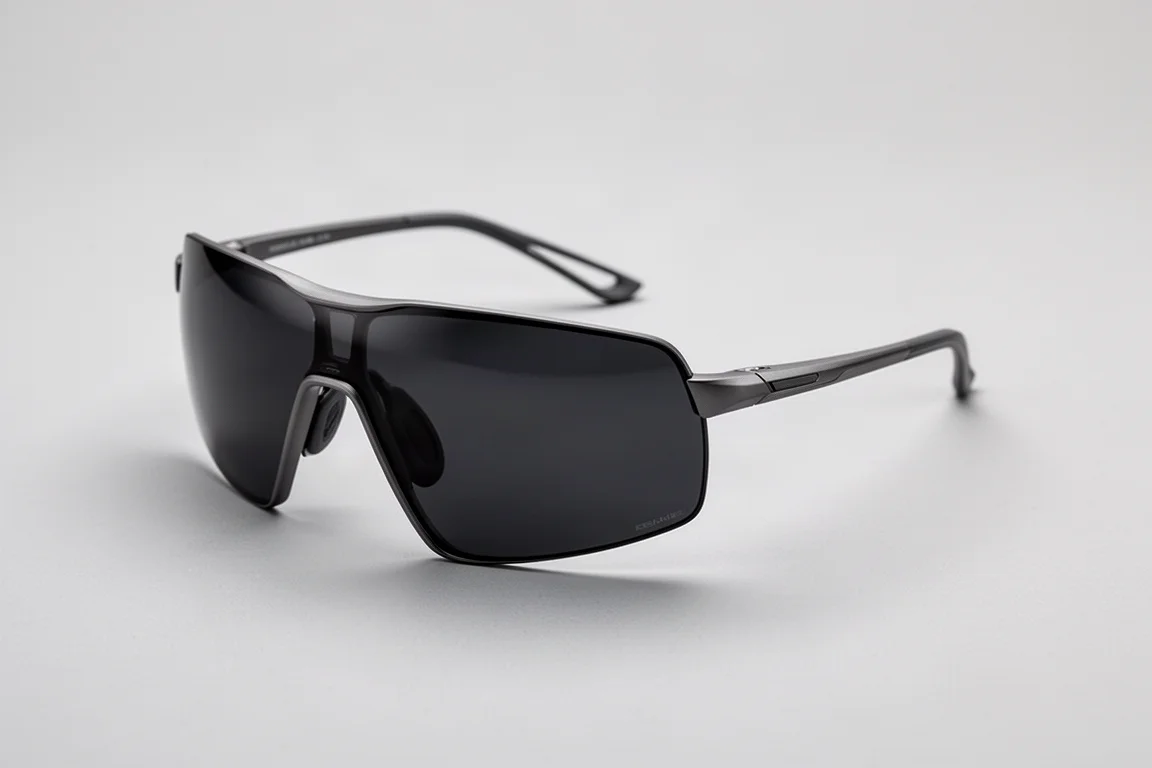
Vallon Herens: Glacier Glasses That Handle Sand
The Vallon Herens are mountaineering glasses rather than cycling glasses. They are built to cut glare at altitude and to keep snow out of your eyes, which makes them unusually well suited to desert riding as well.
In blowing sand, the wrap and the coverage keep grit out, which is the difference between riding comfortably and riding with your eyes half shut. They look unconventional on a bike and they are not the pair most riders would pick for a fast group ride, but on exposed desert and high mountain routes they do a job that ordinary sunglasses do not.
Vallon Watchtower: A Cycling-Specific Alternative
Vallon has since added a cycling-specific model, the Watchtower, and it has been the pair used on rides ever since. It is the more natural starting point if you ride mostly roads and gravel rather than crossing deserts.
The Herens remain the specialist option for sand, snow and altitude glare. Between the two, the choice comes down to where you ride most: a cycling-specific shape for everyday riding, or glacier-style coverage for extreme conditions.
Montane Prism Gloves: Instant Warmth in a Tiny Package
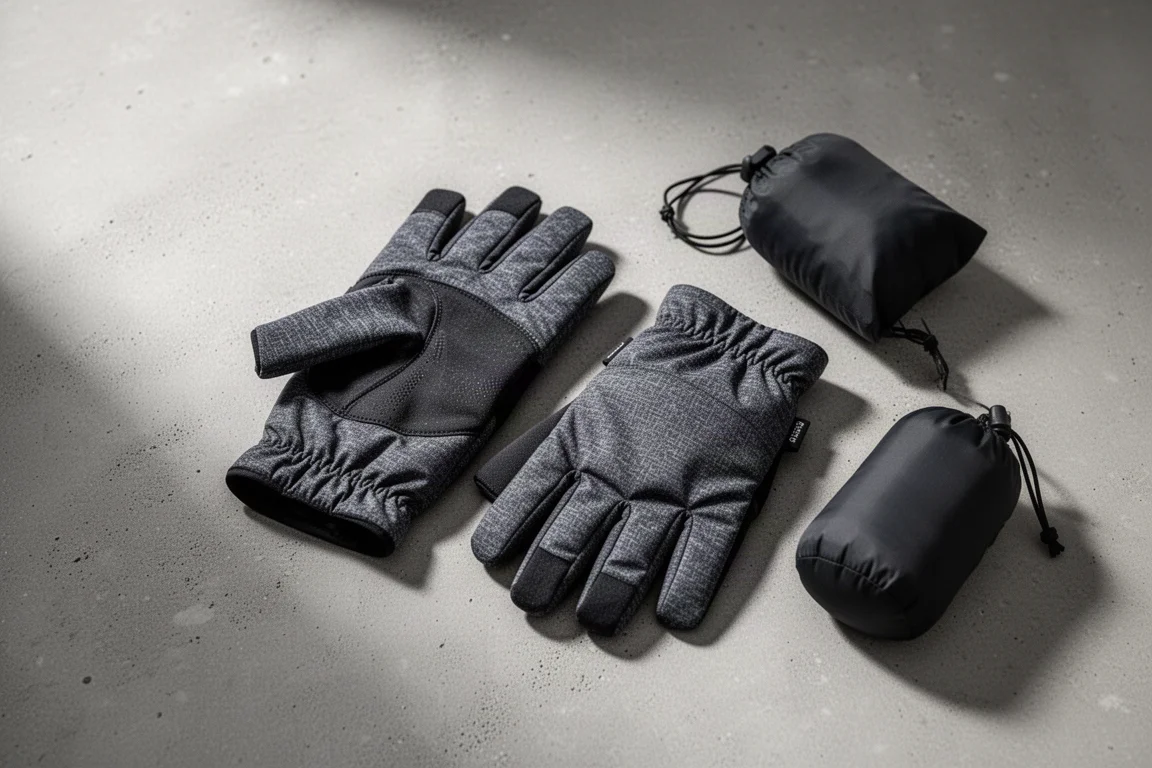
Cold hands ruin a descent, a camp setup and a morning pack-down. The Montane Prism gloves are lightweight insulated gloves that pack down extremely small and warm hands almost immediately when you pull them on.
They are the kind of item that lives at the bottom of a bag until it is needed, then becomes the most valuable thing you own for twenty minutes. On a long descent, or at a campsite once the sun drops, that instant warmth is worth far more than the weight they add.
These have become harder to find in stock, so it is worth checking availability before you plan around them. Given how much use they get, buying a spare pair while they are available is a reasonable move.
Buying Advice
The pattern across this list is simple: gear that survives repeated packing and transport beats gear that is marginally lighter. Steel frames, made-to-measure bags and durable shelters all cost a little more and weigh a little more, and all of them reduce the number of things that go wrong on a long trip.
Spend your budget in order of impact. Shelter and sleep come first, because a bad night’s sleep changes your plans and your spending. Storage and weight distribution come next, because a bike that handles well when loaded is a bike you will ride further. Lighting and visibility follow, especially if your routes mix quiet lanes with fast traffic, and small comfort items such as gloves and a pillow round things out.
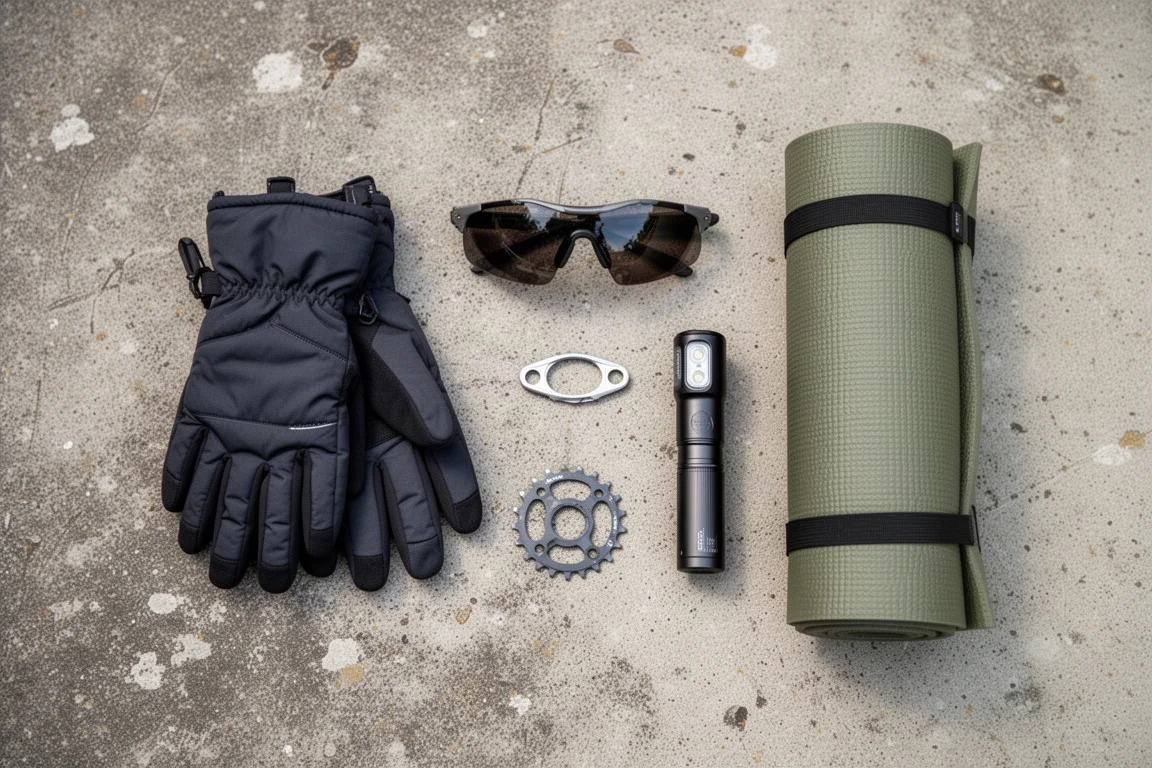
Finally, check that the gear fits you and your bike rather than the other way around. Tyre clearance, frame bag width, mat length and helmet light mounts are the details that decide whether a purchase works in practice, and they are worth measuring before you order.
Conclusion
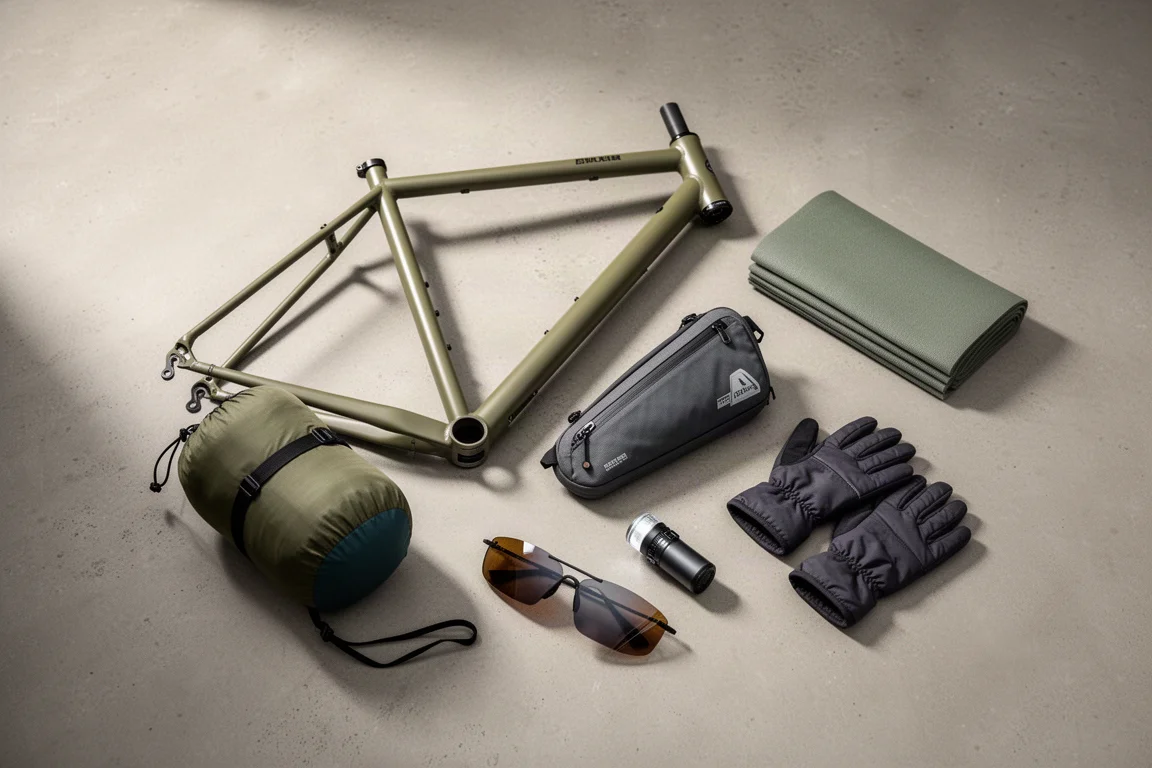
Nothing on this list is exotic for its own sake. A steel frame, an oval chainring, a compact tent, a full-length mat, a custom frame bag, a helmet light, two pairs of sunglasses and a pair of packable gloves all do a specific job, and they do it over thousands of kilometres rather than one good weekend. If you are building a bike for long distances, these are the kinds of choices that hold up.
Further reading
Related Reviews
Bikepacking Gear
11 Bikepacking Essentials for Long-Distance Cycling
Eleven bikepacking essentials for long-distance cycling, from a steel gravel frame and a two-person tent to helmet lights, packable gloves, and a frame bag that puts weight in the right place.
Bikepacking Gear
Best Bikepacking Gear 2026: 11 Essentials Worth Carrying
A practical look at bikepacking kit that earned its place on long rides, from a solar bike computer and basket packing to bar bags, bivvies and gravel shoes.
Bikepacking Gear
Best Bikepacking Gear: 10 Field-Tested Picks for Long-Distance Rides
Ten bikepacking products that earn their place on long rides, from a steel gravel frame to packable gloves, with the strengths and trade-offs worth knowing.