Bikepacking Gear
Bikepacking Essentials: Four Must-Have Products for Ultra Cycling
A practical look at four bikepacking essentials: satellite messaging, water filtration, waterproof top tube storage and a compact chain tool.
Introduction
Ultra-distance bikepacking rewards riders who carry less, not more. The kit that survives these events tends to be small, dependable and chosen after a lot of failed experiments. The four products below come from the personal kit list of an ultra cyclist with years of racing behind him, including a ride across Australia, three finishes at Badlands and a top-10 result at a national 24-hour time trial.
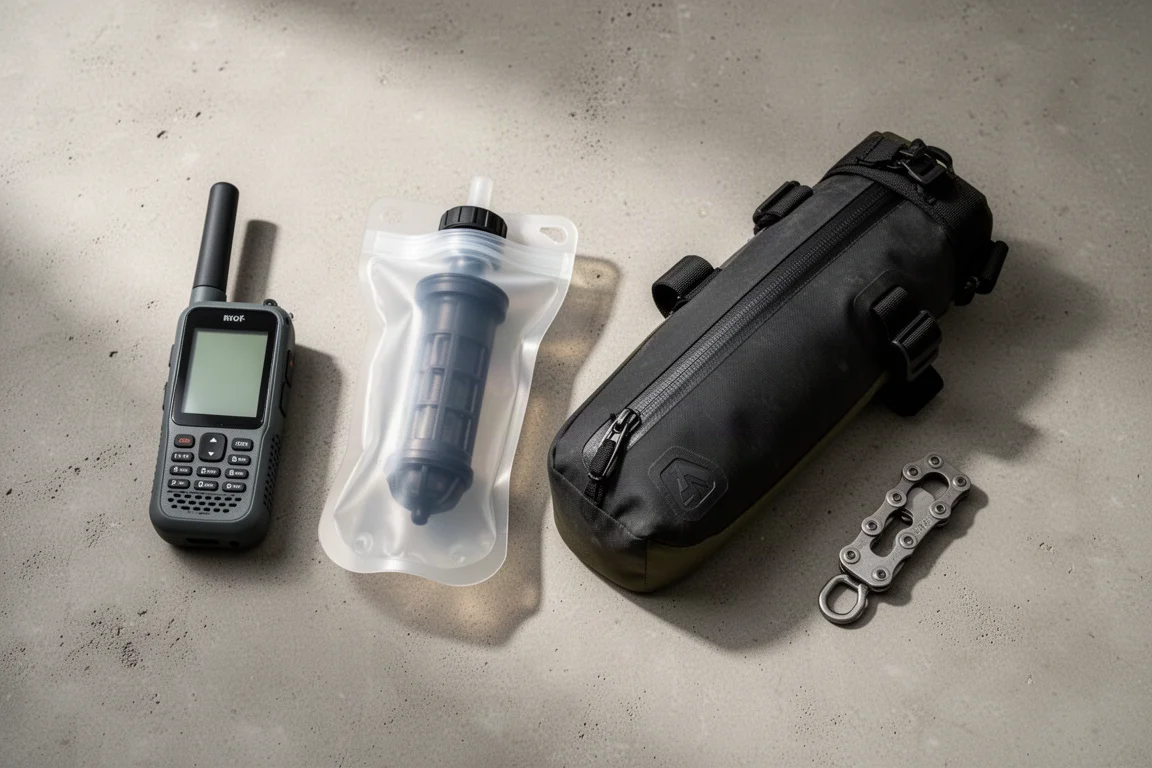
Each one answers a specific problem that can end a ride: staying in contact when there is no phone signal, finding safe drinking water in remote terrain, keeping food secure and dry on the frame, and repairing a snapped chain at the roadside.
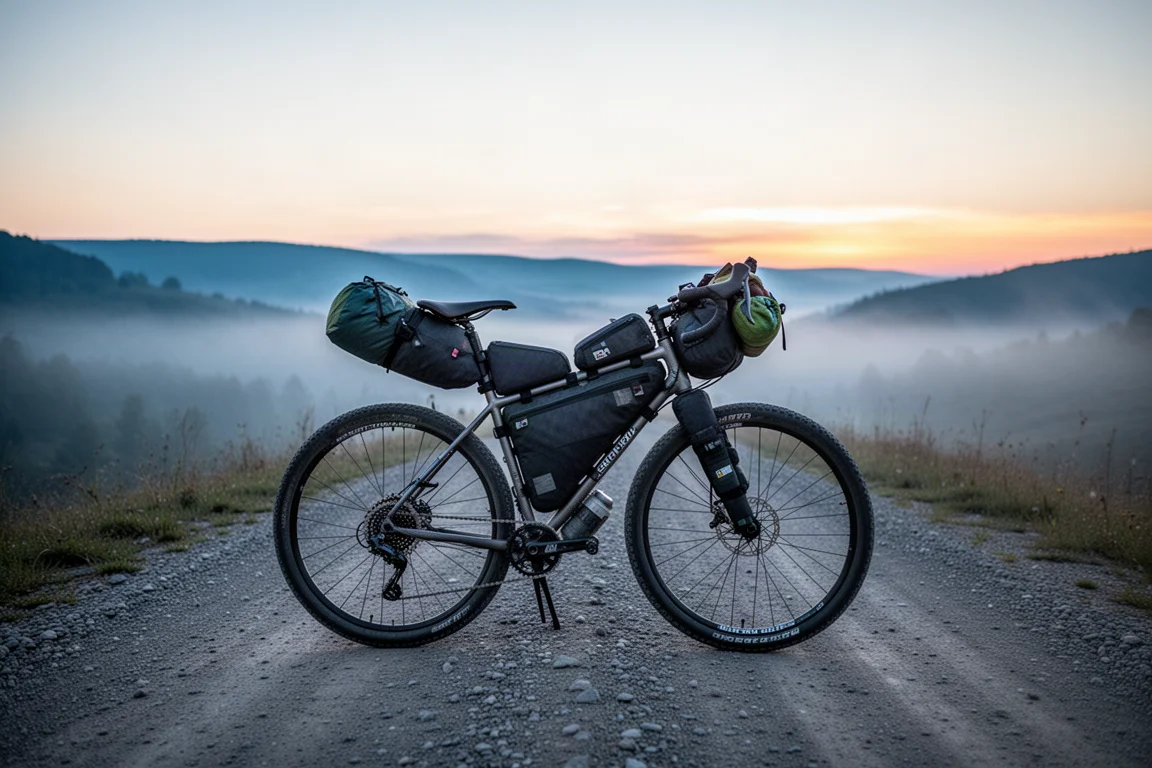
Taken together, they cover the situations that tend to go wrong far from help. What follows is a look at what each product does well, who it suits, and what is worth weighing up before you buy.
How These Picks Were Chosen
The selection here is deliberately narrow. Every product had to earn its place through repeated use in long events rather than through a specification sheet. Three questions shaped the list.
- Does it solve a problem that can end a ride? Water, communication and mechanical failures all qualify.
- Does it keep working after years of use? Durability matters more than a marginal weight saving.
- Does it fit on a bike without rubbing, rattling or adding bulk?
Where a product carries a trade-off, that trade-off is noted in its own section rather than glossed over.
Garmin inReach Mini 2: Satellite Messaging Beyond Cell Coverage
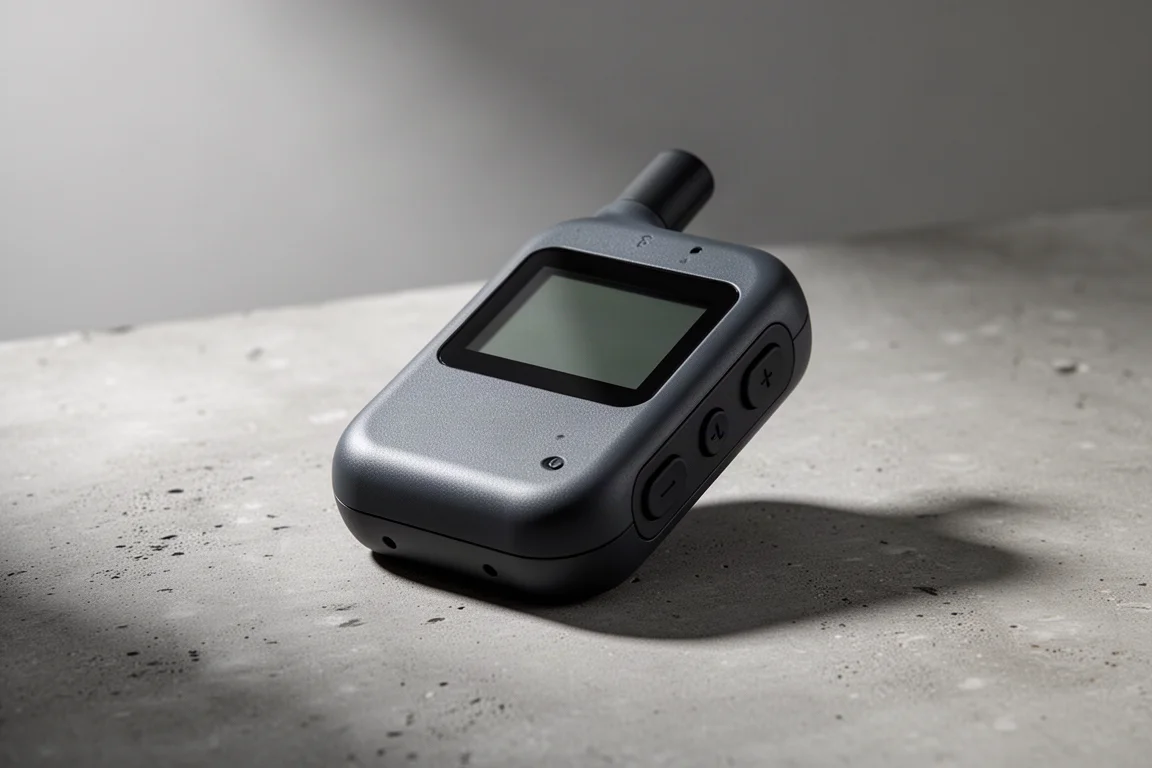
The Garmin inReach Mini 2 lets you communicate with people when you have no phone reception, which happens surprisingly often in remote events. It is small and compact, and its battery lasts a long time between charges.
The device keeps you in touch with family and friends, allows them to track your position, and supports messaging through an app that connects via your phone. For anyone heading into areas with no coverage, that combination is the difference between being able to call for help and simply waiting.
A practical mounting trick is to fit a stick-on Garmin mount so the unit sits on the stem using a standard Garmin computer mount. Mounted that way, the antenna keeps a clear line to satellites instead of sitting buried in a pocket or bag.
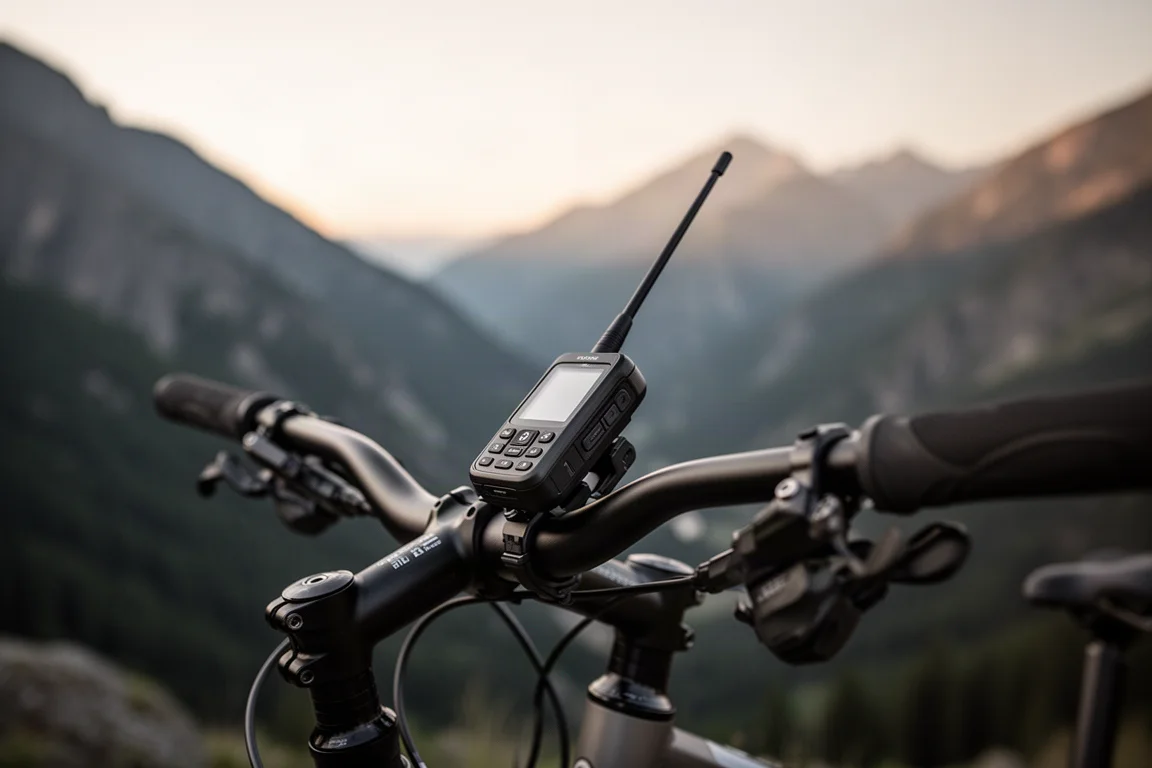
It is worth thinking of this as peace of mind rather than a gadget. If something goes wrong far from a road or a town, a satellite communicator is what turns a serious situation into a manageable one.
Sawyer Water Filtration System: Drinking Water Anywhere
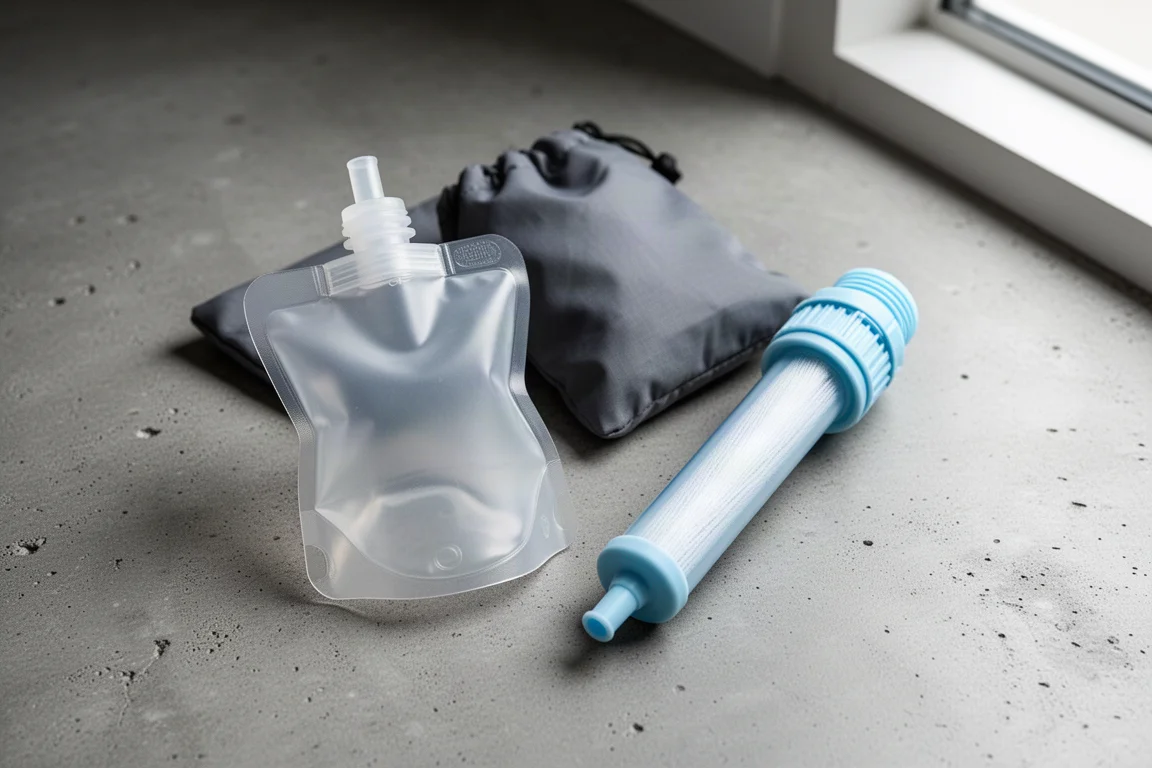
A squeeze filter such as the Sawyer water filtration system changes what you can do when your bottles run dry. You fill the pouch with water from a river, a puddle, a stream or a lake, screw the filter on, and then either drink straight through it or squeeze the water into a bottle or a hydration bladder.
Running out of water happens in far more situations than most riders plan for. On a long ride through a remote area in the middle of the night, a filter turns a water source from a problem into an opportunity. Because the whole system packs down small, it takes up almost no room in a frame bag or jersey pocket.
Hydration is usually where trouble starts on a long ride. Carrying a filter is a simple way to keep topping up rather than rationing what is left in your bottles.
Tailfin Top Tube Bag: Waterproof Storage Within Reach
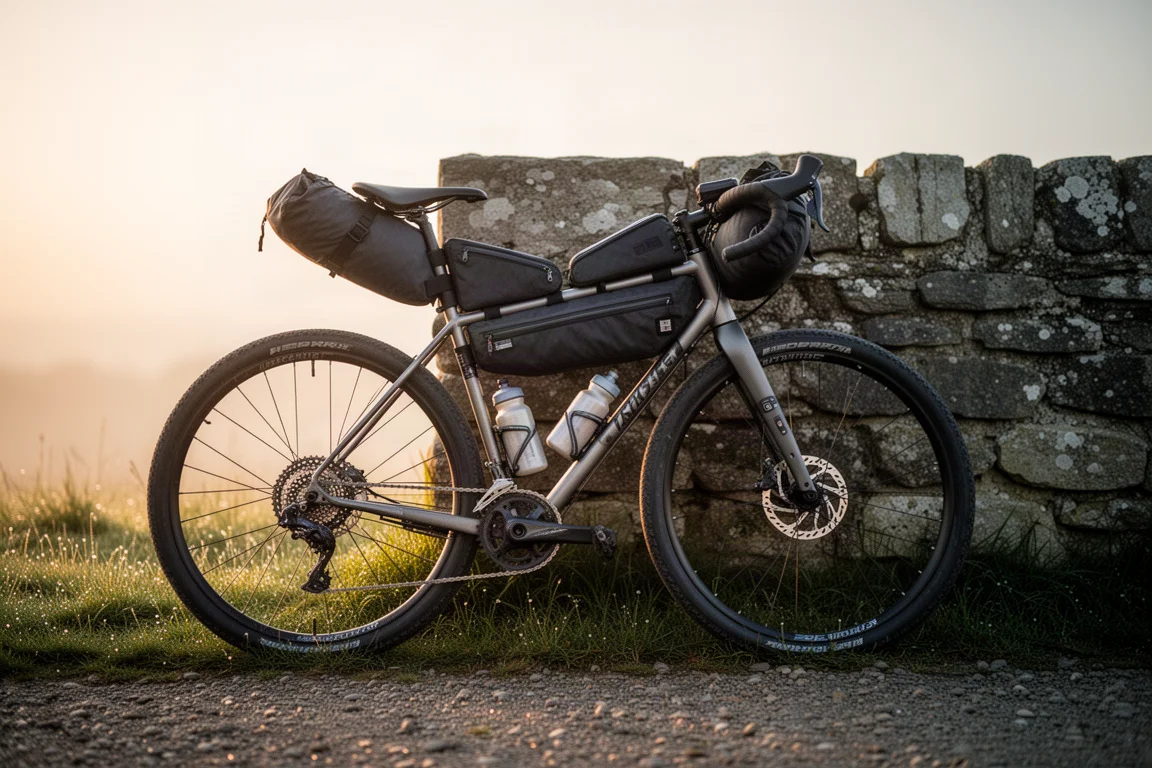
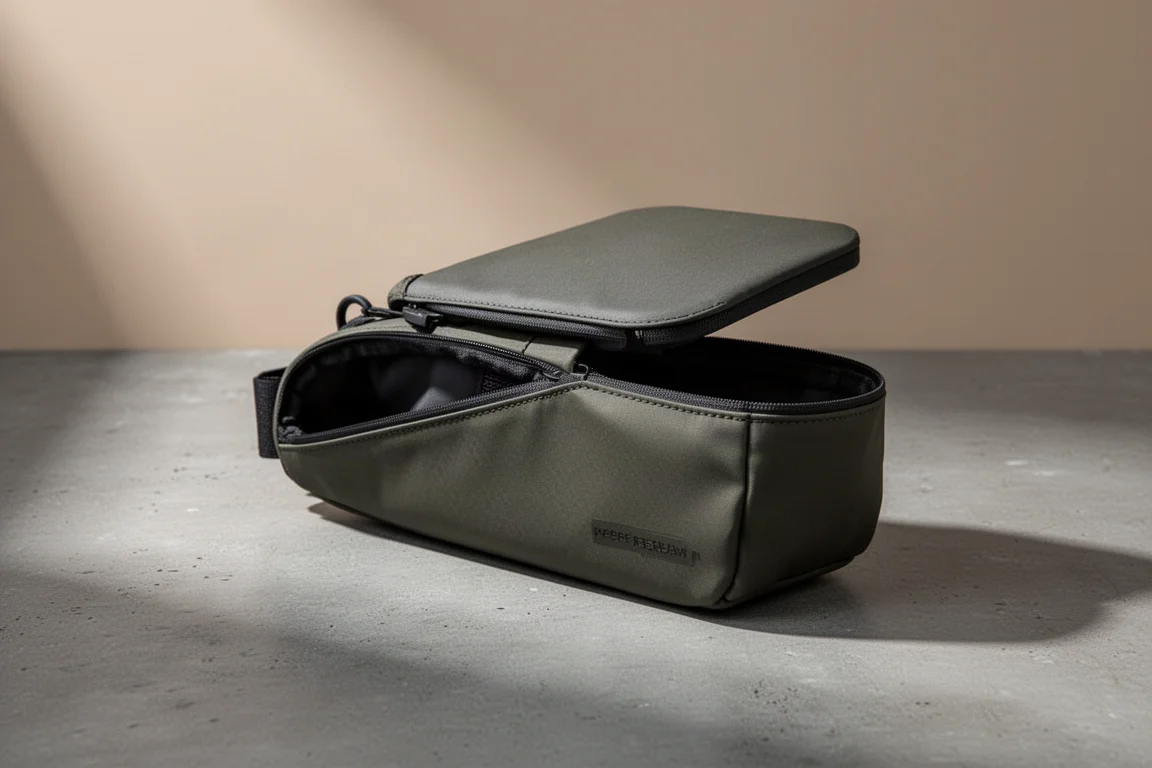
A top tube bag is one of the most useful places on a bikepacking bike to keep snacks, and it doubles as a spot to charge devices from while you ride. The Tailfin Top Tube Bag is waterproof, which matters as soon as the weather turns.
Its mounting system uses straps with rubber feet at the bottom so the bag does not damage the frame, and it can be bolted on as well. The shape is tapered, which keeps it from rubbing against your legs. That detail is easy to overlook until you have ridden with a bag that does rub, because many other top tube bags catch on the sides of your thighs over a long day.
Tailfin develops and tests its range thoroughly before release, and this recommendation comes with context worth knowing: the rider who rates this bag is part of the brand’s research and development programme and is sponsored by Tailfin. He has used Tailfin products for around five years, beginning with a bag he bought himself before any relationship with the brand existed.
Wolf Tooth Chain Tool: Roadside Chain Repair
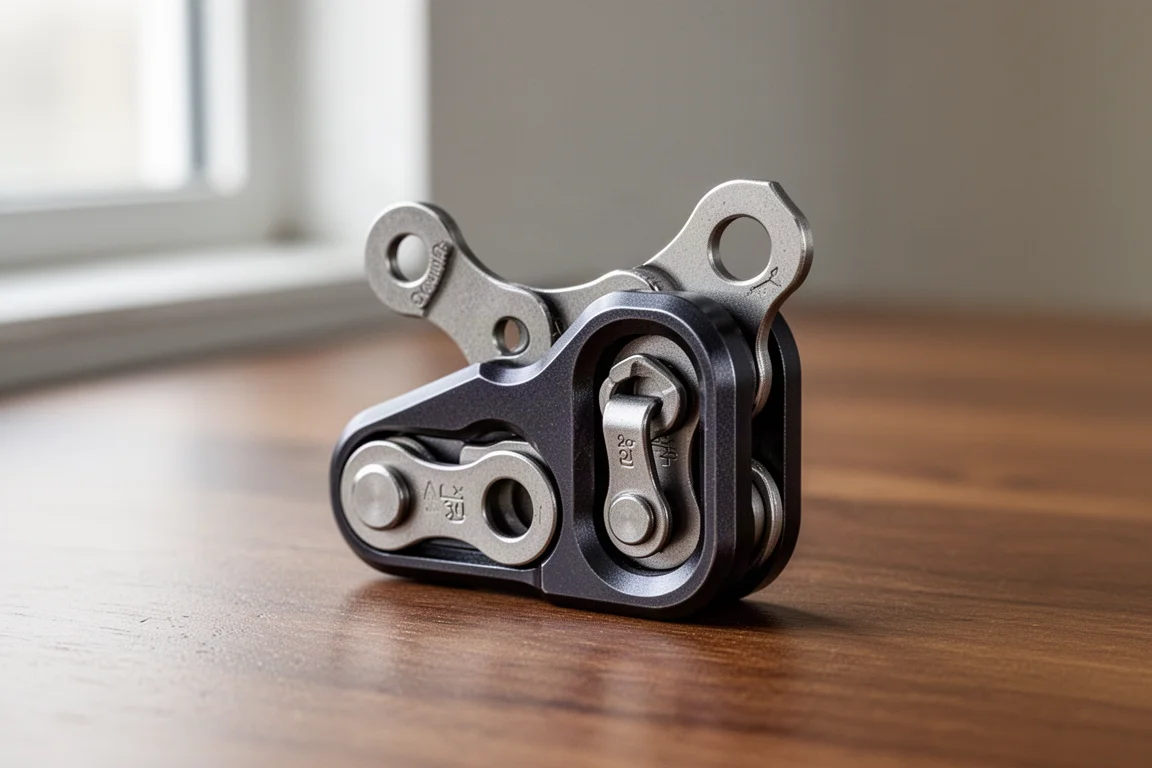
A snapped chain can end a ride in a single moment. The Wolf Tooth chain tool is a compact way to open and close a chain, and it holds quick links magnetically in place so they do not disappear into the grass at the side of the road.
It is small enough to live permanently in a frame bag or tool roll, and this one has been in use for around four years. The brand designs its tools so that if a part breaks it can be repaired or replaced rather than thrown away, which is a sensible approach for anything that travels with you.
The first time this tool proved its worth was on a training ride when a chain snapped. A more experienced rider produced it and rejoined the chain quickly, and that is exactly the scenario it is built for: a repair you can complete calmly at the roadside.
Buying Advice: Matching Gear to Your Riding
Start with the risks that stop a ride, then spend what is left on comfort. Communication and water come first for anyone riding remote terrain, because both are hard to improvise once you are out there. Storage and tools come next, and they are easier to choose once you know how much you need to carry.
A complete bikepacking kit usually covers more ground than these four items. An emergency bivvy bag, dynamo or high-output lighting, a hydration vest, a durable power bank, a mini track pump with a pressure gauge and photochromatic lenses all appear on the same list, and each one solves a different problem.
Two details are worth checking before you buy. If you plan to use a hydration vest on the bike, choose one designed for cycling rather than running, because running-focused vests do not sit well in a cycling position. And if a dynamo hub is not for you, carry a spare set of lights with long battery life instead: a dynamo setup keeps lights running day and night for visibility, while a separate high-output light is useful when the trails or roads get rough.
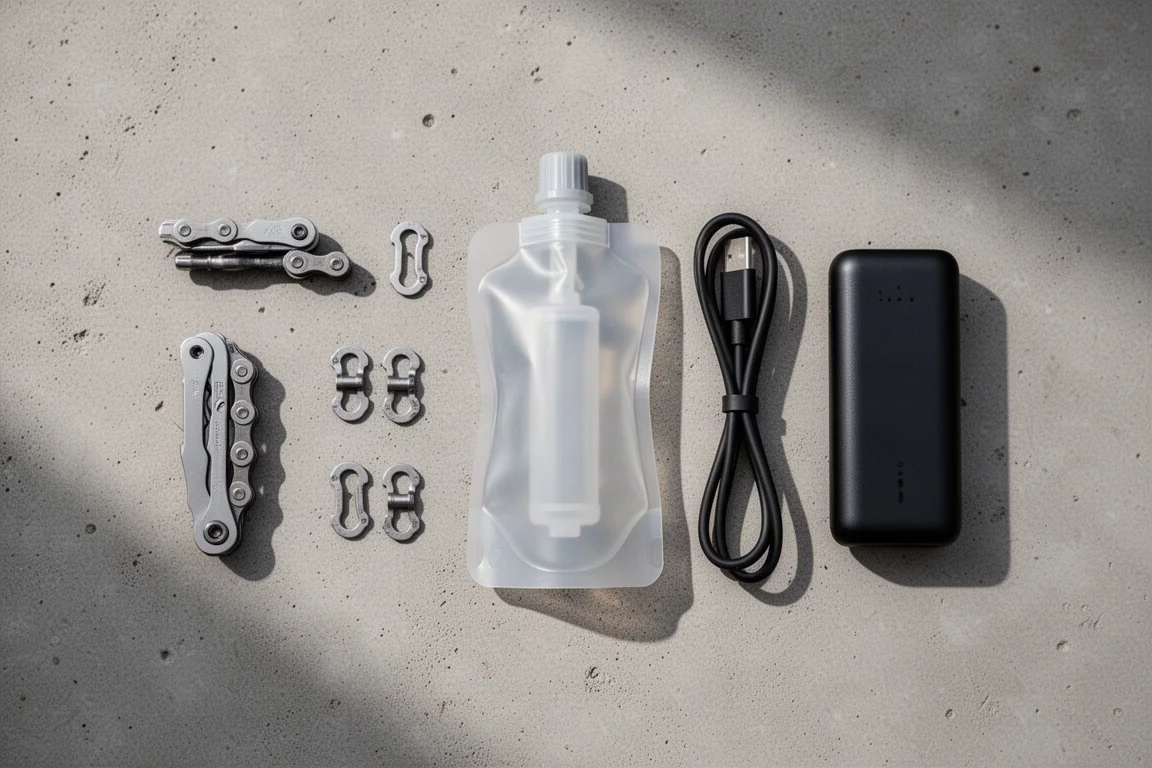
Whichever way you build your kit, the pattern stays the same. Cover the problems that end rides first, then use whatever budget and weight remain to make the long hours more comfortable.
Conclusion
These four products earn their place because each one removes a specific risk rather than adding convenience for its own sake. A satellite communicator keeps help within reach when there is no signal, a water filter keeps you hydrated from whatever source you find, a well-shaped top tube bag keeps food and charging within easy reach, and a compact chain tool turns a ride-ending failure into a five-minute stop. If your riding takes you far from towns and phone coverage, that combination is a sensible place to start.
Further reading
Related Reviews
Bikepacking Gear
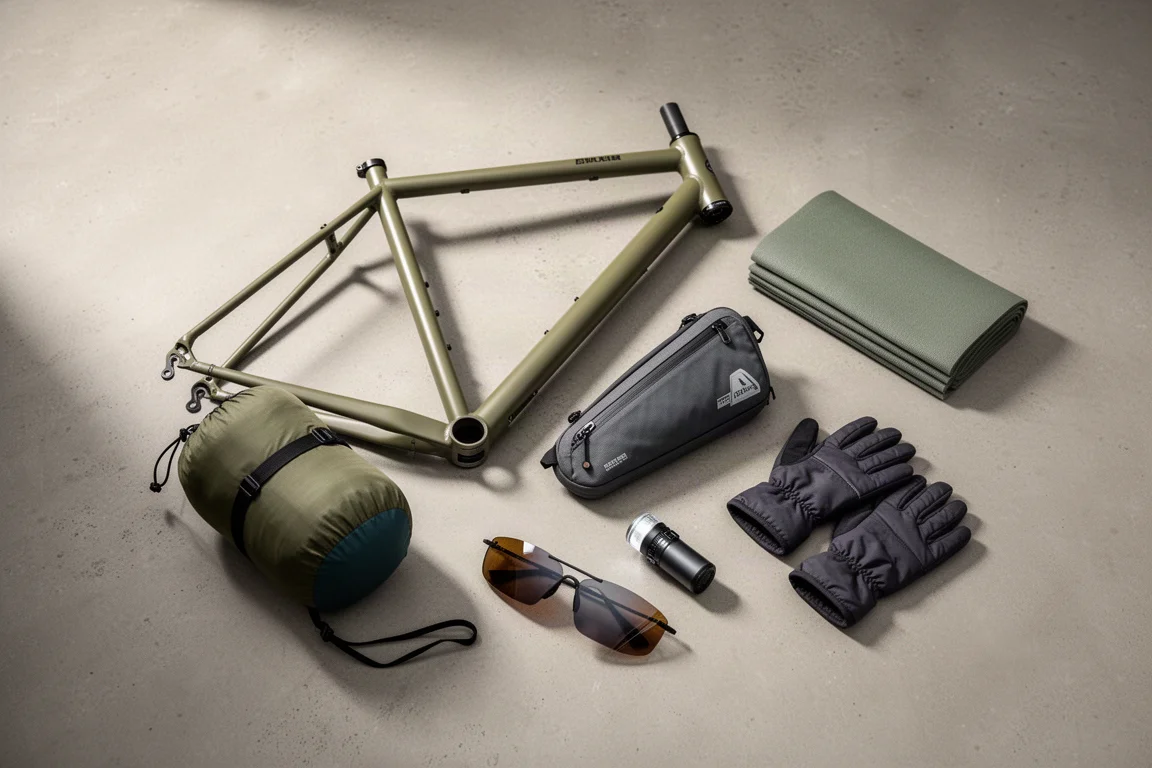
11 Bikepacking Essentials for Long-Distance Cycling
Eleven bikepacking essentials for long-distance cycling, from a steel gravel frame and a two-person tent to helmet lights, packable gloves, and a frame bag that puts weight in the right place.
Bikepacking Gear
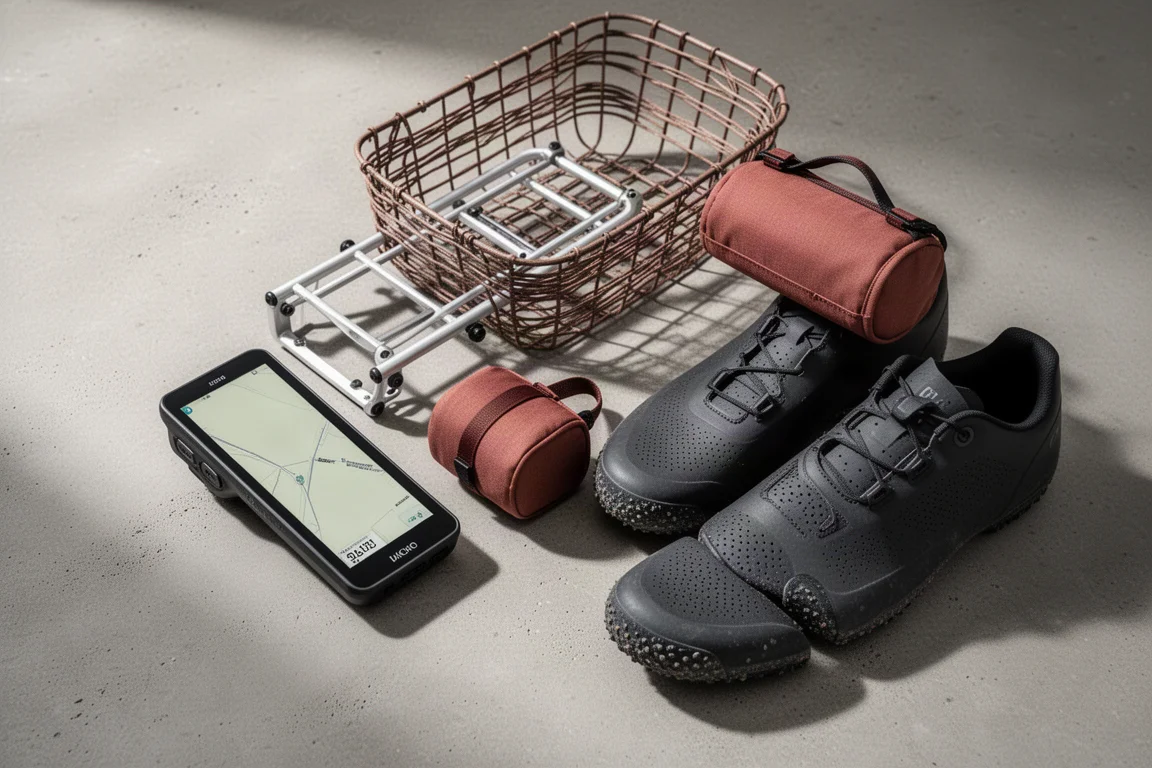
Best Bikepacking Gear 2026: 11 Essentials Worth Carrying
A practical look at bikepacking kit that earned its place on long rides, from a solar bike computer and basket packing to bar bags, bivvies and gravel shoes.
Bikepacking Gear
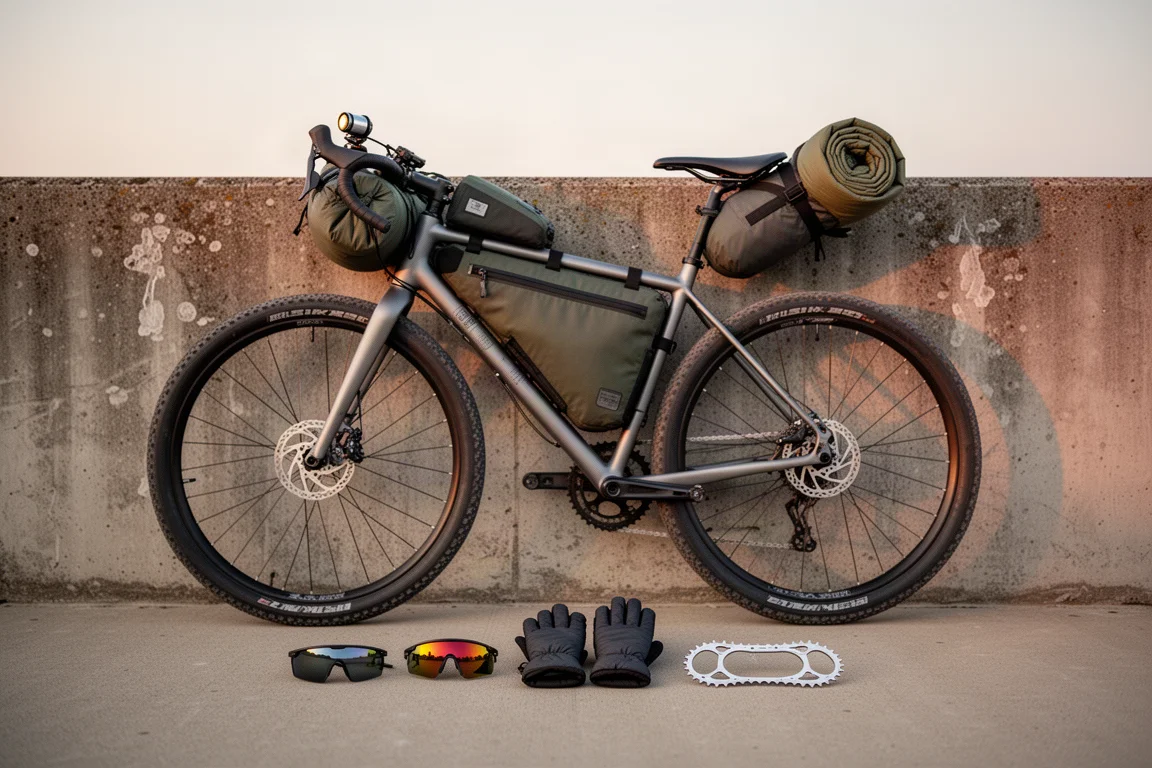
Best Bikepacking Gear: 10 Field-Tested Picks for Long-Distance Rides
Ten bikepacking products that earn their place on long rides, from a steel gravel frame to packable gloves, with the strengths and trade-offs worth knowing.