Bikepacking Gear
Bikepacking Essentials: A 22L Pannier and Padded Gloves for Your First Loaded Trip
A compact 22 L pannier and a pair of padded gloves solve two of the biggest problems on a first loaded bikepacking trip: how the bike carries weight, and how your hands cope with long days.
Introduction
Planning a first bikepacking trip usually starts with the same question: how much can I carry? Riders who have spent years on loaded tours tend to answer it the other way round. Carry less, pack it better, and choose the few pieces of kit that keep you comfortable on day four as well as day one.
Two items come up again and again in that conversation. A compact, hard-wearing pannier that discourages overpacking, and a pair of padded gloves that keeps your hands working when the days get long.
What Matters Most on a First Loaded Trip
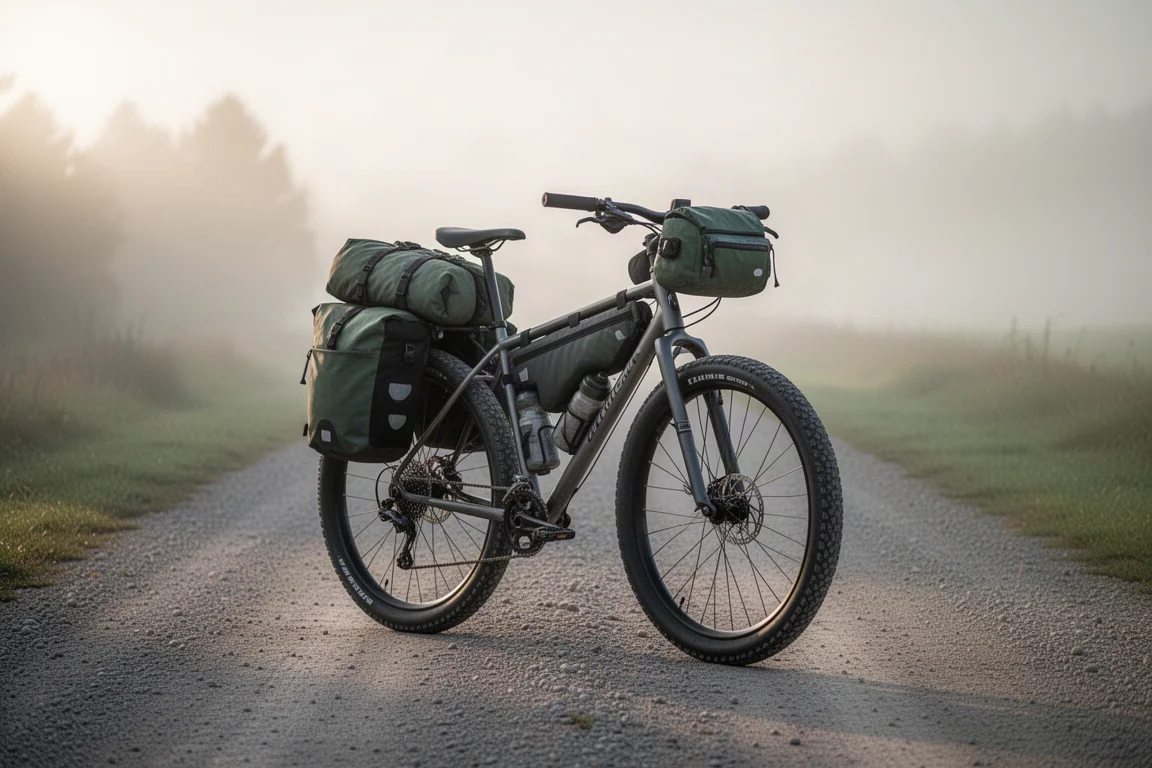
Weight is the obvious factor, but it is not the only one. A loaded bike also has to be balanced. The aim is to keep the heaviest items low and as close to the centre of the bike as possible, and to avoid piling everything onto the rear.
That rear-biased setup has consequences. A back-heavy bike is harder work on steep climbs, and it can introduce the wobble or shimmy that makes descents feel unpredictable. It also puts stress through parts that were never designed to carry that much load, which raises the risk of a cracked rim, a buckled wheel, or a bent rack.
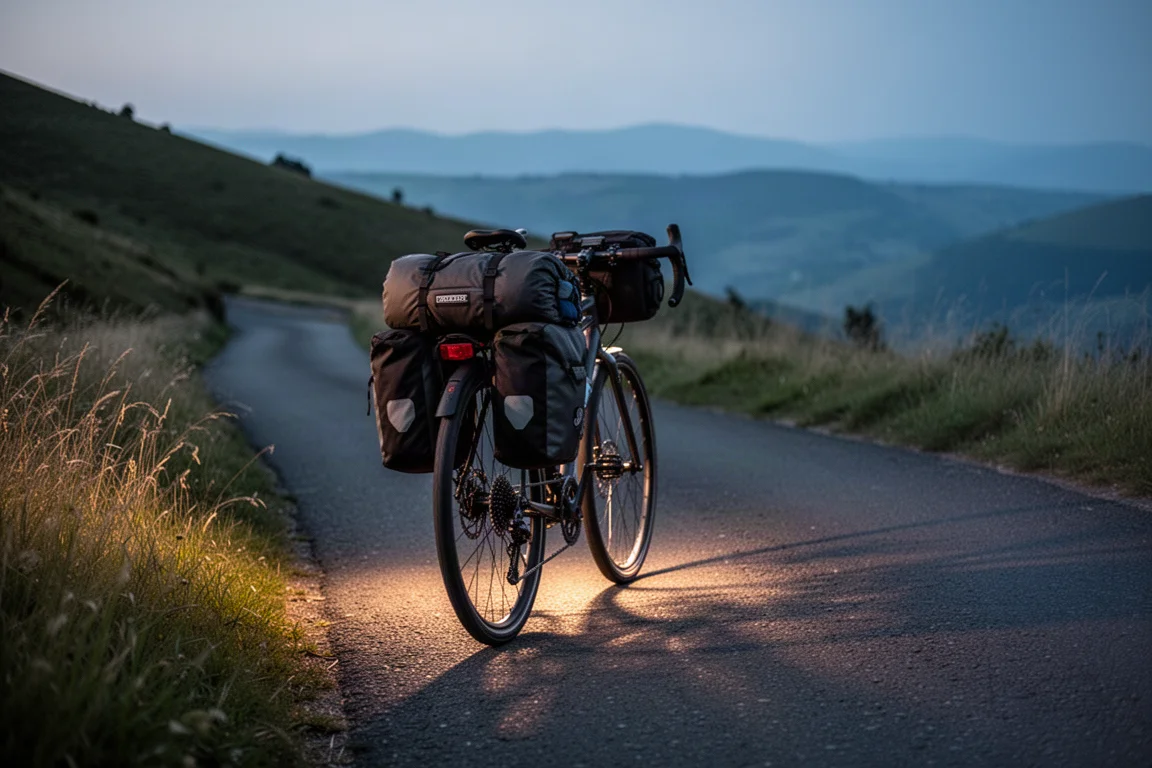
Organization matters just as much as weight. Smaller bags mean you know where everything is, and you are not unpacking half your kit to find a sleeping bag at the end of a long day.
Best for Load Distribution: Tailfin 22L Pannier
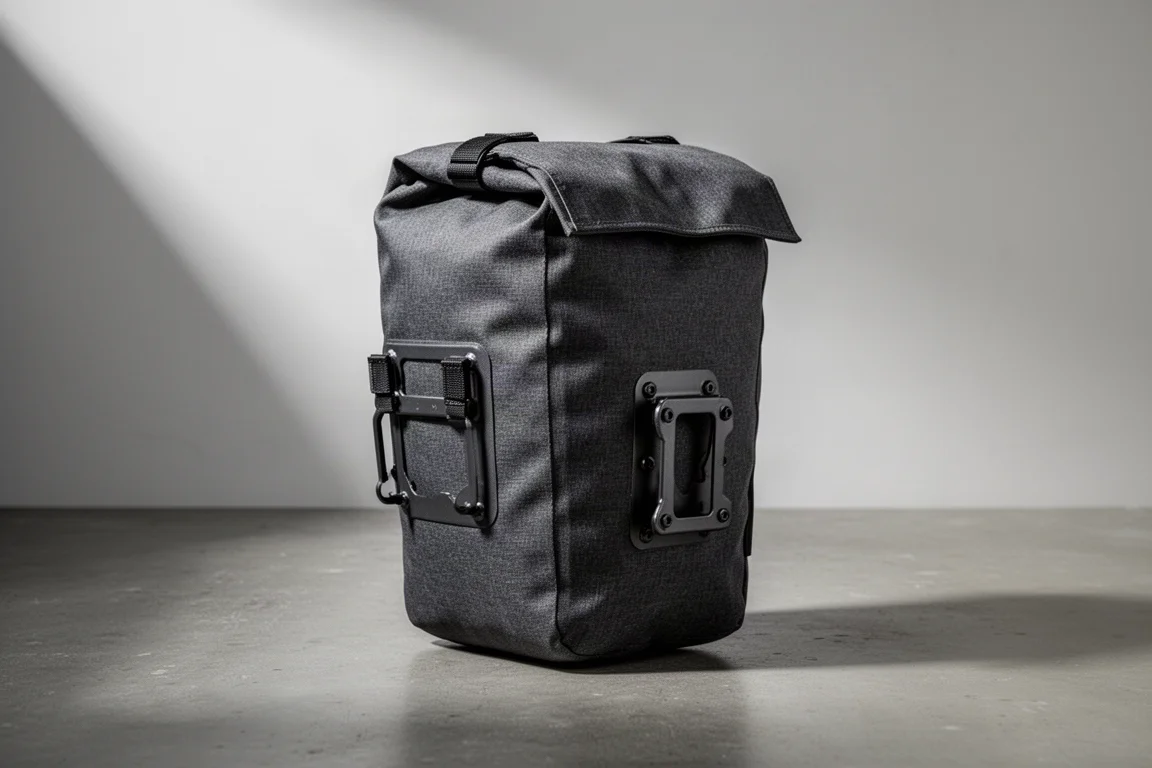
A 22 L pannier is a deliberate choice rather than a compromise. It is large enough for the essentials, small enough that you cannot quietly fill it with things you will not use, and built to survive the abuse of a long tour.
Choosing a compact bag addresses three problems at once. It keeps the total weight of the bike down, it makes a balanced, centre-weighted load easier to achieve, and it reduces the strain that a fully loaded rear end puts on rims, wheels, and racks.
It also leaves room to evolve. One approach is to start with a single compact pannier and later spread the load across several smaller packs, for example four 5.8 L fork packs with two mounted at the front and two on the rack bosses. The result is better organization and a load that sits closer to the middle of the bike.
Best for Long Days in the Saddle: Castelli Endurance Gloves
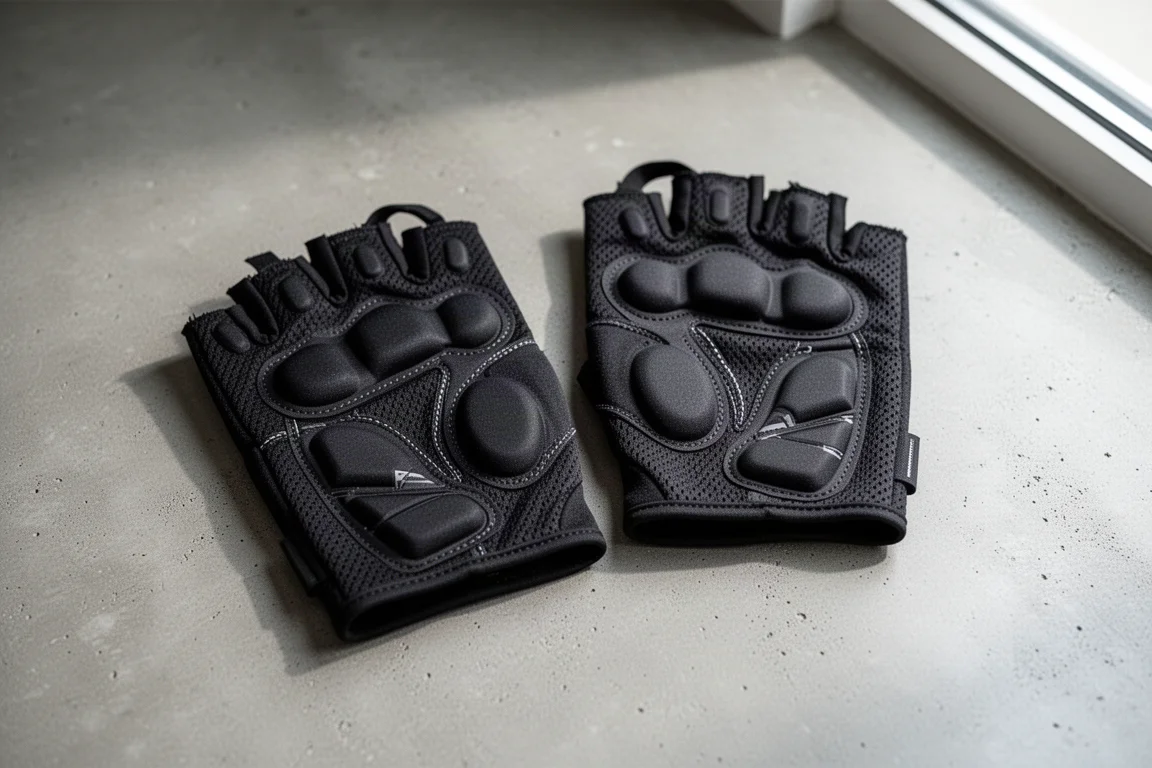
Gloves with padding and vibration dampening are not standard road cycling kit, but on a loaded tour they earn their place. The vibration that travels through the handlebars over consecutive long days can aggravate the nerves in the palm, which is how riders end up with numb fingers or carpal tunnel symptoms.
Padded gloves place cushioning over exactly those pressure points, covering the areas where the nerve and the carpal tunnel sit. The practical result is that your hands keep working for the whole trip, which matters when you still have to pitch a tent and cook at the end of the day.
Sizing is worth checking before you buy. Castelli offers separate women’s and men’s fits rather than a single unisex shape, which makes it easier to find a pair that stays comfortable over long distances.
Packing and Setup Habits That Pay Off
A test pack on the living room floor is a good start, but it is not the same as a test ride. Even very experienced riders have admitted that a perfect pack does not tell you how the bike will behave once it is moving.
Load the bike, ride it, and pay attention. A test ride is where you find the rattle you did not expect, the bag that shifts under braking, and the weight distribution that produces a shimmy at speed. It is also how you work out which items you need to reach during the day and in what order, so the packing layout matches the way you actually ride.
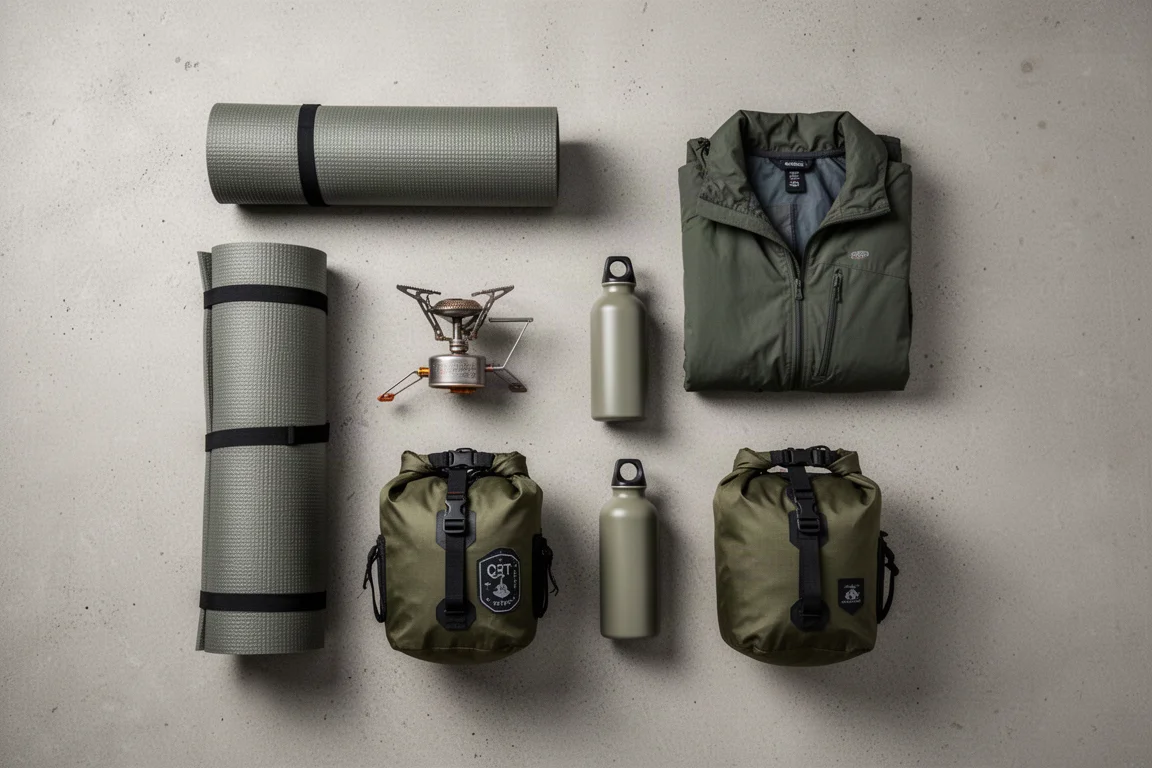
If you can, do the test ride overnight. Spending a night with the setup, even close to home, exposes the small problems that only appear once you are tired and it is getting dark.
Practical Setup Details: Tires, Pedals, and Clothing
A few other choices make a first loaded trip noticeably easier.
Fit the widest tyres your frame will accept, even if the route is mostly paved. Wider rubber adds grip and confidence on a bike that already handles differently because of the luggage, it adds cushioning that lets you stay in the saddle longer, and it reduces the chance of punctures that would otherwise cost you hours at the roadside. One experienced touring setup runs 2.4 in at the front and 2.25 in at the rear for exactly those reasons.
Dual-sided pedals, clipped on one side and flat on the other, are a quiet insurance policy. If a cycling shoe fails mid-tour you can still ride in whatever flat shoes you have, which is how one rider covered 2,000 km in a pair of Crocs. Flats also help on steep or rough terrain, where putting a foot down is safer than trying to unclip from an unstable loaded bike.
For clothing, look for pieces that work on and off the bike. Tight jerseys get sweaty quickly and are awkward to wear off the bike, while button-up or quick-dry shirts can be opened for ventilation, dry fast, and still look reasonable in a cafe. Cotton t-shirts are the one item to leave at home.
Small additions are worth the space. A multi-use neck buff doubles as a dust filter on gravel, a face covering in cold or wet weather, and an eye mask when you are camped somewhere brightly lit. A tube of anti-inflammatory gel is useful if your knees object to the extra weight on the climbs, which is common when the days are longer and the bike is heavier than usual.
How the Two Upgrades Work Together
The pannier and the gloves solve different halves of the same problem. The bag controls how the bike carries weight, which affects handling, durability, and how hard the climbs feel. The gloves control how your body copes with the hours, protecting the contact points that take the most punishment.
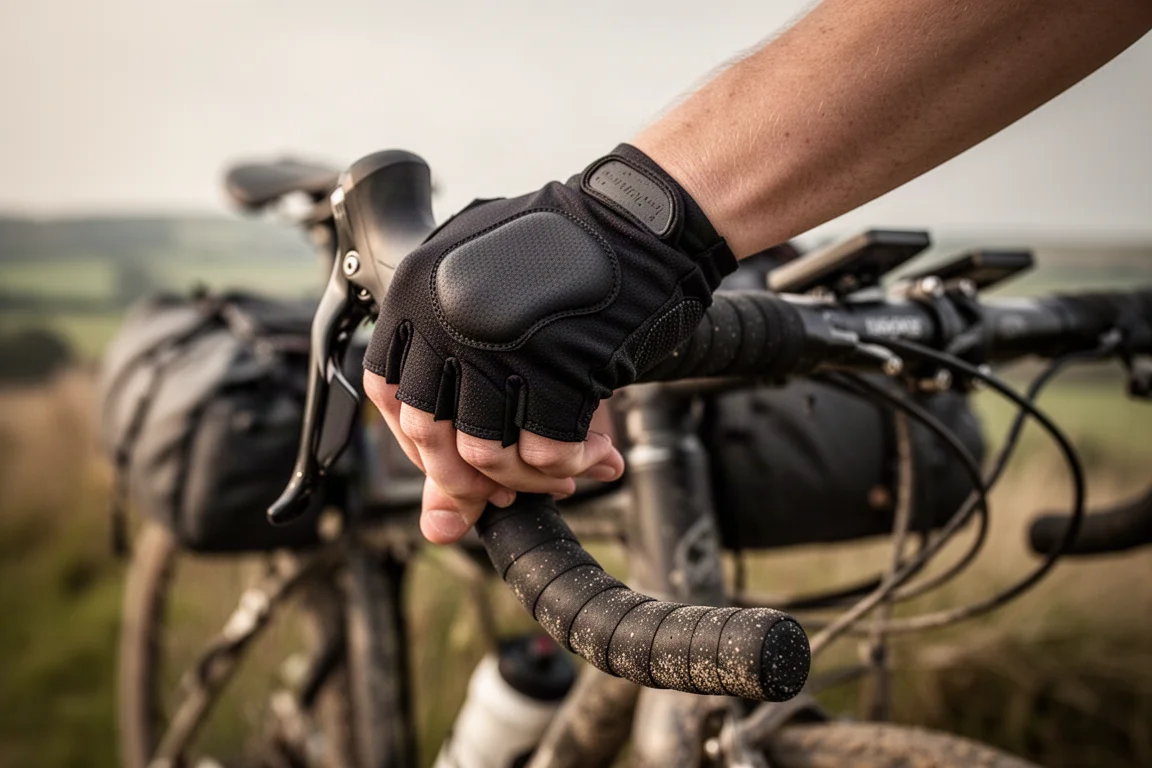
Bought together, they support the same goal: a first loaded trip where the bike stays predictable and you stay comfortable enough to enjoy the days rather than endure them.
What to Expect From Your First Loaded Trip
A loaded bike does not move like an unloaded one. It accelerates more slowly, turns more deliberately, and feels heavier on every gradient. That adjustment period is normal, and it is one reason to keep the setup simple and the load modest.
Knee discomfort is also common on a first tour, even for riders who never feel it on shorter rides. Longer days, consecutive days, and extra weight on the climbs all add up. If it appears, treat it as a signal to reduce the load and check your position rather than pushing through it.
Overall Buying Advice
If you are still deciding where to start, buy the bag first. A compact pannier changes how you pack and how the bike behaves, and it is the single change that most reliably prevents the overloaded, rear-heavy setup that makes first trips hard work.
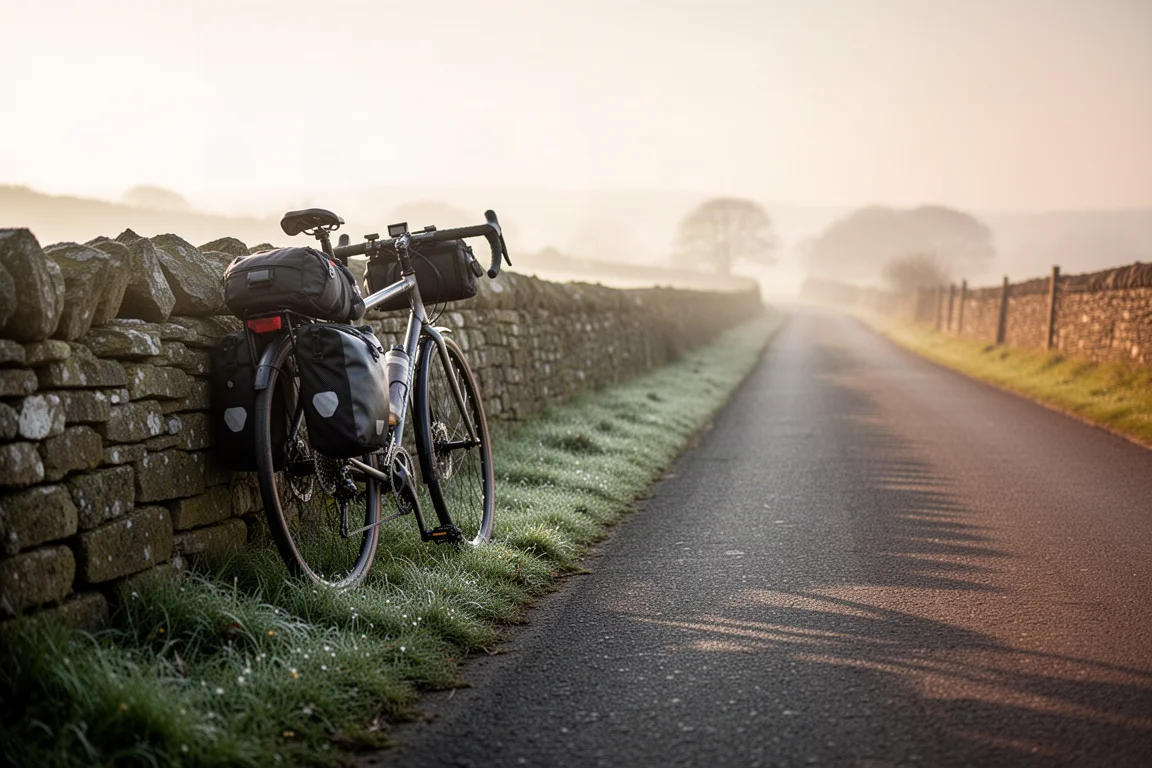
Add the gloves if you plan long days in the saddle, or if you already notice tingling or numbness in your hands on longer rides. They pack small, they protect the nerves that suffer most from road vibration, and they address a problem that tends to get worse rather than better as a tour goes on.
Either way, test both before you leave. Load the pannier, wear the gloves, ride a full day, and adjust from there. A first bikepacking trip is far more enjoyable when the kit has already proved itself close to home.
Conclusion
The best bikepacking kit is the kit that makes the bike easier to live with. A 22 L pannier keeps the load honest, balanced, and kind to your wheels, while padded gloves keep your hands comfortable enough to keep riding day after day. Start with those two, test them properly, and the rest of your setup becomes much easier to refine.
Further reading
Related Reviews
Bikepacking Gear
11 Bikepacking Essentials for Long-Distance Cycling
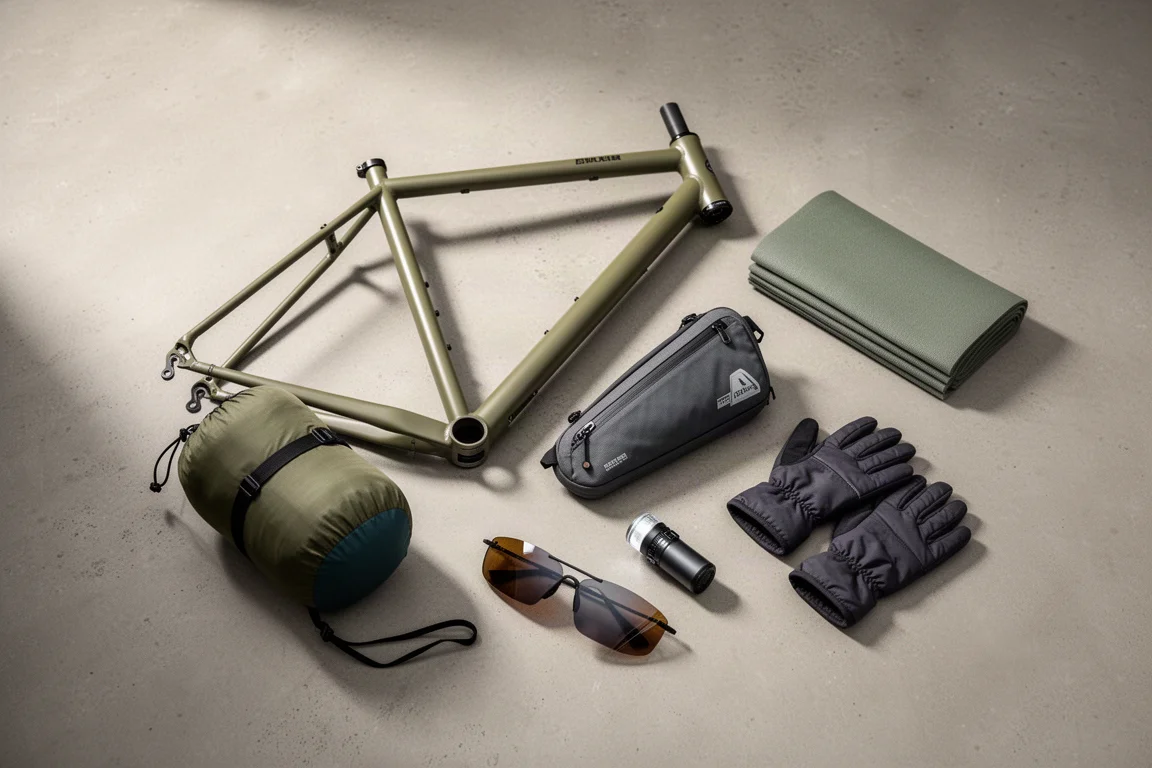
Eleven bikepacking essentials for long-distance cycling, from a steel gravel frame and a two-person tent to helmet lights, packable gloves, and a frame bag that puts weight in the right place.
Bikepacking Gear
Best Bikepacking Gear 2026: 11 Essentials Worth Carrying
A practical look at bikepacking kit that earned its place on long rides, from a solar bike computer and basket packing to bar bags, bivvies and gravel shoes.
Bikepacking Gear
Best Bikepacking Gear: 10 Field-Tested Picks for Long-Distance Rides
Ten bikepacking products that earn their place on long rides, from a steel gravel frame to packable gloves, with the strengths and trade-offs worth knowing.