Cycling Gear
Bike Fit Products Worth Buying: 9 Picks for Comfort and Power
A practical roundup of nine bike fit products, from modular footbeds and narrow saddles to steel frames, wide-fit shoes and extended axle pedals.
Introduction
Bike fit advice often focuses on position, but the parts touching the rider do just as much work. Insoles, saddle shape, cleat placement and shoe sizing all feed back into how pressure is distributed through the saddle, how the knee tracks and how efficiently power reaches the pedals.
The nine products below are the ones that keep earning their place in a fit studio. Some solve a specific problem, such as a stance that needs to be wider or a saddle that catches the thigh. Others simply make a good fit easier to repeat, which matters just as much when you are paying for someone’s time.
Each pick is assessed on the same questions: does it change something measurable, is the setup repeatable, and does it cost less than the fully custom alternative it replaces.
How These Picks Were Chosen
Three criteria shaped this list. First, does the product change something you can measure rather than something you can only feel? Second, can the setup be repeated on the next bike or the next pair of shoes? Third, does it cost less than the bespoke alternative while delivering a similar outcome?
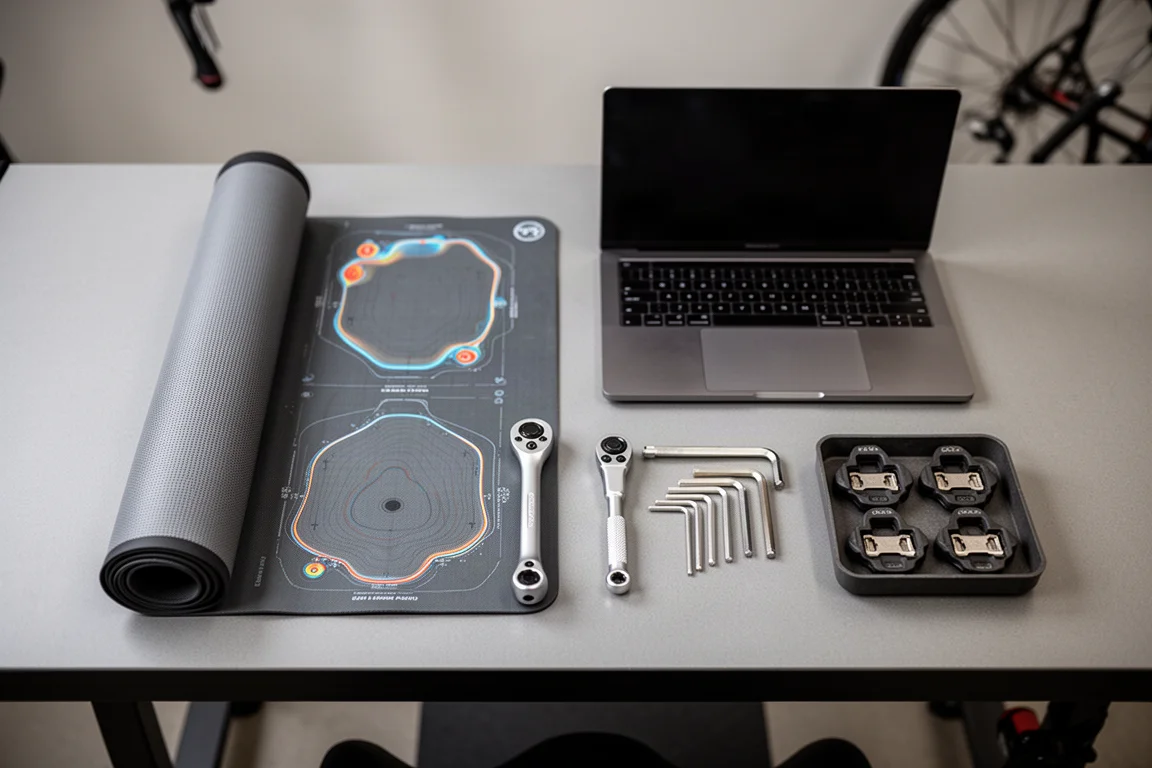
Pressure mapping has been part of professional fitting for the best part of a decade. Instead of guessing how a rider sits on a saddle, the sensor mat shows it, and that visual feedback has shifted attention towards the foot, shoe and pedal interface. Changes made at the shoe frequently show up as pressure changes at the saddle, which is why so many of the products below sit at the contact points rather than on the frame.
That focus also explains the stance width discussion further down this list. When feet are brought closer together for cornering clearance, some riders need them moved back apart, and a small hardware change is usually the simplest answer.
G8 2620 Footbed: Arch Support You Can Adjust Yourself
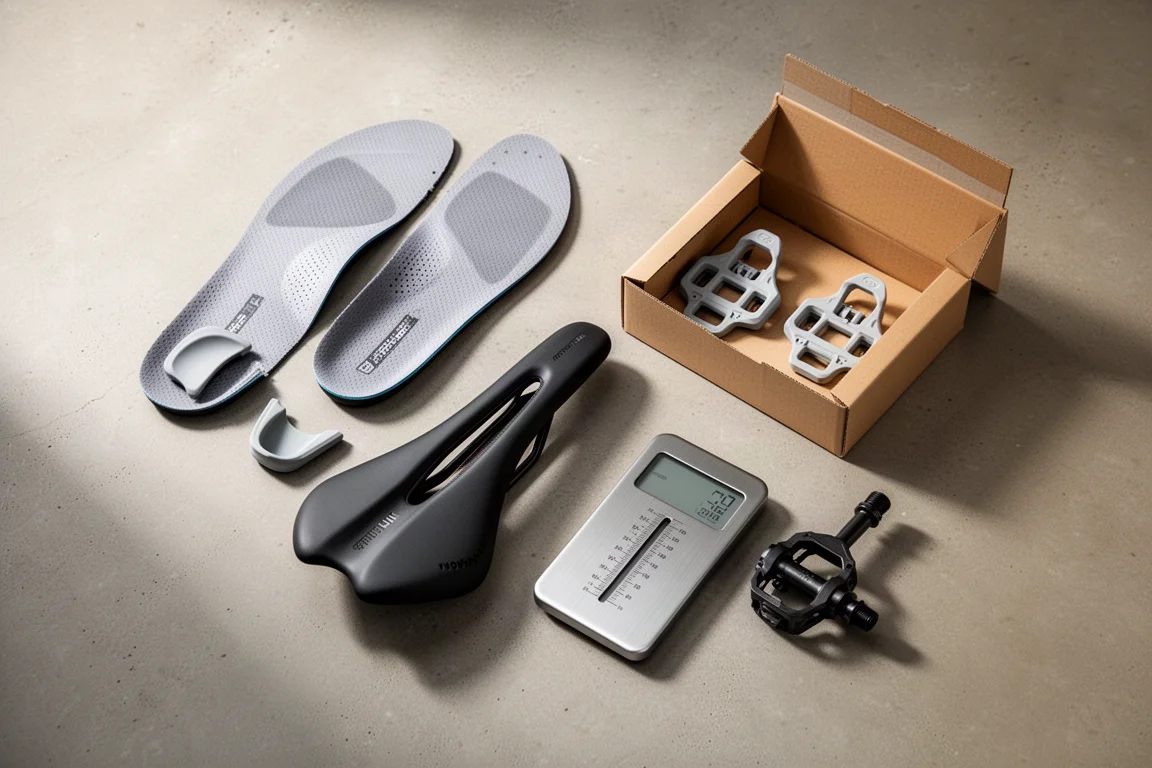
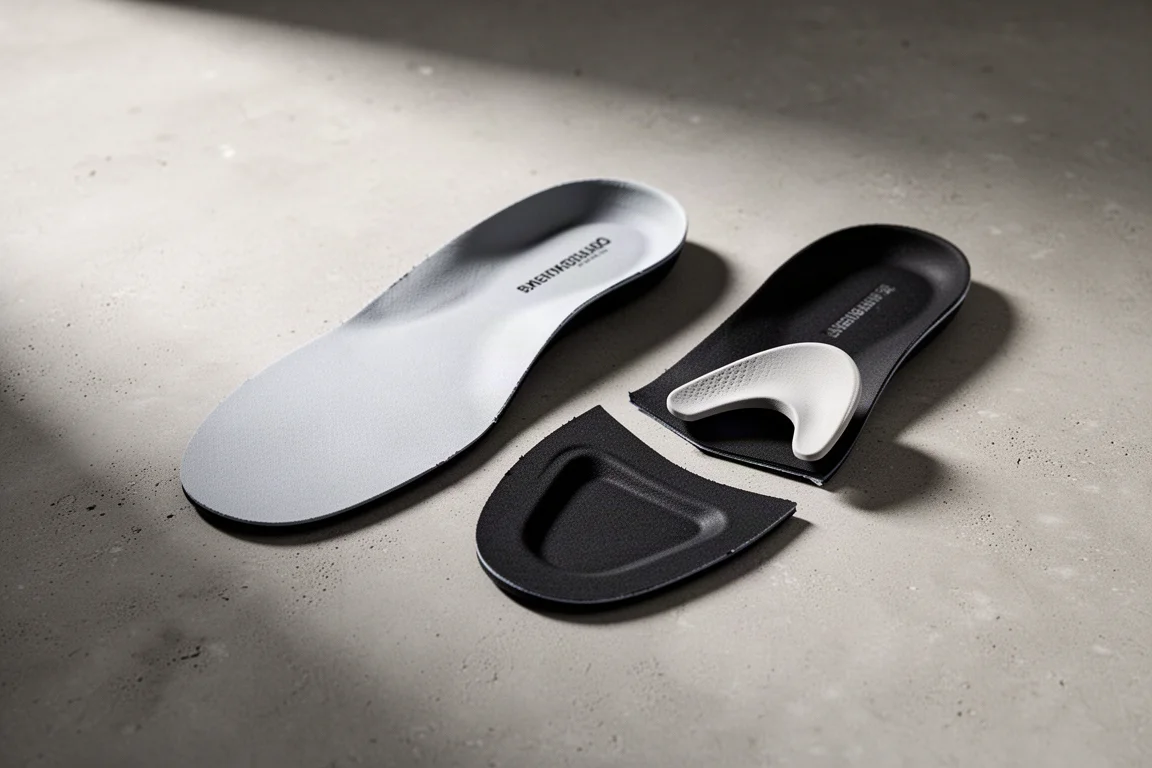
The G8 2620 is a modular, customisable footbed. It comes in four sizes that can be trimmed to sit precisely inside the shoe, and it uses five different arch pieces that can be moved both fore and aft and in the medial and lateral plane. That adjustability supports biomechanical function and restores some of the proprioceptive feedback from the foot that disappears the moment you put it inside a cycling shoe.
Compared with a fully moulded custom footbed, the appeal is practical. A mould takes half an hour to forty minutes to administer, which is a large slice of a three hour fit session. A modular footbed is cheaper, faster to fit and repeatable, so the same setup can be reproduced on a second pair of shoes without starting over.
Arch support is not a marginal detail. In fitting sessions using pressure mapping, adding arch support alone has reduced pressure through the saddle by up to 50 percent.
Deda Zero 100 Handlebar: Consistent Reach and Drop Across the Range
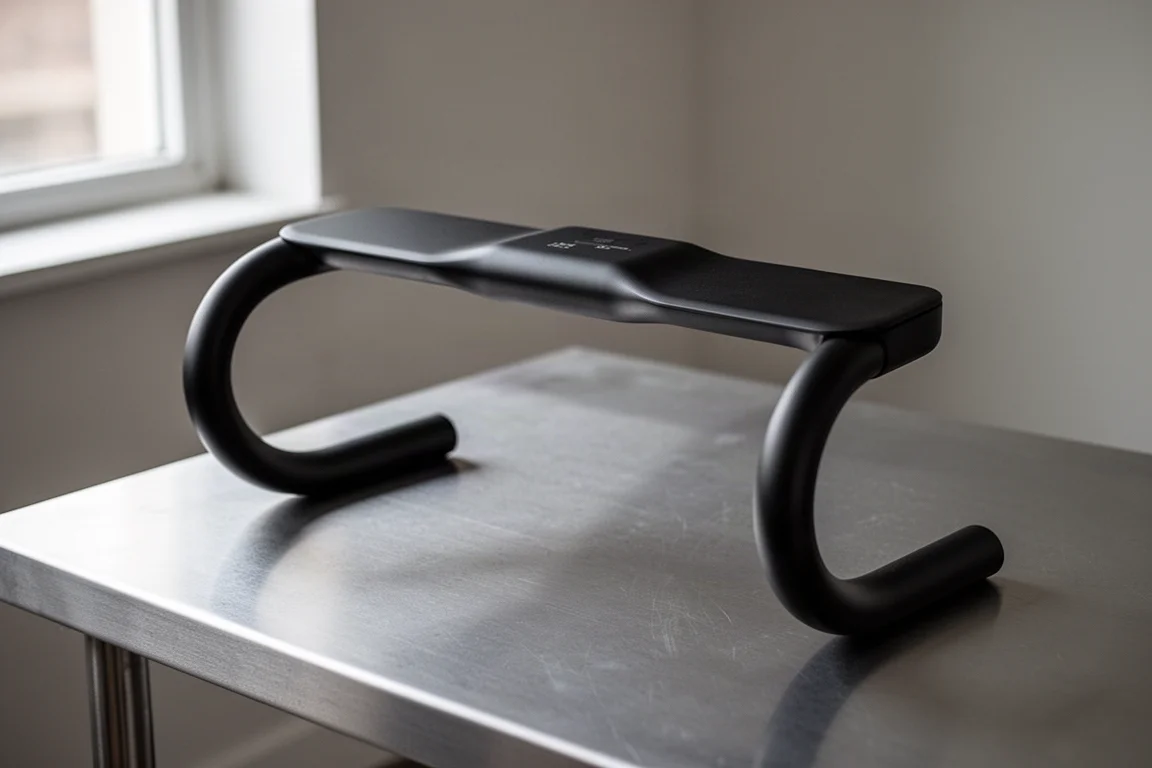
The Deda Zero 100 is an alloy road handlebar with a 75 millimetre reach, a 128 millimetre drop and an ergonomic flat top. Sizes run from 36 centimetres up to 44 centimetres. The shape, reach and drop stay essentially the same across the whole Deda range, from the entry level bar at around 30 pounds to the top model at around 300 pounds, which makes it a predictable starting point when a rider’s position is being dialled in.
Reach here is measured from the centre of the bore to where the control sits. Reducing that number is an easy way to shorten a rider’s reach without cutting the stem length, and it is a change that comes up often, because overreach at the handlebars can contribute to saddle discomfort, neck and shoulder problems, hand issues and even knee issues.
The alloy versions are the ones to prioritise, since the control setup is easier to place correctly on them. The RHM shape underpins the family, and the Zero 100 is the pick of the range for most riders.
Selle Italia SLR Superflow Boost S3: Narrow Shape, Large Pressure Relief Channel
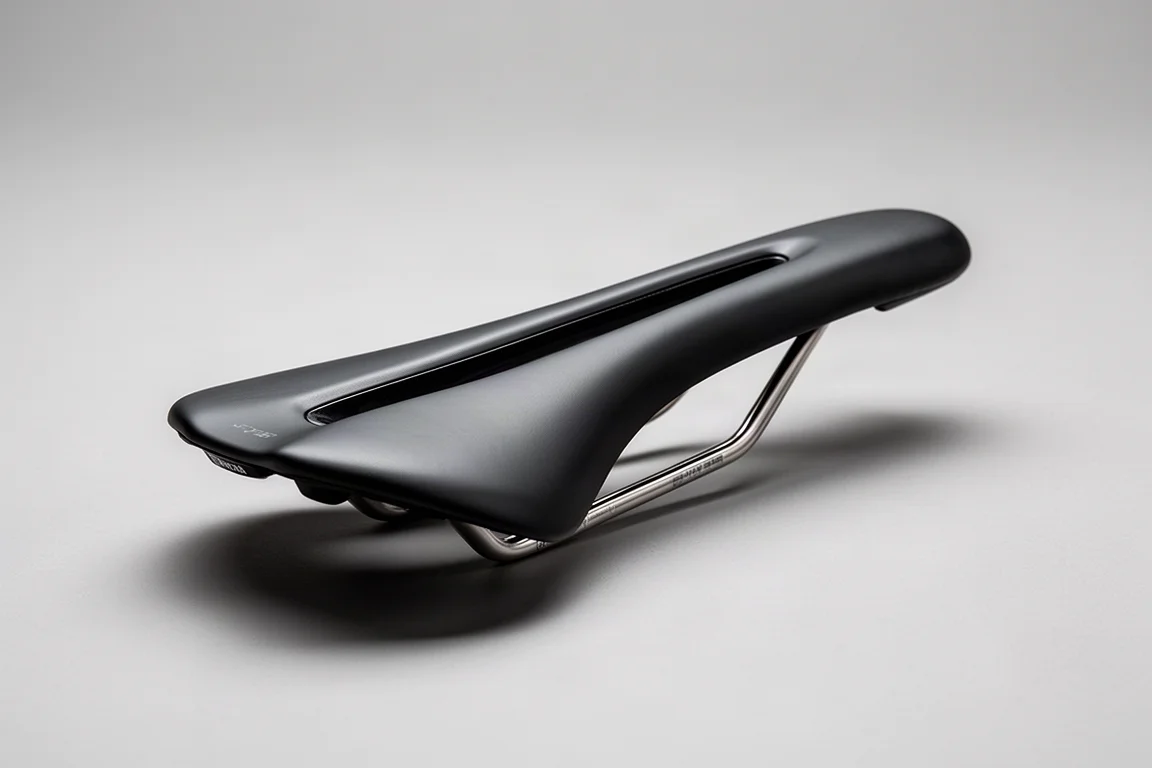
The SLR Superflow Boost S3 measures around 128 millimetres at its widest point, making it one of the narrowest saddles on the market. That narrowness is the whole point. It keeps the wings of the saddle out of the way of the thigh as the leg comes past, allowing more natural thigh movement and encouraging the rider to sit further back on the widest, most supportive part of the saddle rather than sliding forward onto the nose.
Sit bone measurement has become commonplace in shops, largely as a way of making saddle sales feel more scientific. In practice it often pushes riders towards saddles that are too wide, and the usual result is a rider who drifts to the nose to clear that width. The proportions of this saddle sidestep that problem, and around three quarters of customers end up leaving with one.
It is a little shorter than a conventional saddle but not a full short nose design, and the nose itself is narrow. The large central pressure relief channel is easy to find, and the carbon version is built with high impact resistance. Rail options run from chromoly up to titanium and carbon, with the carbon railed flagship at around 290 pounds and chromoly versions from around 130 pounds. A more padded gravel version adds integrated elastomers where the rail meets the shell.
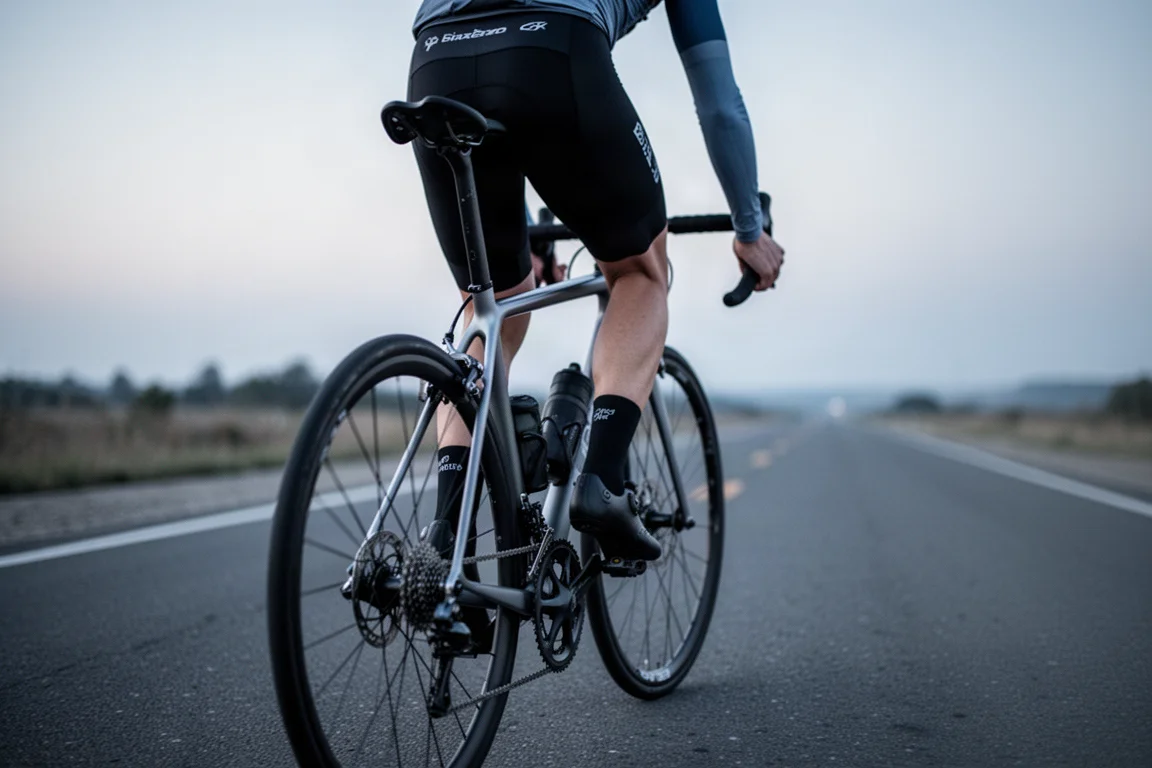
It is worth saying plainly that if this saddle still causes problems, the position on the bike is the more likely culprit than the saddle itself.
Shimano SPD-SL Cleats: A Small Change With Less Plastic
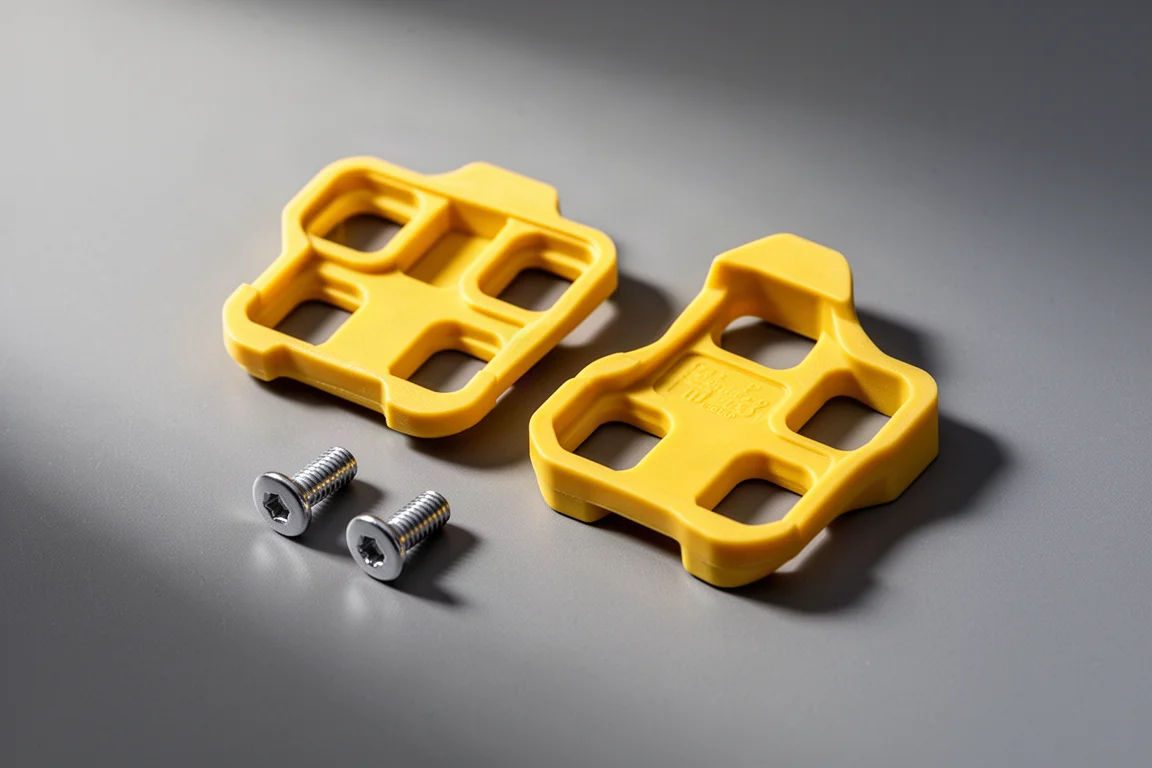
Shimano has removed plastic from its packaging across the range, and the SPD-SL cleats now arrive in a plain cardboard box, as do the SPD versions. It is a minor point in a list of fit products, but packaging waste adds up across a workshop, and a cleat that ships in card is a small, welcome improvement.
The cleats themselves remain the standard road interface, which means they work with the pedals most riders already own.
Brannock Device: Measure the Foot Before Choosing the Shoe
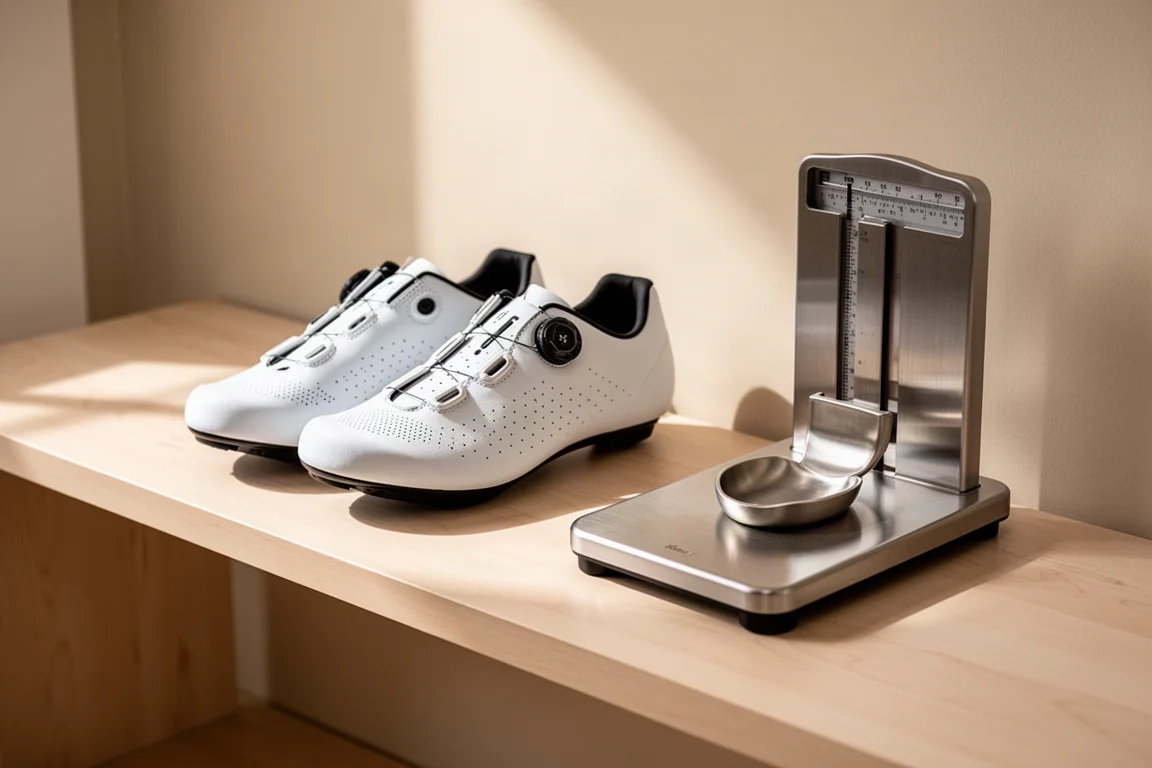
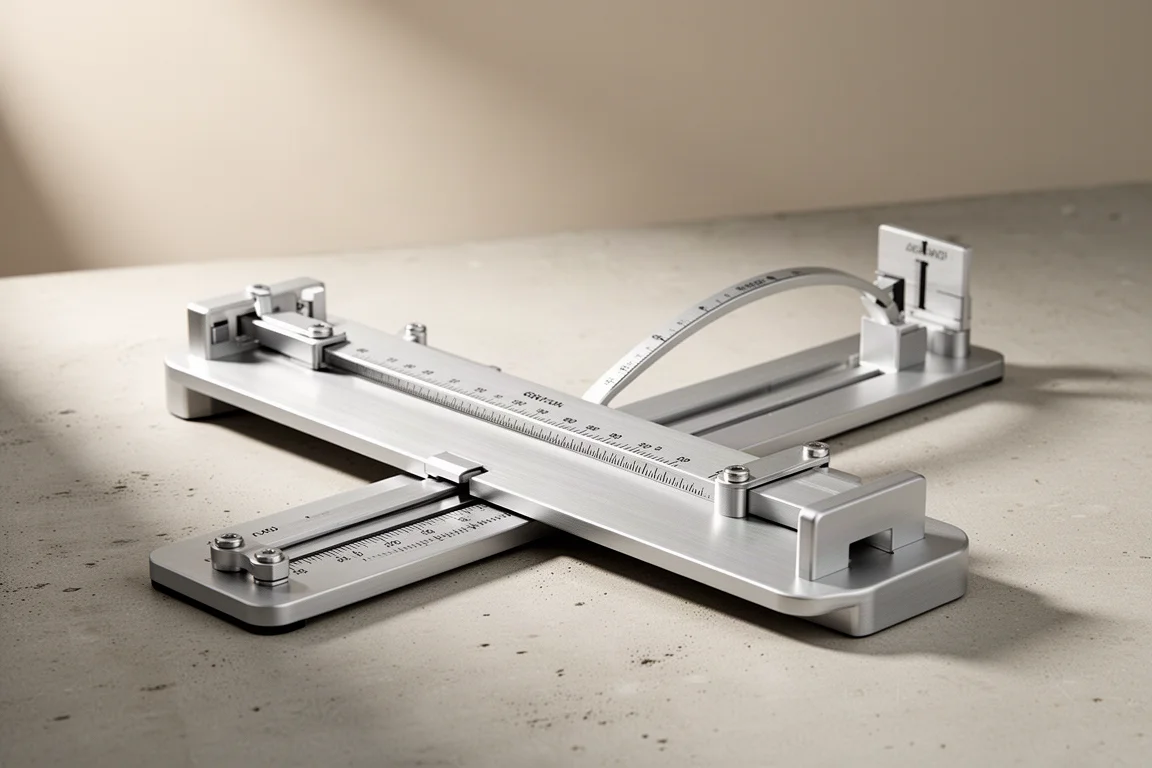
The Brannock device standardises foot measurement. It records foot length, width and arch length, and that standardisation is what makes shoe fitting repeatable rather than guesswork.
Every rider buying shoes should have their feet assessed on one. Simply looking at a foot is not enough to tell whether it is wide or narrow, and specific points on the width spectrum tend to point clearly towards one shoe or another. Without that measurement, the common outcome is a rider being told to go up a size to accommodate width. Sizing up moves the cleat forward relative to the foot, and that shift can produce foot pain, knee pain, saddle issues or all three at once.
Shoes deserve this level of attention because they are where the power goes. A correctly fitted shoe will change more about a rider’s experience than carbon wheels or an electronic groupset.
If a shop’s answer to a wide foot is simply a bigger size, that is a sign to look elsewhere.
Fairlight Secan: Steel Bikes Built Around Fit
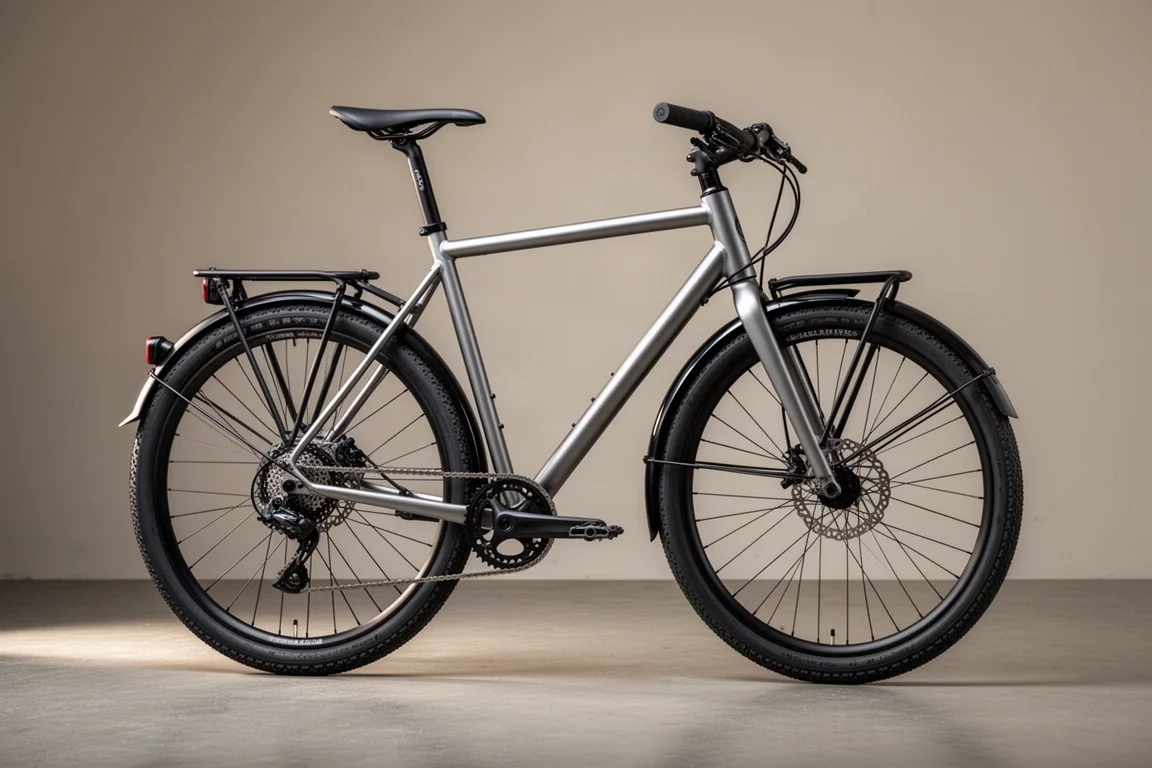
Fairlight is a small British brand building steel bikes with a strong fit story. The range of sizes is unusually broad, and crucially the frames come in both standard and tall geometries. In a market where fit is often the last consideration, this is a brand where it is clearly a primary one.
The frames are also practical. Some models offer mudguard eyelets, rack mounts and additional luggage capacity, which makes them capable bikepacking machines as well as everyday bikes. The Secan and its sibling platform differ mainly in tyre clearance, so the choice between them comes down to how much tyre you want to run.
Tailfin Rack System: Stable Loads on Almost Any Bike
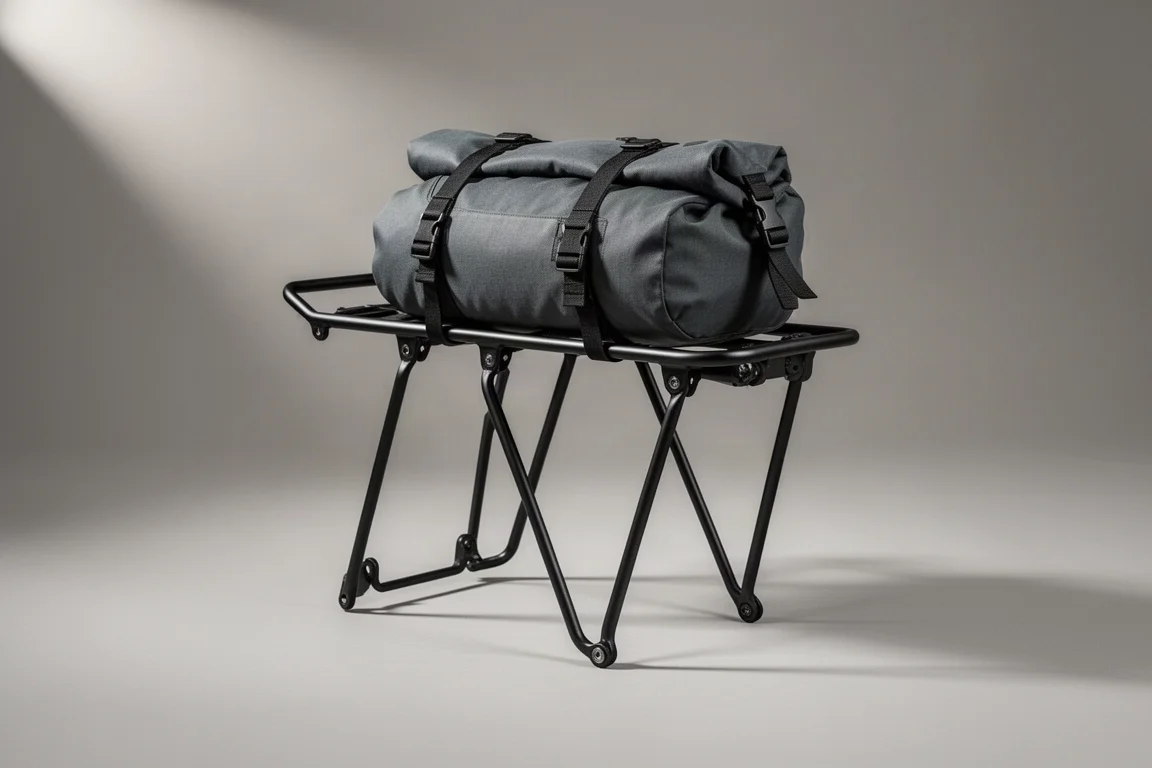
The Tailfin rack system fits to almost any bike and is aerodynamic, lightweight and functional. It was designed with bikepacking in mind but works just as well for commuting, particularly for riders who want a fast, easily removable way to carry a load.
The comparison that matters is with traditional saddle rail mounted saddlebags. On a long trip using that style of bag, the difference became obvious once a rack system was used instead: a large increase in stability and far more opportunity to lash extra kit to the bike. It turned out to be one of the best pieces of equipment on the trip.
Lake CX332: Kangaroo Leather, Carbon Sole, Heat Mouldable Heel
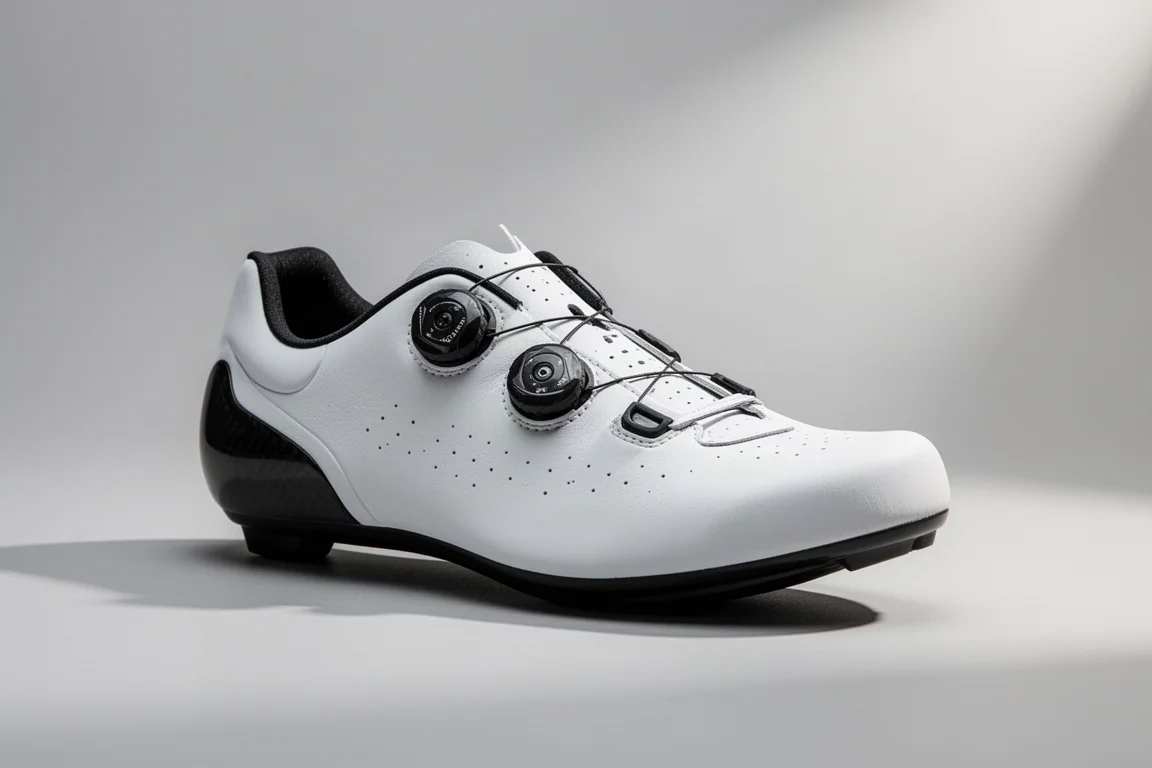
The Lake CX332 pairs a kangaroo leather upper with a carbon fibre sole, a dial closure and a heat mouldable heel cup. It is one of the best selling shoes in the category and comes in both a standard and an extra wide fit.
The upper is light, stiff, comfortable and highly breathable, and there is a vegan friendly Clarino option for riders who prefer it. Buyers can also customise the shoe with different dials, colours and logos, or specify no logos at all.
All of that only pays off if the shoe fits. Riders who buy online and end up three sizes too big get none of the performance benefit the shoe is capable of delivering, which is why the measurement step above matters so much.
Shimano SPD-SL Extended Axle Pedal: Four Extra Millimetres of Stance
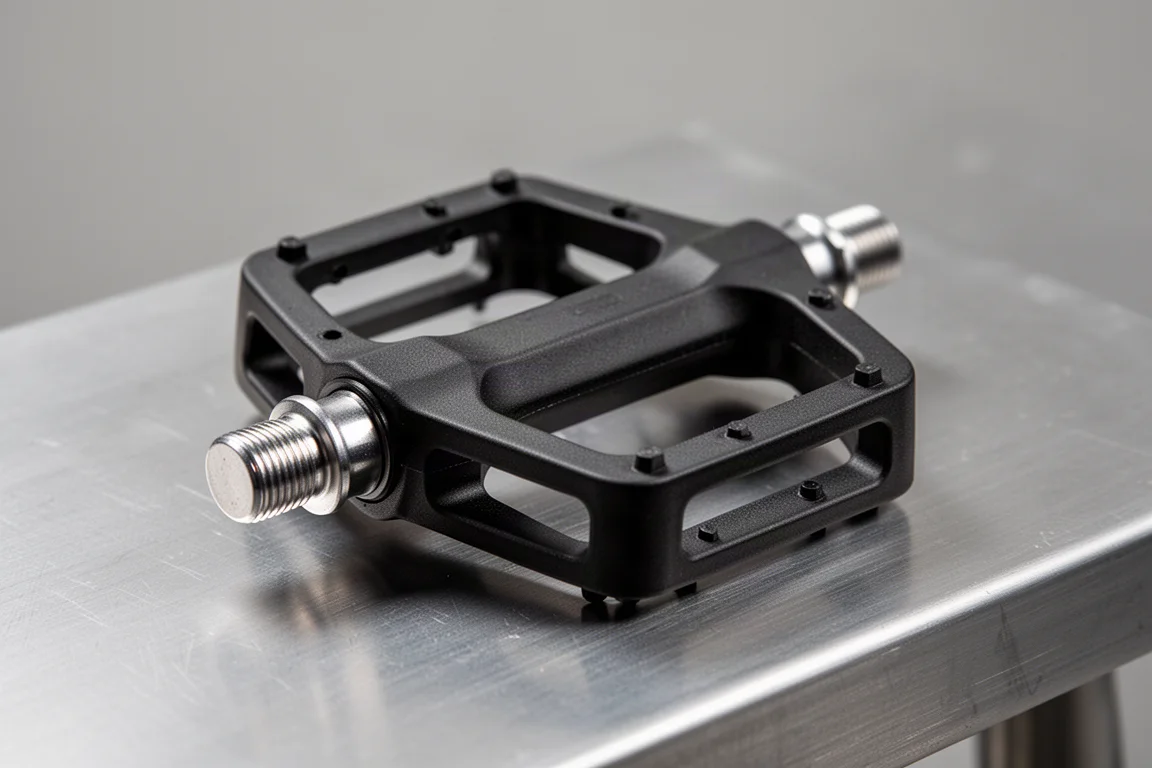
The SPD-SL extended axle pedal adds four millimetres to the axle, moving the foot further from the crank. It exists because bicycles have become progressively narrower over the last few decades, which helps light, powerful riders corner faster with more clearance between the pedal and the road.
Most riders do not need that trade off. In a fit session the opposite problem is far more common, with feet needing to be brought further apart to mitigate the narrower stance, and this pedal is the cleanest solution. It is also starting to appear in professional circles, which suggests the fit argument is being taken seriously at the sharp end of the sport too.
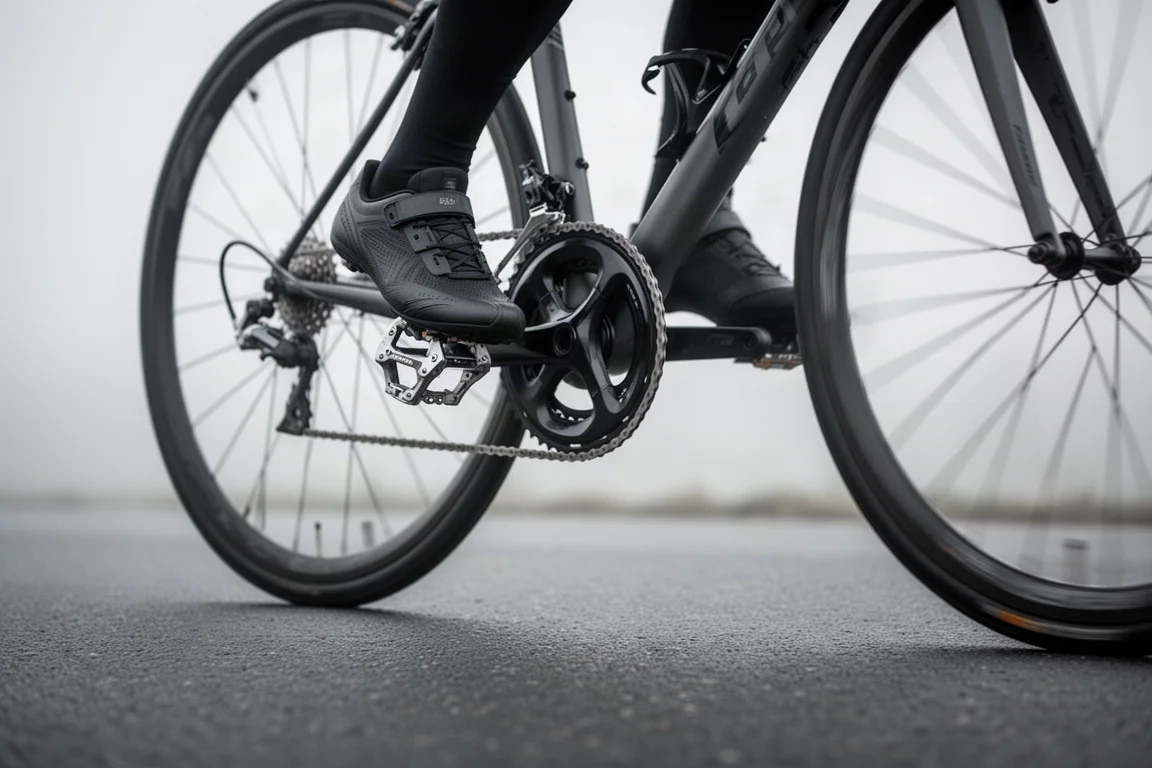
For anyone whose knees track awkwardly or whose hips feel compressed at the bottom of the stroke, stance width is worth checking before more expensive changes are considered.
Buying Advice: Where to Spend First
Start at the foot. A measured shoe fit and appropriate arch support influence everything above them, from knee tracking to saddle pressure, and they are usually the least expensive changes on this list. Saddles come next, and the priority should be shape rather than width numbers taken from a chart.
Handlebars and stance width are adjustments to make once the contact points are settled. They solve specific problems, so they are worth changing when the problem actually exists rather than pre-emptively.
Bikes and luggage systems sit at the other end of the scale. A steel frame with a genuine spread of sizes and geometries, or a rack that makes loaded riding stable, is a bigger commitment, and both make most sense for riders who already know what they need from their position.
Conclusion
None of these products is glamorous, and that is rather the point. Footbeds, saddles, cleats, shoes and stance width all sit between the rider and the bike, and small improvements there tend to show up everywhere else. Buy them in the order that matches your problem: measure the foot first, then work outwards.
Further reading
Related Reviews
Cycling Gear
8 Cycling Products Riders Keep Coming Back To
Eight cycling components and accessories with clear strengths, honest trade-offs and long-standing reputations among riders and mechanics.
Cycling Gear
Aero Helmets and Bottle Setups Tested: Six Options Ranked by Measured Watt Savings
Wind tunnel data on six aero helmets and bottle setups, with real watt savings, practical trade-offs, and guidance on what is worth buying first.
Cycling Gear
Aero Road Bikes and Fast Tires Worth Watching in 2026
Four aero road bikes and one fast road tire, with the real strengths, the open questions, and what to check before you buy.