Indoor Cycling
Better Indoor Training: Tacx Neo 2T and Tacx Galaxia for Turbo Sessions
A practical look at indoor training upgrades, including direct drive and roller options from Tacx, plus the cooling, hydration and fueling habits that make turbo sessions more comfortable.
Introduction
Indoor training season arrives whether or not the weather cooperates, and most riders discover the same thing: the hardware is only half the story. Ventilation, hydration, position changes and fueling all shape how a turbo session actually feels, and the trainer you choose determines how realistic the resistance feels and how far you can push it.
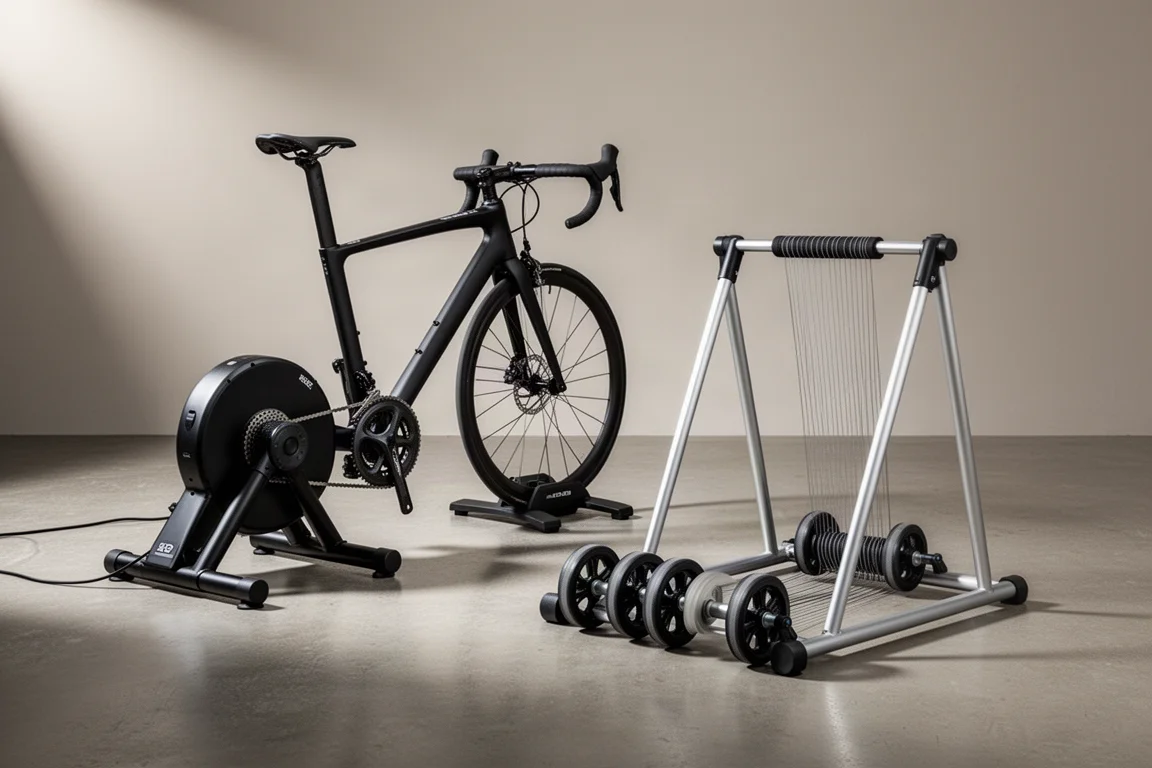
This guide covers both sides of that equation. It looks at the habits that make indoor sessions more comfortable, and at two Tacx options at opposite ends of the indoor training spectrum: the direct drive Tacx Neo 2T and the Tacx Galaxia rollers.
Cooling and Ventilation Come First
Heat is the most underestimated part of indoor training. Even a steady effort produces far more body heat than the same effort outdoors, because there is no airflow carrying it away. Start with what costs nothing: think about where the trainer sits in the room, and make use of any windows. A wide open window paired with an open door, or a second open window in the next room, creates a through flow of air that does a surprising amount of work.
Fans come next, and placement matters more than sheer quantity. A wind machine style fan is widely available from general retailers for roughly 40 pounds and moves a serious volume of air. One aimed straight at you from the open window, with others positioned to cool different parts of the body, covers a session well.
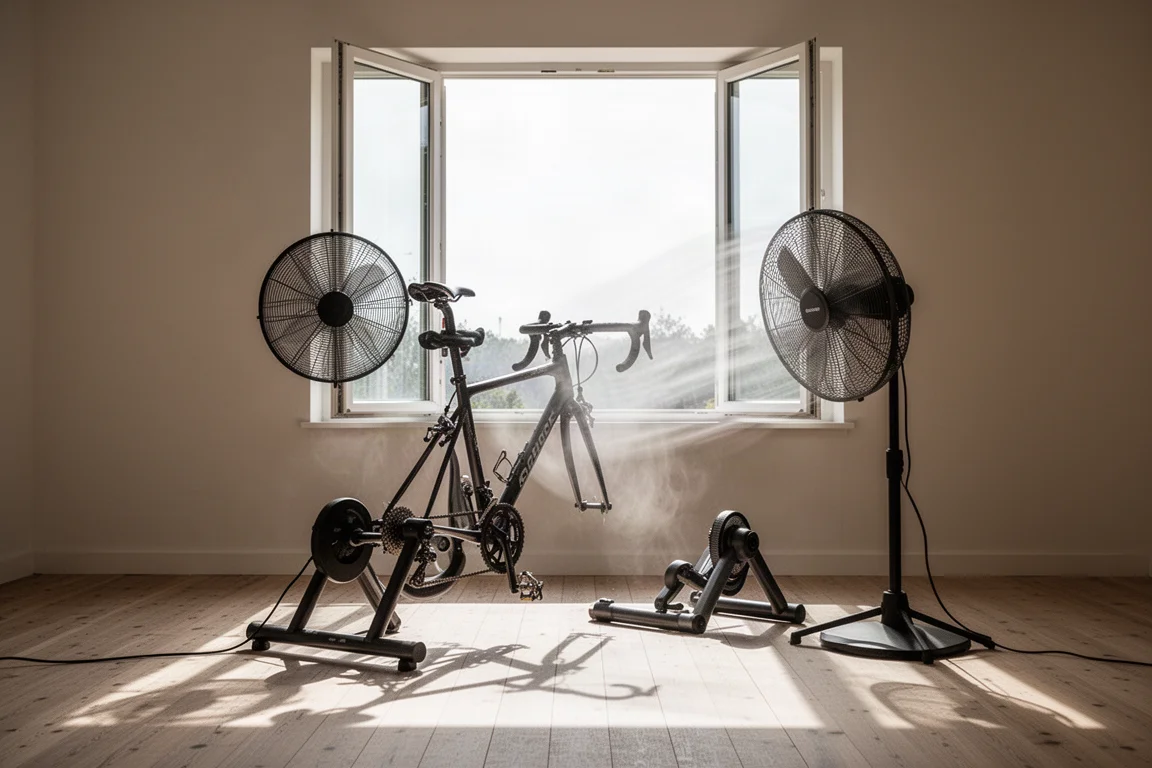
The practical snag is that you are not warm yet when you start, so leaning over to switch fans on mid-session is awkward. A remote plug solves this neatly: the fan goes into the switched socket, and you turn it on from the bike once you have warmed up. The premium route is a trainer-specific high output fan such as the Vacmaster from Clever Cardio, which is marketed at cyclists, offers several power levels and includes its own remote control. Whatever route you take, treat airflow as seriously as the intervals themselves. Matching the cooling effect of riding outdoors at 30 miles per hour can take as many as nine fans, which shows how much heat a trainer session genuinely produces.
Hydration: Set Up Before You Start
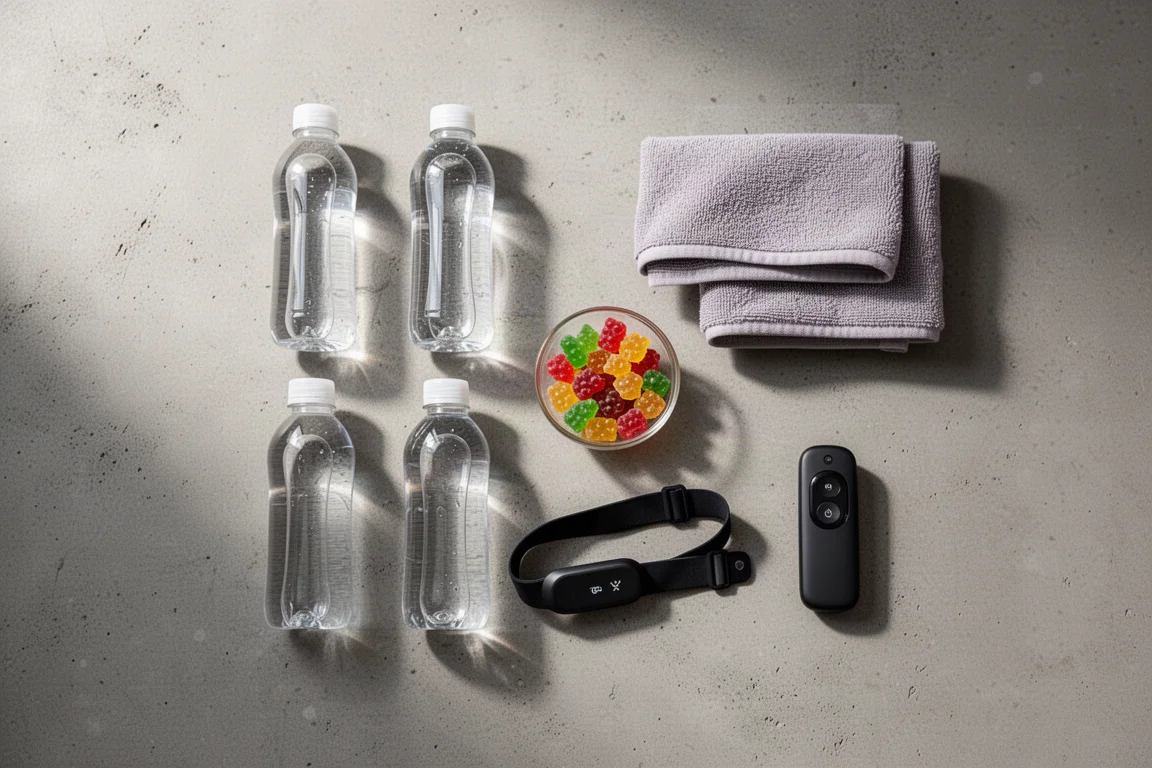
Indoor sessions burn through water quickly, and stopping halfway through an interval to refill a bottle is the last thing you want to be doing. Prepare bottles before you clip in. For longer sessions, alternate between an electrolyte mix and plain water, since sweating will be heavy. Four 600 ml bottles is a realistic quantity for a two hour session that includes efforts. Keep them on a table directly in front of you so drinking becomes automatic rather than something you have to remember, and a little squash or cordial in the bottles is an easy prompt to actually use them.
Stand Up More Often
This one sounds obvious and is still easy to forget. On a trainer there are no four stops, no traffic lights and no climbs, so nothing forces you out of the saddle. Sitting static for an entire session is what creates most of the discomfort riders associate with indoor training. Getting out of the saddle every now and then, and staying a little looser on the bike, makes a long session noticeably more comfortable. The Tacx Neo has a small amount of lateral movement built in, but standing every 10 minutes or so remains worthwhile. A reminder on your head unit is a simple way to make it a habit.
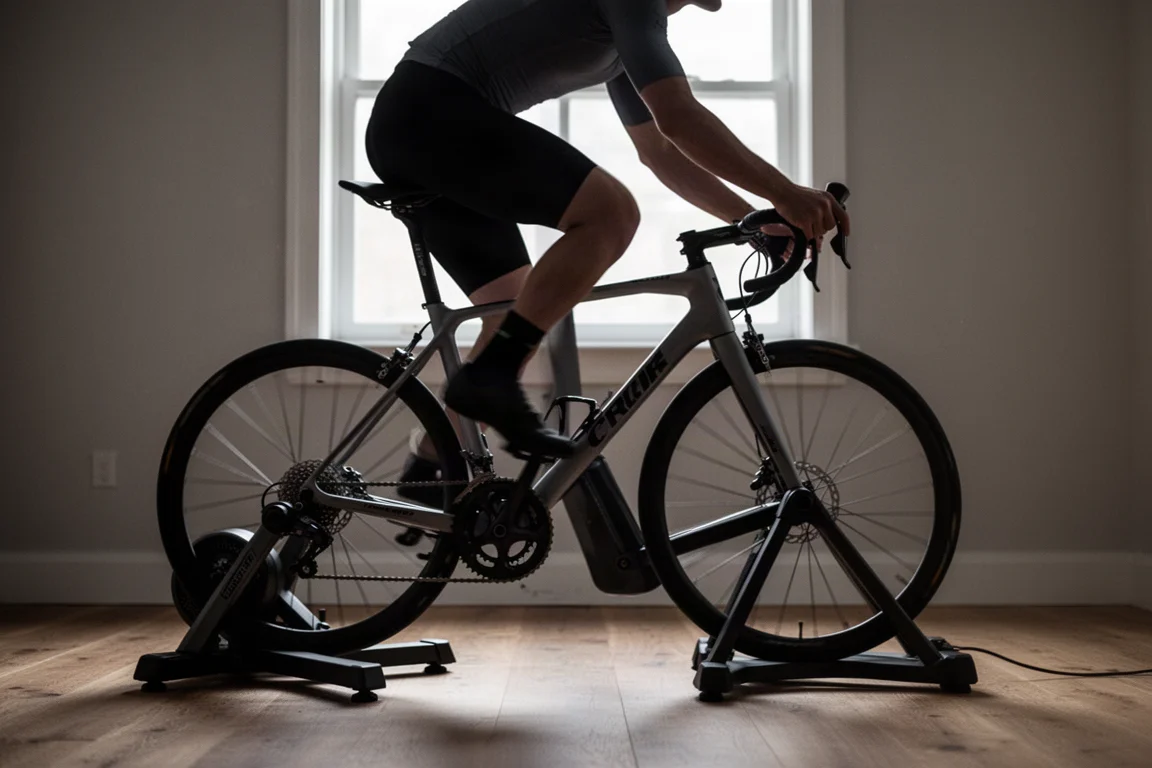
Varying position also spreads pressure more evenly across the contact points, which helps on sessions that stretch past the hour mark.
Direct Drive Trainers: Tacx Neo 2T
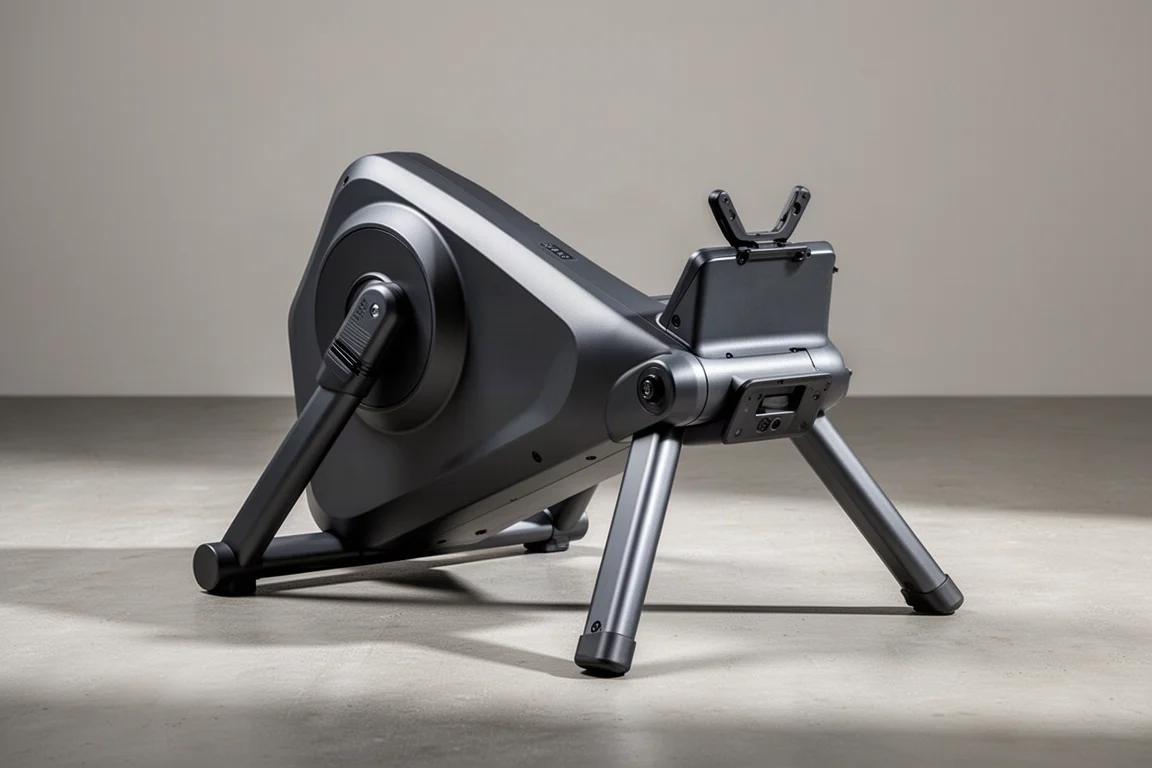
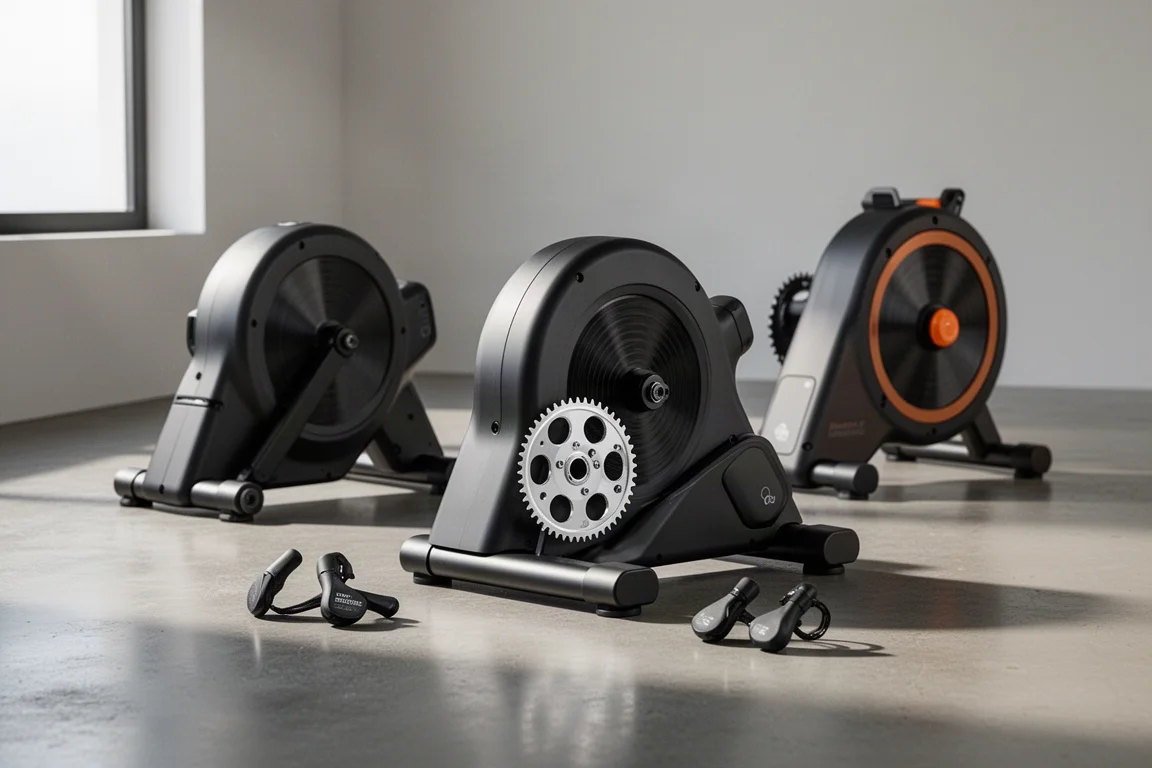
A direct drive trainer removes the rear wheel entirely and links your drivetrain straight to the trainer. That single change solves several problems at once. There is no rear tyre to wear out, which is the usual cost of wheel-on trainers. Direct drive units are generally quieter, generally feel more realistic, and generally offer a much higher maximum resistance. The Tacx Neo 2T sits at the top of the Tacx line and is rated at a 2200 watt limit, a figure that most riders, including strong track sprinters, will never approach. Wheel-on trainers cap out far lower because the roller pushing against the tyre eventually slips.
There is a second benefit worth knowing about. The Tacx units can operate without being plugged into a power supply, so you can warm up in a car park before a race without hunting for a socket.
Rollers: Tacx Galaxia
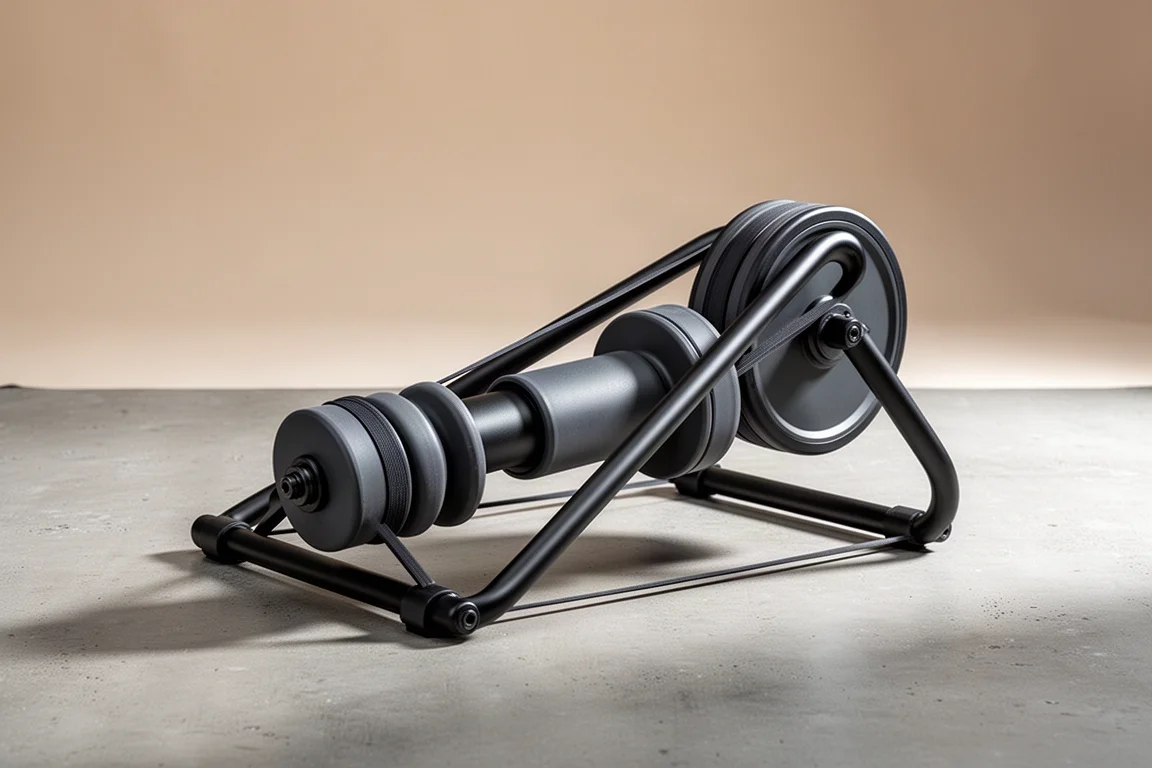
Rollers are probably the most convenient and cheapest way into indoor training. The setup is a frame, three rollers and an elastic band that spins the front wheel while you ride. They are a popular choice with bike racers because they are light, easy to carry to an event and quick to warm up on. They are also often overlooked as a training tool in their own right. Resistance is very low, so hard intervals on rollers can be genuinely challenging, and balancing on them makes sprinting out of the saddle tricky. What they deliver instead is a distinctive riding feel, an excellent platform for steady efforts and a very small footprint in the room.
Because the sensation is different from riding outdoors, it is worth borrowing a set before committing. The way the front and rear wheels react on rollers does not match the road, and some riders take longer than others to get the motion down. The Tacx Galaxia is a step above the most basic rollers and adds a small amount of forward and backward motion for a more realistic feel. The concave shape of the roller drum nudges the bike back toward the centre, which makes balancing noticeably easier. Tacx also offers a more basic version for riders who want the simplest entry point.
Smart Trainers and Virtual Platforms
A smart trainer is essentially a controllable turbo trainer. It connects wirelessly, over Bluetooth or ANT+, to a phone, tablet, PC, head unit or smartwatch, and that connection unlocks a whole set of features. Most measure your power, let you vary resistance, and connect to third-party apps, structured workouts and full ride simulations. Zwift, Rouvy and RGT Cycling all fall into that simulation category, effectively a game you play while riding. Strictly speaking, you do not need a smart trainer to use them. A power meter is enough for the platform to know how hard you are pushing. A smart trainer simply gives you the fuller experience, and most of these platforms run on a monthly fee.
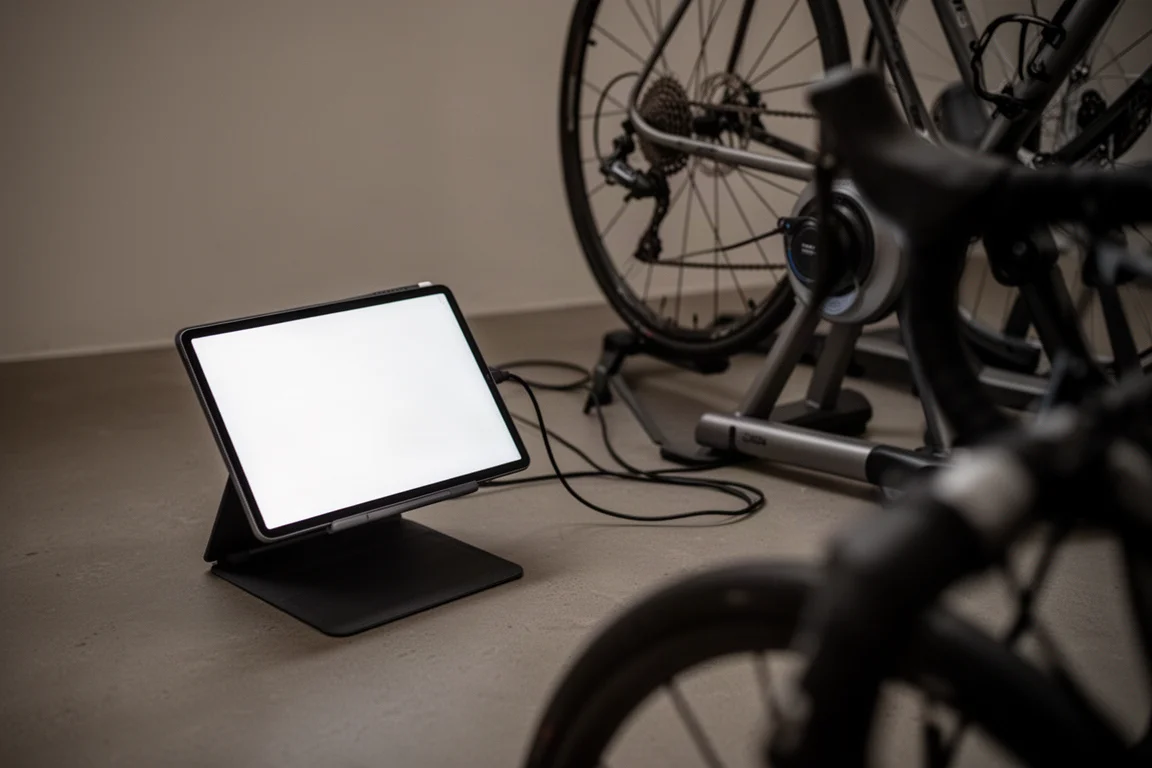
The features on offer have moved a long way in a short time. Racing modes let you compete in real time against riders anywhere in the world, and professional esports teams now compete for real prize money and sponsorship. Resistance changes with the terrain, so a virtual climb feels like a climb, and you can tune how realistic the gradient feels. Because your power output determines your speed, you can compare your times on famous climbs against real world efforts or other riders’ virtual attempts. The Tacx Neo 2T goes further still and reacts to the surface beneath you, so cobbles and gravel feel distinctly different. On descents the flywheel spins up as well. Those particular features only work with the trainer connected to mains power, which is worth remembering if you rely on the unplugged warm-up trick.
Fueling Hard Sessions
Eating on the trainer is harder than eating outdoors, largely because heat suppresses appetite. That makes under-fueling easy to do, especially on a specific hard session. For anything over an hour with intervals, aim for maximum fueling, up to 80 grams of carbohydrate per hour or more depending on body weight. Small sweets work well because they are easy to chew a little at a time while riding. Gels are the convenient option, though you are largely paying for that convenience. If solid food does not appeal, a carbohydrate drink is a reliable fallback. Purpose-made cycling drink mixes work, or you can mix your own with a scoop of carbohydrate powder, a small pinch of salt for electrolytes and a no-added-sugar cordial topped up with water. The no-added-sugar point matters, because the fructose in sweetened squash absorbs in a different part of the intestine to the main carbohydrate source. As with bottles, keep it within easy reach and you will use it more.
Buying Advice
The right indoor setup depends on what you actually want from it. Rollers suit riders who want steady efforts, a compact footprint and the lowest possible entry cost, and they double as a warm-up tool at races. A direct drive smart trainer suits riders who want quiet operation, realistic resistance, a very high power ceiling, no tyre wear and full integration with virtual platforms and structured training apps.
Software and comfort items deserve a place in the budget too. Ventilation and hydration deliver more benefit per pound than almost any other purchase, and a remote plug for your fans is a small spend that removes real friction from every session. Solve the heat and the drinking first, then decide how much trainer you need.
Conclusion
Better indoor training is mostly a matter of small, deliberate choices. Open the windows, position the fans properly, prepare the bottles in advance, stand up regularly and fuel hard sessions properly. When it comes to hardware, the Tacx Neo 2T represents the top of the direct drive range with a 2200 watt ceiling and surface-reactive resistance, while the Tacx Galaxia makes rollers approachable with a concave drum and a touch of forward and backward motion. Match the hardware to the way you actually train, and the indoor season becomes far easier to live with.
Further reading
Related Reviews
Indoor Cycling
Best Budget Smart Indoor Trainer Setups: Six Options Worth Considering
Smart indoor trainers keep getting better while prices come down. Six setups and components worth considering, from the cheapest Zwift-ready option upward.
Indoor Cycling
Best Budget Smart Indoor Trainers for Immersive Cycling in 2026
A practical guide to affordable smart indoor trainer setups, including budget and mid-range options with virtual shifting.
Indoor Cycling
Best Indoor Cycling Apps and Smart Trainers: A Winter Buying Guide
A practical look at the indoor training platforms and smart trainers that matter this season, from a new challenger to Zwift to the entry-level trainer that stands out on value.