Aquarium Equipment
Best Wave Makers for Reef Tanks: Six Flow Pumps Compared
A practical guide to choosing a wave maker, covering what flow actually does in a reef tank, six pumps worth comparing, and how many units you really need.
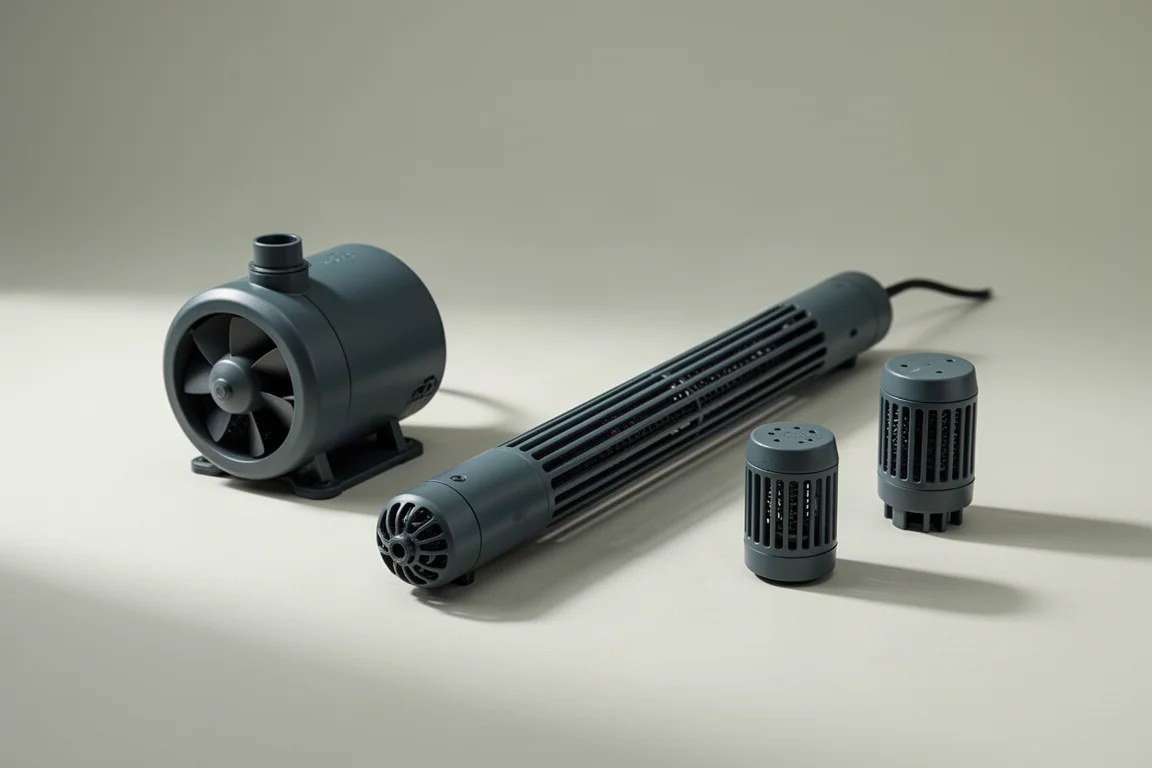
Introduction
Picking a wave maker for a first reef tank looks like a simple decision until you see how many models exist. There are more than 100 options out there, and flow touches almost everything: water quality, coral health, and how clean the tank stays over time. Get it wrong and you can end up with high phosphates from settled waste, a display coated in cyanobacteria, or corals that never fully settle in.
This guide covers what a wave maker actually does, the two broad pump categories, the factors that narrow the choice, and six pumps worth comparing, from wide-dispersal units for small tanks to narrow, high-output pumps built for long systems.
What a Wave Maker Actually Does for Your Reef Tank
The name is slightly misleading. A wave maker is really a flow maker: any submersible powerhead with a relatively wide flow pattern that is designed to move water around and through the tank. It handles several distinct jobs.
The first is keeping detritus suspended. Fish food and fish waste settle to the bottom of an aquarium, and without water movement they break down into nitrates and phosphates, which fuels nuisance algae. Enough movement keeps food and waste suspended in the water column long enough to reach the overflow and be filtered out before they break down.
The second job is delivering nutrients to corals. Whatever coral food or fish food goes into the tank, a submersible powerhead circulates it and brings it directly to the coral polyps.
The third job is habitat. Most saltwater aquarium fish do not come from the still depths of the ocean. They come from the turbulent zone around a reef where water is constantly moving, and a wave maker helps recreate the conditions they would find at home.
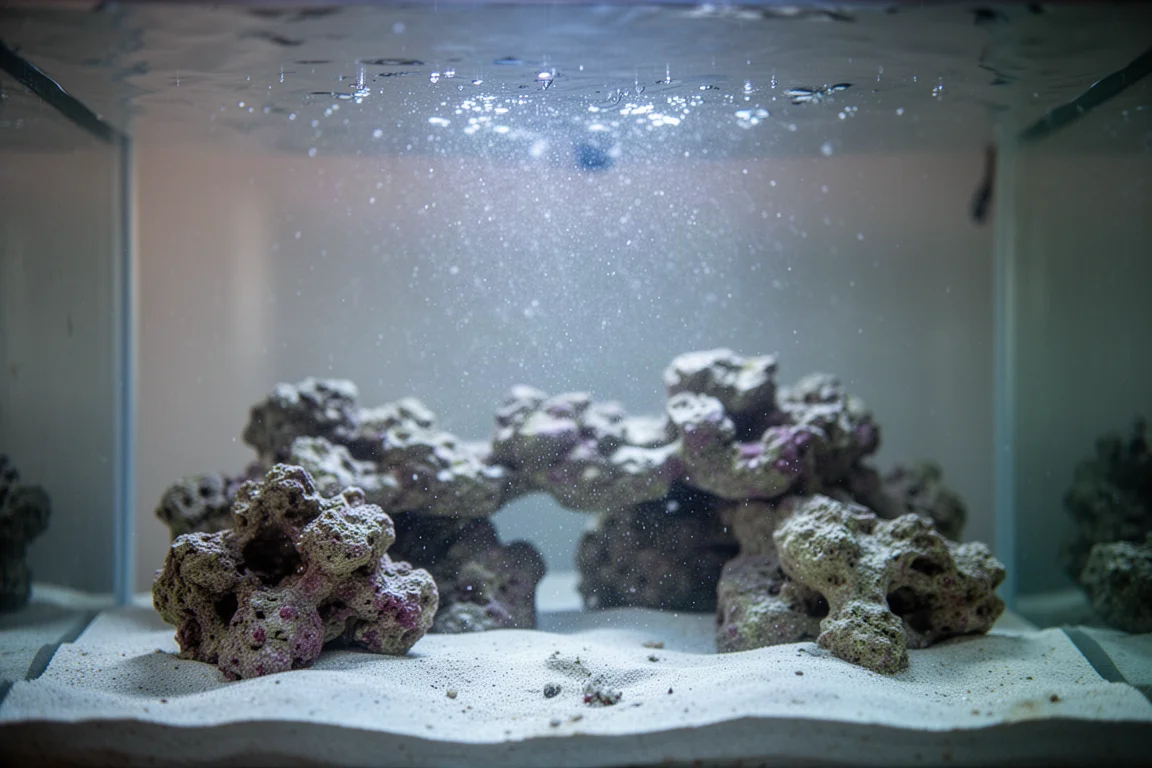
Without flow, a reef tank loses much of its ability to process waste and corals have a harder time feeding. That makes pump selection one of the highest-impact choices in the hobby rather than an afterthought.
AC and DC Wave Makers: Two Broad Categories
The first broad category is AC pumps. These are by far the least expensive and the most simple, with only two states: fully on or fully off. Pair them with a timer and they become pseudo-controllable, because you can program on and off periods to create subtle variation in the flow pattern.
The second category is DC powerheads. These are the more expensive option, so they are adjustable and come with a wider set of features. Some include built-in programs that simulate the flow patterns found on a natural reef, while others are more straightforward and simply control the speed of the pump.
How to Choose the Right Flow for Your Tank
Five practical factors narrow the field quickly.
Tank dimensions come first. Smaller tanks, roughly anything under two feet in length, are usually better served by a powerhead with wider dispersal or by a much smaller pump with a narrow, concentrated focus. The real concern is avoiding a direct blast at your corals. Larger tanks of three feet or longer are better served by a gyre pump that produces narrow laminar flow, or by something like a Vortech, which is very powerful across a narrower range and can carry flow the full length of a long tank.
The second factor is the aquascape you have already built or intend to build. You want a pump that creates meaningful flow patterns through and around the rockwork, which clears dead spots and prevents detritus buildup. Depending on the shape of the aquascape, a second wave maker aimed directly at a low-flow area may be the simplest way to keep that zone clean.
Corals are the third factor. Soft corals and many large polyp stony corals do well with low to medium flow, while many small polyp stony corals need medium to high flow. Too much flow aimed directly at large polyp stony corals can damage their fleshy polyps or cause them to retract, and too little flow around many small polyp stony corals can stunt growth and allow detritus to accumulate. In a mixed reef, the answer is to choose the right pump and then place each coral where its flow needs are met.
Placement is the fourth factor. Powerheads most often sit on the sides of the tank, but the back panel is sometimes the better position. The right choice depends on the flow pattern you want and on how much clearance the mounting magnet needs, which is why the pump sections below note where each model fits best.
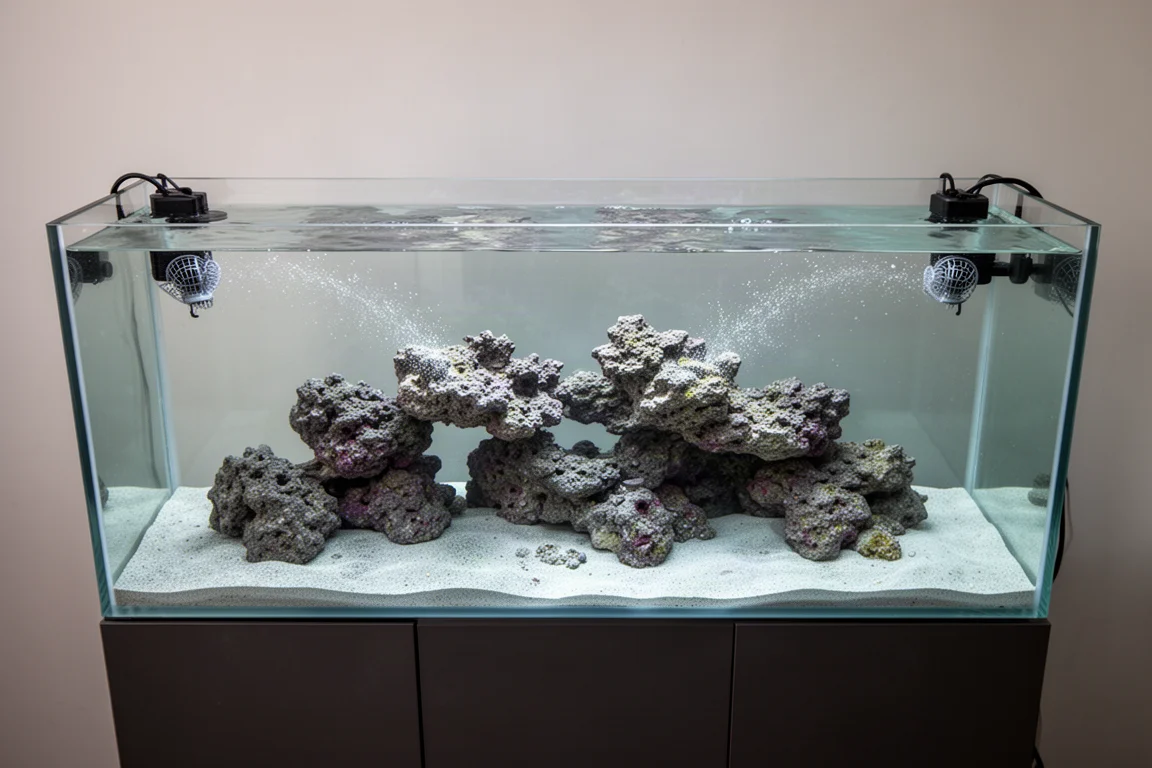
The fifth factor is how many pumps you need. Small tanks under 40 gallons usually need only one. Beyond that, it depends on the tank.
Best Overall: Ecotech Marine Vortech MP10
The Vortech MP10 is the pump to understand first. It produces a conical flow pattern, the circular style of flow rather than a flat laminar sheet, and it runs at 2,500 gallons per hour. It anchors the smallest end of a three-size range that extends up to the 7,500 gallon per hour MP60.
Its defining trait is the low-profile design with no wires inside the tank, which keeps the display clean and makes it one of the easiest pumps to live with visually. It is programmable through the included controller or wirelessly through the Mobius app. Long-term durability is part of its reputation as well, with units staying in service for close to a decade across a wide variety of tanks, and a single MP10 has proven to be enough for a display of roughly 50 gallons. For a tank of that size, two MP10s on opposite sides would create a good amount of flow and enough turbulence to keep most corals happy.
Its narrower, condensed flow also means the output can reach the far side of a lengthy tank, which is a real advantage over wide-angle pumps whose effectiveness drops off quickly.
Ecotech Marine Vortech MP60: Flow for Long Tanks
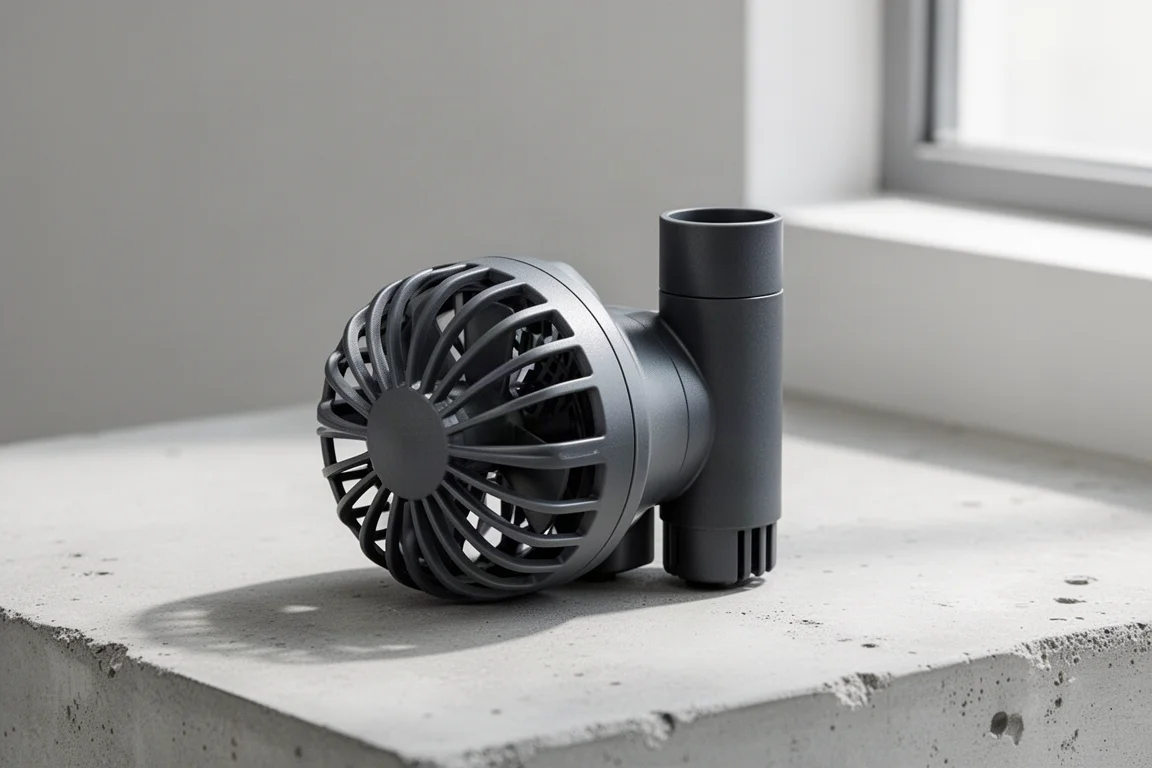
The MP60 sits at the top of the same range at 7,500 gallons per hour, roughly three times the output of the MP10. It shares the platform’s core traits: conical flow, a low-profile body with no wires inside the display, and control through the included controller or the Mobius app.
That higher rating makes it the more logical pick for long, high-volume systems where a narrower, forceful flow has to travel a considerable distance. Where a smaller Vortech covers a compact display comfortably, the MP60 exists for the tanks that need far more water movement across a much longer span.
Because the flow is concentrated rather than widely dispersed, placement still matters. Angle the pump so the current passes through the aquascape rather than straight into a coral, and build in room for a second unit later if the rockwork leaves quiet zones.
Maxspect Gyre: Laminar Flow in a Slim Body
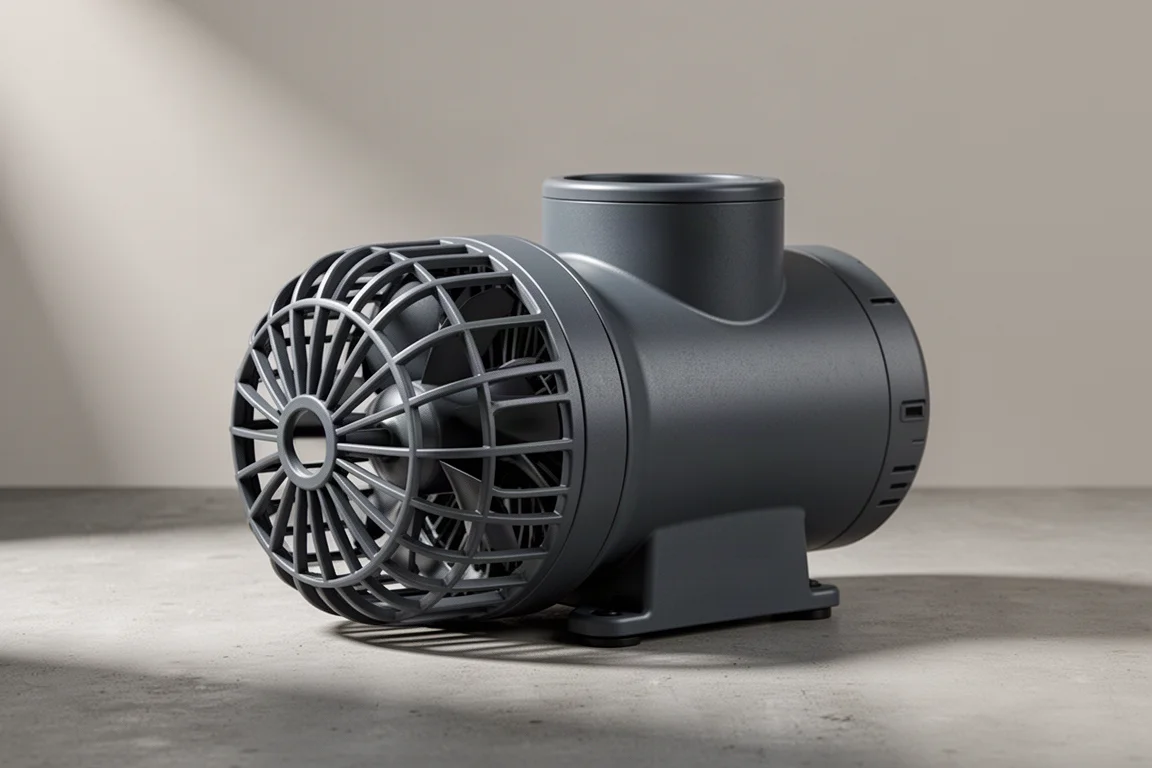
The Maxspect Gyre looks different from a conventional powerhead for a reason. It is long and slender, and it puts out a laminar, sheet-like flow rather than a cone. The easiest way to picture the difference between the two flow styles is a cone against a sheet of paper, and the Gyre is the sheet.
That shape makes it a strong candidate for tanks three feet or longer, where narrow laminar flow can be pushed the full length of the display. It also solves a specific placement problem: if you need the pump mounted as close to the water level as possible without drawing a lot of air into the propeller, this is the form factor to look at.
The number of units depends on the setup. A gentle system can run on a single gyre at its low setting, where the laminar flow disperses widely enough for calm-water inhabitants. A tank with a more demanding aquascape can benefit from a second gyre running on an opposite schedule, which produces a more varied flow pattern overall.
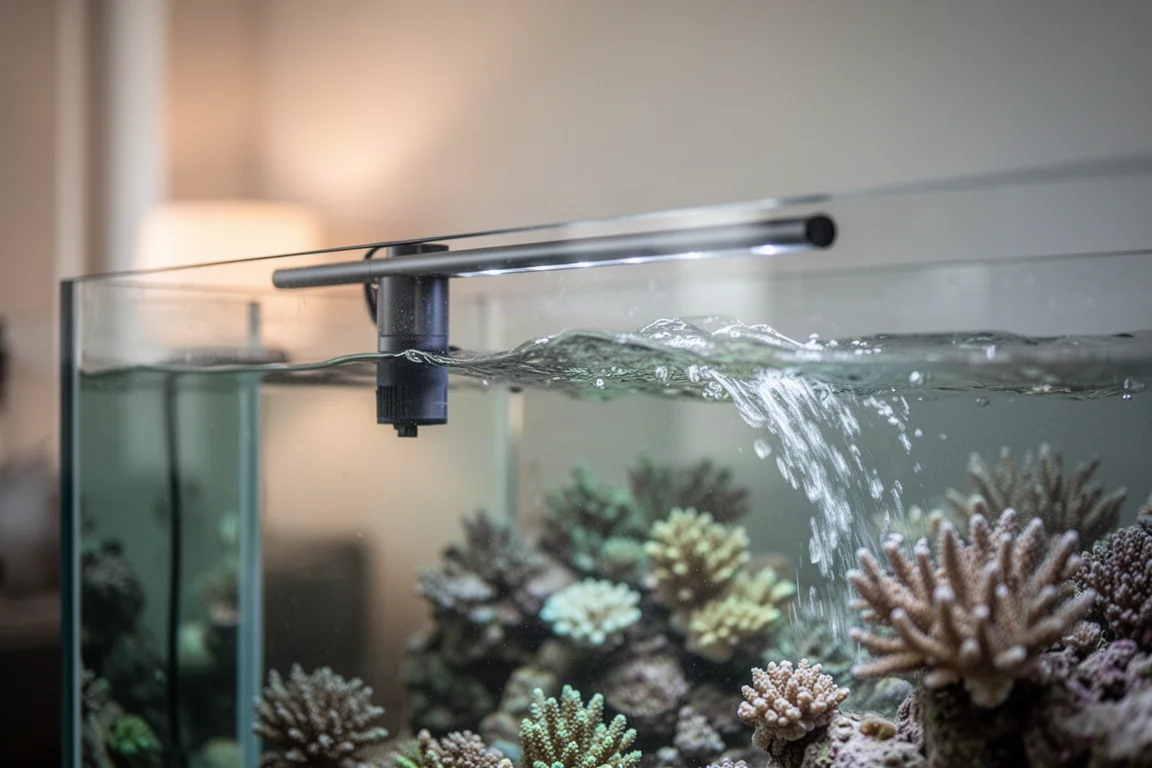
For long tanks, the combination of a slim profile and a directional sheet of flow is what makes a gyre worth planning around.
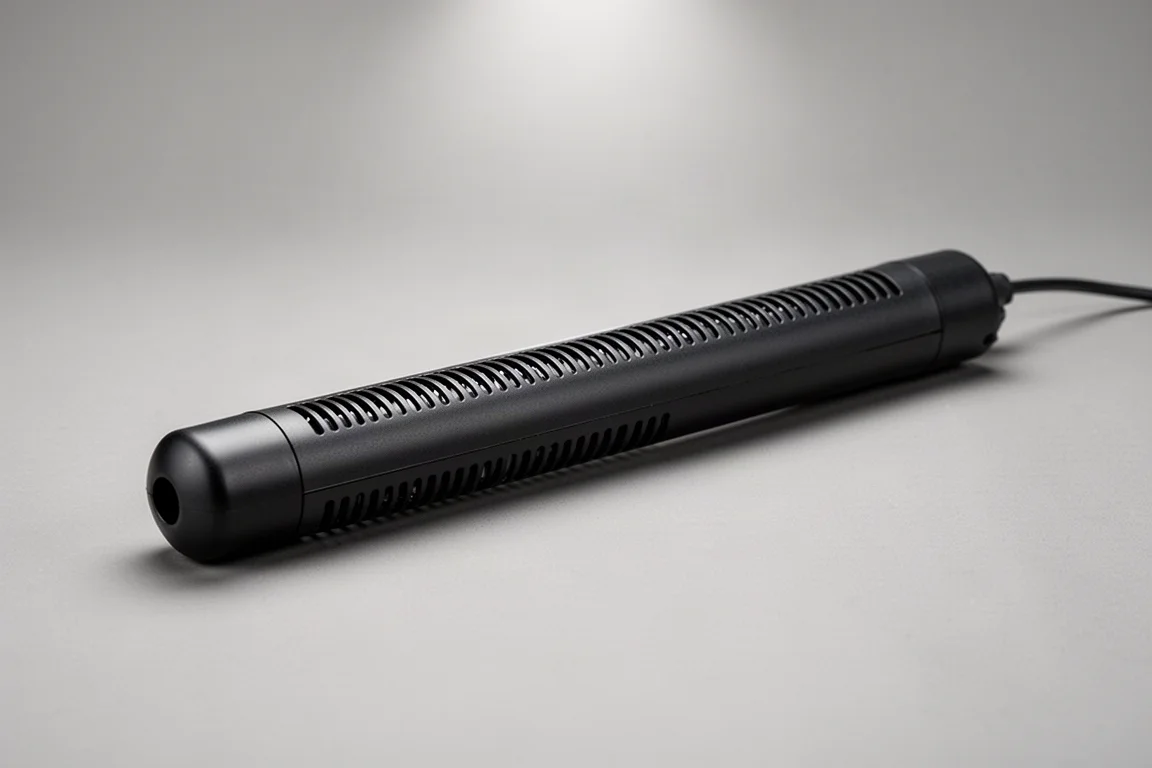
Reef Breeders RP-M: Wide, Dispersed Coverage
The Reef Breeders RP-M is a wide-angle pump. A 2,000 gallon per hour powerhead behaves very differently depending on how the water leaves the pump head, and with a super wide angle the flow disperses quickly and the effectiveness of the pump wanes as the water spreads out.
That is not automatically a downside. Wide dispersal is often the better match for a small tank, where a concentrated jet would hit the corals in its path too hard. The RP-M also uses a small, thin exterior magnet, which makes it a practical choice for mounting on the back panel of a tank where space is tight.
Think of it as a coverage pump rather than a distance pump. It is at its best when the goal is gentle, broad movement across a compact footprint rather than a strong current that has to cross six feet of glass.
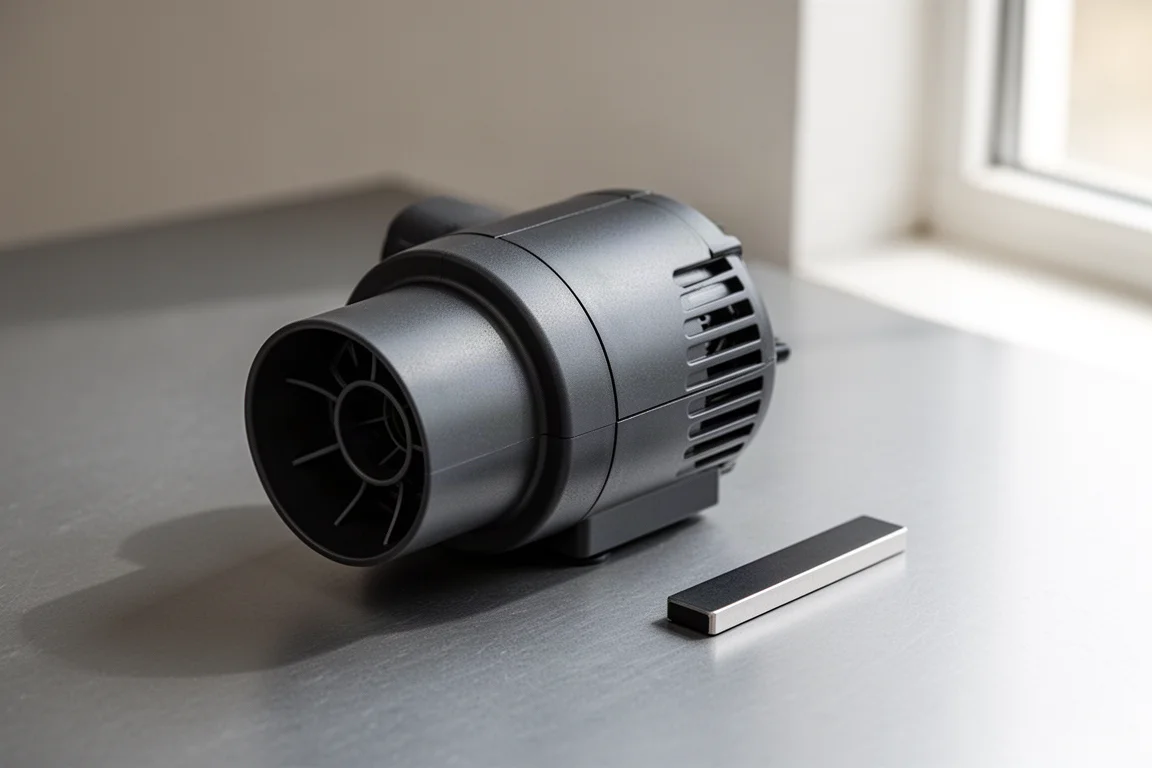
AquaIllumination Nero: Slim Magnet for Back Panel Mounting
The AquaIllumination Nero belongs to the group of pumps suited to back panel placement. Mounting on the rear glass generally requires a powerhead with a small, thin exterior magnet that fits into tight spaces, and the Nero meets that requirement.
Back panel mounting is worth considering when side placement puts flow where you do not want it, or when you would rather keep the side glass clear. Because a rear-mounted pump can direct flow along the length of the aquascape instead of across it, it is also a useful way to address a dead spot behind the rockwork.
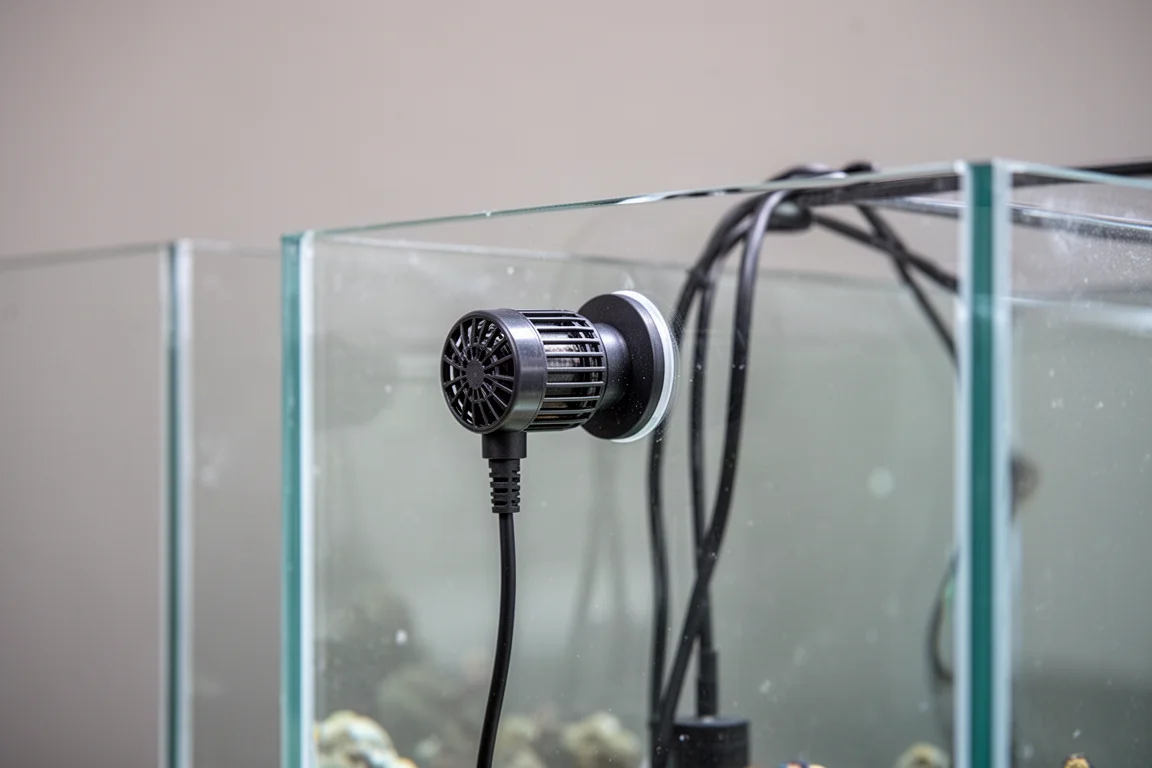
If the back panel is your preferred position, the Nero is one of the pumps to shortlist alongside the RP-M and the WAV.
Neptune Systems WAV: A Back Panel Option
The Neptune Systems WAV also qualifies for back panel mounting. It uses a small, thin exterior magnet that can fit into tight spaces at the rear of the tank, which is the same requirement that makes the RP-M and the Nero workable in that position.
The trade-off with any rear-mounted pump is that the flow direction is fixed by where the glass allows you to place the magnet. That makes it worth checking the aquascape first: a rear-mounted pump works best when the current can travel along the rockwork rather than straight into the front glass.
If keeping wires out of the display is the higher priority, a low-profile pump with an external motor is the better direction. If tidy rear mounting is the priority, the WAV is a sensible contender.
Buying Advice: How Many Pumps Do You Need?
One pump is usually enough for tanks under 40 gallons. Beyond that, the right number depends on the tank rather than on a fixed formula.
Two aquariums of nearly identical size can have different needs. A gentle setup can run a single laminar pump on its low setting and be perfectly served, while a tank whose aquascape leaves sheltered pockets may need a second pump aimed straight at the quiet zone. Running two pumps on opposite schedules creates a more diverse flow pattern, and that variation is often what keeps anemones and corals settled.
Flow also has to match the corals you keep. Low to medium flow suits soft corals and large polyp stony corals, while many small polyp stony corals want medium to high flow. Aiming strong direct flow at large polyp stony corals can damage their fleshy polyps or cause them to retract, and too little flow around small polyp stony corals can stunt growth and let detritus build up. In a mixed reef, select the pump first and then position each coral where its flow requirement is met.
Budget is the final trade-off. AC pumps are the least expensive and the simplest, and a timer can add useful variation to an otherwise fixed output. DC pumps cost more but bring adjustable speed and, in some cases, built-in programs that mimic natural reef flow. If you are unsure, start with one quality DC pump sized to your display and add a second unit only once you can see where the dead spots actually are.
Conclusion
Choosing a wave maker comes down to matching flow to your tank. Small displays benefit from wide dispersal or a smaller, focused pump. Long tanks benefit from narrow, directional flow that can carry across the full length of the glass. Low-profile, wire-free designs such as the Vortech line remain the benchmark for most hobbyists, with the MP10 covering a broad range of common display sizes and the MP60 handling larger, longer systems. If you want flow near the water surface or a slim bar inside the tank, the Gyre is the closest match. If the back panel is your mounting position, the RP-M, the Nero, and the WAV are the ones to compare.
Get the flow right and the rest of the tank gets easier: waste reaches the overflow, food reaches the polyps, and the fish in the display behave the way they would on a reef.
Further reading
Related Reviews
Aquarium Equipment
Abyzz Professional DC Pumps: A100, A200, and A400 Reviewed
A closer look at three German-made DC return pumps built for large reef systems, with titanium internals, fine flow control, and a 10-year warranty.
Aquarium Equipment
AdaptiveReef Controller Accessories: Three Tactile Upgrades for Your Reef Controller
A practical look at three AdaptiveReef add-ons that put physical switches, at-a-glance status lights, and a loud alarm within arm's reach of your reef tank.
Aquarium Equipment
Adaptive Reef Controller Boards: Basic vs Deluxe for Cleaner Aquarium Gear
A practical look at the Adaptive Reef Basic and Deluxe controller boards, what each one includes, and how to choose the right size for your tank gear.