Cycling Gear
Best Ultra Cycling Gear 2026: Seven Essentials for Long Rides and Bikepacking
A practical look at seven ultra-distance cycling picks, from frame-safe straps and solar navigation to cargo bibs and tubeless plug tools.
Introduction
Ultra-distance cycling is hard on gear. Anything that rattles, rubs, leaks or needs charging too often becomes a problem at exactly the wrong moment, usually several hours from anywhere useful. The seven items below have each earned a permanent place on long rides, multi-day bikepacking trips and self-supported races, and every one of them solves a specific problem rather than adding weight for its own sake.
The selection covers carrying capacity, navigation, food storage, comfort and roadside repair, with a short list of small essentials at the end. Prices across the group vary widely, and in several cases a cheaper alternative will do the same job. What matters is whether an item answers a question you actually ask on your own rides.
Tailfin Ski Straps: Curved Buckles That Never Rub
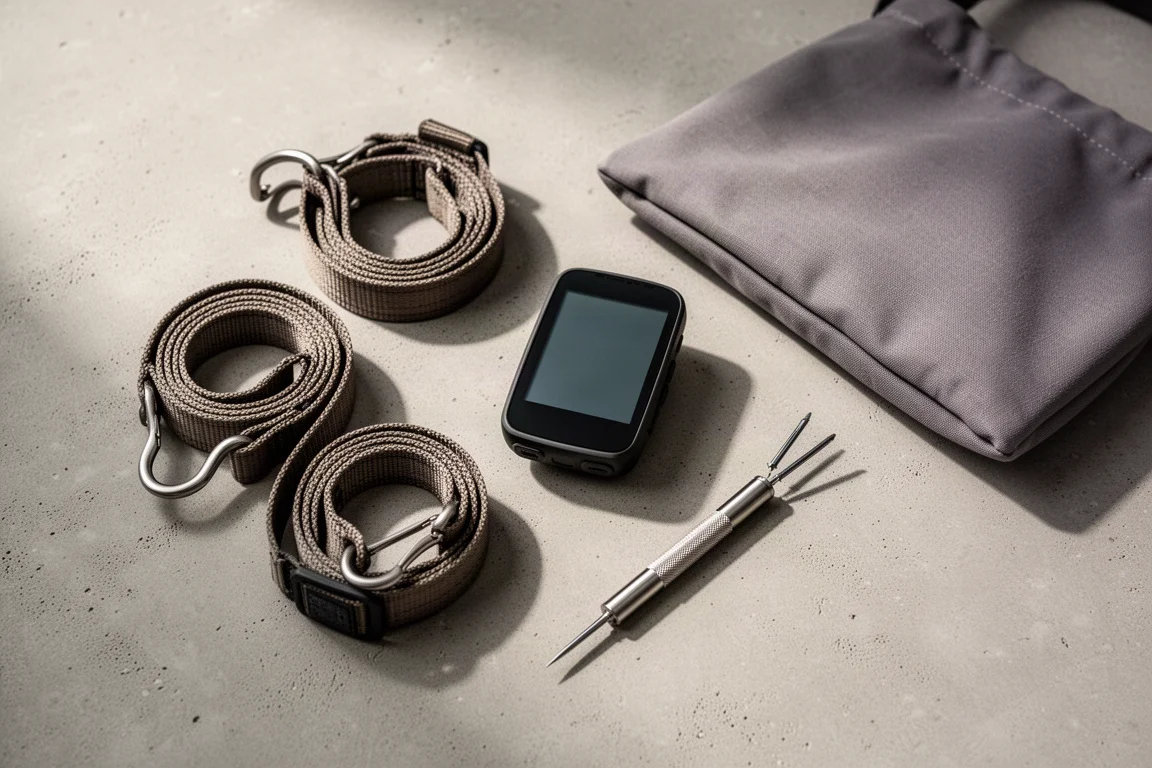
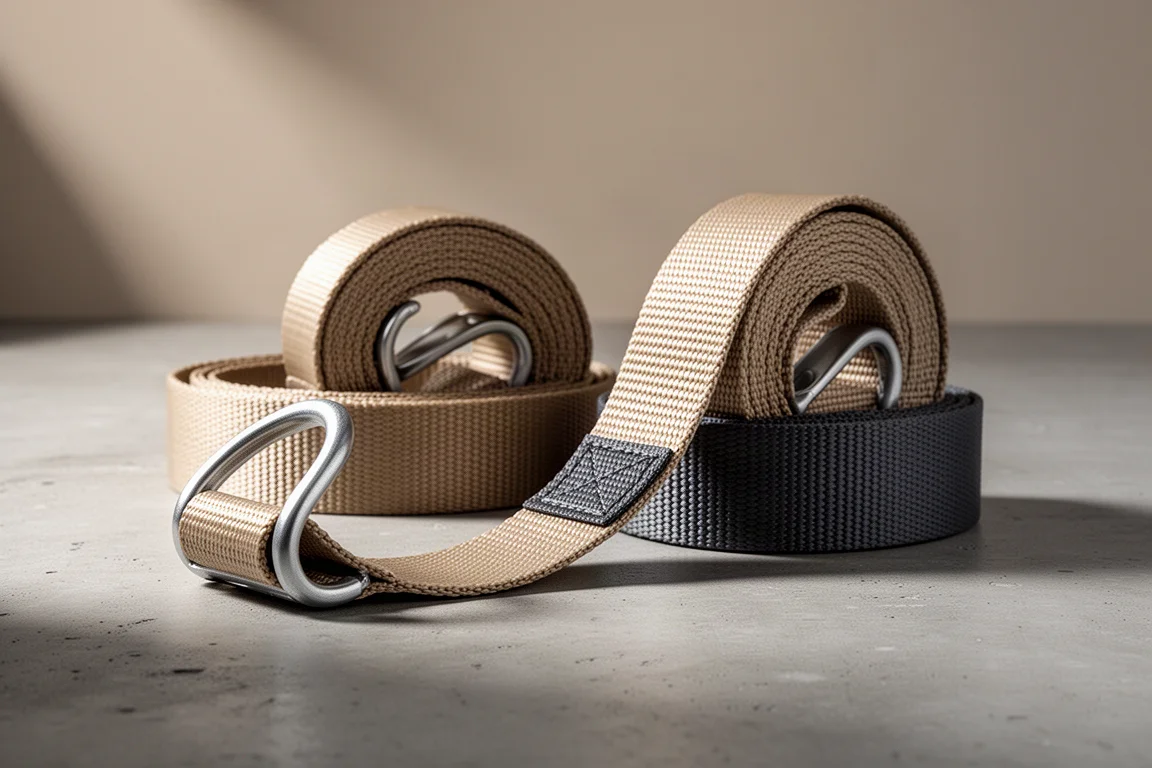
Straps are the least glamorous item in any bikepacking kit and often the one that gets used most. The Tailfin version has a curved buckle, a small design detail with a real benefit: the curve keeps the metal away from the frame, so a strap tightened over a tube or a bag is far less likely to rub through paint. They are available in several lengths, which makes it easier to match a strap to the load instead of fighting one that is too short or too long.
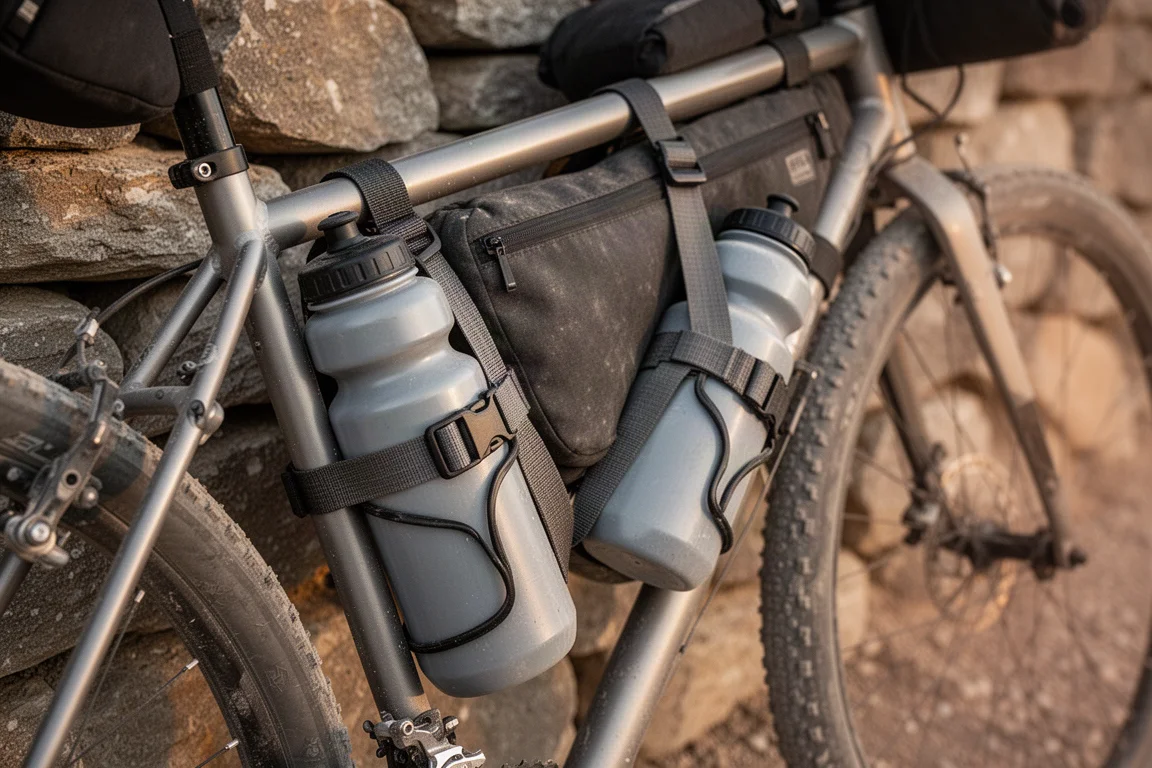
On rides where resupply is uncertain, straps are what let you carry more water than your bags were designed for. A large bottle strapped to the frame or the fork is a common answer on long, dry routes, and the same approach works for extra food, a rolled layer or anything else that will not fit inside a bag. They also work as a field repair: if a bag strap or buckle fails mid-ride, a ski strap will hold the load in place until you reach the next town.
The loads do not have to be sensible. Three baguettes and a croissant have been strapped to a bike with straps like these, though the croissant did not survive the journey.
Garmin Edge 1040 Solar: Navigation That Keeps Its Charge
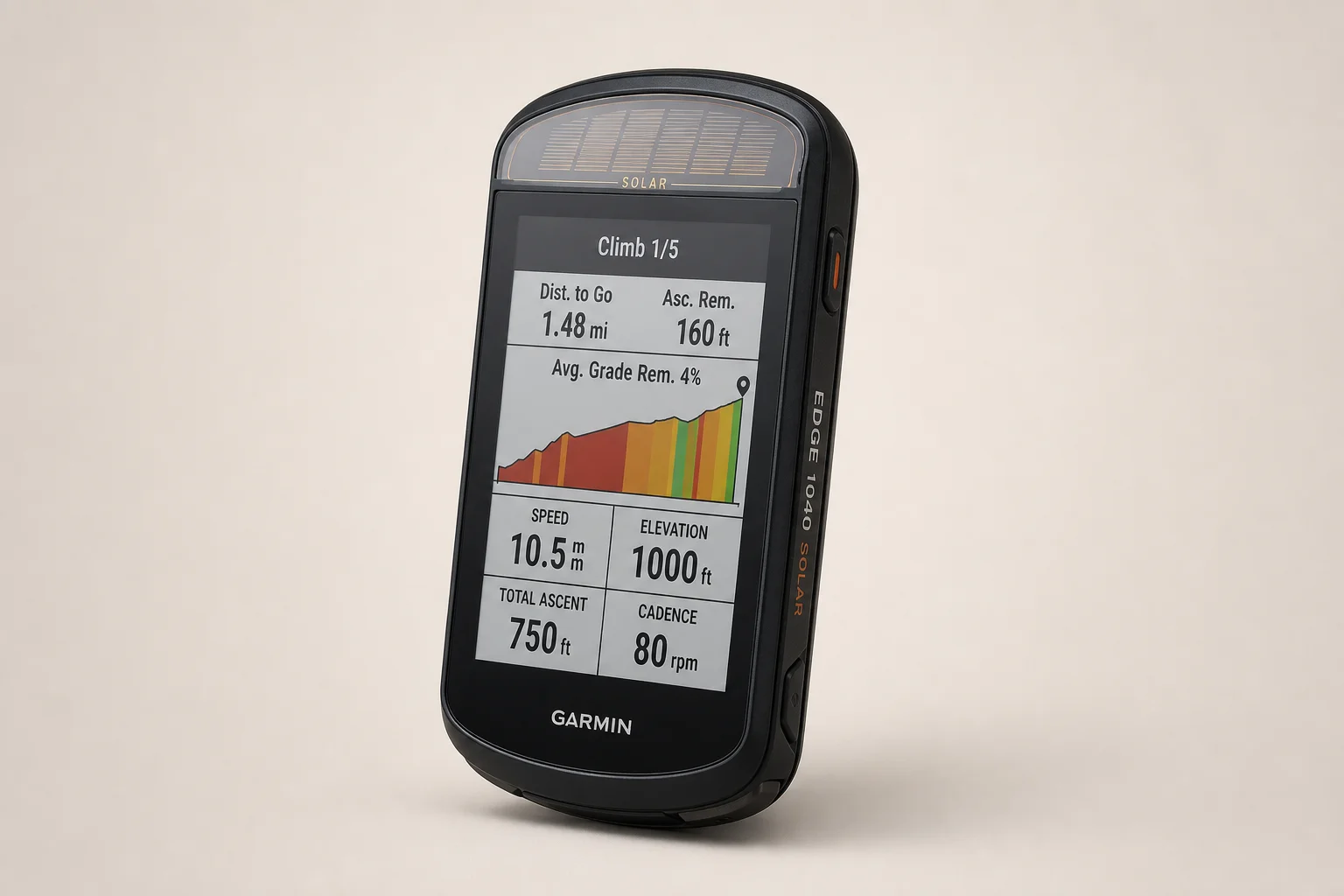
Solar charging sounds like a marketing line until you ride an 850 km race without plugging the computer in once. That is exactly what happened with the Edge 1040 Solar: the unit kept itself topped up across the whole event, which removes the small but constant worry of finding power at a control point or carrying a battery bank just to keep navigation alive.
The 1040 is the largest computer in the range, and the big screen is the part that matters most off-road. Route lines and trail junctions are easier to read at a glance, and zooming into the map is genuinely useful when a path is faint or the line on screen does not obviously match what is under your wheels.
Route planning is straightforward too. Day-by-day routes can be built on a phone and pushed across through the Garmin Connect app, which suits multi-day trips where the plan changes as you go.
Garmin Edge 1030 With a Battery Pack: Doubling Ride Time
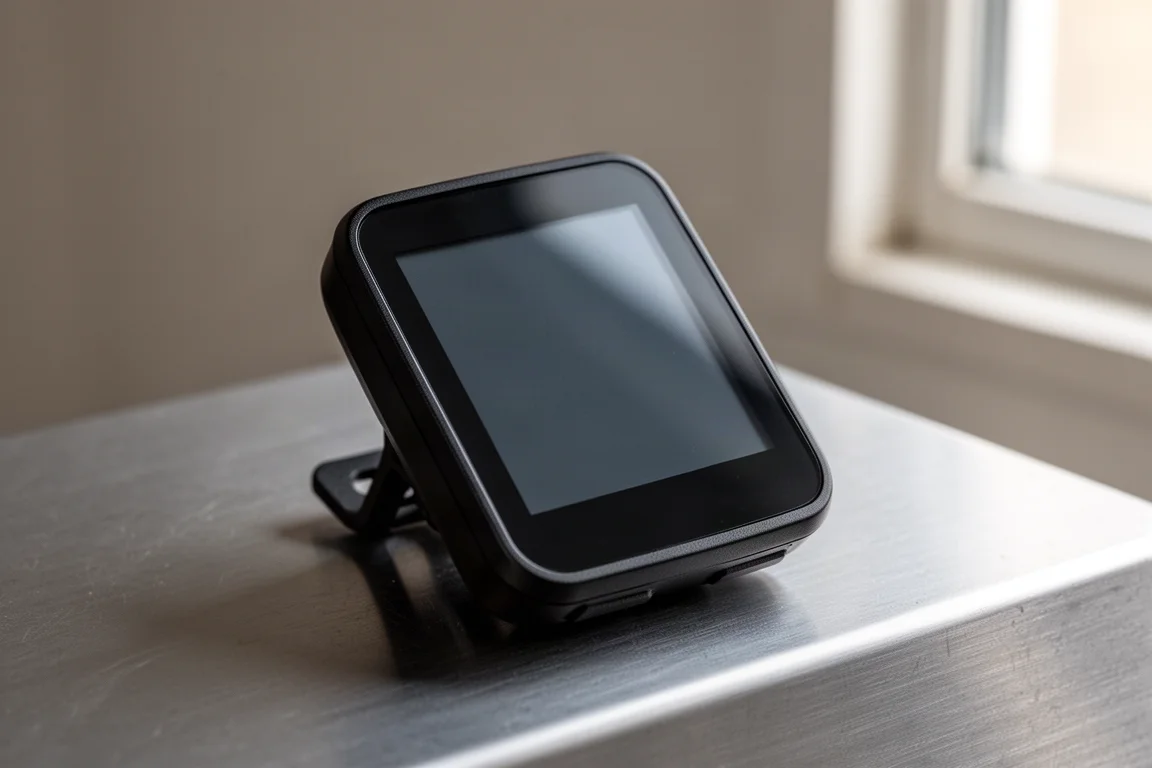
Before solar computers, the practical answer to battery anxiety was a bolt-on pack. The Edge 1030 pairs with a battery pack that attaches to the bottom of a mount supplied with the pack, effectively doubling the run time of the computer. It is a simple, mechanical solution: no cables to manage and no change to how the computer itself works.
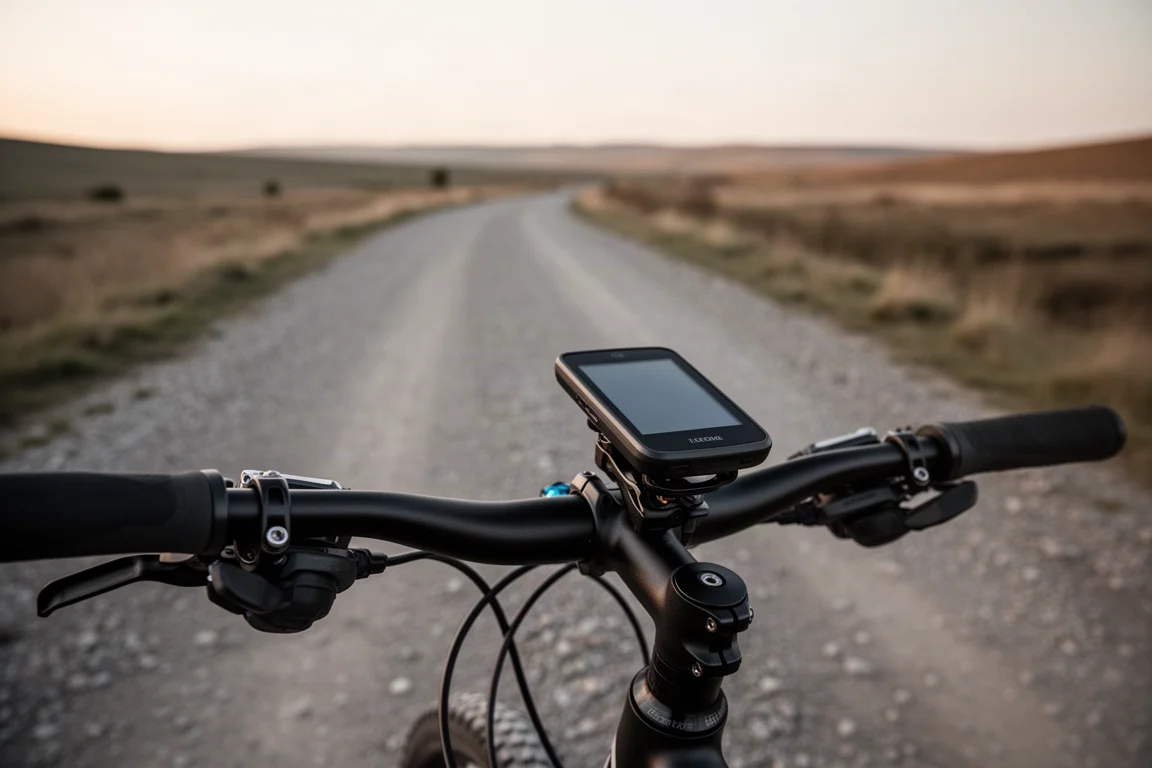
For riders who already own this generation of computer, or who prefer a known quantity over a new unit, the pack remains a sensible way to extend range on long events. The trade-off is a slightly bulkier cockpit when the pack is fitted, and one more thing to charge before a big ride.
Attaquer Cargo Bib Shorts: Pockets Where You Can Reach Them
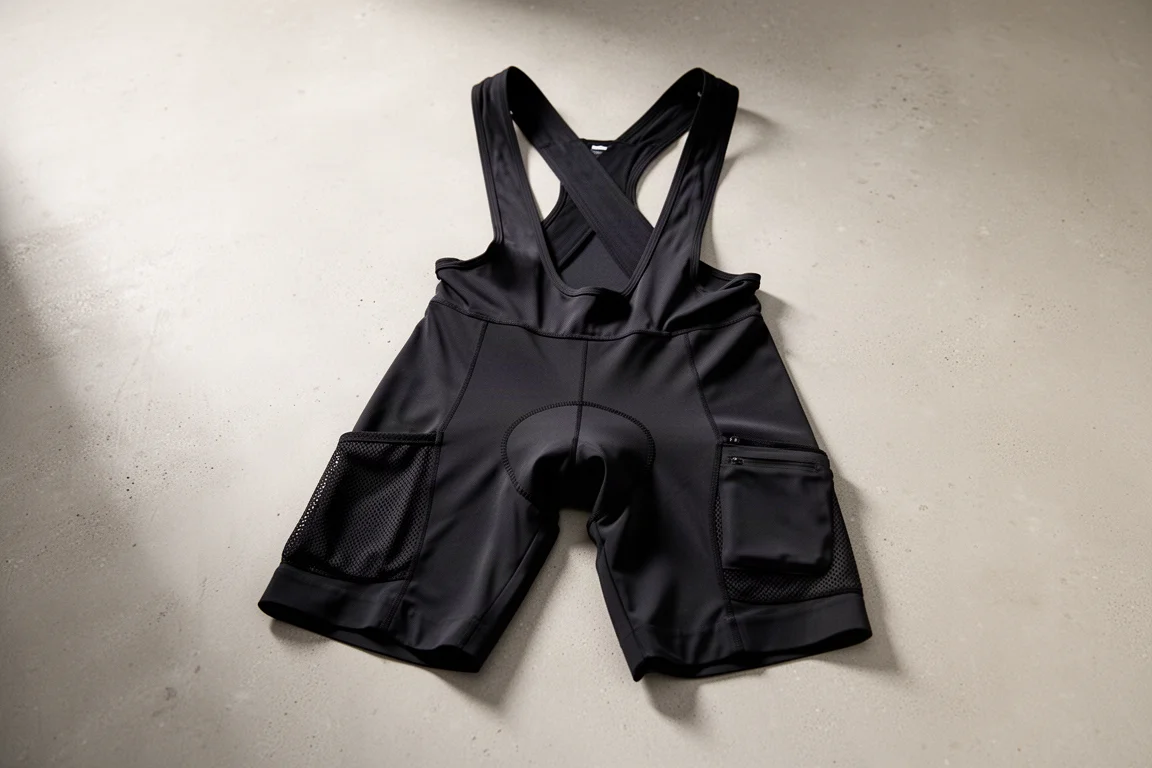
Cargo bib shorts add pockets in places you can actually reach while riding. On the Attaquer version there is a pocket on the side of each leg plus one across the back, and the side pockets are the useful ones. A packet of biscuits fits neatly and sits against the thigh, so it can be opened and eaten without stopping or twisting around in the saddle.
For everyday riding and training, a cargo cut is simply more practical than a standard race short. Food comes out of the pockets far more easily than from a rear-only design, and being able to carry more supplies in the first place is what keeps a long ride going. The one thing to keep in mind is that these pockets suit snacks and small items rather than a full resupply.
Apidura Fold-Up Musette Bag: Waterproof Storage Off the Bars
A musette bag is not a complicated product, but the details here are well chosen. The Apidura version folds down small enough to disappear into a bag, and it can be strapped to the bike rather than carried in a pocket. The fabric is waterproof, which matters more than you might expect in wet climates, and it opens quickly when you need something out of it.
An included strap keeps the bag steady while you ride, so it does not swing about on rough surfaces. On bikepacking trips it works well as a food carrier at the end of the day, when bringing supplies back to a hotel or campsite is far easier than trying to squeeze everything into an already packed bikepacking bag.
Dynaplug: Clean Tubeless Repairs in Seconds
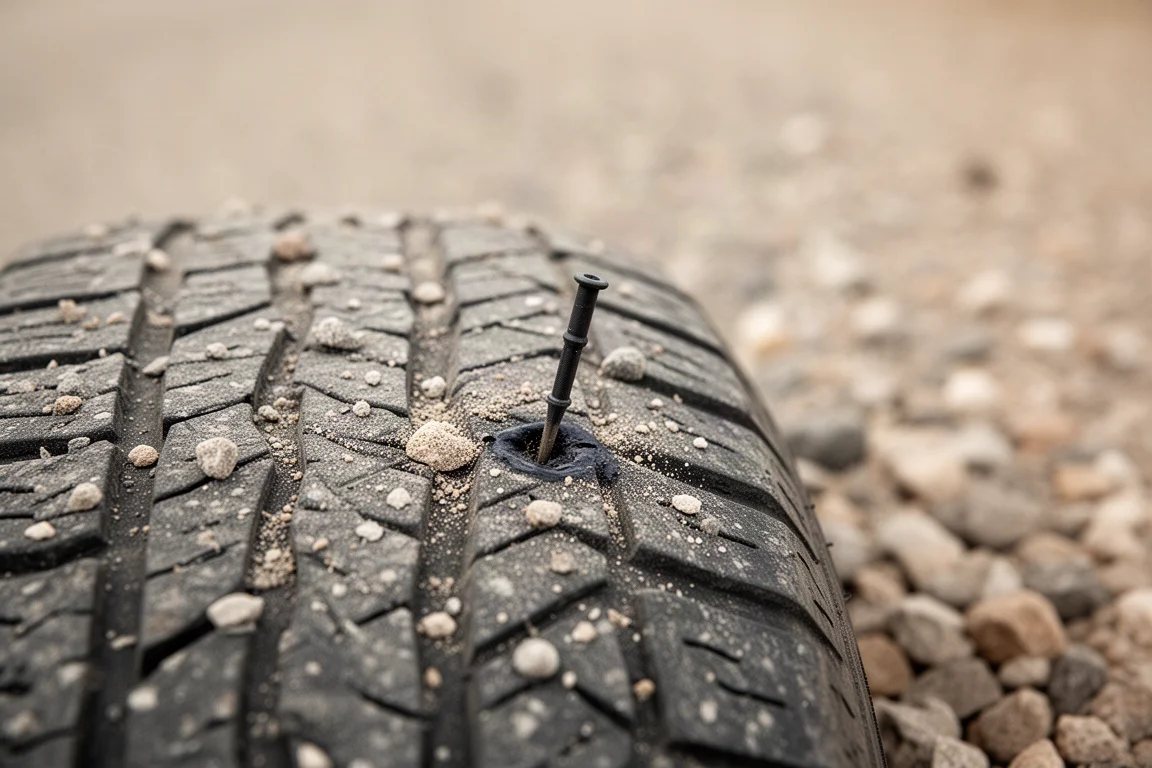
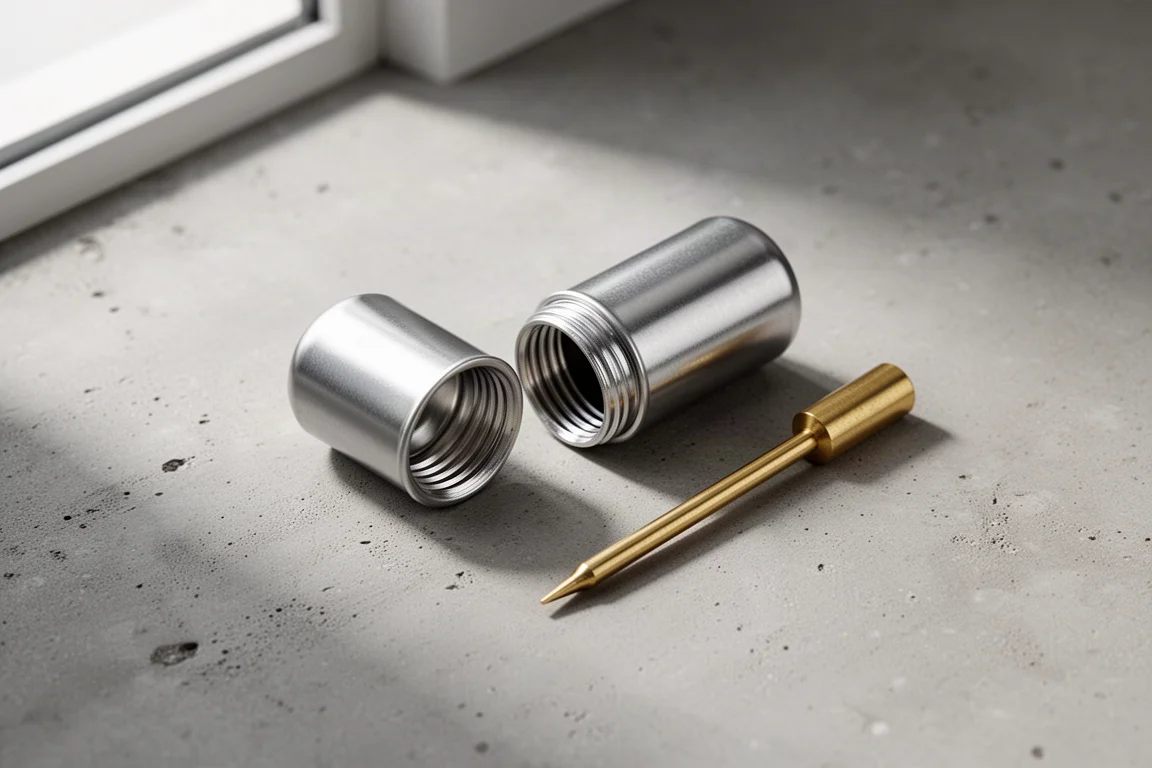
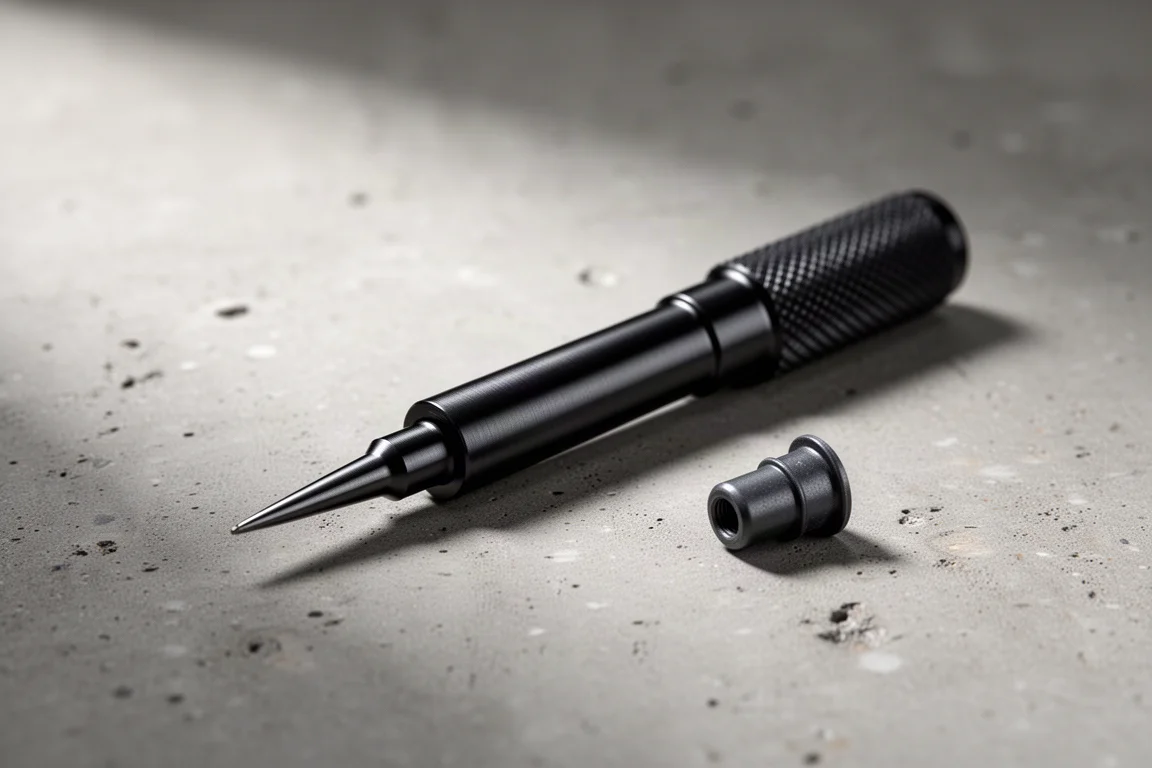
Tubeless punctures used to mean a messy, fiddly repair at the side of the road. The Dynaplug changes that. The tool carries an insertion tip at each end, one smaller and one larger, so you can match the plug to the size of the cut. The brass tip pushes into the tire easily and the rubbery plug fills the hole, which makes the whole process quick and clean.
That speed matters more than it sounds. A repair that takes under a minute is a minor interruption, while one that drags on for fifteen minutes can end a race outright. This is the tool that keeps the first outcome within reach.
Dynaplug Racer: The Same Repair, Mounted and Ready
The Racer takes the same repair approach and reshapes it for accessibility. Instead of living at the bottom of a pack, it is designed to mount on a bottle cage, so it is right there when you need it. Standing over a flat tire on a cold morning, not having to unpack a bag first is a genuine advantage.
Small Essentials That Earn Their Space
Not everything needs a full entry, but a few small items are worth packing on any long ride. A lightweight down jacket is warm for its size, packs down into the odd corners of a bag, doubles as a cushion when you are sleeping rough, and adds a layer for cold nights in a bivvy or a tent. Fold-up shoes are the other half of that comfort equation: on bikepacking trips where you stop somewhere for a couple of days, walking around properly instead of in cycling shoes is a small luxury, and lace-free designs with a simple cord adjuster save space and slip on quickly.
A toothbrush is the item most often left behind and the one most appreciated on the third night of a race, since something minty also helps you feel awake during the small hours. A titanium spork is strong, weighs almost nothing, and usually carries a bottle opener on one side and a spork on the other, which means you can eat almost anything when proper cutlery is not available. A mini multi-tool with pliers, scissors and a small knife takes up no room and occasionally saves a trip, as when a failed brake caliper was worked around by filing cable guides and remounting the rear brake to the front just to finish a mountain race.
Buying Advice: Matching Gear to the Ride
Ultra racing and bikepacking ask different things of the same kit. A racer wants speed, minimal weight and tools that are instantly accessible, which is where the bottle-cage mounted plug tool and cargo bib shorts make the most sense. A bikepacker who stops for a few days wants comfort and flexibility, which is where the musette bag, fold-up shoes and a warm layer earn their place.
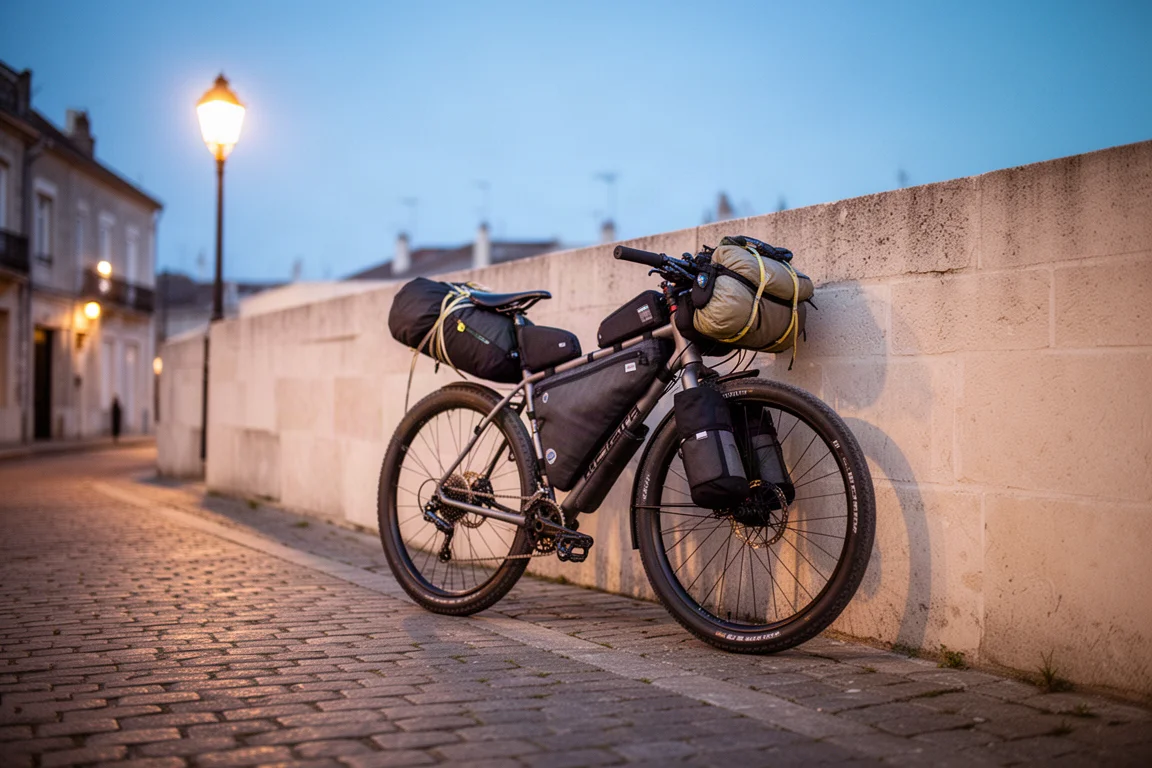
Carrying capacity is the other axis to think about. Straps and a musette bag are among the most affordable ways to add it, and they are also the most adaptable, because they can move between bikes and be left at home when they are not needed. Navigation comes down to power: a solar computer suits riders who are out in daylight for long hours, while a battery pack extends a computer you already own. Repair and hygiene items are small enough that there is rarely a good reason to leave them behind.
If you are building a kit from scratch, start with the problem you actually have. Riders who run out of water should look at straps first. Riders who lose navigation to a flat battery should look at power. Everything else can wait until it becomes annoying enough to solve.
Conclusion
None of these items are complicated, and that is the point. Straps that do not rub, a computer that holds its charge, pockets you can reach, a bag that keeps food dry and a plug that fixes a tubeless puncture in seconds: each one removes a small source of friction from a long day on the bike. Start with the pick that matches the problem you run into most often, and add the rest as your rides get longer.
Further reading
Related Reviews
Cycling Gear
8 Cycling Products Riders Keep Coming Back To
Eight cycling components and accessories with clear strengths, honest trade-offs and long-standing reputations among riders and mechanics.
Cycling Gear
Aero Helmets and Bottle Setups Tested: Six Options Ranked by Measured Watt Savings
Wind tunnel data on six aero helmets and bottle setups, with real watt savings, practical trade-offs, and guidance on what is worth buying first.
Cycling Gear
Aero Road Bikes and Fast Tires Worth Watching in 2026
Four aero road bikes and one fast road tire, with the real strengths, the open questions, and what to check before you buy.