Fountain Pen Inks
Top 5 Tea-Inspired Fountain Pen Inks Worth a Spot in Your Rotation
Five tea-inspired fountain pen inks from Nagasawa, Linen Taiwan, Jacques Herbin, Sailor, and Diamine, and what makes each shade worth writing with.
Introduction
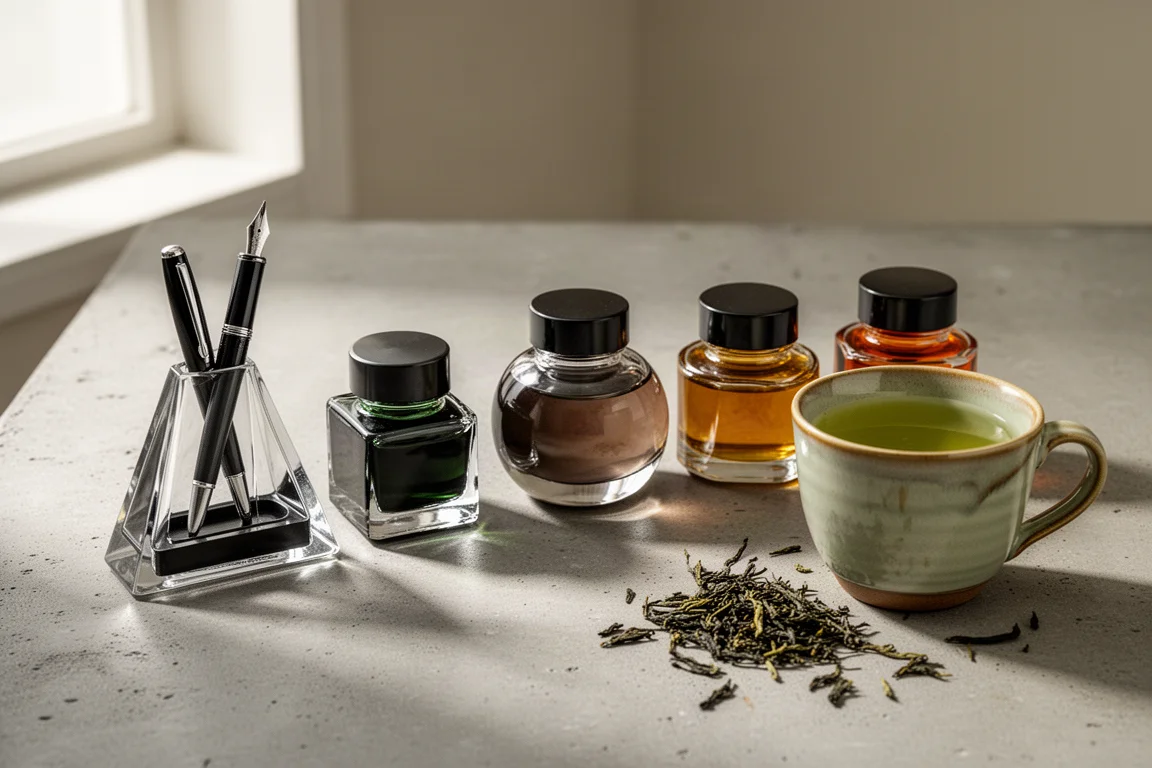
Tea and fountain pens make a natural pairing. Both invite ritual: the slow preparation, the anticipation, the small pleasure of taking time. It is no surprise that ink makers keep returning to tea for inspiration, translating the colors and moods of different leaves into bottled shades.
Tea itself is ancient. Legend places its discovery in China around 2700 BC, and a ninth century Arabian traveler wrote about it at length, as did Marco Polo. Portuguese traders eventually carried tea from Asia into Europe, and by 1650 it was spreading alongside British influence around the world. Its influence even reaches fashion: the origins of khaki trace back to tea-based dyes used on fabrics and yarns.
With so many varieties, flavors, and colors, tea has produced some remarkable ink shades. Here are five of the best tea-inspired fountain pen inks.
Nagasawa Sailor #34 Soramame Green Tea
Green tea comes from the Camellia sinensis plant, and its short drying time retains much of the leaf’s earthy green color and clean, sweet flavor. That character carries straight into this ink, which was developed for the Nagasawa stationery center in Kobe, Japan under the guidance of Sailor, so the pedigree is solid.
The color sits firmly on the green scale, away from the greys and browns you might expect from a tea-themed ink. The highlights read as springlike, like fresh April shoots, while the deeper pools shift toward a Sicilian olive. Nice toning and shading give it plenty of presence on the page, making it an intriguing and very usable green.
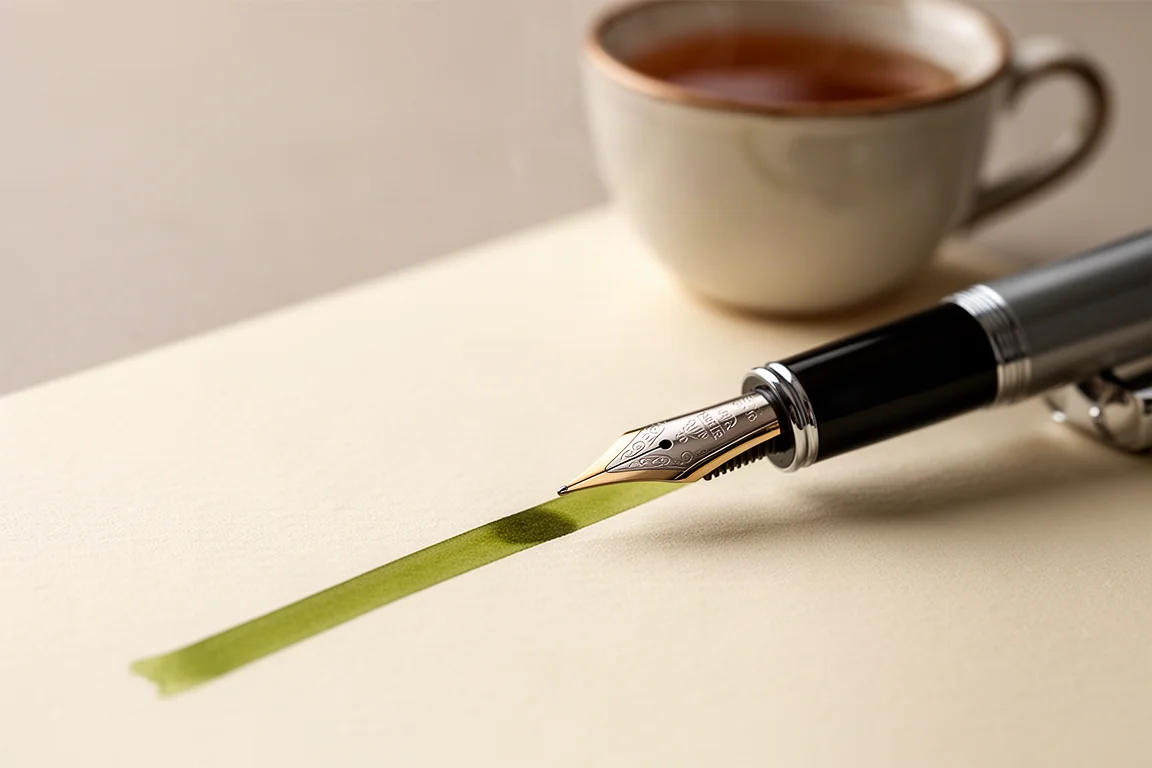
If you enjoy green inks, this is a fantastic addition to your collection. And like green tea itself, it rewards a bit of ritual: settle in, take your time, and enjoy the shade range.
Linen Taiwan Tea Set Dong Ding Oolong Tea
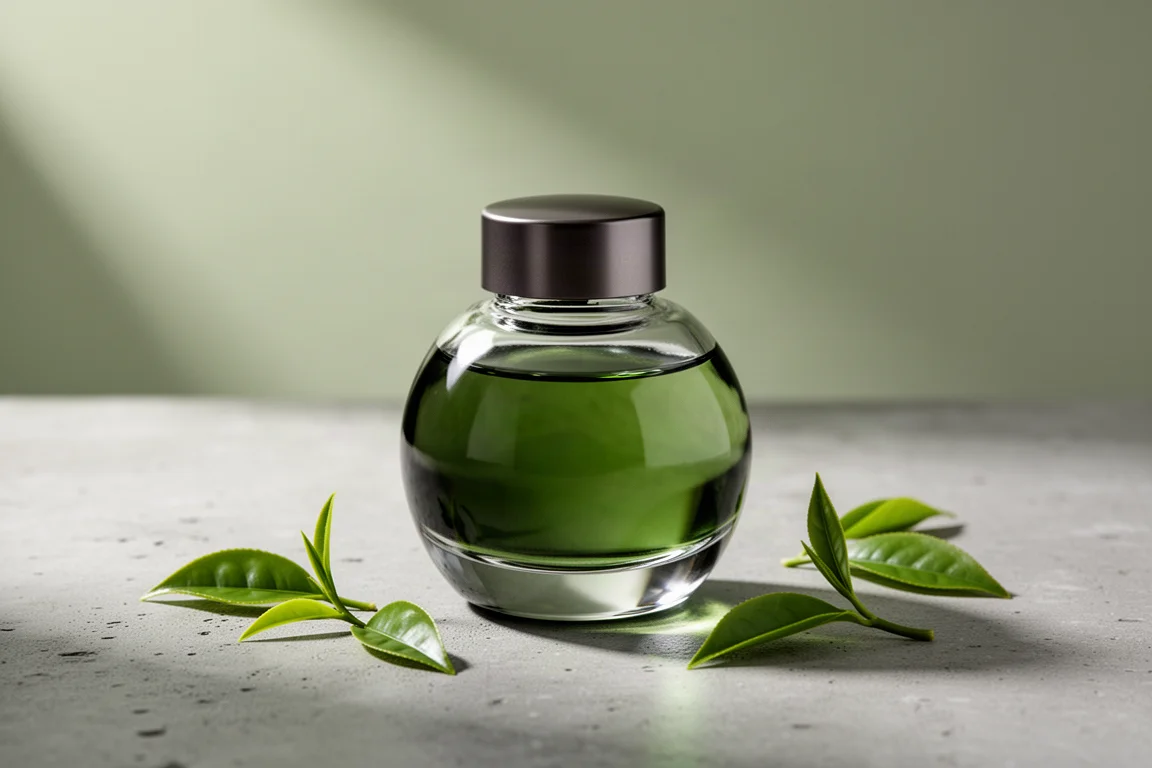
Oolong tea comes from the Yungkang village area near the Dong Ding mountains in Taiwan, the original home of oolong. The mornings bring early sunshine and the afternoons often fill with mist, conditions that give the leaves their distinctive earthy, sage-like depth.
This dye-based ink captures that mood beautifully. It is a greenish grey with dark, mysterious undertones, like moist forest soil. As you write, the color shades from dark tones reminiscent of the leaves at the bottom of the cup to lighter highlights like a swirl of sugar stirred in.
What makes it special is the balance. It is not green enough to be called green, and not grey enough to be a typical grey. It is a perfect suspension of colors that delivers good contrast on the page and works as a genuine everyday ink rather than a novelty.
Jacques Herbin Lie de The
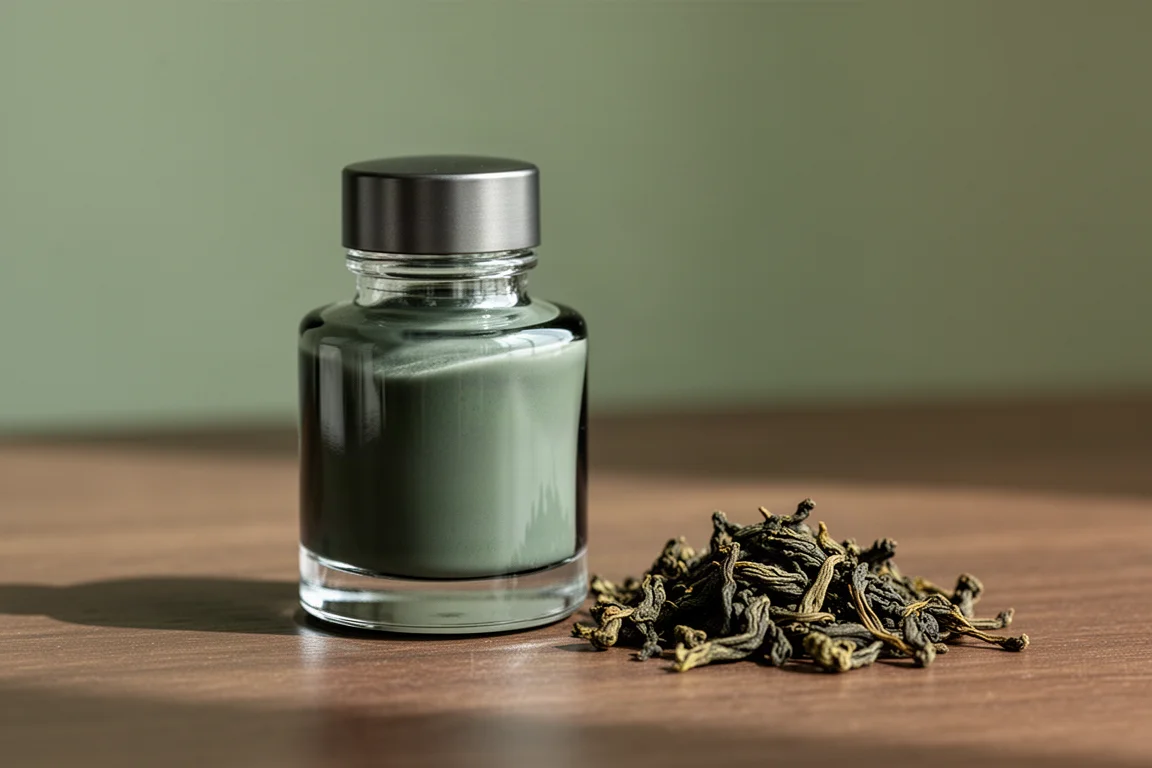
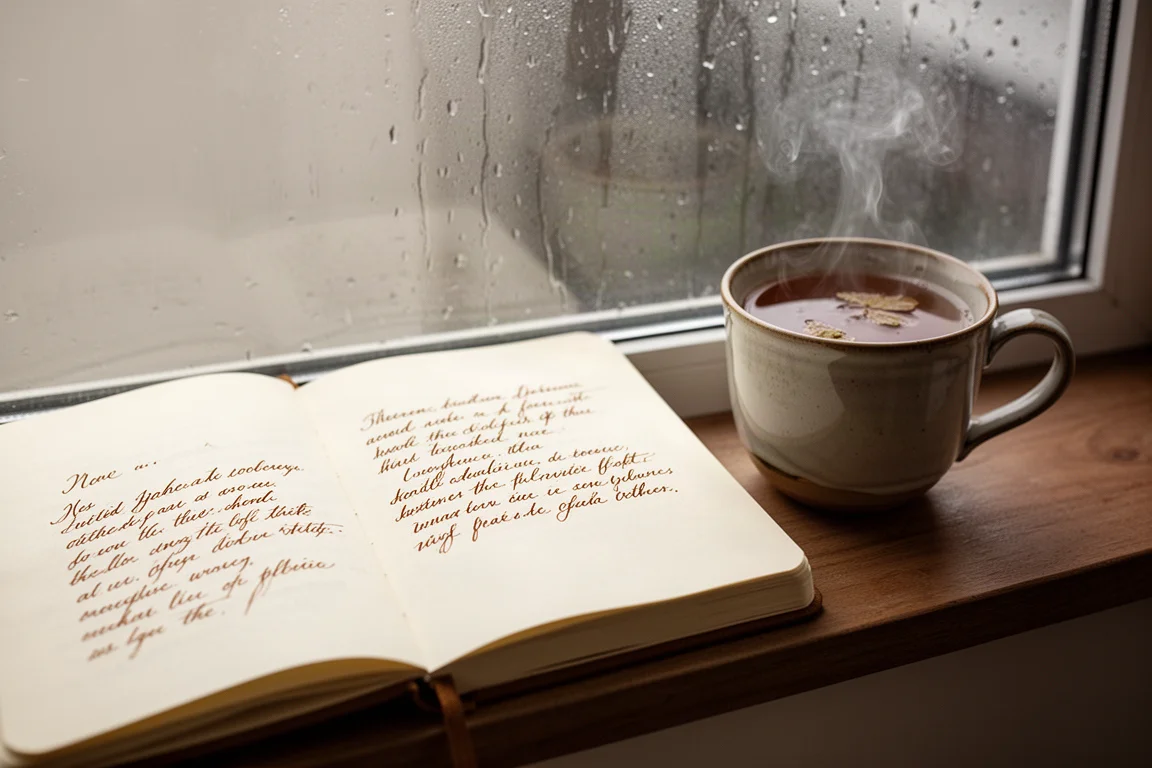
Lie de The is not named after a specific tea, but it evokes that big, warm brown cup of tea you were handed as a child when you were feeling unwell. It is the cozy shade of a rainy-day window seat and a good book.
Browns are notoriously hard to make interesting, but Lie de The manages it with an impressive range, moving from almost khaki highlights down to a deeper brown. It has a vintage feel, something like aged iron gall ink, yet it remains very usable. It is well suited to journaling and correspondence, especially if you want your writing to carry associations of tea, comfort, and history.
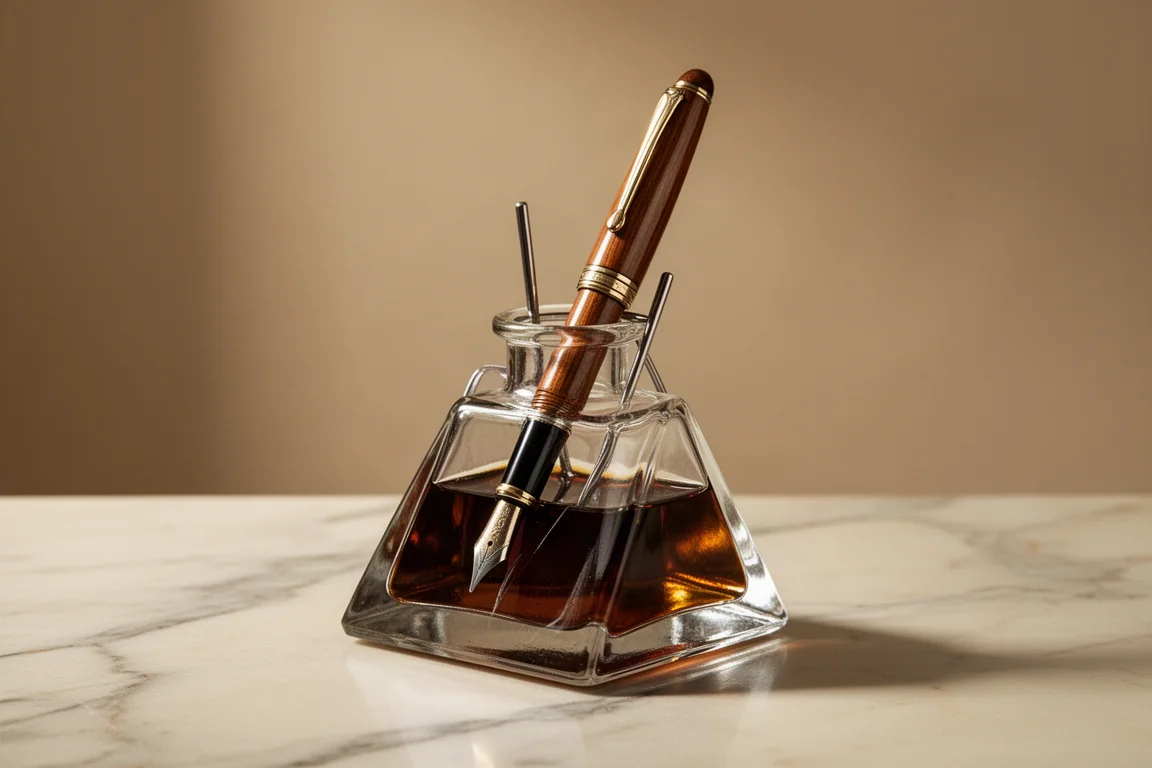
Jacques Herbin is a natural dye, non-toxic ink with a neutral pH, and the classic bottles even feature a built-in pen stand on top. They are charming, evocative of French sophistication, and a lovely bonus on an already excellent ink.

Sailor Tea Time Morocco Mint Tea
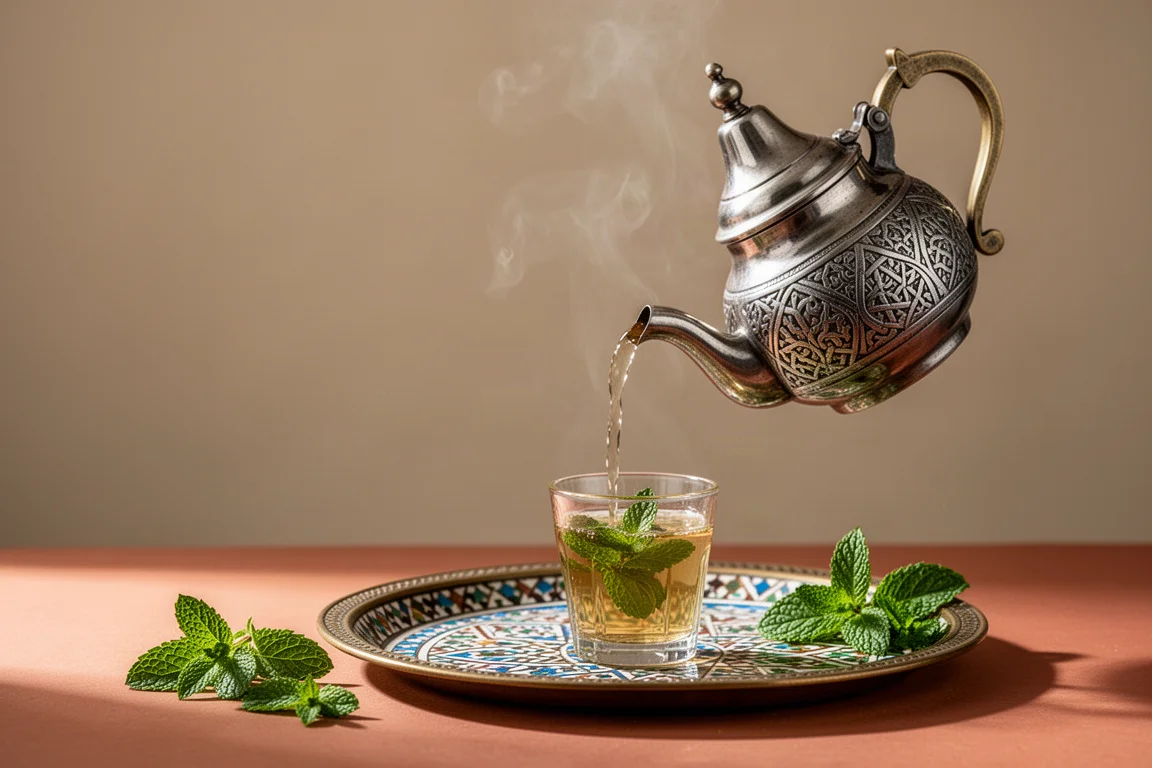
In Morocco, tea is a ceremony. It is a symbol of friendship, how you welcome guests, and part of every meal. Mint tea is wonderfully aromatic, full of freshness and sweetness. There is even a Moroccan saying that the first cup of mint tea is soft as life, the second as strong as love, and the third as bitter as death.
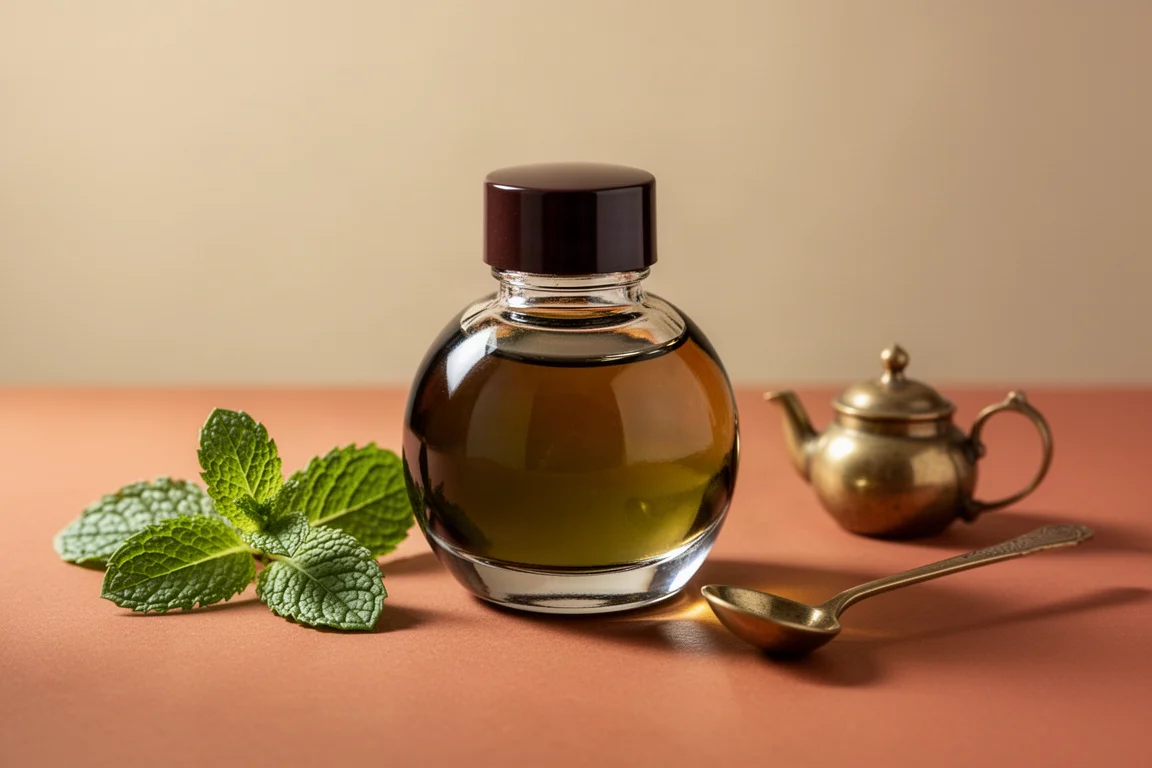
Sailor’s take on this tea is a greenish ochre with lovely highlights and enough darkness to stay grounded. It reads like tea leaves steeped in water but carries a golden cast that makes it distinctive on the page. It delivers excellent contrast for writing, light enough to be interesting but not so light that it disappears, which is a common weakness of paler inks.
It is also a limited edition, with corresponding fountain pens in the series, so ambitious collectors can track down a matching pen. As a writing ink, it is simply a brilliant, very usable choice.
Diamine Earl Grey Tea
Earl Grey is often treated as the default tea, which undersells its mild, interesting flavor, especially with a bit of lemon, and it is strong enough to hold up in milk and sugar. It is a beautiful, dependable tea.
Diamine expresses it with a wide color spectrum, a little like the brand’s Autumn Oak. It runs from yellowy orange highlights through mid orange down to deeper red orange, the uncorrupted color of tea before any milk goes in. That translucent quality is what makes it so appealing.
In practice it is a wonderful ink to write with. It leans a little light on the page, but its shading more than compensates, making it perfect for correspondence, journaling, and little notes left for family around the house. It captures the feeling of a strong, comforting cup on a UK afternoon remarkably well.

Which One Should You Choose?
If you want a distinctive green, the Nagasawa Sailor #34 Soramame Green Tea is hard to beat. If you prefer something darker and more mysterious, the Linen Taiwan Dong Ding Oolong delivers depth without losing usability. For a warm, vintage brown, Jacques Herbin Lie de The is the standout, and it is arguably the most practical everyday ink of the five. The Sailor Morocco Mint Tea suits fans of greenish ochres who also enjoy a bit of collecting, and the Diamine Earl Grey Tea is ideal for warm orange tones on the lighter, shadier side.
One gap worth noting: there does not appear to be a chai-inspired ink on the market yet. Given how much inspiration tea has already provided, that seems like a missed opportunity.
Conclusion
Tea has inspired an unusually strong set of fountain pen inks. Each of these five translates a real tea tradition into a usable, characterful shade, whether you lean toward greens, greys, warm browns, or golden ochres. Pick the one that matches your writing style and your favorite cup, and you are unlikely to regret it.
Further reading
Related Reviews
Fountain Pen Inks
Six Fountain Pen Day Ink Picks Worth a Second Look
From a true sepia to a soft Delft blue, these six inks cover browns, greens, oranges, and blues with shading worth watching.
Fountain Pen Inks
Pelikan Edelstein Golden Lapis Review: A Deep Blue Ink Loaded With Golden Shimmer
Pelikan's 2024 Ink of the Year delivers a true medium blue with an enormous amount of gold shimmer, with a few practical trade-offs to weigh before buying.
Fountain Pen Inks
Kittywink Pot Ink Samples: 23 Shades Swatched and Reviewed
A full first look at 23 Kittywink Pot fountain pen inks, from muted greens and smoky browns to dual-shading purples, swatched and compared on paper.