Speakers
Best Speakers Under $2,500: Five Picks Worth Auditioning
Five standmount and floorstanding speakers under $2,500, compared on linearity, dispersion, bass extension, and what each one asks of your room.
Introduction
Choosing a pair of speakers under $2,500 is less about finding one universal winner and more about matching a design’s strengths to your room. The five models below cover a range of approaches: a value floorstander, two stand-mounted designs with very different dispersion behaviour, a point-source monitor, and a coaxial two-way that prioritises even radiation in every direction.
All prices listed are per pair and, where relevant, exclude stands. Each speaker has a clear personality, and each one asks something slightly different of your room.
How These Five Speakers Were Chosen
Every pick here was assessed on a consistent set of criteria. On-axis linearity describes how evenly a speaker reproduces the frequency range when it is pointed directly at the listening position, usually called zero degrees. Off-axis behaviour describes what happens when you move to the side, and 30 degrees off axis is the reference point used most often, because it represents a realistic listening position in a normal room.
Beyond that, the important measures are the listening window, the estimated in-room response, horizontal and vertical dispersion, low-frequency extension, and how forgiving the speaker is about placement. Vertical dispersion matters more than many buyers expect. A design with a tight vertical window can change tonality noticeably as soon as you stand up or move around the room.
A speaker with a wide, even radiation pattern tends to hold its character as you move around. A narrower one can be an advantage in a lively room with lots of glass and hard surfaces, because it sends less energy toward reflective walls. Neither approach is automatically better. The right answer depends on the space you have.
Polk R500: A Floorstander That Suits Many Rooms
At around $1,300 per pair, the Polk R500 is the most affordable speaker here and the only floorstanding tower. Average sensitivity measures roughly 86 dB. On-axis linearity is good, the listening window is solid, and the soundstage is wide at roughly plus or minus 70 degrees.
The trade-offs are worth knowing before you buy. This speaker can sound a little sharp or sibilant, and its ring radiator tweeter causes the horizontal soundstage to narrow above 8 kHz. Vertical placement is unusually important: stay within about 10 to 15 degrees of the tweeter axis. Placing the speakers 1 to 2 feet out from the wall is a good starting point.
Two response features stand out. A resonance around 170 Hz can make some voices sound slightly hollow, and a peak between 3 and 4 kHz can sound shouty. Because the 4 to 5 kHz region behaves differently on and off axis, equalisation is not a clean fix. Sidewall acoustic absorption placed around 40 to 60 degrees off axis is the better solution, since it reduces the energy that reflects back at the listening position. Panels placed only 10 to 30 degrees off the first reflection angle will absorb high frequencies you want to keep.
Wharfedale Aura 2: Wide Response, Tight Vertical Window
The Wharfedale Aura 2 costs about $2,500 per pair without stands, and it earns its place with strong fundamentals. Linearity is excellent, the estimated in-room response is very good, and the 30 degree off-axis response tracks the on-axis response closely, within roughly half a decibel. Average sensitivity is around 86 dB. Low-end extension is generous enough that a subwoofer may not be necessary.
Because the speaker uses an air motion transformer tweeter, its vertical dispersion narrows faster than a typical dome design. Plan to sit within about 10 degrees of the tweeter axis. The mid-bass is slightly lower in sensitivity than the midrange and treble, so positioning the speaker 1 to 2 feet from the rear wall helps bring that region up and makes the overall balance more neutral.
That combination makes the Aura 2 an appealing option for listeners who want a wide horizontal presentation without the extra work of subwoofer integration, provided they can commit to a consistent listening height. Horizontal radiation is wide at about plus or minus 70 degrees, which keeps the soundstage stable as you move from side to side.
Wharfedale Linton 85th Anniversary Edition: Neutral and Generous
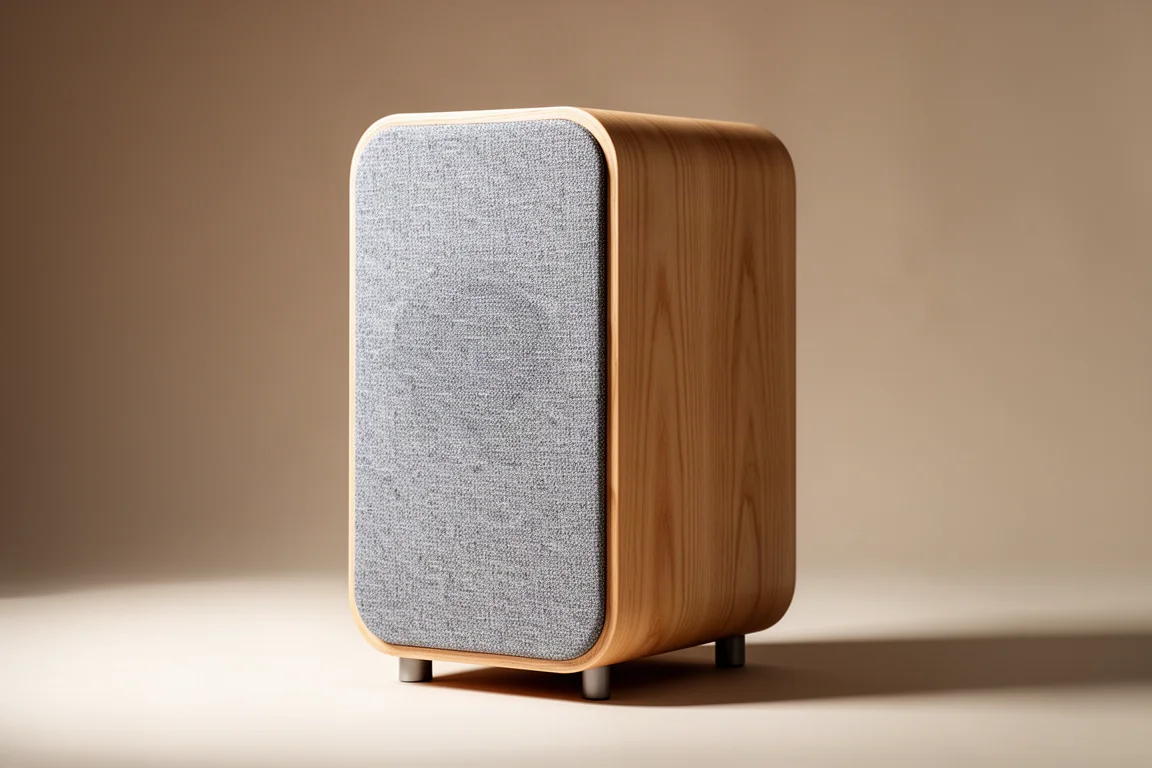
Retailing at roughly $1,500 per pair, the Wharfedale Linton 85th Anniversary Edition is one of the most neutral speakers in this group. It has an intentional dip around 1 kHz, which costs a little attack and clarity, and a slight upward tilt in the treble when heard directly on axis. Toeing the speaker in about 10 degrees off axis smooths that tilt and results in a more neutral overall balance.
Soundstage width is wide at about plus or minus 70 degrees, and low-end extension is strong enough that a subwoofer may not be needed, with a smooth roll-off down to roughly 40 Hz. Two setup details matter. Bring the speaker at least 2 feet out from the wall, since placing it closer can make the bass sound boomy, and listen with the grille on, which is how the speaker was designed to be used for critical listening. Vertical positioning is tight around the crossover, so stay within about 10 degrees of the tweeter level.
KEF R3 Meta: A Point Source Built for Difficult Rooms
At about $2,300 per pair, the KEF R3 Meta is an extremely neutral speaker with excellent low distortion. Its concentric driver arrangement makes it a point source, and dispersion is unusually even in both the horizontal and vertical planes, at roughly plus or minus 50 degrees. Average sensitivity is about 86 dB, and the design responds well to equalisation.
Placement is a genuine strength. The speaker uses an extended bass shelf tuning, which means it can sit close to a wall, within about a foot, without the bass turning boomy. A 10 degree toe-in is the recommended starting point, partly because diffraction effects are more visible at zero degrees. Two things to accept: the R3 Meta will need a subwoofer, and its horizontal radiation is narrower than some listeners prefer.
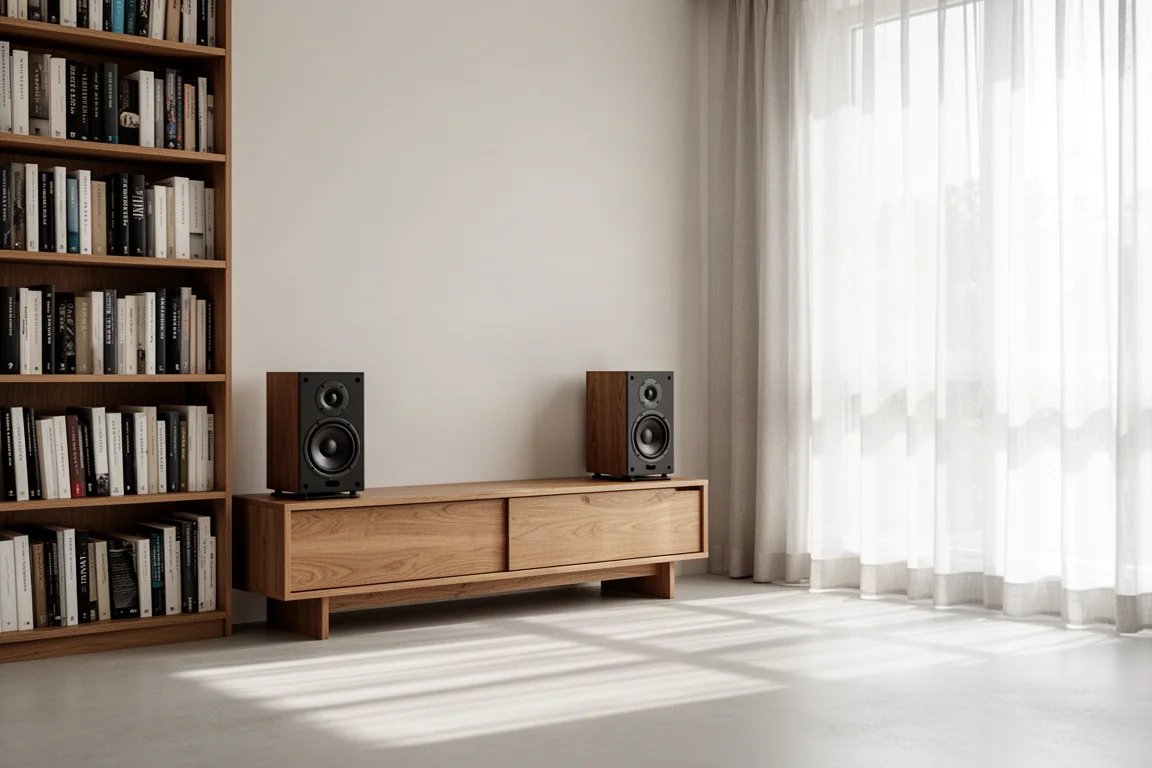
That narrower pattern is not automatically a drawback. In a lively room with large windows, mirrors, or hard floors, a speaker that sends less energy toward reflective surfaces can sound cleaner and less diffuse than a wider design. For listeners whose rooms are less than ideal, that behaviour can be an advantage rather than a compromise.
MoFi SourcePoint 8: The Most Even Dispersion Here
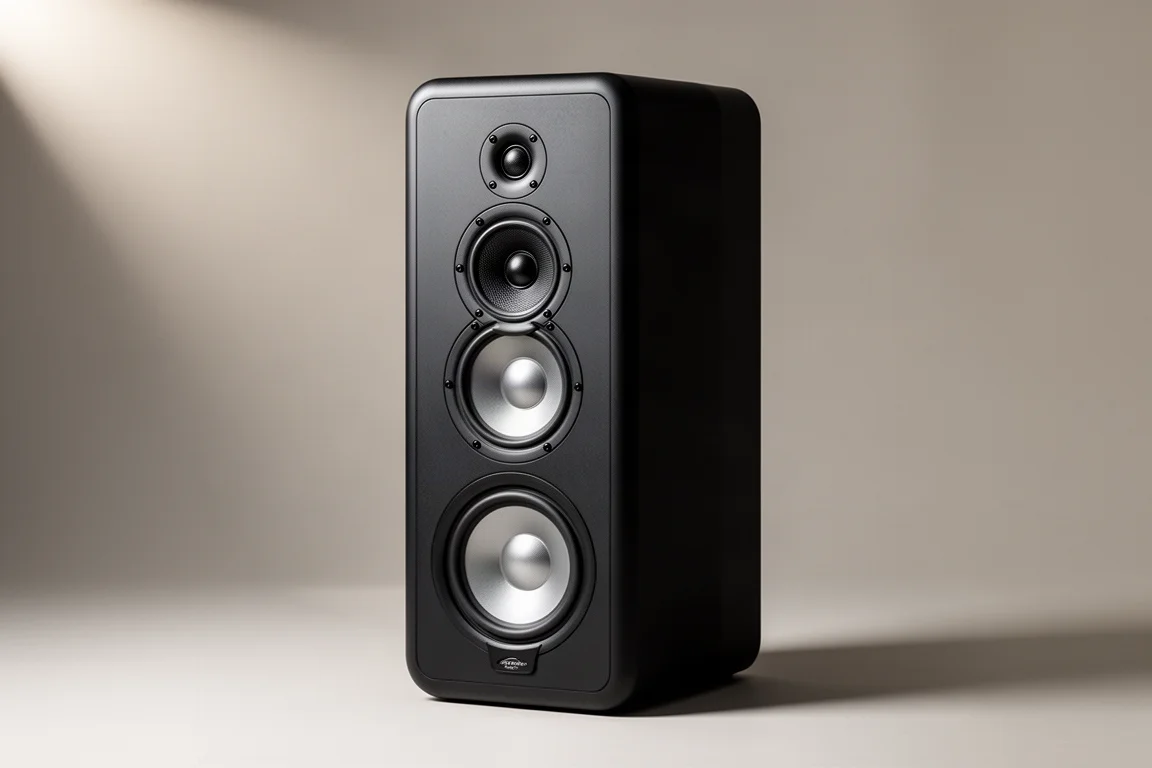
The MoFi SourcePoint 8, currently on sale for around $2,000 per pair, takes the top spot in this group. It combines good linearity with a good estimated in-room response and, most importantly, wide dispersion of about plus or minus 60 degrees in both the horizontal and vertical planes. That even radiation is the main reason to choose it over the KEF R3 Meta.
Its concentric coaxial driver works best at around plus or minus 15 degrees off axis, following the same pattern as other coaxial designs. The compromise is bass. This speaker rolls off quickly at the low end and has the least bass output of the five, so a subwoofer is almost certainly required. It also needs to be brought out from the wall, since it does not use the extended bass shelf tuning that makes close-to-wall placement workable on the R3 Meta.
Which Speaker Should You Buy?
The decision comes down to two questions: how much bass you want without a subwoofer, and how much freedom you have over placement. The Wharfedale Linton 85th Anniversary Edition and the Wharfedale Aura 2 both extend low enough that a subwoofer may not be necessary, while the KEF R3 Meta and the MoFi SourcePoint 8 will almost certainly want one.
Dispersion is the other axis. The MoFi SourcePoint 8 and the Polk R500 spread sound widely, which suits listeners who move around the room. The KEF R3 Meta is more directional, which helps in reflective spaces. The Polk R500 also asks the most of your room, since it benefits from sidewall absorption to control a brightness region that equalisation cannot address cleanly.
Narrowing the choice to two or three models and auditioning them at home is the most reliable path. Buying from a retailer with a generous return policy lets you hear each candidate in your own room, at your own listening distance, with your own furniture in place. Measurements are a useful filter for getting down to a shortlist, but the final call belongs to your ears.
Conclusion
There is no single best speaker under $2,500, but there are several well-defined ones. The Polk R500 offers a floorstanding tower at the lowest price in this group and rewards careful setup. The Wharfedale Aura 2 and the Wharfedale Linton 85th Anniversary Edition deliver a neutral, wide presentation with enough low-end extension to skip a subwoofer. The KEF R3 Meta is the most placement-friendly and the most even vertically. The MoFi SourcePoint 8 is the most consistent in every direction, provided you budget for a subwoofer. Match the trade-offs to your room, and any of these five can be a satisfying long-term purchase.
Further reading
Related Reviews
Speakers
13 Under-the-Radar Speakers Still Worth Buying
Thirteen speakers that quietly stayed in production while newer models took the spotlight, from budget bookshelf pairs to a full-size tower.
Speakers
Arendal 1528 Monitor 8 Review: A Three-Way Standmount With Serious Dynamic Headroom
A three-way standmount speaker with extremely low distortion, high output capability, and deep bass for its size, plus the setup details worth knowing before buying.
Speakers
Arendal 1723 Monitor S Review: A Compact Monitor With Serious Ambition
A close look at the Arendal 1723 Monitor S, a compact MTM monitor with a waveguide-loaded tweeter, an HDF cabinet, and flexible ported or sealed operation for music and home theater.