Engines & Power Equipment
Honda GX200 vs Predator 212cc vs Briggs & Stratton 208cc: 48-Hour Small Engine Comparison
Three 6.5-horsepower class small engines tested side by side for 48 hours: fuel use, oil consumption, noise, vibration, and pulling performance.
Introduction
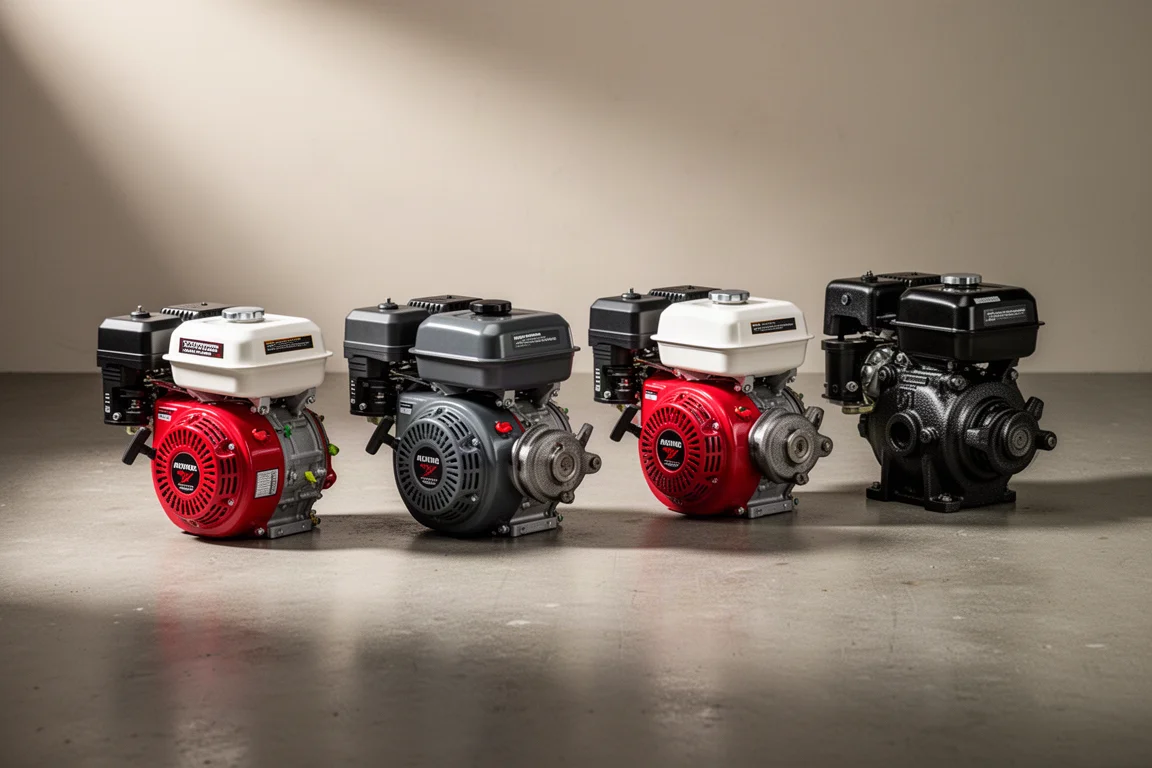
Why spend $400 to $600 on a Honda GX200 when clones sell for under $200? That question drove a 48-hour side-by-side test of four engines: the genuine Honda GX200, a Honda clone, the Harbor Freight Predator 212cc, and the Briggs & Stratton 208cc. The tests covered fuel efficiency, oil consumption, noise, vibration, starting effort, pulling torque, and speed runs. Here is how each engine stacked up.
The Contenders at a Glance
- Honda GX200: Rated 5.5 horsepower, made in Thailand, NGK spark plug, paper filter with foam cover, 34.9 lbs, priced $400-$600.
- Honda clone: Rated 6.5 to 7.2 horsepower, made in China, SAP spark plug, foam filter only (no paper filter in the tested unit), 27.6 lbs, around $150.
- Predator 212cc (Harbor Freight): Rated 6.5 horsepower, made in China, Torch spark plug, paper filter with foam cover, 34.9 lbs, around $150.
- Briggs & Stratton 208cc: Rated around 6.2 horsepower, made in China, Champion spark plug, DuraBore cast iron sleeve, 32.5 lbs, $312.
All four use overhead valve designs, hold just over half a quart of oil, and include a built-in compression release. All were filled with 10W-30 full synthetic oil and run at a 3,600 RPM no-load setting.
How the Engines Were Tested
The test protocol ran each engine for 48 total hours: first powering a 500 W halogen light through an alternator and inverter for about 4 hours, then unloaded running. Fuel came from detached fuel cells filled with 87 octane gasoline containing 10% ethanol, weighed before and after each 24-hour block.
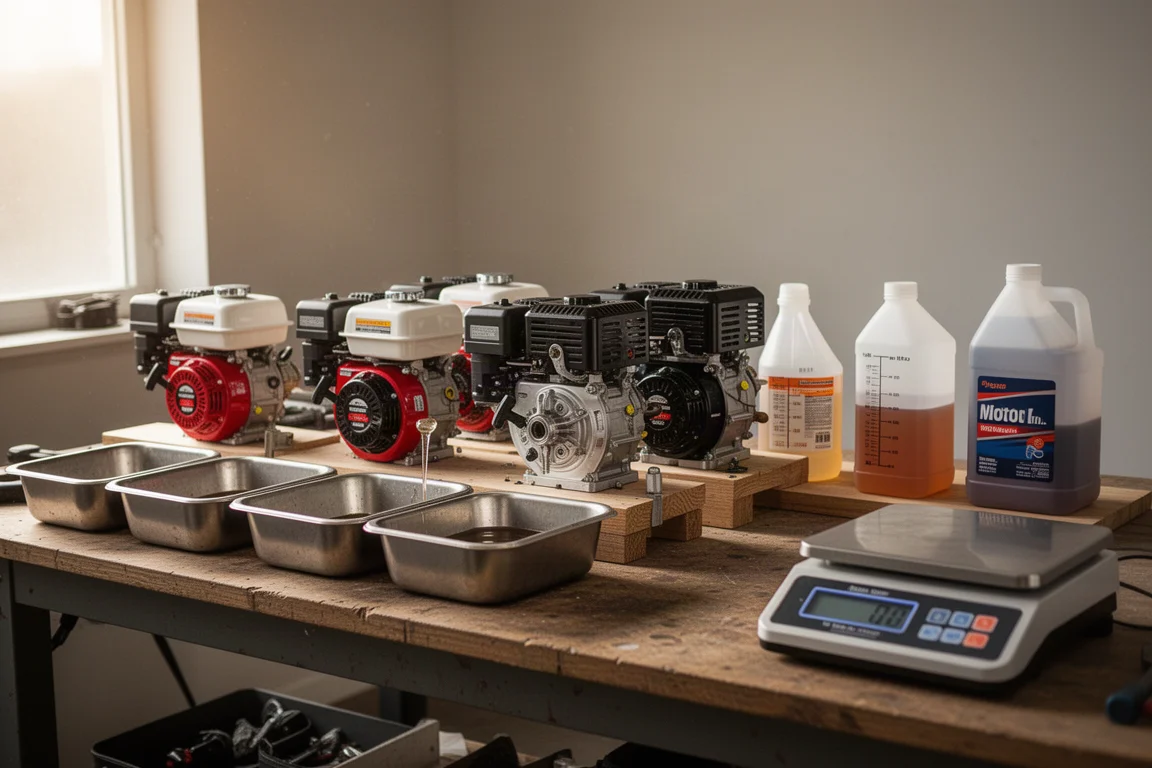
Starting effort was measured by the peak force needed to spin each engine over. The Briggs & Stratton was easiest at 32 lbs, the Honda clone needed 36 lbs, the Honda 39 lbs, and the Predator the most at 52 lbs. In practice, the Honda started on the first pull every time, while the Briggs & Stratton and Predator also started on the first pull in their tests.
Noise, Emissions, and Vibration
Measured about 3 feet from each motor, the Honda was the quietest at 91.7 dB. The Honda clone hit 94.1 dB, the Briggs & Stratton 94.4 dB, and the Predator 94.8 dB.
The Honda also burned noticeably cleaner. The clone’s exhaust set off gas sniffers, and the Predator ran slightly dirtier than the Honda too. The Briggs & Stratton burned cleaner than the Predator.
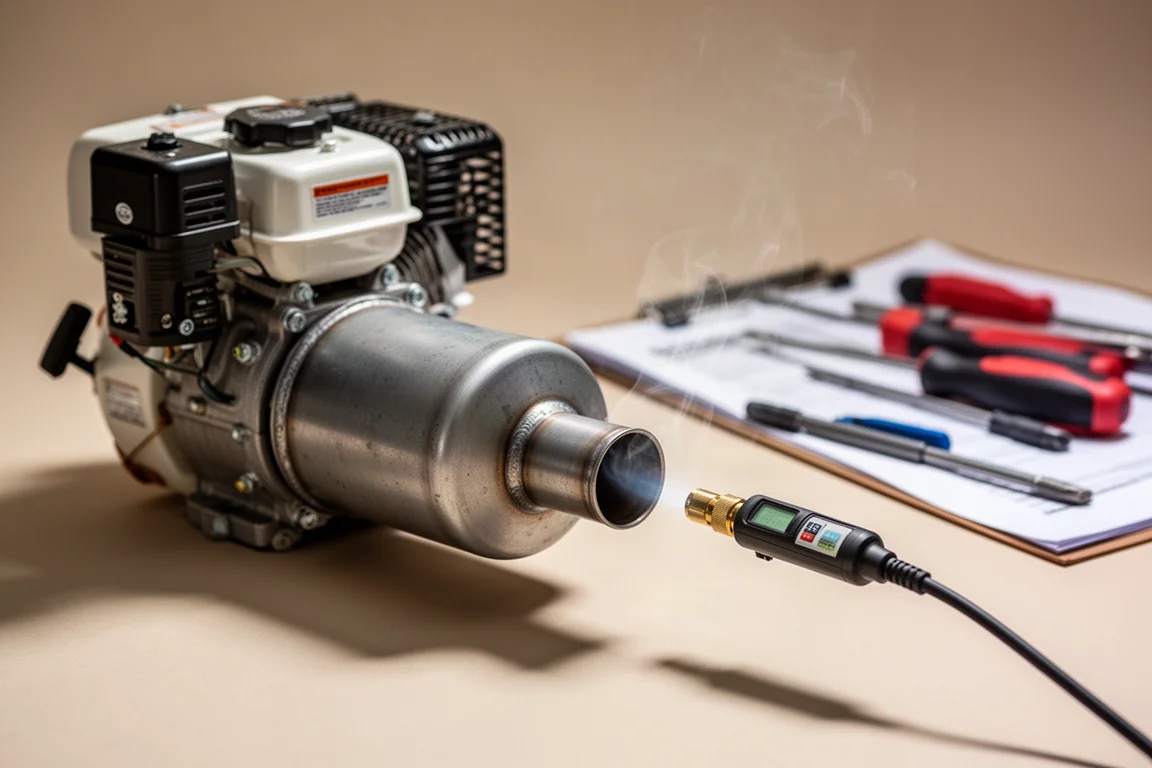
Vibration told a bigger story. The Honda and Briggs & Stratton measured around 300 mm/s², and the Predator vibrated slightly less than both. The Honda clone, however, vibrated so badly the tester could not even register a value. The cylinder head on the clone ran about 130°F hotter at the muffler than the Honda’s, with a hotter head as well. That level of imbalance on a single-cylinder engine raises real durability concerns past 100 hours.
Fuel and Oil Consumption Over 48 Hours
After 48 hours of running, total fuel use was remarkably close:
- Predator 212cc: 56 lbs of fuel
- Honda GX200: 57 lbs (about 5% more efficient than the clone per 24-hour block)
- Briggs & Stratton 208cc: 59 lbs (though it stalled three times during the loaded test)
- Honda clone: 60 lbs
Oil consumption separated the field dramatically. The Honda, Briggs & Stratton, and Predator stayed within 10 grams of each other in the first 24 hours and showed no meaningful oil use. The Honda clone burned over 6 ounces of oil in the first 24 hours alone and needed fresh oil added twice more during the second 24-hour block just to avoid running dry. There were no visible leaks, so the engine was clearly burning oil.
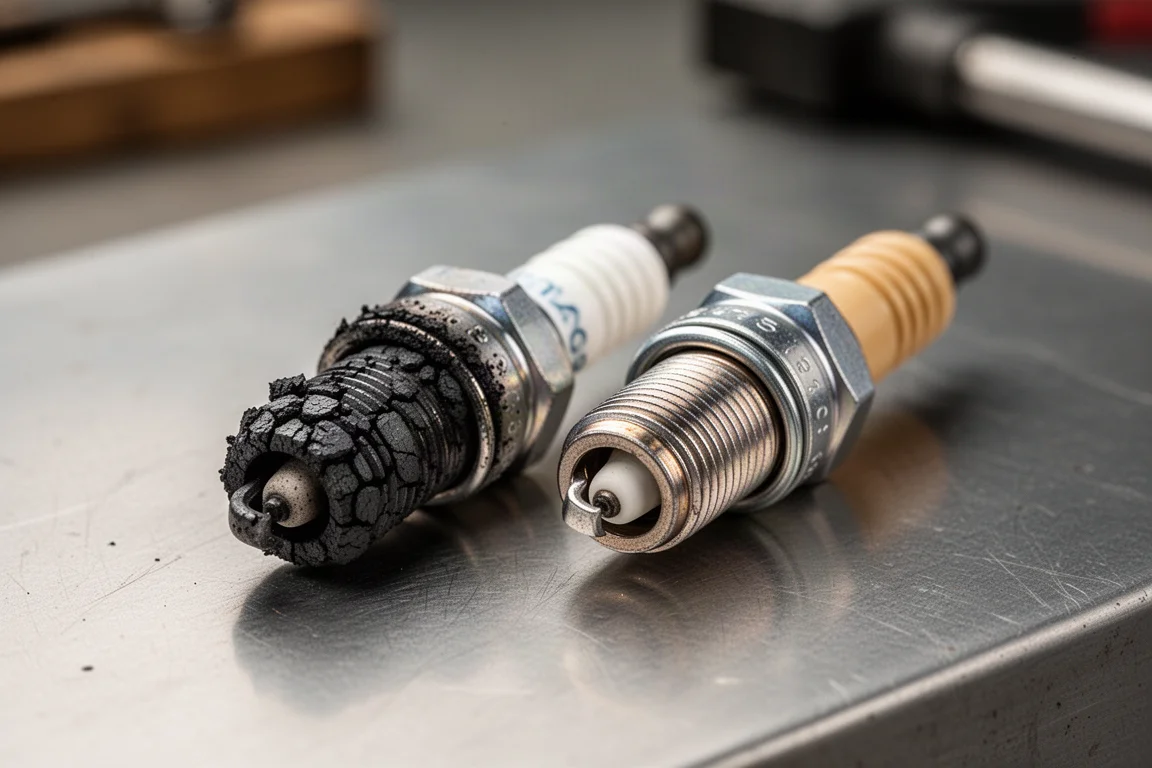
Spark plugs confirmed it. The clone’s plug was heavily coated in carbon deposits from burning oil, surprisingly severe for an engine with only about 50 hours. The Honda’s plug still looked good, as did the Briggs & Stratton’s. The Predator’s plug showed moderate carbon buildup, indicating it had started burning a small amount of oil.
Oil Analysis Results
Oil samples went to a lab for wear metal testing (around $35 per analysis, $45 with a total base number check). Results:
- Aluminum: The clone had the most, a wear indicator.
- Chromium: The Predator had the most at 1 ppm, which points to slight piston ring wear, though 1 ppm is very low.
- Iron: The clone was lowest; the Honda, Briggs & Stratton, and Predator measured 12, 13, and 14 ppm respectively. All very healthy numbers.
- Insolubles: The clone showed 0.2% versus 0.1% for the others, consistent with its blow-by.
All four engines looked good on wear metals overall. The clone’s fresher oil (from the frequent top-ups) should be kept in mind when reading its numbers.
Pulling Force and Drag Test Results
On a go-kart chained to a tractor, low-end torque told a familiar story. The Honda clone, despite a claimed 7.2 horsepower, managed only 200 lbs of pulling force. The genuine Honda, rated at just 5.5 horsepower, hit 239 lbs. The Predator reached 233 lbs, and the Briggs & Stratton 213 lbs.
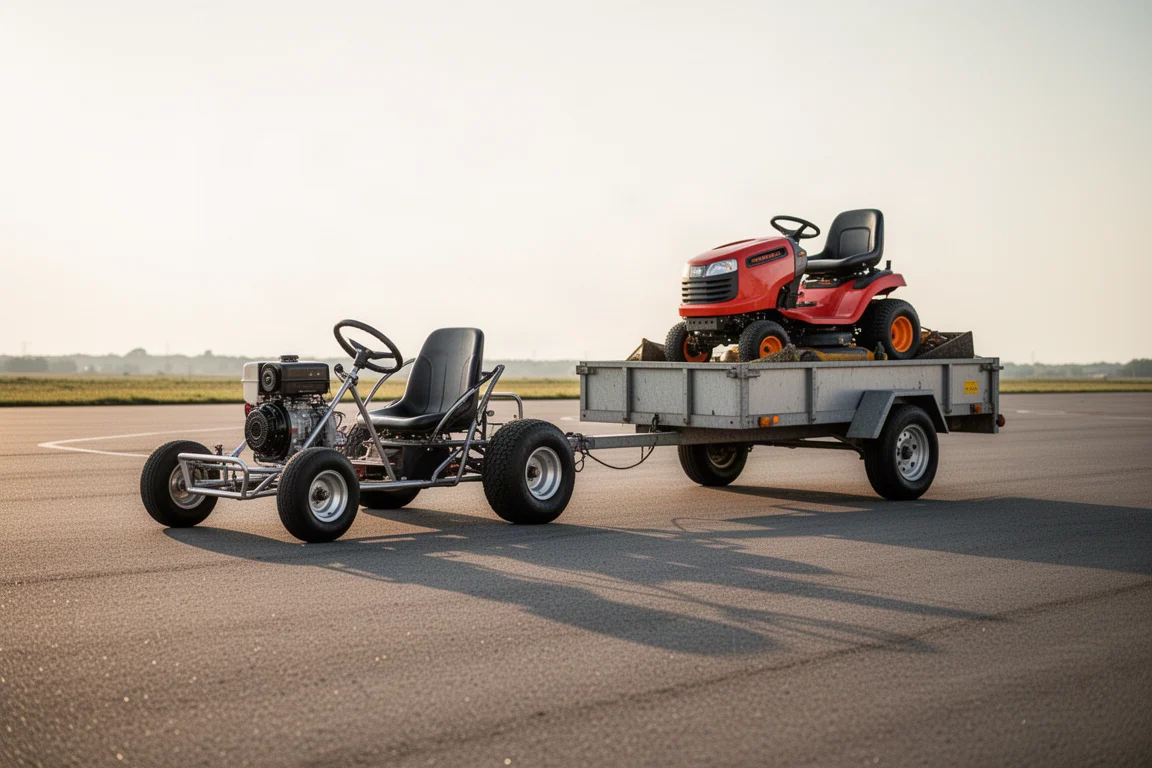
In the trailer drag sprint (pulling a trailer, lawn tractor, and load over 25 feet):
- Predator 212cc: 3.47 s average
- Honda GX200: 3.52 s average
- Honda clone: 4.02 s average
- Briggs & Stratton 208cc: 4.07 s average
In the 100-foot full-RPM run, the Predator averaged 4.76 s with remarkably consistent passes, the Honda 4.83 s, the clone 5.24 s, and the Briggs & Stratton 5.35 s. The Honda accelerated noticeably faster than the clone, which underlines that the clone’s rated horsepower does not translate to real output.
Cold Weather Starting
After a night outside at just below freezing, all four engines fired up on the first pull. Cold-weather starting is not a differentiator here.
Which Engine Should You Buy?
The Honda GX200 is clearly the best engine in the group: quietest, cleanest, lowest vibration, best low-end torque, near-best fuel economy, and the best filter system. But at $400 to $600, it costs two to four times as much as the alternatives.
Considering price and performance together, the Harbor Freight Predator 212cc is the best value. It was the fastest engine in both drag tests, used the least fuel, matched the Honda’s weight and filter setup, and showed only very minor ring wear in the oil analysis. Its carbon buildup after 48 hours suggests some oil burning over the long haul, but at roughly $150 that trade-off is easy to accept for many users.
The Briggs & Stratton 208cc sits in between. It started easiest, vibrated about as little as the Honda, burned the cleanest oil of the budget engines, and its plug stayed clean. But it stalled three times under load, used the most fuel per block among the four in the first stretch, and finished last in the speed tests at $312.
The Honda clone is the one to avoid for anything demanding. It burned oil steadily, shook violently, ran hot, and produced the least usable torque despite the highest advertised horsepower rating.
Conclusion
The 48-hour test produced a clear ranking. The Honda GX200 remains the quality benchmark if your budget allows it. The Predator 212cc delivers about 90% of the Honda experience for roughly a quarter of the price, making it the smart pick for most buyers. The Briggs & Stratton is a reasonable mid-priced option if you value easy starting and low vibration. The Honda clone, despite attractive specs on paper, is the engine most likely to cost you in oil, noise, and longevity.
Product link
View more details for Honda GX200
This product is mentioned in the review. Check the specifications, options, and compatibility before buying.
View more details for Honda GX200Further reading
Related Reviews
Coffee Equipment
BEEM vs Melitta EPOS: Two Automated Pour-Over Coffee Makers Compared
A detailed comparison of two automated pour-over brewers: the budget-friendly BEEM and the feature-rich Melitta EPOS with integrated grinder. Which one delivers better coffee?
3D Scanning Equipment
Budget 3D Scanners Under $1000: Four Practical Options Compared
A detailed comparison of four entry-level 3D scanners under $1000, including real-world scanning tests, accuracy measurements, and practical recommendations for automotive and mechanical projects.

E Ink Monitors
Dasung 13K vs Modos Flow: Which 13.3 Inch Color E Ink Monitor Fits Your Workflow?
A direct comparison of the two main 13.3 inch color E Ink monitors, covering image quality, front light performance, connectivity, and design.