Ski Passes
Best Ski Megapasses 2026-2027: Epic, Ikon, Mountain Collective, and Indy Compared
The 2026-2027 season brings the biggest shake-up to North American ski passes in years. Here is how Epic, Ikon, Mountain Collective, and Indy now stack up, and who each pass is really for.
Introduction
If you have planned a North American ski trip recently, you already know that access to most major destination mountains is increasingly defined by two passes: Epic and Ikon. Both companies have now announced their updated products for the 2026-2027 season, and this looks like the biggest shift in how these passes are structured since the megapass era began. This guide walks through what changed, compares the two giants with the smaller Mountain Collective and Indy Pass products, and helps you figure out which pass makes sense for where you plan to ski or ride this winter.
Why the Pass Landscape Is Shifting
Several of this year’s changes look shaped by the winter just past. Ski resorts in the western United States endured a poor early season severe enough to drag down visitation and confidence. Vail Resorts, which operates the Epic Pass, reported a 20% drop in skier and rider visits through early January and a 2% decline in North American pass sales amid low western snowfall. Alterra, which operates the Ikon Pass, did not release visitor metrics during the core winter season, but it ran an unusually aggressive friends and family blitz that temporarily doubled the standard discount from 25% to 50% at many of its most important mountains.
There is also a basic business explanation for at least some of the movement. Epic Pass product unit sales were down 3% heading into 2024-2025, down 1% in the spring selling period for 2025-2026, and down 3% again through September 2025. Vail later reported a 3% decline in North American pass revenue and a 13% decline in visitation during this winter’s weak western conditions. Alterra does not disclose comparable Ikon sales data, so its financial position is harder to read with certainty.
Epic Pass: A Clear Play for Younger Skiers
Epic made the loudest move this year: pricing. Vail introduced a new pricing structure for ages 13 to 30, with the Epic Pass and Epic Local Pass cut by 20% versus the normal full purchase price. Discounted prices, based on age at the time of purchase, are $869 for the full Epic Pass and $649 for the Epic Local Pass.
For buyers 31 and up, the full Epic Pass is $1,089, a 5% increase from last year. Combined with significant investment in influencer marketing and short-form social media, the strategy clearly targets younger buyers who may have drifted away from the pass. Note that these discounts do not extend to the cheaper day-ticket-style Epic Day Pass, so you get no price benefit if you only want a few days. One consolation for occasional skiers: if you bought a traditional day lift ticket at a Vail-owned mountain in 2025-2026, you can get up to $175 of that cost back when purchasing a non-day-pass Epic product for 2026-2027, regardless of age. Early buyers of season-long passes also get 10 Epic Friend tickets, half off for adults and 25% off for kids.
What Epic did not do is equally notable: there were no major new resort additions to headline the launch. Facing declining sales and a static portfolio, Vail is trying to grow its base through pricing perks and incentives rather than expansion.
The full Epic Pass remains the right call if the Vail-owned network dominates your region, and Whistler Blackcomb alone gives it a unique unlimited-access anchor in Western Canada.

The Epic Local Pass is the value tier of the Epic suite, aimed at skiers and riders who can live with some access limits while still enjoying the Vail network at a meaningfully lower price, especially for the 13-to-30 cohort at $649.

The Epic Day Pass remains the entry point for occasional skiers, though the new young-adult discounts do not apply to it. If you skied a few days at a Vail mountain last season, remember the up-to-$175 credit when upgrading to a season-long Epic product.

Ikon Pass: Premium Access with More Fine Print
Ikon did not lead with a single headline price cut. Instead, it countered with a squad pack: buyers between 23 and 28 can get a $199 discount on the Ikon Base Pass, but the transaction must be completed by one individual buying passes for exactly five participants on the Ikon website, with no way to split payment and no equivalent offer on the full pass or the day-ticket-style Session Pass. Family pricing did improve, with child passes as low as $249 when paired with an adult Ikon Pass.
Core pricing is largely unchanged. The full Ikon Pass is $1,399 for adults 23 and up, the Ikon Base Pass is $949, and the Ikon Session Pass starts at $299 for two days with three- and four-day options available. Renewal discounts, however, were cut in half to $50 off a full pass and $25 off a Base Pass, replaced by a set of renewal rewards offering credits for hotel stays, gear rentals, or on-mountain food and retail. The catch: you can only pick one reward, it substitutes for the renewal discount itself, and you must choose at checkout.
The new refundable purchase option also deserves scrutiny. Pass holders who have not used their pass by January 15, 2027 can get 100% cash back, and those with a single scan can get 50%. That sounds like flexibility, but the prior cycle’s 100% deferral program for unused passes is now completely gone. The add-on costs $269.80 for a full Ikon Pass renewal and $184.80 for an Ikon Base Pass renewal, so read the checkout defaults carefully before purchasing.
Where Ikon is genuinely investing is its resort portfolio. The biggest geographic move is the addition of three Midwest destinations: Lutsen in Minnesota, Granite Peak in Wisconsin, and Snow River in Michigan. Full Ikon Pass holders get 7 days at each with no blackout dates; Base Pass holders get 5 days each with holiday blackouts. The bonus mountain program also added Tamarack in Idaho and Devil’s Head in Wisconsin, though bonus mountains offer only 2 days, are limited to the full Ikon Pass, and come with holiday blackouts. Silver Star in British Columbia will not return after its inaugural year.
For Colorado-oriented skiers, the Base Pass got materially stronger: Arapahoe Basin becomes unlimited on the Ikon Base, Snowmass gets 5-day Base access for the first time in several years, and reservations are no longer required at any of the four Aspen Snowmass resorts. Just be aware that A-Basin limits visitation through paid parking reservations, so weekend access there will be harder to secure than the word unlimited implies.
The full Ikon Pass remains the pick for expert skiers and riders who value variety and the biggest footprint of world-class destination resorts, especially across Utah, the Northern Rockies, and an expanding Japan portfolio.

The Ikon Base Pass is now a more flexible product than it was a year ago, particularly in Colorado with unlimited Arapahoe Basin and 5 days at Snowmass, though Alta, Snowbasin, and Deer Valley remain absent and holiday blackouts apply at many partner resorts.

The Ikon Session Pass starts at $299 for two days and scales to three or four days, making it the simplest Ikon option for a shorter trip rather than a full season.

Mountain Collective: Simple, Curated, and Quietly Effective
Mountain Collective is the least noisy of the bunch. It retained its 27-destination lineup, raised its price from $639 to $669, kept the core two days at each resort model with no blackout dates, added a referral bonus for current pass holders who bring in someone new, and continues the spring sale bonus day, where early purchasers get an extra day at one mountain of their choice. Additional days at partner resorts remain 50% off.
That is a modest update slate compared to Epic and Ikon, but for skiers who value economical access to world-class destination resorts without needing long stints at any of them, Mountain Collective is still delivering exactly that. Its access overlaps with a significant portion of the Ikon Pass’s flagship resorts, making it a cheaper competing option, especially when stacked on top of a local home-mountain setup.
Two days per destination, no blackouts, and half-off extra days is still a refreshingly clean proposition for a couple of curated destination trips per season.
Indy Pass: The Best Value, with New Strings Attached
Indy is where the emotional temperature of this year’s rollouts ran highest. The pass, which offers two days of access at each of its partners, is now a mix of aggressive affordability, ideological branding, and much tighter retention mechanics. The headline: the adult Indy Plus Pass price is actually being cut, to $399 for renewals and $419 for those on the wait list, while the Indy Base Pass is slightly increasing to $349 for renewals and $369 on the wait list. With the gap between Base and Plus the lowest ever since Plus debuted in 2020, the no-blackout flagship is now positioned as the affordability play.
The bigger structural change is the new auto-renew requirement at purchase. You can opt out later and keep your pass, but your future spot goes back into the pool and you may need to rejoin the wait list next season. Indy has effectively moved closer to a subscription membership model, backed by extremely aggressive renewal reminders, sometimes several in a single day.
There is also refund language worth knowing. If Lutsen, Granite Peak, and Snow River fully leave the Indy Pass for Ikon this season, that would be the biggest partnership loss of any of the four major pass products. Indy says a purchaser can request a refund for an unused pass by December 1, 2026, if their favorite resort from 2025-2026 does not renew, and it states it is trying to bring the three partners back, at least on Indy Plus. Notably, Tamarack remains part of both ecosystems and is arguably even more appealing on Indy Plus because there are no blackouts. Indy also added Pebble Creek in Idaho and one resort in North Dakota, and introduced a 300-plus resort guarantee, up from 200-plus: if the pass does not offer at least 300 combined alpine and cross-country resorts for 2026-2027 and your pass is unused, you can request a refund for any reason by December 1, 2026.
The Indy Plus Pass at $399 is still outrageously competitive on raw cost, especially for road-trip-oriented skiers who value independent areas, lower crowds, and no blackout dates.

The Indy Base Pass trades blackout flexibility for an even lower price, making it a good fit for locals and flexible travelers who can plan around holiday restrictions.
Who Should Buy Which Pass
If you are under 30 and even remotely aligned with the Epic footprint, that suite deserves a serious look. The 13-to-30 discount is large enough to change the math in a way we rarely see: $869 for the Epic Pass versus $1,399 for the Ikon Pass is not a subtle gap. Ikon does offer its own youth pricing at $999 for ages 13 to 22, and its student discount brings the full pass to $899 through the right channels, so the competition is more balanced there, but Epic now undercuts even those rates for the 13-to-30 group.
If you are over 30, the Epic Pass did not get cheaper for you, but it remains a few hundred dollars less than Ikon. If price is not the deciding factor, Ikon remains the better fit for skiers who value variety and access to the biggest footprint of truly world-class destination resorts, particularly expert riders. It is worth being honest about what you are paying for: Ikon is building itself into a premium-positioned network that increasingly does not match Epic’s buddy ticket and lift ticket credit strategies.
Mountain Collective is still best if you do not need one pass to rule your entire season. Two days per destination, no blackouts, and half-off additional days is a clean proposition, especially stacked on a local pass. The Indy Pass remains the best raw value if your ski life genuinely fits its model of smaller areas and road-trip-style travel, but go in with eyes open: it is now a capped, wait-listed, auto-renew-driven product with real membership strings attached.
Regional Breakdown: Where Each Pass Wins
In the Midwest, Epic has the broadest footprint with nine close-to-home hills spread across several population centers, while Ikon has taken a more destination-oriented approach with Lutsen, Granite Peak, Snow River, and its bonus mountains. Indy still offers a very wide Midwest roster plus growing cross-country partners, but losing the three top resorts to Ikon is a real hit to its top-end regional appeal. Mountain Collective has no offerings in the region.
Colorado remains the most competitive battleground. Epic still holds the clearer top-end unlimited lineup with Vail, Beaver Creek, and Breckenridge, plus Telluride on the full pass. But Ikon’s Base Pass is now deeper with Snowmass and Arapahoe Basin access, and its character-driven roster of Winter Park, Steamboat, and Aspen Snowmass offers broader skiing styles. Mountain Collective only makes sense in Colorado for a targeted Aspen trip, and Indy remains a local-hill alternative rather than a destination competitor.
Utah is one of Ikon’s clearest wins for week-long destination travelers: the full pass covers all the Cottonwood resorts, plus Snowbasin and the massively expanded Deer Valley. Epic counters with unlimited access to Park City, the largest US ski resort, which still works for locals who want one big mountain. Ikon Base Pass holders lose out on Alta, Snowbasin, and Deer Valley, and Alta and Deer Valley do not allow snowboarders. Mountain Collective remains highly relevant here with two days each at Alta, Snowbird, and Snowbasin, and it counts Alta and Snowbird separately, allowing four or even five shared days between them.
Tahoe is the most balanced Epic-versus-Ikon debate. Ikon starts with Palisades Tahoe, the basin’s strongest resort, plus Sierra-at-Tahoe, and extends to Mammoth and June Mountain for a broader California trip. Epic counters with Northstar in the north and Heavenly and Kirkwood in the south, with Heavenly sitting effectively above South Lake Tahoe town. Ikon has the stronger top-end flagship; Epic has the depth. Mountain Collective is a niche play through Sugar Bowl only, and Indy is effectively outside the conversation.
In the Northeast, Ikon has the strongest destination-style lineup, while Epic counters with Stowe and a more family- and day-trip-oriented portfolio, including a strong Mid-Atlantic net in Pennsylvania. Ikon holds Snowshoe in West Virginia, the closest thing the Mid-Atlantic has to a destination, but lost Windham for New York City day trippers while Epic kept Hunter. Indy is genuinely competitive here, where its independent identity maps onto real travel patterns, and the gap to destination resorts is much smaller than elsewhere, with Jay Peak the best example. Mountain Collective has improved, but with no Vermont mountains it cannot beat the other three for an all-purpose Eastern skier.
The Northern Rockies, spanning Montana, Wyoming, and Idaho, are where Ikon arguably has its clearest destination edge, boosted further by Tamarack as a bonus mountain. Mountain Collective remains extremely strong with Big Sky, Jackson Hole, Sun Valley, and Grand Targhee, arguably the best premium sampler for a road trip, especially since visiting Jackson Hole and Tamarack on Ikon requires a full pass at roughly double the price. Indy also deserves mention with Tamarack and Brundage in Idaho, while Epic is completely shut out of the region.
Western Canada is one of the few regions where Epic makes an extremely strong case, almost entirely because of Whistler Blackcomb, the largest ski resort in North America and the only resort on any multi-resort pass here available as an unlimited option with no blackouts. The full Epic Pass also includes up to 7 days total at the Resorts of the Canadian Rockies and interior British Columbia, with Kicking Horse and Fernie offering serious big-mountain terrain. Ikon has the deeper multi-resort lineup across British Columbia for road-trip itineraries, and Mountain Collective may actually make more sense than Ikon there, since it counts Lake Louise and Banff Sunshine separately for four shared days in the Banff area. Indy is a surprisingly reasonable option too, with Big White and Castle Mountain.
Internationally, Epic offers the simpler, more concentrated story across Europe, Japan, and Australia, though its European access can be restrictive. Ikon has pushed much further globally: all its international mountains are available on the Base Pass, it offers three New Zealand mountains where Epic has none, and over the last two seasons it dramatically expanded into Japan while pushing into South Korea and China. Mountain Collective stays curated with footholds in Japan, France, Australia, New Zealand, and Chile. Indy offers dozens of overseas partners, including the only access among these four products to South Central Chile, Sweden, Finland, Norway, Spain, and Turkey, though many additions are smaller or niche areas with some count inflated by Nordic and cross-country centers.
Conclusion
The 2026-2027 rollout makes one thing clear: Epic and Ikon are in very different strategic positions. Epic is visibly trying to rebuild volume, particularly among younger skiers, through aggressive discounts and incentives. Ikon is behaving like a company that either does not need to or cannot respond in kind, investing instead in its resort portfolio and experimenting with more complex incentive structures. Mountain Collective continues to quietly deliver a clean premium sampler, and Indy, despite new retention strings, remains the best raw value in the market. Match the pass to where you actually ski, how many days you realistically ride, and how much fine print you are willing to tolerate, and this season’s lineup has a genuinely strong option for almost every kind of skier and rider.
Further reading
Related Reviews

Ski Passes
Best Multi-Resort Ski Passes Compared: Epic, Ikon, Mountain Collective, and Indy
A practical comparison of four multi-resort ski passes, covering resort coverage, blackout dates, pricing tiers, reservations, and the group discounts that actually change the math.

Ski Passes
Epic Pass vs Epic Local Pass vs Epic Day Pass: Which One Fits Your Season
A practical breakdown of the three main Epic products, where each one breaks even, and the regional passes that often cost less.
Backpacking Gear
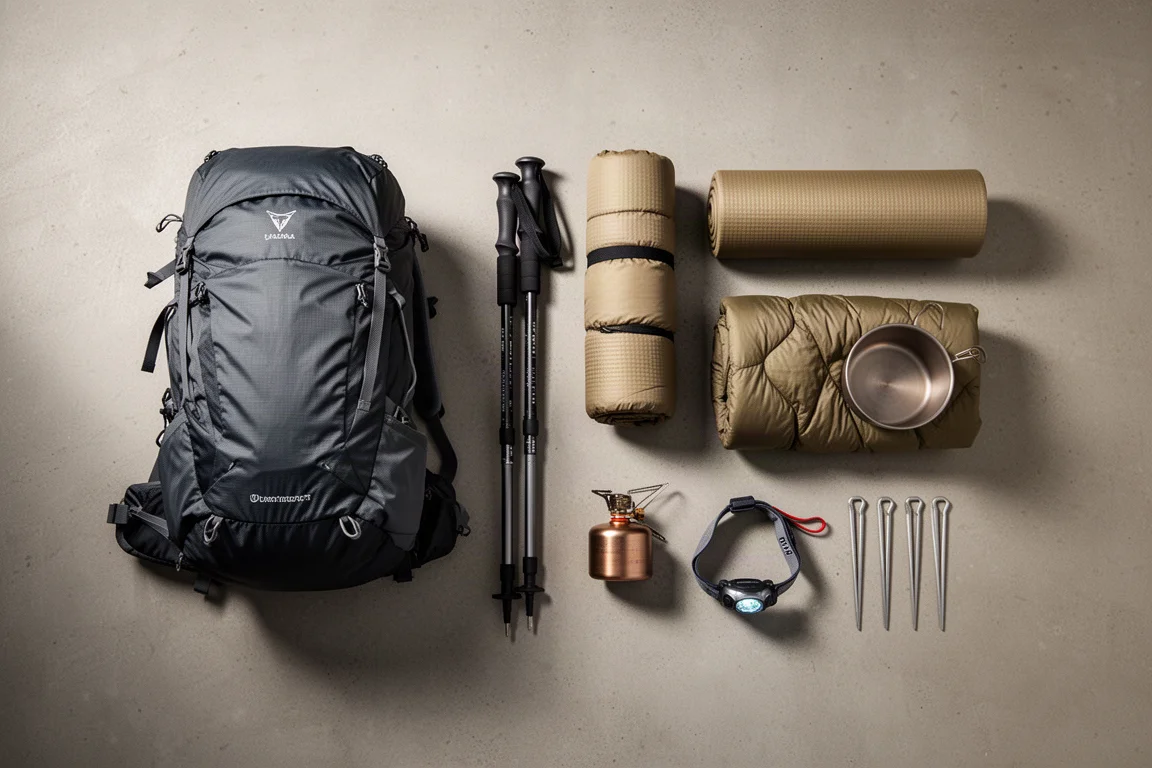
Building a 10 lb Base Weight: An Ultralight Backpacking Gear List
A practical walkthrough of the ultralight pieces behind a 10 lb base weight, from a 765 g pack and a roomy one-person tent to a full camp chair and a dependable water filter.