Sharpening Tools
Three Inexpensive Sharpening Angle Guides That Take the Guesswork Out of Sharpening
Three budget-friendly angle guides that help you hold a consistent blade angle on almost any sharpening stone, from Wedgek and Sharpal.
Introduction
Plenty of sharpeners already have built-in angle aids. Some, like the Spyderco triangle sharpener, lock you into one angle that may or may not suit your knife. Others, like certain Work Sharp models, include built-in ramps and marked angle positions to help you start a blade at the right orientation on both their abrasive and ceramic surfaces. But if you are working with plain wet stones, ceramic stones, or diamond stones, you are on your own for angle control.
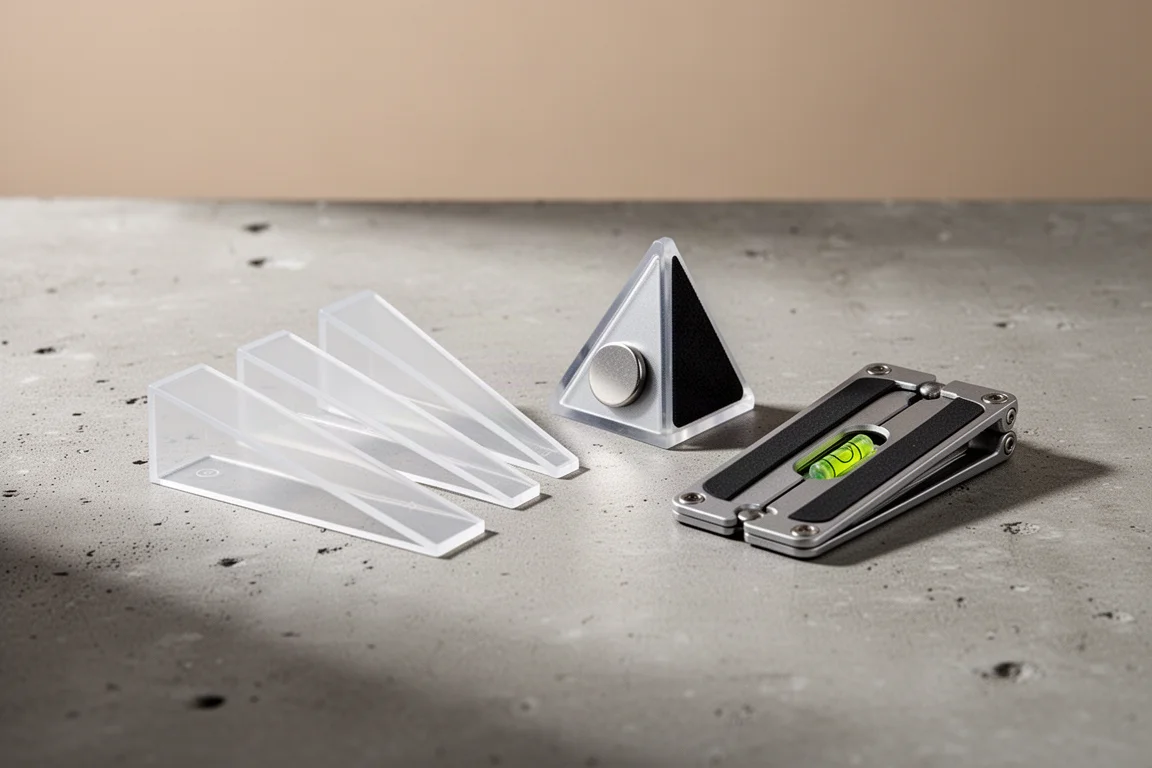
That is where three inexpensive sharpening aids come in: the Wedgek angle guides, the Sharpal angle pyramids, and the Sharpal Hubble sharpening angle guide. All three are small, affordable tools designed to solve the same core problem in slightly different ways.
Why Angle Consistency Matters
Most people can sharpen reasonably well. What they struggle with is holding the angle where the blade meets the stone consistently. If the angle is perfectly consistent, even if it is not the ideal angle, you will eventually grind the edge into a new, uniform angle and end up with a working edge. If the angle wanders with every stroke, you are effectively dulling the knife as you go, rounding off the edge instead of refining it.
Hold the blade at the angle it already has, keep it consistent, and the edge will come back. These three tools exist to make that consistency achievable, especially when you are starting out.
Wedgek Angle Guides: The Simplest Option
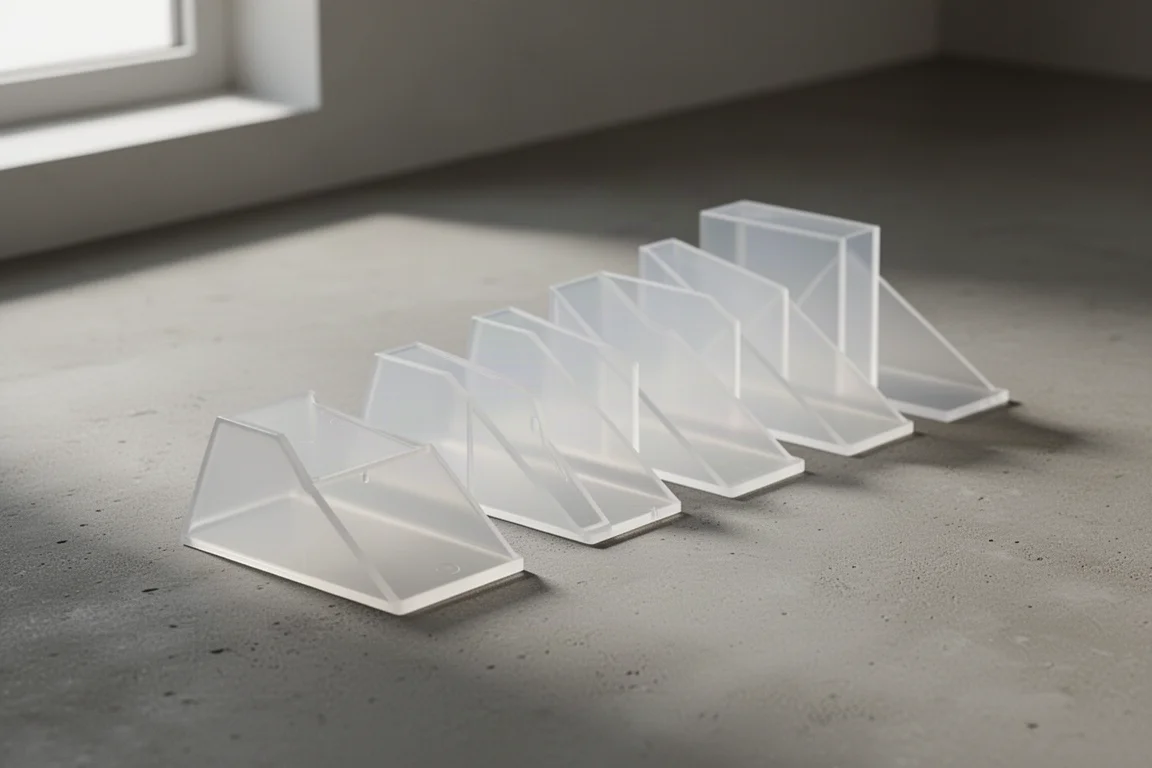
The Wedgek set is the simplest of the three. It is a collection of different sized ramps, each one marked with its angle, and this set covers 10 through 20 degrees. That range matters because different blades want very different angles: razor-type knives use shallow angles, while chopping tools like axes and splitting mauls need much steeper ones.
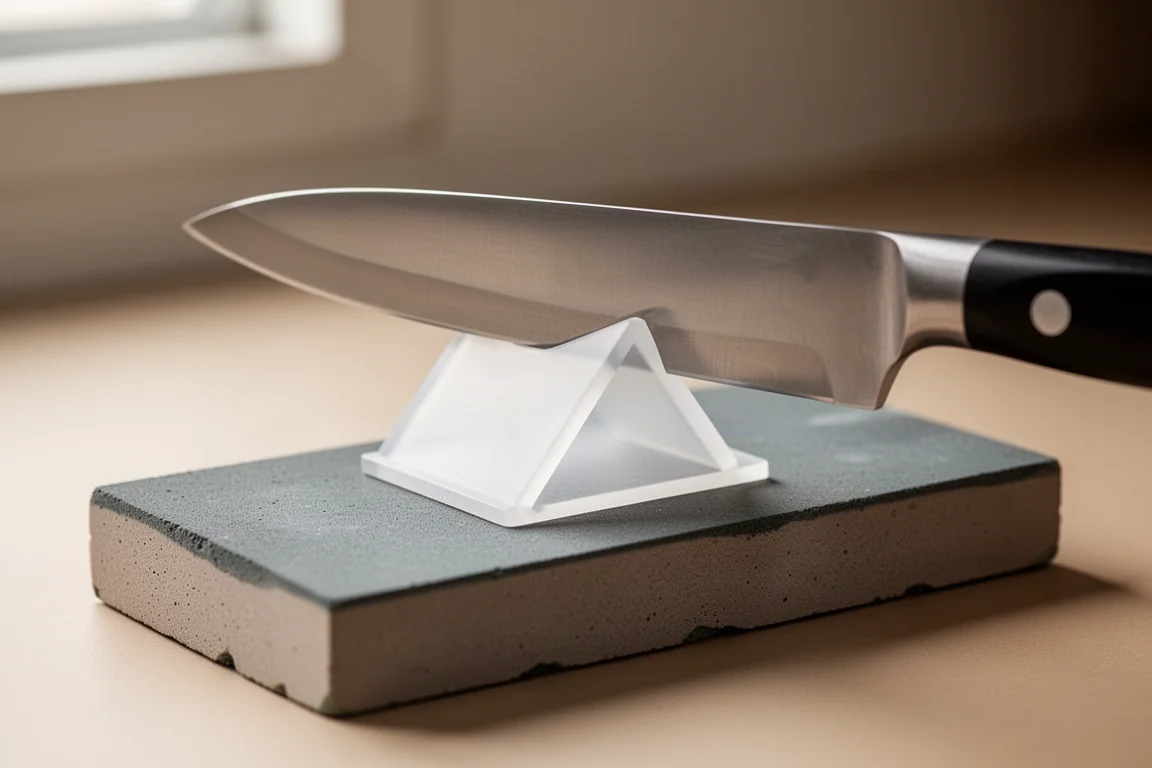
To use one, you line up the ramps against the blade, measuring on the flats until you find the angle that matches, then simply rubber band the guide in place. Once it is attached, the blade engages the stone at the proper angle from the very first stroke.
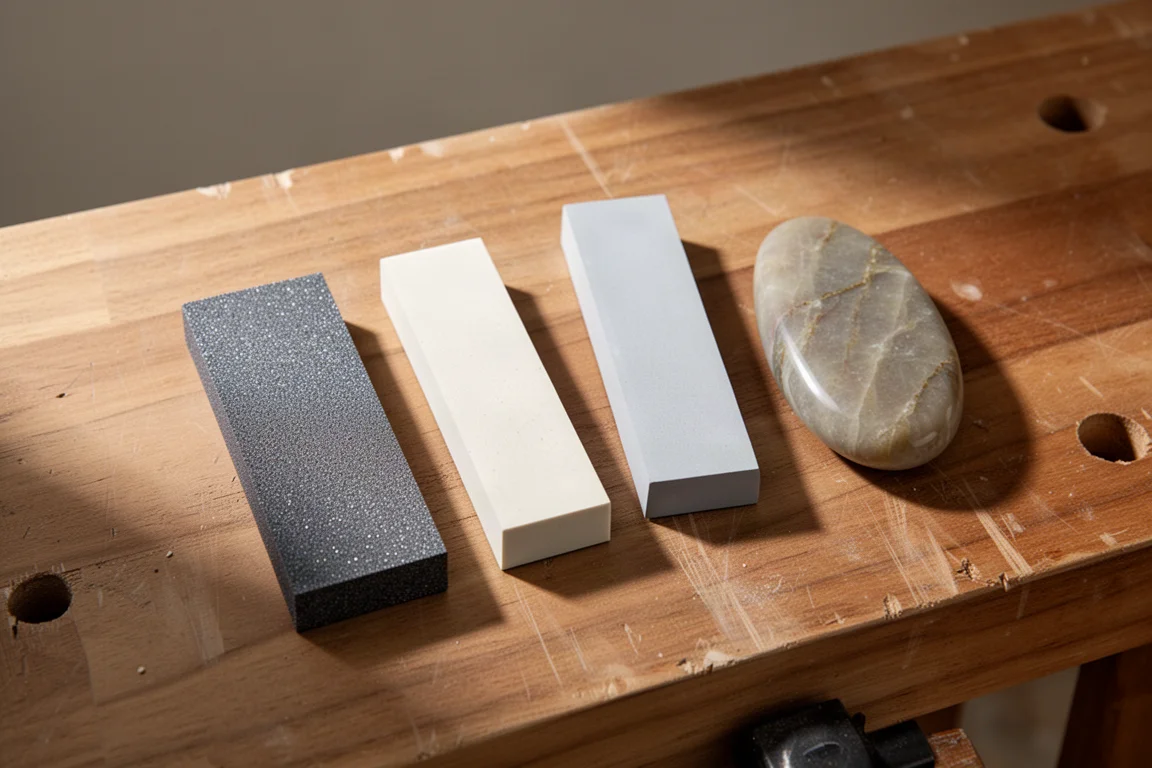
They are compatible with just about any kind of stone you might already own, which makes them a genuinely universal aid. The Wedgek website is wedgek.com, and the set is easy to find online.
Sharpal Angle Pyramids: Versatile Angles with Built-in Grip
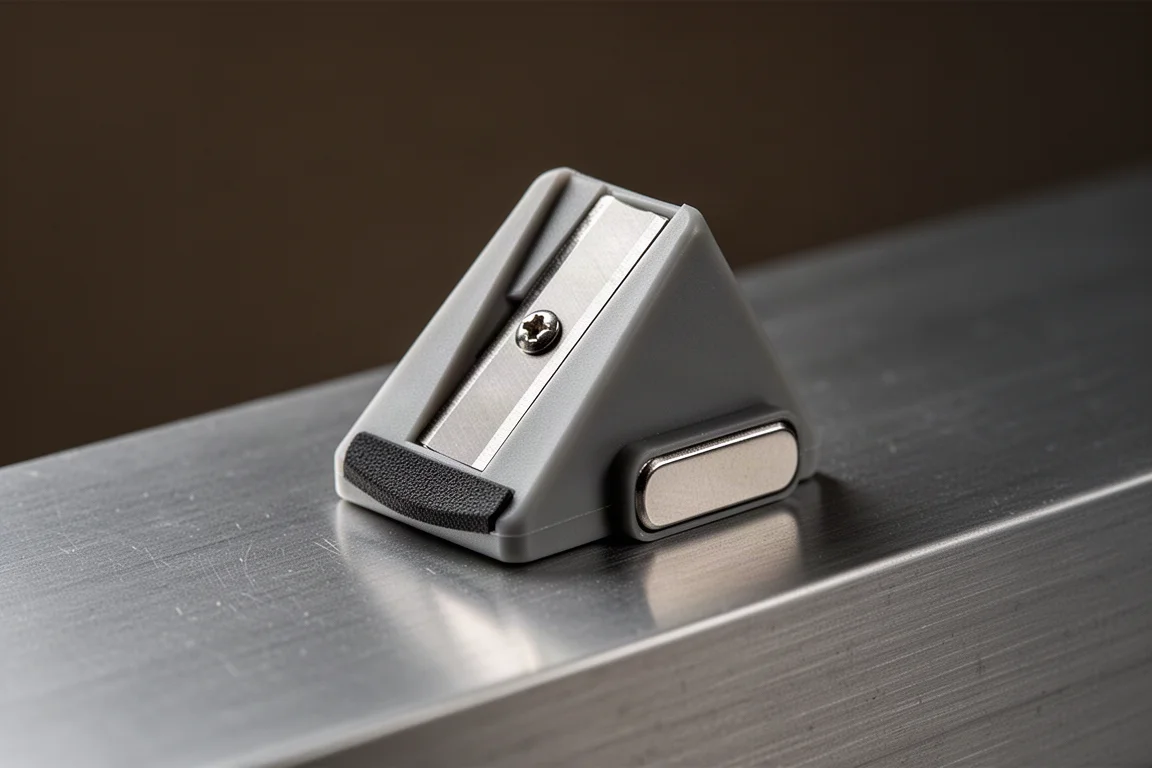
The Sharpal angle pyramids take a different approach. Each one is a small multi-angled piece of plastic, so instead of swapping between separate ramps, you select the correct angled face for the angle you want, for example 17 degrees, and slide it onto the blade.
There are two variants, and the difference is the base. One has a magnet on it, which works well on diamond stones. The other has a rubber-type coating, which grips better on slicker stones like an Arkansas stone. That small distinction matters more than it sounds, because the guide needs to stay put while you find your stroke.
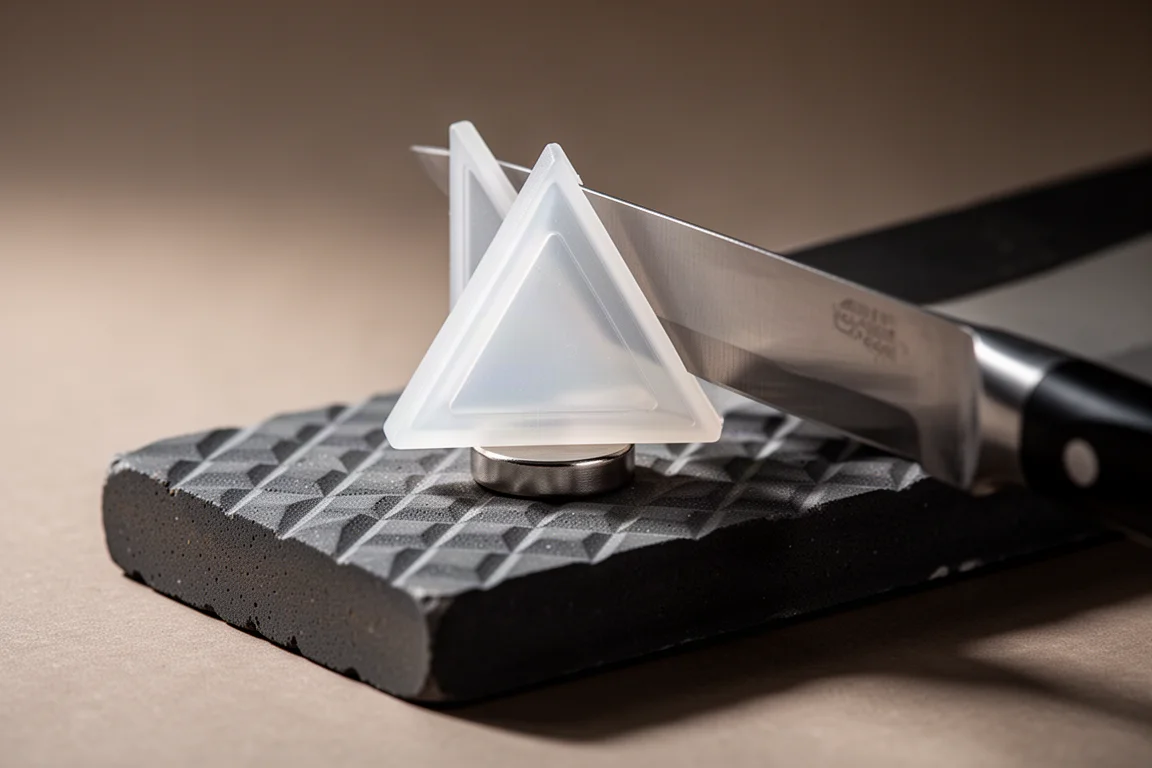
Beyond holding the angle, these are excellent training tools. A common mistake is going either far too shallow or far too steep, and using the pyramid teaches you what a given angle actually feels like. Once you get a handle on it, you can eyeball the position and come close enough on your own. On diamond stones, which are so abrasive they can remove a lot of metal in just a couple of passes, that learning curve is worth shortening.
Sharpal Hubble Sharpening Angle Guide: Steep Angles Made Easy
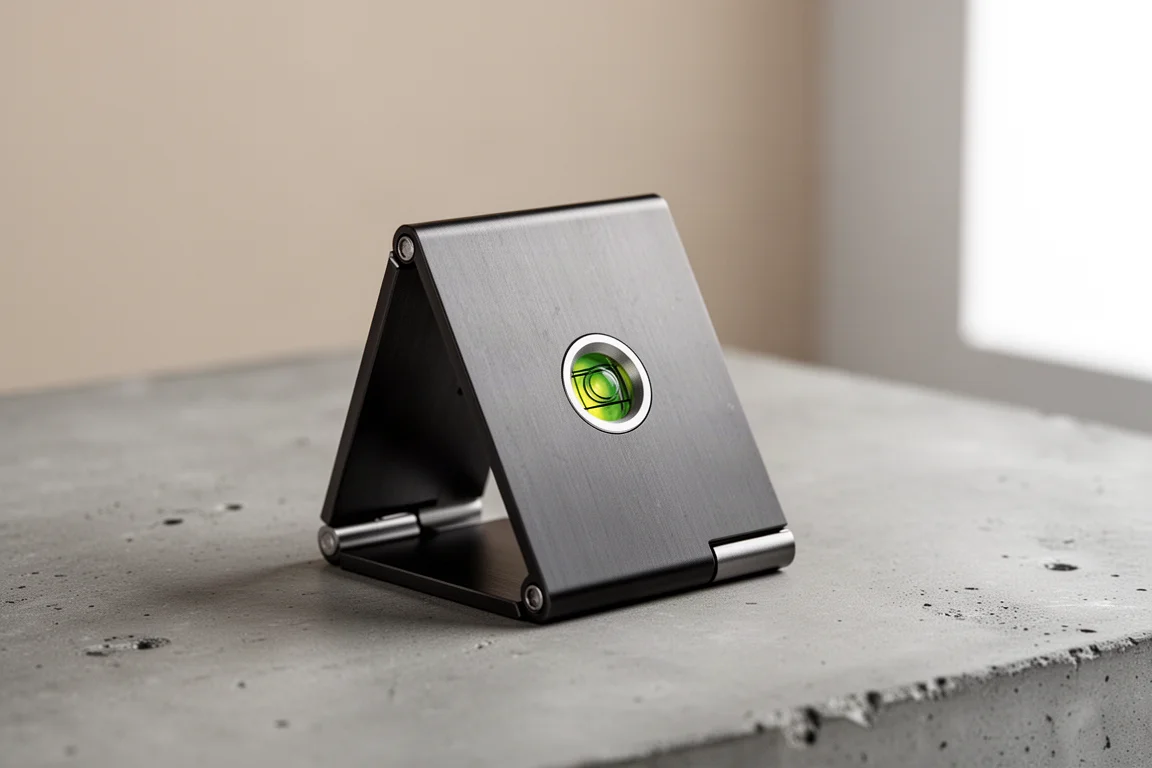
The Sharpal Hubble sharpening angle guide is the most unusual of the three. It is a magnetic plate with a bubble level inside, and it folds up very small. You set the level to align with the degree marking you want, with a wide range that extends up to very steep angles suited to chisels and similar woodworking tools.
The method is clever: attach the plate to the flat of the blade, make sure the stone itself is level, then tilt the blade until the bubble centers. At that moment, you are holding the blade at the chosen angle, whether that is 15 degrees or something much steeper for splitting mauls and heavy tools.
How accurate is it? Realistically, the markings are fairly big jumps, so it gives you a strong indication of where you are rather than a precision setting. But for lining up an angle, it does the critical job well.
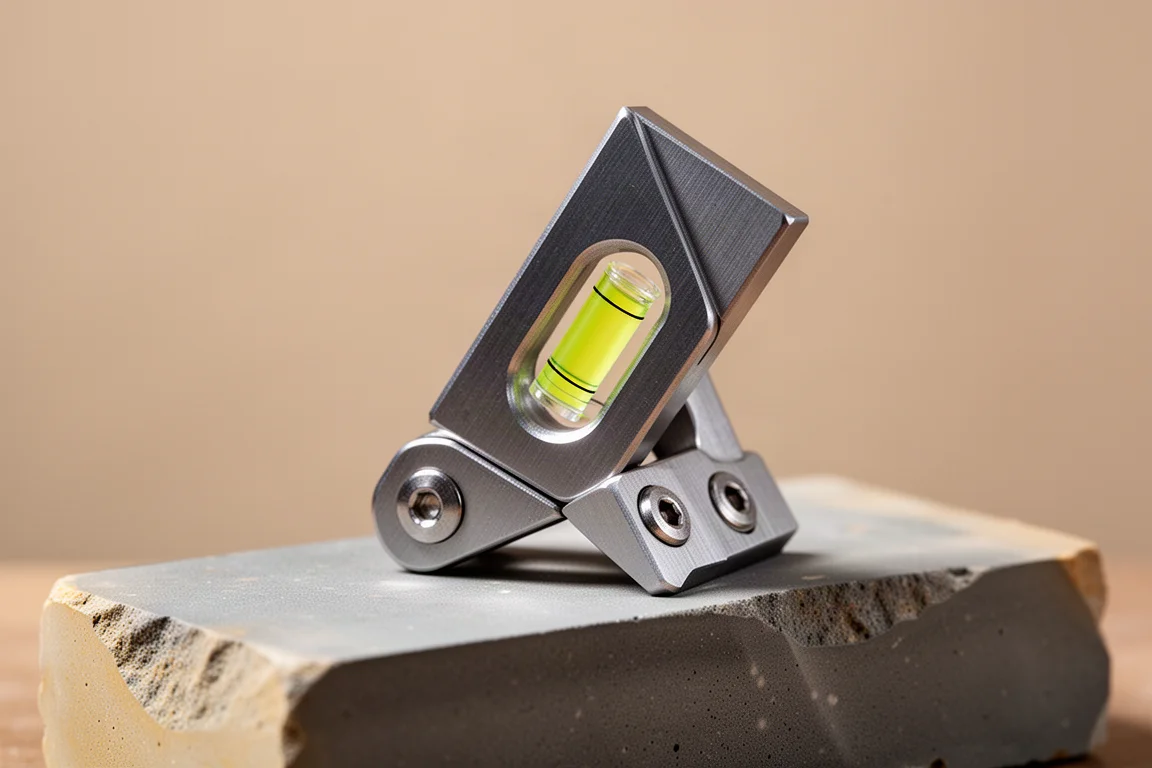
There is a broader point here: you can sharpen on a piece of concrete or even a river rock if the angle is right and you keep everything consistent. Knowing the angle, and holding the blade to it, is the critical part of sharpening.
Which One Should You Buy?
If you want the absolute simplest tool that works with any stone, the Wedgek set covering 10 to 20 degrees is a great starting point, especially for knives that need shallow angles. If you use diamond stones or slicker stones like Arkansas stones and want to train your eye for angles, the Sharpal angle pyramids offer versatile angles with a magnetic or rubber base to match your stone. If you work with steeper-angled tools like chisels or splitting mauls, or simply want a bubble level to confirm your angle, the Sharpal Hubble is the most capable of the three.
All three are inexpensive, small enough to store in a drawer, and compatible with stones you may already own. Any of them will help you hold a consistent angle, which is the single most important factor in getting a blade genuinely sharp.
Conclusion
Consistent angle control separates sharpeners who get razor edges from those who round their blades off. These three affordable aids, the Wedgek angle guides, the Sharpal angle pyramids, and the Sharpal Hubble sharpening angle guide, each solve that problem in a slightly different way. Pick the one that matches your stones and your blades, and sharpening gets a lot more predictable.
Further reading
Related Reviews
Sharpening Tools
Sharpal Dual-Sided Leather Strop Review: Affordable Edge Polishing for Knives and Hatchets
A rawhide leather double strop mounted on hardwood that takes sharpening from the large scale down to the microscopic, for about twenty dollars.

Backpacking Gear
Building a 10 lb Base Weight: An Ultralight Backpacking Gear List
A practical walkthrough of the ultralight pieces behind a 10 lb base weight, from a 765 g pack and a roomy one-person tent to a full camp chair and a dependable water filter.

Road Bikes
10 New Road Bikes Worth Watching: Aero, Titanium, Steel and Endurance Standouts
A practical roundup of 10 new road bikes, from aero flagships chasing single-watt gains to titanium, steel and endurance platforms built for real roads.