Cycling Gear
Best Road Cycling Upgrades 2026: KMA Enta 40 Wheels, S-Works Prevail 3 Helmet, and Physique Argo Adaptive Saddle
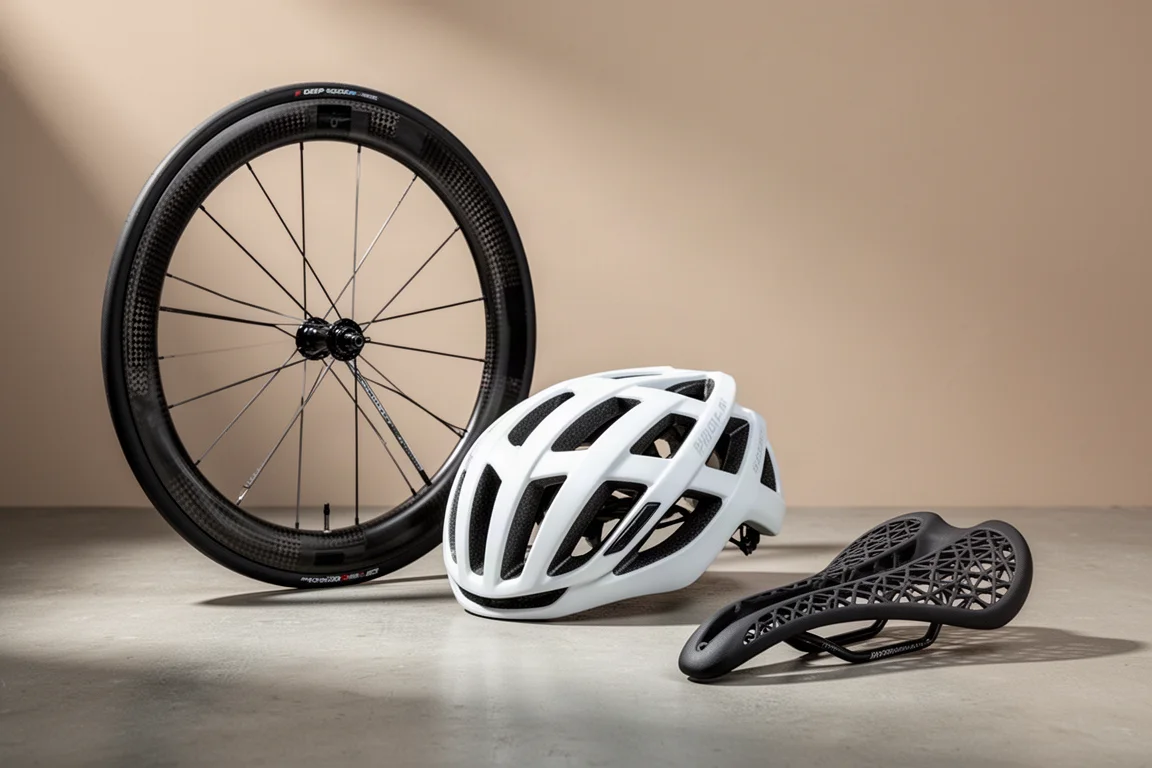
Three premium upgrades for road, all-road, and gravel riders: a handmade French carbon wheelset, a heavily ventilated flagship helmet, and a 3D printed saddle built for long days.
Introduction
Some upgrades shape a ride more than others, and the three products in this roundup each touch a different part of it: the wheel underneath you, the air moving around your head, and the contact point taking your weight. Taken together they cover the three places where road, all-road, and gravel riders most often look to gain comfort or speed.
All three are current, hand-picked highlights rather than a broad category sweep, and each one carries a clear purpose as well as a clear trade-off. This roundup looks at what each product does well, where it falls short, and which riders get the most from it.

None of these are budget purchases. They are the kind of parts that make sense once you already know what you want from your riding and are prepared to pay for the last few percent of performance or comfort.
How These Products Were Assessed
The three products here were used in real riding conditions over a summer and into autumn, mounted on the same road bike, so the impressions below come from repeated use rather than a short first ride.
Four things carried the most weight in the assessment. First, setup and maintenance: how easy each product is to install, adjust, and live with week to week. Second, performance in the conditions it was designed for, whether that is holding speed on flat roads, coping with coarse gravel and potholes, or keeping a head cool on a hot climb. Third, long-term behaviour, including air retention, bearing and hub condition, spoke tension, and surface wear. Finally, value relative to what the product asks of you, since two of the three sit at premium price points.
Where a direct comparison to a familiar product was possible, that comparison is noted so the performance claims are easier to place.
KMA Enta 40 Carbon Wheels
KMA is a French wheel brand founded in the late 1980s. It flies well under the radar compared with the bigger wheel names, which is part of the appeal. The Enta 40 Carbon is the brand’s new all-rounder, designed to bridge kind road, all-road, and gravel use.
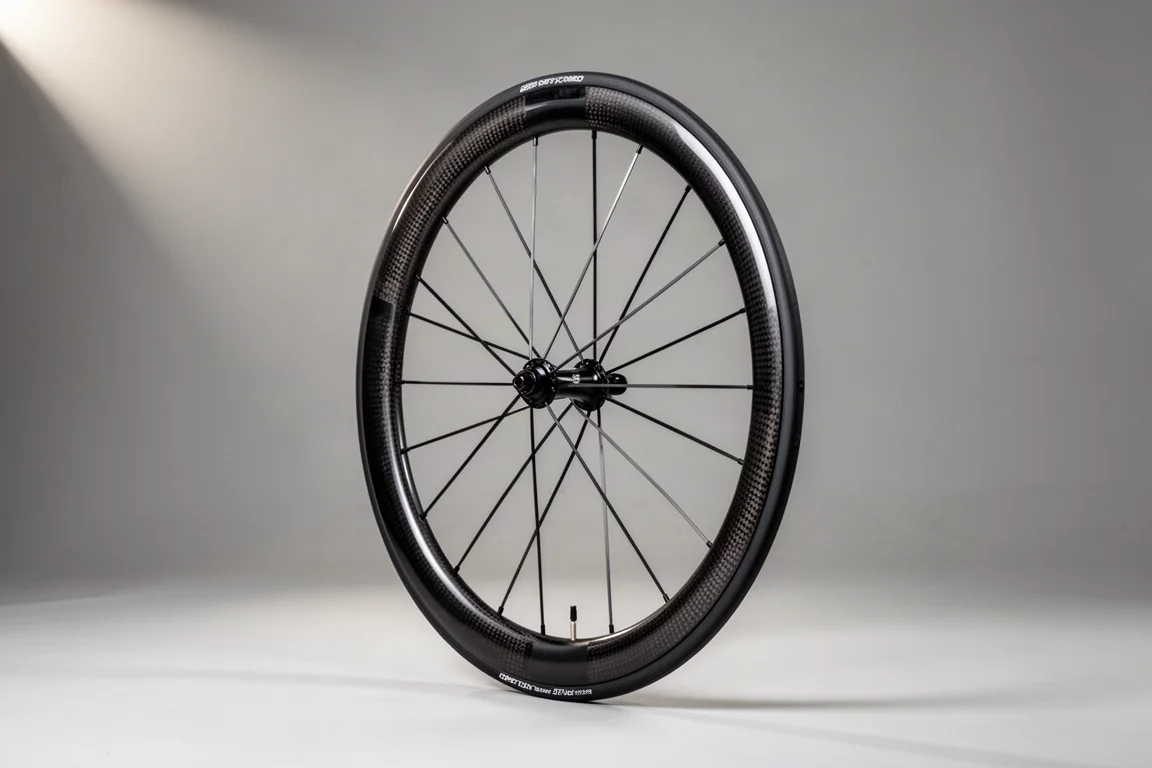
The rim is 40 mm deep carbon with a wide 23 mm internal width. It is tubeless only with a hookless bead, which keeps the rim strong and light while making tubeless setup straightforward. You can run a 28 mm or 30 mm tyre on a road bike, or step up to a 40 mm tyre for gravel. The wheels arrive pre-taped with valves already installed, so setup means fitting tyres, adding sealant, and riding. The tyres used here seated with a normal track pump, with no special tools or tricks required.
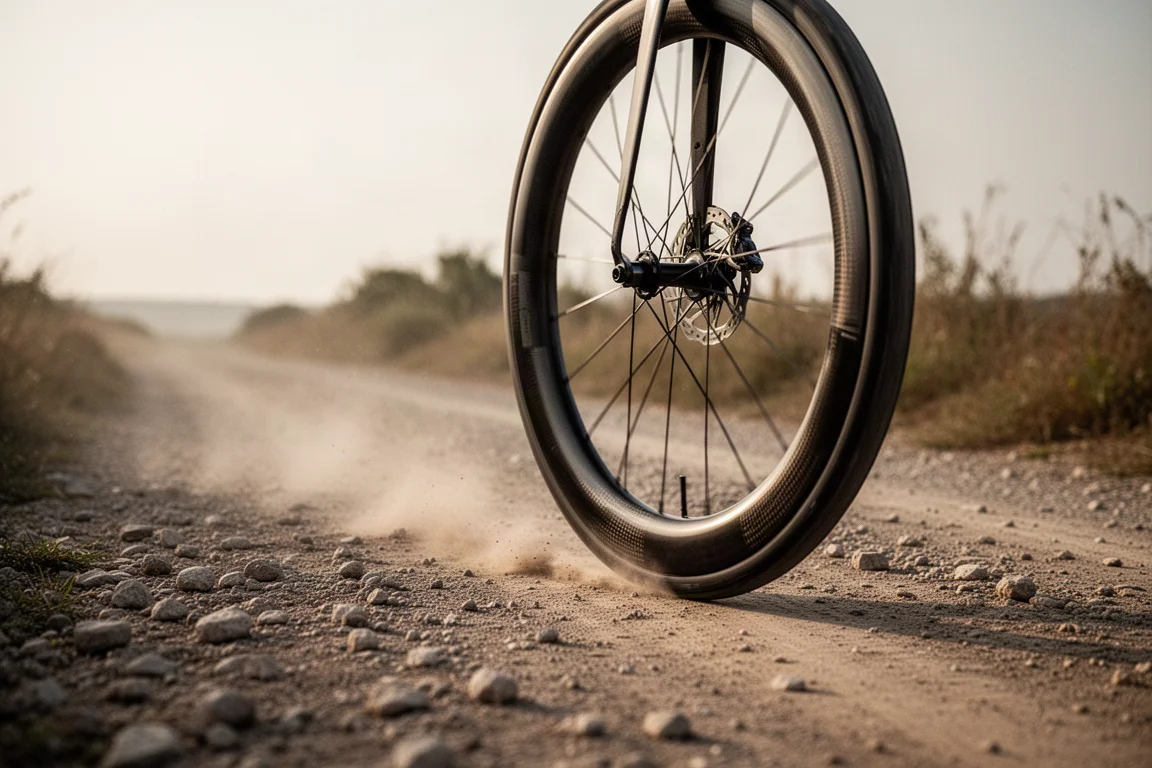
The look is deliberately distinctive. There is an exposed carbon weave that harks back to the late 1990s and early 2000s, when showing off the weave was almost mandatory, along with bold branding graphics on the rims and a paired spoke lacing pattern. The spokes are aero bladed, and external nipples make maintenance easier. Claimed weight is 1,600 g, which is light but not exceptionally light for a carbon wheelset of this depth.
On the road, the wheels deliver what you would expect from this style of rim. They hold speed well on flat roads, and the combination of a wide internal width and a wide, lower-pressure tyre produces a stable platform. Stiffness from the spoke lacing holds up under hard cornering loads, with no sense of flex or distortion under heavy braking. Ride comfort is good too, and in back-to-back riding against a comparable carbon wheelset of similar price, weight, and depth, these felt slightly smoother and more damped on rough roads, loose gravel, and potholes, and noticeably more muted rather than frenetic.
Reliability over roughly six weeks to two months of regular use has been solid. The bearings and the front and rear hubs have given no trouble, air retention is good enough that topping up about once a week is enough, no punctures have been recorded, and spoke tension is still holding. The freehub engages quickly with no delay, which you feel the moment you stand on the pedals, and it makes a distinctive sound. As for drawbacks, the weight is good rather than remarkable, and the exposed carbon weave is a matter of taste. Handmade construction in France is a genuine point in its favour for riders who value that.
Specialized S-Works Prevail 3 Helmet
The Prevail 3 is the most heavily ventilated and lightest helmet in the Specialized range, with the Evade covering aerodynamics instead. This one is aimed squarely at climbing, mountain riding, and hot weather, where staying cool matters more than shaving drag.
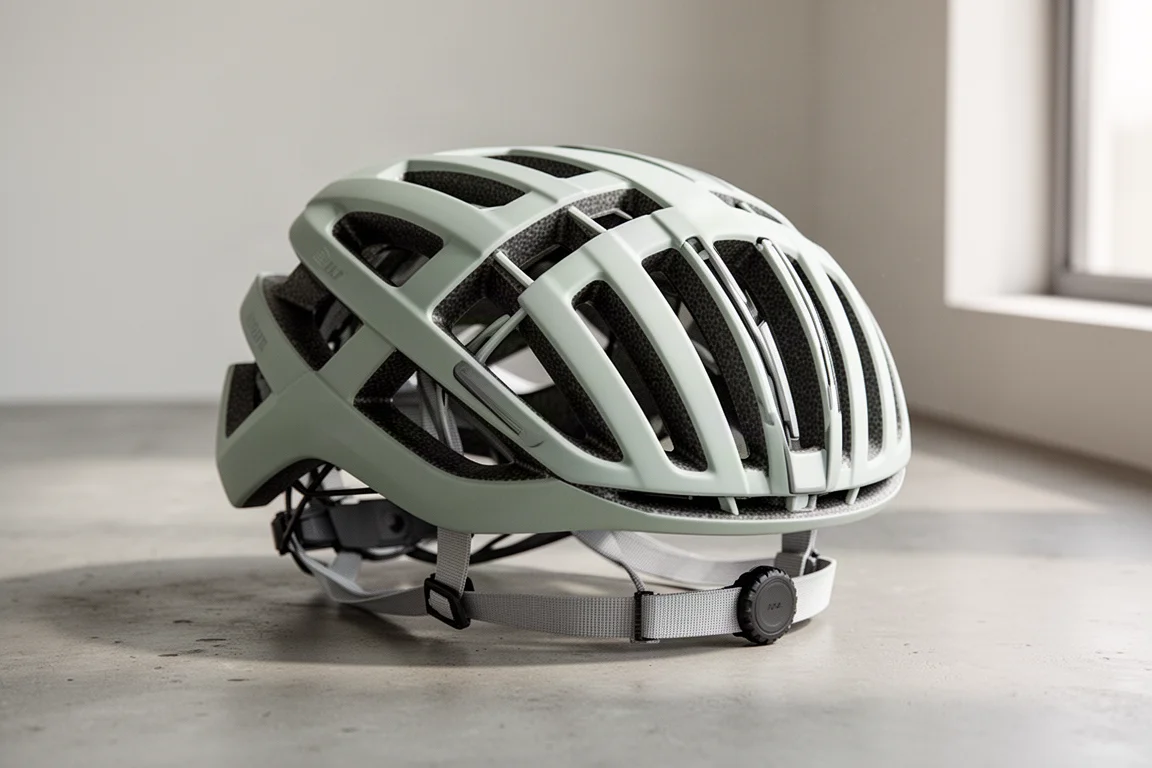
The step forward over the previous version is substantial. The vents along the central section are far larger, achieved by removing the structural bridges that usually sit across a helmet shell and replacing them with very small spars. That opens up the airflow in a way that is unusual to see in a production helmet. The helmet still meets the same safety standards, and ventilation on a hot climb is clearly better than on the older model.
Weight is around 260 g, roughly unchanged from the previous version. That is not the lightest in the category, but it is among the lighter helmets available, and in use the weight is barely noticeable. The MIPS Air Node liner is integrated into the foam liner and is almost unnoticeable, so there is no sacrifice in fit or comfort, which has not always been true of MIPS-equipped helmets. Fit is subjective, but rounder head shapes tend to work well with this design, and the retention system is easy to adjust using the dial at the back, with further adjustment inside the helmet. Sweat management from the brow pad is about on par with most other helmets. The webbing straps are thin, emerge from the side of the shell, and sit fairly close to the face, though the triangular junction where two straps meet the single chin strap is a small gripe.
The trade-off is seasonal. The enormous vent area that makes this helmet excellent in heat also lets in cold air on autumn descents, rain, and airborne insects, so its usefulness is weighted toward warm-weather riding. The other consideration is price. This is a flagship S-Works model with cutting-edge design, and the price reflects that. History suggests this kind of technology trickles down to lower price points over the coming years, and cheaper helmets are already lighter and smarter than they were a decade or so ago, but if you want the best cooling available right now, this is the helmet to look at.
Physique Argo Adaptive 3D Printed Saddle
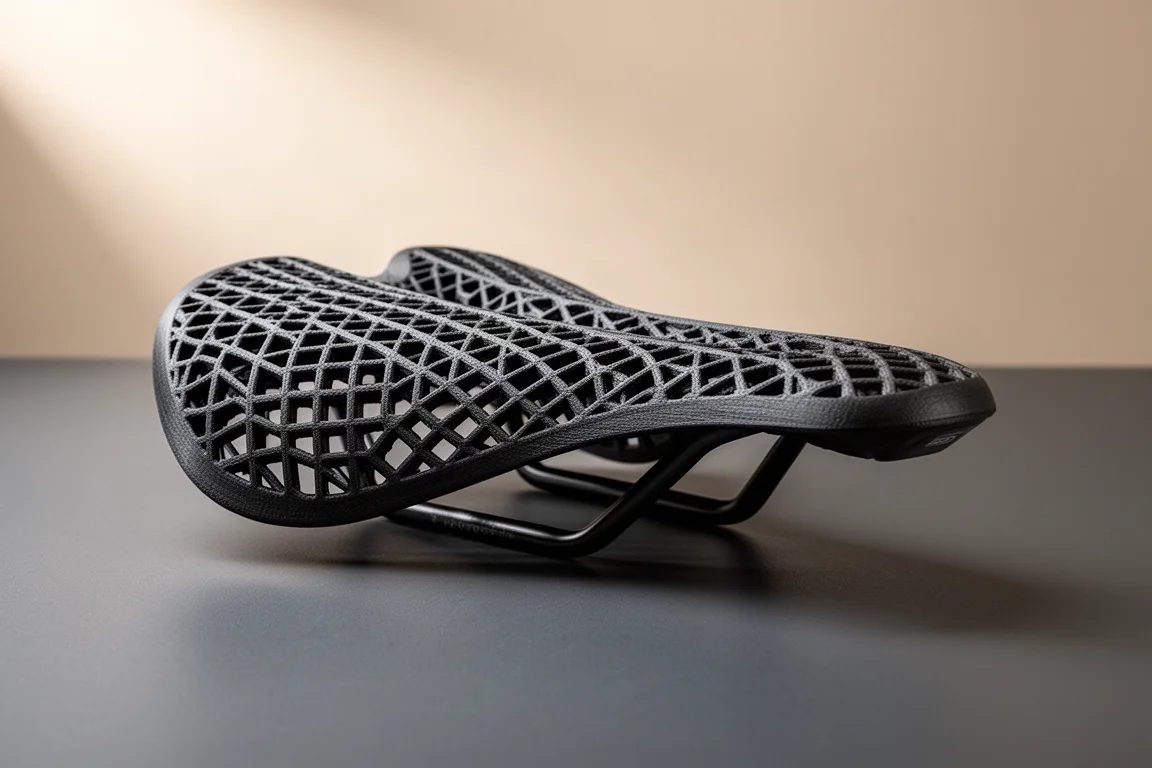
The Physique Argo Adaptive is a 3D printed saddle, and it has become a favourite for long-distance riding. The reason comes down to shape first. It is short and broad across the back, with a short taper from a fairly broad nose that flares out almost immediately into the wide base. That creates a wider sweet spot to sit on, so there is more usable area in the middle when you move around. You can shuffle forward toward the nose when climbing, and there is a scoop at the back that supports you when you push back into the saddle in an aggressive position.
The Adaptive name refers to how firmness is tuned across the surface: softer in the middle, firmer at the nose and at the wings. The result is support where you need it and a softer feel in the areas that are more vulnerable to discomfort. On long rides that shows up as less shuffling around in the final hour, with the last mile feeling much like the first, which is a real difference compared with foam saddles even when the shape already suits you.
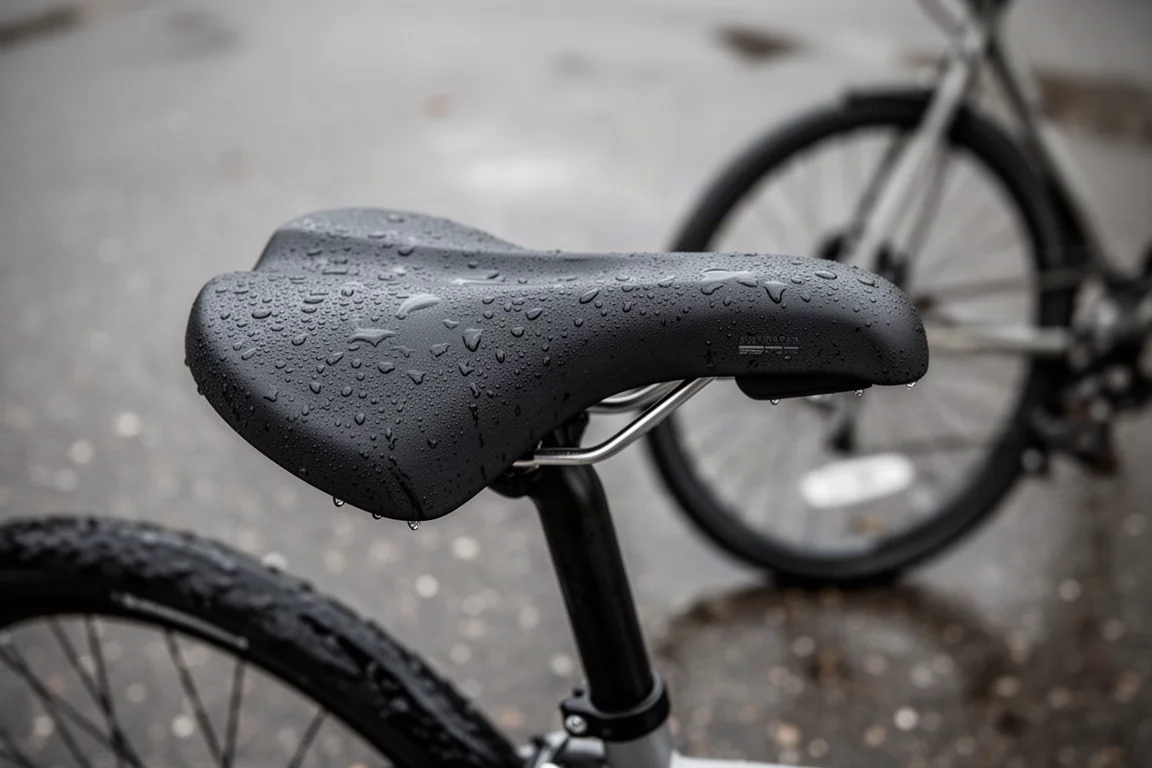
Two common questions come up with 3D printed saddles of this type, and both have reassuring answers. The holes do not fill up with mud and water. Debris passes in and out just as quickly, so the seating surface stays clean rather than collecting a layer of silt that you end up sliding around on in gritty conditions. That also makes washing the bike after a wet ride easy, whether with a hose or a bucket. The second question is surface wear on shorts. The surface is smooth to the touch rather than sharp, and no bib shorts have shown wear over several months of use. Some roughness has begun to appear around the edge, which is the area that takes pressure during hard efforts, but there is no sign of the saddle failing.
Rail choice matters for cost. The hollow titanium rail version is considerably cheaper than the carbon rail version and fits most saddle clamps without issue. The price is still fairly high, as is typical for cutting-edge 3D printing, and it should become more accessible over the coming years. As with any saddle, shape is everything, and this shape will not suit every rider.
Tyre Width, Fit, and Shape Notes
A few practical points are worth checking before committing to any of the three.
The KMA Enta 40 Carbon rims are tubeless only and use a hookless bead, so plan around tubeless tyres from the start. The wheel is designed to cover a wide range, from a 28 mm or 30 mm road tyre up to a 40 mm gravel tyre, which is what makes it a genuine one-wheelset option for riders splitting their time between tarmac and unpaved roads.
Helmet fit is highly individual. The Prevail 3 suits rounder head shapes well, and the retention system is easy to fine-tune, but the ventilation story is a warm-weather one. Riders who spend most of their time in cool or wet conditions should weigh that up honestly before paying flagship money.
Saddle shape matters more than any other factor. The Argo Adaptive offers a short, broad platform with a wide sweet spot, and it comes in more than one width, so the shape and size combination matters as much as the 3D printed construction. If the shape works for you, the technology is a clear step forward from foam in comfort terms.
Overall Buying Advice
The most broadly useful of the three is the wheelset. A single set that runs a 30 mm road tyre one week and a 40 mm gravel tyre the next covers a lot of riding, and the price sits competitively against comparable carbon wheelsets of the same depth and internal width. For riders who want one bike to do more, this is the upgrade that changes the most.
The helmet is the easiest decision to get right or wrong. If you ride in heat, climb a lot, or simply overheat easily, the ventilation here is exceptional and the integrated MIPS liner removes the usual comfort penalty. If your riding is mostly cool and damp, the vents work against you.
The saddle is the most personal purchase of the three. Read the shape description carefully and be honest about what you currently ride. If a short, broad saddle with a wide sweet spot matches your position, the tuned firmness and the way water and grit pass straight through make it a genuinely better long-ride option than foam, and the titanium rail version keeps the cost more reasonable than the carbon rail alternative.
Conclusion
Three upgrades, three different jobs. The KMA Enta 40 Carbon wheels bring a wide, tubeless, gravel-capable platform with a smooth and reliable character and a competitive price position. The Specialized S-Works Prevail 3 sets a new reference for airflow on a hot climb, at flagship pricing and with limited appeal in cold weather. The Physique Argo Adaptive turns 3D printing into real long-ride comfort through a shape that puts more usable surface under you and holes that stay clean no matter what the road throws up.
Choose by the problem you want solved, and each of these three stands up well within its own brief.
Further reading
Related Reviews
Cycling Gear
8 Cycling Products Riders Keep Coming Back To
Eight cycling components and accessories with clear strengths, honest trade-offs and long-standing reputations among riders and mechanics.
Cycling Gear
Aero Helmets and Bottle Setups Tested: Six Options Ranked by Measured Watt Savings
Wind tunnel data on six aero helmets and bottle setups, with real watt savings, practical trade-offs, and guidance on what is worth buying first.
Cycling Gear
Aero Road Bikes and Fast Tires Worth Watching in 2026
Four aero road bikes and one fast road tire, with the real strengths, the open questions, and what to check before you buy.