Aquarium Foods
Best Reef Tank Foods: Pellets, Frozen, Algae, and Refrigerated Options
A practical guide to reef tank feeding, covering pellets, frozen foods, algae sheets, and refrigerated options, plus two pellet foods that cover very different needs.
Introduction
Reef keepers have more feeding options than ever, and the choices span frozen foods, dry pellets, algae sheets, and refrigerated blends. Each category solves a different problem, and each comes with its own trade-offs in convenience, cost, nutrient load, and shelf life.
This guide walks through the main food groups, explains what each one does well, and highlights two pellet options that cover very different feeding needs: one built to support colour and coral feeding, and one aimed at herbivores.
How to Choose the Right Reef Food
Start with the fish you actually keep. Small-mouthed species such as seahorses and anthias need very small food particles, while medium and larger fish handle bigger items. Predators with constantly growing teeth, such as puffers, need something hard enough to wear those teeth down. If you keep herbivores, they need plant matter and fibre in the diet, not just protein.
Corals matter too. Some foods feed the tank and the corals at the same time, which is a genuine efficiency win in a mixed reef where you want one feeding to do double duty.
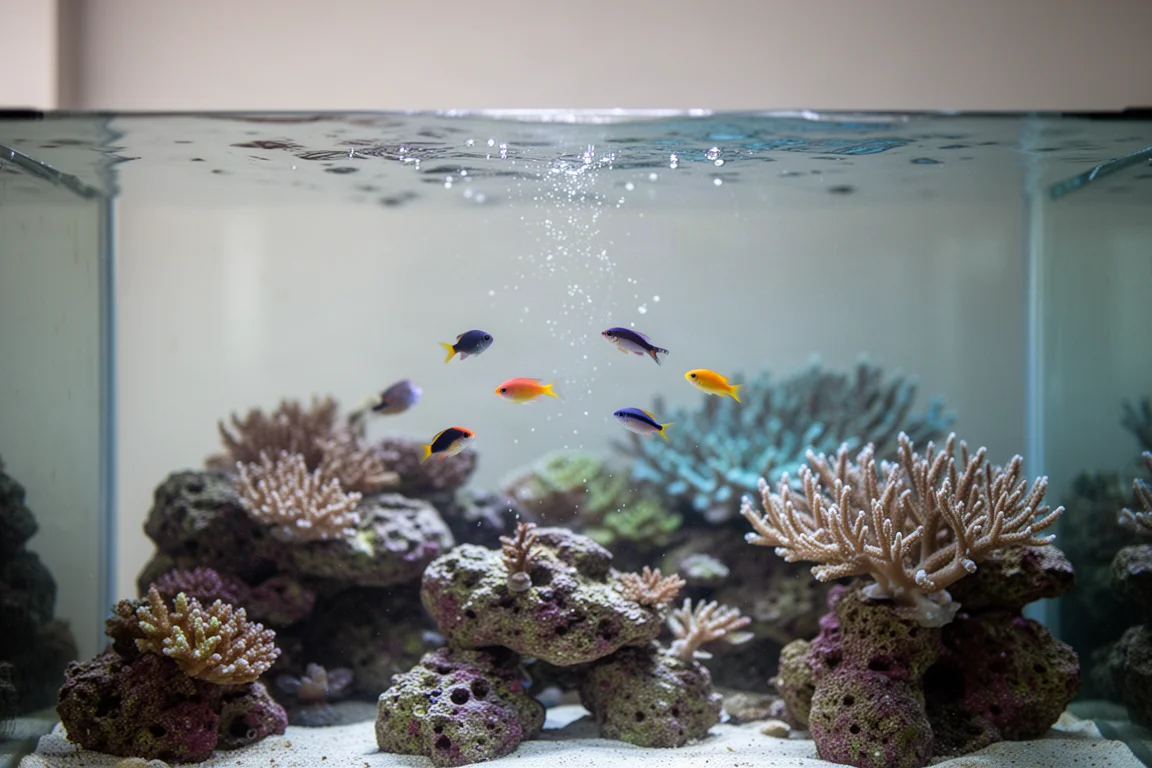
Practical factors matter just as much. Think about how the food is stored, how long it keeps, whether it can go into an automatic feeder, and how much uneaten food ends up in the water. A food that is easy to use but loaded with excess liquid can push phosphate and nutrient levels up. A food that is nutritionally dense is easy to overfeed, and every pellet or fragment that sinks uneaten adds to the tank’s nutrient load.
Best for Colour and Coral Feeding: TDO Chroma Boost
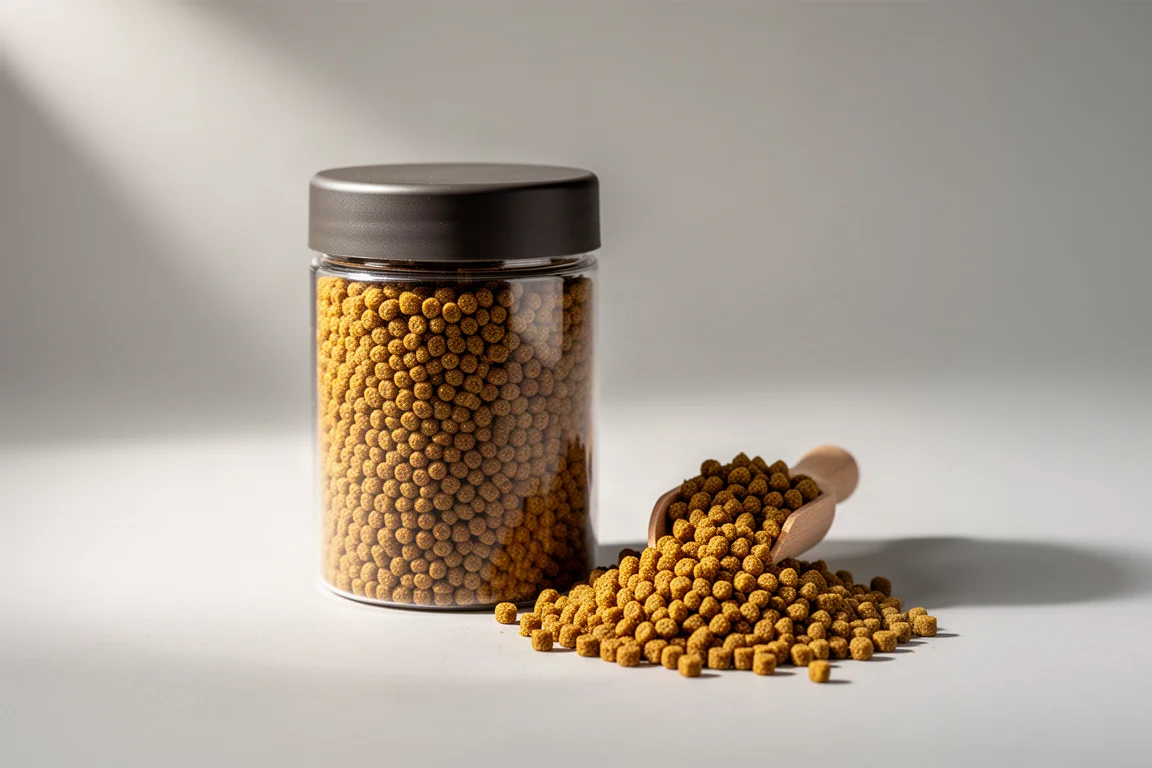
TDO Chroma Boost is a pellet food with a coating that releases into the water and feeds corals as well as fish, which makes it a useful everyday staple in a mixed reef.
Pellet foods like this are easy to use. You can sprinkle them onto the surface or load them into an automatic feeder, and fish raised in captivity, including clownfish and anthias, tend to recognise pellets straight away. The pellets come in granular sizes, so the same food type can serve tiny fish through to full-grown adults, and the format makes it simple to feed a few at a time and wait until the fish have finished before adding more.
Colouration is the other appeal. Coated pellets of this kind are used to bring out orange and red tones, which is relevant for ocellaris and percula clownfish and for anthias.
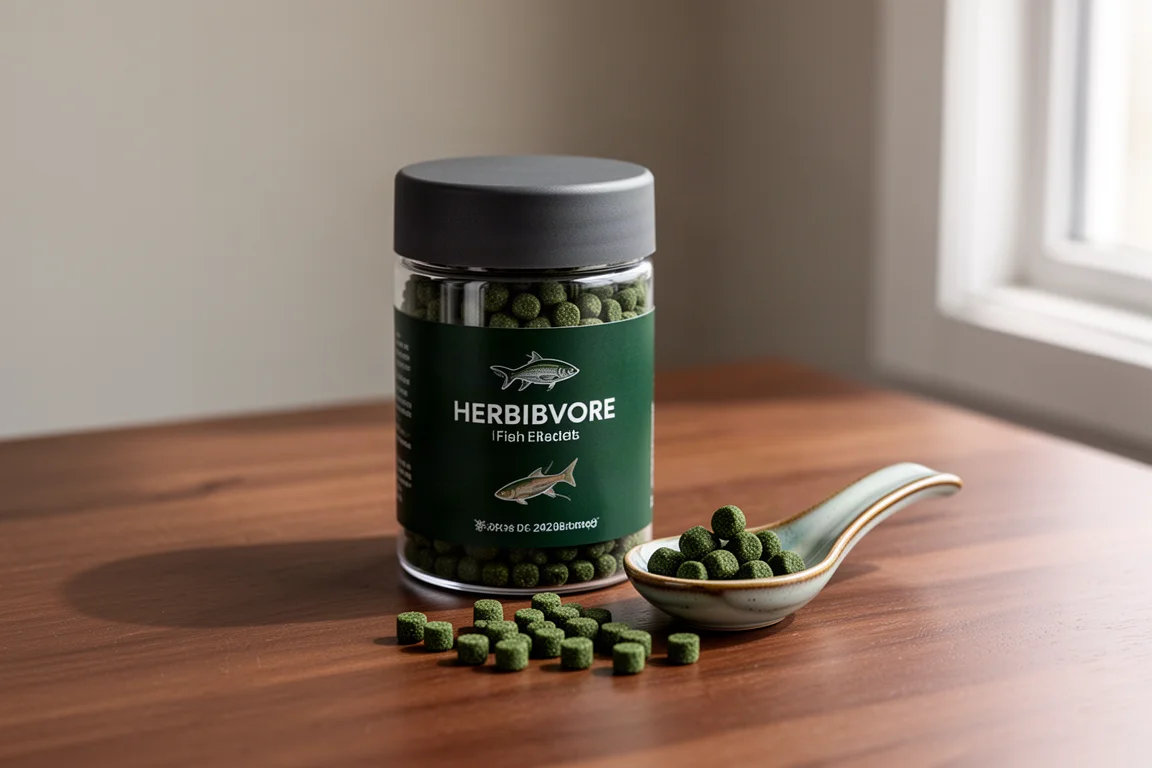
Best Herbivore Pellet: Seaweed Extreme
Seaweed Extreme is a herbivorous pellet option, which matters because many reef fish need plant matter and fibre in their diet rather than protein alone.
The practical advantage of a herbivore pellet is convenience. It can go into an automatic feeder, which makes it a sensible choice when you are away and need something reliable for plant-eating fish.
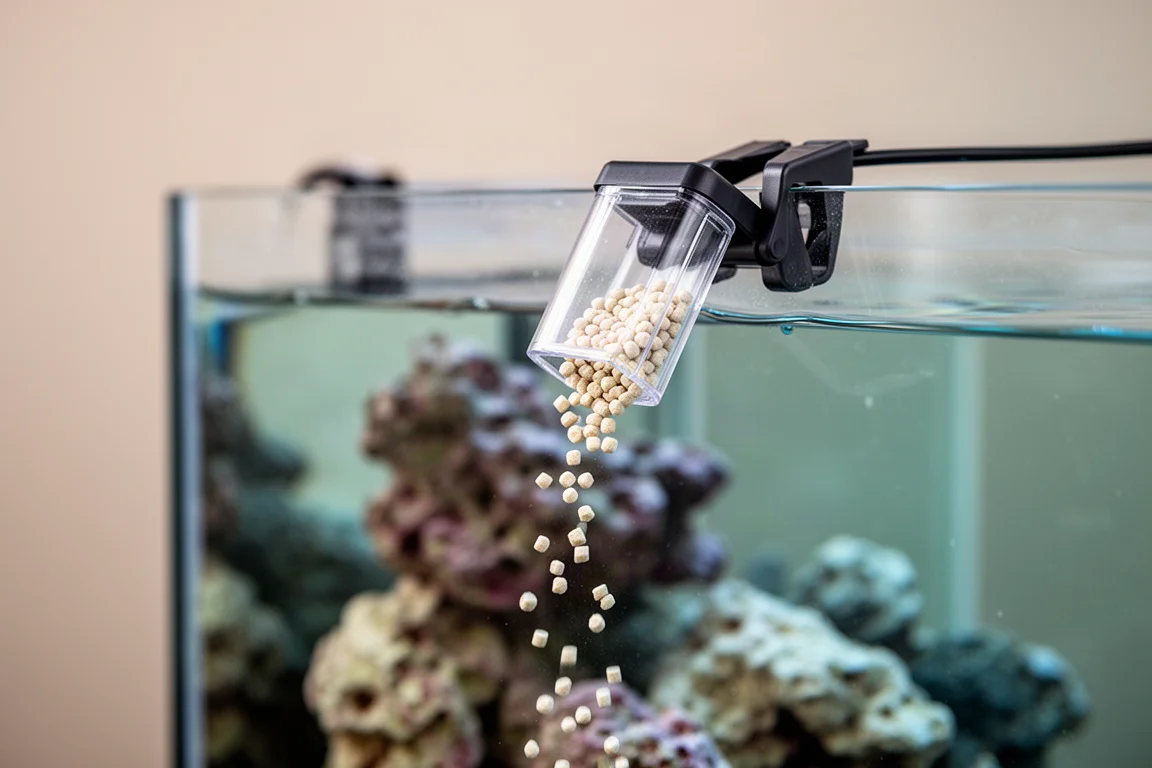
Like other pellets, it is nutrient dense, so portion control is the main thing to watch. Because the pellets are granular, you can feed small amounts and observe how much is actually eaten, which is easier to manage than a large block of food breaking down in the tank.
Frozen Foods: Variety With a Trade-Off
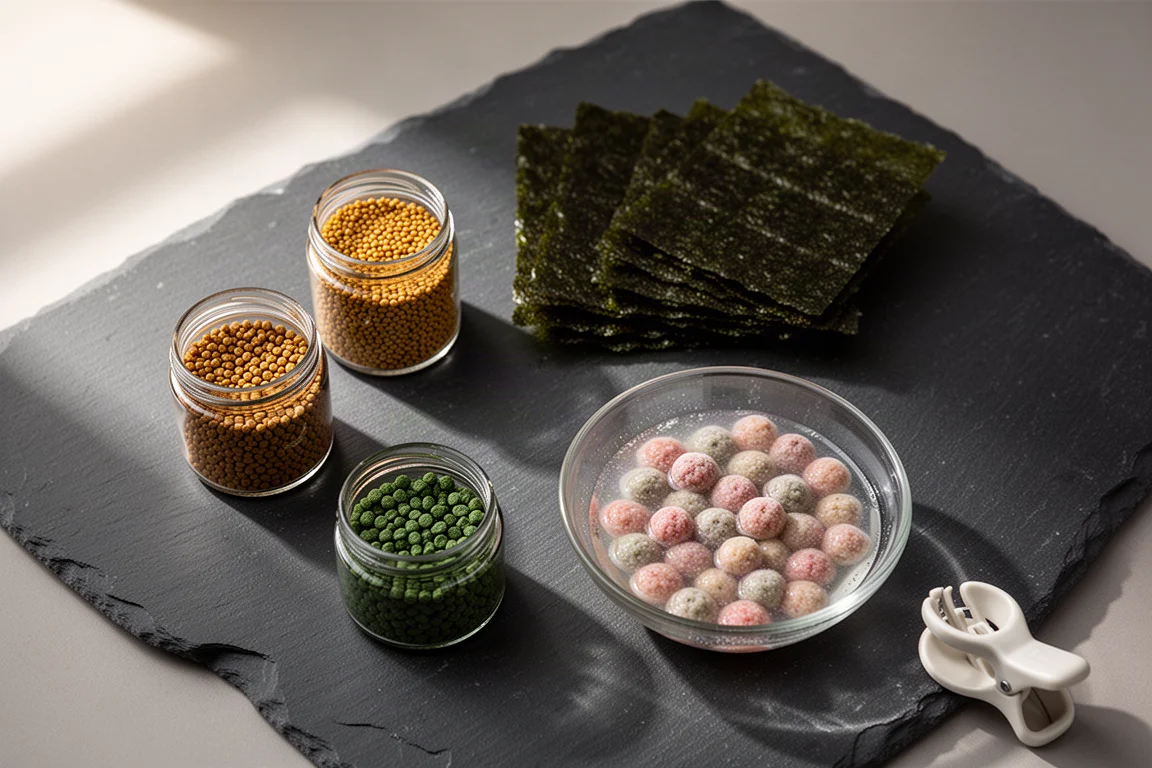
Frozen food is the most popular category, largely because of the range available. Cyclops and calanus suit small-mouthed fish such as seahorses and anthias, and they feed corals at the same time. Squid, mysis, and spirulina-enriched brine shrimp work well for medium and larger fish, and spirulina-packed options add nutrition that supports immune function, overall health, and colouration. Krill suits predatory fish with teeth that keep growing.
The trade-offs are real. Frozen food is tedious to use: it needs to be defrosted ahead of time and should be fully thawed before it goes into the tank rather than dropped in as a cube. The cubes also carry a lot of liquid, which is unwelcome in tanks already running high phosphate or high nutrients. Defrosted food cannot be left sitting either. It degrades quickly, and refreezing breaks down the proteins, so you either use it or discard it.
Algae and Nori: Encouraging Natural Grazing
Algae sheets, most commonly nori, are fed on a veggie clip or a dedicated grazing device. They encourage natural grazing behaviour, which is a meaningful benefit for tangs and other herbivores that would otherwise have nothing to graze on if the rockwork is bare.
Nori comes in a range of sheet sizes and quantities, and it is not the only option. Varying between green, red, and purple varieties adds nutritional variety, though some fish will refuse certain colours, so it is worth trying more than one.
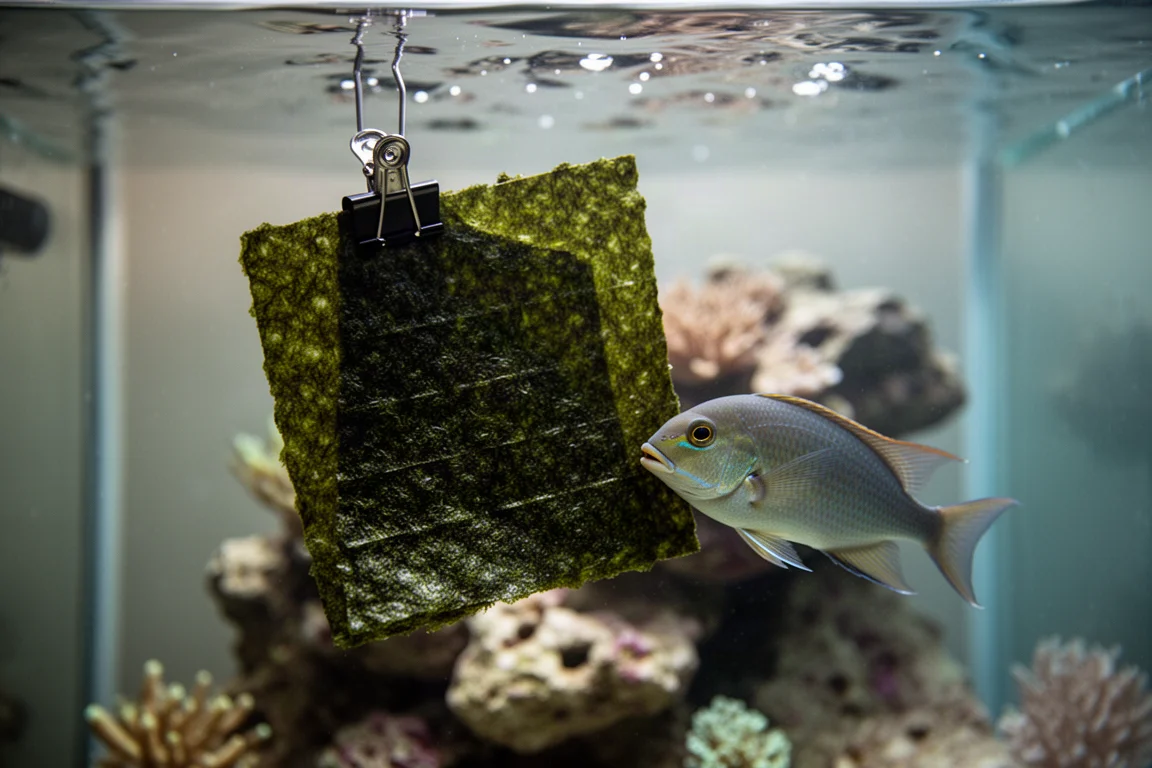
There are two things to manage. First, tangs are messy eaters that pick and pull, so folding the sheet before it goes on the clip helps prevent pieces from being ripped off and ending up on an overflow, which can cause flooding. Second, do not overfeed. A single sheet is far too much for one or two tanks, and uneaten algae breaking down simply fuels more algae growth in the tank.
Refrigerated Foods: Convenient but Costly
Refrigerated foods sit between frozen and dry. They do not need thawing, and they come in a wide range of options that work well for picky eaters. Roe, super eggs, and golden pods are different enough from standard fare that they are often the go-to choice when a new fish refuses to eat. Refrigerated coral foods are also available in this category.
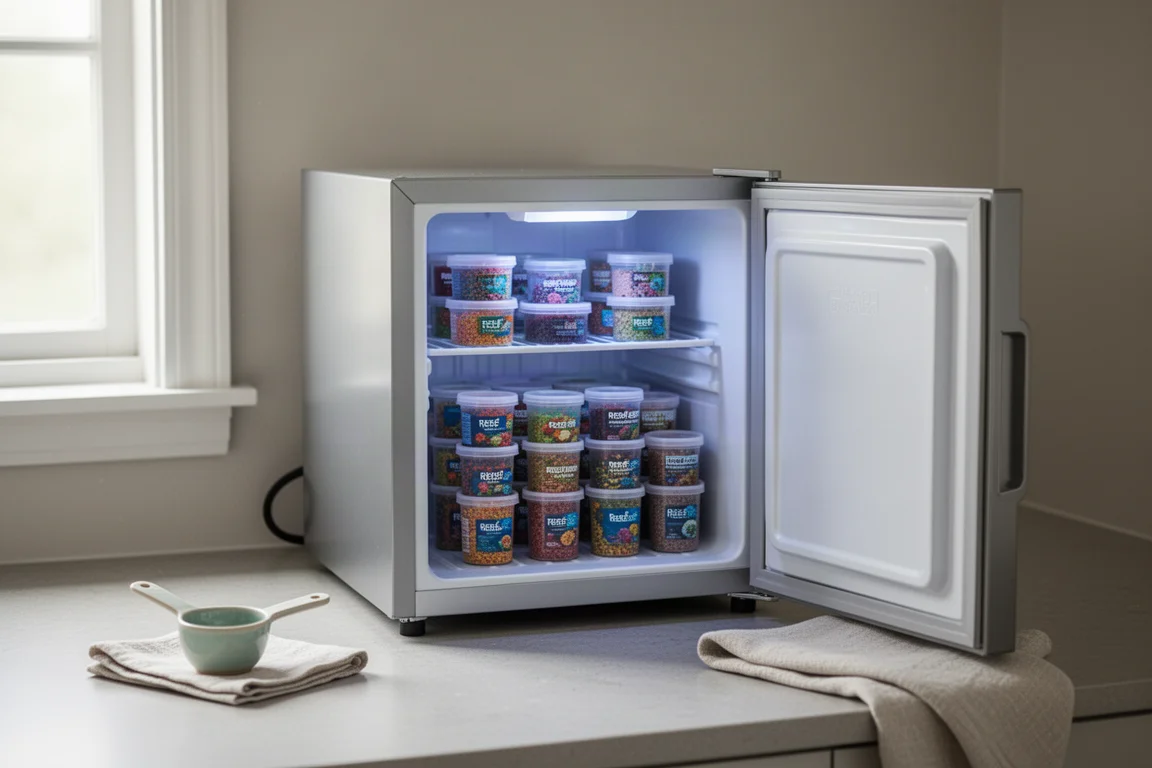
The downsides are storage, shelf life, and price. These foods live in the fridge and will give it a fishy smell, so a separate mini fridge is a sensible move if you share a kitchen. Because they are neither frozen nor dry, they have a much shorter shelf life, which means buying only what you will use in time and keeping a close eye on expiration dates. They are also expensive, which makes daily feeding impractical on a large tank, though they can be a good fit for a nano tank.
Buying Advice: Matching Food to Your Reef
Match the food to the fish first. If you keep a community of captive-bred fish, a quality pellet is the simplest everyday staple and the most economical route. Add a herbivore pellet if you keep plant-eating fish, and use algae sheets to encourage grazing behaviour.
Layer in frozen or refrigerated foods for variety and for picky eaters. Frozen food covers the widest range of fish sizes and feeding styles, while refrigerated options are best reserved for coaxing new or reluctant fish to eat. Whichever you choose, portion control is the single biggest factor in keeping nutrients in check, and storage discipline is what keeps the food itself in good condition.
Conclusion
There is no single best reef food, only the best match for the fish and corals you keep. Pellets cover everyday feeding economically and can support colouration and coral feeding, herbivore pellets handle plant-eating fish, and frozen, algae, and refrigerated foods fill in the gaps for variety, grazing, and fussy eaters.
Further reading
Related Reviews

Backpacking Gear
Building a 10 lb Base Weight: An Ultralight Backpacking Gear List
A practical walkthrough of the ultralight pieces behind a 10 lb base weight, from a 765 g pack and a roomy one-person tent to a full camp chair and a dependable water filter.

Road Bikes
10 New Road Bikes Worth Watching: Aero, Titanium, Steel and Endurance Standouts
A practical roundup of 10 new road bikes, from aero flagships chasing single-watt gains to titanium, steel and endurance platforms built for real roads.
Saltwater Aquarium Setup
10 Questions About Cycling a Saltwater Aquarium: What You Need to Know
Essential questions and answers for cycling a reef tank or saltwater aquarium, from biome building to light management and bacterial supplements.