Aquarium Equipment
Best Reef Tank Flow Pumps: EcoTech Marine VorTech, Tunze 6095, and AquaIllumination Nero 5
A practical comparison of three reef tank flow pumps covering output angle, velocity, in-tank footprint, and upkeep, plus how to match flow to SPS, LPS, and soft corals.
Introduction
Reef tank flow is one of those subjects where the number on the box tells you almost nothing useful. A pump rated at 2,500 gallons per hour can deliver a soft, wide push across a large area, or a narrow jet that reaches the far end of the glass. Those two behaviors solve completely different problems, which is why shopping by flow rate alone so often leads reefers into the wrong purchase.
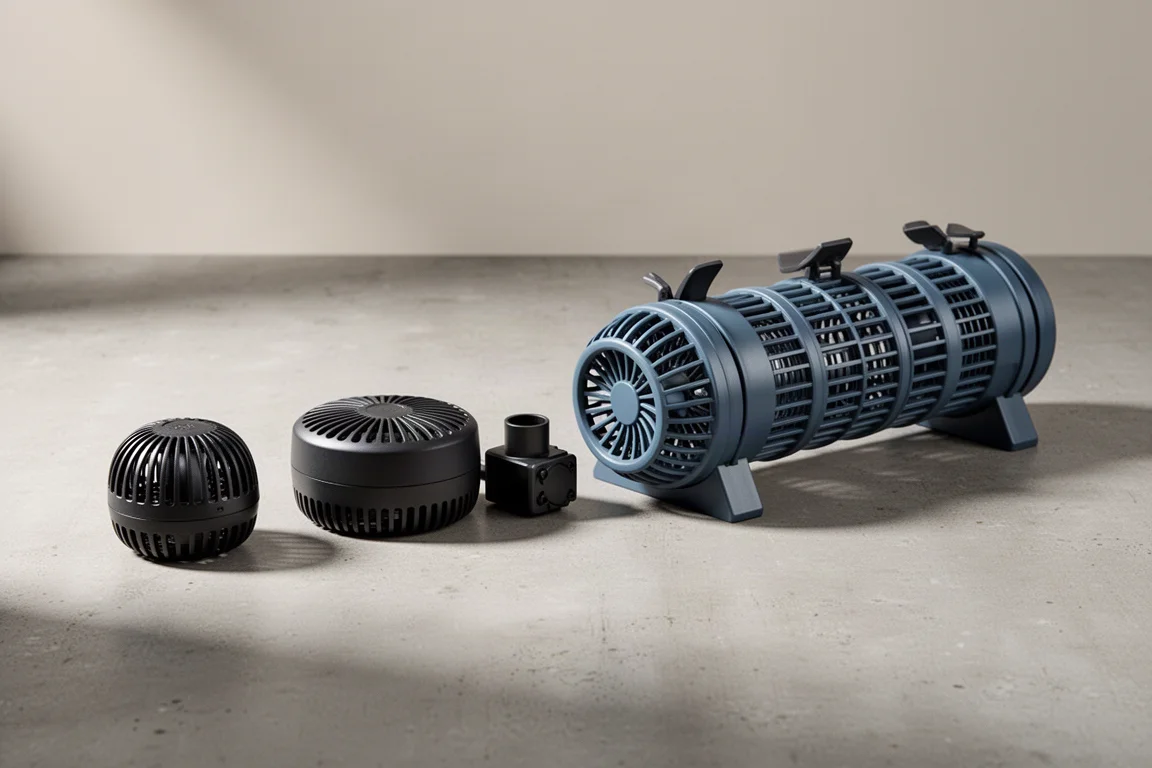
This guide looks at three widely used flow pumps, EcoTech Marine VorTech, Tunze 6095 and AquaIllumination Nero 5, and treats each as a tool for a specific job. It also covers the questions that actually decide whether a pump works in your tank: how wide the output spreads, how fast the water travels, where the dead spots hide, how the pump mounts, and how much effort it takes to keep clean.
What Good Flow Actually Looks Like in a Reef Tank
A useful mental model is to split flow into three equal shares: a third for the corals, a third for the fish, and a third for the filtration. Each share is doing real work.
For corals, flow acts as a circulatory system. Everything a coral takes in comes from the water, and everything it needs to expel goes back into the water. That exchange only happens if flow is forceful and turbulent enough to break through the boundary layer sitting on the coral’s surface, so nutrients and elements can pass into the tissue while oxidants and the byproducts of photosynthesis move back out. The requirement is not one size fits all, because different coral types handle very different amounts of movement.
For filtration, flow keeps waste in suspension. Fish waste and uneaten food settle wherever water movement drops off, and those collection points are where water quality starts to drift. Keeping debris moving so it can reach the overflow and then the filtration makes the filtration itself more effective. Tanks that do not tolerate constant turbulence can still use short periodic bursts to lift everything off the sand and rock.
For fish, flow is exercise and gas exchange. Swimming against current works their muscles, and moving water helps oxygenate the tank while carrying off CO2. Cleaner, better-oxygenated water is part of fish health too.
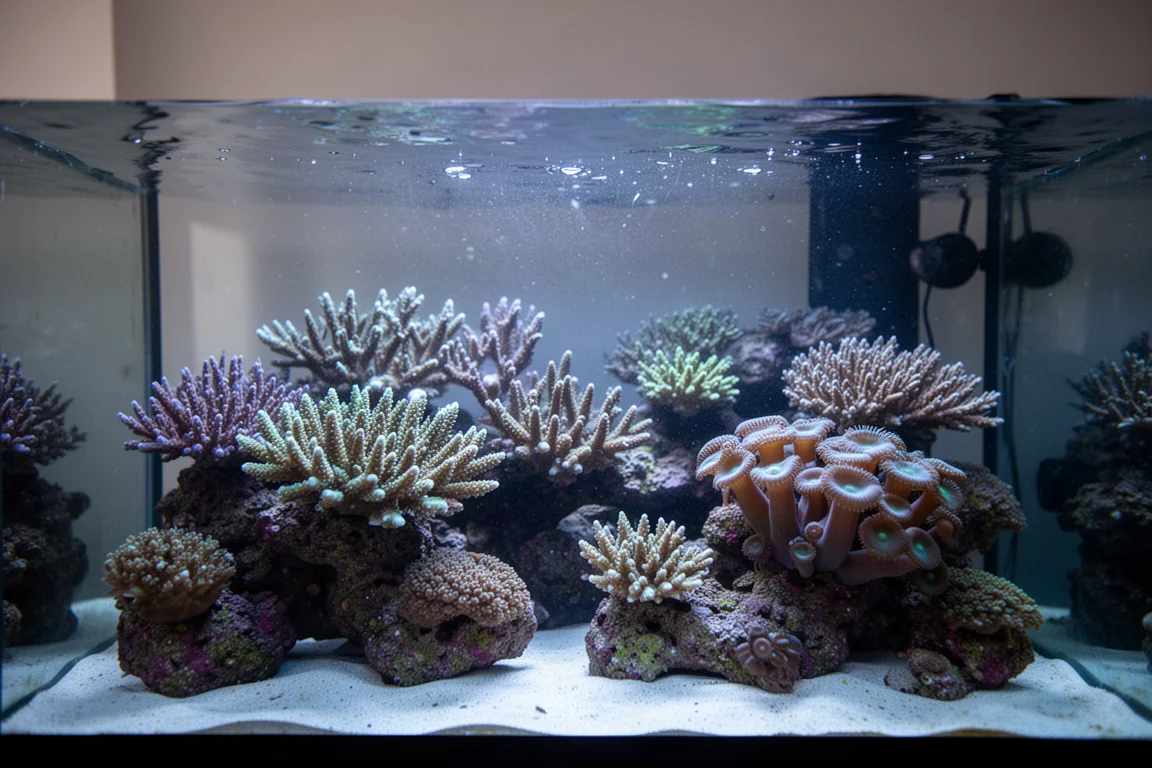
None of that depends on one impressive headline figure. It depends on coverage: a pump that reaches the surface, the sand, the gaps between rock structures and the corners where debris otherwise collects. The next step is knowing which pump delivers which kind of pattern.
Best for SPS-Dominated Tanks: EcoTech Marine VorTech
SPS-dominant tanks are the most flow-hungry setup. Small polyp stony corals want high velocity, high turbulence, and a turbulence point that keeps shifting instead of parking in the same place all day. This matters most around midday, when photosynthesis is running at its peak. Raise PAR from roughly 100 to 350 and the rate of photosynthesis inside a coral can triple, meaning a much larger volume of oxidants has to be flushed away. If it cannot be, the coral’s remaining option is to expel its zooxanthellae, which is how a flow shortfall turns into visible bleaching.
The VorTech suits this job because its output is neither very narrow nor very wide. It sits in the middle, and paired with variable modes such as Reef Crest it produces shifting, chaotic flow when two or more units are used together. Two of them on opposite sides of a four-foot tank form the basis of that moving turbulence point. Tidal Swell and Nutrient Transport modes take a different approach, alternating stronger and gentler periods and occasionally surging to lift settled debris into the water column.
The design is also unusual in that the motor sits outside the glass, so no cable runs through the tank. Even in a heavily stocked system, dead spots can still develop as colonies grow and begin blocking water, which is why most mature tanks end up supplementing their main pumps rather than relying on one type alone.
Best for Wide, Gentle Flow: Tunze 6095
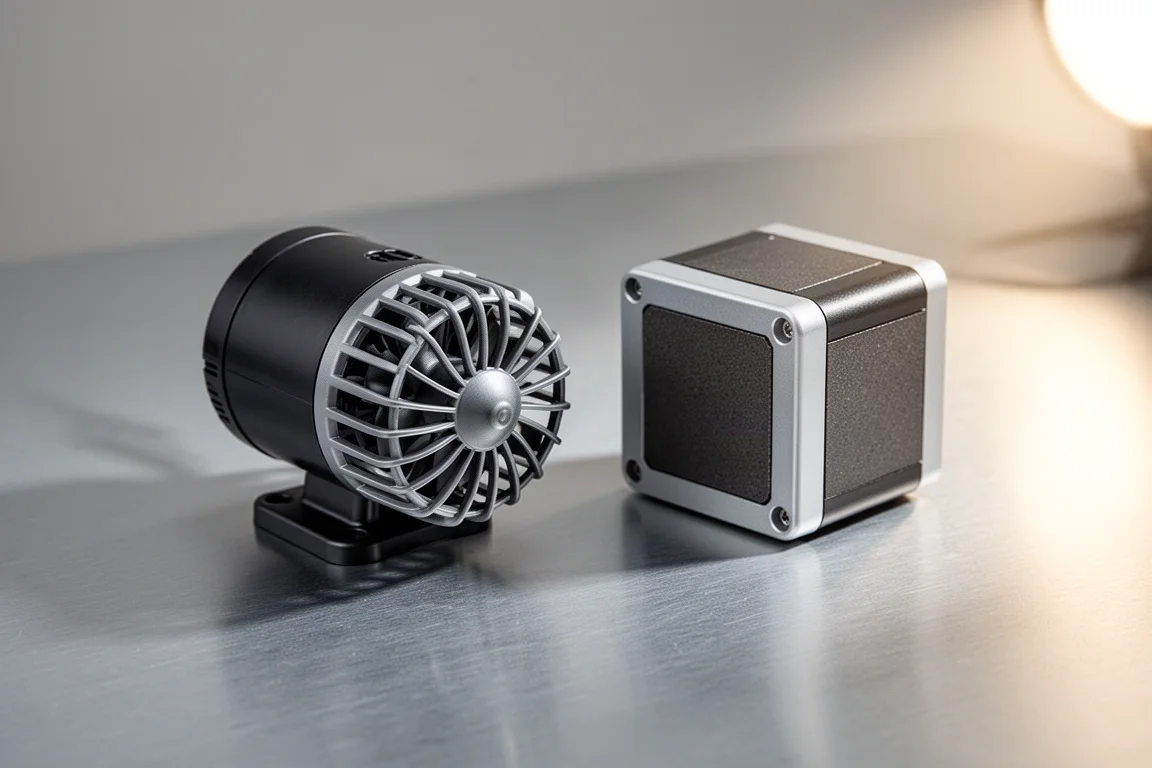
Not every tank wants a jet. LPS corals, soft corals and anemones generally do best with wide, gentle, varied movement, and the Tunze 6095 is built for exactly that kind of delivery. Its output spreads at roughly 65 degrees, which is unusually broad. In a four-foot tank that means the pattern reaches the top and bottom of the water column within about a foot of the pump rather than travelling across the tank as a beam.
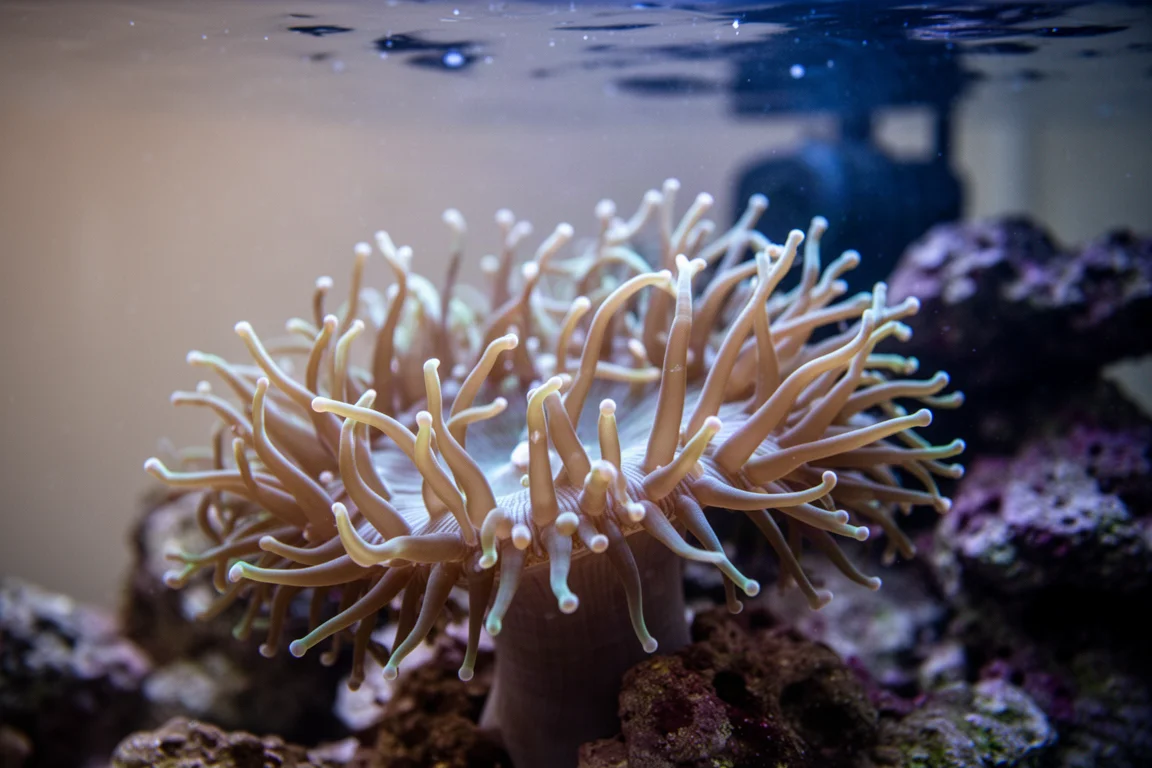
That spread is why this pump is a natural fit for softy and LPS systems, and for displays that include large leathers, Sinularia, toadstools, BTAs or mushrooms growing onto rock. Those corals do not appreciate being pounded by a concentrated jet, and they will let go of their footing if the flow is too forceful. As a rule, the wider the delivery the better for these corals, provided overall turnover stays where the tank needs it.
Aim matters here too. The pump can be turned through a wide arc, so it can be pointed at the specific gaps behind or between rock structures where debris collects, including the areas directly underneath the pump that often turn out to be the lowest-flow zones in the tank. Tunze also offers a safety connector that lets this pump run from an off-the-shelf battery during a power cut, which makes it a credible candidate for the one unit in a tank that stays running when the grid goes down.
Best for a Discreet, Low-Profile Install: AquaIllumination Nero 5
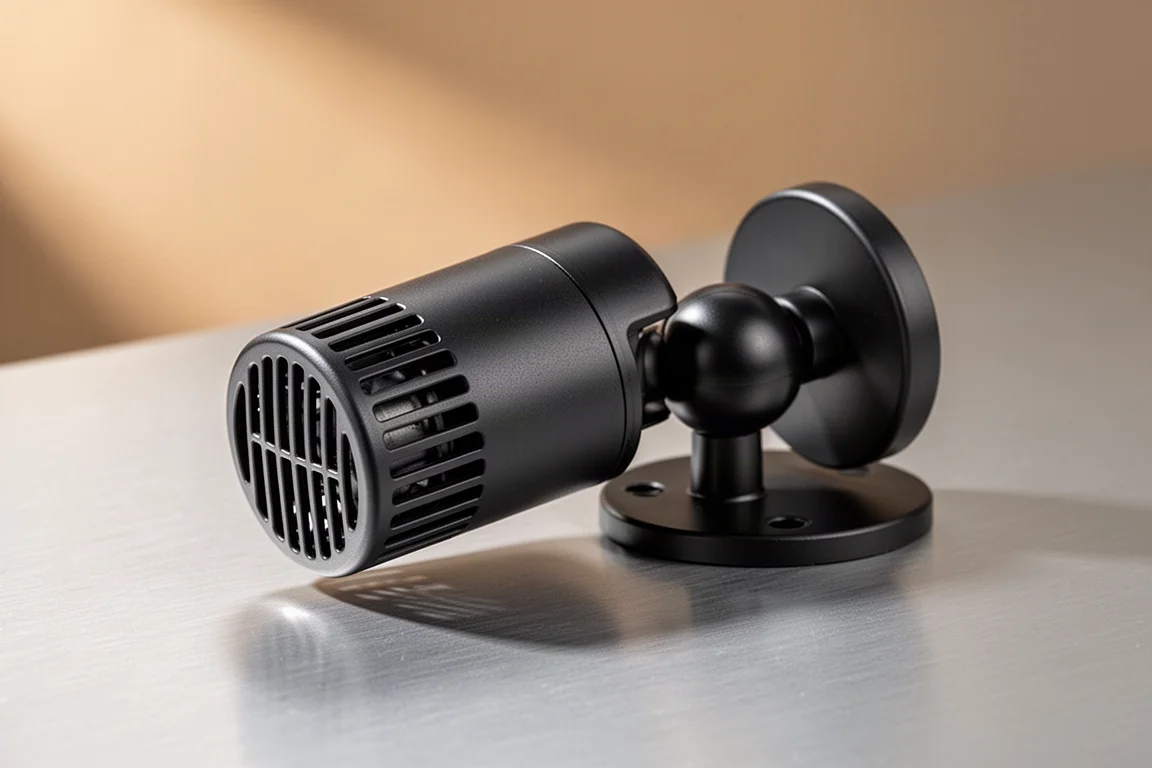
Flow pumps are also a visual decision. A reef tank exists to be looked at, and a bulky body on the front glass undoes an otherwise clean aquascape. This is where the Nero 5 makes its case: the in-tank footprint is very small, so the hardware recedes instead of competing with the display.
A discreet footprint does not mean a small role. In setups where every panel is a viewing panel, such as peninsula tanks, keeping in-tank hardware minimal is worth real trade-offs, and several small pumps aimed carefully will often beat one large unit on both looks and coverage. Reefers who care about how the tank reads from the side tend to gravitate toward this kind of low-profile pump.
Placement decisions compound the advantage. Hardware mounted on the back panel, or tucked high on the glass so cables exit near the surface, largely disappears from view, especially against a dark background. The Nero 5 fits that approach well.
Turning Pump Specs Into a Flow Plan: Angle, Velocity, and Turbulence
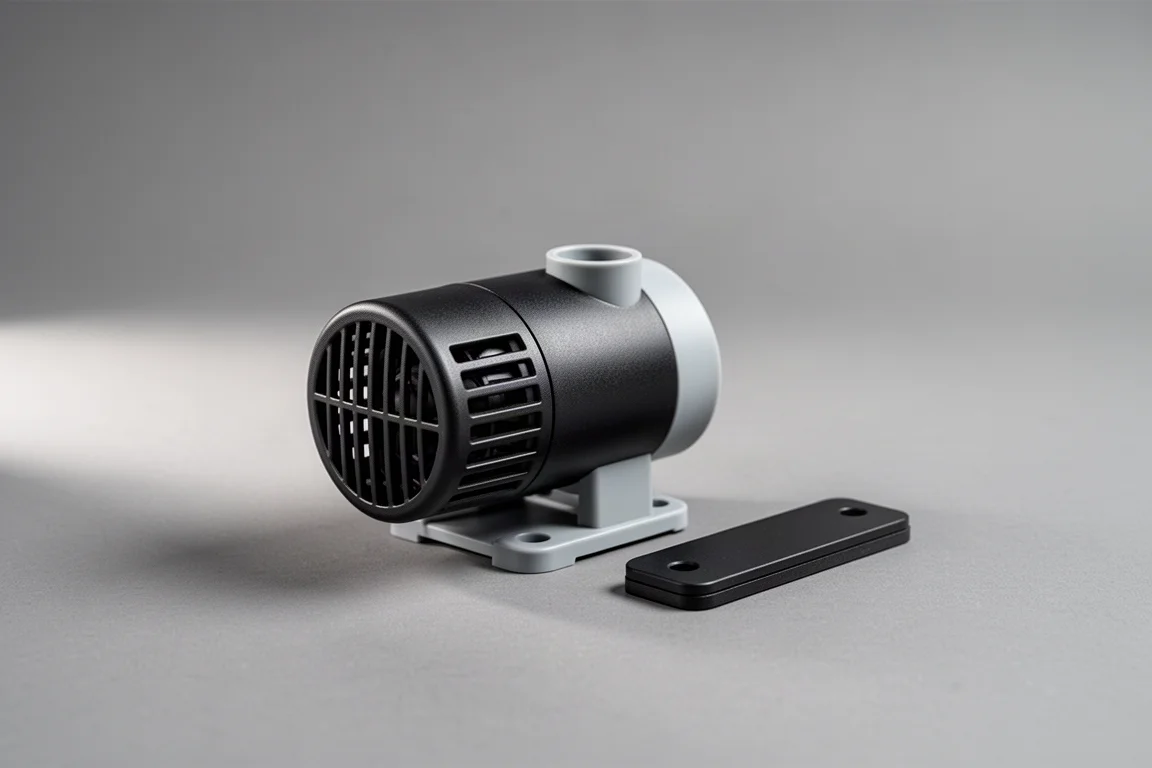
Gallons per hour is the worst way to shop, because the rating says nothing about the pattern. Manufacturers measure differently from one another, and the same 2,500 gph figure can describe a slow, wide push or a jet that crosses the tank. A simple way to feel the difference: a three-quarter inch bulkhead with the flow running barely registers against your hand, while the same plumbing fitted with an eductor and a much smaller opening feels like a hammer, even though a flow meter shows the reading cut roughly in half.
Angle is the first thing to pin down. A pump with a 65-degree spread can reach the top and bottom of a four-foot tank within about a foot of the nozzle. A pump with a very narrow beam sends water most of the way across the tank before it returns. Flat, wide sheet-type pumps sit at another extreme, producing a thin even band of water that behaves differently again. None of these is better in the abstract. They are simply different tools.
Velocity is the second. Two pumps can read almost identically right in front of the nozzle, but move the measuring point a foot and a half away and the narrow beam is still fast while the wide one reads nothing. Move the meter up out of the beam and the relationship flips, with the narrow pump moving almost nothing there while the wide one is still moving water. That is why a wide pump and a narrow pump of the same rating do very different things in the same tank.
Then there is the difference between varied flow, turbulence and current. Running two opposing pumps at a constant rate locks the turbulence point in the dead center of the tank, which shows up in odd growth patterns and in losses. Varying the output is what fixes it, and it does not have to be complicated: an hour on for one pump, then an hour on for the other, is enough to count as varied. Turbulence is the chaotic zone where two pumps meet, and the trick is moving that zone around the tank by running one pump at 10 percent and the other at 90, then gradually reversing them. Current is different again: a sustained, repetitive cycle such as a gyre-style pump pushing across the top and returning, which suits corals that like high flow but do not tolerate being smashed.
Aim is the final piece. Pumps that adjust through a wide arc let you place flow where the dead spots actually are, which is often between two rock structures, behind the aquascape, or surprisingly close to the pump itself.
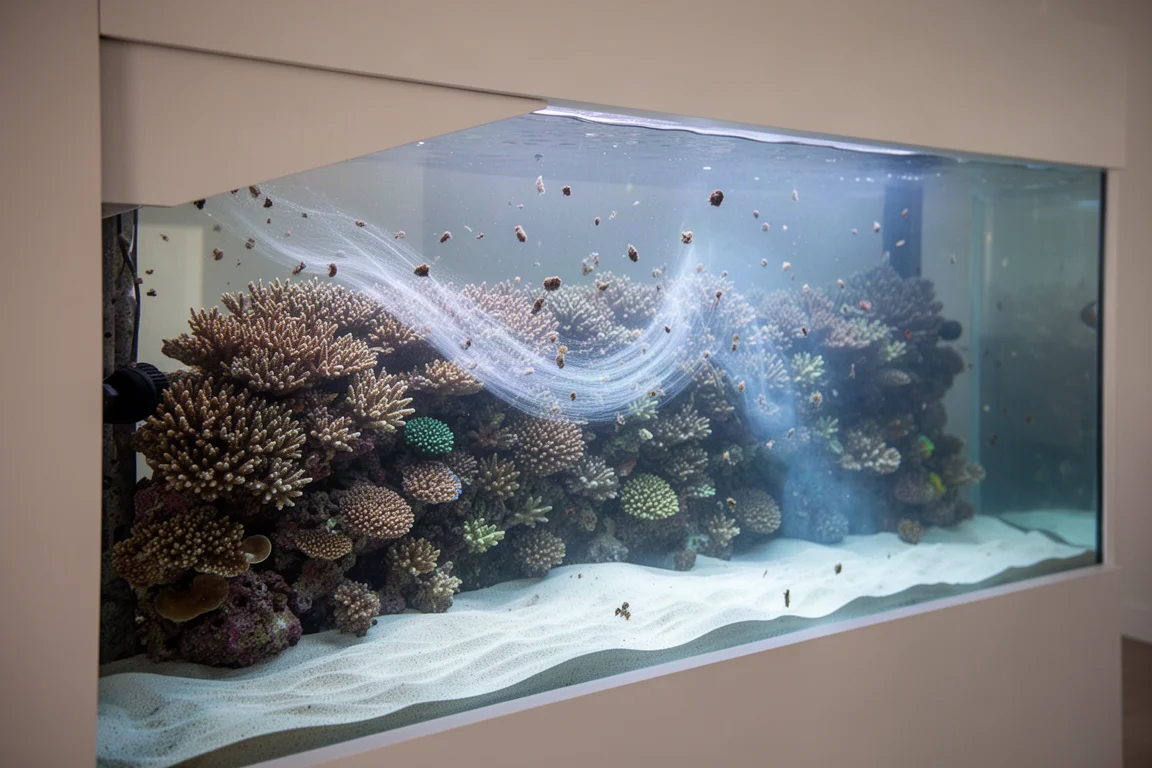
It also helps to remember that flow evolves. A frag that started an inch across becomes a colony that blocks the pattern it once benefited from, and an area that was well covered a year ago can quietly become the most stagnant part of the tank. That is the argument for treating flow as an ongoing project rather than a one-time purchase.
Buying Advice: Matching a Flow Pump to Your Tank
Start with the corals you keep or plan to keep. SPS-dominant tanks need high velocity and a turbulence point that moves through the day, while LPS and soft coral systems do better with wide, gentle, varied movement plus an occasional surge to flush debris out. From there, look at the display itself. If you view the tank from more than one side, in-tank footprint and cable routing stop being afterthoughts and become real selection criteria.
Choosing the right tool for the right job beats chasing a turnover multiplier, and there is no rule that one pump model has to cover an entire tank. Plenty of healthy systems pair a middle-of-the-road pump for overall movement with a wide-output pump aimed at specific dead spots, then adjust as the aquascape fills in. Plan for the corals you want in two years, not just the ones you have today.
Battery Backup and Maintenance Before You Commit
At least one pump on the tank should be able to keep running when the power goes out. Outages happen to almost everyone, often around once a year, and a still tank loses gas exchange exactly when it needs it most. A standard AC backup block for a pump may only add a handful of hours, while a dedicated battery backup paired to a flow pump can run considerably longer, in some cases quoted around 80 hours. You do not need every pump covered. One is enough to keep water moving.
The VorTech is the most familiar name in this area and brought a backup solution to market early, while Tunze offers a safety connector that pairs the pump with an off-the-shelf battery instead. Either route gets you to the same place: a tank that keeps breathing during an outage.
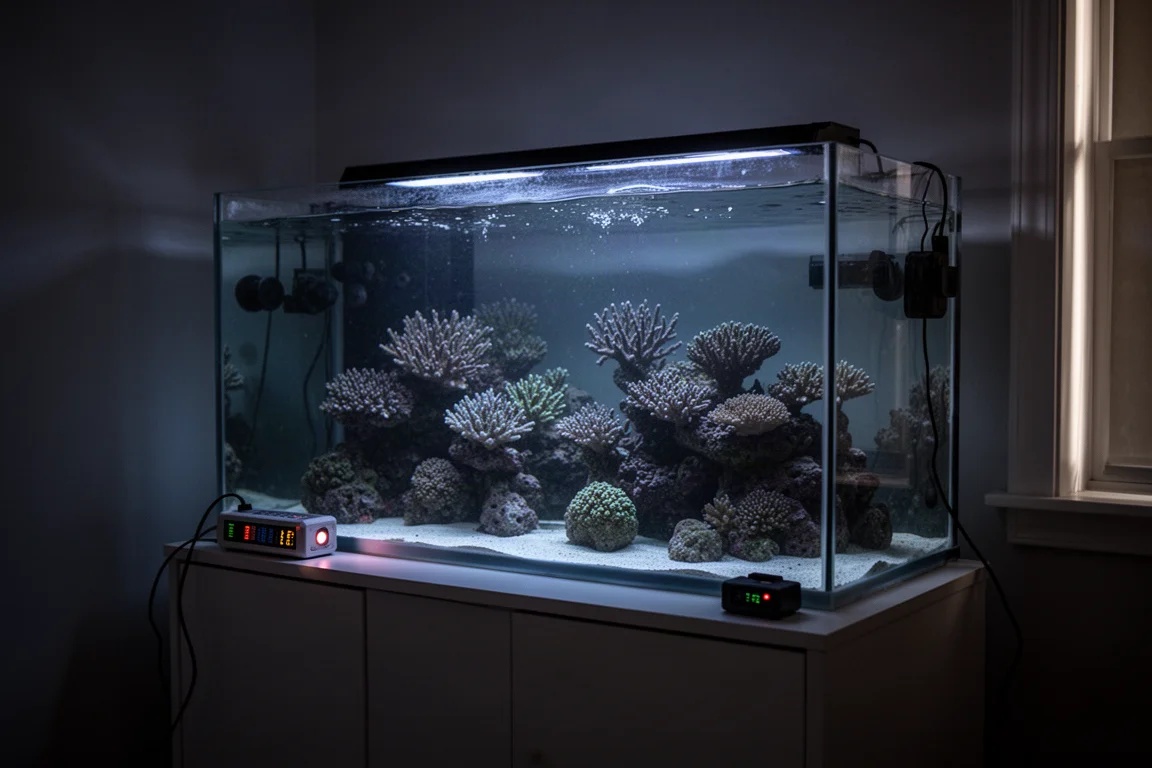
Maintenance is the other long-term consideration, and it is often what decides which pump a reefer actually stays happy with. The VorTech is about as simple as it gets: swap the dirty wet side for a clean one, then soak the dirty side in citric acid until the next swap comes around. Other designs depend on how the pump comes apart and how the cable runs. Leaving a little slack in the cord lets you lower the pump straight into a bucket of citric acid beside the tank, run it for an hour or so, rinse it thoroughly and put it back without a full disassembly.
The connection point matters as well. Pumps that disconnect at the controller are easy to carry to a sink, while AC power heads must be traced all the way back to the outlet, which is the kind of friction that stops maintenance from happening. Sheet-style pumps deserve a closer look against your own habits too, since they are typically recommended for cleaning every 30 to 60 days and contain more parts that can be damaged during disassembly.
Conclusion
Flow is not a branding exercise or a turnover number. It is the mechanism that feeds corals, clears their waste, keeps debris suspended for filtration, and keeps fish working and breathing. The three pumps here cover three different versions of that job: the EcoTech Marine VorTech for SPS-dominant tanks that need high velocity and shifting turbulence, the Tunze 6095 for wide, gentle, easily aimed delivery in LPS and soft coral systems, and the AquaIllumination Nero 5 for displays where in-tank hardware should be as close to invisible as possible.
Whichever you choose, match the output pattern to the corals and the layout you actually have, look for the dead spots that will inevitably appear, and make sure one pump on the tank can survive an outage. That combination is what makes a flow purchase feel like money well spent a year later.
Further reading
Related Reviews
Aquarium Equipment
Abyzz Professional DC Pumps: A100, A200, and A400 Reviewed
A closer look at three German-made DC return pumps built for large reef systems, with titanium internals, fine flow control, and a 10-year warranty.
Aquarium Equipment
AdaptiveReef Controller Accessories: Three Tactile Upgrades for Your Reef Controller
A practical look at three AdaptiveReef add-ons that put physical switches, at-a-glance status lights, and a loud alarm within arm's reach of your reef tank.
Aquarium Equipment
Adaptive Reef Controller Boards: Basic vs Deluxe for Cleaner Aquarium Gear
A practical look at the Adaptive Reef Basic and Deluxe controller boards, what each one includes, and how to choose the right size for your tank gear.