Portable Audio
Best Portable Audio Gear 2026: Earbuds, In-Ears, Players and Dongle DACs
A practical roundup of portable audio gear, from true wireless earbuds and wired in-ears to digital audio players and dongle DACs.
Introduction
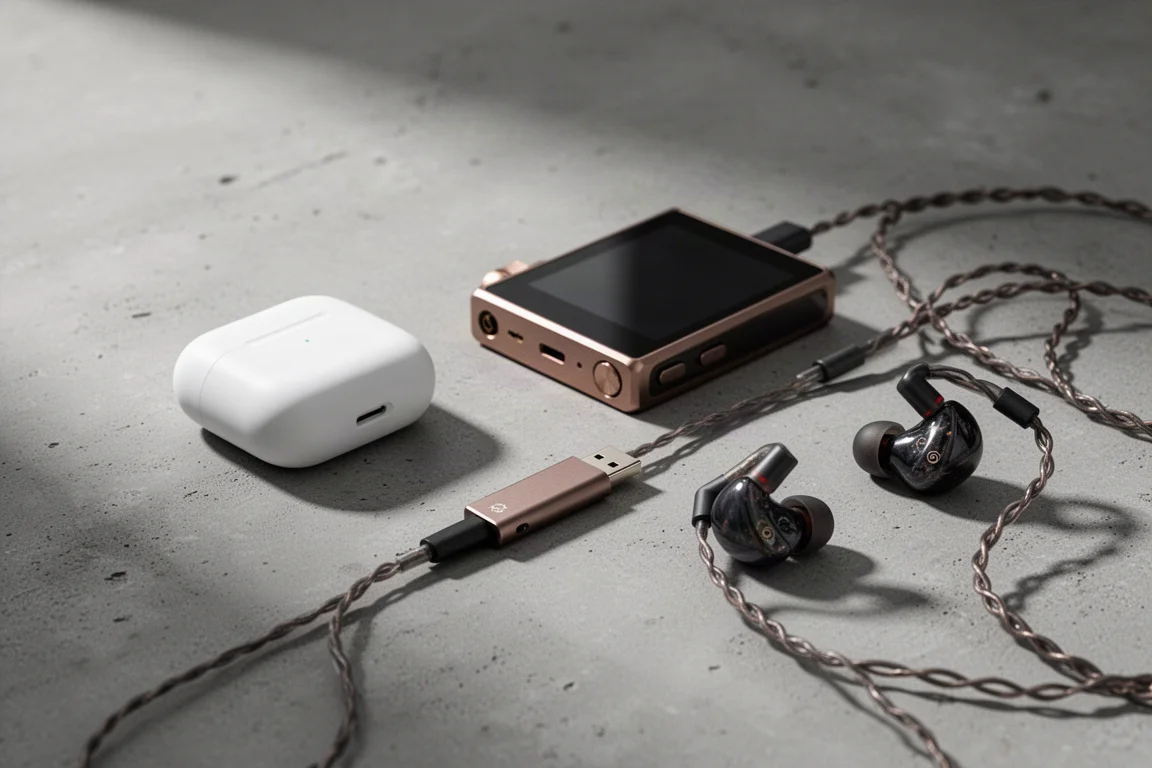
Portable audio is less a single product category than a set of answers to one question: where do you listen, and what are you willing to carry?
Some listeners want a single pair of Bluetooth earbuds that handles music, calls and noise. Others want the fuller, fleshier sound of wired in-ears and are happy to add a dongle DAC or a compact player to get it. This guide covers the gear that earned a place in a bag over the past year across all of those paths.
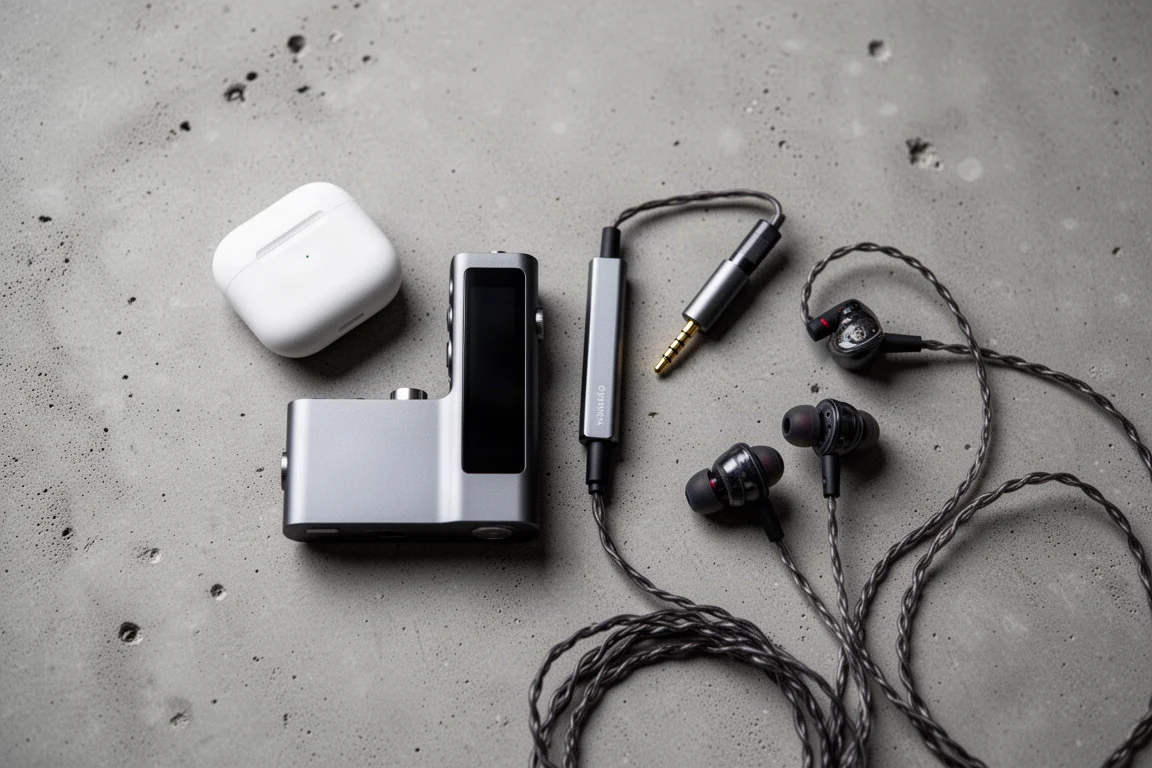
Each entry below sets out what the product does well, where it gives ground and who it suits. Nothing here is ranked on price alone, because the right answer depends on whether you value convenience, noise cancellation, tone or portability most.
What Matters Most in Portable Audio
Two things shape every portable listening decision. The first is how much technical assistance you want. Active noise cancellation in true wireless earbuds is a genuine modern marvel, and it changes how a commute or a flight feels.
The second is what happens when you move to a wired in-ear. Wired in-ears trade some of that technical showmanship for a sound that is easier to follow musically. Layer separation and the abundance of tone colour, the two qualities that make music feel whole rather than merely loud, tend to be stronger once a cable is involved.
Source devices matter just as much. Power and gain are not the same thing, and very sensitive in-ears need a source that stays composed. A dongle DAC and a dedicated player sit at different points on that spectrum.
Apple AirPods Pro (2nd Generation): The Convenience Benchmark
Apple’s second-generation AirPods Pro remain the natural starting point for portable listening. Compared with the original model they offer better low-frequency extension and improved everyday usability, and as a balance of user convenience and sound quality they set a benchmark that is hard to beat.
They are the pair to reach for on a day that mixes music and phone calls. Callers report that the AirPods push away the audible intrusion of road and wind noise more effectively than almost anything else here, which matters if you spend time on a platform, a bike or a busy street.
Where they give ground is tonality. Music through the AirPods sounds less natural than through the best wired in-ears, and less dynamic and detailed than the strongest Bluetooth rivals in this guide.

Sennheiser Momentum True Wireless 3: Natural Sound Over Noise Cancelling
The Momentum True Wireless 3 are the earbuds to pick when music matters more than anything else. They beat the AirPods Pro (2nd generation) on dynamics and detail, and they offer a far more natural sound with music.
The trade-offs are practical rather than musical. Active noise cancellation is not as strong as Apple’s, the fit is less comfortable, and wind noise is not minimised as effectively. If your day is mostly music and very few calls, those compromises are easy to live with.
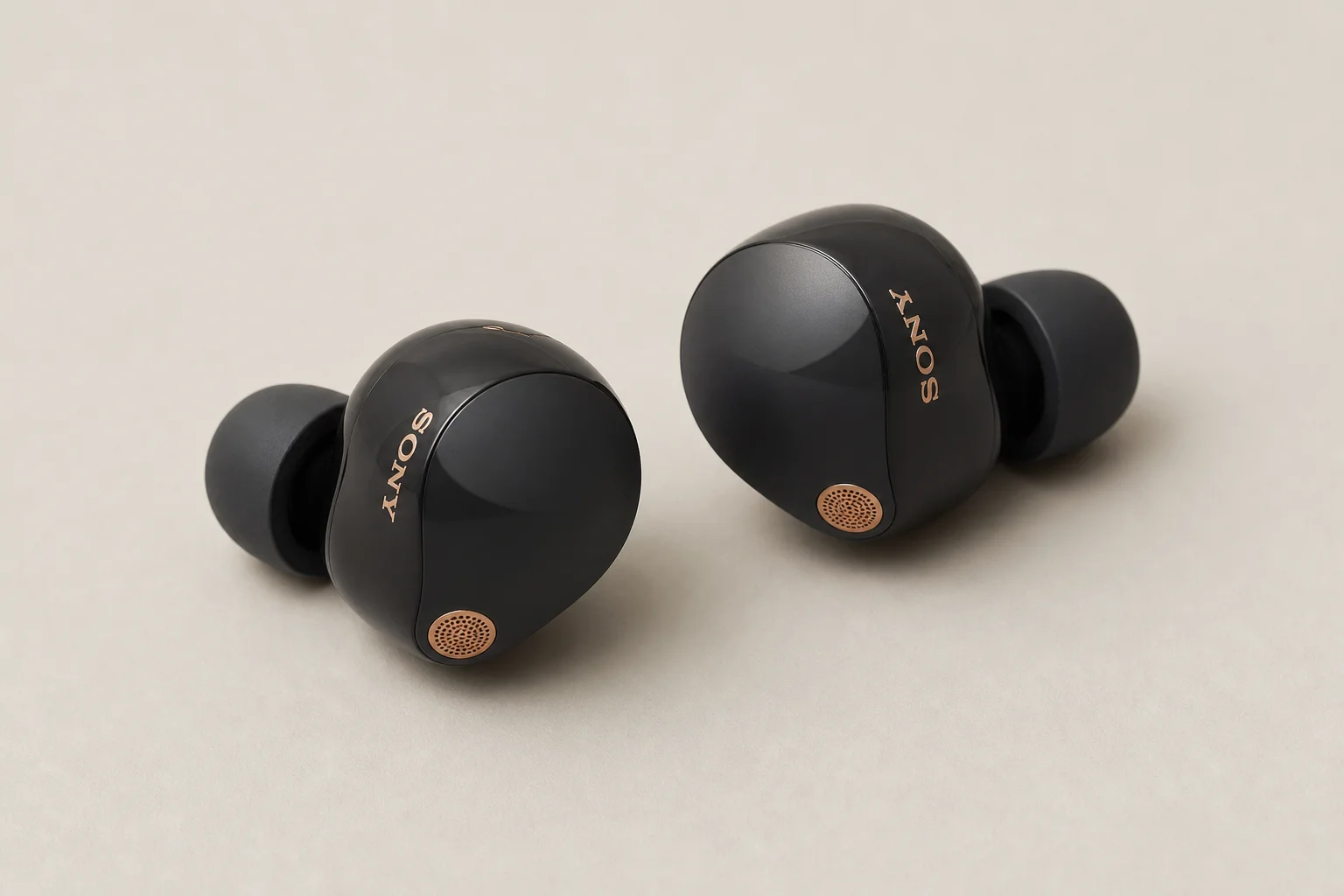
Sony WF-1000XM5: The All-Rounder
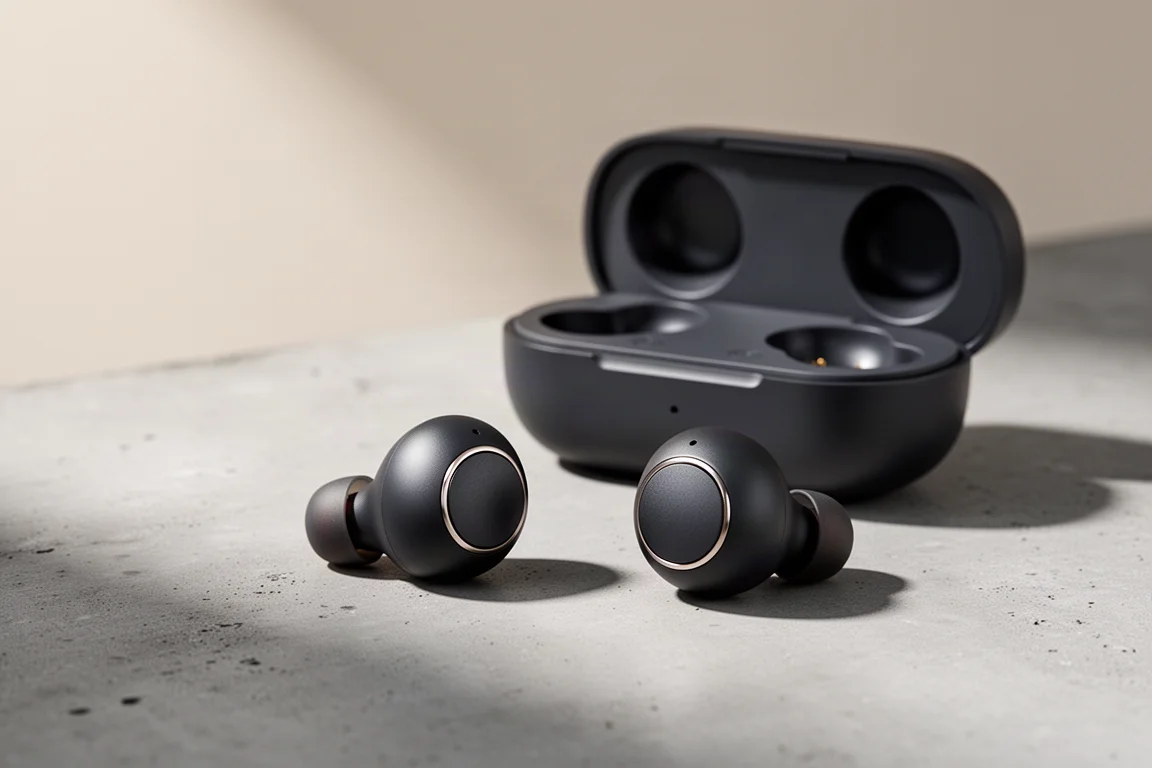
Sony’s WF-1000XM5 are the earbuds that changed the routine. Sound quality is much improved over the previous generation, with better clarity, a more extended treble and a tighter bottom end. Listeners who found the earlier model muddy will notice the difference immediately.
The bigger story is active noise cancellation. The improvement is most easily felt during phone calls, where callers describe the Sony as almost as good as the AirPods Pro (2nd generation) at pushing away road noise and wind. The result is a pair that is genuinely strong at everything: the jack of all trades, and almost but not quite the master of all of them.
Tonally, the more organic Sennheiser still has the edge, but only just.
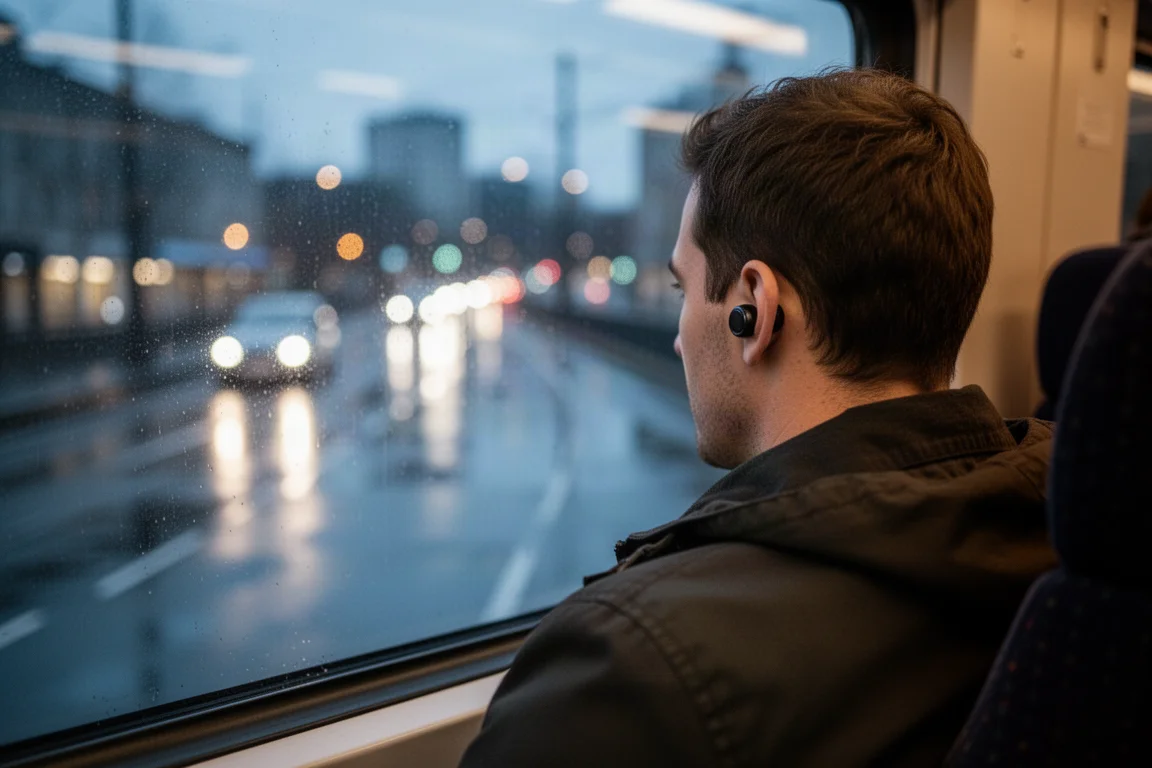
For most listeners that combination is what makes the WF-1000XM5 the easiest recommendation in the Bluetooth category. It covers commuting, calls and music without asking you to carry anything else.
Sennheiser IE 600: The Wired Sweet Spot
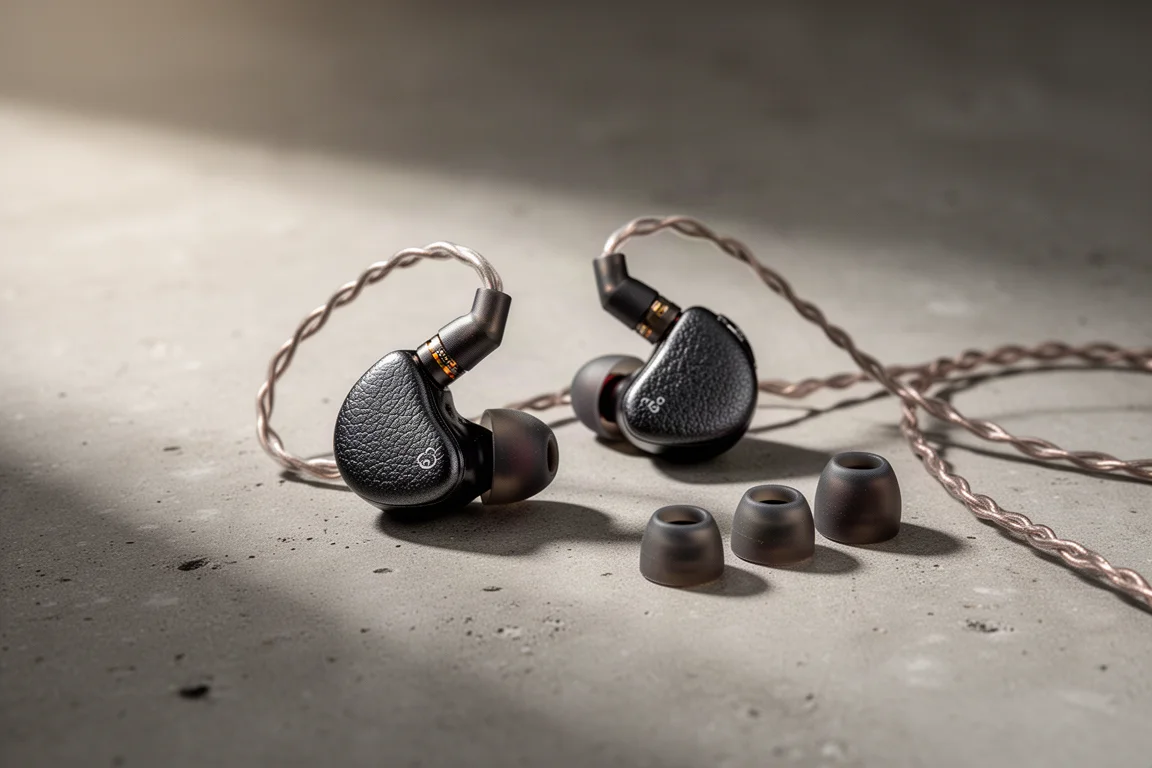
Move to a wired in-ear and the character of the sound changes. The Sennheiser IE 600 offers a richness and fullness that true wireless earbuds struggle to match, and with a good source feeding it the treble becomes noticeably smoother than any Bluetooth option here.
It is a more mid-range-centric listen than the flagship IE 900, which makes it the safer choice for long sessions, and it is the more affordable of the two as well. If the IE 900’s lively top end ever feels like too much of a good thing, the IE 600 is the natural step sideways.
Sennheiser IE 900: Flagship Detail With a Lively Top End
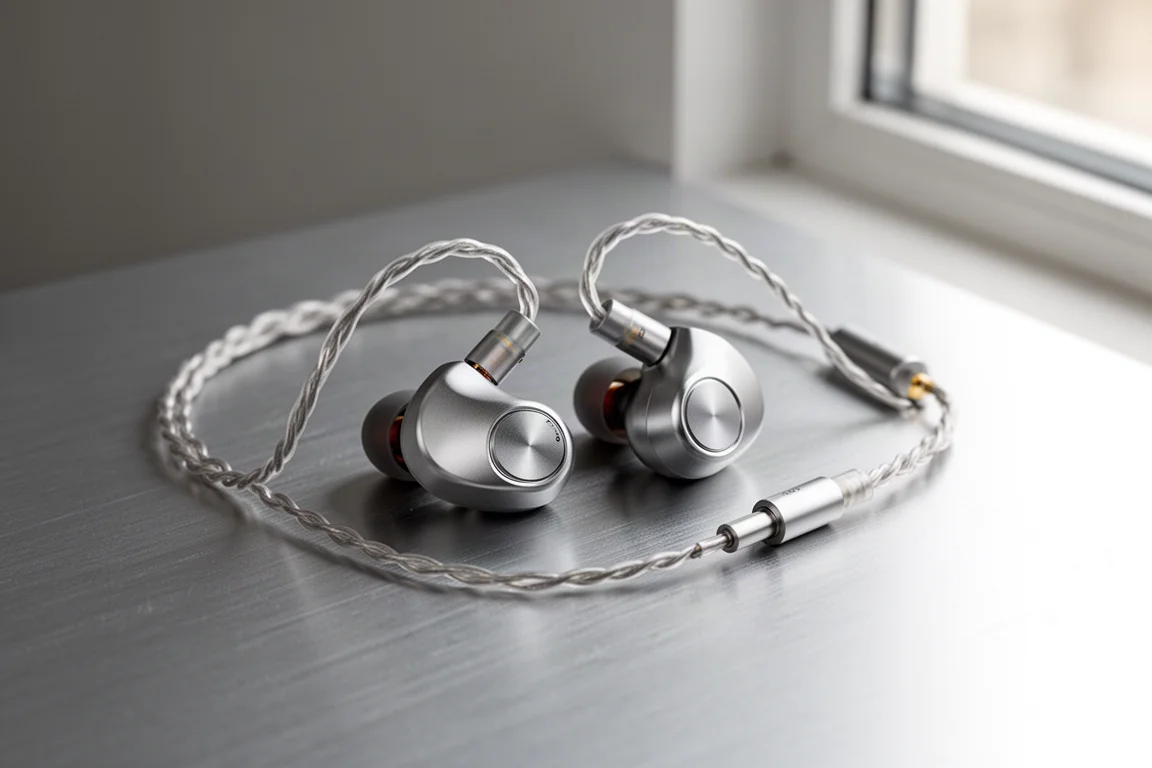
The IE 900 is Sennheiser’s flagship wired in-ear, and with the stock tips it pairs a lively top end with a slightly boosted sub-bass. It conveys a greater sense of neutrality as a feeling, even though its frequency response is not a textbook neutral one, and it comes across as the more technically capable of the two Sennheiser models.
It is the better of the pair for electronic music, where its precision and control pay off. Two caveats are worth knowing. Sennheiser’s custom tips for the IE series push the treble further still, which some listeners will find excessive. And the cable tangles more readily than the Campfire Audio alternative, while the case is a plainer affair.
Campfire Audio Andromeda Emerald Sea: Intimacy and Craft
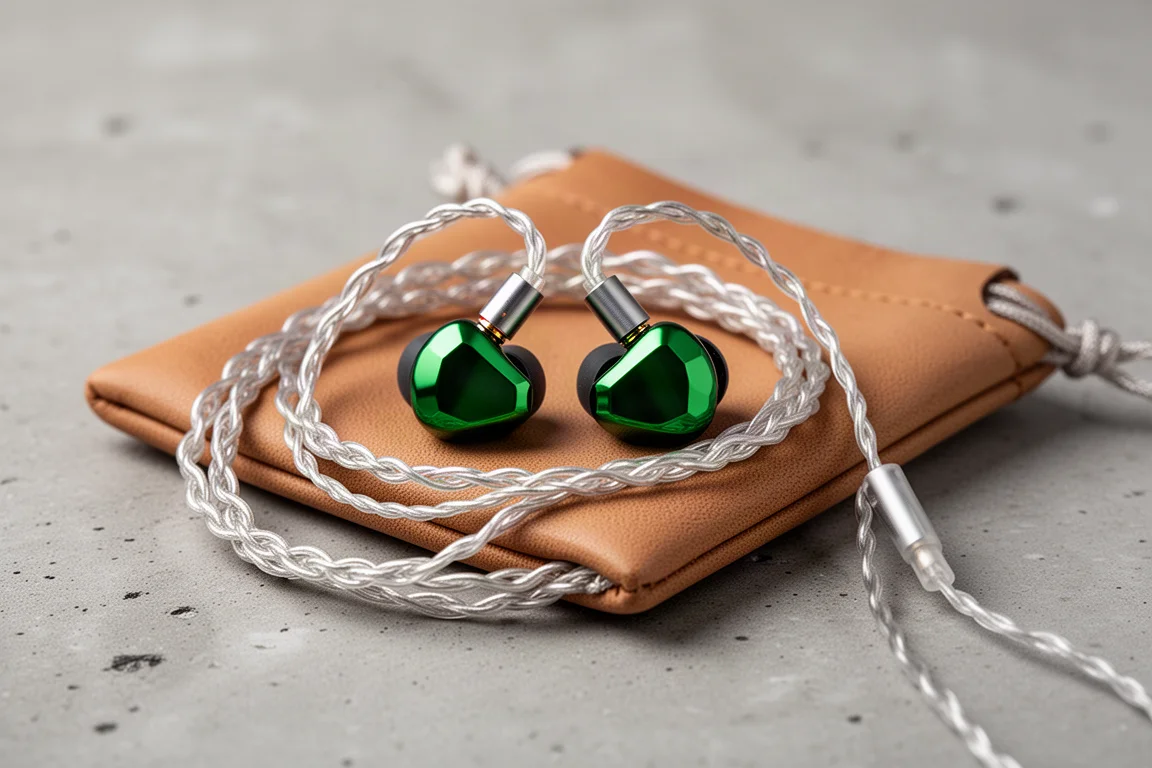
The Andromeda Emerald Sea is a very sensitive in-ear, and that sensitivity is the key to understanding it. It is easy to drive, loud enough even from a phone, and it stays secure while you are walking, with no need to re-seat it every few minutes.
Its strength is intimacy. Where the IE 900 can sound a touch distant, this Campfire Audio in-ear puts the performance closer, which suits vocal-led and acoustic material particularly well. It also arrives as the better package: the cables are nicer to handle than Sennheiser’s, and the leather carry pouch feels closer to a luxury good than a standard case.
One note on sources. Going loud enough is not the only benefit of having more power on tap, and the Andromeda rewards a source with real headroom.
Campfire Audio Solaris Stellar Horizon: Scale, Space and Purity
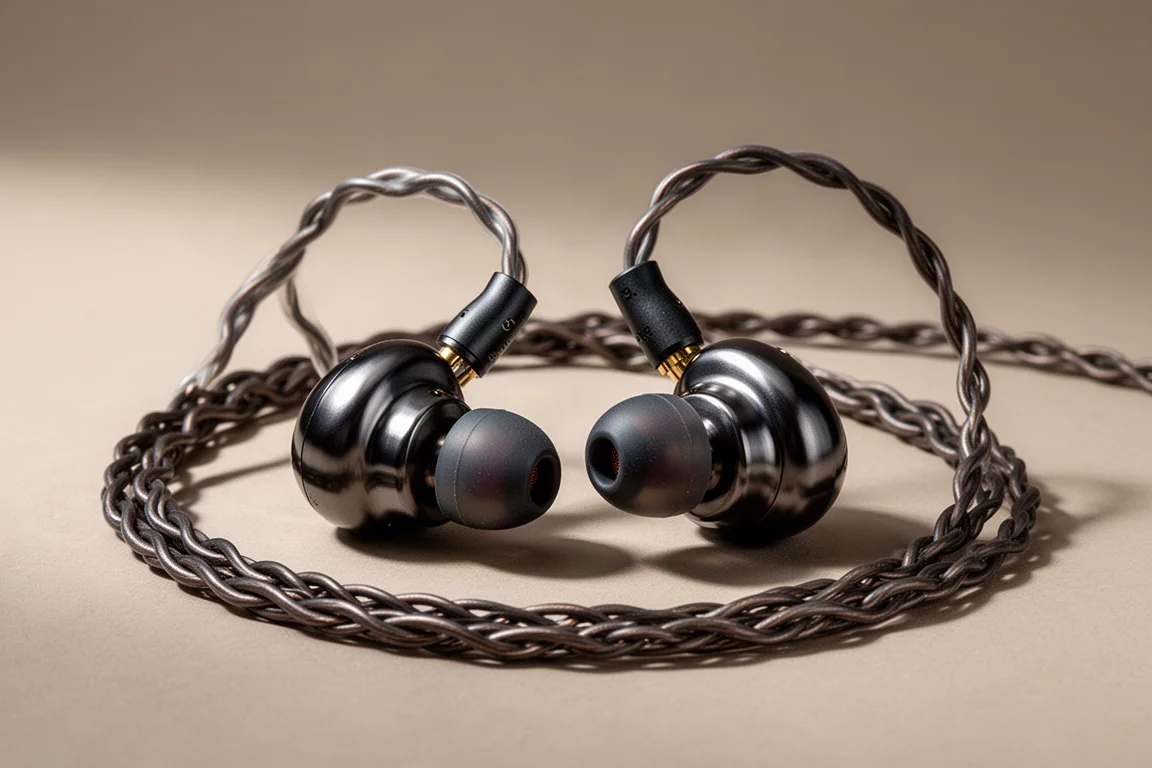
The Solaris Stellar Horizon takes the Campfire Audio approach and enlarges it. The shell is bigger and more internally capacious than the Andromeda’s, and the soundstage it draws in front of the listener is wider as a result. Part of that may come from its hybrid design, which combines driver types rather than relying on an all balanced armature layout.
It is also the in-ear that best demonstrates what a wired setup can do. Layer separation and tone colour, the qualities that separate a technically impressive sound from a musically complete one, step up through the IE 600 and the IE 900, become more obvious with the Andromeda, and reach their high point here.
The practical cost is fit. The larger shell means the Solaris needs re-seating every few minutes while walking, which makes it a better companion for a train seat than a city street.
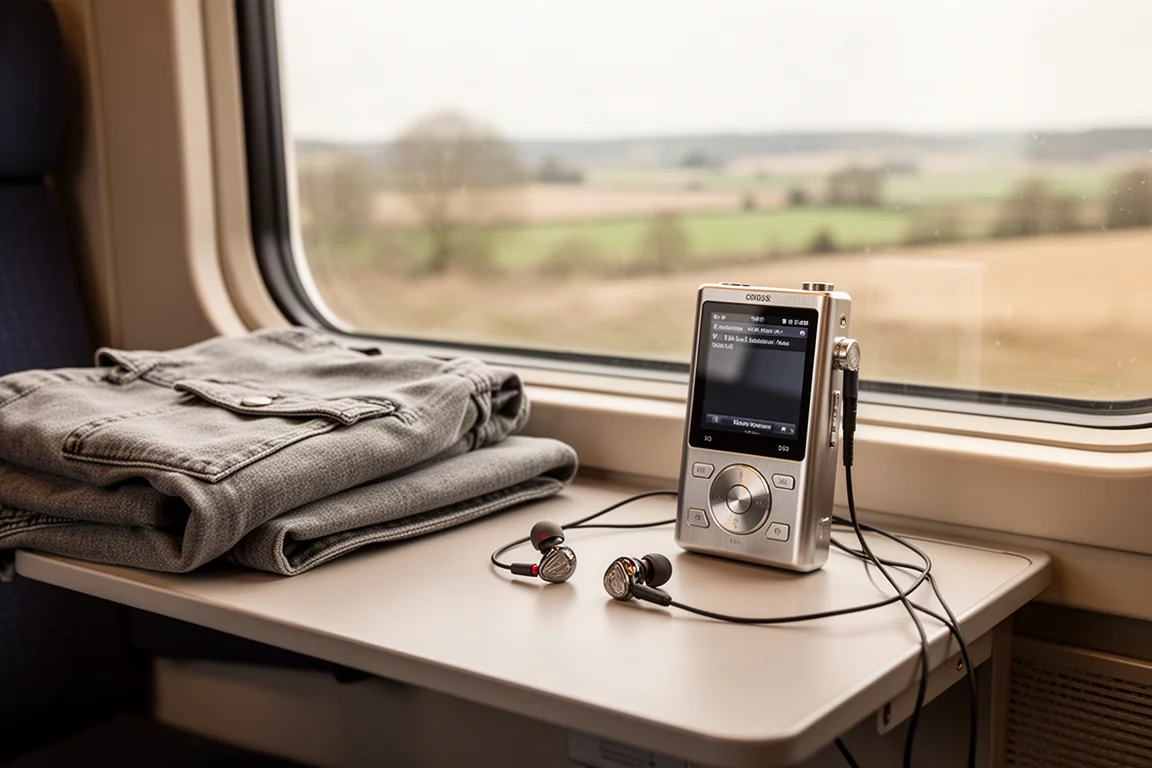
Pair it with a player of equivalent ambition and the result is the most convincing portable listening experience covered in this guide, including a train journey that pulled detail and tone out of electric guitars in a way that felt genuinely surprising.
FiiO KA2: Balanced Output From a Phone
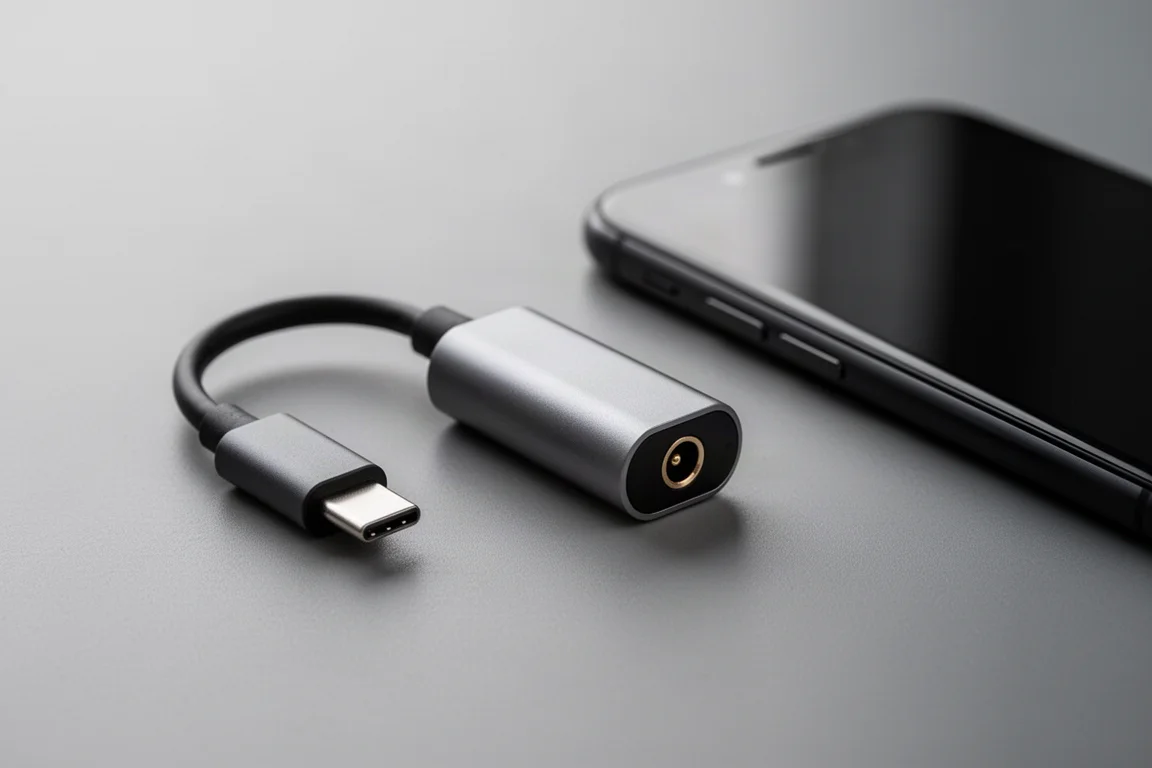
The FiiO KA2 is a small USB-C dongle DAC with a 4.4mm balanced headphone output, and it punches well above its size. Connected to an Android phone, it lends more life to the Andromeda Emerald Sea than a compact Walkman-style player does, and the balanced topology is likely part of the reason.
The same effect shows up with the Sennheiser IE 900, which benefits from the KA2’s balanced output in much the same way. For listeners who want a taste of balanced output without buying a dedicated player, this is the least expensive route in this guide.
Shanling M3 Ultra: A Player That Suits Sensitive In-Ears
Stepping up from a dongle to a dedicated player brings more control. The Shanling M3 Ultra offers a 4.4mm balanced output and a slightly burnished top end that is exceptionally well suited to the IE 900.
It also serves as a reminder that power and gain are not the same thing. Very sensitive in-ears such as the Andromeda Emerald Sea need care, and a player with more output on tap does not automatically make them sound better.
Set against the Sony NW-A306, the Shanling was preferred in pretty much everything apart from looks and size.
Sony NW-A306: Compact and Good Looking
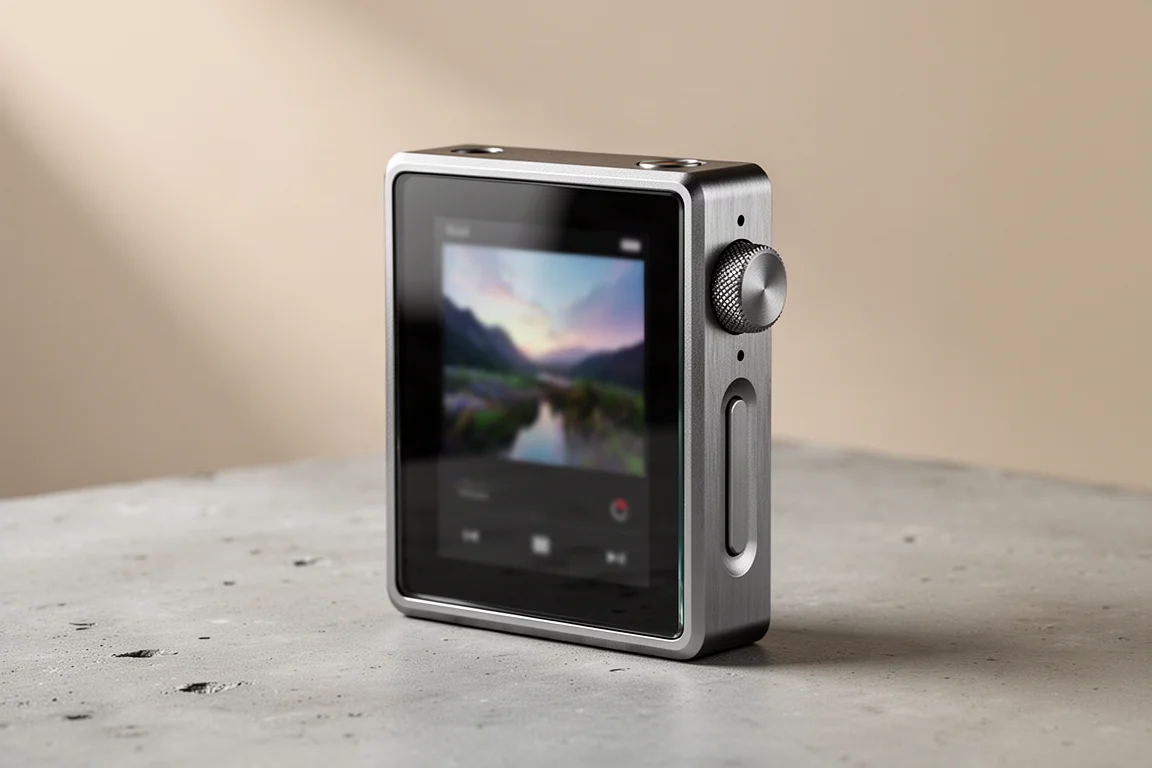
The Sony NW-A306 is the more pocketable of the two players, and the better looking. It has enough output to drive sensitive in-ears to robust levels, and it makes a clear step up from a phone as a music source.
In a direct comparison, however, the Shanling M3 Ultra was preferred in almost every respect other than looks and size. Buyers who want a small, attractive player will still find plenty to like here.
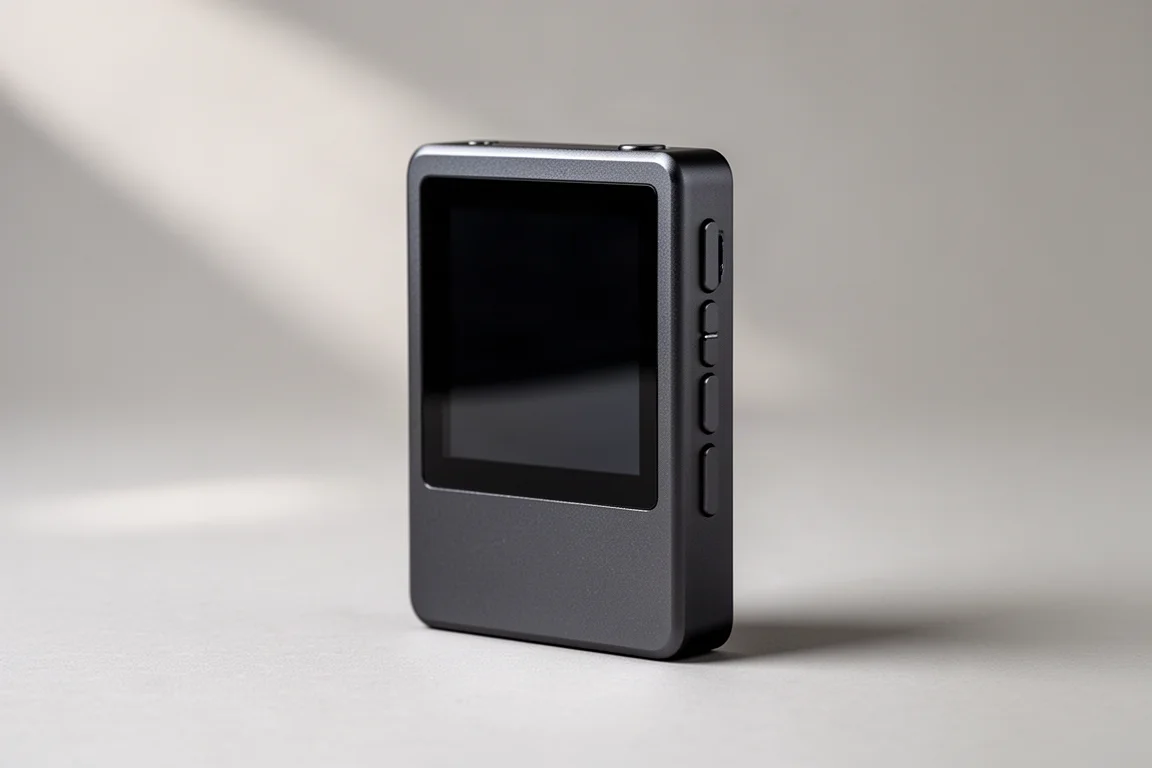
Astell&Kern SP3000: A Self-Contained Flagship
The SP3000 is the flagship of this group, and its greatest practical advantage is that it is entirely self-contained. It needs no smartphone to operate beyond a home network, which makes it simpler to live with than a rig that depends on a phone.
Through its 4.4mm output, paired with the Solaris Stellar Horizon, it produced the finest listening experience of the year, revealing tone and layering in electric guitars that had not been audible before.
The limitation is software. The SP3000 does not run stock Android, so the choice of apps is limited to a slim whitelist.
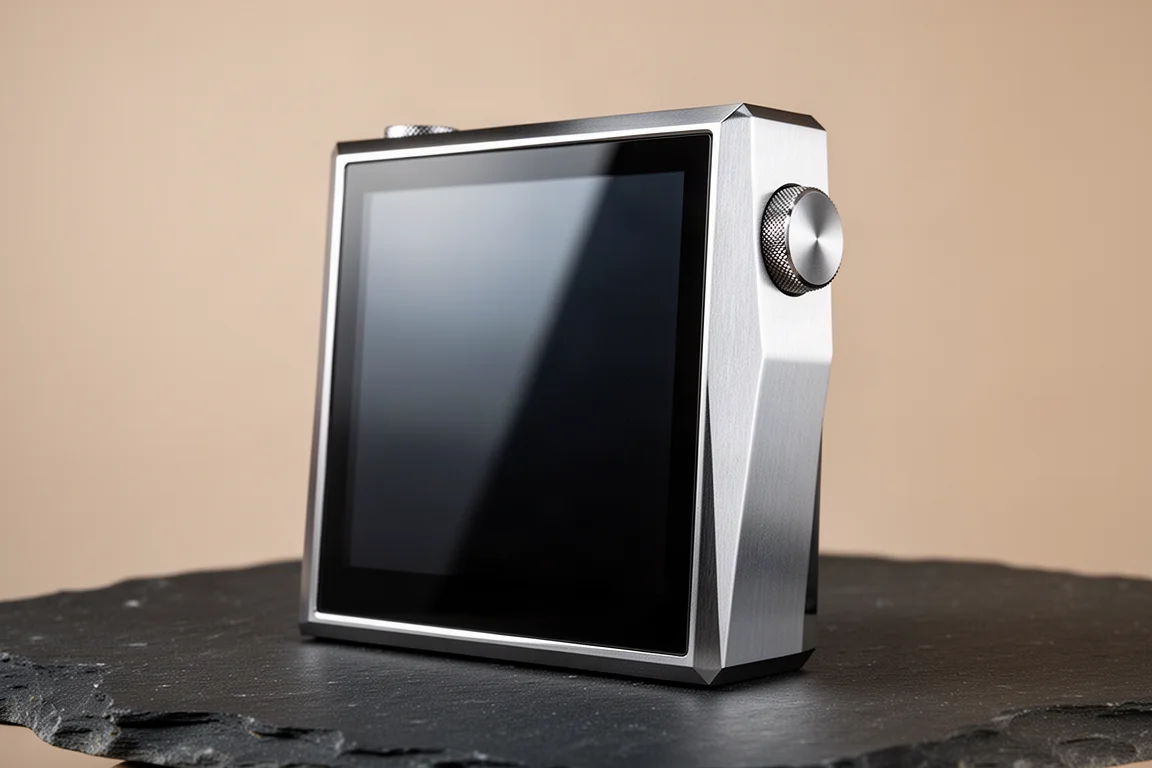
iFi GO pod: Wired Sound Without the Cable
The GO pod is the most interesting piece of gear in this roundup. It removes the cable from a pair of wired in-ears and attaches each head shell to a pod that loops over the ear, effectively turning wired earphones into wireless ones.
Rather than relying on a single system-on-chip, the GO pod uses separate components for Bluetooth reception, digital-to-analog conversion and amplification inside each earpiece. That is likely why the housing is so large, and why it sounds so impressive. Even with the slight lossy compression that Bluetooth introduces, in-ears connected to the GO pod retain much of the musical purity of a wired source.
There are caveats. The touch-sensitive panel sits behind the ear rather than on the earphone, which takes some getting used to. There is no active noise cancellation. And in very busy environments such as airports the left channel can drop out momentarily, although performance is fine once you are on the plane or out of the terminal.
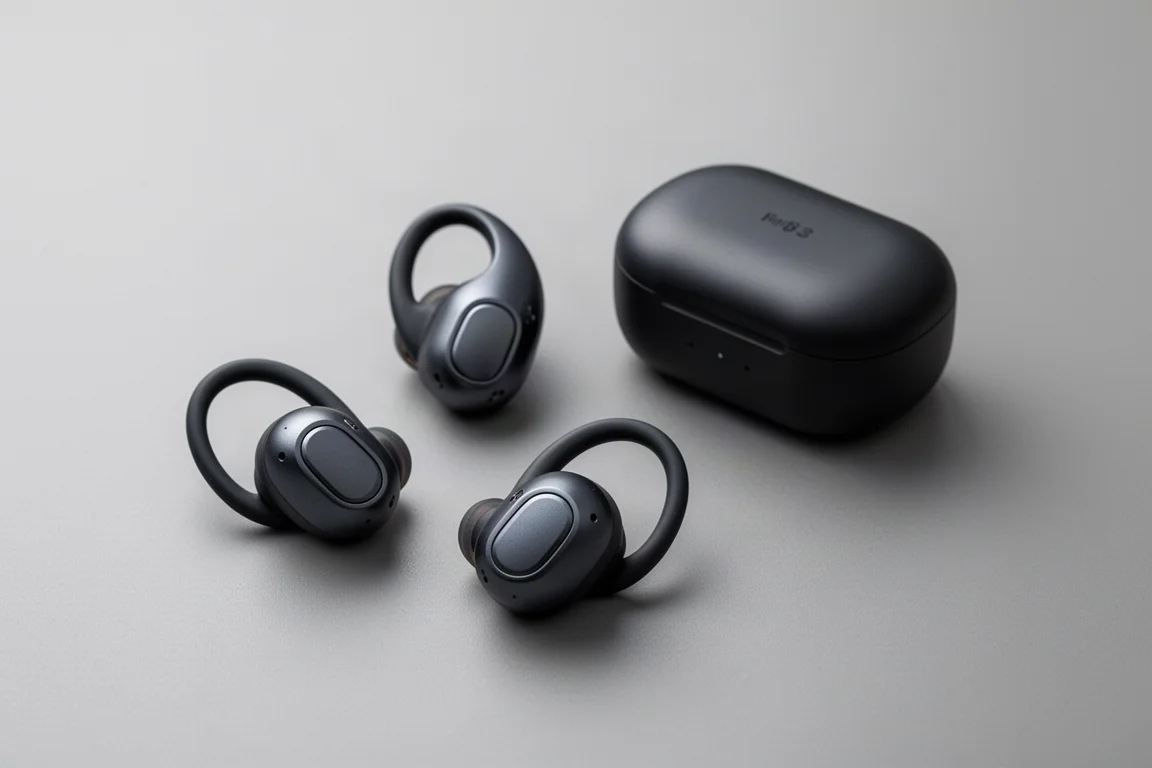
Overall Buying Advice
Start with how you listen rather than with a spec sheet. If your days mix music and phone calls, the Apple AirPods Pro (2nd generation) remain the simplest answer, and the Sony WF-1000XM5 is the stronger all-rounder if noise cancellation on calls matters most. If music is the only job, the Sennheiser Momentum True Wireless 3 is the more natural listen.
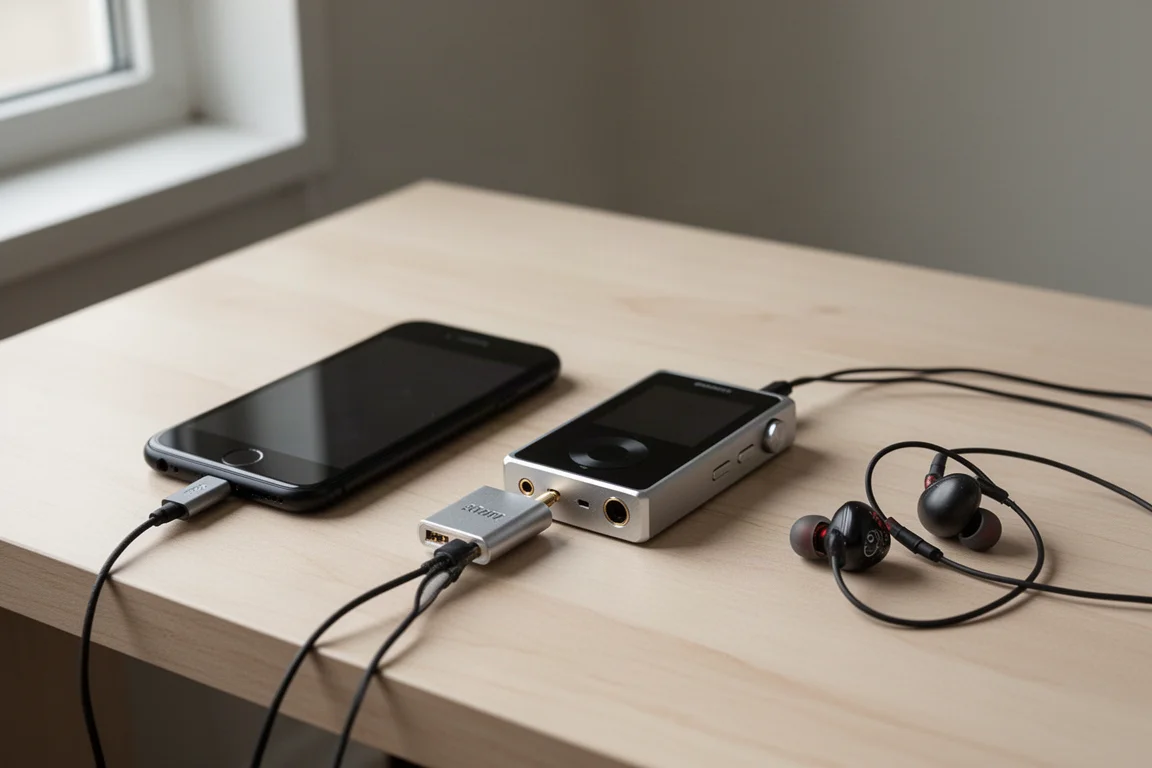
Wired in-ears reward a little more investment in the source. A dongle DAC such as the FiiO KA2 is the cheapest way to add balanced output to a phone, while the Shanling M3 Ultra and the Sony NW-A306 are the natural next step for listeners who want a dedicated player. At the top of the range, the Astell&Kern SP3000 pairs most convincingly with the Campfire Audio Solaris Stellar Horizon.
If you already own wired in-ears and want to keep their character without the cable, the iFi GO pod is the most interesting option here, provided you can accept the absence of noise cancellation and its behaviour in crowded wireless environments.
Conclusion
There is no single best portable setup, because convenience, noise cancellation and tone pull in different directions. The AirPods Pro (2nd generation) and the Sony WF-1000XM5 cover the everyday case, the Sennheiser Momentum True Wireless 3 covers the music-first Bluetooth case, and the wired in-ears from Sennheiser and Campfire Audio take sound quality further once a suitable source is in place. Match the combination to your own listening habits and the rest follows.
Further reading
Related Reviews
Portable Audio
Best USB DAC Dongles Compared: DragonFly Cobalt, Fosi Audio DS1 and Hidizs S9 Pro
Five portable USB dongle DACs compared on sound signature, outputs, connectivity, build quality and value, from the $77 Fosi Audio DS1 to the $350 DragonFly Cobalt.
Portable Audio
Cayin RU6 Review: A Discrete R2R Dongle DAC That Sounds Bigger Than It Looks
A pocket-sized R2R ladder DAC with balanced output, tactile controls, and a spacious, dynamic sound, plus the power limits worth knowing before you buy.
Portable Audio
Chord Mojo 2 Review: A Pocketable DAC and Headphone Amp for Serious Listening
A practical look at the Chord Mojo 2, a portable DAC and headphone amplifier with a custom FPGA design, dual headphone outputs, USB-C input, and a battery-friendly desktop mode.