Phono Preamps
Three Phono Preamps Worth Considering: Budget, Detail, and Flexibility
Three phono preamps at three price points, compared by sound, adjustability, and cartridge compatibility so you can pick the right one for your vinyl setup.
Introduction
Phono cartridges put out a very low signal, and that signal needs a substantial boost in gain before an amplifier can work with it. That is the job of a phono preamp. Some turntables and some amplifiers build one in, but plenty do not, and that is where a separate box earns its place.
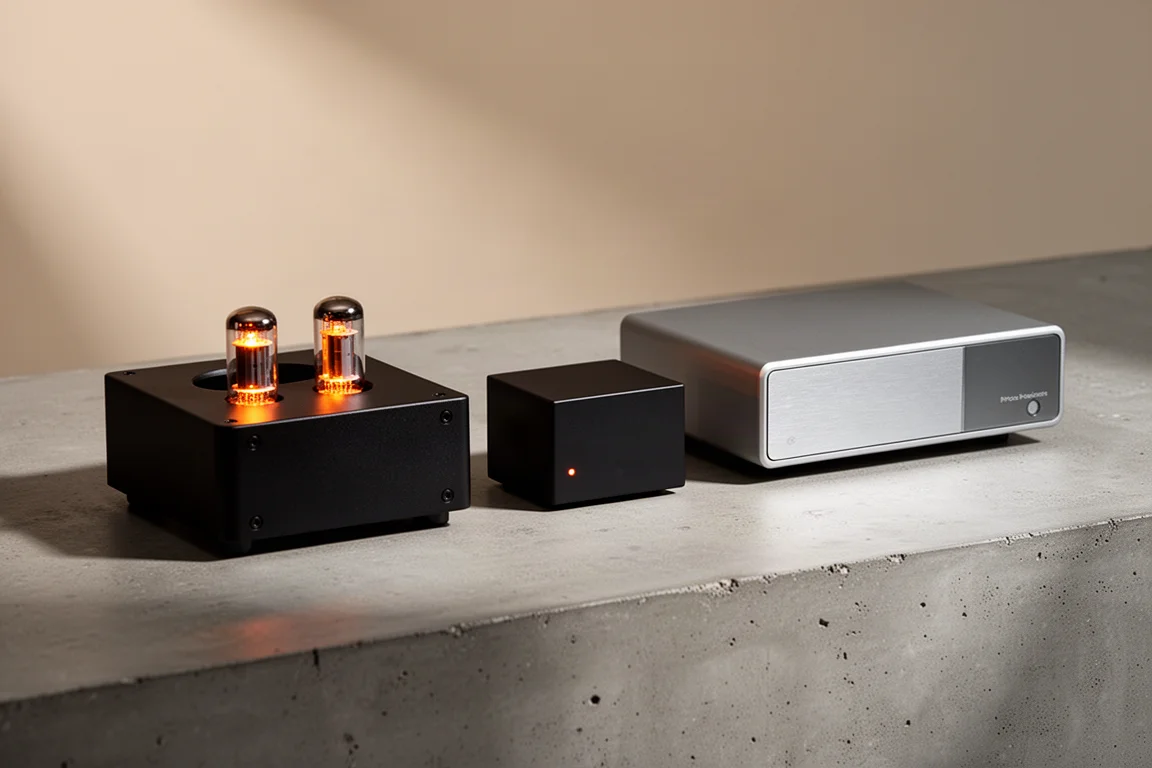
The three preamps below cover a wide spread of prices and philosophies. One is a $70 tube design, one is a fixed-gain unit built for simplicity, and one is a $350 model with full adjustability. Each has a distinct sound, and the right choice depends as much on your cartridge and the rest of your system as it does on your budget.
Why an External Phono Preamp Can Help
There are three common situations where an external phono preamp solves a real problem.
The first is a turntable without a built-in stage. Some models include one, such as the Fluance RT80 and RT81, and some turntables can be ordered with a phono preamp added at purchase, including several U-Turn models and a number of Pro-Ject turntables. If your turntable has no internal stage and no option to add one, an external preamp is required.
The second is an amplifier, receiver, or integrated amplifier with no phono input. Plenty of modern components, including compact amplifiers and DAC-equipped integrated models, omit the phono stage entirely. Without one, a turntable cannot be connected in a usable way.
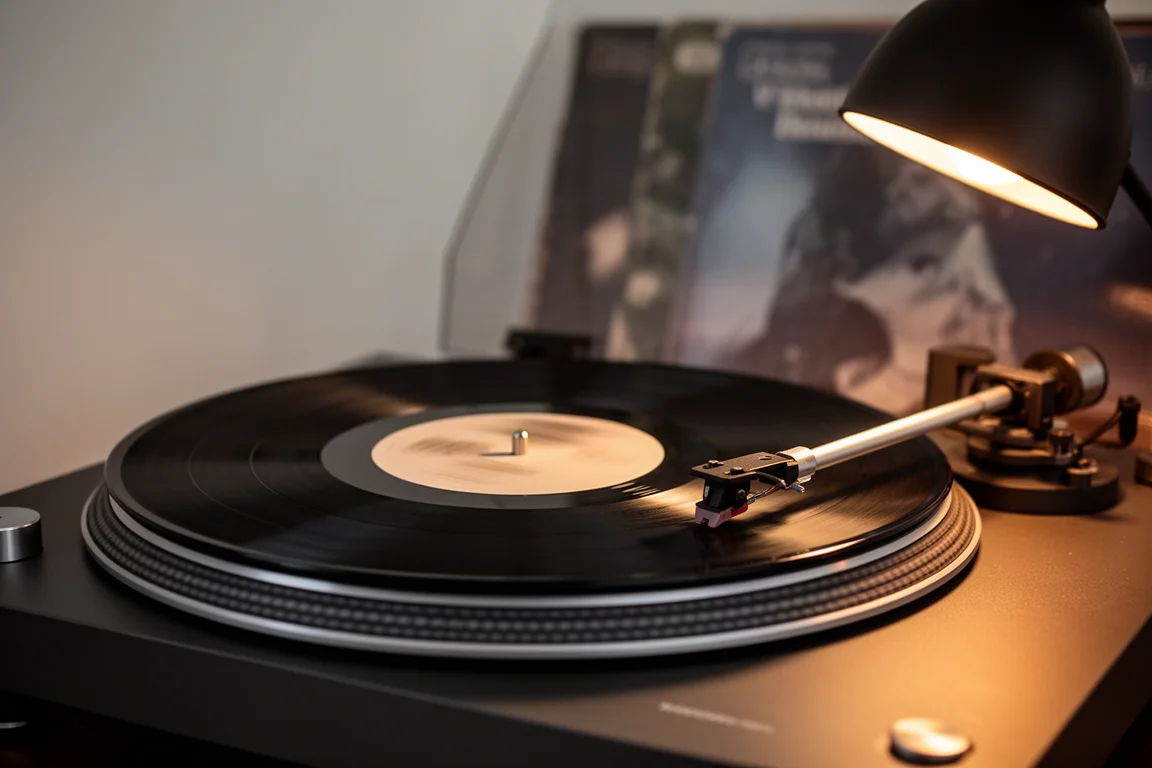
The third reason is sound quality. An external phono preamp will often outperform the stage built into a turntable or an affordable integrated amplifier. In a $400 to $500 integrated amplifier or a home theatre receiver, the budget is spread across a DAC, multiple inputs, a remote, and the chassis itself, so the phono section is rarely a priority. Cost does not always equal performance, but at this level many listeners consider a $100 external preamp to be a step up from what is built into amplifiers under $500 or receivers under $1,000. Well-made integrated amplifiers can have genuinely good internal phono stages, and some vintage receivers are excellent in this regard, but those are the exceptions rather than the rule.
Most Affordable Pick: Fosi Audio Box X2
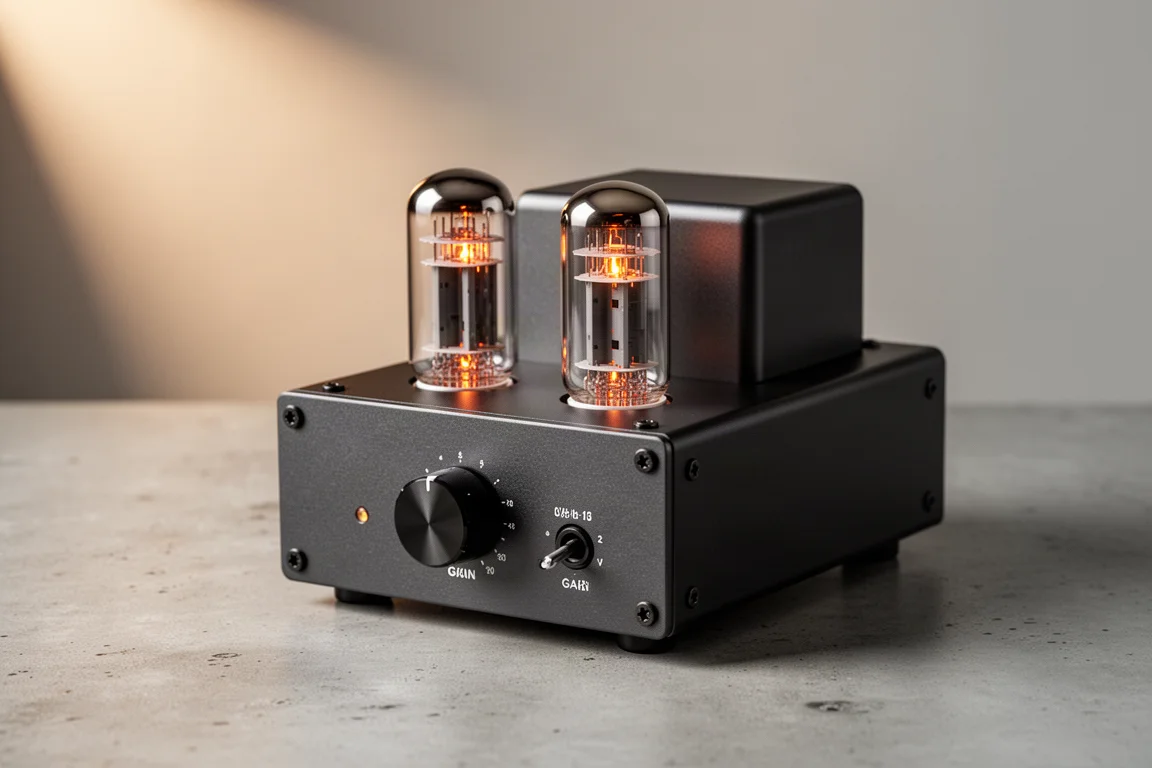
At $70, the Fosi Audio Box X2 is the least expensive of the three and the only tube design here. It uses two tubes and offers three selectable gain settings at 39 dB, 42 dB, and 45 dB, which is useful flexibility at this price. It handles moving magnet cartridges only. There is also a 3.5 mm auxiliary input on the front panel, an unusual addition that some listeners will use and others will simply ignore.
Sonically, the Box X2 is the most energetic of the group. It sounds dynamic and punchy, with emphasis at both ends of the spectrum, and the mids stay present rather than receding. The tubes contribute a sense of depth and scale that makes the presentation feel larger than the price suggests. Bass tightness and overall resolution fall short of the two more expensive units, so it suits systems that are not ruthlessly revealing.
Pairing matters here. Warmer, less detailed cartridges can sound a touch too rich through the Box X2, while the Ortofon family, including the OM5e, OM10, 2M Red, and 2M Blue, works well. The tubes are common types, so swapping them is easy if you want to experiment.
Detail-Focused Pick: U-Turn Pluto 2
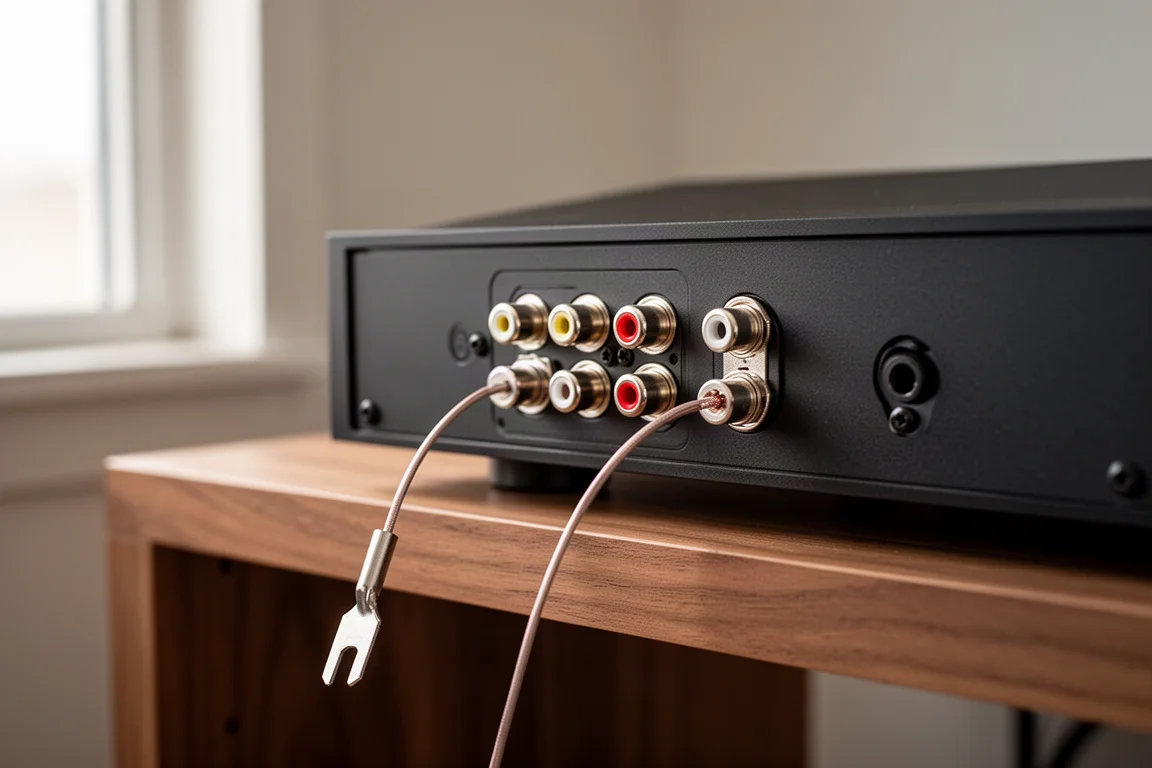
The U-Turn Pluto 2 takes the opposite approach: there is nothing to adjust. Gain is fixed at 40 dB, and there are no switches at all, not for power, gain, input impedance, or input capacitance. You plug it into the wall, connect the RCA cables and the ground wire from the turntable, run a second pair of RCAs to your amplifier, and you are finished. It handles moving magnet cartridges only.
The sound is detail oriented, with a clear emphasis on the treble and a tight, present bass. It is not a thin-sounding unit, but it does place the top end under a microscope, and with an Ortofon 2M Blue a small amount of sibilance was audible. That character makes it a natural partner for warm-sounding cartridges or speakers. A warmer cartridge such as the Nagaoka MP-110 is an especially good match, and the Pluto 2 can add useful detail to a system that leans soft.
Build and origin are part of the appeal here. The Pluto 2 is designed and assembled in the United States, in Massachusetts.
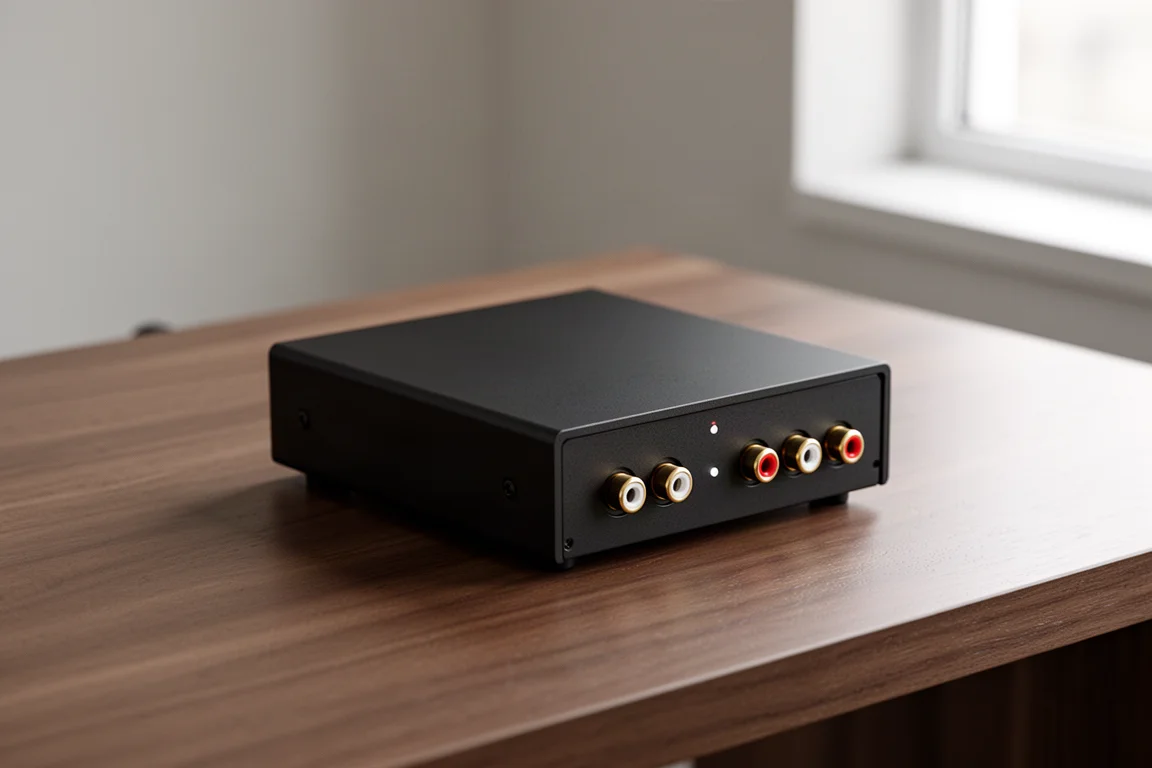
Most Flexible Pick: Pro-Ject Phono Box S2 Ultra
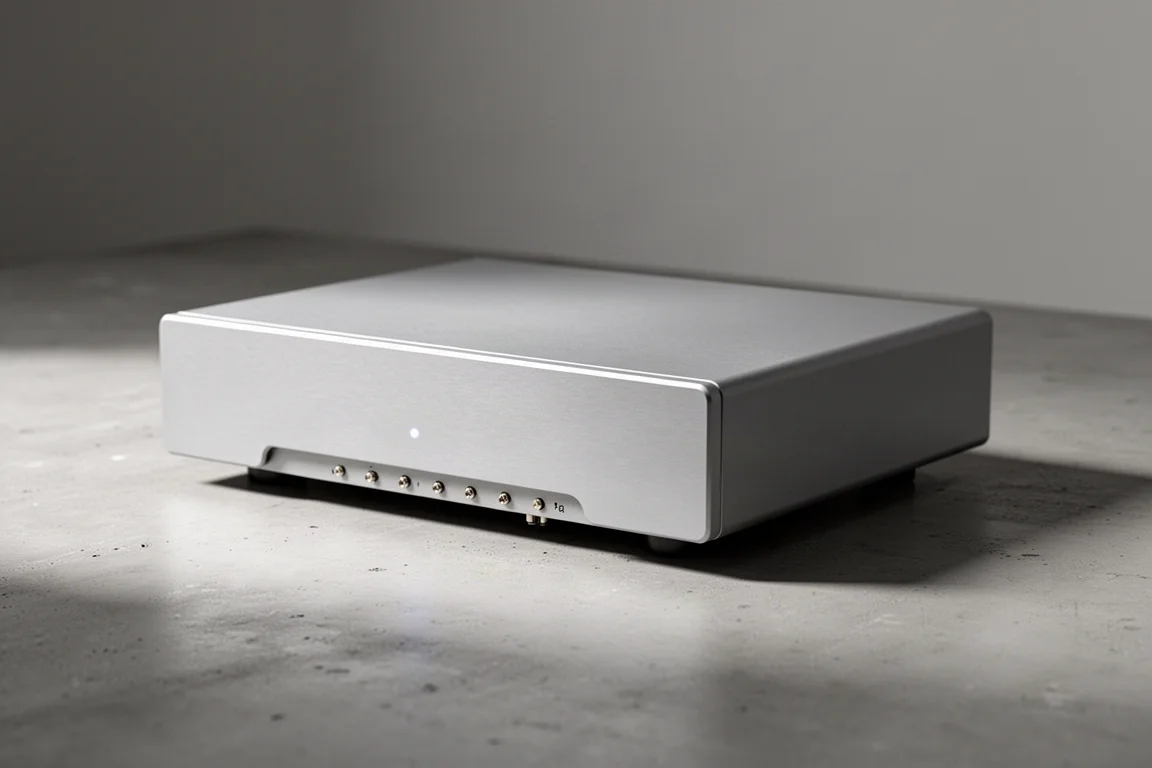
The Pro-Ject Phono Box S2 Ultra is the most capable of the three and the most expensive at $350. It offers adjustable gain, adjustable input impedance, and adjustable input capacitance, plus a subsonic filter that can be switched on or off. It supports both moving magnet and moving coil cartridges, which neither of the other two does. It is built in Pro-Ject’s European factories.
Where the other two have distinct personalities, the Phono Box S2 Ultra is neutral. It sounds even and clean across the range, with strong detail retrieval and no obvious emphasis in any one area. It passed every cartridge tried through it without complaint, including the Nagaoka and both Ortofon styli, which is exactly what you want from a component that is meant to stay out of the way.
Matching a Preamp to Your Cartridge
The most useful thing you can do before buying is to think about the balance of your system rather than the preamp in isolation.
A cartridge that already leans warm and relaxed benefits from a preamp with clarity and treble presence, which is where the Pluto 2 fits. A cartridge with plenty of top-end detail pairs well with the richer, more energetic character of the Fosi Audio Box X2. If you want a preamp that simply passes through what the cartridge produces without adding colour, the Pro-Ject is the one that does that.
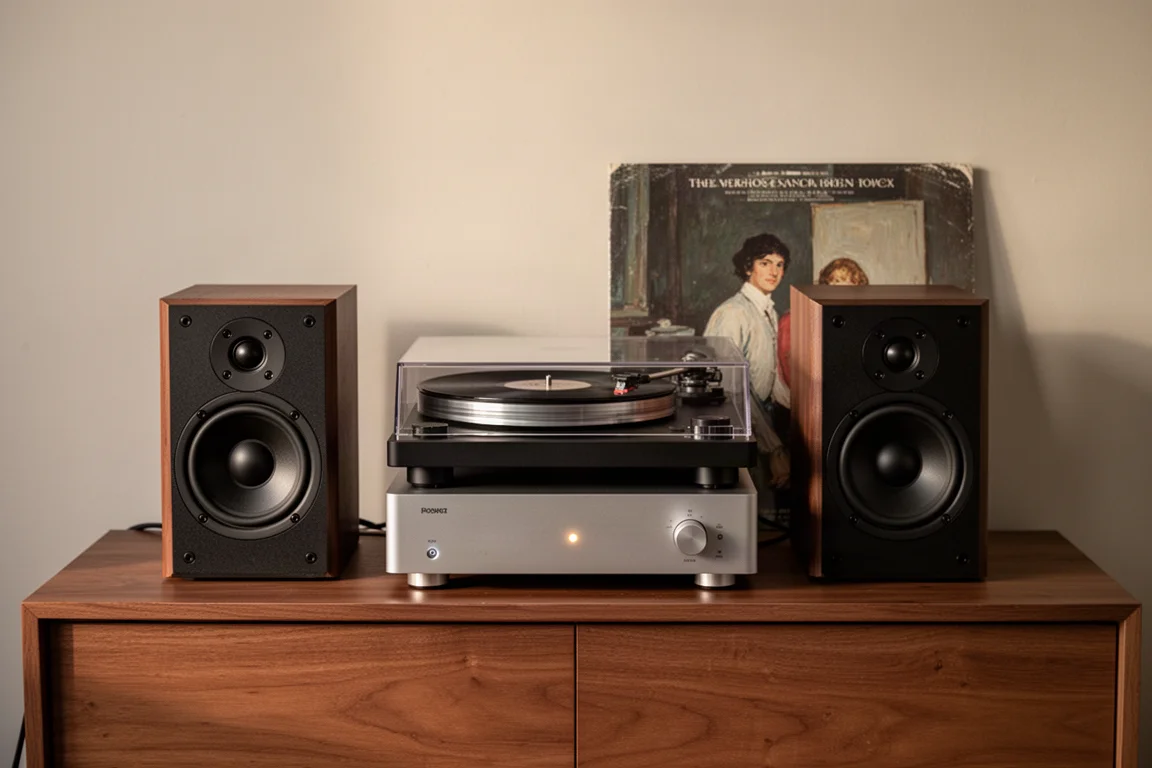
Cartridge type sets a hard limit as well. Moving magnet cartridges work with all three preamps. Moving coil cartridges require the Pro-Ject Phono Box S2 Ultra, since the other two are moving magnet only.
Adjustability, Filters, and Tube Rolling
Adjustability is worth paying for only if you will use it. The Pluto 2 has none, and that is a deliberate design choice rather than a shortcoming, because it removes any chance of a misconfigured setting. The Box X2 offers three gain positions, enough to match most moving magnet cartridges. The Pro-Ject gives you gain, impedance, capacitance, and a subsonic filter, which matters if you change cartridges often or want to fine-tune the low end.
The other variable is tubes. The Box X2 is the only tube design here, and because it uses common tube types, rolling them is straightforward for anyone who enjoys tuning the sound that way. That is part of the appeal of the unit, and it is unusual at $70.
Buying Advice
For most listeners running a moving magnet cartridge, the sensible split is simple. If you want the lowest entry point and a lively, engaging sound, the Fosi Audio Box X2 delivers a lot for $70. If you want more detail and a set-and-forget design, the U-Turn Pluto 2 is the stronger pick, provided your system is not already bright. If you use a moving coil cartridge, plan to change cartridges, or simply want the cleanest and most neutral option, the Pro-Ject Phono Box S2 Ultra justifies its $350 price.
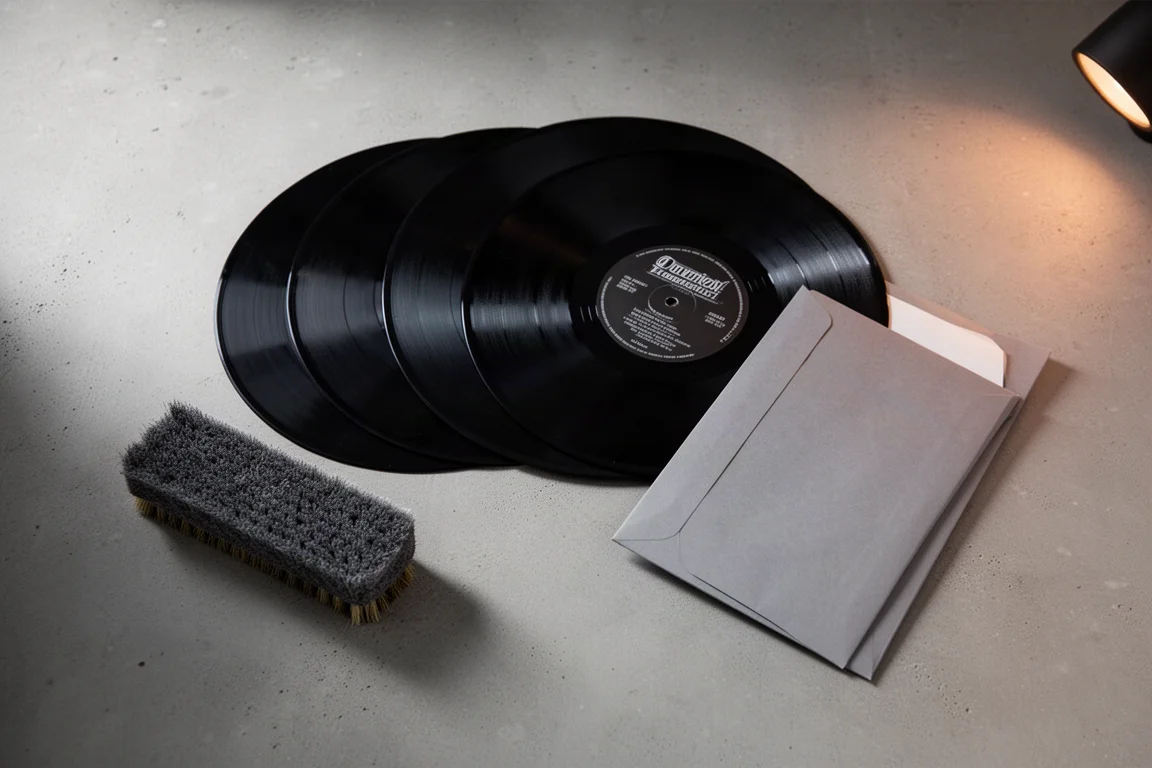
It also helps to know what you are upgrading from. Moving off the internal stage in an inexpensive turntable or an affordable receiver is usually a clear improvement. Moving off the phono stage in a genuinely high-quality integrated amplifier may be a smaller step, and it is worth checking before you spend.
Conclusion
None of these three is the single best phono preamp. The Fosi Audio Box X2 is the value pick with a lively tube character, the U-Turn Pluto 2 is the detail-first option with no setup decisions to make, and the Pro-Ject Phono Box S2 Ultra is the neutral, fully adjustable choice that also handles moving coil cartridges. Match the preamp to your cartridge and the rest of your system, and any of them will get more out of your records.
Further reading
Related Reviews
Phono Preamps
Ampapa A1 Review: A $130 Tube Phono Preamp With Tone Controls
A compact tube phono preamp with bass and treble controls, a headphone output, and a design-origin claim worth reading carefully.
Phono Preamps
Duke Audio T4 Plus vs Andover Phono Preamp: Which One Suits Your Turntable?
A tube phono preamp at around $100 against a $250 model with an extra analog input: how the Duke Audio T4 Plus and the Andover Phono Preamp differ in sound, features, and value.
Phono Preamps
iFi Zen Phono 3 Review: Affordable Vinyl Sound Worth the Upgrade
A close look at the iFi Zen Phono 3, an affordable phono preamp with moving magnet and moving coil support, a balanced 4.4mm output, and a remarkably quiet noise floor.