Headphones
Best Open-Ear Headphones for Runners: Six Alternatives Worth Considering
Six open-ear headphones that deliver balanced sound, situational awareness, and running-friendly features, without defaulting to the usual brand.
Introduction
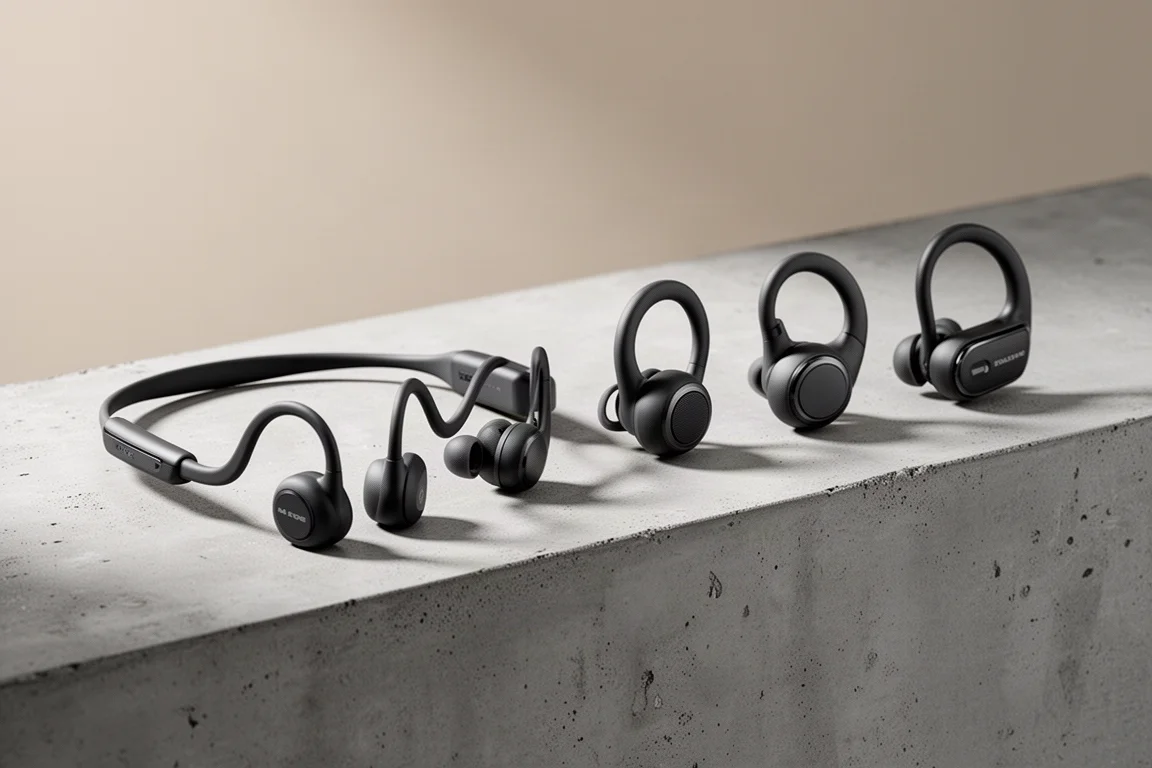
Open-ear headphones deliver audio while keeping you aware of your surroundings. That makes them a strong pick for running: you still hear traffic, other runners, and the general environment while your music or podcast pushes you along. Most open-ear designs currently fall into two camps: bone conduction, which uses transducers to turn vibrations into sound near your ear, and wearable speaker designs that place drivers close to your ear canal without blocking it. The latter generally offers a fuller, more rounded sound than bone conduction.
One brand dominates this space, and its headphones are genuinely good. But there is life outside it. After testing many options, some better than others, these six picks offer a strong open-ear experience with their own distinct strengths.
Why Open-Ear Headphones Make Sense for Running
Safety is the biggest argument. Whether you are running beside busy roads or past pedestrians, these designs leave your ear canals open so you stay aware of what is around you. The trade-off is usually sound: open designs rarely match the bass or fullness of in-ear headphones, and on very busy roads even the best of them can be drowned out. The picks below represent the best balance of awareness, comfort, and sound we found.

Most Discreet Pick: Sony LinkBuds
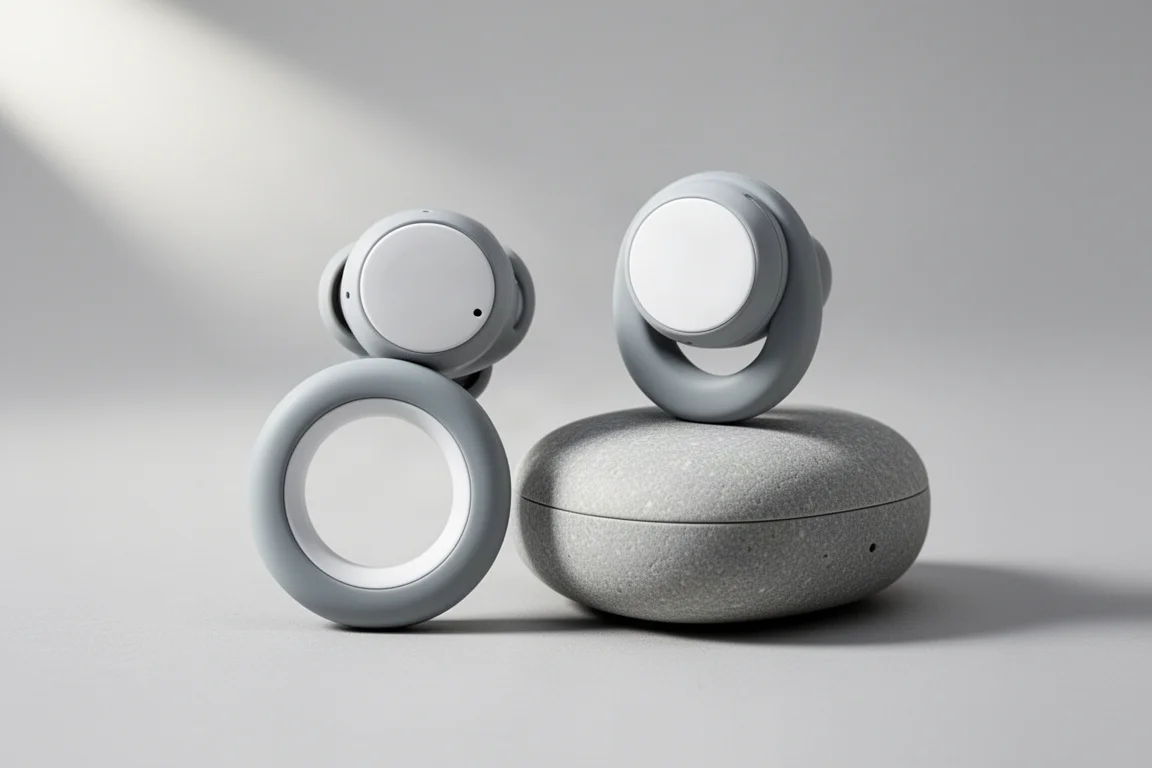
If you dislike the neckband style, the Sony LinkBuds sit far more discreetly on the ear and essentially vanish in terms of form factor, while delivering a similar balanced sound profile: reasonable detail, no big bass, and full awareness of your surroundings.
Fit takes some experimentation. Play around with the additional tips in the box to nail the fit; once you do, they stay put. Gesture controls are well executed, letting Sony keep the design small and low profile, though physical controls would generally be preferred for running. Battery life is not class-leading but is good enough for most people over a week’s worth of running, and the small case is a nice touch.
Best Budget Alternative: Halo Purefree BCA1
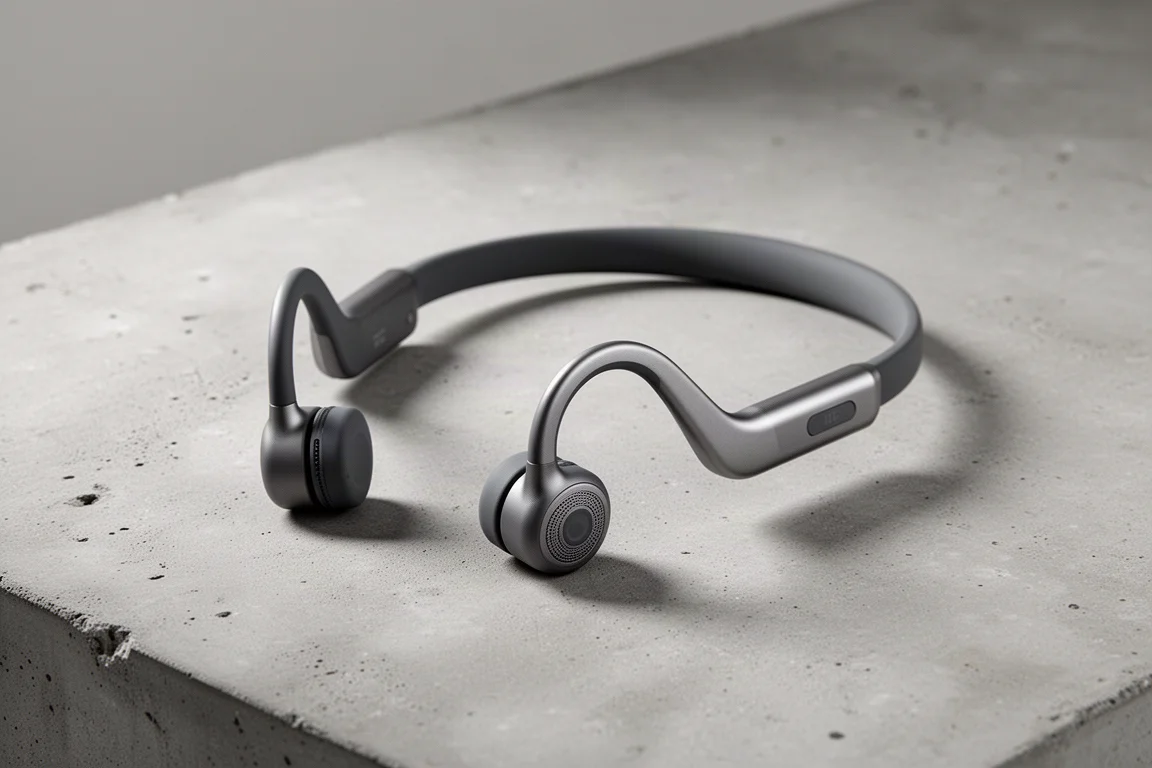
The Halo Purefree BCA1 is an almost direct alternative to a well-known bone conduction model, at £99.99, less than that model’s typical RRP. The lightweight design, materials, button layout, and balanced sound profile are all very similar: no big bassy output, but it works absolutely fine for music, podcasts, and audiobooks.
Battery life is solid at up to eight hours, and quick charge is included. The main drawback is a proprietary charging cable, a consequence of the rain-resistant waterproofing in the design. Side by side, the performance is very similar to the pricier original, which makes this an easy recommendation for budget-conscious runners.
New-Style Open-Ear Picks: Cleer Arc and Oladance
Beyond bone conduction, a newer category of open-ear headphones places speaker units in close proximity to your ears for a fuller sound while retaining environmental awareness.
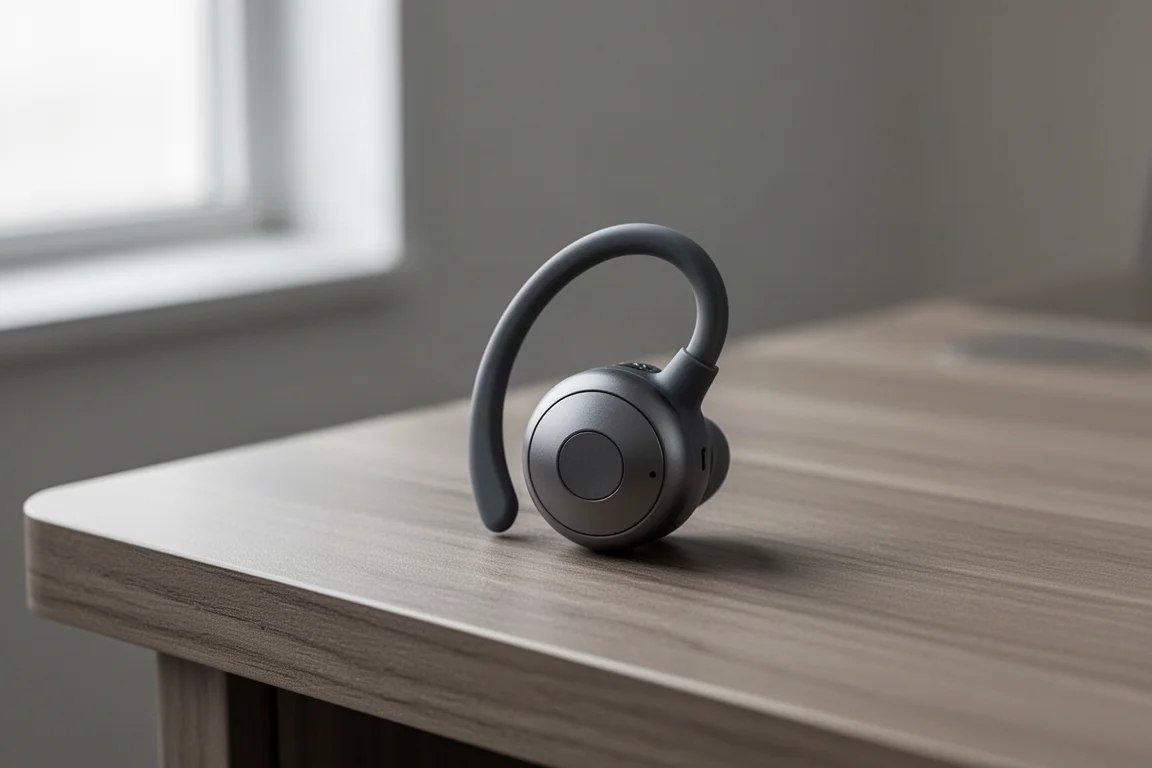
The Cleer Arc uses an ear-hook design that sits on top of the ear and hinges a unit down beside it. The sound is not best in class, slightly muddy without amazing detail, but it is good enough, the fit is very secure, and battery life is strong with a quick charge feature for forgotten charging nights.
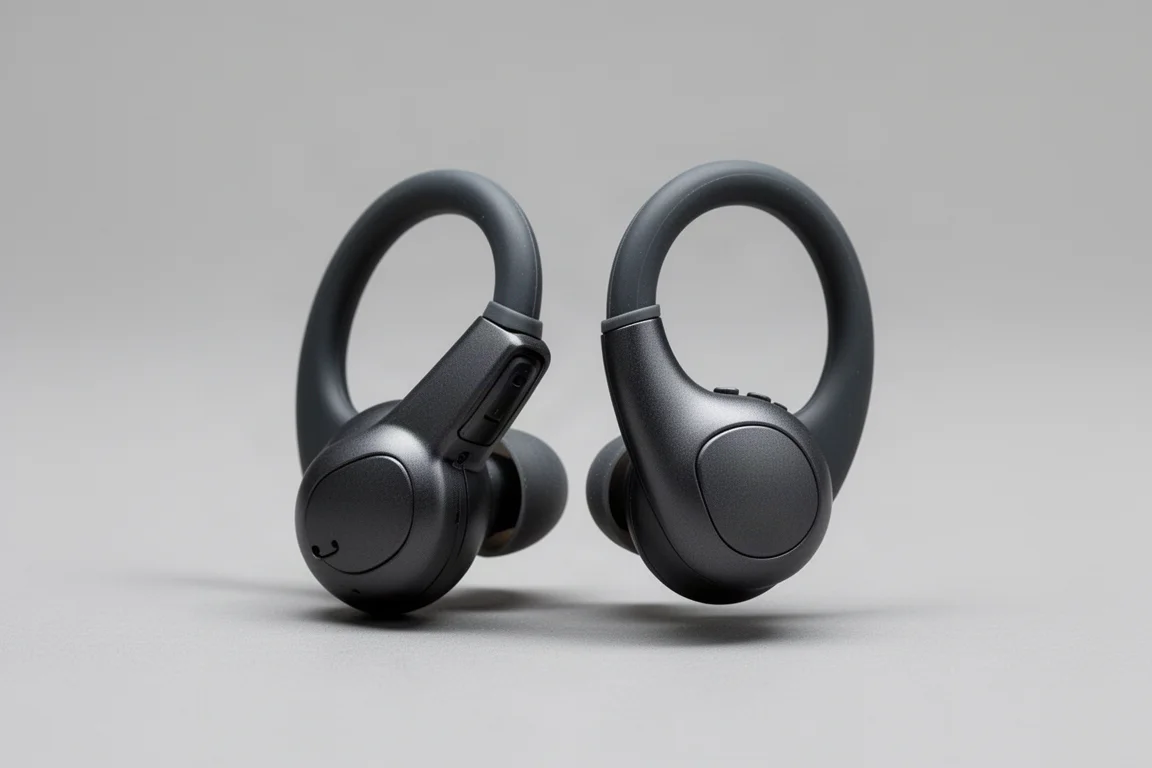
The Oladance, a wearable stereo design, was a standout favourite. Its 16.5mm drivers deliver genuinely impressive sound, among the very best for an open design, powerful and fairly bassy, good enough to enjoy outside of exercise. Fit security was excellent for running, including with glasses or a headband, though some users have reported a looser fit. Controls are the weak point: a touch panel that reliably handles single-tap play/pause but struggles with double taps, and direct wind can activate it and pause your music. Battery life is a strong 16 hours, but the standard case is not a portable charger, and a charging case costs roughly £50 extra. List pricing is around £180 to £200, though they are frequently discounted, often under £150, which makes them far more competitive.
Best Battery Life: One Audio Open Rock Pro
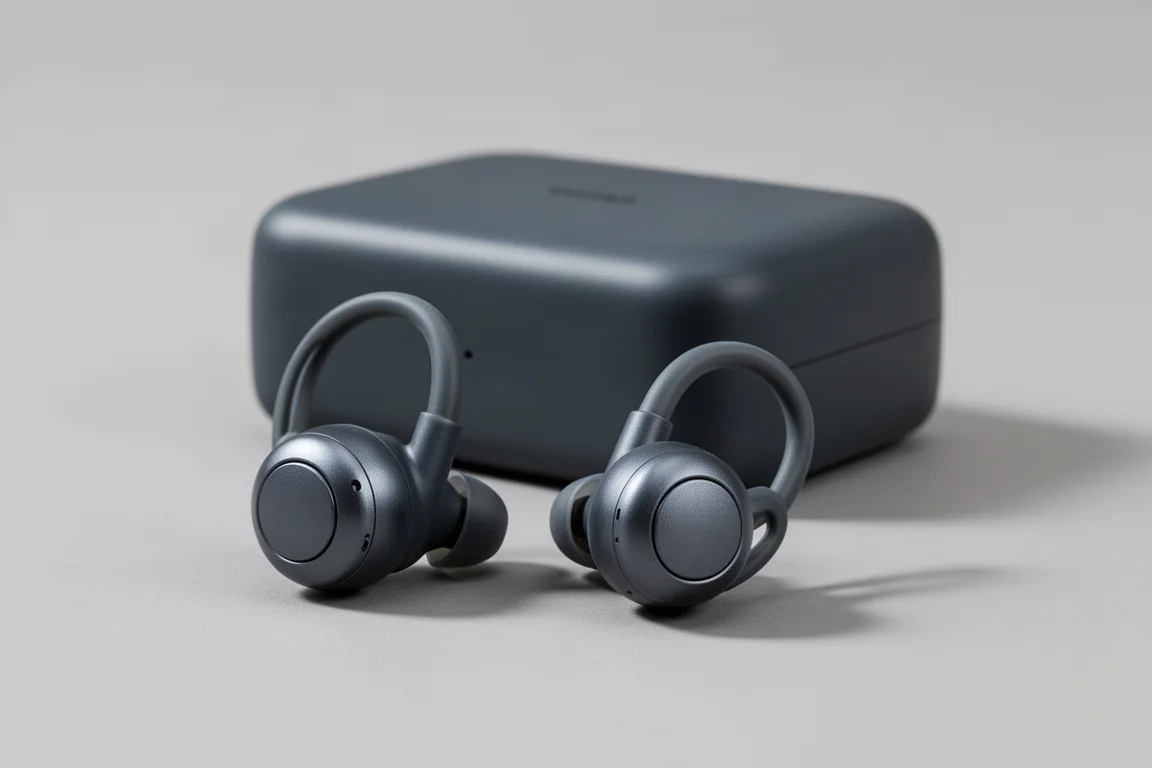
The One Audio Open Rock Pro also clips on top of the ear with a speaker near the ear canal. Its 16.2mm drivers make it one of the two best-sounding open headphones in this roundup, with powerful bass and clear mids and highs. Along with the Oladance, it is about as loud as open headphones get, though very busy roads can still overwhelm them. There is no EQ adjustment in the app, but that is not a big loss given the limits of EQ on open designs.
The fit is the main question mark: the gap is slightly smaller and less flexible, so they need to be forced into place and can loosen slightly, and glasses or a headband can create clutter. That varies from ear to ear, so do not rule them out entirely. Physical buttons on each earbud handle playback and volume, which is easier than touch panels while running.
Battery life is the headline: 19 hours from the headphones alone, extending to 46 hours with the charging case, the best we have come across in this category. The case doubles as a portable charger, though it is large and not ideal for a running belt. Quick charge gives an hour of playback from five minutes in the case. At £102 or $109, they undercut the Oladance considerably.
Best for Swimming and Music Storage: Naenka Runner Diver
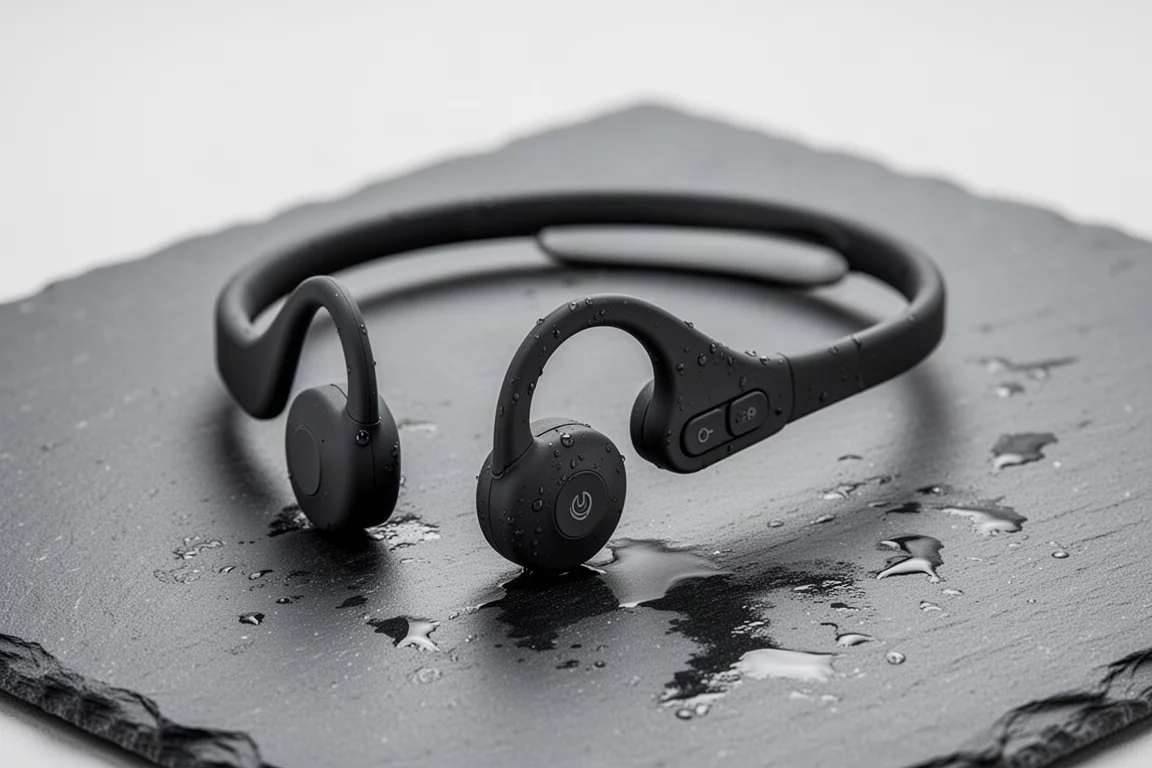
If you like the idea of a bone conduction headphone with a built-in music player but also want Bluetooth streaming, the Naenka Runner Diver offers both. As the name suggests, it works in the water, with a 16GB music player on board. Dragging and dropping files onto it is a little slower than on some swim-friendly rivals, but you can load a decent amount of music.
The sound profile is very balanced in and out of the water, on par with established bone conduction models. The frame is bulkier and thicker than slimmer neckband designs, but it is comfortable and secure enough for slow runs, faster runs, and everyday use. Battery life is solid and enough for a decent week of training, though it drops noticeably when streaming over Bluetooth.

Conclusion
Every pick here solves a slightly different problem. The Sony LinkBuds are the most discreet, the Halo Purefree BCA1 is the best-value bone conduction clone, the Cleer Arc and Oladance lead the newer wearable-speaker style with the Oladance standing out for sound, the One Audio Open Rock Pro delivers unbeatable battery life and strong sound at a fair price, and the Naenka Runner Diver covers swimming plus Bluetooth streaming. Match the design to how you run and what you listen to, and any of these can replace the default choice.
Further reading
Related Reviews
Headphones
Apos Audio Caspian Review: Warm Bass, Solid Build, and a Detail Trade-Off
The Apos Audio Caspian is an easy-to-drive open-back headphone with standout bass and a warm, relaxed tuning, though mid-range and treble detail trail the competition.
Headphones
Audeze LCD-X vs LCD-XC vs LCD-3: Which High-End Headphone Fits Your Setup
A practical comparison of three Audeze planar magnetic headphones under $2,000, covering the open-back LCD-X, the closed-back LCD-XC, and the wood-ringed LCD-3.
Headphones
Audeze LCD-X vs HiFiMan Edition XS: Two Open-Back Headphones Compared
A practical comparison of the Audeze LCD-X and the HiFiMan Edition XS, covering build quality, comfort, sound signature, and which listener each one suits.