Kitchen
Best Nonstick Frying Pans Compared: 11 Skillets From $16 to $185, Tested
Eleven nonstick frying pans go head to head in pancakes, eggs, heat distribution, thermal efficiency, and scratch resistance to find out whether a cheap pan can really compete with a premium one.
Introduction
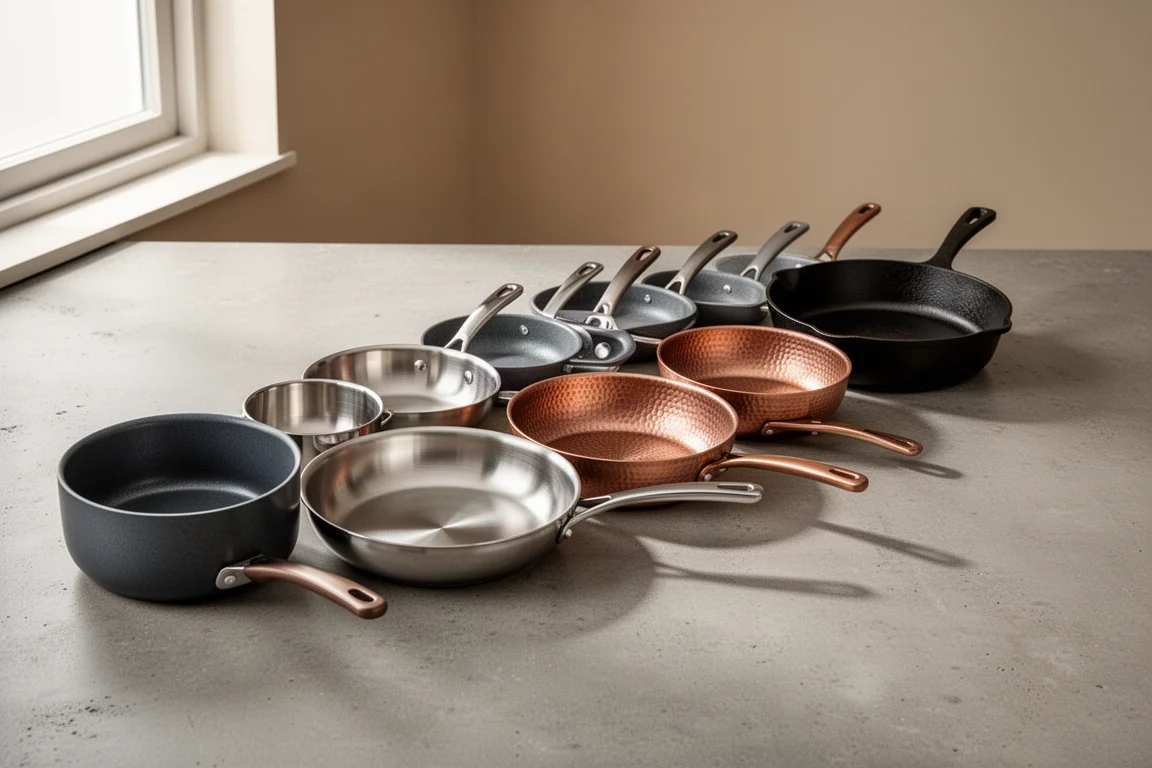
Is a $16 nonstick frying pan really any worse than a $185 one? To find out, eleven skillets with roughly 10-inch diameters were put through the same gauntlet: frying pancakes, frying eggs, heating food evenly, boiling water for speed, and surviving a scratch-resistance test. The results were genuinely surprising, and several budget pans beat their far more expensive rivals.
How the Pans Were Tested
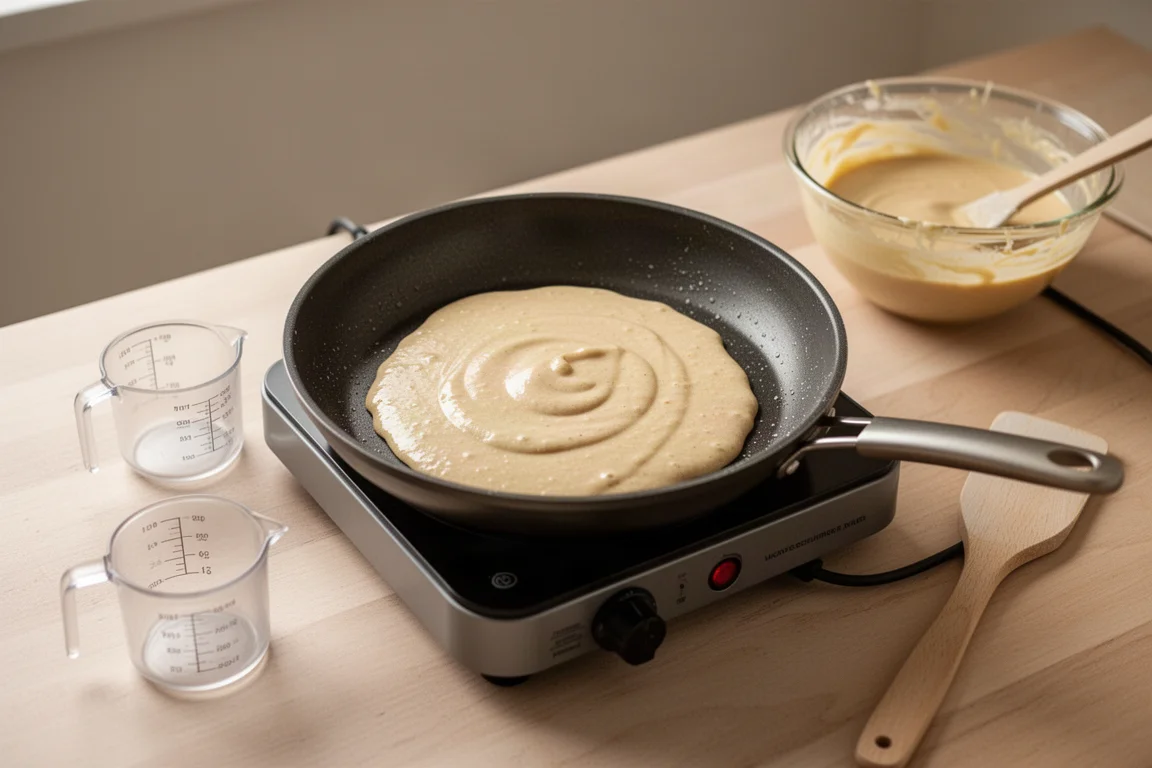
Every pan was used on the same 1500 W hot plate set to 400 W for the pancake test, and each was pre-treated with a thin coating of vegetable oil as the instruction manuals direct. Heat distribution was measured by comparing the hottest and coolest points across the cooking surface, a gap referred to here as the temperature spread. Smaller spreads mean fewer burnt centers and pale edges.
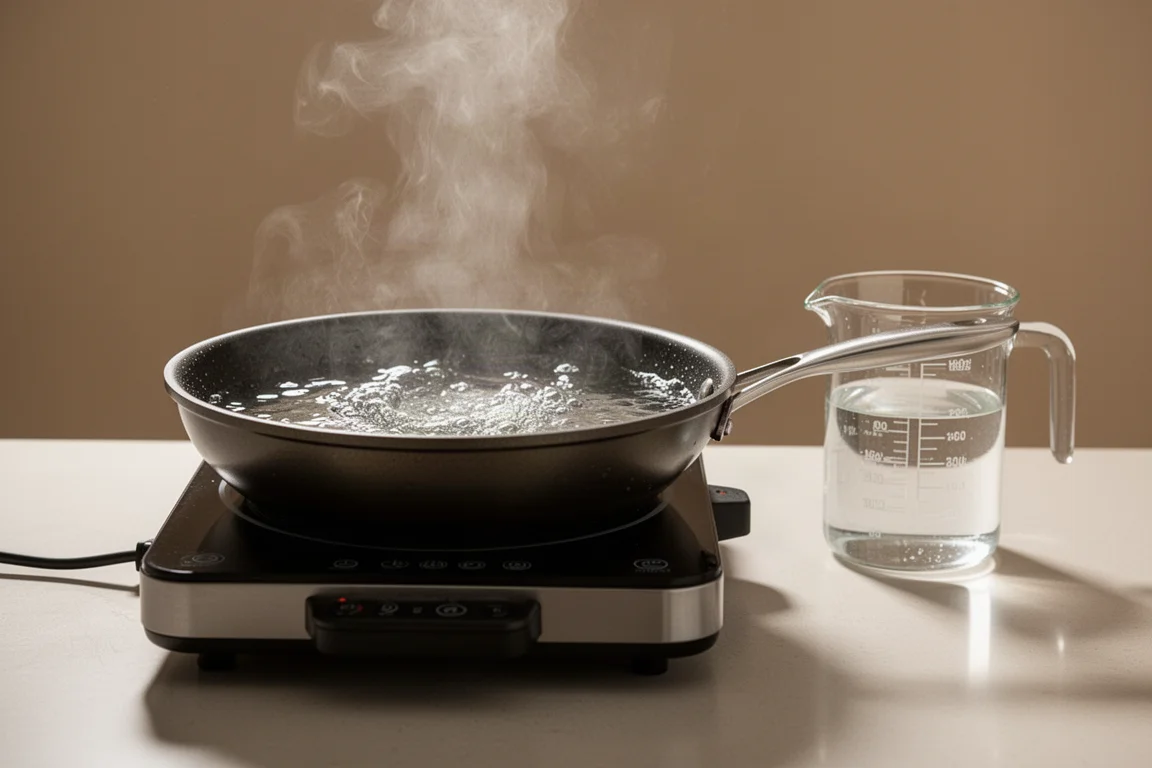
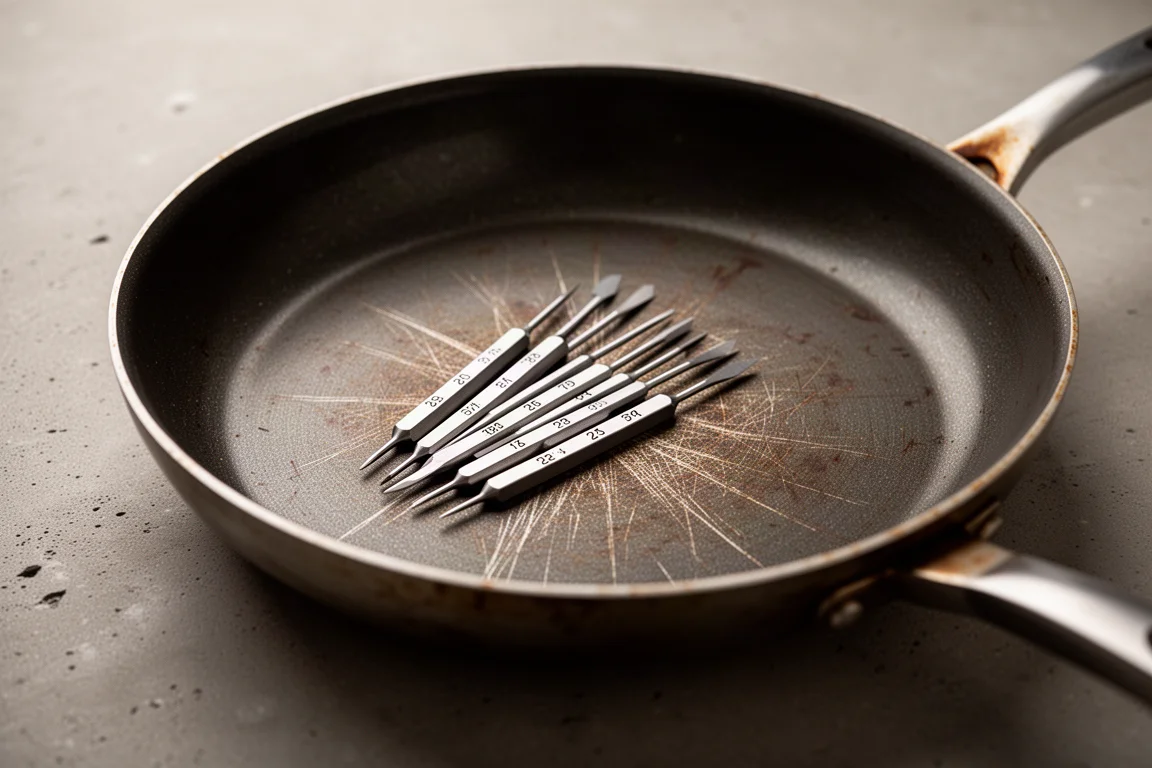
The thermal efficiency test measured how hot 5 minutes on a 1500 W plate could get a pan of water, using a water whirl to equalize the temperature across the surface since no pan heats perfectly evenly. Finally, a hardness test kit with progressively harder picks was dragged across each coating to see how much damage the surface could take. Weights were also noted, since weight can sometimes hint at build quality, and it turned out prices ranged from $16 all the way to $185.
Blue Diamond Nonstick Frying Pan
At only $16, this diamond-infused ceramic nonstick pan is the cheapest in the lineup. Blue Diamond claims it is five times harder and 10 times more durable than traditional nonstick cookware, metal utensil safe, oven and broiler safe up to 600°F, and compatible with all stovetops except induction. It is made in China and weighs 664 g, making it the lightest pan tested.
That thin build helped it heat water quickly, but its temperature spread was the worst of any true nonstick pan at about 132°F, and that hot spot darkened and nearly burned the center of the pancake. The egg also became essentially glued to the pan, and the coating took minor scratches from a mid-hardness pick.
GraniteStone Diamond Pro Skillet
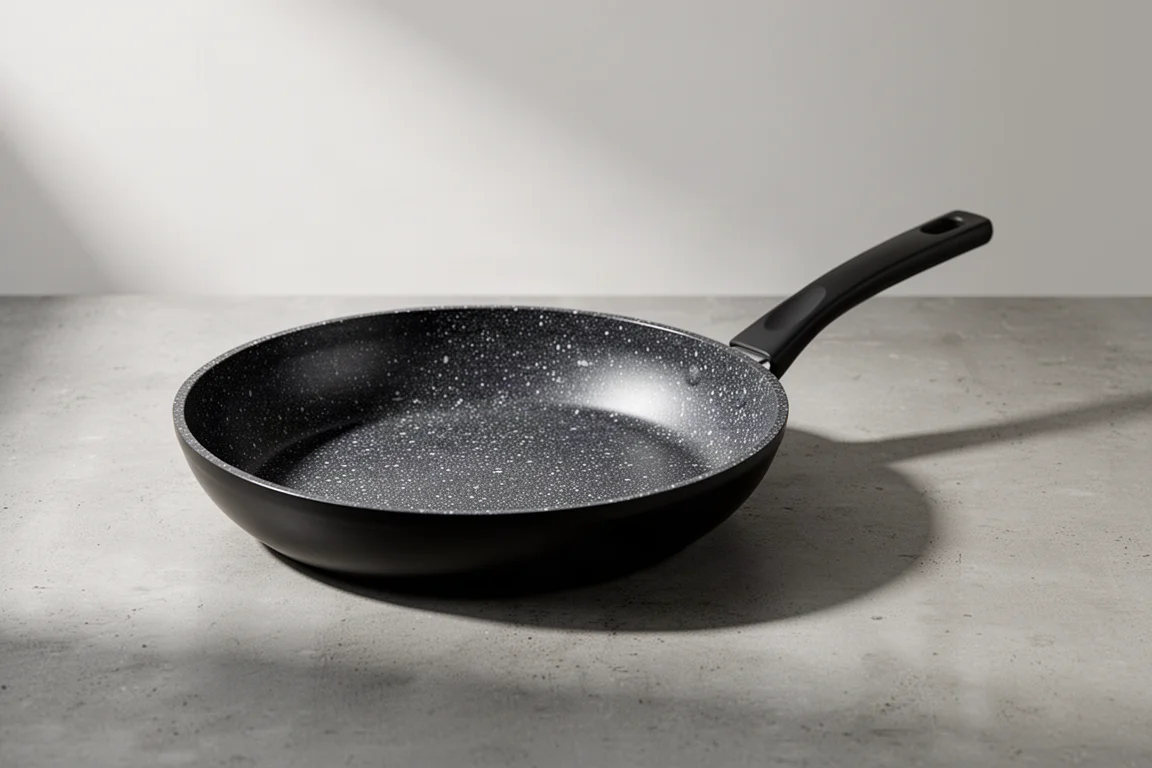
For just a dollar more at $17, the GraniteStone Diamond Pro turned out to be the value star of the entire showdown. It claims a 10-times-more-durable surface, metal utensil use, oven safety up to 500°F, and a thick aluminum core clad between two layers of stainless steel with a stay-cool handle. It works with gas, electric, halogen, ceramic, and induction, is made in China, and weighs 776 g.
Its 60°F temperature spread was second best in the field, the pancake cooked evenly without sticking, the egg lifted effortlessly and fell right off the plate, and the coating shrugged off scratches better than most. On a value-graded scale, it earned top marks in nearly every category, including scratch resistance.
Tramontina Commercial-Grade Aluminum Nonstick Frying Pan
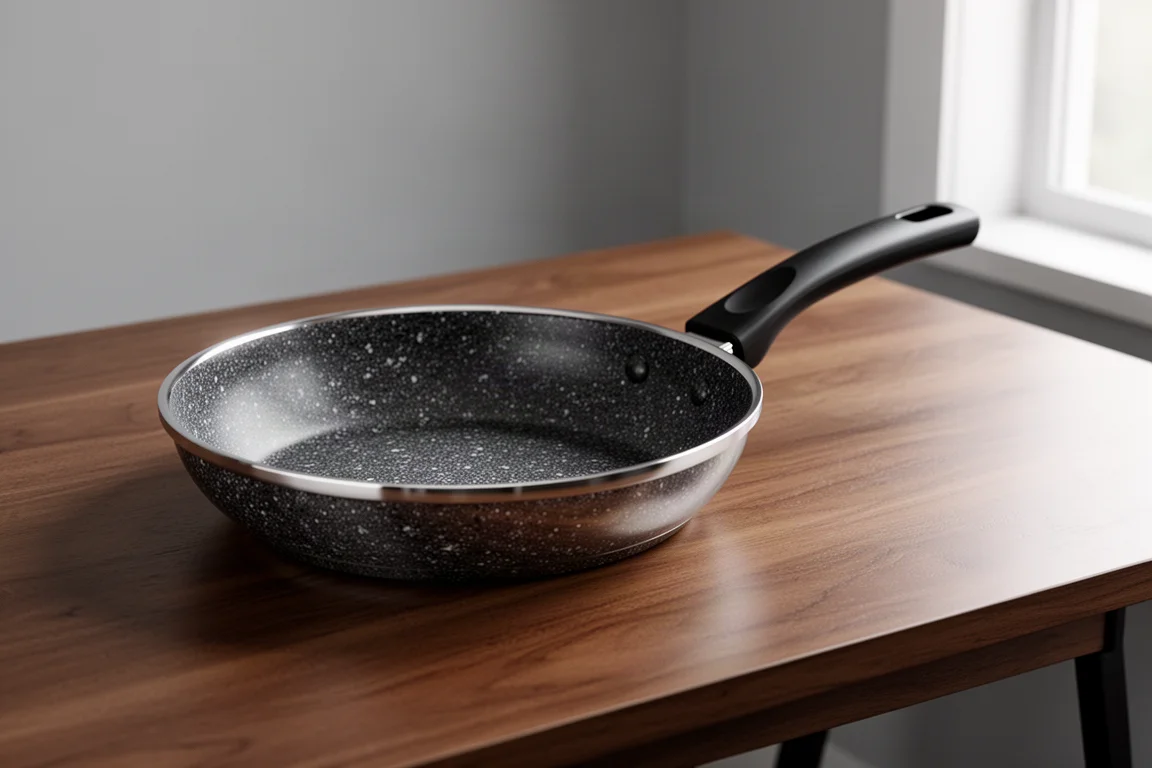
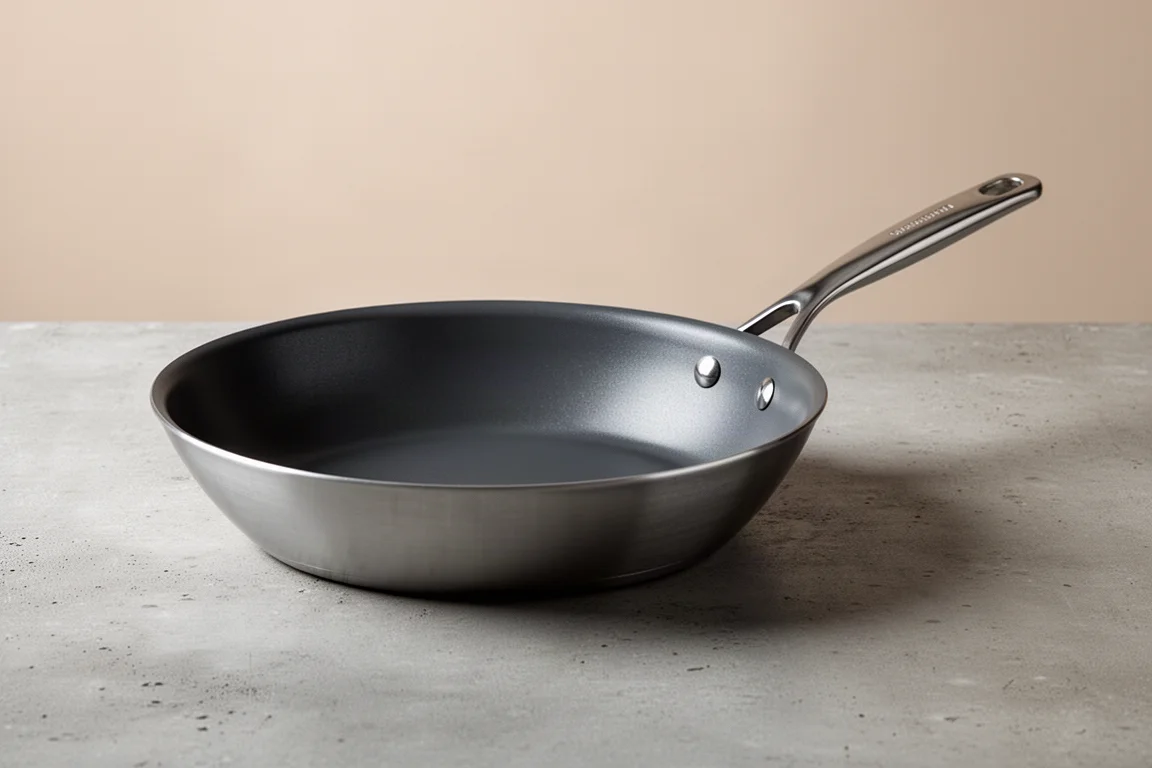
At $25, this professional restaurant-style aluminum nonstick pan is NSF certified commercial grade, works with gas, electric, and ceramic, and is oven safe up to 400°F. It is made in Brazil and, at 990 g, was the heaviest of the entry-level pans.
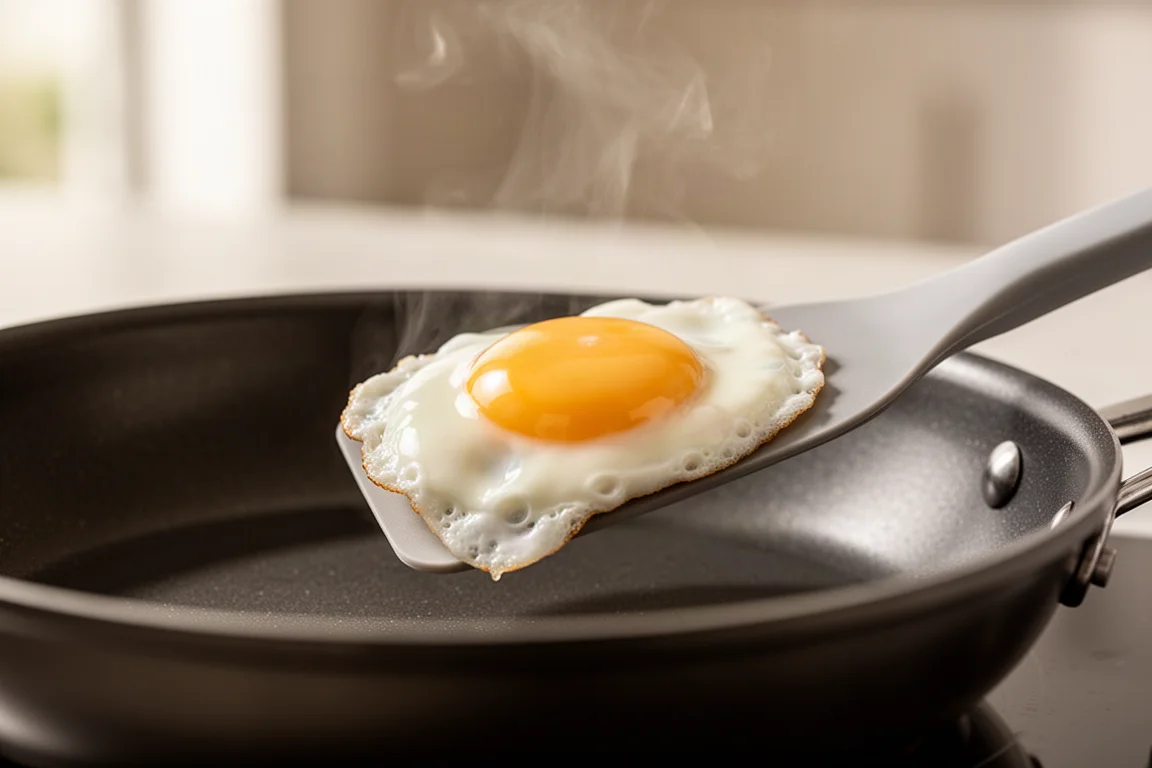
Heat distribution was respectable with just over a 100°F spread, the pancake came out with a nice even finish, and the egg fried beautifully with minimal stickiness. The coating, however, proved to be the softest in the test, with a pick cutting right through to the metal.
OXO Hard Anodized Nonstick Skillet
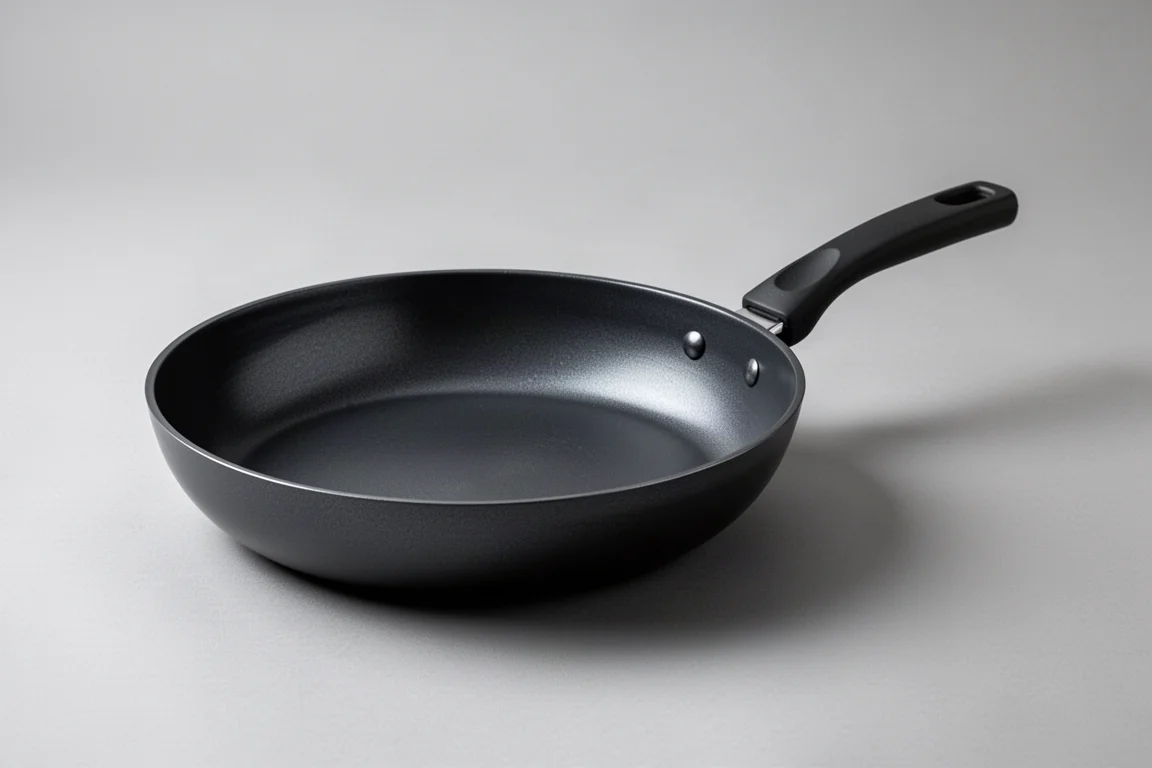
Also at $30, the OXO hard anodized skillet carries a claim as a past best-in-class performer in independent kitchen testing. Its three-layer German-engineered nonstick coating sits on a hard anodized body that OXO says delivers excellent heat conduction and strong scratch resistance. It is oven safe up to 430°F, does not work on induction, and weighs 838 g. Assembly is required, though a screwdriver is included.
With an 85°F temperature spread it placed third for even heating, the pancake and egg tests went smoothly with little to no sticking, and the scratch test showed real toughness: only major damage appeared at the fifth pick, tying it with GraniteStone as the toughest nonstick coating at that level.
GreenPan Ceramic Nonstick Pan
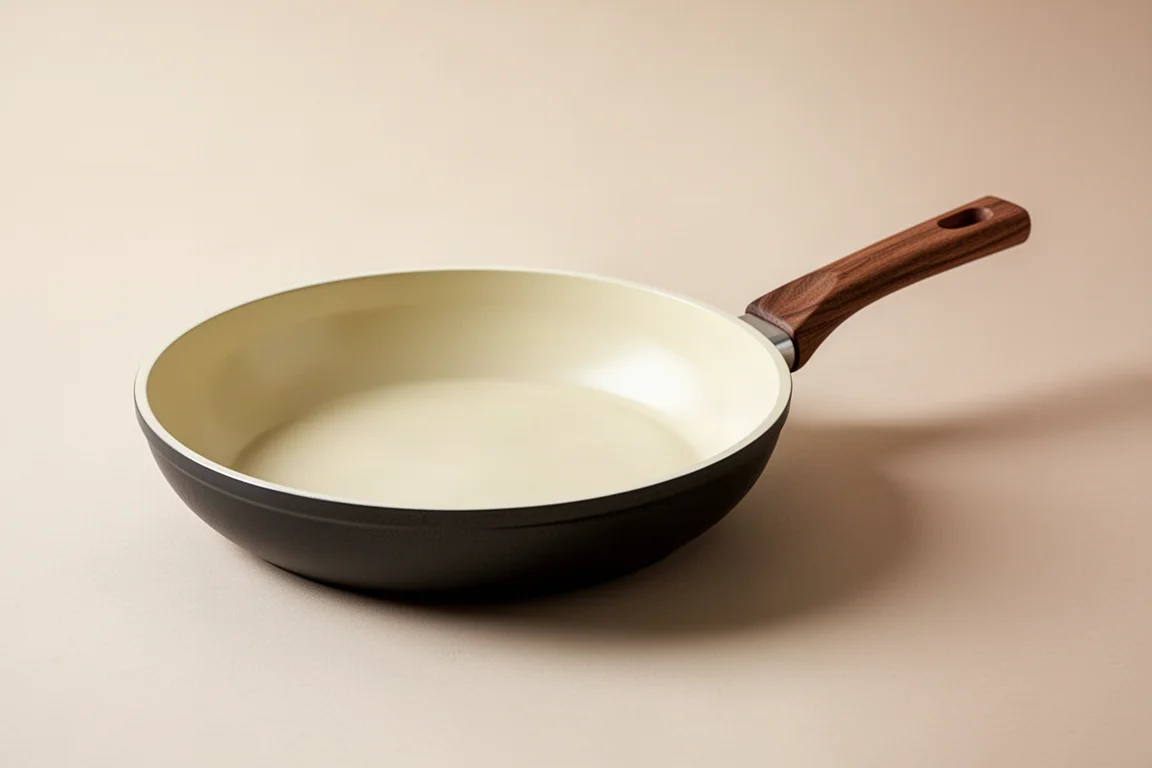
At $35, GreenPan’s healthy ceramic nonstick pan is metal utensil safe, free of PFAS, lead, and cadmium, and designed to heat quickly and evenly. It is made in China and weighs 838 g. A few other mid-priced pans also tested in this bracket and performed respectably, but GreenPan stood out for durability.
Its 148°F temperature spread was one of the weaker showings, but scratch resistance was the best in the entire lineup: no damage at all until the sixth pick finally broke through the coating. Egg release was good but not flawless, holding onto part of the egg after an extra minute of cooking.
Ninja Plasma Ceramic Nonstick Pan
Priced at $50, this pan is pitched at cooks who describe themselves as accident prone. Its plasma ceramic particles are superheated at 30,000°F during manufacturing and fused to the surface, creating an extremely hard texture, and it is oven safe up to 500°F. It is made in China and, at 1,036 g, was the heaviest pan tested to that point.
Performance was excellent. Its 70°F temperature spread tied for the best of the mid-pack, the pancake cooked evenly with no visible hot spots, the egg lifted away effortlessly, and the cheese marshmallow came out possibly the best-looking of the whole test.
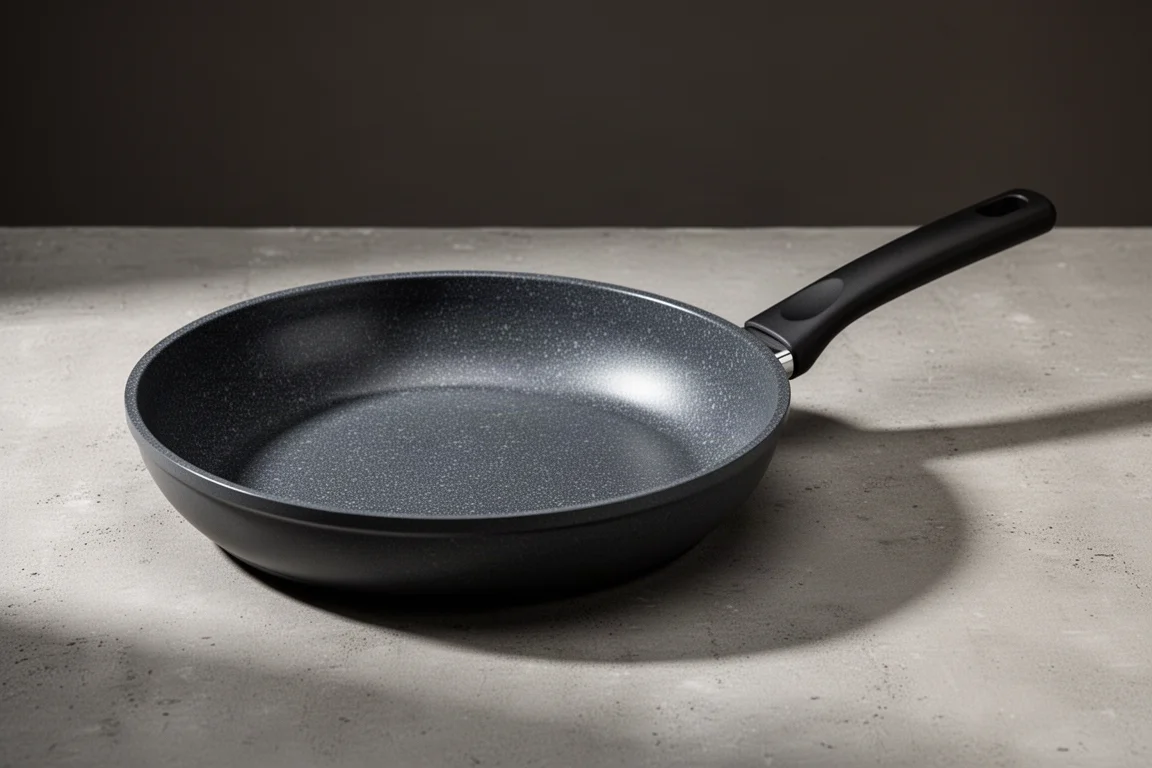
Anolon Nonstick Pan
At $50 as well, Anolon claims its pan lasts 16 times as long as traditional nonstick, heats fast and perfectly uniformly, and is twice as hard as stainless steel. It is oven safe up to 400°F and made in Thailand. It was the heaviest pan in the showdown.
Its roughly 107°F temperature spread placed it about 30 to 40°F behind the top four brands, and the pancake did not cook quite as evenly as the leaders. Nonstick performance was still very good throughout, though, with the egg and cheese marshmallow releasing easily, and the scratch test revealed a soft coating that took major damage from the third pick.
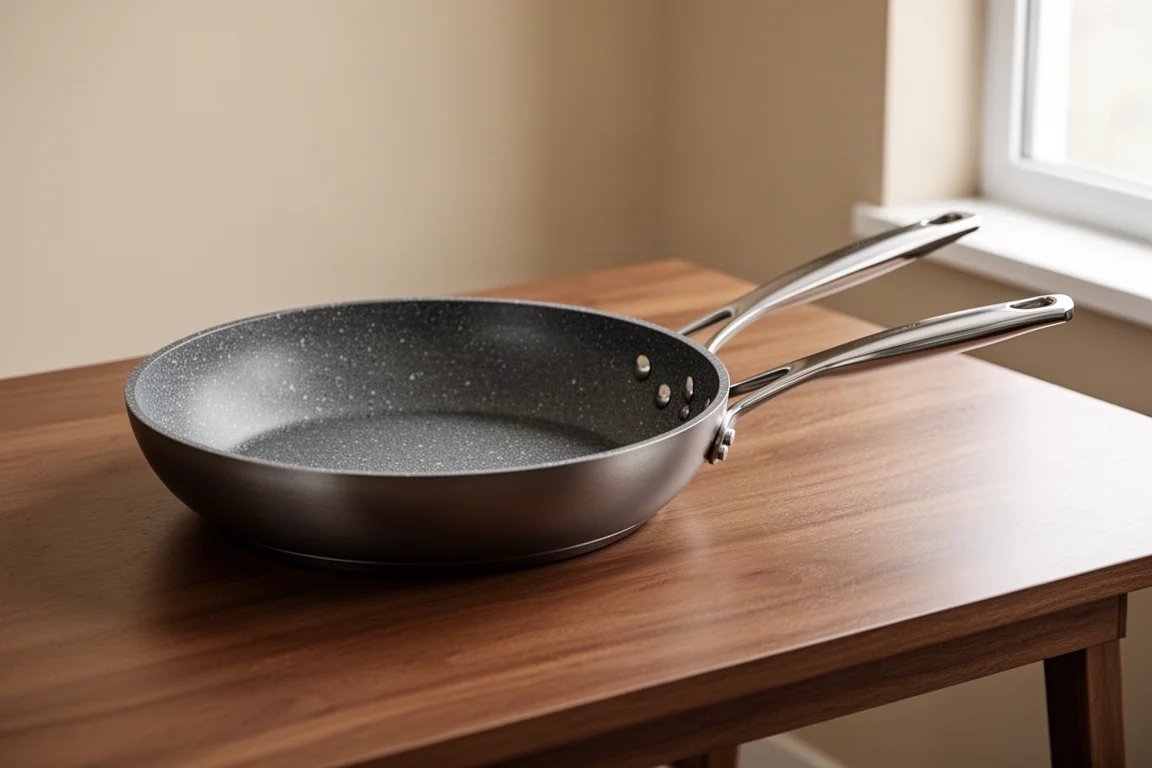
Caraway Nonstick Pan
At $86, Caraway markets a non-toxic, eco-friendly pan that promises slide-off eggs and easy pancake flips, oven safe up to 550°F and effective on induction, gas, and electric. It is made in China and weighs 1,266 g.
This was the most even heater in the field, with only a 44°F temperature spread from coolest to warmest, and the pancake and cheese marshmallow both came out clean with no stickiness issues. The trade-offs are real, though: it takes the longest to warm up, its water-heating score of 132.0°F was among the slowest, and its coating took significant damage from the fourth pick.
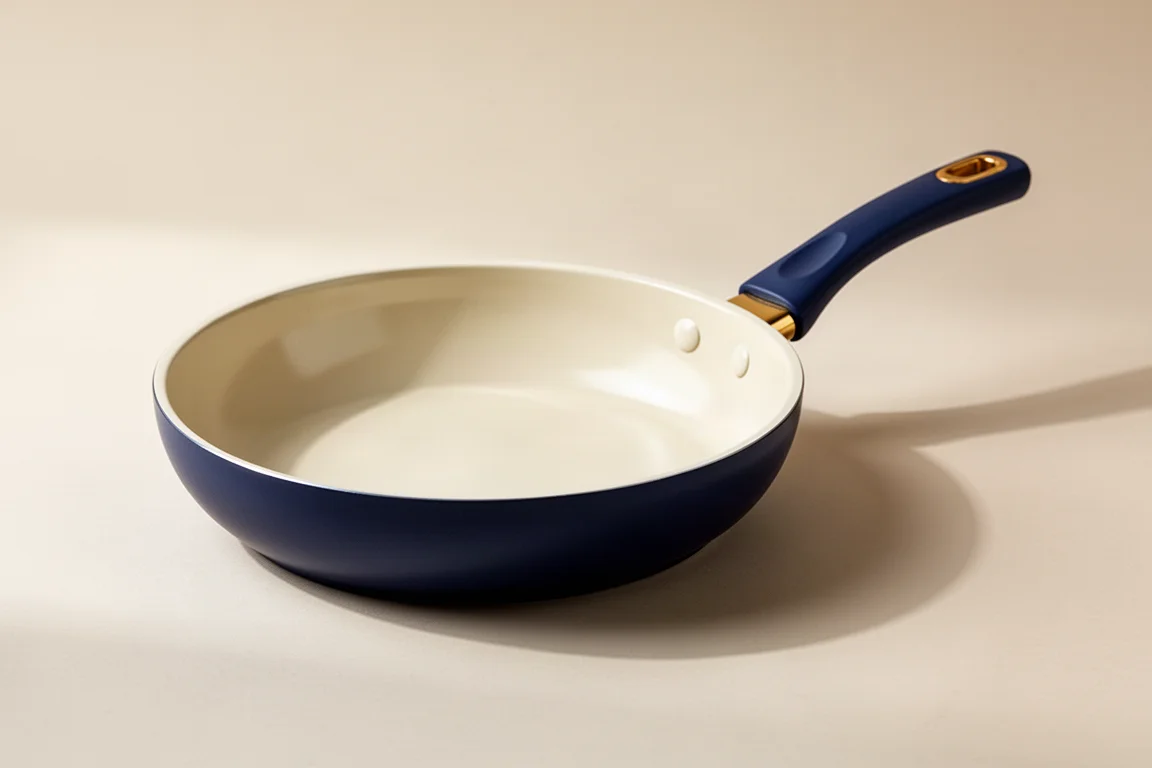
Made In Blue Carbon Steel Frying Pan
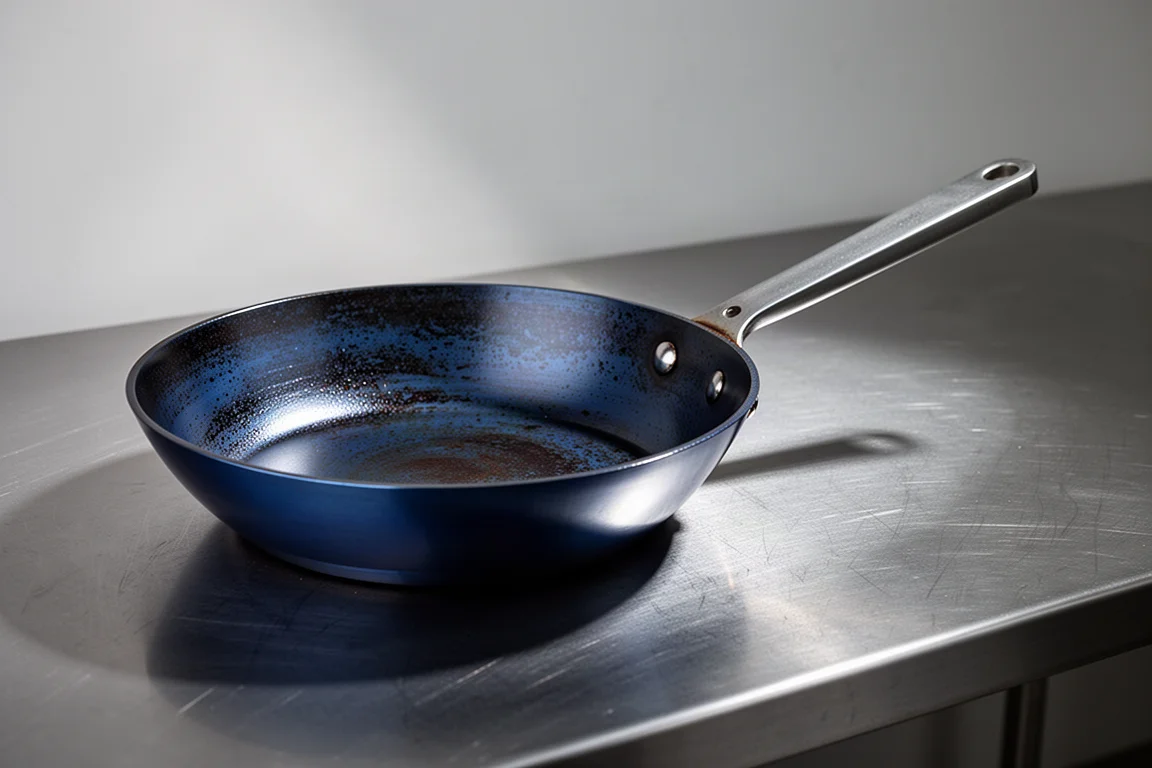
At around $90, the Made In blue carbon steel frying pan is the odd one out, since carbon steel is not truly nonstick. Made In claims it is like cast iron but better, handles heat up to 1,200°F, and combines cast iron’s heat retention with stainless steel’s heat control. It is made in France and was the heaviest pan in the test at roughly 1,480 g, and it was conditioned per the manufacturer’s instructions before testing.
Fairness matters here: carbon steel behaves differently from coated nonstick. Even so, it struggled badly in the coated-pan tests, with a 268°F temperature spread that burned and stuck the pancake, an egg test that had to be ended early, and cheese that welded to the surface. It did win the thermal efficiency test, heating water to 186.1°F in five minutes, the fastest of any pan.
Imark Nonstick Cast Iron Skillet
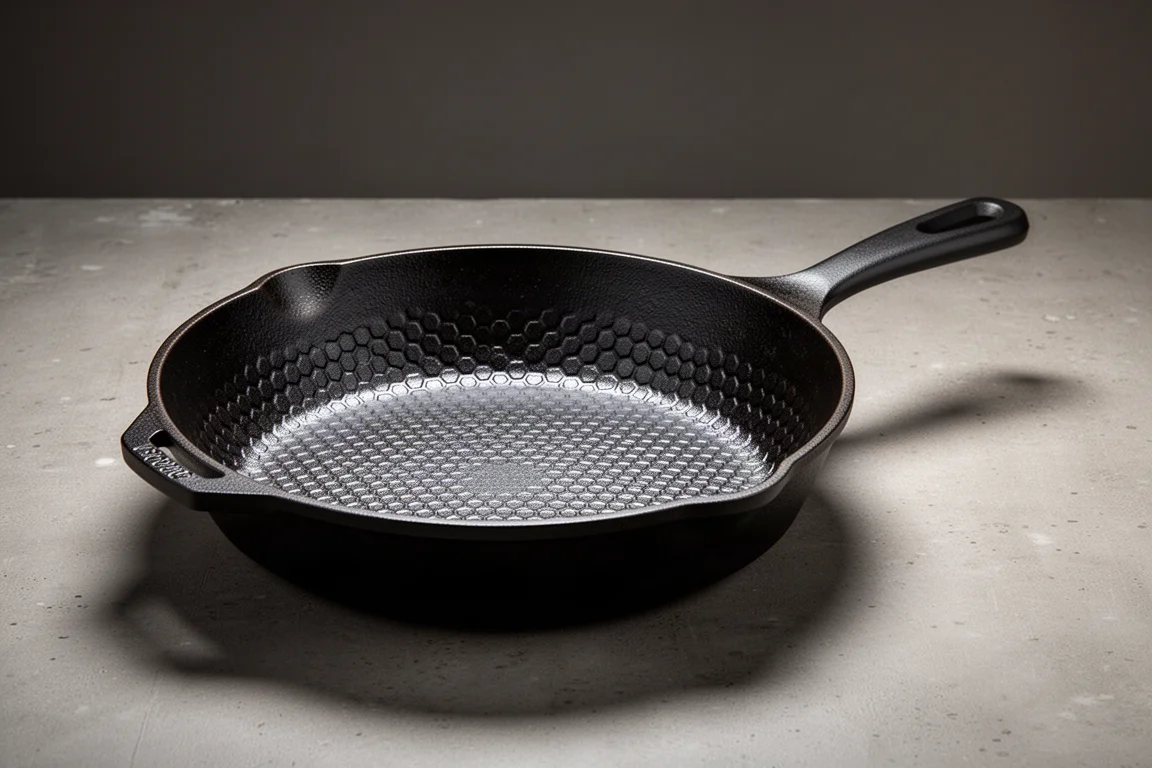
At $120, the Imark is a nonstick cast iron skillet with a stay-cool handle and honeycomb nonstick technology, claimed to be scratch proof and rust proof. It is designed in California but made in China, and weighs 1,366 g.
It beat the carbon steel pan comfortably with a 101°F temperature spread, but it still trailed most of the coated nonstick field. The pancake did not stick, the egg lifted easily, and its textured surface released the cheese marshmallow fine once the flip technique cooperated. Scratch resistance was solid at the third pick, though the fourth cut deep into the coating.
HexClad Hybrid Nonstick Skillet
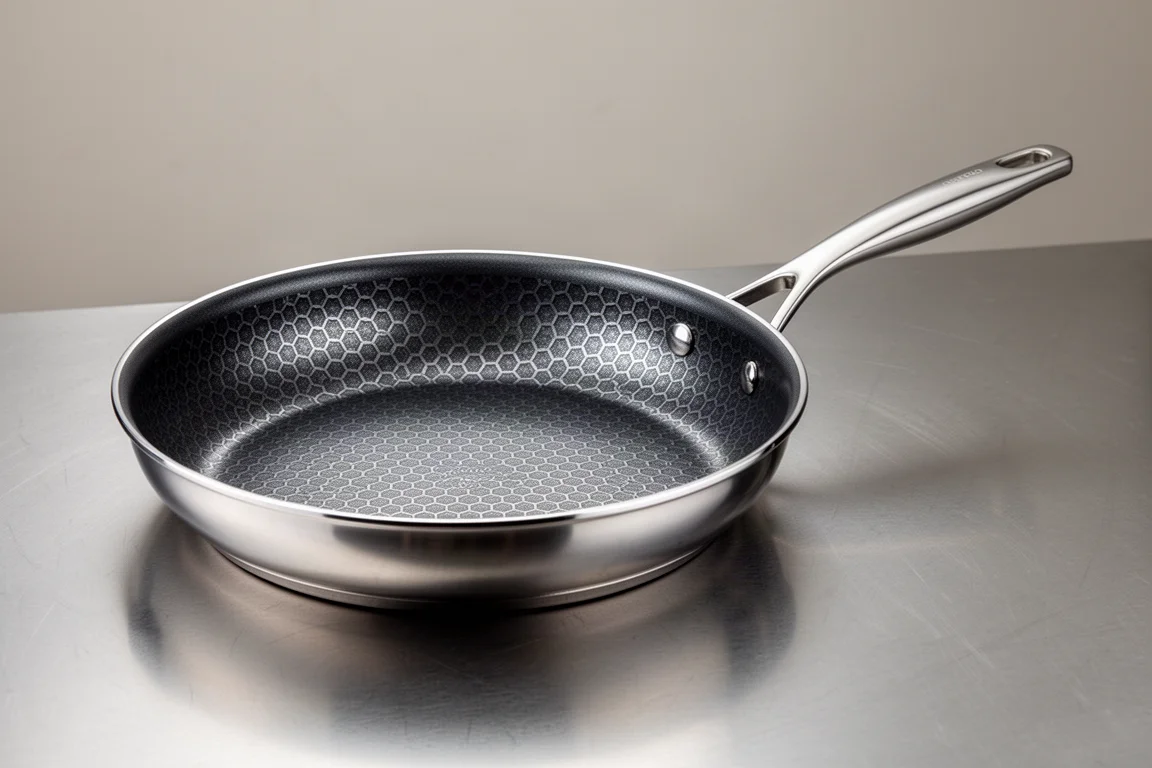
The most expensive pan tested at $185, HexClad uses a patented hybrid technology with tri-ply construction, aluminum between two layers of stainless steel, plus a textured cooking surface. It has a stay-cool handle, is dishwasher and oven safe up to 500°F, and is induction ready and compatible with all cooktops. It is made in China and weighs 1,136 g.
Despite the premium price and the tough-sounding name, the coating proved buttery soft, taking major damage from the third pick. Its temperature spread of nearly 167°F was one of the worst, and the pancake did not cook as evenly as the leaders. Nonstick release was good but required noticeably more effort than the best performers, with the textured bowl-shaped surface holding cheese in place a bit stubbornly.
Overall Buying Advice
If it is all about value, the GraniteStone Diamond Pro earned top grades in just about every category, including scratch resistance, at a $17 price. The OXO hard anodized skillet also performed very well in most categories and tied for the toughest coating at the fifth pick. The Caraway delivered the most even heat of any pan but is the slowest to warm up and has a somewhat softer coating than GraniteStone or OXO. Scratch resistance tells a clear story too: GreenPan had the hardest coating, surviving until the sixth pick, while several more expensive options scored far worse.
Conclusion
Price does not predict performance in the nonstick pan market. A $17 GraniteStone matched or beat pans costing five and even ten times more on even heating, nonstick release, and scratch toughness, while the $185 HexClad finished near the bottom on heat distribution and scratch resistance. Match the pan to what you actually cook, prioritize an even temperature spread and a hard coating, and you can spend very little and still cook very well.
Further reading
Related Reviews
Kitchen
Vivor Stainless Steel Kitchen Sink Review: A Solid Drop-In Upgrade With One Weak Spot
An all-stainless single-basin drop-in sink with easy-clean rounded corners and a drain-sloped base, at a roughly $200 price point.

Backpacking Gear
Building a 10 lb Base Weight: An Ultralight Backpacking Gear List
A practical walkthrough of the ultralight pieces behind a 10 lb base weight, from a 765 g pack and a roomy one-person tent to a full camp chair and a dependable water filter.
Road Bikes
10 New Road Bikes Worth Watching: Aero, Titanium, Steel and Endurance Standouts
A practical roundup of 10 new road bikes, from aero flagships chasing single-watt gains to titanium, steel and endurance platforms built for real roads.