Cooling Gear
Best Neck Fans and Wearable Air Conditioners: 12 Models Tested and Ranked
We put twelve neck fans and neck air conditioners through noise, airspeed, vibration, comfort, runtime, and charging tests. Here is how they stack up.
Introduction
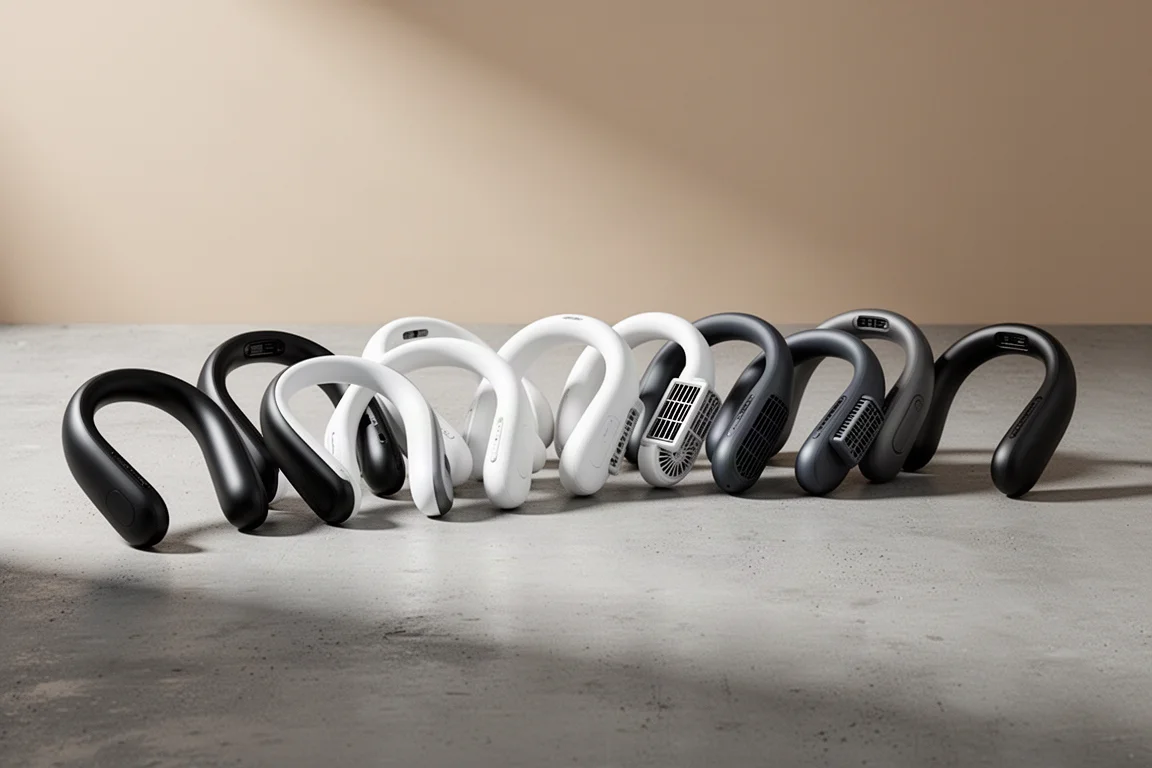
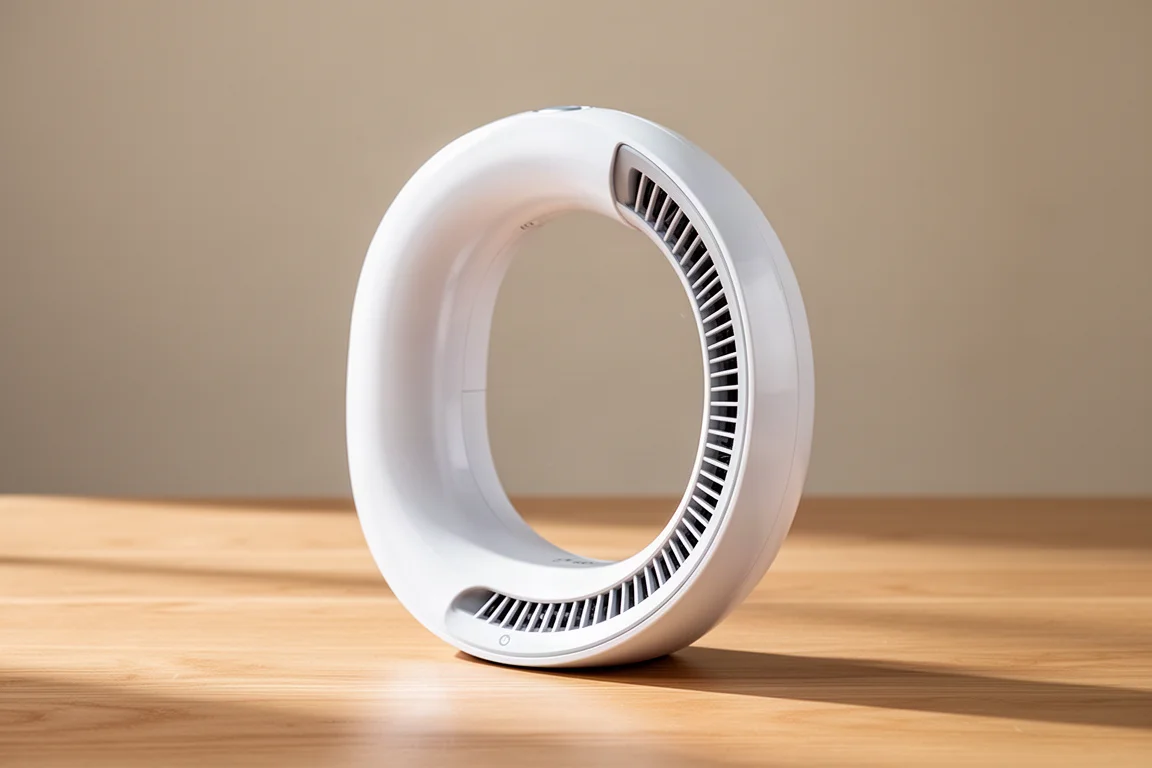
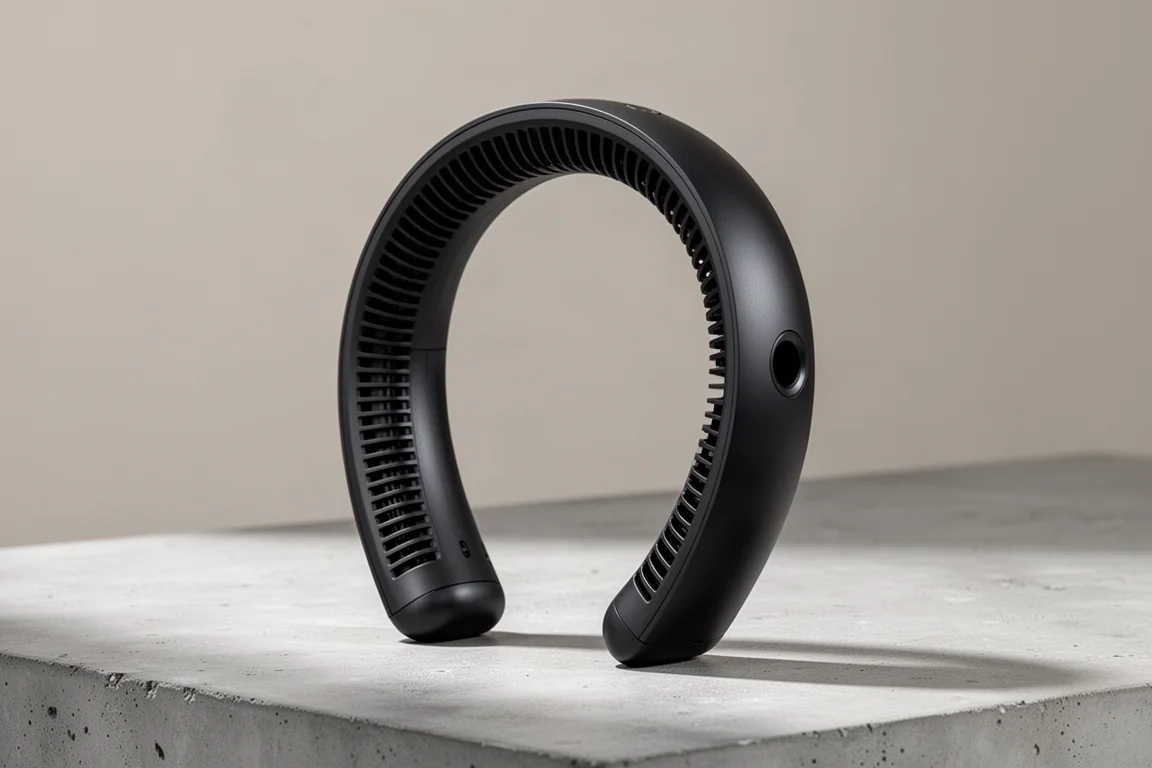
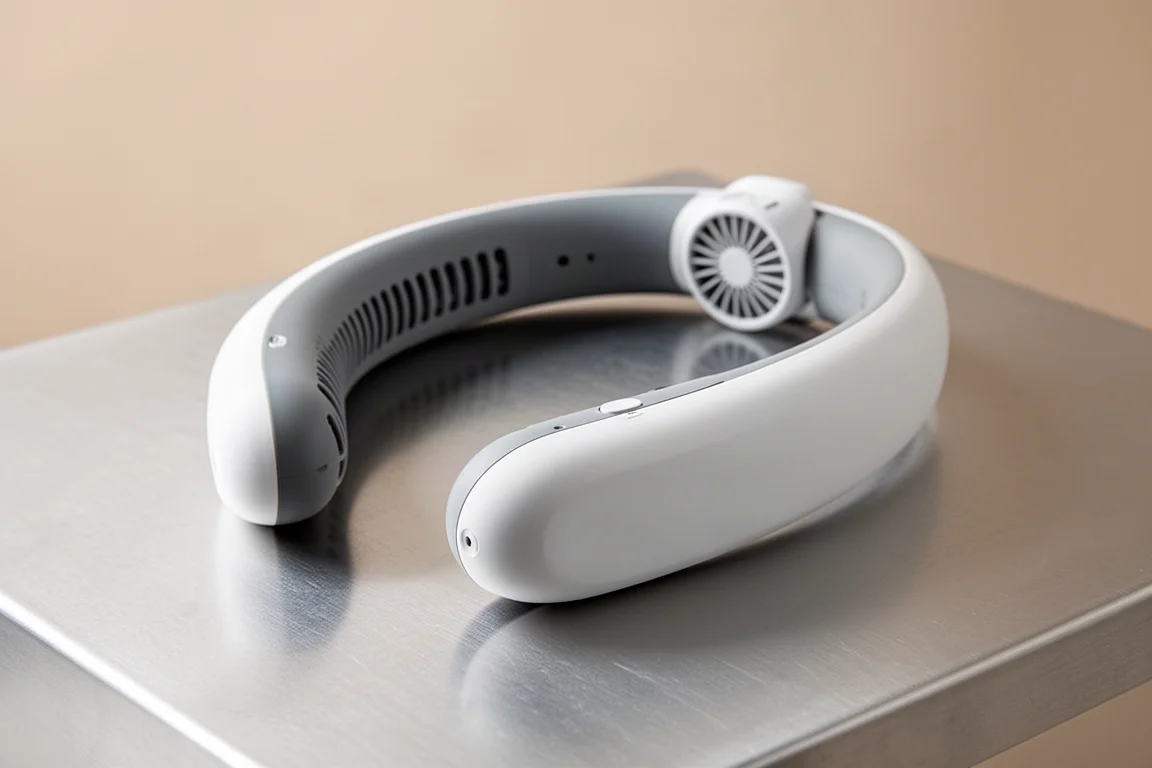
Neck fans and wearable air conditioners have quietly become one of the most popular ways to beat the heat without touching your thermostat. But with prices ranging from roughly $15 to $280, the obvious question is whether any of them actually deliver. To find out, we compared twelve models on noise, airspeed, vibration, hair safety, comfort, real-world runtime, and charging speed. Some of these units are simple neck fans; a few claim to be genuine neck air conditioners with active cooling plates. The results were more interesting than expected.
How We Tested
Each unit was fully charged and evaluated on its highest fan speed unless noted. We measured decibel output at low, medium, and high settings, airspeed in feet per minute at multiple points around the head and neck, vibration in millimeters per second, and total runtime until the battery drained. Charging speed was measured with a powerful 40-watt charger, though none of the units ship with a charger in the box, so real-world charging will vary with your own equipment.

Comfort and perceived cooling were scored subjectively, and hair safety was assessed by looking at how easily hair could reach the fan blades through the air inlets. Units with small-hole air inlets performed far better than those with large cutouts or slots.
Noise Test: Jisulife Sets the Benchmark
Noise separates good neck fans from annoying ones, and the differences are significant. On the lowest setting, the Jisulife made the least noise at just 50.1 decibels. The Torras followed at 53.6, and the FR Sara and COM LIFE tied for third at 54.9.
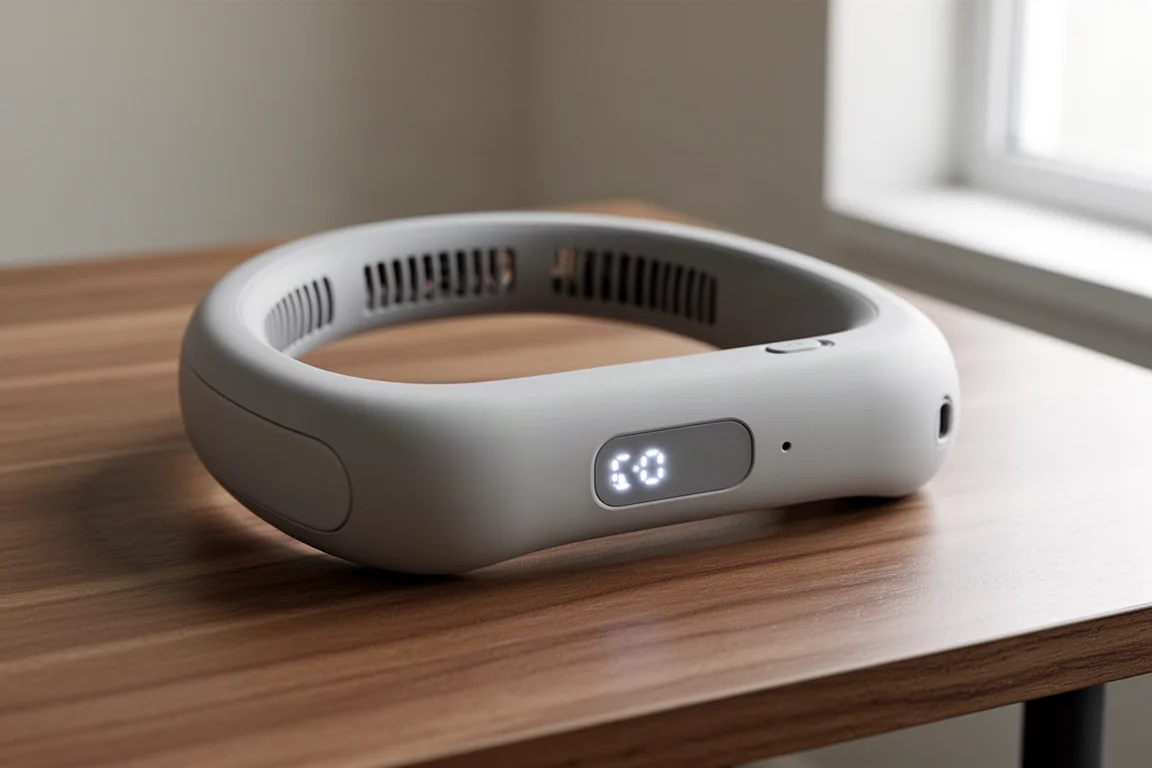
On the highest speed, the Jisulife again led at 64.6 decibels, with the Scurry second at 65.8 and the Torras third at 68.2. At the other end, the FR Sara peaked at 74.6 decibels and the AJGJF hit a lineup-worst 76 decibels on high. If quiet operation matters to you, the Jisulife is the standout here.
Airspeed Test: ChillGo Runs Away With It
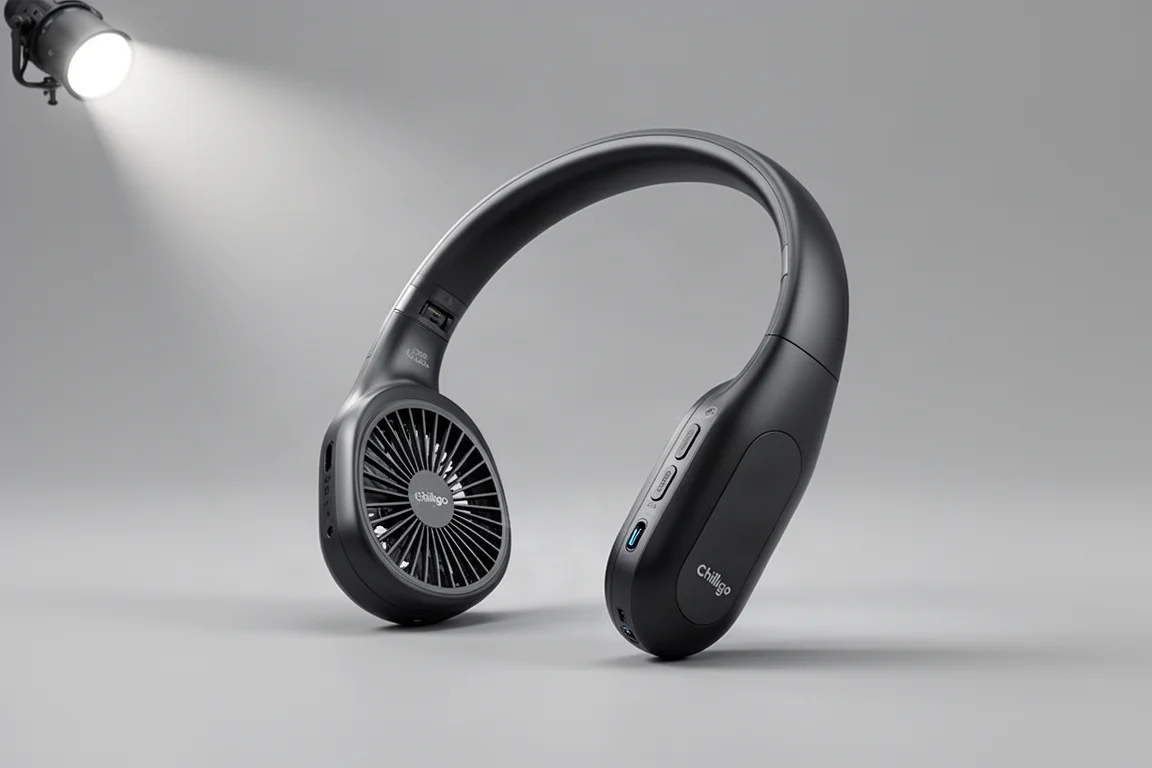
Measuring airspeed at the ears, mustache, and back of the neck revealed huge gaps. After summing the readings across five measurement points, the ChillGo came out on top with a cumulative score of 2,518, and its adjustable airflow angle proved to be a genuine advantage. The Torras finished second at 2,070 and the Sweetfull third at 1,987.
On raw maximum airspeed at the highest setting, the ChillGo recorded an outstanding 1,789 feet per minute, nearly double most of the field. The Amacool hit 1,077 for second place and the Torras 1,058 for third. The AJGJF struggled badly at just 375.
Neck Air Conditioners: Cooling Plate Comparison
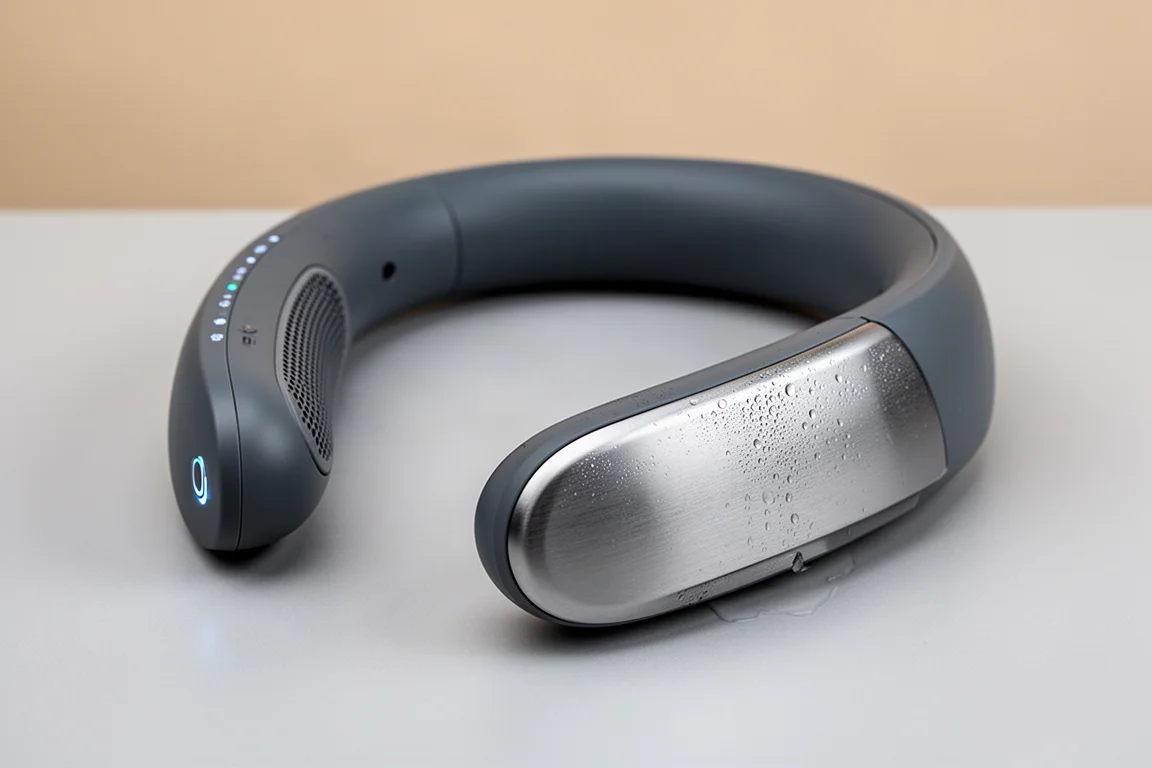
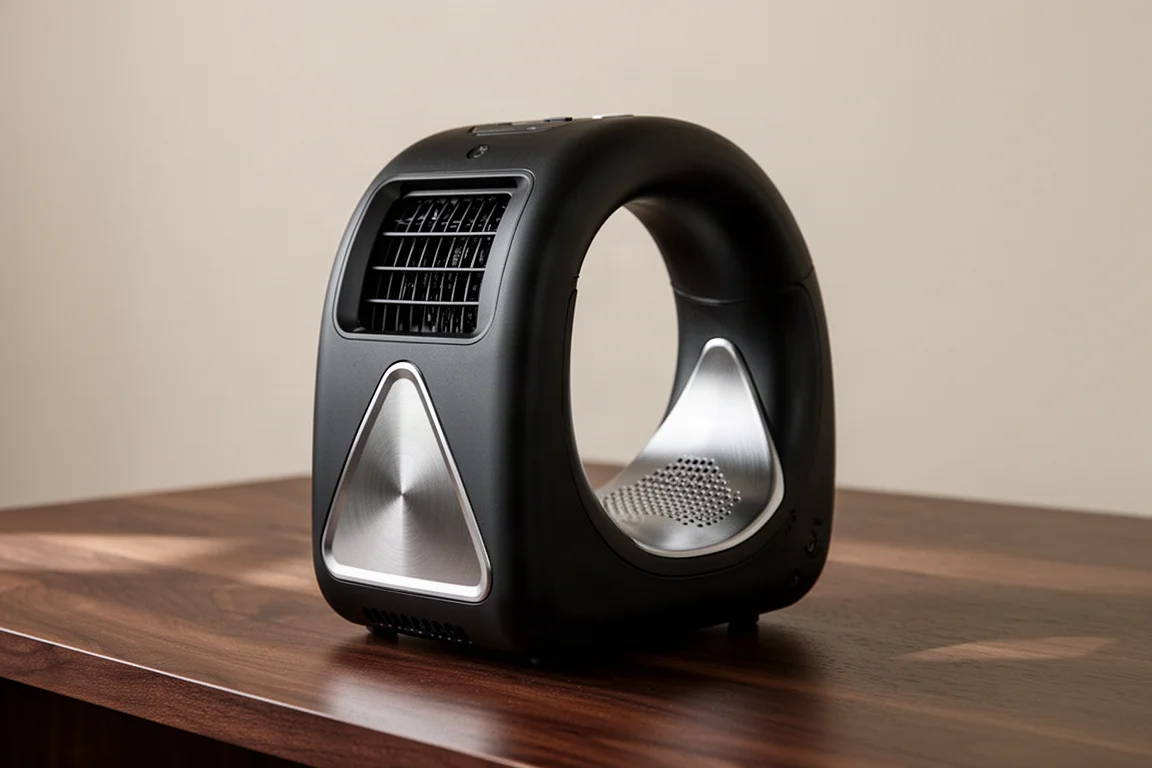
Four units claim active cooling: the AJGJF, DATOY, COM LIFE, and Torras. The AJGJF’s 2.75-inch-wide cooling plate ranged from about 55 degrees at the center to 62 at the warmest point. The DATOY’s triangular plate measured between roughly 65 and 72 degrees.
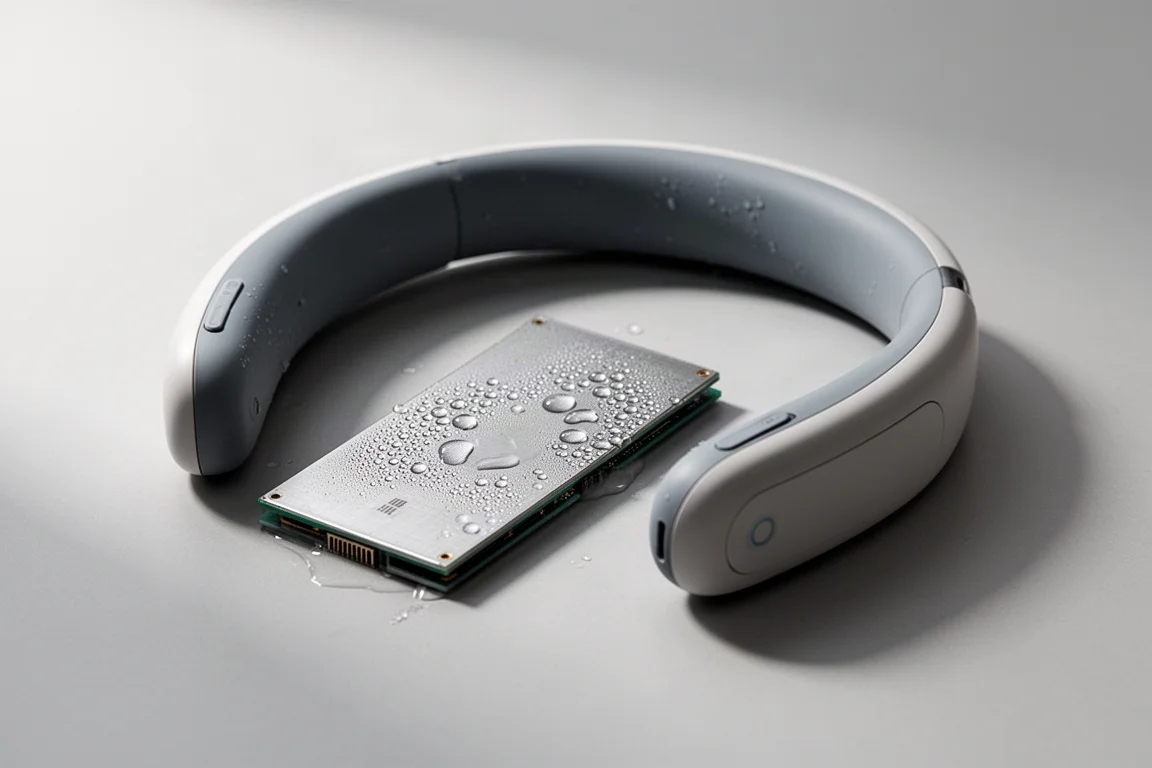
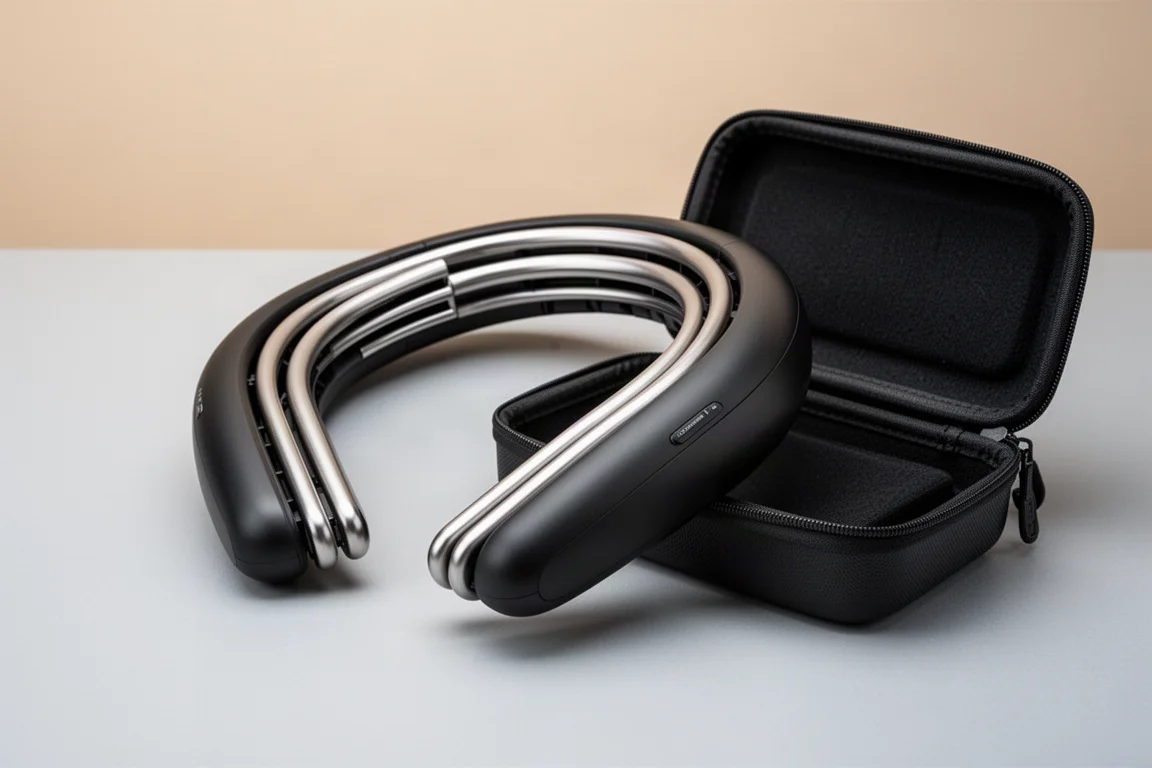
The COM LIFE takes a different approach with two large cooling panels totaling 9 inches in length that wrap around most of the neck, ranging from 63 to 69 degrees. The Torras offers the largest cooling surface at around 14 inches total, ranging from 64 to 70 degrees. For subjective cooling performance, the Torras earned the best possible rating, with the ChillGo and DATOY tying for second. Notably, the ChillGo achieves its cooling purely through strong, directed airflow rather than a cooling plate.
Vibration and Comfort
Vibration matters more than you might expect, because it directly affects how comfortable a fan feels over long sessions. The Torras topped this test with vibration too low to measure. The COM LIFE followed at 0.36 mm per second and the Jisulife at 0.38. The OLV Turbo was the worst offender at well over 2 mm per second, which is very noticeable when worn.
Half of the brands earned a very good comfort rating. For the rest, vibration or an awkward shape was the main complaint. On hair safety, the ChillGo and COM LIFE received the best possible rating, since it is nearly impossible for hair to reach the fan.
Runtime Test: Jisulife Lasts Nearly 5 Hours
With every fan fully charged and set to the highest speed, and the air conditioners on their highest cooling setting, the results were revealing. The COM LIFE died first at just under 2 hours, followed by the Scurry at 2 hours 7 minutes and the DATOY at about 2 hours 8 minutes. The Torras drained in 2 hours 15 minutes, the ChillGo at 2 hours 47 minutes, and the AJGJF just over 3 hours.
The Siv Power and OLV Turbo quit around 3 hours 28 minutes, the Amacool at 3 hours 42 minutes, and the FR Sara at 4 hours 5 minutes. The Sweetfull lasted 4 hours 9 minutes. The Jisulife won comfortably at 4 hours 52 minutes, more than double the runtime of several competitors.
Charging Speed
None of the neck fans include a charger, only a USB cable, so we measured maximum charging speed with a 40-watt charger. The Torras was the fastest at 12.8 watts, followed by the AJGJF at 8.77 watts and the ChillGo at 8.66 watts. The Torras also claims a 0 to 80 percent charge in just 1.2 hours.
The Budget and Mid-Range Picks
The Strong All-Rounders
The Air Conditioner Tier
The Premium Option
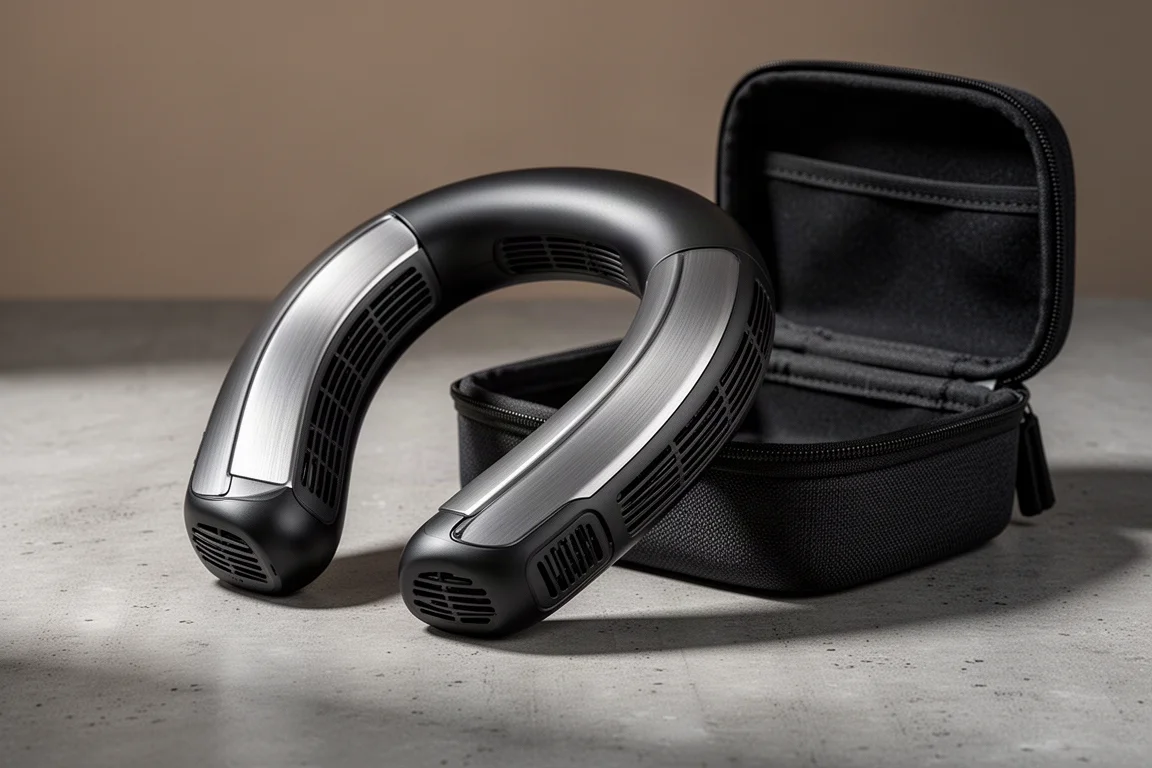
The Torras Coolify Cyber Ultimate is the most expensive and heaviest unit in the lineup at $280 and 508 grams, but it also posted the best overall score with an average ranking of 2.7. It performed very well in nearly every category, offers app control, six upper and two lower air vents, a 6,000 mAh battery, 20-watt charging, and a generous 14-inch cooling plate. Its main weaknesses are price, weight, and a mediocre 2 hour 15 minute runtime at maximum settings. If budget is not a constraint and you want the best cooling experience available, this is the one.

Buying Advice: Which One Should You Buy?
If we had to pick a single winner, it would be the ChillGo. At under $30 it is very affordable, its foldable and adjustable design lets you direct airflow exactly where you want it, and its fan is remarkably powerful, posting the best airspeed numbers of the entire test. The Jisulife earned a strong third-place finish overall and is the best pick if quiet operation and long runtime matter most, though it moves noticeably less air than the ChillGo or Torras. The Torras is the most impressive performer across the board, but its high price and short maximum-speed runtime make it a luxury purchase rather than an obvious one.
Conclusion
Neck fans genuinely work, and the test data proves it. The ChillGo is the best value overall, the Jisulife wins on quietness and runtime, and the Torras Coolify Cyber Ultimate delivers the most refined cooling experience if you are willing to pay for it. Match the model to your priorities: raw airflow, battery life, or full cooling-plate comfort.
Further reading
Related Reviews

Cooling Gear
Best Waist Fans 2026: 16 Models Tested for Air Speed, Noise, and Value
We tested 16 waist fans across air speed, air volume, noise, durability, and runtime to find the best value picks from $10 to $99.

Backpacking Gear
Building a 10 lb Base Weight: An Ultralight Backpacking Gear List
A practical walkthrough of the ultralight pieces behind a 10 lb base weight, from a 765 g pack and a roomy one-person tent to a full camp chair and a dependable water filter.

Road Bikes
10 New Road Bikes Worth Watching: Aero, Titanium, Steel and Endurance Standouts
A practical roundup of 10 new road bikes, from aero flagships chasing single-watt gains to titanium, steel and endurance platforms built for real roads.