Mountain Bike Lights
Best Mountain Bike Lights: Six High-Output Options for Night Riding
Six mountain bike lights compared on output, beam pattern, run time and mounting, from entry-level picks to a class-leading premium unit.
Introduction
Riding at night is one of the easiest ways to bring something new to routes you already know well. The catch is that in the pitch black you are entirely dependent on your light, so a reliable, easy to operate, high-powered unit matters more than almost anything else in your kit.
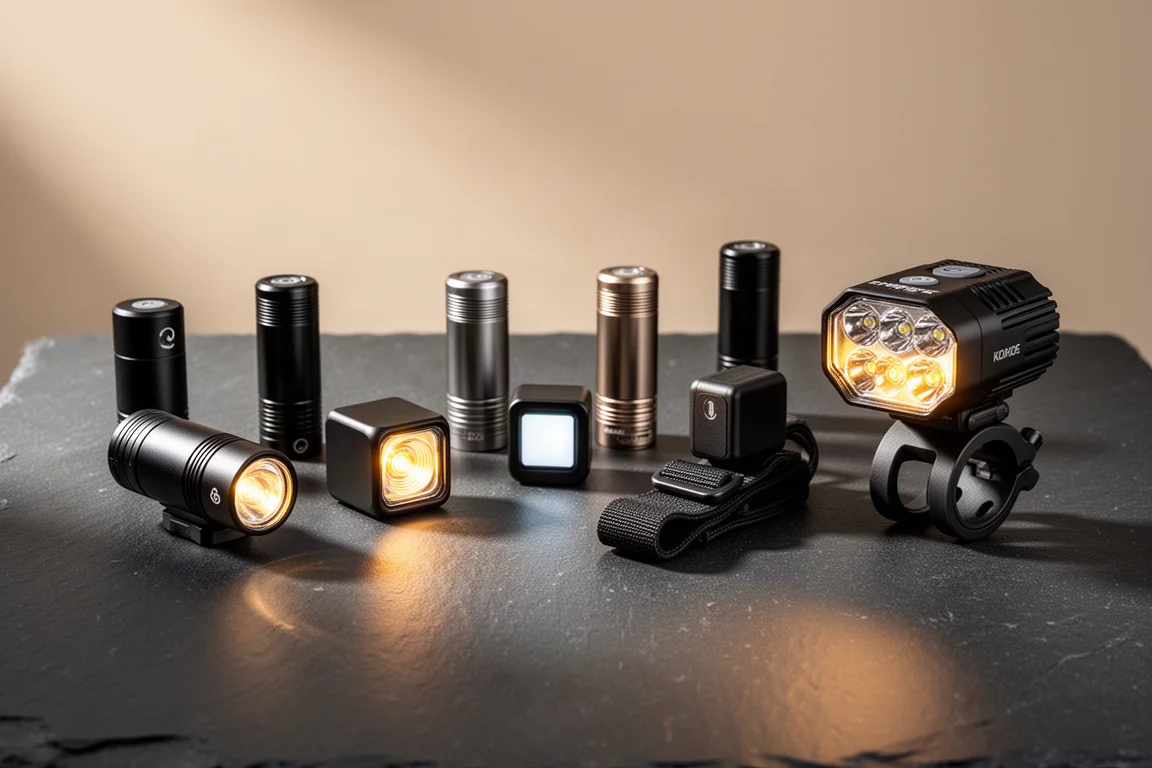
Output claims have climbed quickly. A 4,000 lumen light once seemed remarkable, and the highest claimed figures now run well past 10,000 lumens, roughly the equivalent of four cars running main beam. That kind of power can turn night into day, but it is not automatically what you need. The six lights below cover a wide range of outputs, beam patterns, mounting systems and prices, and each one has been used on real trails rather than judged on a spec sheet alone.
What to Look For in a Mountain Bike Light
Start with output, then work out how much of it you actually need. For blue graded trail centre runs and gentle, undulating singletrack, around 1,500 lumens is a sensible minimum. Step up to 2,000 lumens or more for red graded runs, and budget for at least 3,000 lumens if black lines and rough, technical trails are part of your regular riding.
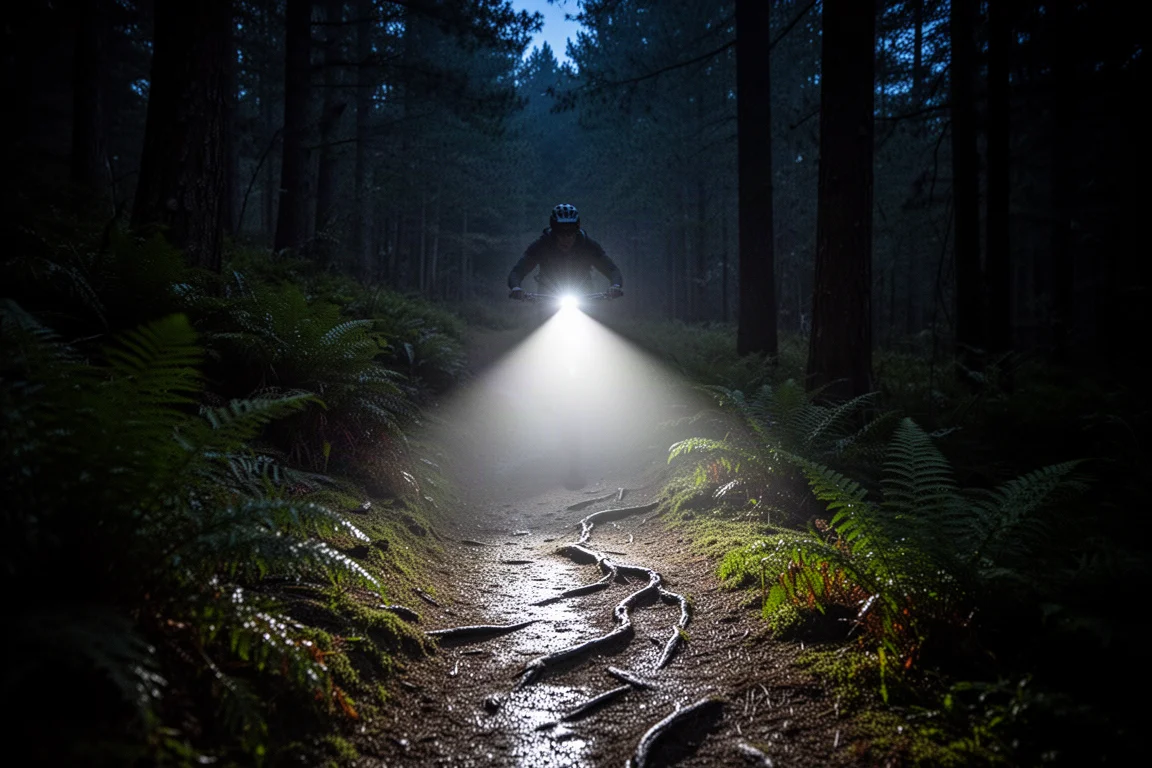
Claimed lumen counts are often higher than what a light delivers in practice, and real run times can differ from the figures on the box, so treat both as a guide rather than a guarantee. Water and dust resistance matters just as much on a mountain bike, and an IP (Ingress Protection) rating is the quickest way to compare how well a light is sealed, with higher numbers indicating better protection.
Beam pattern is every bit as important as raw power, and it comes down to the lens. A spot lens concentrates illumination on a small area, a flood lens spreads it out, and a diffuser softens the light. On the trail, a combination of all three tends to work best, giving a long throw with enough peripheral light to read the ground around you.
Luma Cycles Explorer 2: Balanced Beam, Aggressive Thermal Management
The Explorer 2 is a beautifully made light with an aluminium head unit that gives it a premium, all-round feel. Its beam is powerful and well balanced, reaching long and wide down the trail with a gradual fade to the sides that provides useful context and detail. Plenty of light is cast downward as well, so the ground does not plunge into darkness when you hit a takeoff or a drop, and the gentle green and yellow hue makes trail features stand out.
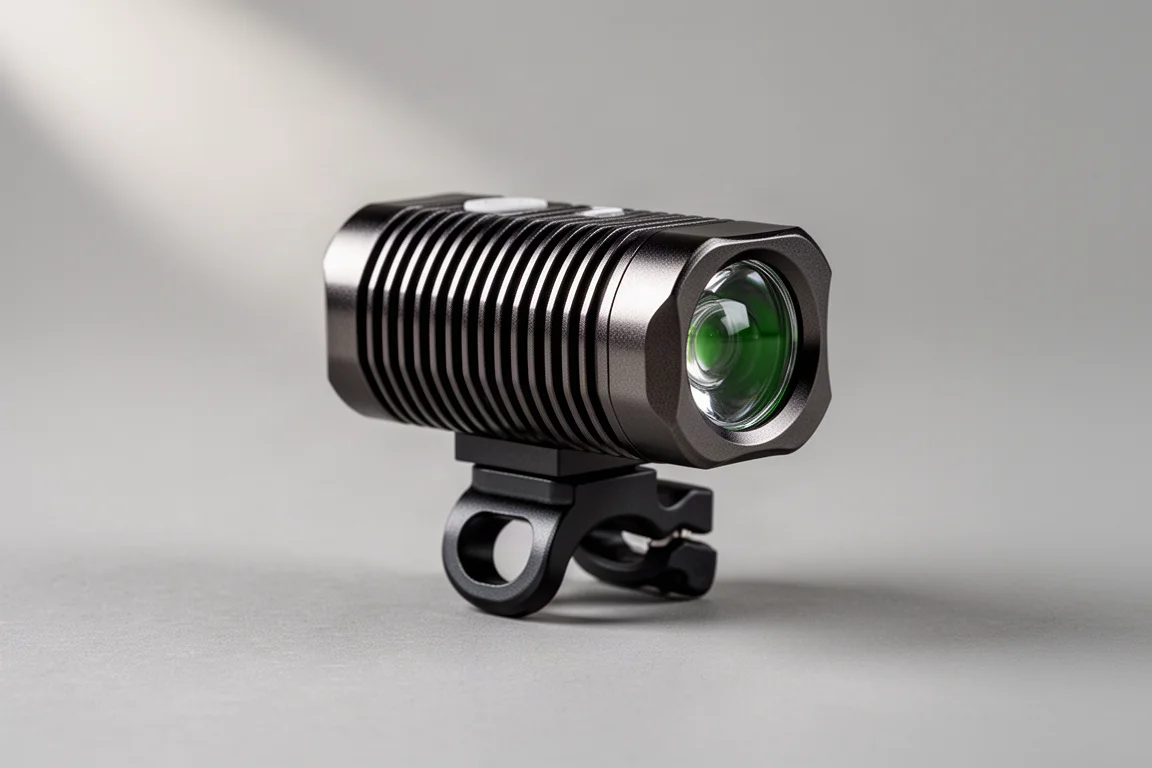
Thermal throttling is the main compromise. It is aggressive, cutting power after only a few minutes in the constant 3,000 lumen mode, and getting the light back to its high output setting means multiple touches of the toggle switch. That switch is tricky to operate while riding. The chunky battery pack also uses a short strap that will not fit around the large down tubes found on e-bikes, which limits how the light can be mounted on some builds.
Gloworm X2: Compact, Waterproof and App-Tunable
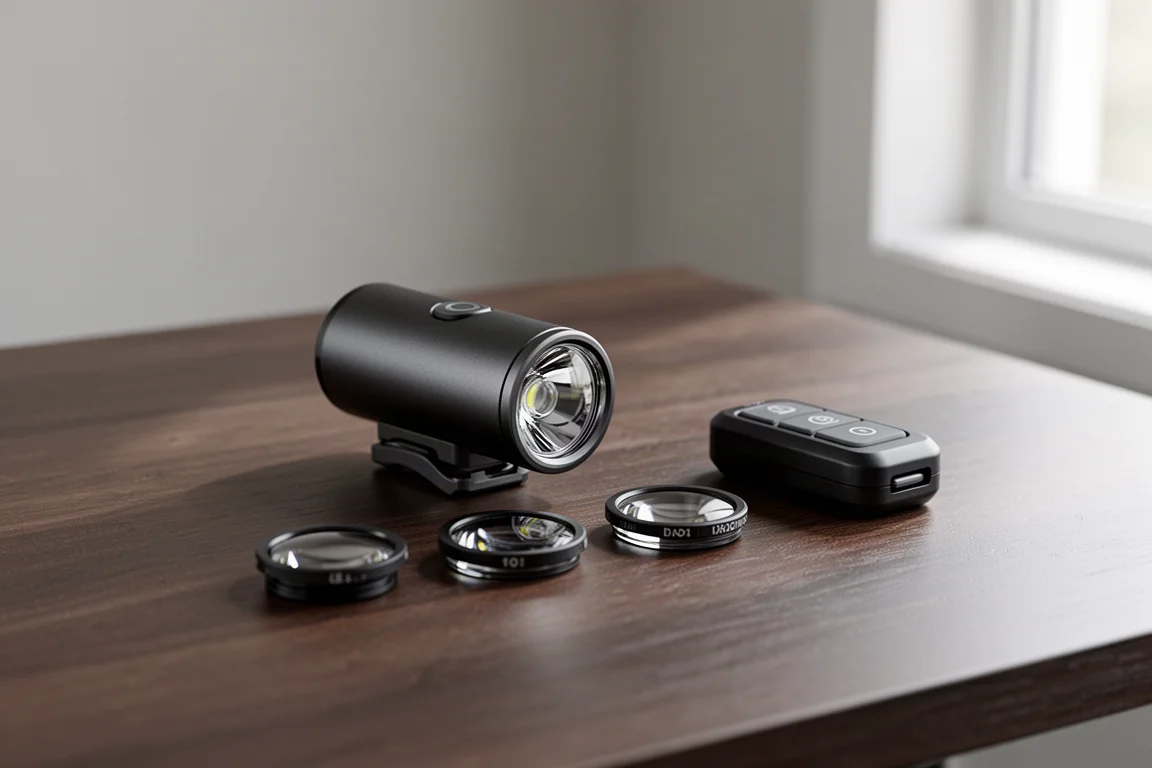
The X2 arrives with an impressively well-made, IP67 rated body, three spare lenses for tuning the beam pattern, and app-based mode customisation. A wireless remote keeps operation simple, and a maximum power burn time of three hours is impressive for a light of this size.
At 2,000 lumens the head unit may look small, but it has ample power for technical terrain. Its gentle green hue and the balance between spot and flood produce a long throw down the trail.
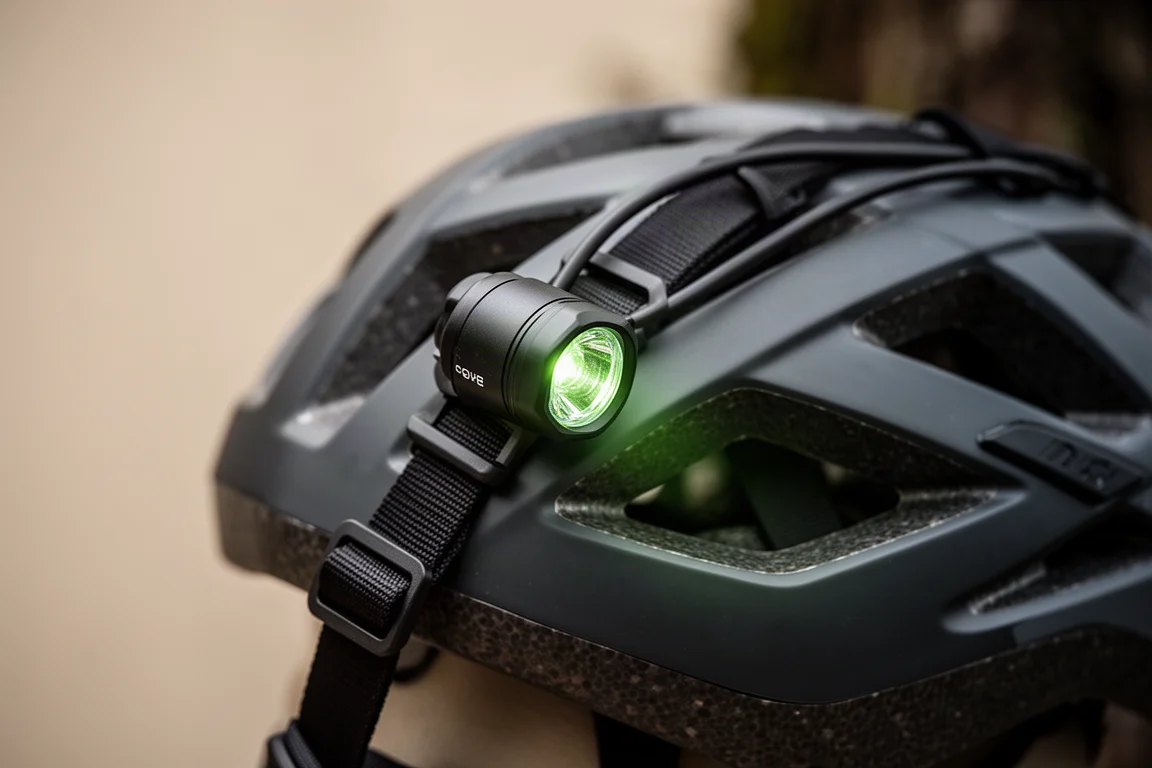
The peripheral beam cut-off is gradual, though the spread could be wider to help pick lines through tight turns, even after swapping lenses. The X2’s mid-level output arguably suits helmet use best, and both velcro and GoPro-style mounts are included. It also works well bar-mounted on straighter, faster trails where a wider spread is less critical.
Lifeline Pavo Motion 3500: All-in-One Value
The Pavo Motion 3500 packs features normally found on far pricier lights into a great all-in-one package. There is no external battery pack and no trailing cable, and the twist lock mount holds the light securely. The beam lights up obstacles and lines well ahead, with a gradual peripheral fade that gives useful context on the trail, and there is enough power to ride rough, technical terrain with confidence.
Motion technology harvests power when you are stationary, and the on/off button doubles as a low battery indicator by changing colour. Mode selection is intuitive, although the colour system itself can be a little confusing.
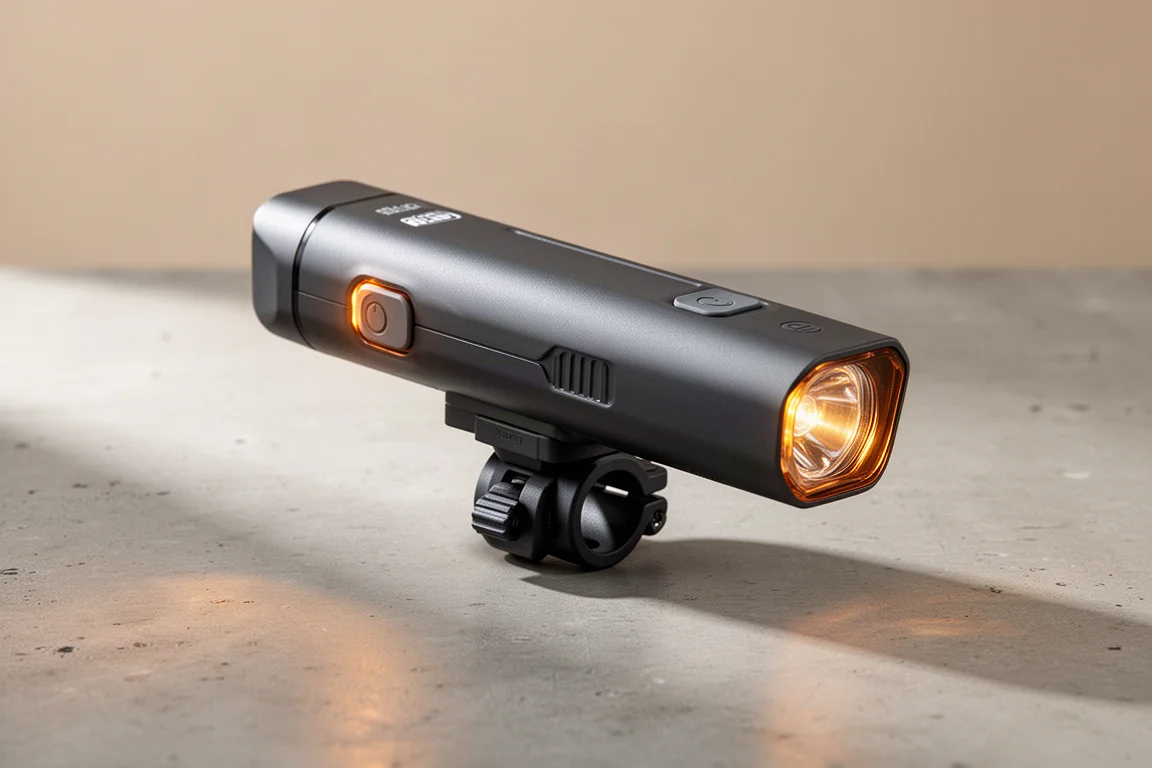
A wider beam spread would help in tight turns, and the yellow-brown hue is a matter of taste, though it does bring out earthy trail tones nicely. For the money, the Pavo Motion 3500 is an impressive performer, and it can usually be found at a substantial discount.
Blackburn Countdown 1600: Confident Power at the Entry Level
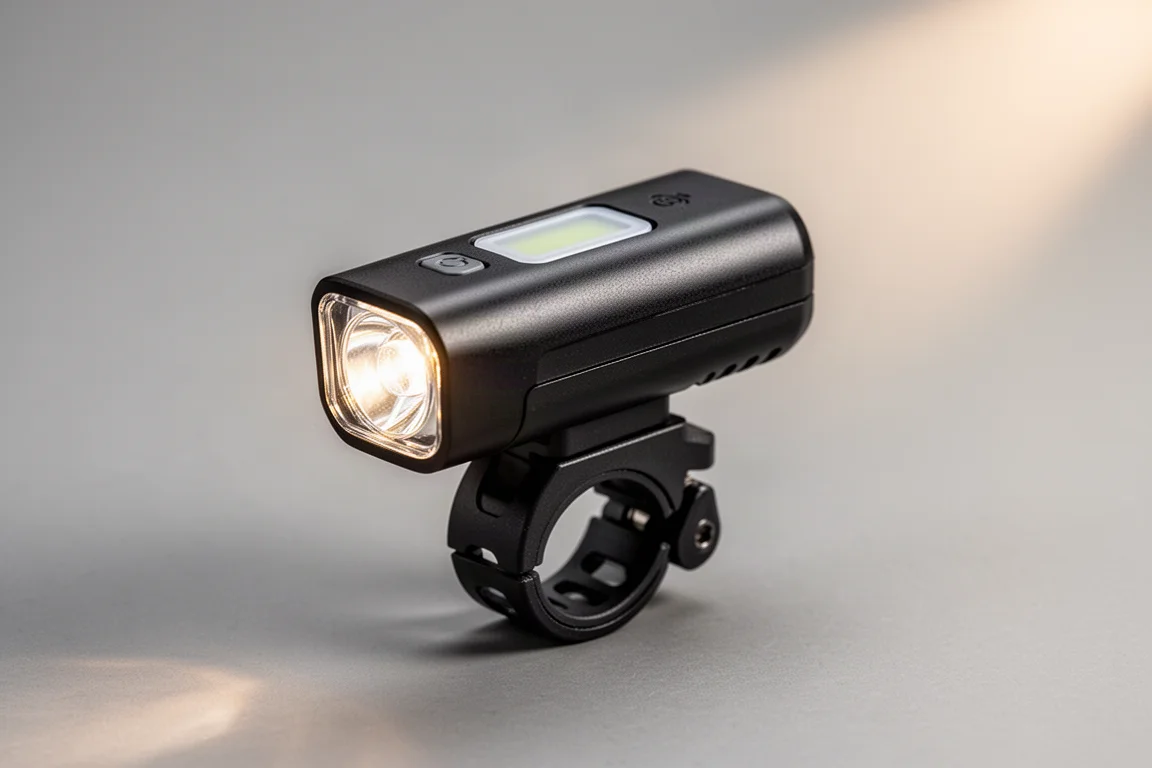
Aimed at adventurous riders, the Countdown 1600 carries the same IP67 waterproof rating as the Gloworm X2 and feels considerably brighter than its claimed 1,600 lumens in the highest Blitz mode. That is enough power for most black graded trail centre runs, and the beam’s white hue, with brown and red highlights, reads trail surfaces well.
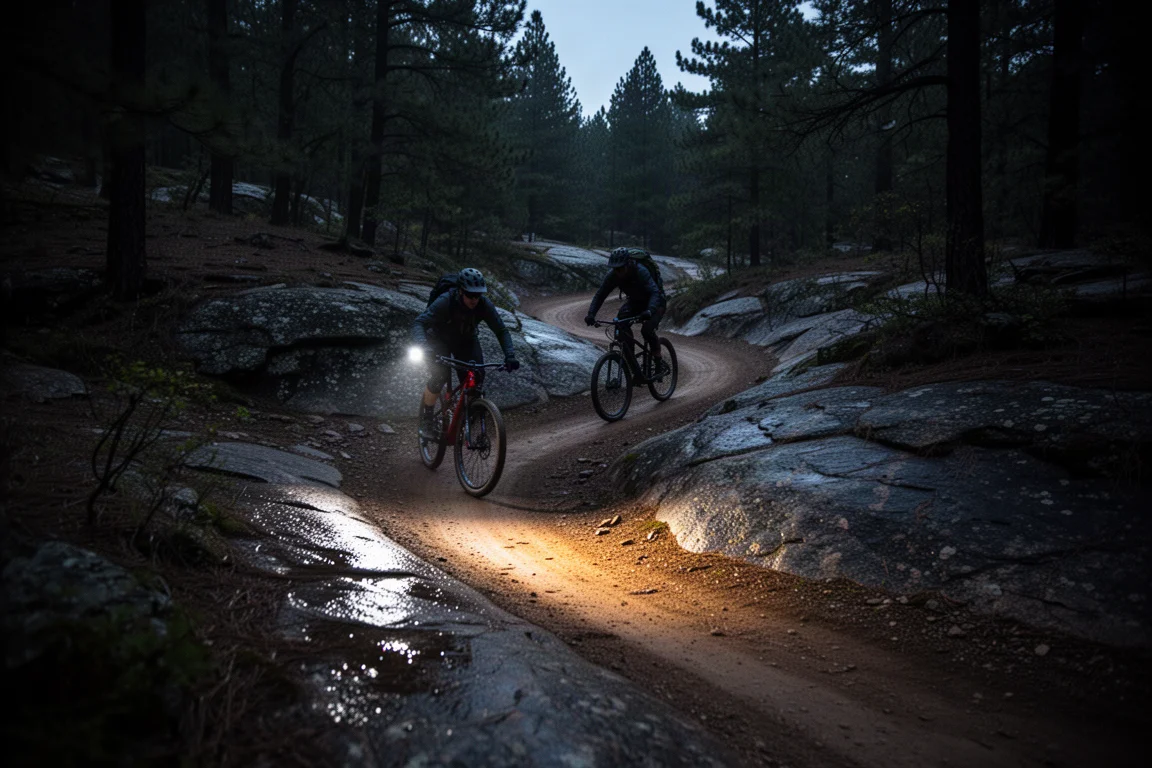
The long throw makes it easy to carry speed on straight sections, but on tight switchbacks the lack of spread and the peripheral cut-off limit confidence. Pairing the Countdown with an affordable helmet light would solve much of that.
The light is definitely easy to use, and the backlit display shows the remaining run time for the selected mode. The interface between light and mount is good, though the plastic clamp is hard to tighten; its narrow width does leave space on the bar for other accessories. Overall this is a great entry-level light with plenty of power for the casual night rider.
Exposure Maxx-D Mark 15: Hands-Off Premium Performance
Exposure has a well-earned reputation for building some of the best lights in the business, and the Mark 15 version of the Maxx-D combines class-leading illumination with top-quality construction and genuinely clever technology.
The Reflex+ mode senses movement and adjusts power output to match the difficulty of the trail. Stop riding or cruise along a smooth section and the light dims slowly so your eyes can adjust; wiggle the bar or hit a bump and it switches to full power instantly. It works so well that manual mode selection becomes pointless, giving an entirely hands-off experience.
There is more than enough power to light up the most technical trails, and it is evenly spread with a gradual fade that provides remarkable context. Run time in the 4,600 lumen Reflex+ mode is a generous three hours. The aluminium body is IP65 rated and backed by a two-year warranty, with the LEDs guaranteed for life. It is pricey, but its performance is worthy of the price tag.
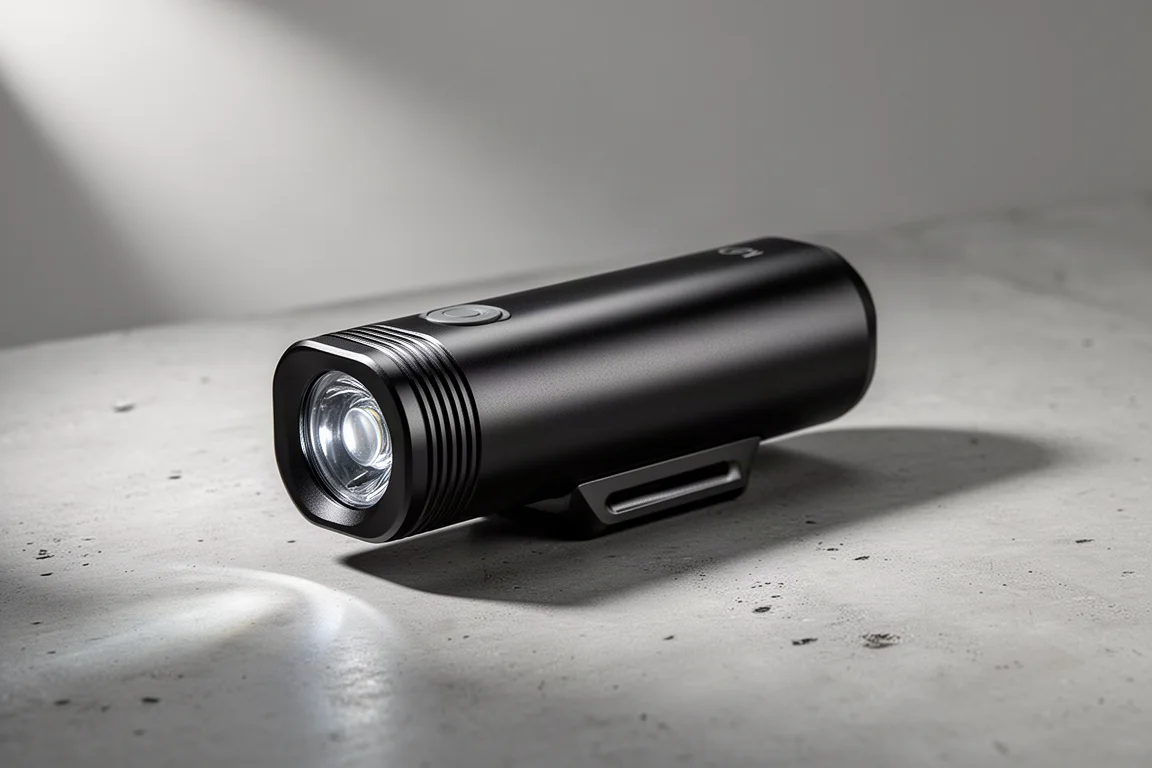
Magicshine Monteer 12000: Maximum Output and Spread
The Monteer 12000 blows the competition away with unrivaled power and a massive beam spread, turning night truly into day. It lives up to its headline claims: an incredible amount of well-distributed light is pumped out, giving brilliant on-trail context and a serious boost in rider confidence.
The throw is immense, illuminating the sides of the trail and around corners, and the soft hue is easy on the eyes. Despite the headline output figures, a superb two-hour maximum power run time can be extended by dropping to lower modes that still project plenty of light.
The head unit and hefty 900 g battery are impact resistant and IPX6 rated, and the sturdy twin clamp mount offers tool-free angle adjustment. Smaller details stand out too: a lid mount is included, there are charge indicators on the light, the battery and the Bluetooth remote, and an app allows output and mode customisation.
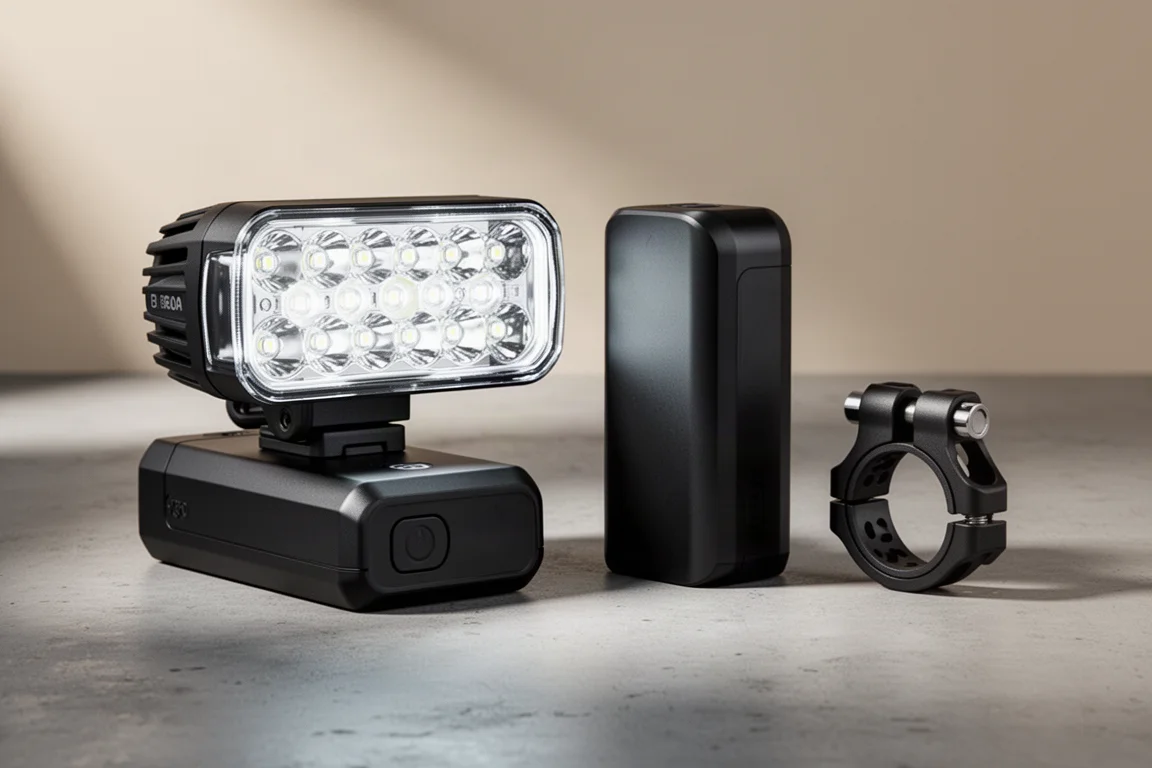
Buying Advice
If money is no object and you want high-tech features, the Exposure Maxx-D Mark 15 is a fantastic product. For outright power and beam spread, the Magicshine Monteer 12000 trumps all, and if you ride the most technical trails it is the top pick. For the cost-conscious rider, the Blackburn Countdown 1600 is a great bet.
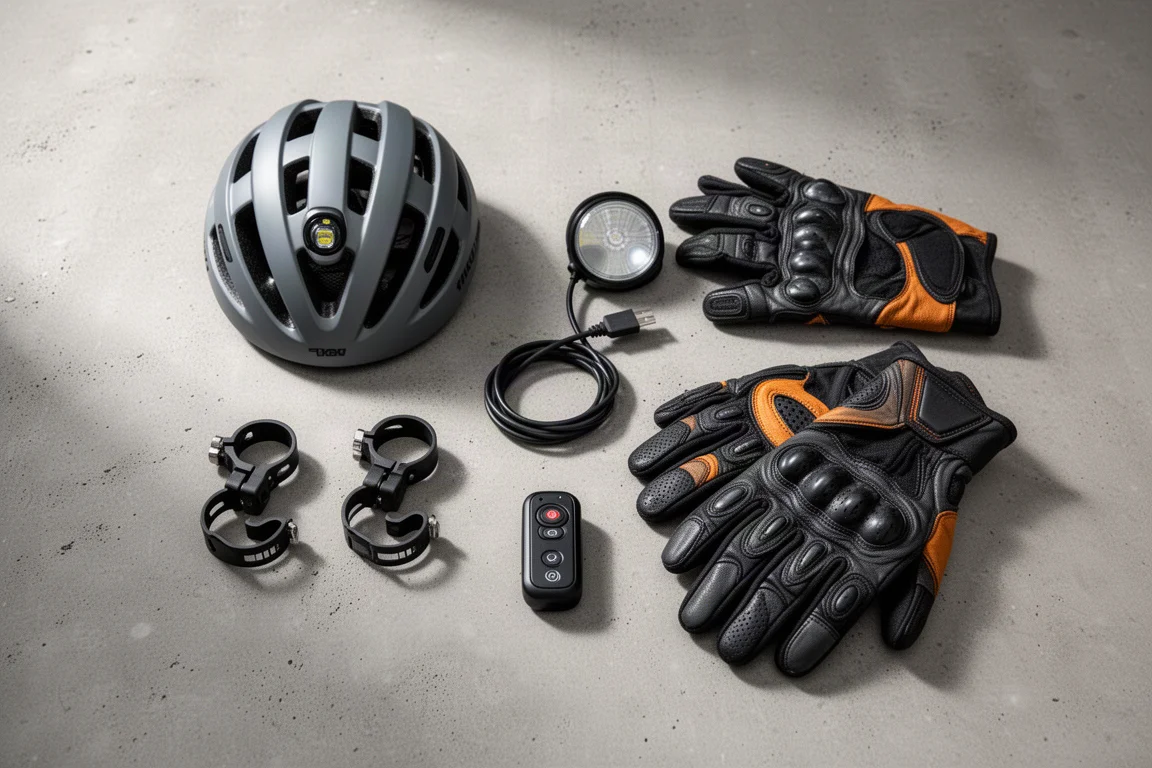
The Gloworm X2 makes sense if you want a compact, waterproof unit you can tune through an app, and its mid-level output pairs particularly well with a helmet mount. The Lifeline Pavo Motion 3500 is the strongest all-in-one value here, especially when it is discounted, and the Luma Cycles Explorer 2 rewards riders who want a beautifully made light with a balanced beam, provided the aggressive thermal management and the battery strap do not get in the way.
Conclusion
There is no single best answer here, because the right light depends on where and how you ride. Work out the terrain you ride most often, match the output to it, then weigh beam pattern, run time and mounting against what you are willing to spend. Get that balance right and a good light will open up a completely different version of trails you already know by heart.
Further reading
Related Reviews
Mountain Bike Lights
Best Mountain Bike Lights: Six Picks for Confident Night Riding
Six mountain bike lights for night riding, from cost-conscious options to high-output systems, with the beam pattern, runtime and mounting details that matter most.

Backpacking Gear
Building a 10 lb Base Weight: An Ultralight Backpacking Gear List
A practical walkthrough of the ultralight pieces behind a 10 lb base weight, from a 765 g pack and a roomy one-person tent to a full camp chair and a dependable water filter.
Road Bikes
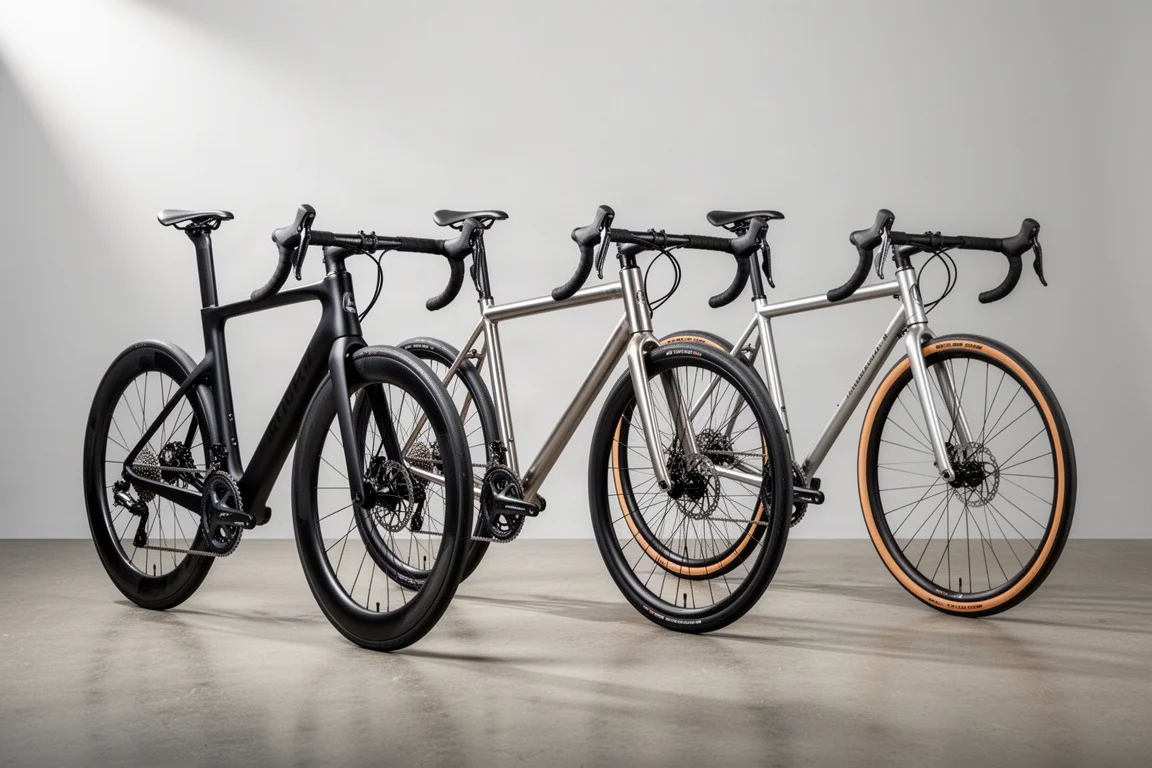
10 New Road Bikes Worth Watching: Aero, Titanium, Steel and Endurance Standouts
A practical roundup of 10 new road bikes, from aero flagships chasing single-watt gains to titanium, steel and endurance platforms built for real roads.