Aquarium Lighting
Best LED Lights for Saltwater Aquariums: Two Proven Options for Reef Success
Two reliable LED lighting solutions that balance coral health, visual appeal, and cost for new reef tank setups.
Introduction
Choosing the right LED light for a saltwater aquarium requires balancing three critical factors: coral health and nutrition, visual appeal and coloration, and reasonable cost. The light you select must provide the energy corals need to thrive while making your tank look visually striking. Installation quality and long-term reliability matter equally. Two options stand out for their proven track record and suitability across different tank sizes and coral types.
Understanding Reef Lighting Fundamentals
Reef lighting serves a primary purpose: delivering the light energy corals need to survive and grow. Corals depend on light as their main source of nutrition, so any lighting decision must prioritize their health above all else. The secondary goal is aesthetic—your tank should look beautiful with natural coloration and high visual contrast.
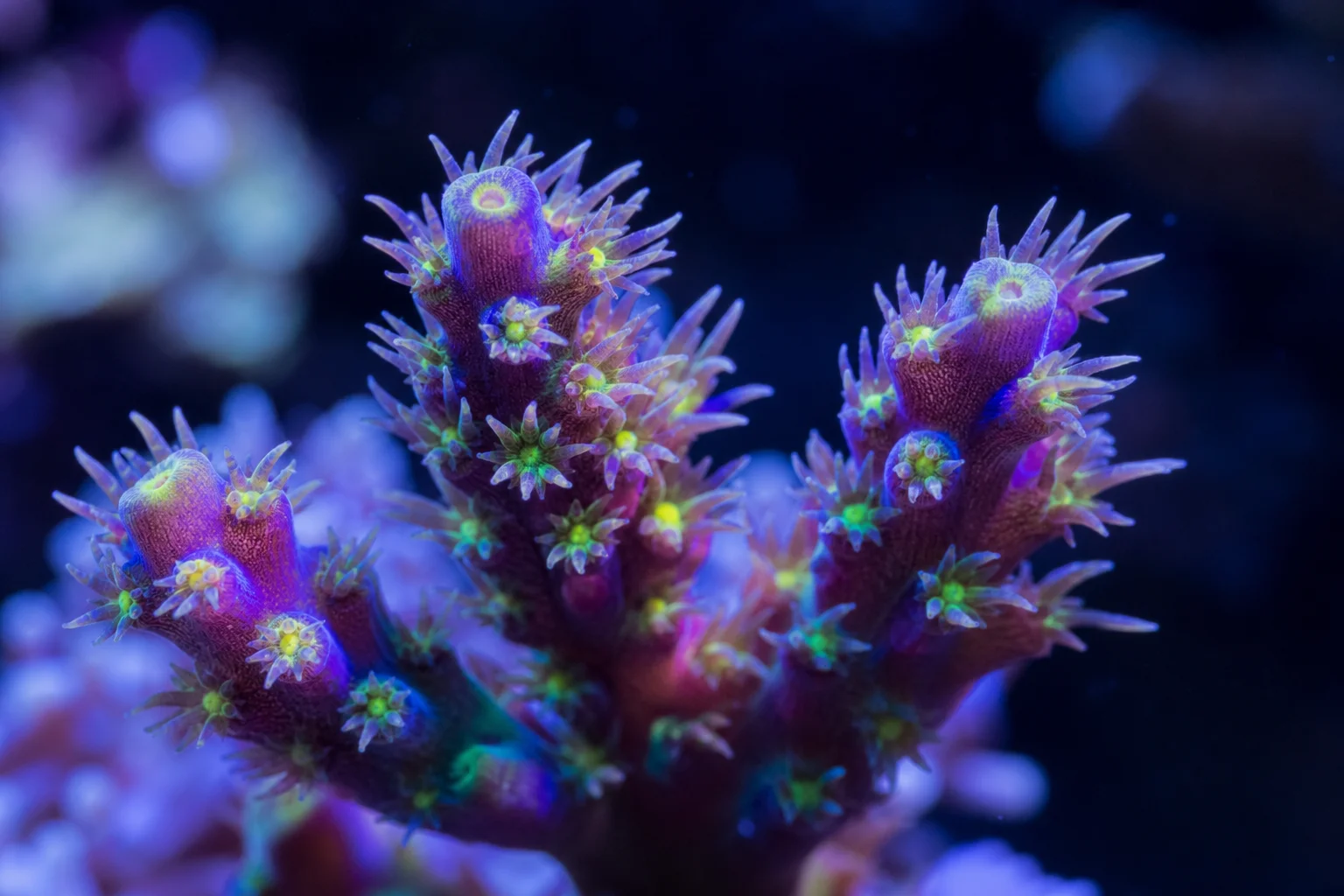
Beyond these core functions, the light fixture itself should integrate cleanly into your setup, enhancing rather than detracting from the overall appearance. Cost is the final consideration; effective reef lighting need not be prohibitively expensive, but quality and reliability justify a reasonable investment.
AI Prime 16HD: Modular Lighting for Flexibility
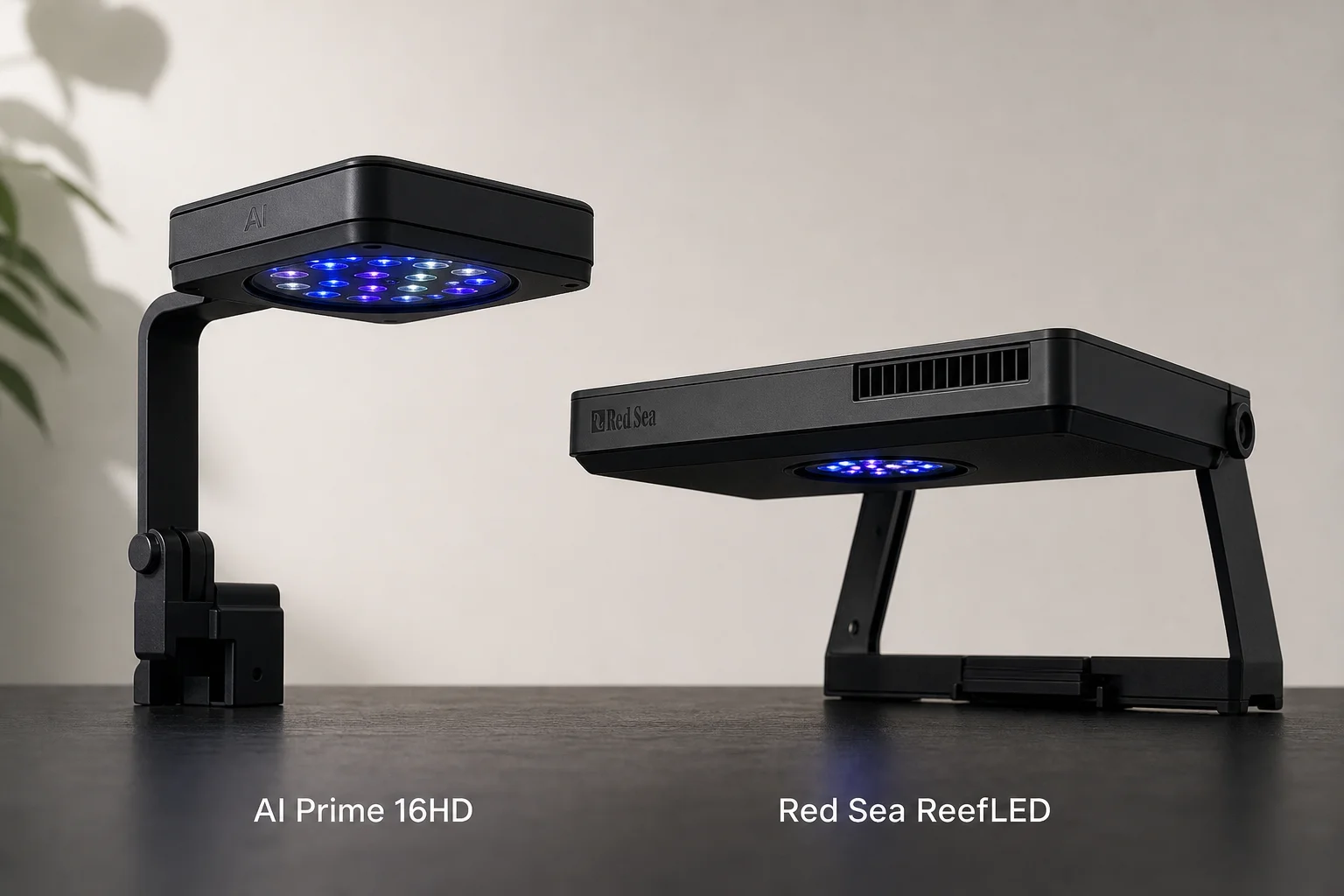
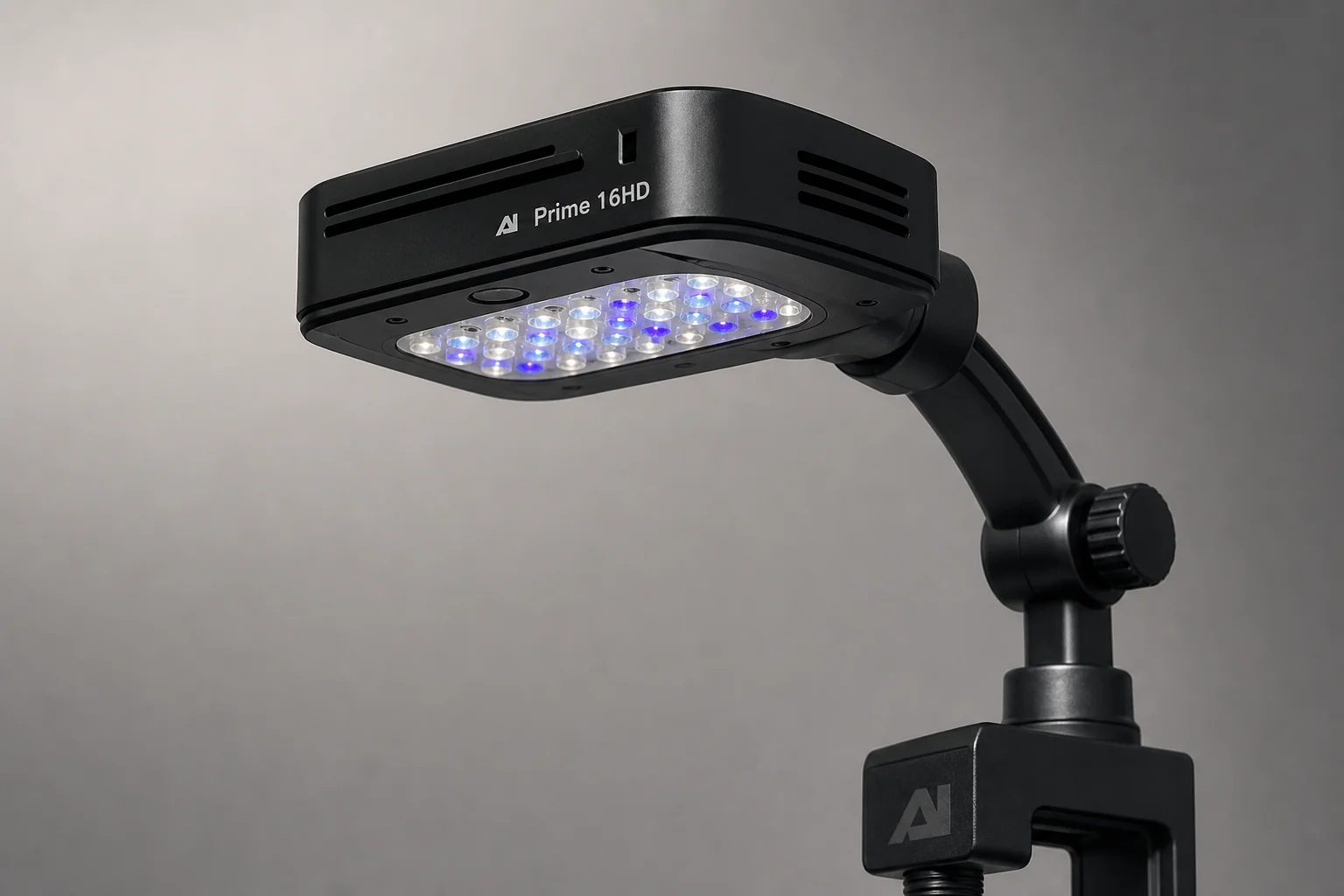
The AI Prime 16HD from Aqua Illuminations is one of the most established reef lighting options available. It delivers all the important light spectrums required for coral growth and is sized appropriately for tanks up to 36 inches wide. Two units will adequately cover a 40-gallon breeder tank, providing balanced power without overdoing intensity.
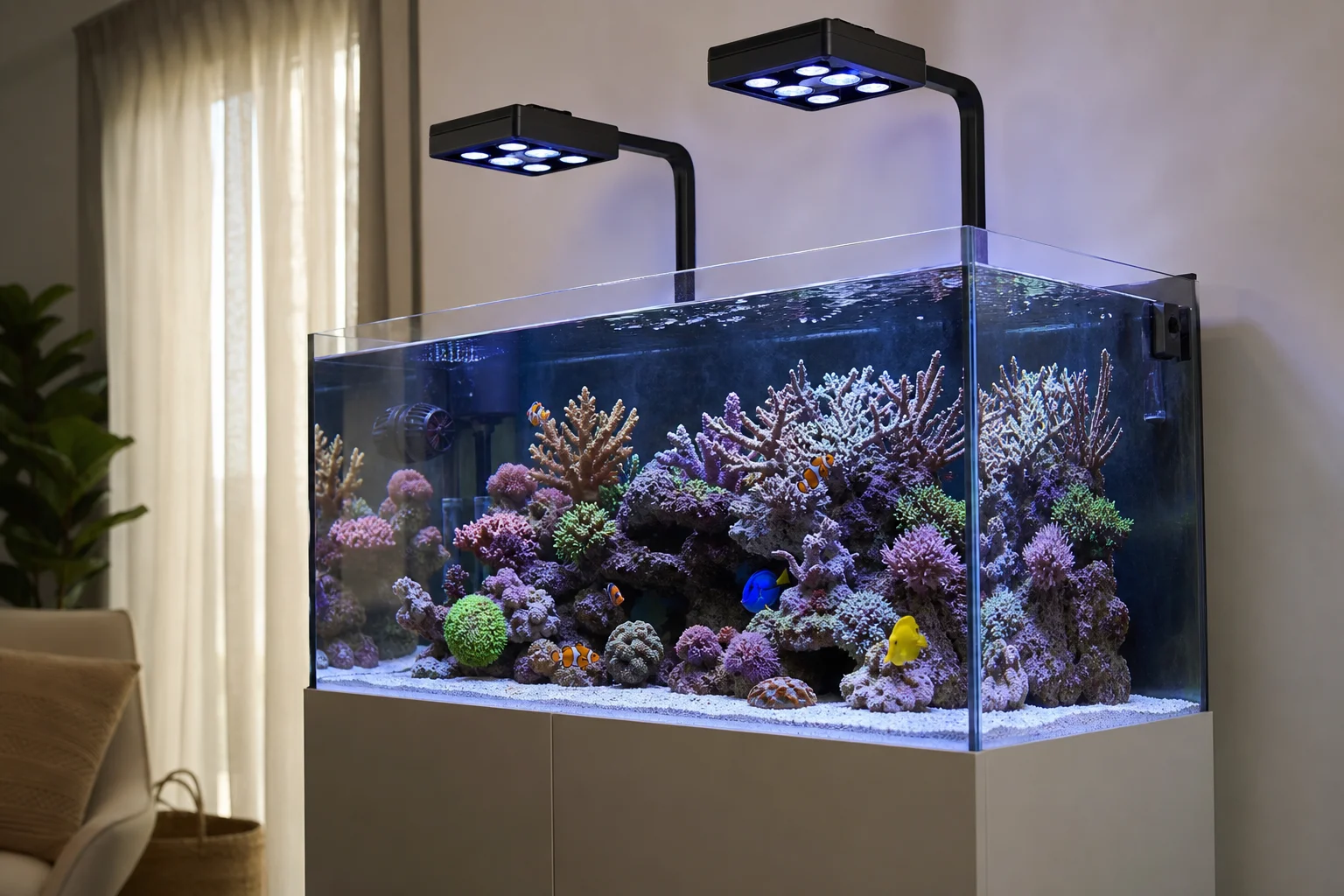
The AI Prime 16HD is upgradable, allowing you to add more units and space them closer together if you later decide to keep more advanced coral species. The spectrum it produces highlights the natural fluorescence of corals exceptionally well, creating a high-contrast, visually interesting display. The fixture offers two mounting options: a flexible arm and a fixed mount. The fixed mount provides a clean, low-profile appearance that complements the tank rather than dominating it. At approximately $200 per module, the AI Prime 16HD costs significantly less than many competing options while delivering reliable performance.
Red Sea ReefLED: All-in-One Simplicity
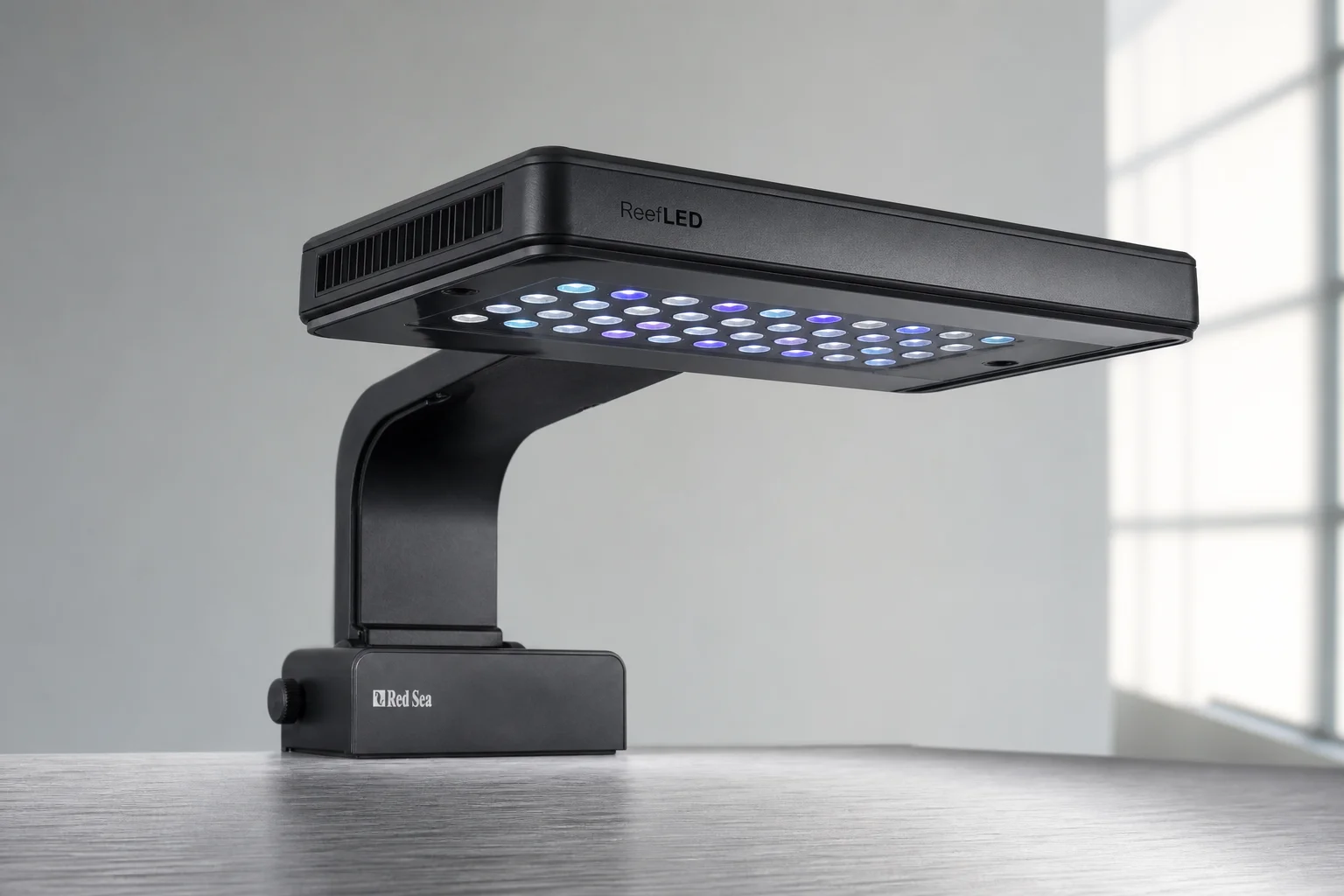
The Red Sea ReefLED is integrated into all-in-one tanks like the Red Sea e170, eliminating the need to shop separately for lighting. Because the e170 tank is closer to square in shape, a single higher-powered ReefLED fixture provides adequate coverage. The inclusion of the reef light and mounting kit as part of the tank package means you avoid the cost and complexity of sourcing components separately.
All-in-one tanks with integrated lighting often cost only marginally more than standard tanks with separate equipment, making the ReefLED an economical choice for new aquarists who want a complete, coordinated system.
Configuring Lights for Optimal Coral Growth
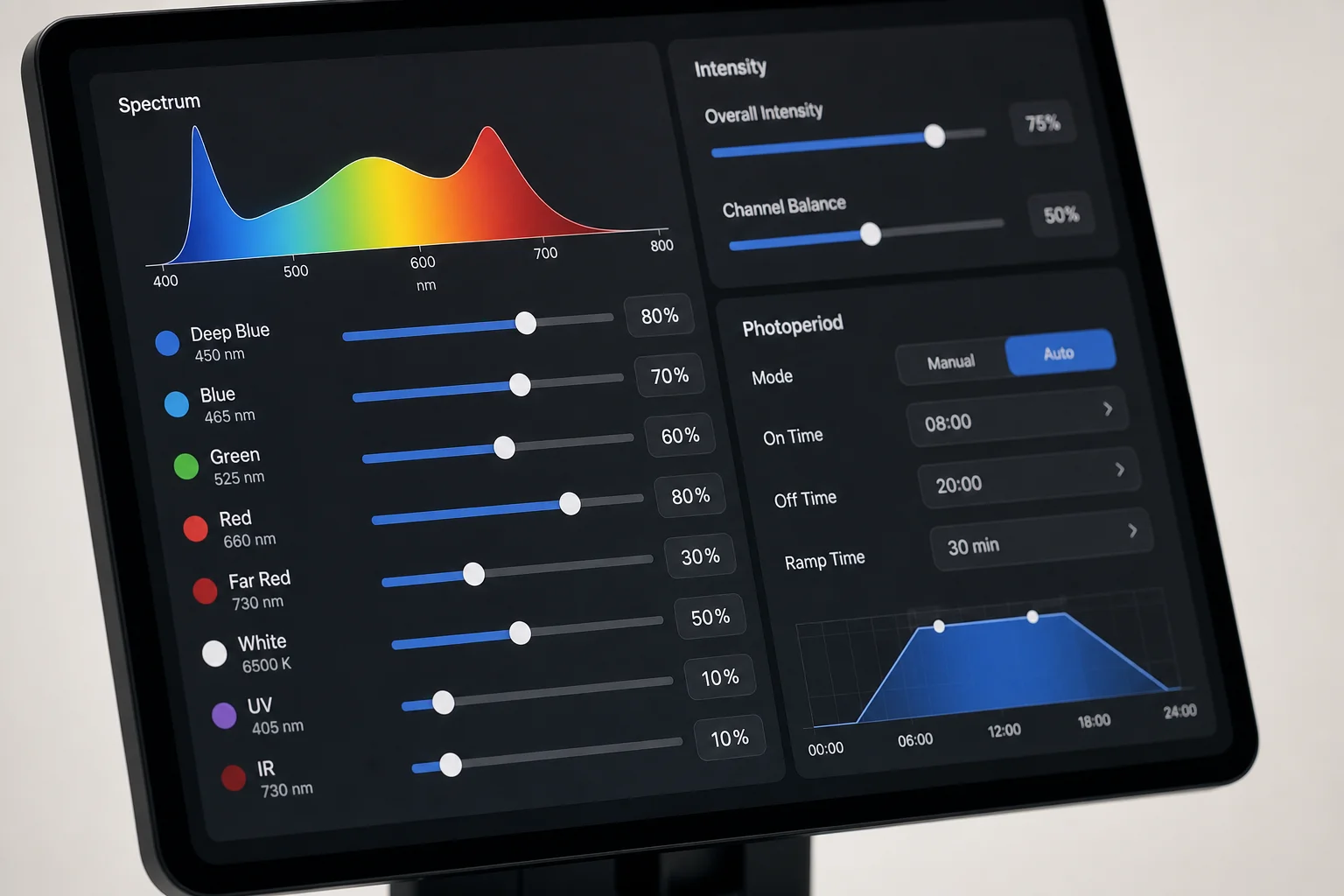
The most reliable way to set up lights like the ReefLED and AI Prime is to follow settings that experienced aquarists have already proven effective. For both fixtures in a 40-gallon breeder or equivalent tank stocked with LPS corals and polyps, use a 10-hour photoperiod with the following approach: set blues as the dominant spectrum, since blue light is the peak spectrum most corals require. Add white light until the tank looks visually appealing to your eye. Be cautious with reds and greens, keeping them no higher than 20% in most cases. Ramp the photoperiod down at both ends to extend viewing time at lower intensities and create optional visual effects like dusk or moonlight.
For LPS corals, polyps, and similar species, aim for 75 to 150 PAR (photosynthetically active radiation) distributed across as much of the tank as possible. When you advance to more demanding corals like SPS, the target range typically shifts to 250 to 350 PAR. If you are setting up your first tank with unfamiliar lighting, renting a PAR meter for approximately $50 allows you to tune lights intelligently rather than guess. Measured tuning produces dramatically higher success rates than estimation.
Lighting Tips Every Reef Keeper Should Know
Several critical principles separate successful reef keepers from those who struggle with lighting:
PAR is not horsepower. More light does not equal better results. In fact, you are roughly 100 times more likely to harm corals with excessive light than with insufficient light. Resist the urge to maximize intensity.
The human eye cannot accurately gauge PAR. The spectrum your eye perceives as brightness differs entirely from usable PAR for corals. Your eye also auto-adjusts to brightness, making estimation unreliable. While some experienced aquarists succeed through intuition or solid advice, it is far from easy for a new keeper to estimate PAR visually.
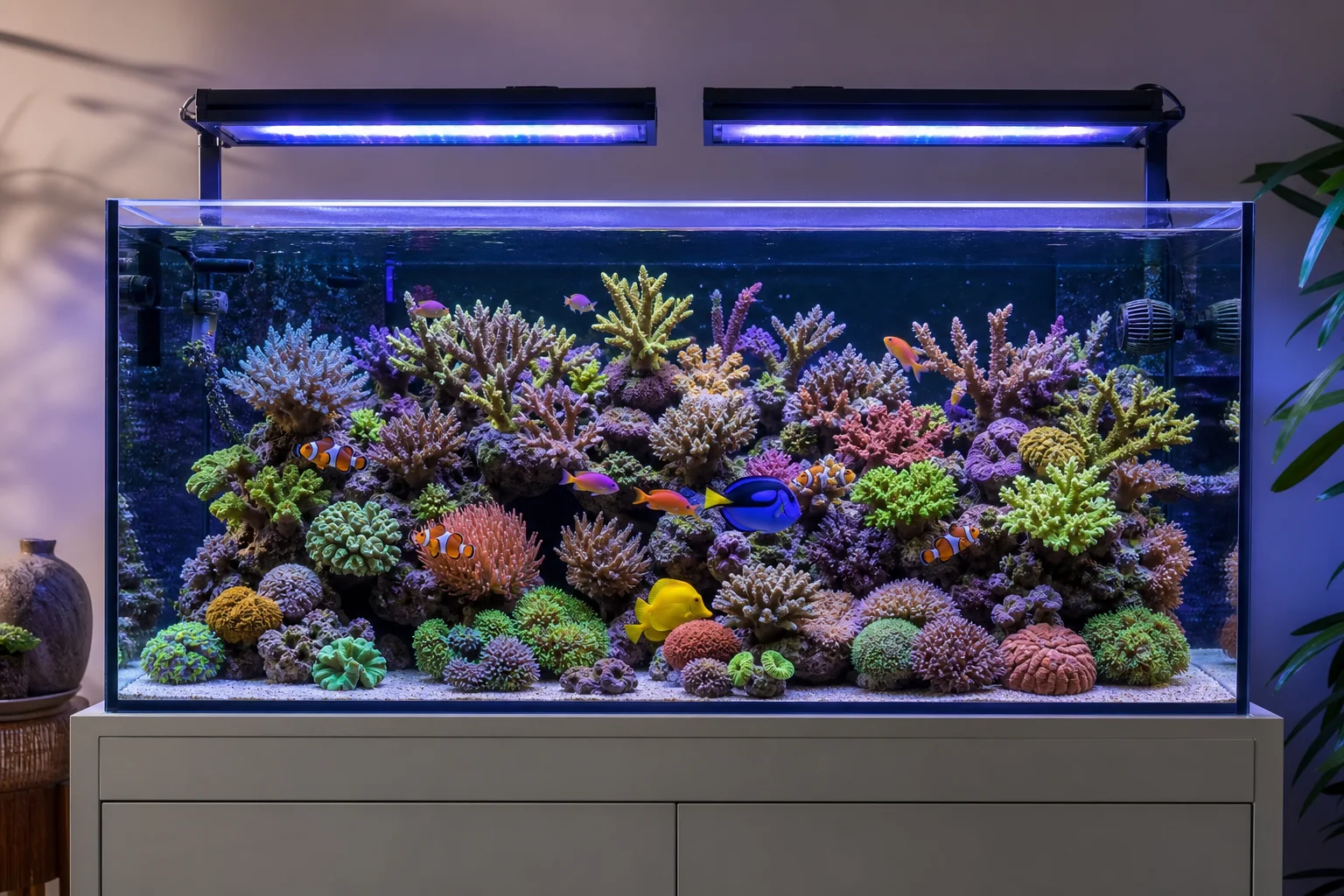
Start low and work upward. If light is too intense, corals will shrink and retract tissue to protect themselves. If light is insufficient, corals will stretch, expand, and reach to capture more energy. Starting conservatively and gradually increasing intensity is safer than the reverse.
Corals are adaptive but require stability. Corals adapt remarkably well to most conditions if left undisturbed. However, they thrive on stability. Resist the temptation to constantly adjust LED app sliders. Manufacturers design these controls as if they were a game, but they are life support for living organisms. Set your lights to proven settings and leave them alone. Success comes from consistency, not tweaking.
By following these principles and using the proven settings for your chosen light and tank type, you can confidently set up lighting without ongoing worry or experimentation.
Conclusion
Both the AI Prime 16HD and Red Sea ReefLED offer proven, cost-effective solutions for reef tank lighting. The AI Prime suits aquarists who want modularity and the ability to upgrade later, while the ReefLED appeals to those seeking an integrated, all-in-one system. Either choice, paired with proper configuration and a commitment to stability, will provide the lighting foundation your corals need to thrive and your tank needs to look its best.
Further reading
Related Reviews
Aquarium Lighting
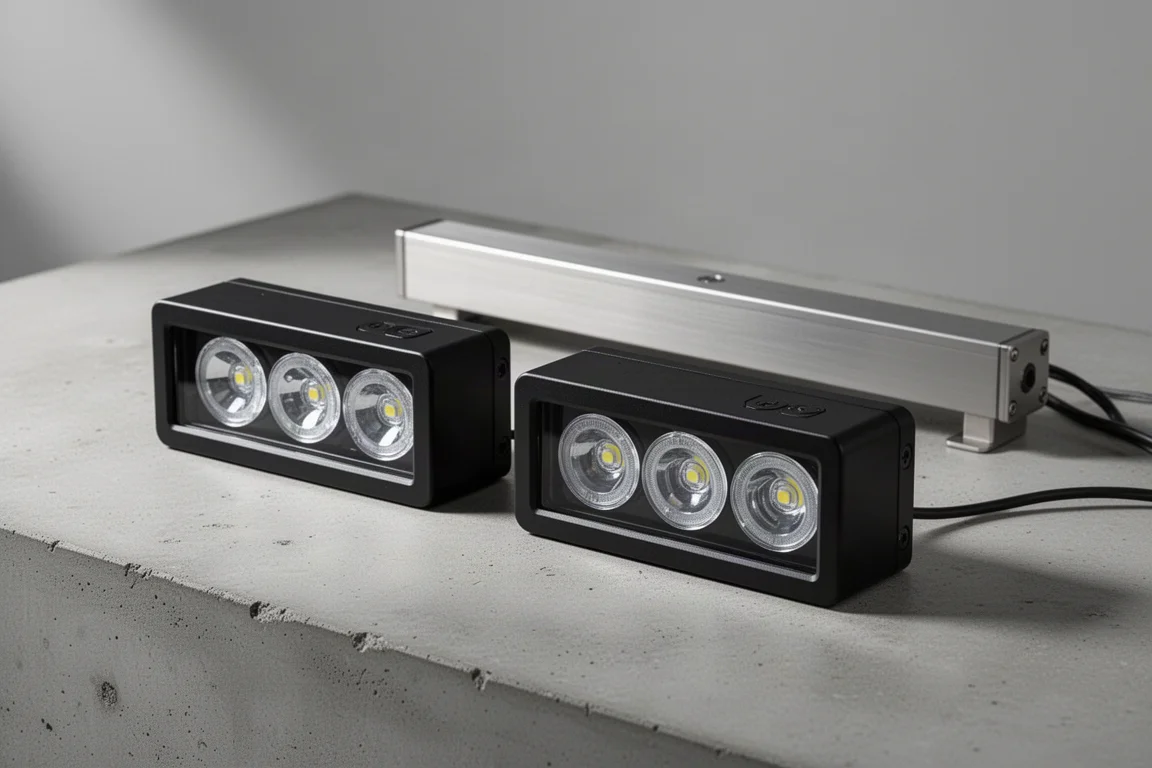
AI Blade LED Lights Review: A Versatile Strip Light for Reef Tanks
A practical look at the AI Blade LED line, including the value-focused Grow spectrum, mounting options, app control and PAR performance.
Aquarium Lighting
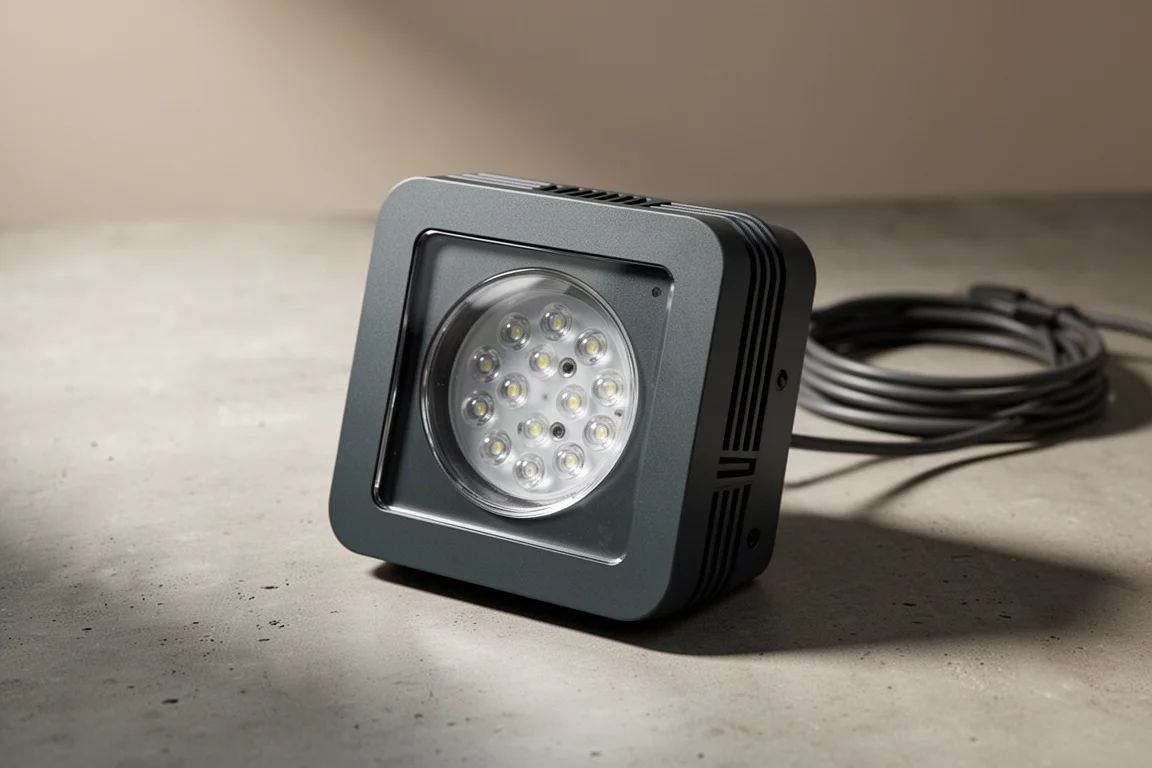
AI Hydra 32 and Hydra 64 Setup Guide: Mounting Heights, Spacing, and Add-On Lighting
A practical reef lighting guide covering optimal mounting heights for the AI Hydra 32 and Hydra 64, spacing for even coverage, and when add-on lighting is worth it.
Aquarium Lighting
AI Prime Review: A Compact Reef Light That Grows With Your Tank
A small, modular reef aquarium LED that reaches LPS and soft coral PAR levels over a 60-gallon cube, plus the spacing, mounting height, and control habits that make it work.