Bike Locks
Best Heavy-Duty Bike Locks: Six Models Tested Against an Angle Grinder
Six heavy-duty bike locks timed against an angle grinder, from entry-level U-locks to a Sold Secure Diamond D-lock, with practical guidance on which designs actually slow a thief down.
Introduction
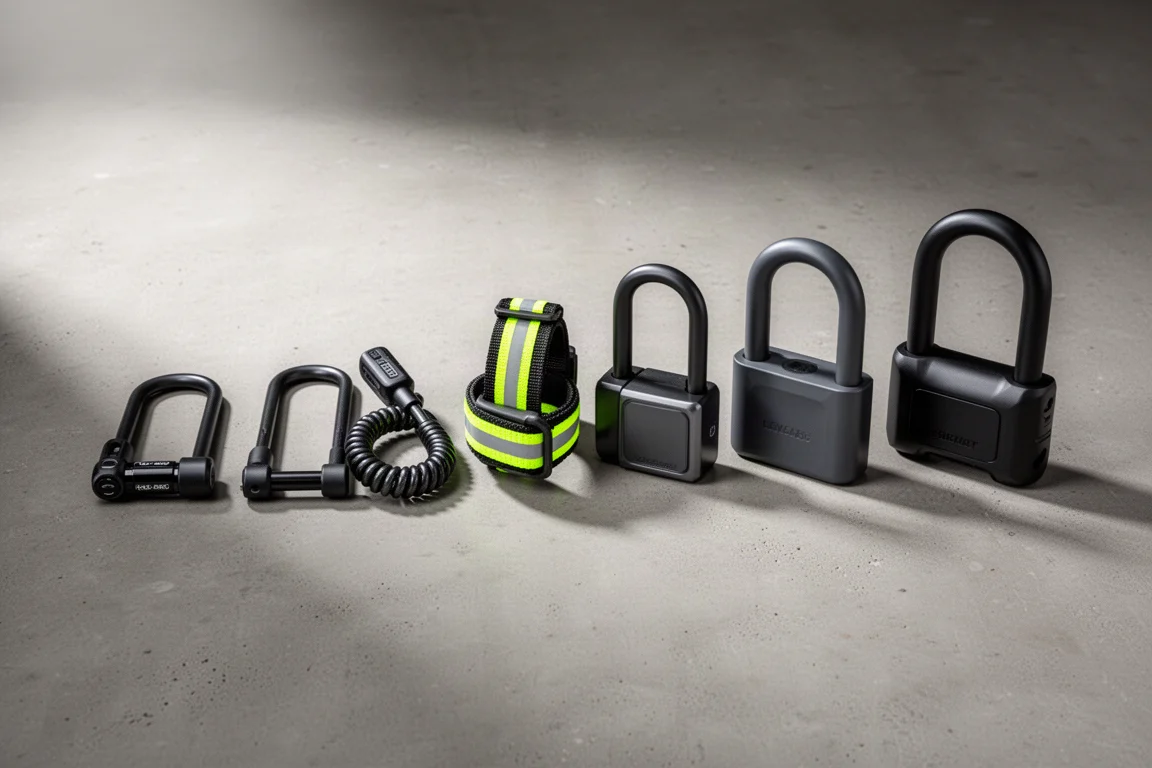
Bike locks live or die by one question: how long can they hold before a determined thief gets through? Pulling, twisting, and bolt cutters still matter, but the angle grinder is the tool that separates a lock that will discourage an opportunistic passerby from one that will make even a prepared thief think twice.
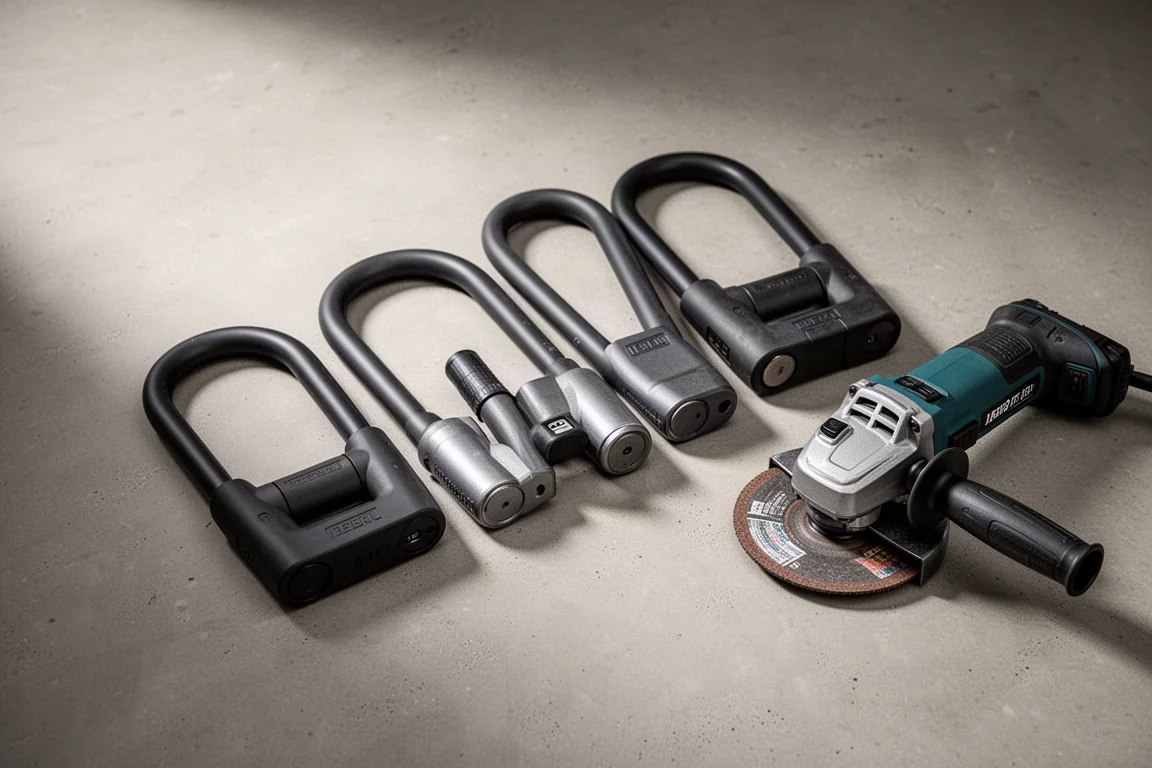
This six-lock roundup covers a spread of designs and price points, from a compact entry-level U-lock to a Sold Secure Diamond D-lock. Each was tested against an angle grinder, with cutting time recorded. The results were instructive: cheaper locks failed fast, mid-tier locks bought minutes, and the most expensive locks drained blades, batteries, and patience.
How These Locks Were Evaluated
Each lock was attacked with an angle grinder. Cutting time was recorded separately from blade changes, battery swaps, and pauses, so the timings reflect the metal itself rather than logistics.
Three patterns stood out.
- Rigid U-locks and D-locks in this group lock the shackle arms into the body, so both sides have to be cut before the lock releases.
- Flexible locks, including belt-style chains and bendy cables, resist the grinder because they move under the blade and never offer clean pressure on a single point.
- The premium locks use denser alloys that visibly blunt blades and force disc changes. Different disc materials performed better on different locks, which suggests the higher-end models may layer alloy densities deliberately.
Some locks were also cut on the wrong side during testing, which in at least one case left the lock still functional even after the timer stopped.
Kryptonite Original Keeper: Fast, Light, and Entry-Level
The Original Keeper is the smallest lock in this group and the quickest to give way. It was cut through in 18 seconds, which was faster than expected but still far above the two-second failure some riders assume.
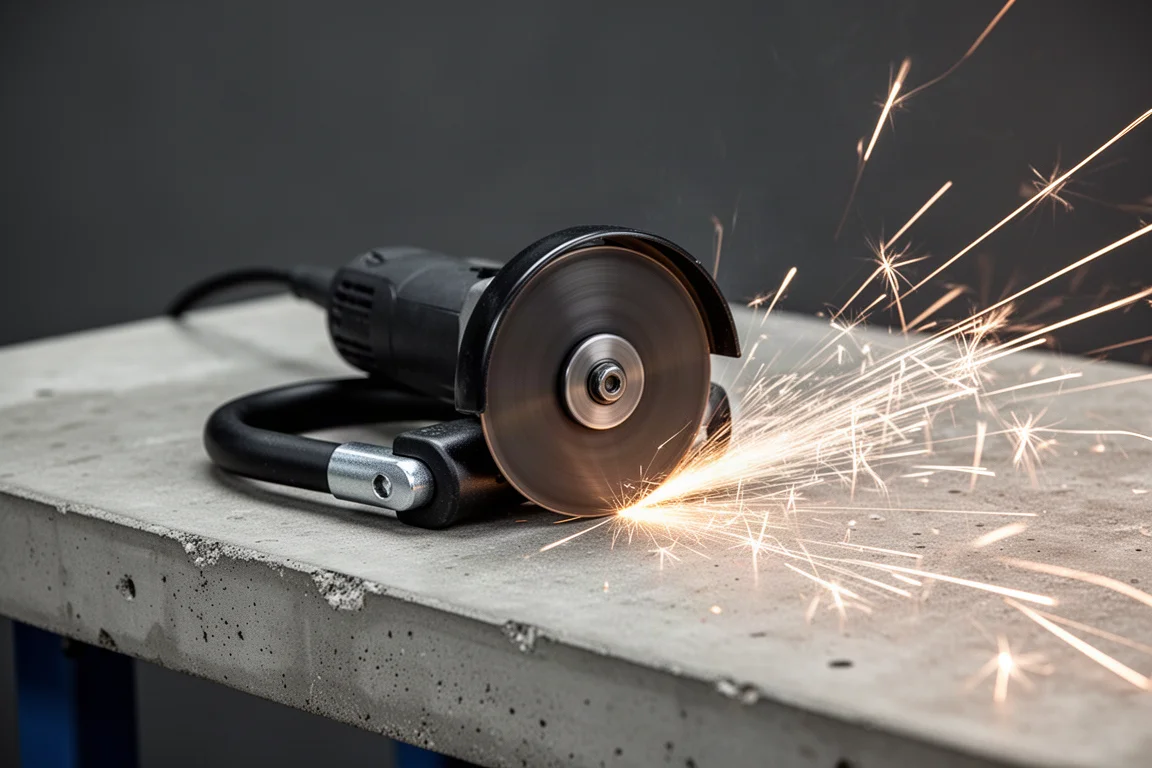
This is a lock for low-risk settings: a short stop in a low-crime area, or a secondary role securing a wheel while a heavier primary lock carries the frame. It is not built to slow a prepared thief in a city where angle grinders are common.
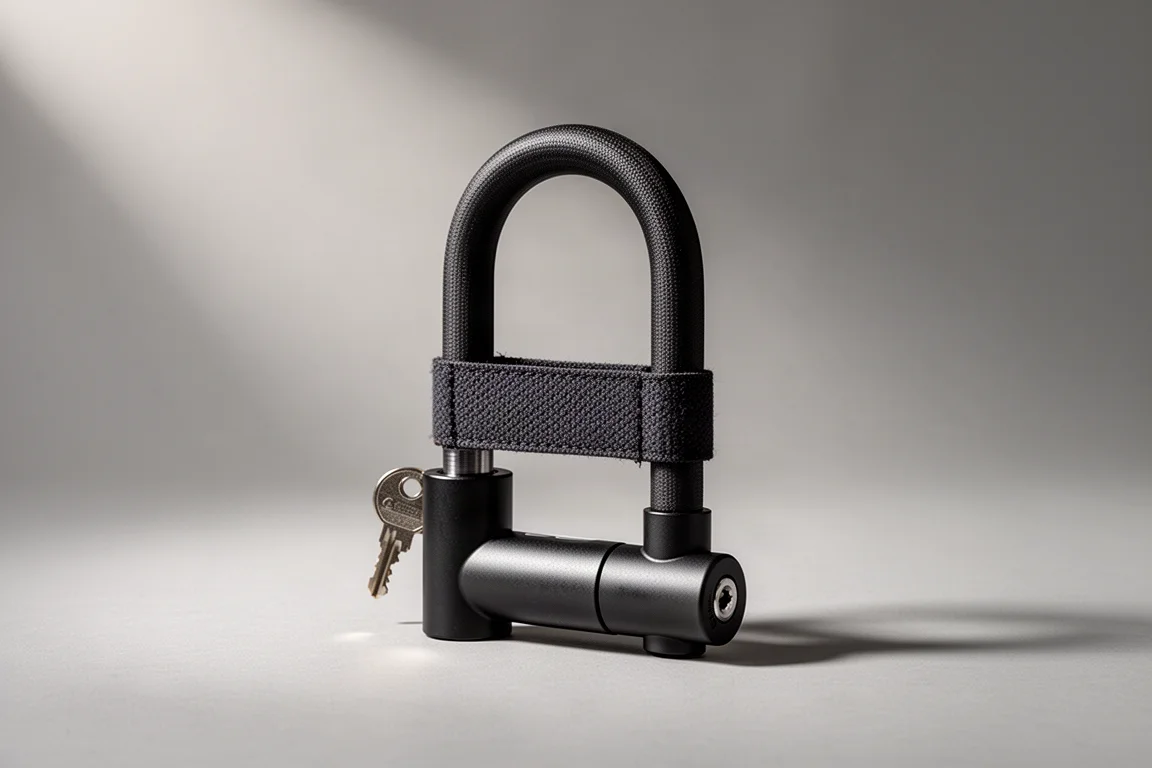
Kryptonite KryptoLok Mini-7 with 4-inch Flex Cable
The KryptoLok Mini-7 is sold as Sold Secure Bronze and comes with a four-inch flex cable. In the test, the lock was cut on the wrong side, which freed the bike in roughly 35 seconds but left the main lock body still usable.
The included flex cable is best understood as a secondary layer. It lets you secure a wheel to the lock body without needing a second U-lock, which is useful for quick stops where a wheel theft is the more likely risk.
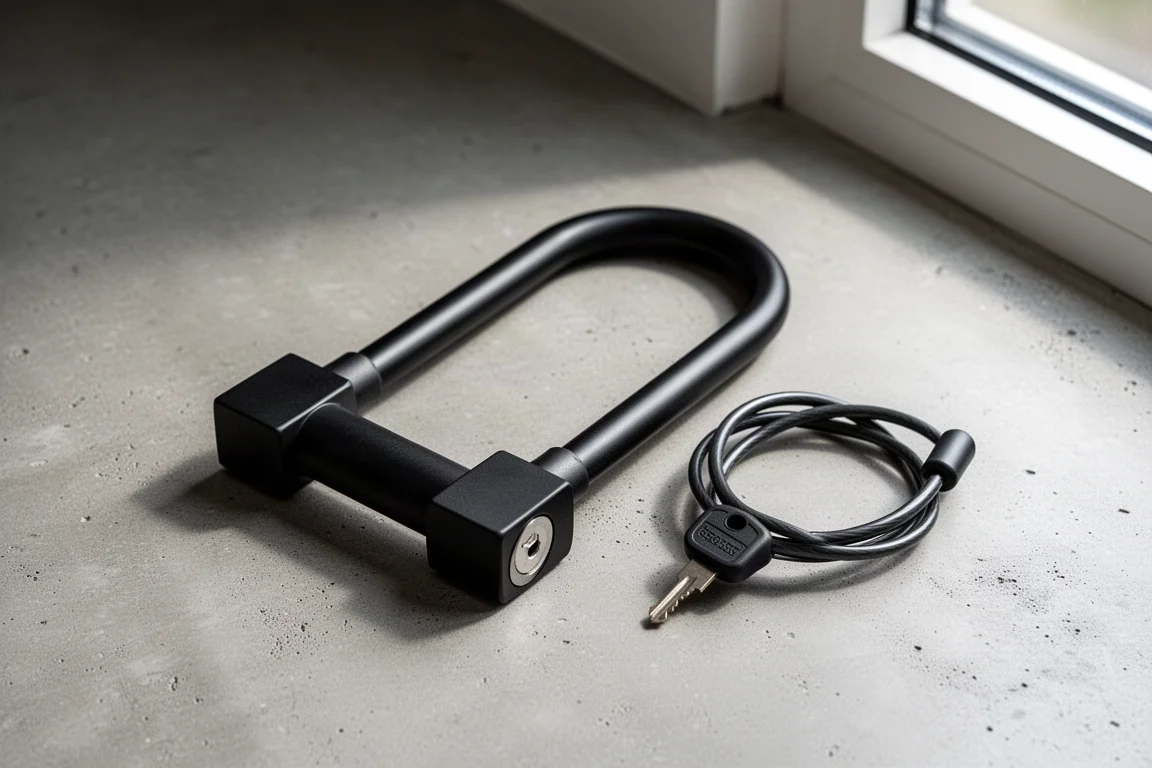
Hiplok Gold: Wearable and Surprisingly Slow to Cut
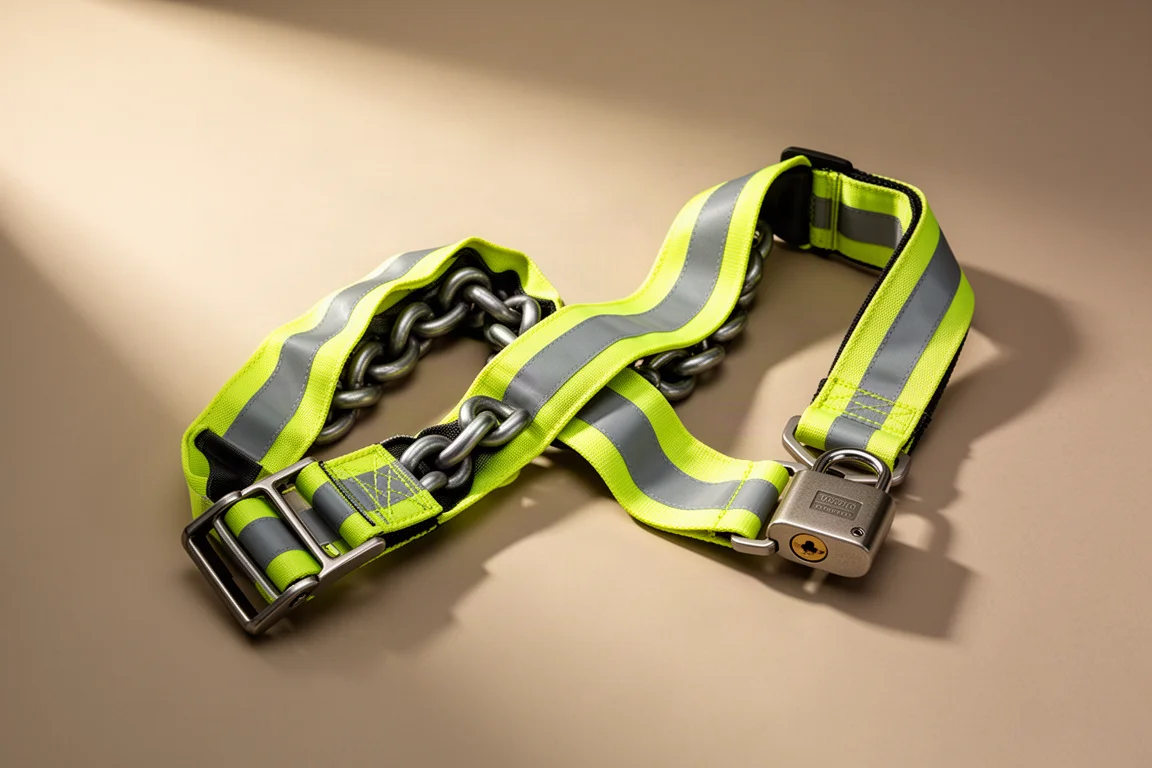
The Hiplok Gold is a belt-style lock designed to be worn around the waist, and its bright, reflective finish is genuinely useful for visibility when riding. In the test, it took 3 minutes and 2 seconds to cut.
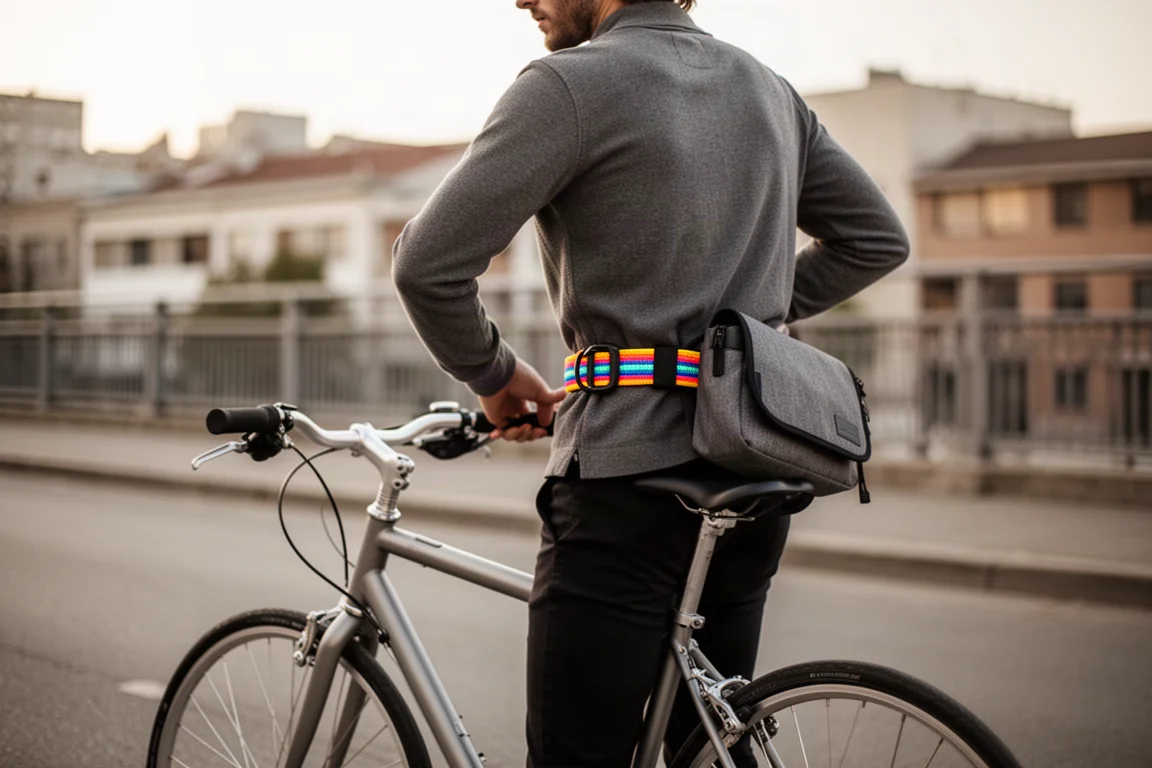
The reason it held up so well is design rather than raw material. Because the lock shifts and flexes under the blade, the grinder never develops clean, focused pressure on a single point. In other words, the lock’s movement is itself a defence, and it makes a strong case for not locking everything rigidly tight.
Kryptonite New York: A Recognizable U-Lock That Requires Two Cuts
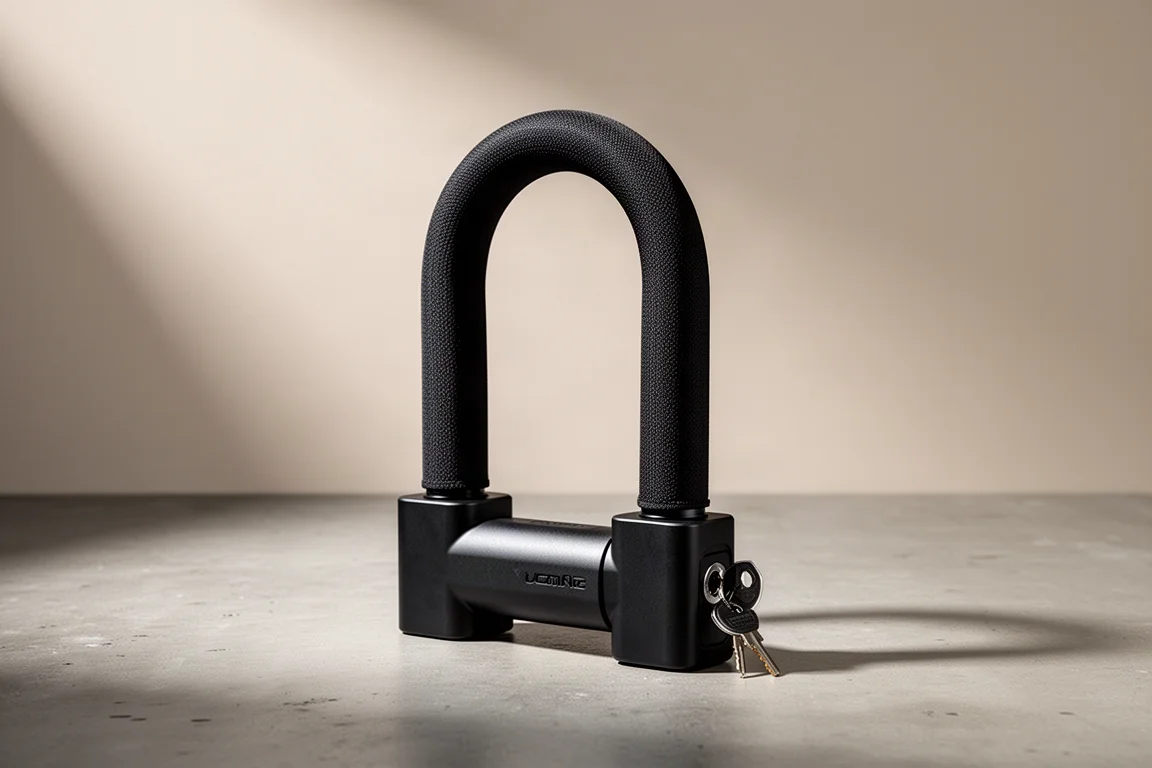
The Kryptonite New York is one of the most widely seen locks on city bikes. Priced around £130 and rated Sold Secure Gold, it survived for 1 minute and 9 seconds in the test, and it requires both sides of the shackle to be cut before the bike can be freed.
The dual-side design is a real advantage. Cutting one arm is not enough, so a thief has to invest roughly double the cutting effort before riding away. That is the main reason locks in this format earn higher security ratings.
Litelok X1: The Blade-Killer
The Litelok X1 is a heavier design priced around £150. During the test, a standard abrasive disc made no meaningful progress beyond the outer plastic; the operator had to switch to a diamond-tipped disc before the lock would yield.
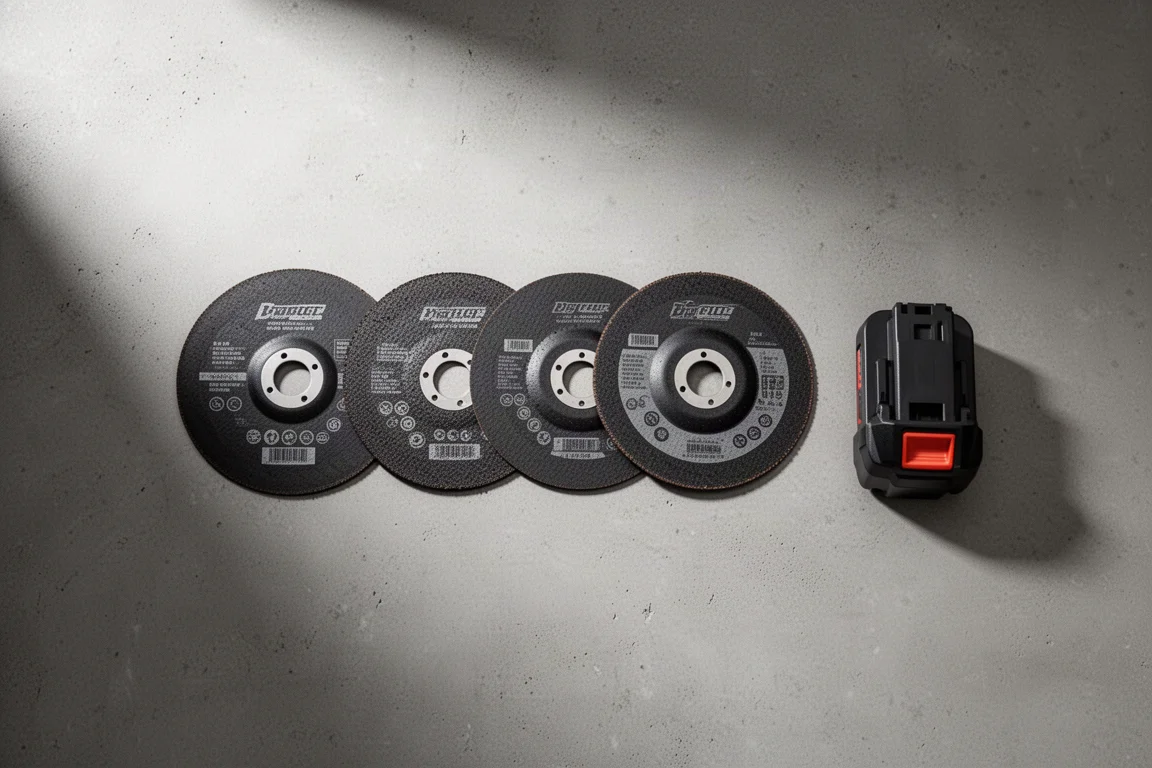
Even with the diamond disc, cutting time reached 3 minutes and 44 seconds and only completed one side. As with the Kryptonite New York, the arms sit fixed in the lock body, so a thief would need to cut both sides to remove it. The material itself appears denser and more abrasive-resistant than the entry-level options, and it is the first lock in the group that clearly eats blades.
Hiplok D1000: The Toughest Lock in the Group
The Hiplok D1000 carries a Sold Secure Diamond rating and a premium price of around £250. In a previous test, it defeated the grinder outright; this time, with fresh discs and freshly charged batteries, it still took nearly five minutes to get through one side, with a total effort well over ten minutes.
The body is built from a very dense alloy that drains discs and batteries at an unusual rate. Even with a fresh diamond blade, each cut was slow. If maximum resistance is the goal, the D1000 is the clear standout in this group.
Overall Buying Advice
The results split cleanly into three groups.
The three Kryptonite locks at the entry end were all cut relatively quickly. They will stop an opportunistic thief and require an angle grinder rather than bolt cutters, but they will not hold off a prepared attack for long.
Flexible locks, including the Hiplok Gold belt and similar bendy designs, were surprisingly effective because their movement prevents the grinder from developing clean pressure on a single point.
The two most expensive locks, the Litelok X1 and the Hiplok D1000, sit in a different category. Their materials visibly blunt blades, and cutting them takes multiple discs, fresh batteries, and real time.
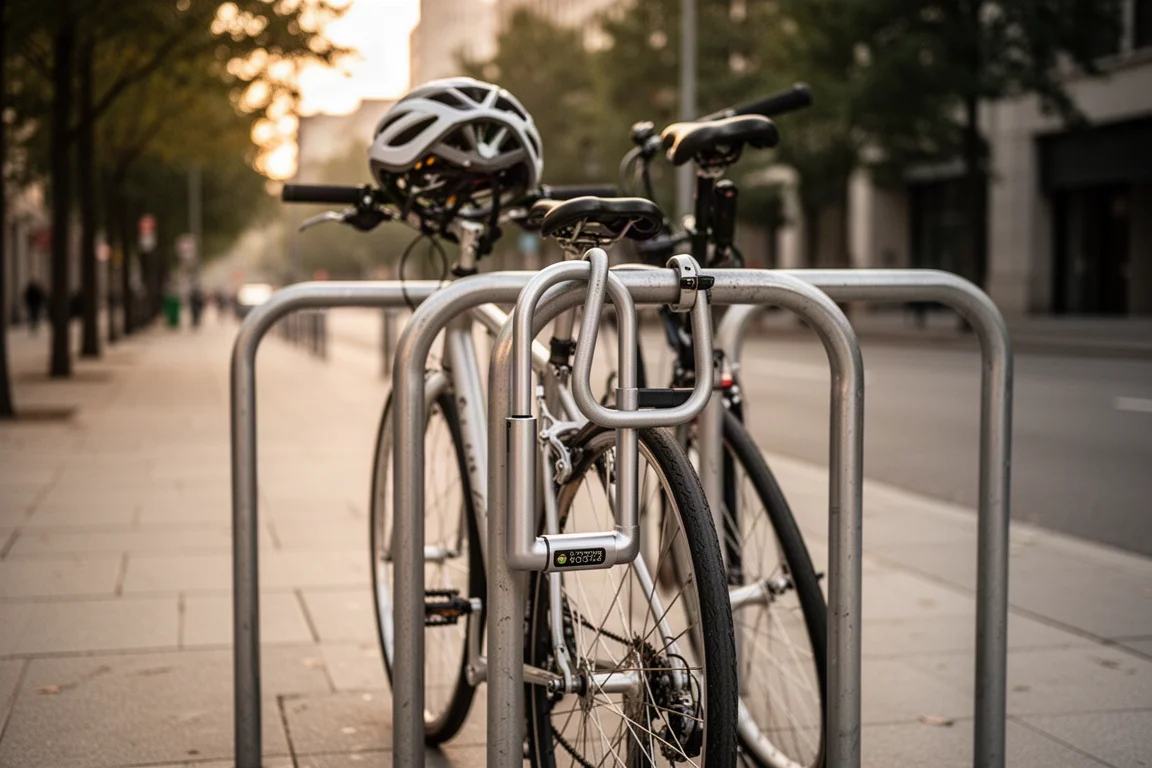
For most riders the right answer depends on the setting. A cheap lock makes sense for a short stop in a low-risk area. A mid-tier U-lock with a Sold Secure Gold rating is a sensible default for daily commuting. The premium options earn their price in high-theft areas or on high-value bikes, where minutes of delay are exactly what you are paying for.
Conclusion
Cutting time is not just about how thick a lock is. Movement, shackle length, alloy density, and the need to cut two sides all change the outcome. A lock that flexes, forces two cuts, or eats through grinding discs can add precious minutes to a theft attempt, and minutes are what send thieves looking for an easier target.
Further reading
Related Reviews
Bike Locks
Best Angle Grinder Resistant Bike Locks 2026: Five Sold Secure Diamond Locks Compared
Five angle grinder resistant bike locks, all Sold Secure Diamond rated, compared on cutting resistance, weight, locking area, and everyday usability.
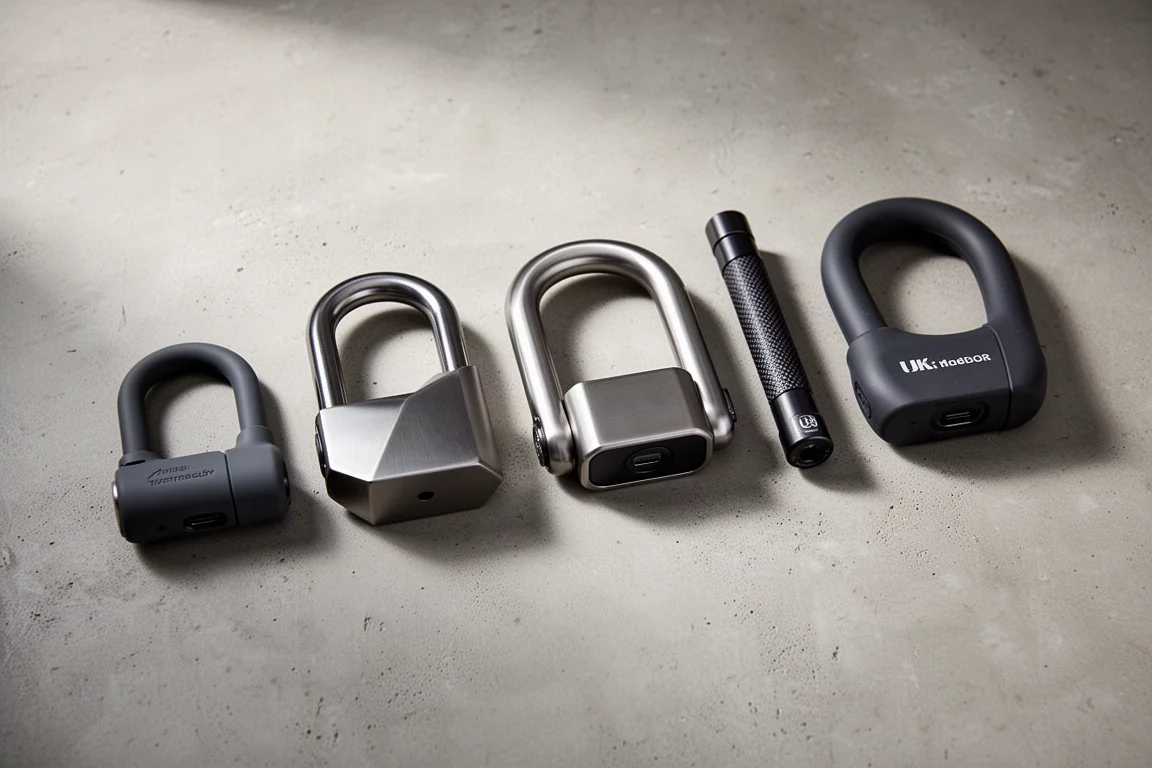
Bike Locks
Best Angle Grinder Resistant Bike Locks: Five Sold Secure Diamond Locks Tested
Five Sold Secure Diamond bike locks faced a five minute cordless angle grinder test. Here is how each one held up, and which offers the best balance of security, weight and price.
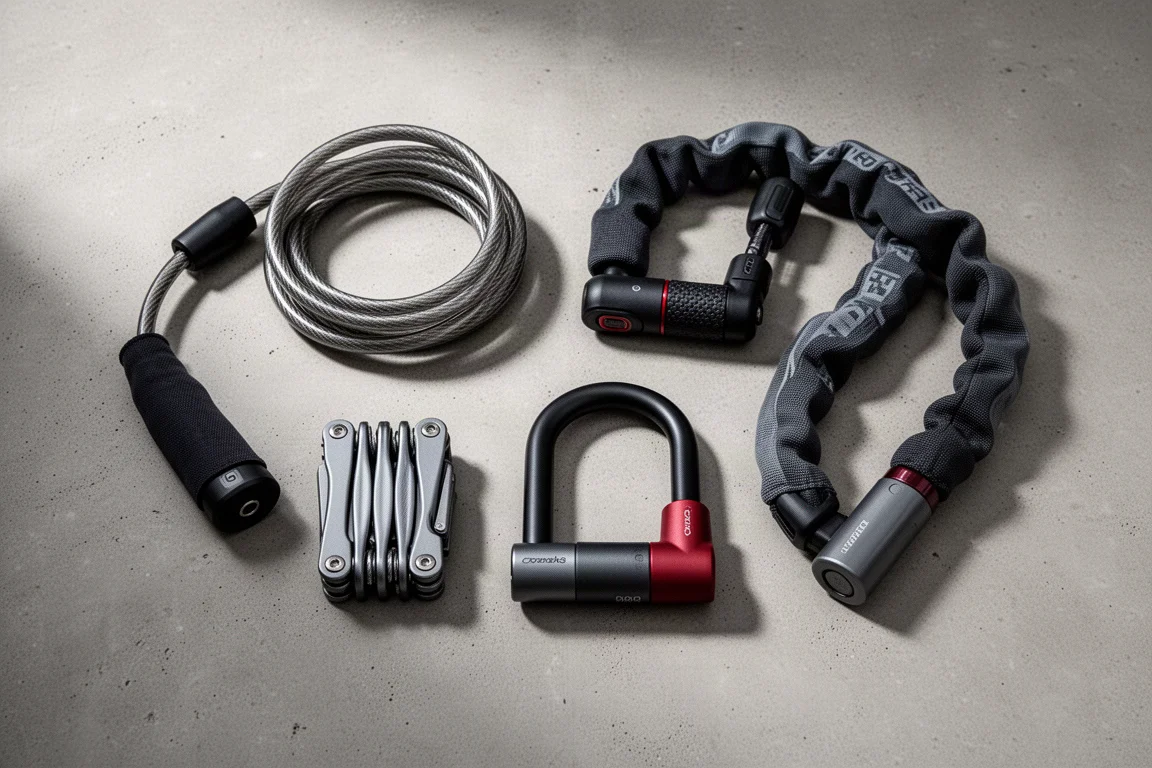
Bike Locks
Best Bike Locks 2026: Six Locks Rated by Security Level
A practical guide to locking your bike properly, plus six locks spanning cable, folding, D-lock and chain designs across the Sold Secure ratings.