Headphones
Best Headphone System Under $500: Six Pieces Worth Considering
Six affordable pieces that add up to a serious headphone setup, covering wireless convenience, open-back and closed-back wired options, and the desktop and portable electronics that tie them together.
Introduction
Around $500 is enough to put together a headphone system that genuinely holds its own. It is also roughly where diminishing returns begin: headphones priced between $100 and $300, paired with a desktop DAC and headphone amp costing a couple of hundred dollars, are where the curve starts to flatten out.
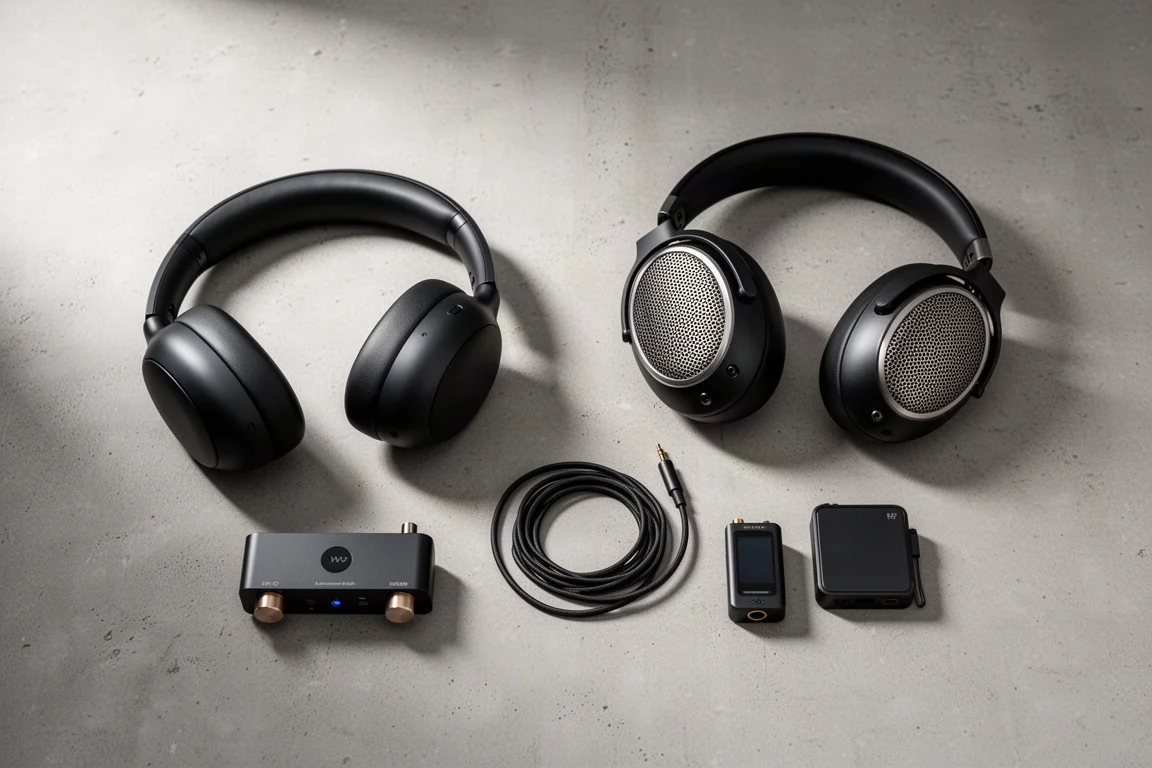
This guide covers six pieces that approach that budget from different directions. One is a wireless pair that needs nothing else. Three are wired headphones with distinct characters. One is a desktop DAC and amp. One is a pocket-sized Bluetooth DAC that turns wired headphones into something you can carry.
How These Pieces Fit Together
There are two routes into this budget. The Bluetooth route is a single purchase with no setup and no cables. The wired route means separates: a DAC and headphone amplifier, plus a pair of wired headphones. More boxes, more decisions, and generally more sound quality for the money.
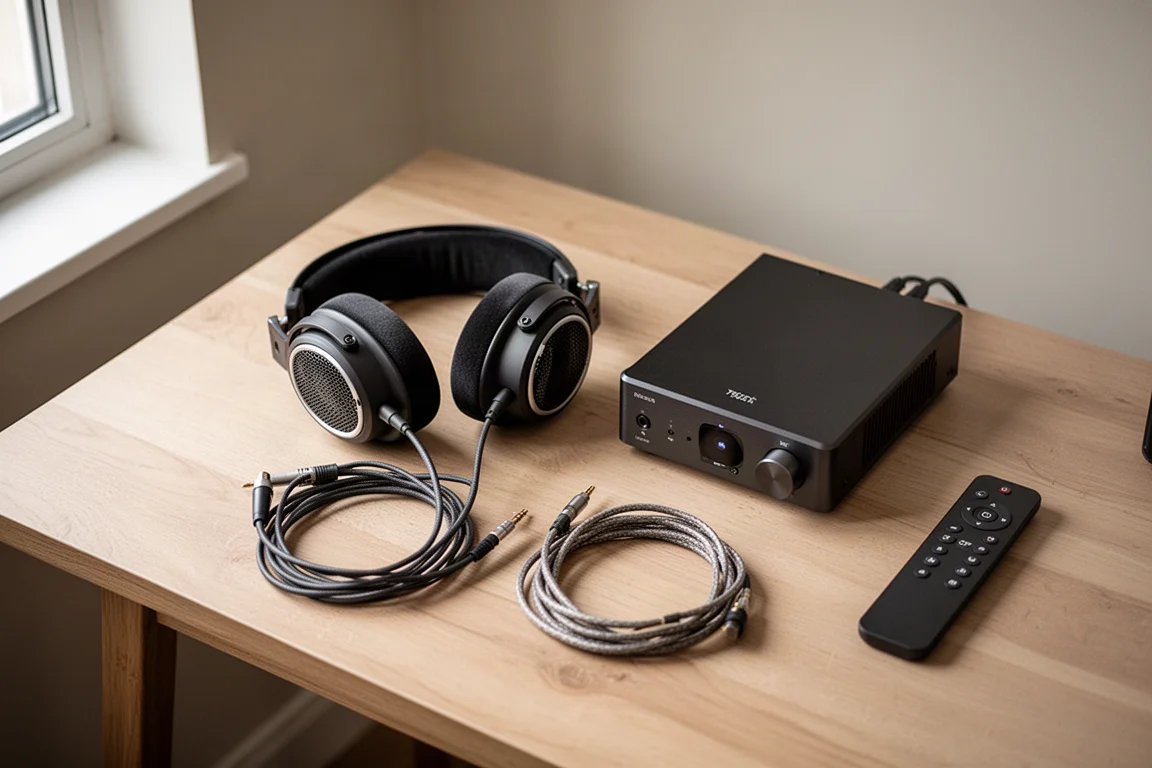
The arithmetic matters. The Sennheiser HD 6XX at around $280 plus the Topping DX3 Pro+ at around $200 already reaches the target on its own, which is exactly why the more affordable wired headphones in this list earn their place.
There is also a reason headphone systems punch above their price. A speaker system has to share a room, and an untreated room causes trouble in the low end while adding reverberation that sits between the listener and the speakers. Headphones remove that variable entirely, which is why a few hundred dollars spent on a headphone setup can reveal more about a recording than a far more expensive speaker system playing in an untreated room.
The practical upshot is that a headphone system is not a step down for anyone listening in a difficult space. It is a way of hearing what the bass is actually doing, and of checking whether a speaker setup is flattering a recording or hiding problems in it.
Bluetooth Option: Sony WH-1000XM5
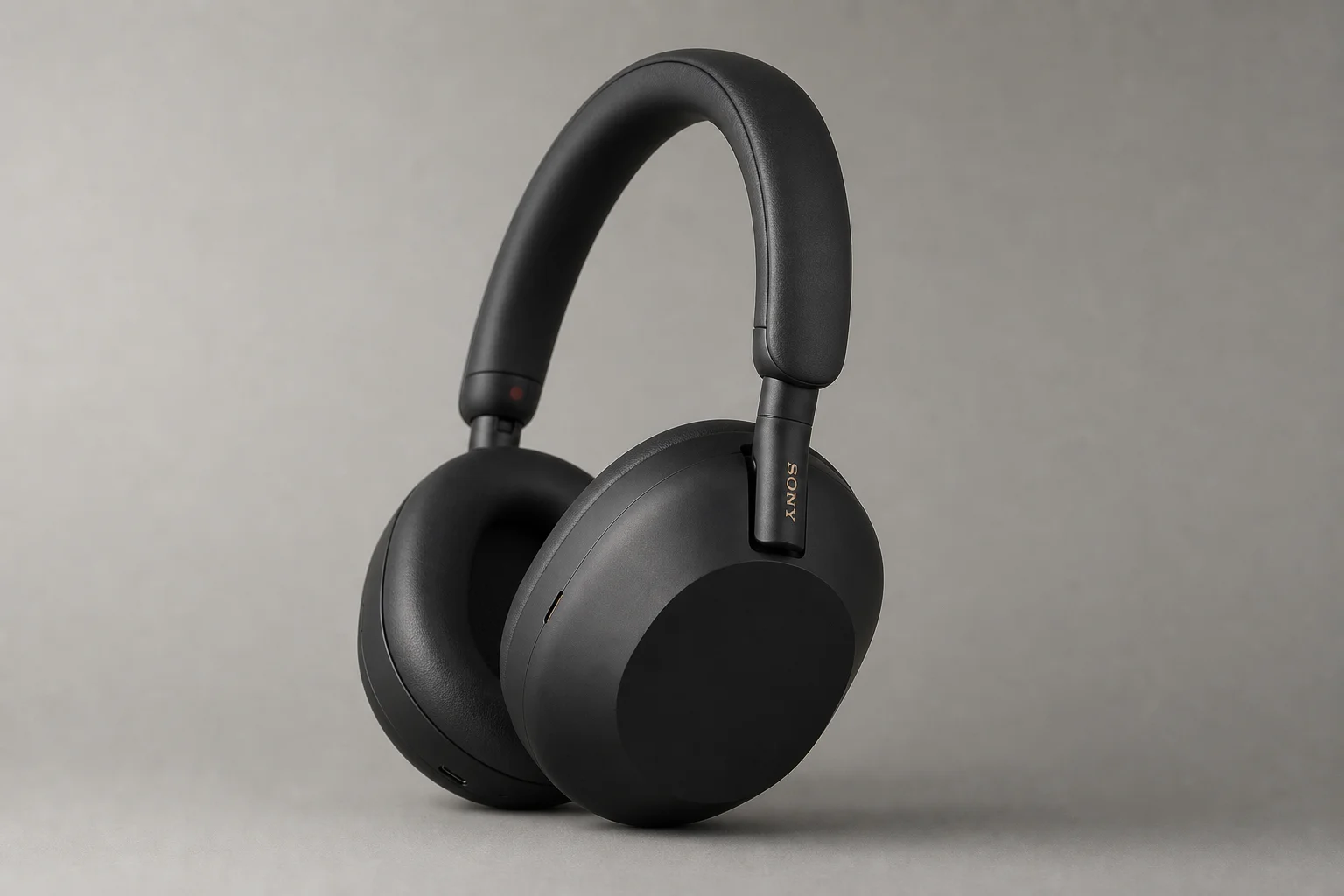
The WH-1000XM5 sits at the top of this budget at around $400, and it is one of the better-regarded wireless over-ear headphones on the market. It needs no DAC, no amplifier, and no cable, which is exactly why it belongs in this conversation: for plenty of listeners, one purchase is the entire system.
It also works as a reference point for everything else here. Any wired combination in this guide has to justify itself against a wireless pair that already sounds good and requires no setup at all.
The one practical compromise is storage. The WH-1000XM5 does not fold, so it takes up more room in a bag than earlier generations did.
Open-Back Value: Sennheiser HD 6XX
The HD 6XX was developed in partnership with Drop and is, for practical purposes, a rebranded HD 650. It is an open-back, over-ear dynamic headphone with 300-ohm impedance, and it now sells for around $280 after an earlier price closer to $200.
Its reputation rests on the mid-range. Vocals come through with unusual clarity, and the overall character is smooth at the top end, sometimes described as dark. Bass extension is modest, and the head staging is narrow: sound stays fairly central rather than spreading wide to the left and right. It also gives up the last word in resolution next to far more expensive headphones.
What it does exceptionally well is comfort over long sessions. It is light on the head, and while the clamping force is firm out of the box, it eases with use. The two-pin cables are detachable at each earcup, which makes replacement straightforward.
Amplification matters here. At 300 ohms, the HD 6XX can sound thin and unengaging when it is underpowered, so it needs a source with real output behind it.
The trade-off is character rather than capability. Listeners who want a wide, dramatic presentation may find it restrained, while anyone who spends hours with acoustic music, podcasts, or vocal-led recordings will find the balance hard to argue with.
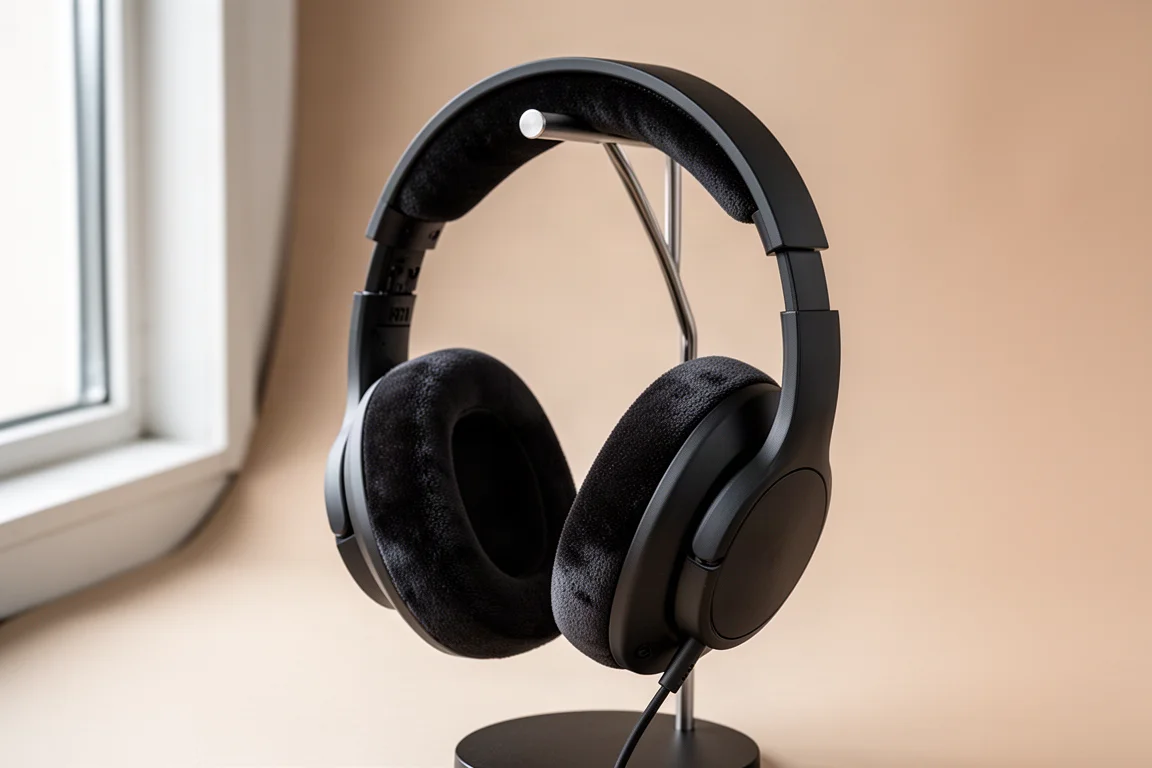
Desktop DAC and Amp: Topping DX3 Pro+
The DX3 Pro+ is the piece that makes the wired side of this guide work, and it costs around $200. The Plus version matters: it offers more output power than the standard model, which is the whole point when driving high-impedance headphones.
Build quality is where the money clearly was not spent. The enclosure feels basic, the sockets flex enough that the circuit board can be felt moving behind them, and the volume knob is not satisfying to use. The remote control, by contrast, is the standout feature. It handles volume, gain switching, and DAC filter selection, so the unit can sit out of reach and never be touched.
The feature set is unusually broad for the price: an ESS-based DAC circuit, high-resolution support, a Bluetooth input on the rear with LDAC, aptX, and AAC codecs, USB, optical, and two coaxial inputs, plus an analogue output that lets the unit double as a small preamplifier. There is a 3.5mm headphone socket on the front with enough power for 300-ohm headphones and two gain settings, low and high.
It is not a neutral partner for every headphone. With the HD 6XX it adds useful bite, but with brighter headphones it can sound lean, thin, and analytical. Sources can be fed in over USB from a small computer or over optical from a network streamer.
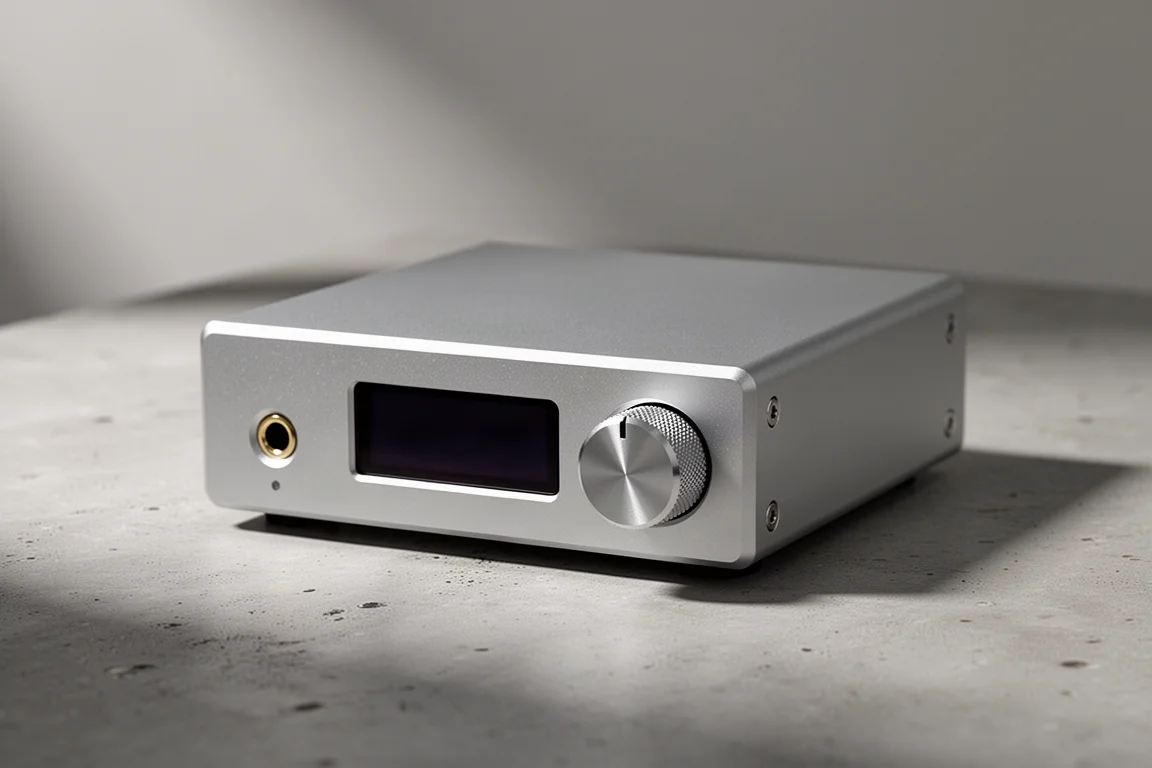
Analytical Alternative: Beyerdynamic DT 990 Pro
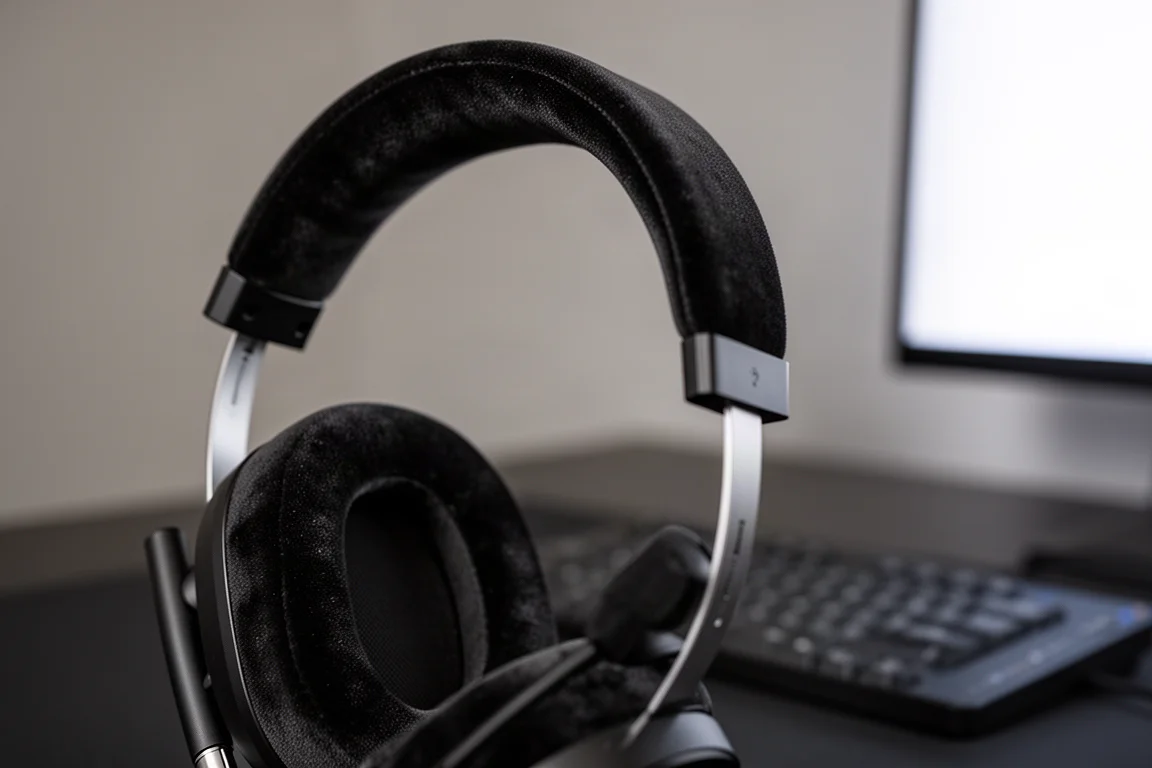
The DT 990 Pro is the divisive one. It is an open-back, over-ear dynamic headphone in a 250-ohm edition, and it sells for around $150, sometimes less. It is brighter than the HD 6XX, with noticeably more treble energy, more bass extension, and a mid-range that is not as strong.
For editing work, that brightness is a feature. It exposes the space in a recording and makes problems easier to hear. For casual listening it will not suit everyone, and the headband padding can become uncomfortable after an hour or so.
Amplification changes this headphone more than most. Underpowered, it turns harsh and unpleasant, and a phone with a simple dongle does not provide enough gain. Driven properly, it is lively rather than unbearable, and a warmer, fuller amplifier would likely suit it better than a lean one.
There is a single cable entry on the left earcup, and that cable is not detachable.
A lower-impedance version also exists. The differences between the two are not something this guide can speak to, but anyone shopping for the DT 990 Pro should check which version they are buying and confirm that the amplifier on hand can drive it.

Closed-Back Value: AKG K371
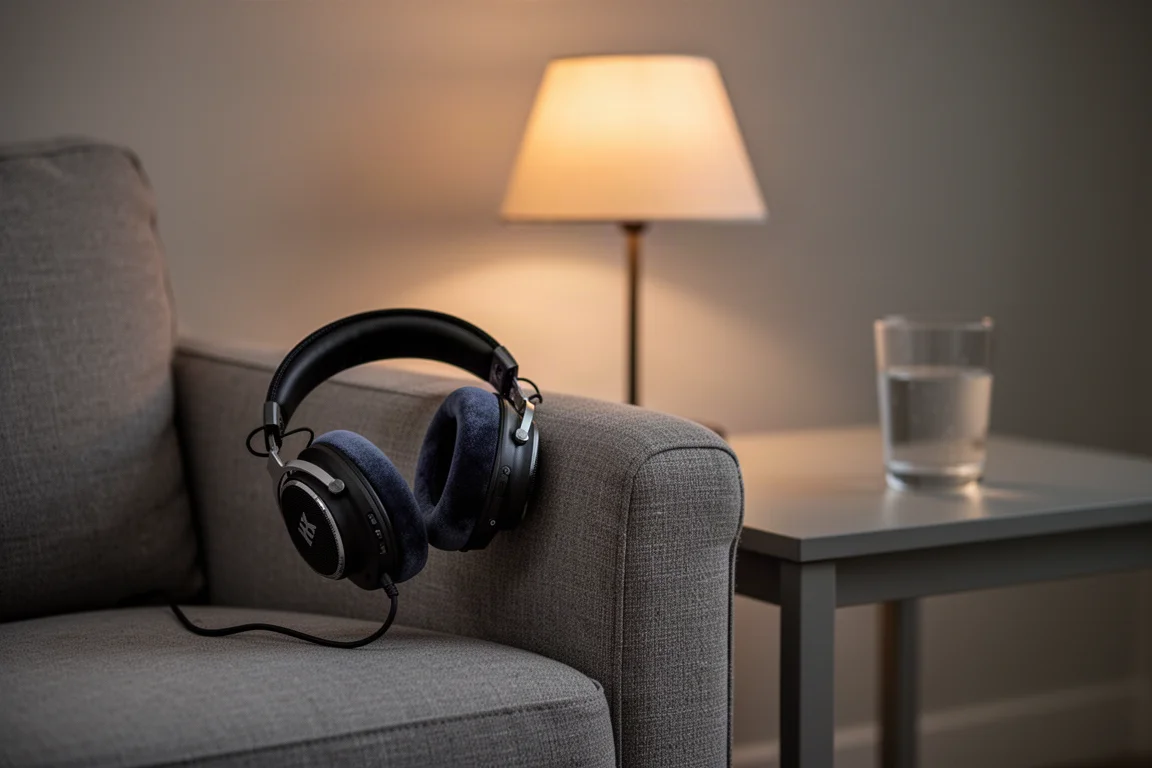
The K371 is closed-back, over-ear, and foldable, with a detachable mini-XLR cable and a design that collapses small enough for a large coat pocket. Retail sits around $150 to $160, and it has been available direct for around $109.
It is voiced to the Harman target curve, a frequency response derived from listener preference testing, and the result is the most balanced of the wired headphones here. Nothing sticks out and nothing drops away, apart from a sub-bass that can feel slightly strong at times. Head staging is wider than the HD 6XX, if only modestly.
Two things make it unusually practical. The 32-ohm impedance means it runs happily from a phone, and the closed-back design means it can be used around other people without leaking sound in both directions. The main drawback is a microphonic cable that transmits handling noise into the earcups.
This is not a headphone that impresses in the first minute. It is a slow burn, and its strengths show up over days of listening across a wide range of music.
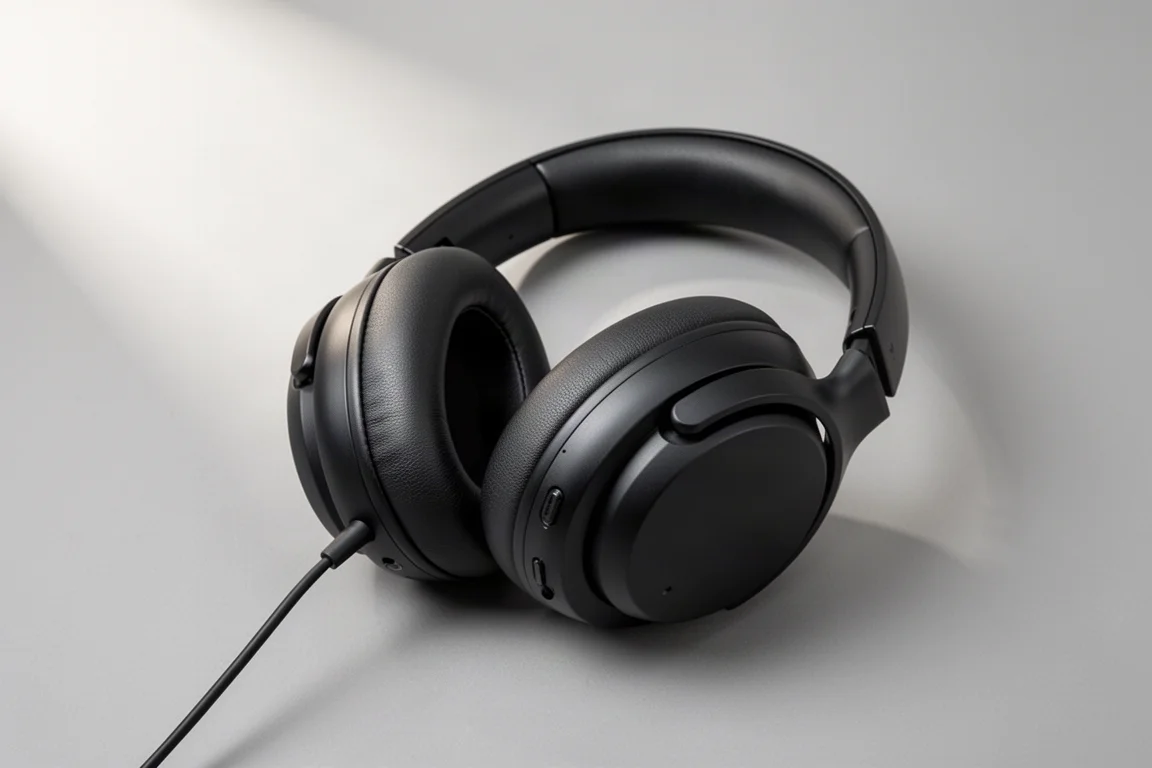
Portable Bluetooth DAC: iFi Go Blu
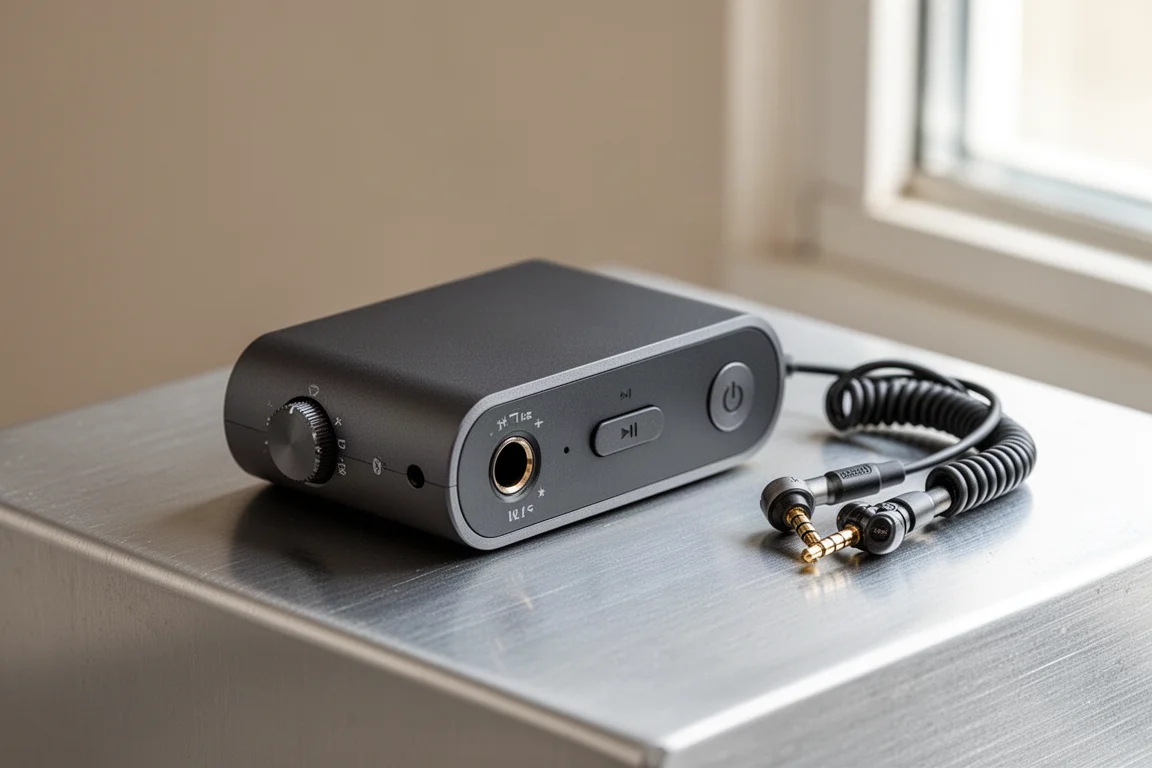
The Go Blu is a pocket-sized Bluetooth DAC. Connect the K371’s 3.5mm jack to it, pair a phone, and the result behaves like a wireless headphone setup with wired headphones on the end.
That combination is more than a convenience. Paired with the K371, the Go Blu produces noticeably better sound than the wireless reference pair in this guide, which makes it one of the more interesting ways to spend money inside a $500 system.
Buying Advice
If simplicity is the priority, the WH-1000XM5 is the whole system for around $400, and nothing else is needed.
If sound quality per dollar matters more, the wired route is where the value sits. The K371 at around $109 paired with the DX3 Pro+ at around $200 comes in comfortably under $500 and covers both desktop and phone listening. The HD 6XX with the same DAC and amp lands close to the target at around $480, but it leaves nothing for a source, so it works best when a computer or an existing streamer can feed the DAC over USB or optical.
The DT 990 Pro is the specialist pick: a genuinely useful editing tool and a fine choice for anyone who likes a bright, detailed top end, provided the amplifier can drive it properly.
Adding the Go Blu turns any of the wired headphones into something portable, and it is the piece that makes the closed-back K371 particularly flexible.
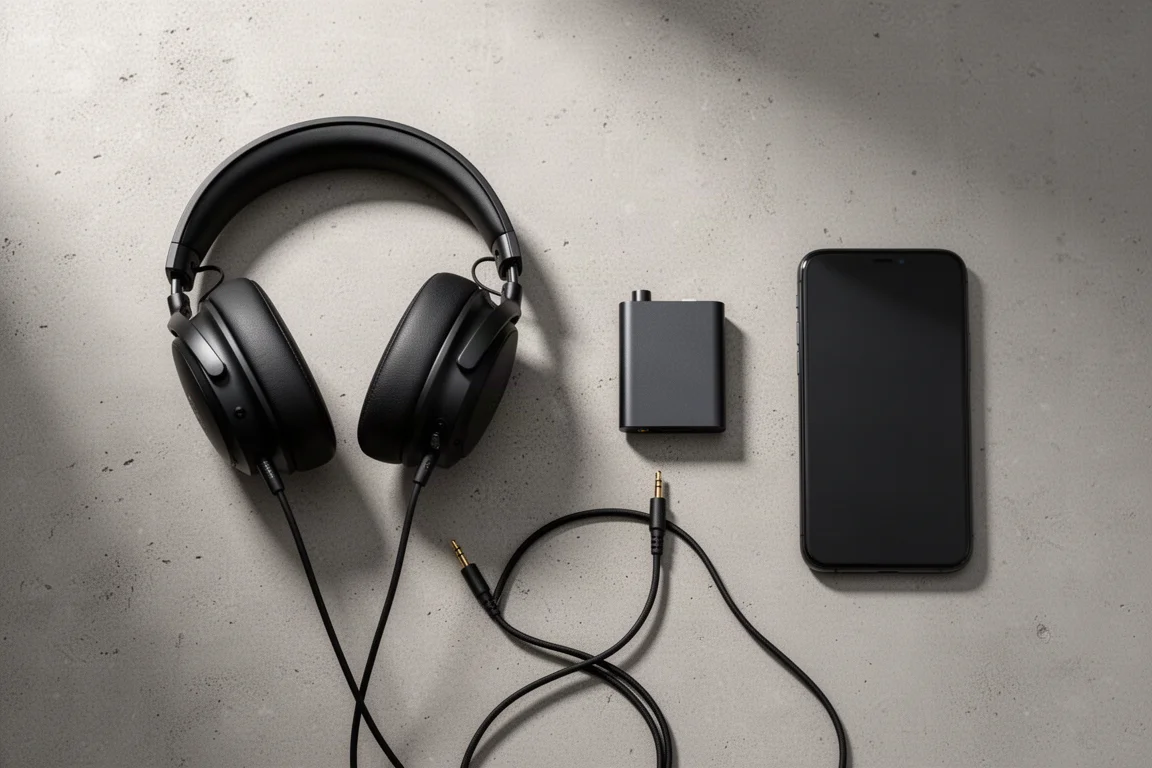
Whichever route you take, the same principle applies. The money goes further at the affordable end, because the room is no longer part of the equation, and a few hundred dollars spent here can reveal how a recording actually sounds.
Conclusion
The point of a $500 headphone system is not to replace a good speaker setup. It is to hear music without the room getting in the way, and to learn what a recording sounds like when the bass is not being reshaped by a living room. The six pieces here cover the main paths into that experience: wireless convenience, open-back and closed-back wired listening, and the desktop and portable electronics that make both of them work.
Further reading
Related Reviews
Headphones
Apos Audio Caspian Review: Warm Bass, Solid Build, and a Detail Trade-Off
The Apos Audio Caspian is an easy-to-drive open-back headphone with standout bass and a warm, relaxed tuning, though mid-range and treble detail trail the competition.
Headphones
Audeze LCD-X vs LCD-XC vs LCD-3: Which High-End Headphone Fits Your Setup
A practical comparison of three Audeze planar magnetic headphones under $2,000, covering the open-back LCD-X, the closed-back LCD-XC, and the wood-ringed LCD-3.
Headphones
Audeze LCD-X vs HiFiMan Edition XS: Two Open-Back Headphones Compared
A practical comparison of the Audeze LCD-X and the HiFiMan Edition XS, covering build quality, comfort, sound signature, and which listener each one suits.