Indoor Growing
Indoor Grow Equipment Guide: Tents, Ventilation, Lights, and Climate Gear Worth Buying
A practical rundown of the grow tents, inline fans, LED lights, monitors, pots, and climate equipment that hold up season after season.
Introduction
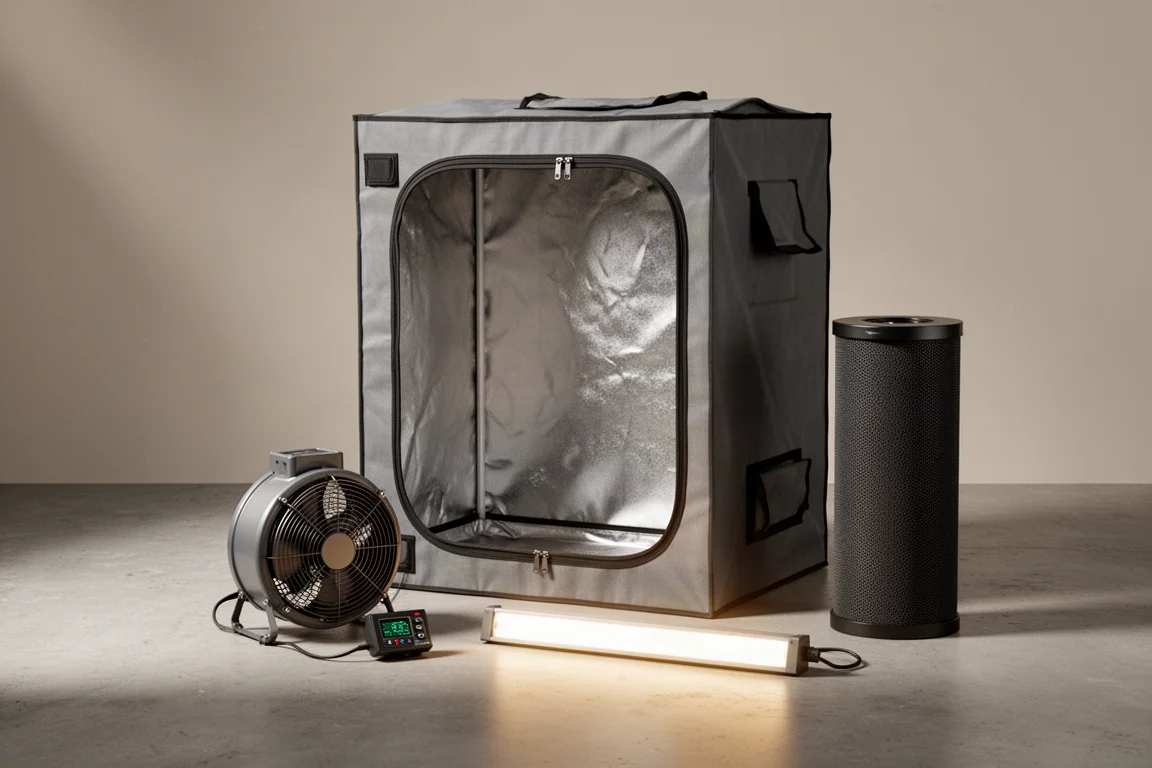
When you grow indoors, your tent is the house your plants live in, and everything inside it either supports the grow or works against it. The good news is that indoor growing has matured to the point where well-made, efficient gear is available at nearly every budget. The key is knowing where to invest and where you can afford to keep things simple.
The overall philosophy is easy to remember: there are places to go cheap, and there are places to invest. Lighting and environment are the two areas where spending a little extra for efficiency and quality pays off over the long run, because you are buying equipment that may run for years, and every month of lower electricity bills adds up.
Grow Tents
The first question worth answering is not which brand to buy, but what you actually need. Are you trying to grow a large amount, or just set up a modest hobby garden for yourself? What is your budget, and what does the space you are working with actually look like? A big spare room might be better served by one large tent or even a full room build, while a closet or office corner calls for something smaller.
Many experienced growers eventually run two tents or two separate rooms, one for the vegetative stage and one for flowering. Separate environments let you try breeding, cloning, or keeping other plants going on a different light cycle, and it genuinely opens up what you can do.
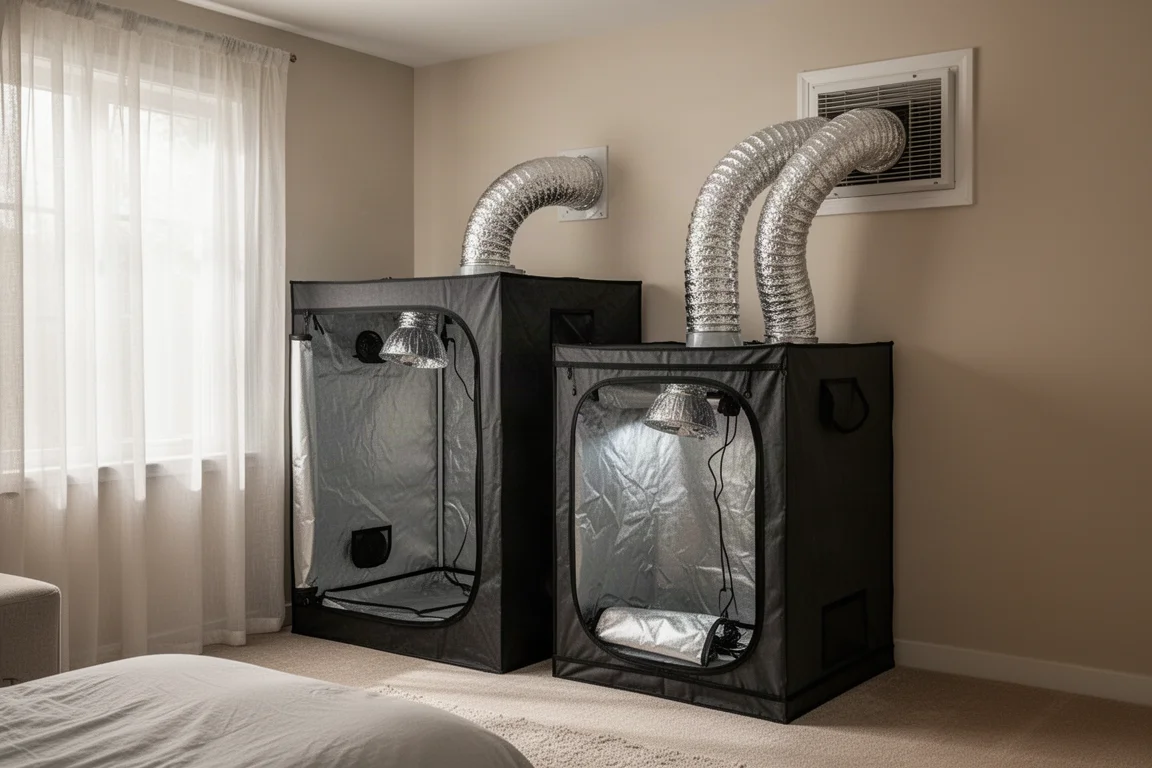
Whatever size you settle on, build quality matters more than almost anything else. A tent is not the place to cut corners, because a cheap unit that falls apart mid-grow is a problem you will regret.
Gorilla Grow Tent Shorty
Gorilla Grow Tent has spent years refining its designs, and it shows in small user-friendly touches like double doors that open up full access around your plants. The Shorty version is especially useful when height is the limiting factor: it fits under shelves or other low obstructions, and extension kits can raise it back up to around seven feet when you move it somewhere with more clearance. Long-term durability is the standout claim here, with owners reporting tents that still look nearly new after five or more years of use.
AC Infinity Grow Tent
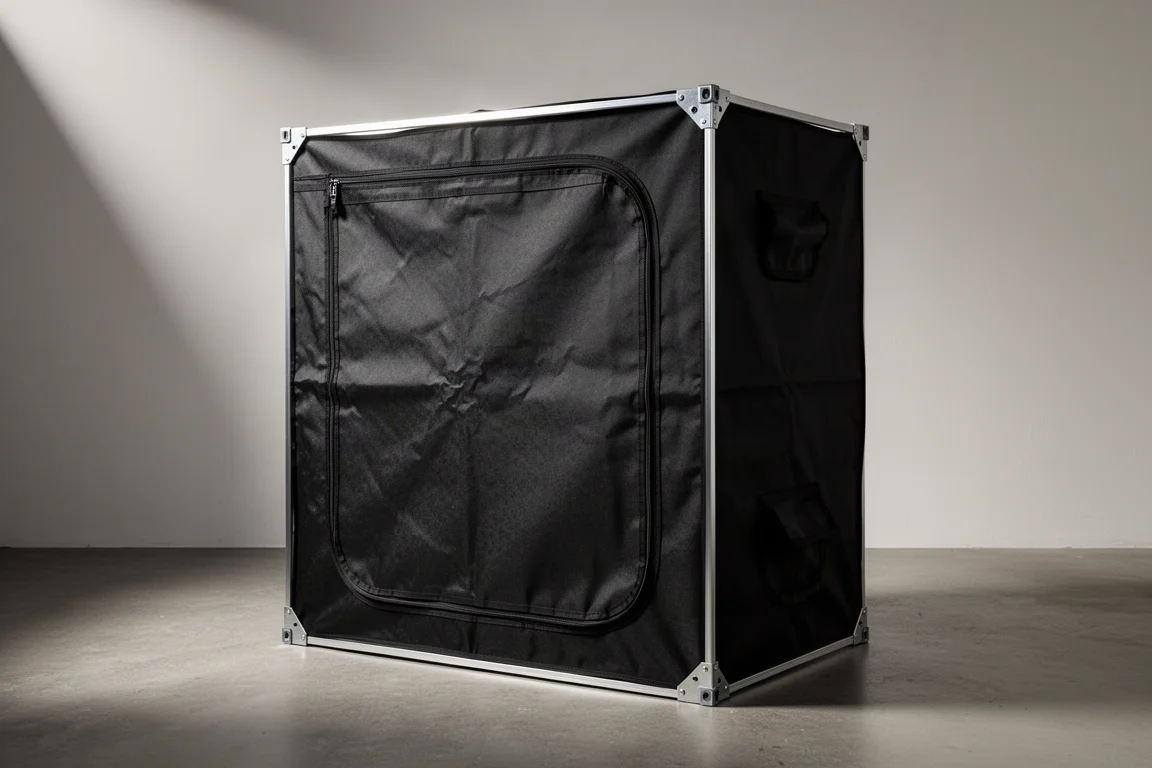
If Gorilla is beyond your budget, AC Infinity tents are a strong alternative. They use a single door instead of double doors, but the canvas density is now among the thickest on the market, the construction is sturdy, and they hold up over many grows. For growers who want quality without the premium price, this is the tent to check first.
Mars Hydro 2x4 Grow Tent
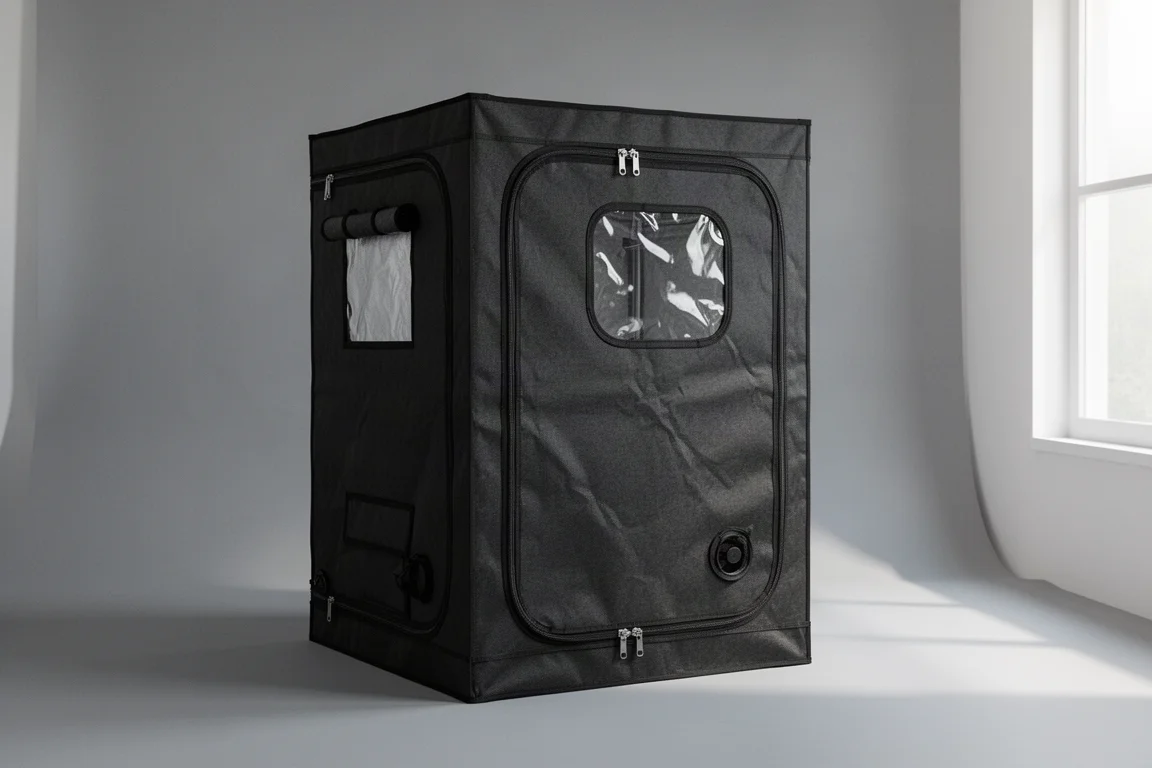
Height is an underrated spec when comparing tents. Some 2x4 tents are only about four feet tall, while the Mars Hydro 2x4 is roughly a foot taller than many competitors. That extra headroom makes it easier to raise your light and grow taller plants, which is a real advantage in tight footprints.
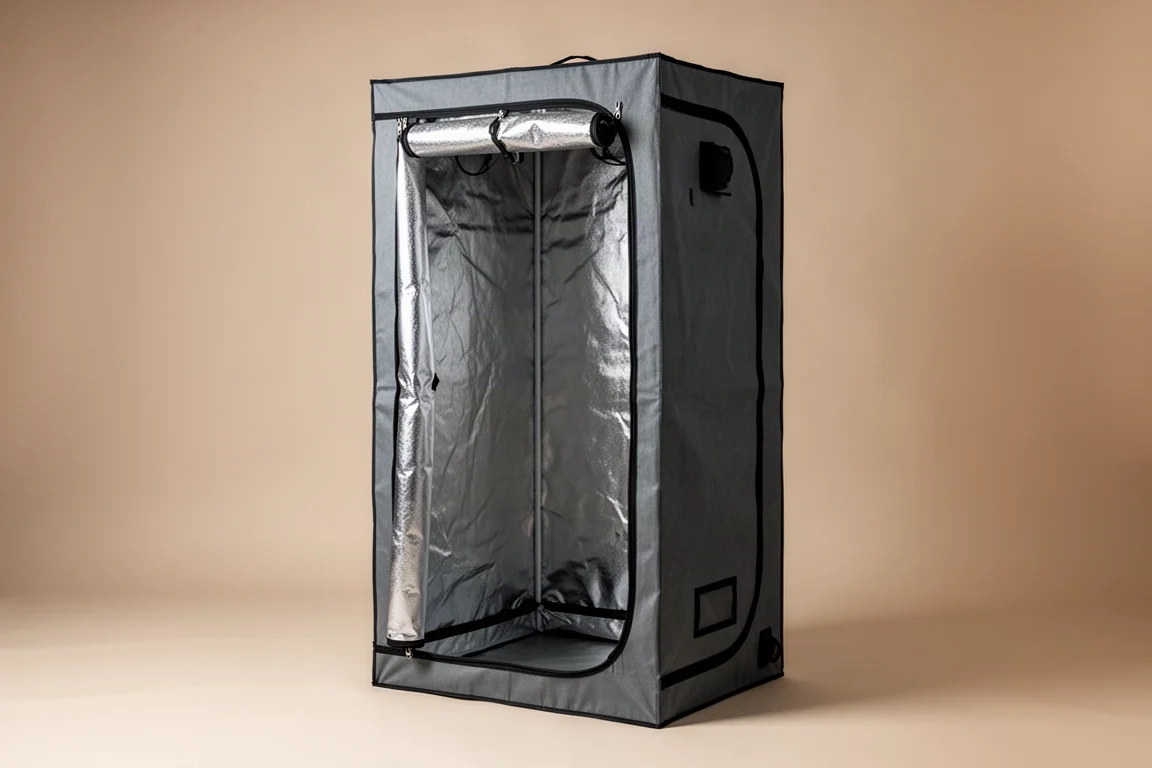
One practical note regardless of brand: check whether the tent has a side or back window. Being able to zip down the side and reach the back of your plants matters a lot in a 4x4, and not every tent offers that. Also, watch out for pinhole light leaks on older budget tents. Some brands that had leaky fabric years ago have since improved their quality, so it is worth checking recent versions before writing a brand off.
Ventilation: Inline Fans and Controllers
Your ventilation system, made up of the inline fan, ducting, and carbon filter, is what keeps temperature and humidity in check, and the controller attached to the fan matters as much as the fan itself.
Sizing is straightforward. For a 3x3 tent or smaller, a 4-inch fan, ducting, and carbon filter are usually enough. A 4x4 up to a 5x5 is comfortable with a 6-inch system. Something like a 4x8 or 5x9 is where 8-inch gear starts making sense, with 10-inch units reserved for very large spaces. If you plan to run a carbon filter, consider going one size up, because the filter restricts airflow.
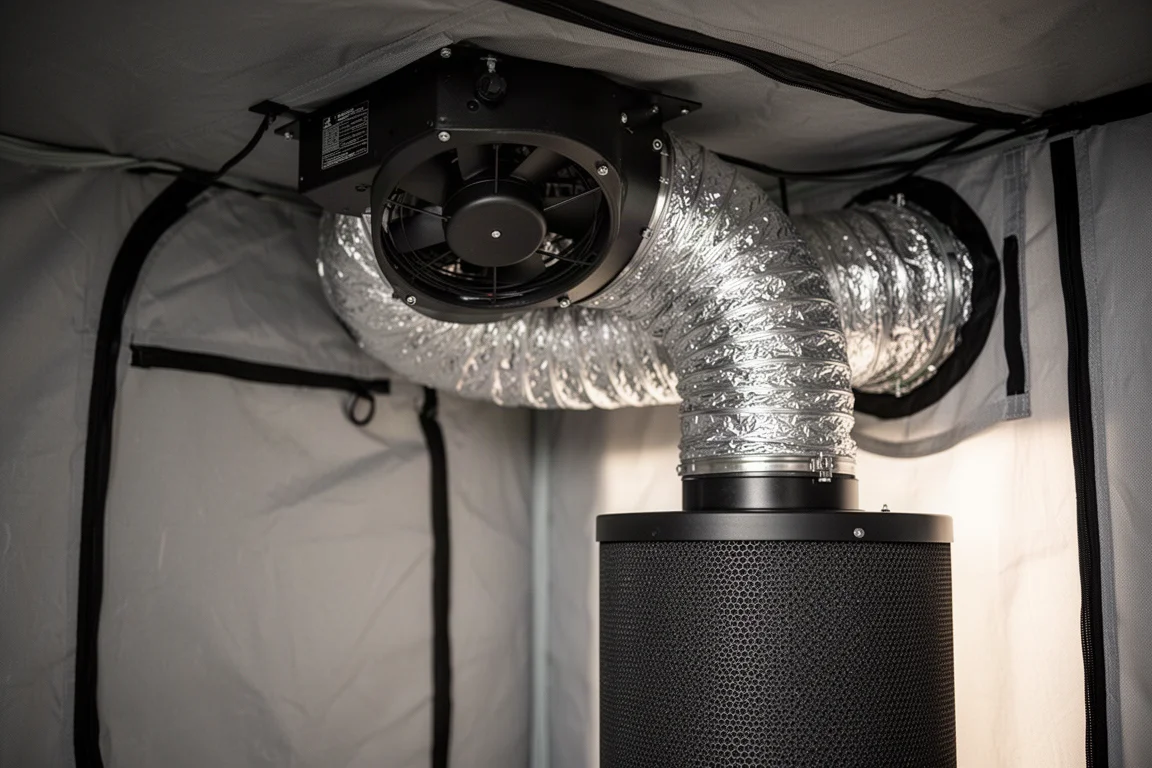
The widely repeated advice is to size up slightly rather than down. With an automated speed controller, an oversized fan simply runs itself down when demand is low, and you keep that extra capacity in reserve for hot days.
AC Infinity inline fans with their automated speed controller are the standouts here. You set a minimum and maximum temperature on the control panel, and the controller adjusts fan speed to hold the environment where you want it. You can also cap the maximum speed, which is how one grower limits office tents to 60 percent to keep noise low enough for podcasting. As a bonus, the built-in controller doubles as an environmental logger, and that three-in-one value makes these fans hard to pass up for small grows.
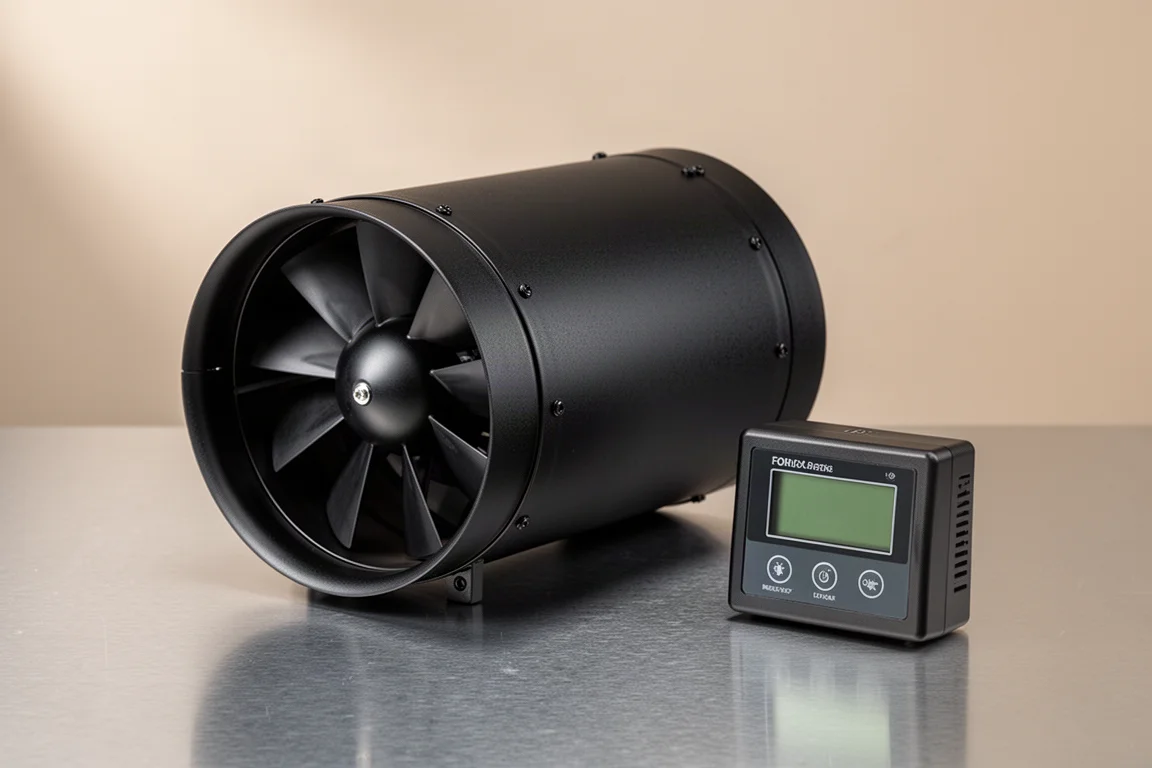
If you are on a tight budget, cheaper fans with basic variable speed control do exist, and the AC Infinity lower-power line is a good middle path. But the environment drives the success of the whole grow, so going too cheap on the fan is a false economy.
Lighting
There is no single best grow light, but there are reliable ways to narrow the field. Two brands come up repeatedly for quality and efficiency: HLG (Horticulture Lighting Group) and AC Infinity.
HLG fixtures sit on the pricier side of the market, but they consistently rank among the most efficient lights available, and the company is known for strong customer support, including help sizing and arranging lights for your specific space. That efficiency matters more the longer you plan to run the light, because a lower electric bill every month eventually offsets a higher upfront price.
AC Infinity ion board LED grow lights cover the other end of the experience: a built-in dimmer button on top of the fixture makes quick adjustments easy when you need less intensity or want to manage heat, and the boards are water resistant, so an accidental overspray during tent cleaning is not a disaster.
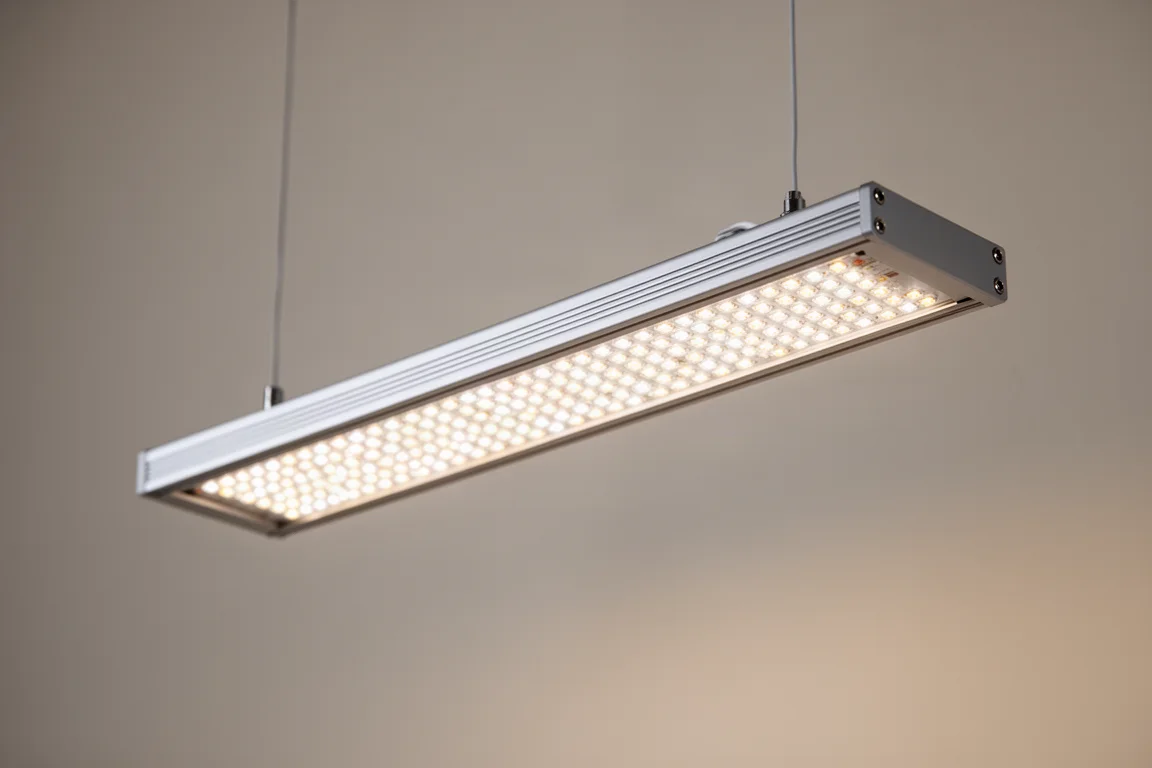
On budget, extensive hands-on testing suggests you do not need to overspend to get optimal growth. Reasonable ceilings by space size work out roughly like this: no more than about $200 for a 2x2, $420 for a 2x4, $500 for a 3x3, $800 for a 4x4, and $1,000 for a 5x5. Plenty of good lights cost more, and that is fine, but plenty of lights under those numbers get the job done.
When comparing two fixtures, efficiency measured in micromoles per joule is the number to watch. Anything above 2.0 puts you in a reasonable range, and higher numbers are better if the price difference makes sense for your budget and electricity rates. Efficiency matters slightly more for a veg light, since it runs 18 hours a day. Also make sure the fixture you choose provides even coverage across the entire footprint, so all of your expensive tent real estate is actually being used.
Environmental Monitors
A monitor that logs temperature and humidity over time changes how you grow, because you finally see what happens at 4 a.m. when the lights are off, not just when you happen to be standing in the room.
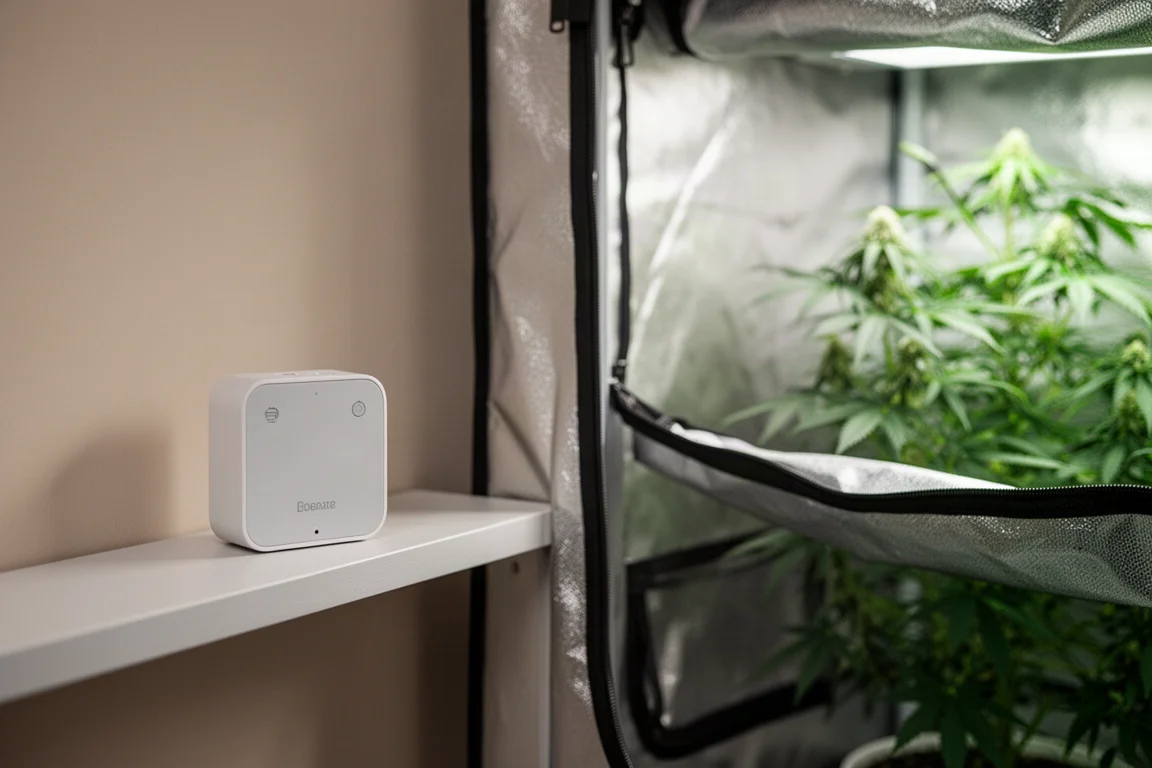
Pulse monitors have earned a loyal following here. They track temperature and humidity, and the Pulse Pro adds a CO2 sensor, a built-in light meter, and a PAR meter. The real superpower is alerting: set your parameters, and the monitor emails you when something drifts out of range. One grower credits a Pulse alert with catching a dehumidifier malfunction days before it would have wrecked the plants. Pulse gear is expensive, but for serious, long-term growers it is widely considered worth it.
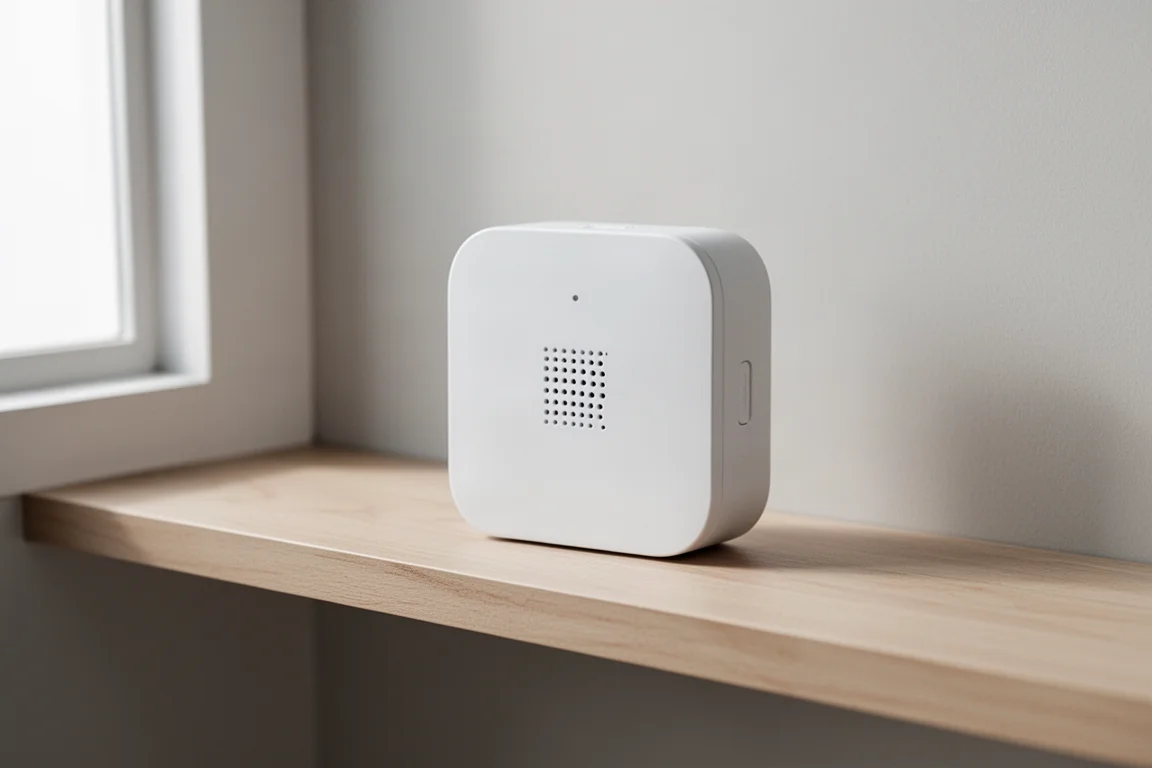
SensorPush monitors are the lighter-duty alternative. A sensor plus Wi-Fi gateway ran about $150 combined, and smartphone alerts can be set for temperature and humidity thresholds. It is worth noting that AC Infinity now builds comparable logging and graphing into its fan controllers, which has led some growers to retire their SensorPush units entirely.
Environmental Controllers
Standalone environmental controllers like the Inkbird smart plug, TrollMaster, and Niwa promise to automate heaters, humidifiers, and dehumidifiers, but they come with caveats worth understanding before you base a grow on them.
The biggest one is Wi-Fi dependence. Some Wi-Fi-based smart plugs behave unpredictably when the connection drops; one reported failure mode was a plug that simply turned everything on during an outage. You also want to know whether a controller remembers its settings after a power cut or whether you will be reprogramming everything.
There is an even more common trap: many of these controllers only switch power on and off. If your humidifier or air conditioner needs a button press after receiving power before it actually starts working, the controller cannot operate it at all. Before buying any controller, confirm that your existing equipment starts automatically when power is supplied.
For small grows, the simpler path is often the best one: keep the room your tents are in at a comfortable temperature, and let the AC Infinity fan controller handle the fine-tuning inside the tents. Many growers run standalone dehumidifiers and air conditioners on their own internal controllers rather than adding another layer of automation.
Pots and Medium
Medium and container choices work as a system, so it helps to decide them together. With living soil, the soil itself is the battery that powers the plant for the whole grow, and big containers are how you size that battery. A final pot of at least 10 gallons, ideally closer to 15 or more, keeps the soil moist and the microbial life active. Let living soil dry out and the microbes go dormant, which locks up nutrition.
With Coco and bottled nutrients, smaller pots are fine, and air-pruning containers such as fabric pots help prevent roots from spiraling while letting the medium dry faster so you can feed more often. Be aware that Coco holds less water than soil, so you will be hand-watering more frequently.
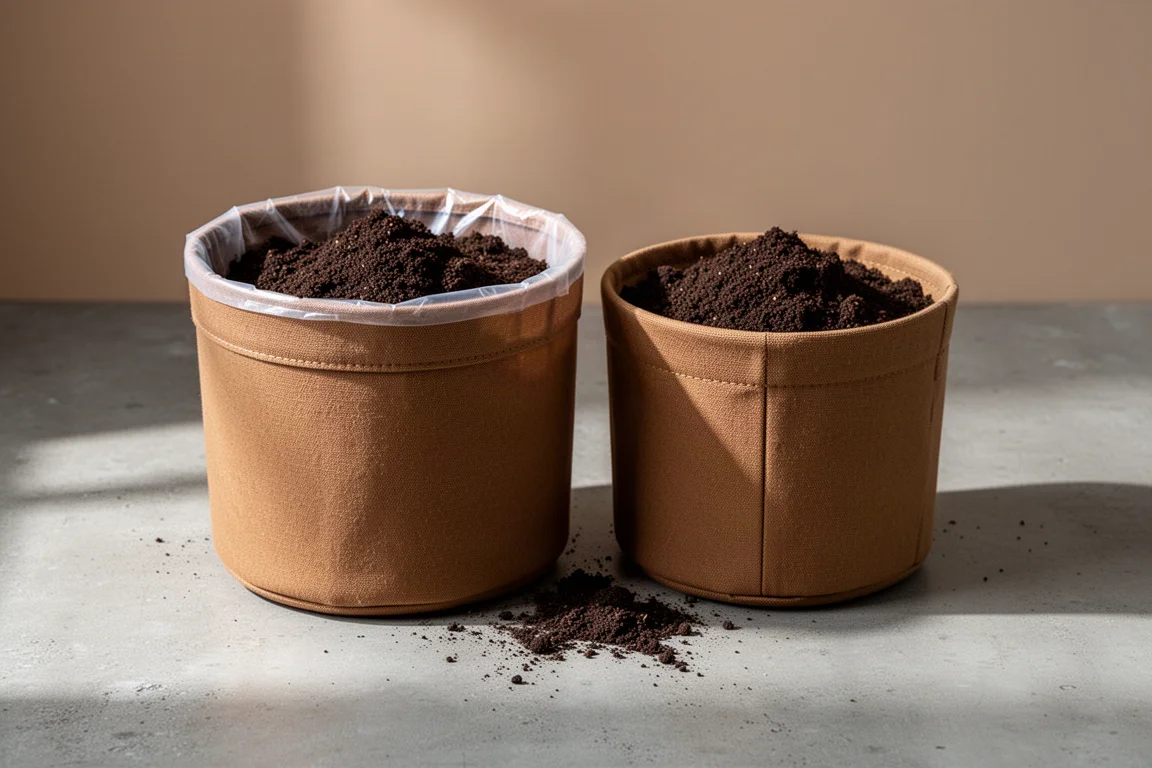
For living soil in fabric pots, there is a smart middle ground: Grassroots fabric pots include a liner on the sides, with fabric left open at the top and near the bottom. You keep the drainage and air pruning at the base, but the sides stop wicking moisture away, which is exactly what a living soil wants. The same liner construction is available in larger beds for bigger setups.
Climate Control: Air Conditioning, Heating, and Humidity
Climate gear scales with your grow. In a small tent, skip the dedicated AC entirely and control the temperature of the room the tent lives in using your home climate system, then let a fan controller handle the last mile inside the tent.
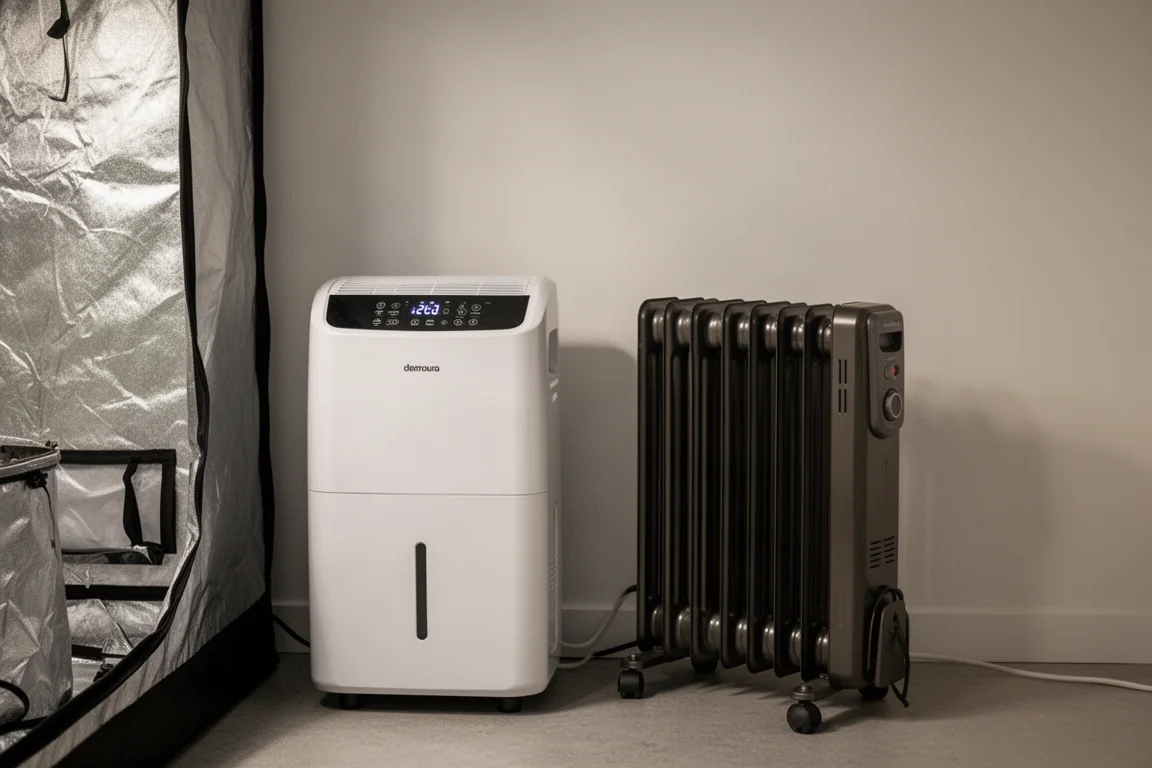
Dehumidifiers reward efficiency research. Home dehumidifiers are typically built for basement use a month or two per year, not 24/7 grow-room duty, so check the efficiency number carefully. For large, serious grows, Quest makes powerful, highly efficient dehumidifiers that cost a lot upfront but pay off over a lifespan measured in a decade of electric bills. For smaller setups, a compact Frigidaire dehumidifier has proven efficient and dependable for years of use despite being a home-grade unit.
When air conditioning is genuinely needed, avoid portable hose-style units if you can. They consume enormous amounts of power relative to the cooling they deliver, and the electricity bill reflects that quickly. A mini split is expensive, with a quality 18,000 BTU Fujitsu unit running around $3,000, but it was the most efficient unit on the market when purchased, carries a ten-year warranty, and keeps monthly costs low for years afterward.
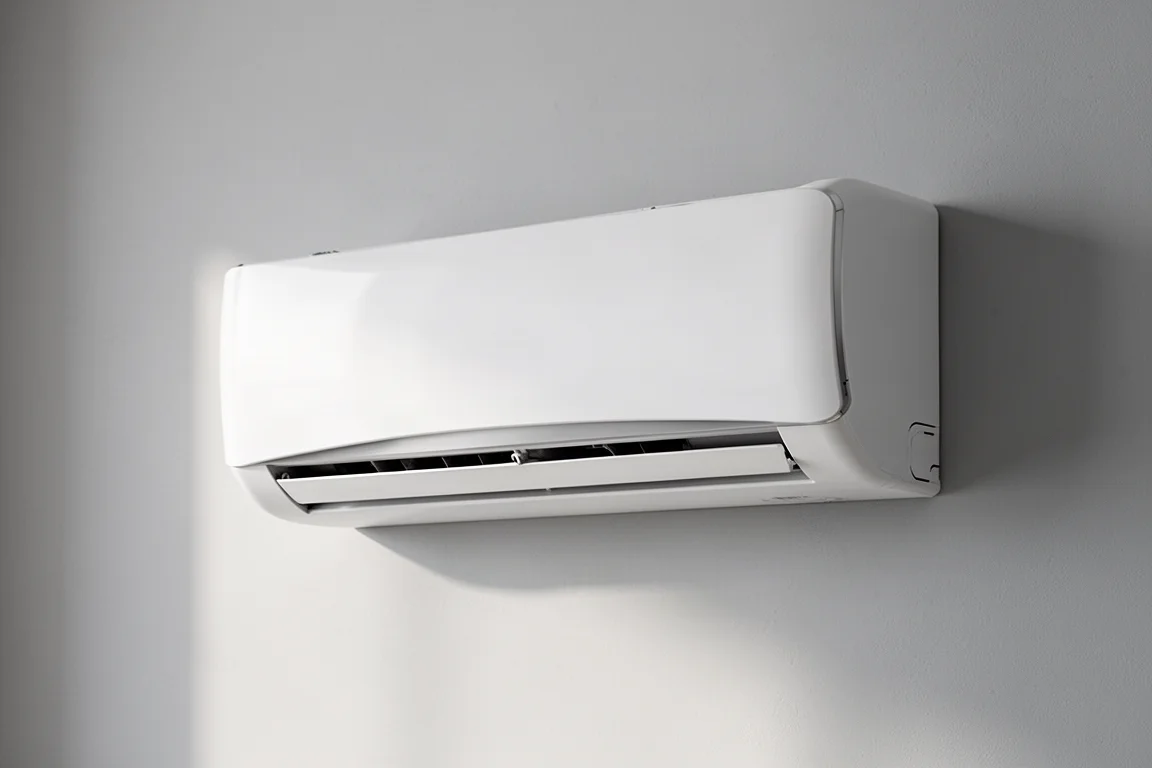
Heating is the cheap end of the climate spectrum. Tower heaters in the $50 to $75 range work well for short bursts when lights-off temperatures drop in winter, and oil-filled radiator-style heaters are a safer option that keeps radiating warmth even after power cuts. One scheduling tip that saves real money: planning your grow calendar so you skip the hottest summer months can drastically reduce cooling costs.
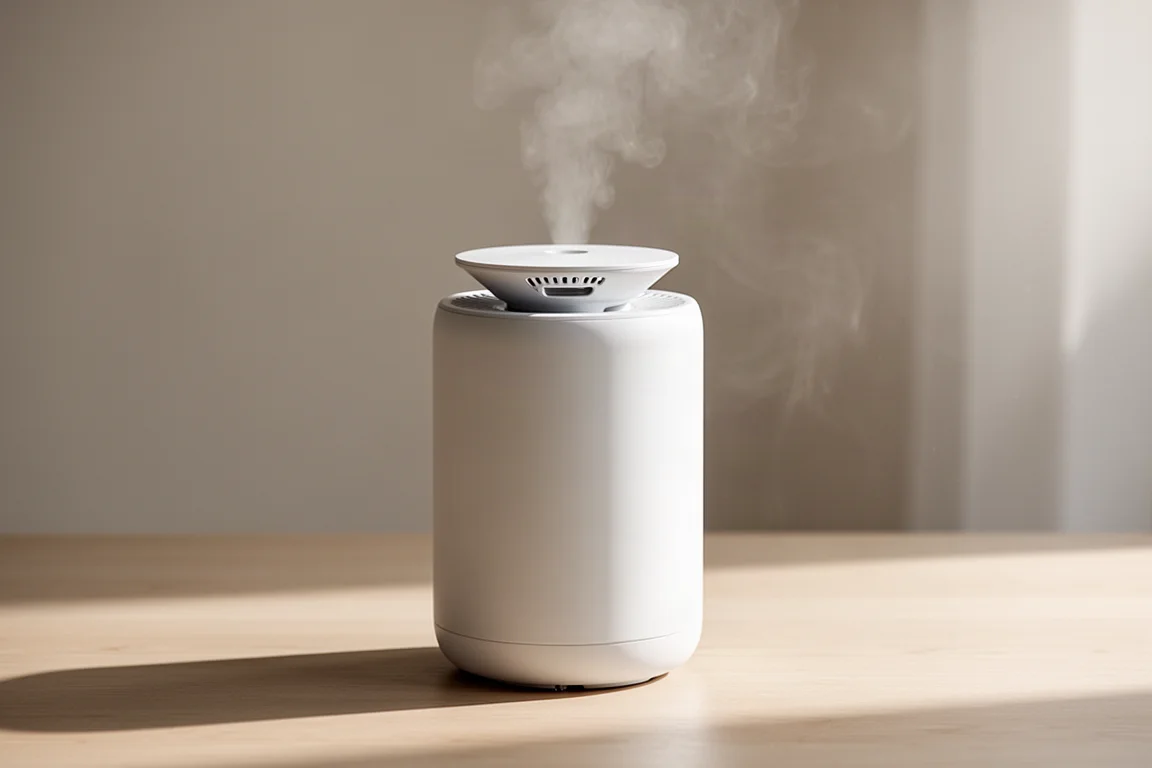
On the humidity-raising side, a smart humidifier with a built-in humidistat is the right tool, because it holds a target percentage and switches off when reached instead of running endlessly. The Levoit smart humidifier is a favorite for its top-fill design, so you pour water in from the top rather than dismantling the tank, and its app notifies you when the tank is empty or the unit needs cleaning.
Buying Advice
If you take one idea from this guide, make it this: your grow tent, fan, and light are the three purchases where quality compounds over time. A sturdy tent lasts many grows, an efficient fan and light lower every monthly bill, and a monitor that alerts you to problems can save an entire crop.
Everything else can be matched to your budget and ambition. Small tent growers can lean on home climate control and built-in fan controllers. Larger setups justify a mini split, an efficient dehumidifier, and dedicated monitoring. Decide your goals and space first, then spend accordingly.
Conclusion
Indoor growing rewards equipment that is solid, efficient, and easy to live with. Choose a tent that will not let you down, a fan that manages the environment for you, a light with real efficiency, and monitoring that tells you what is happening when you are not there. Get those foundations right, and everything else in the garden becomes easier.
Further reading
Related Reviews
Indoor Growing
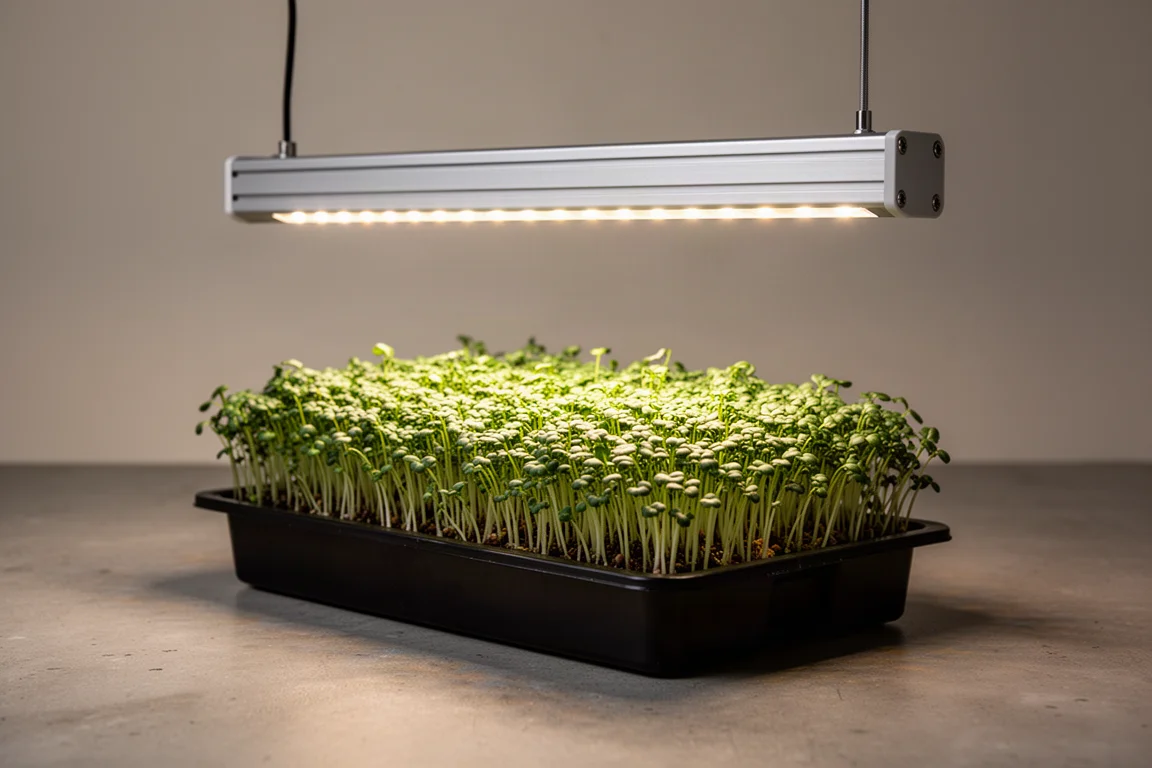
Happy Leaf Grow Lights Review: A Microgreens Farm's Long-Term Favorite
After years of daily use in a busy indoor microgreens farm, Happy Leaf grow lights have proven themselves on growth quality, durability, and support.
Indoor Growing
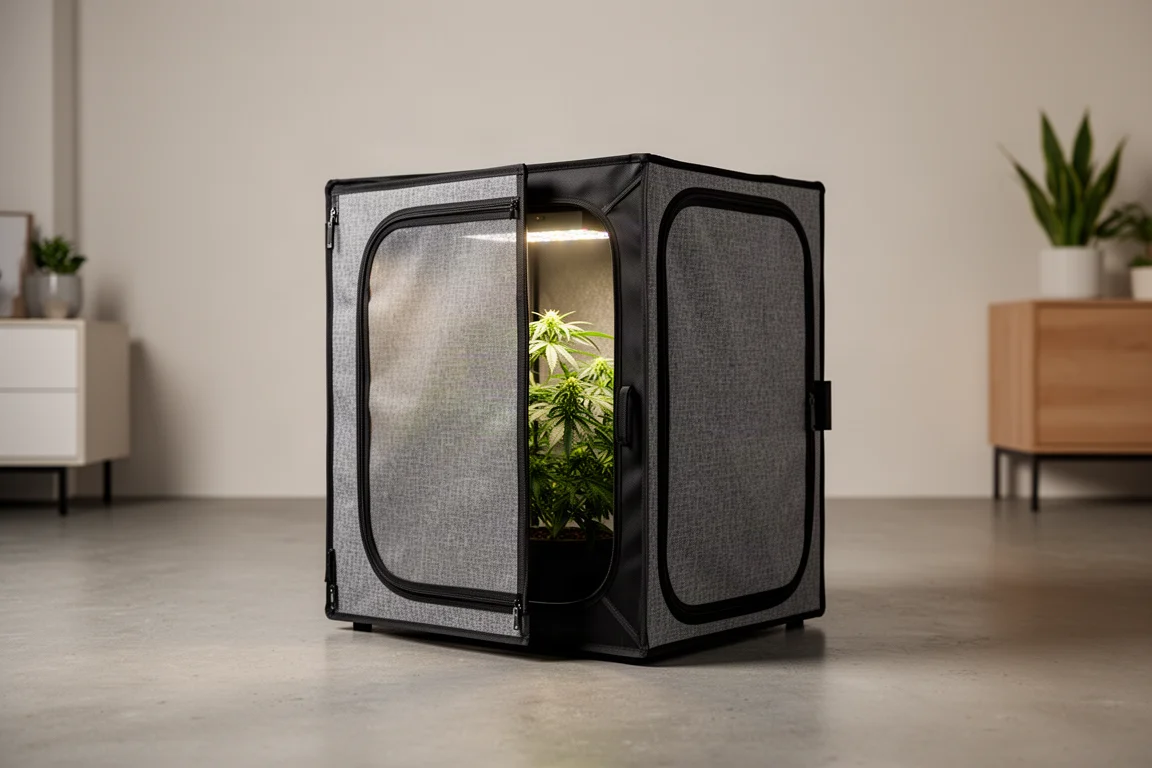
Vivosun VGrow Grow Box Review: 25 Days of Real Growing
After 25 days of daily use, from seedling to topping, here is how the Vivosun VGrow all-in-one grow box handled environment control, feeding, and day-to-day care, plus how the Grow Cam C4 fits in.
Backpacking Gear
Building a 10 lb Base Weight: An Ultralight Backpacking Gear List
A practical walkthrough of the ultralight pieces behind a 10 lb base weight, from a 765 g pack and a roomy one-person tent to a full camp chair and a dependable water filter.