Indoor Growing
Vivosun VGrow Grow Box Review: 25 Days of Real Growing
After 25 days of daily use, from seedling to topping, here is how the Vivosun VGrow all-in-one grow box handled environment control, feeding, and day-to-day care, plus how the Grow Cam C4 fits in.
Introduction
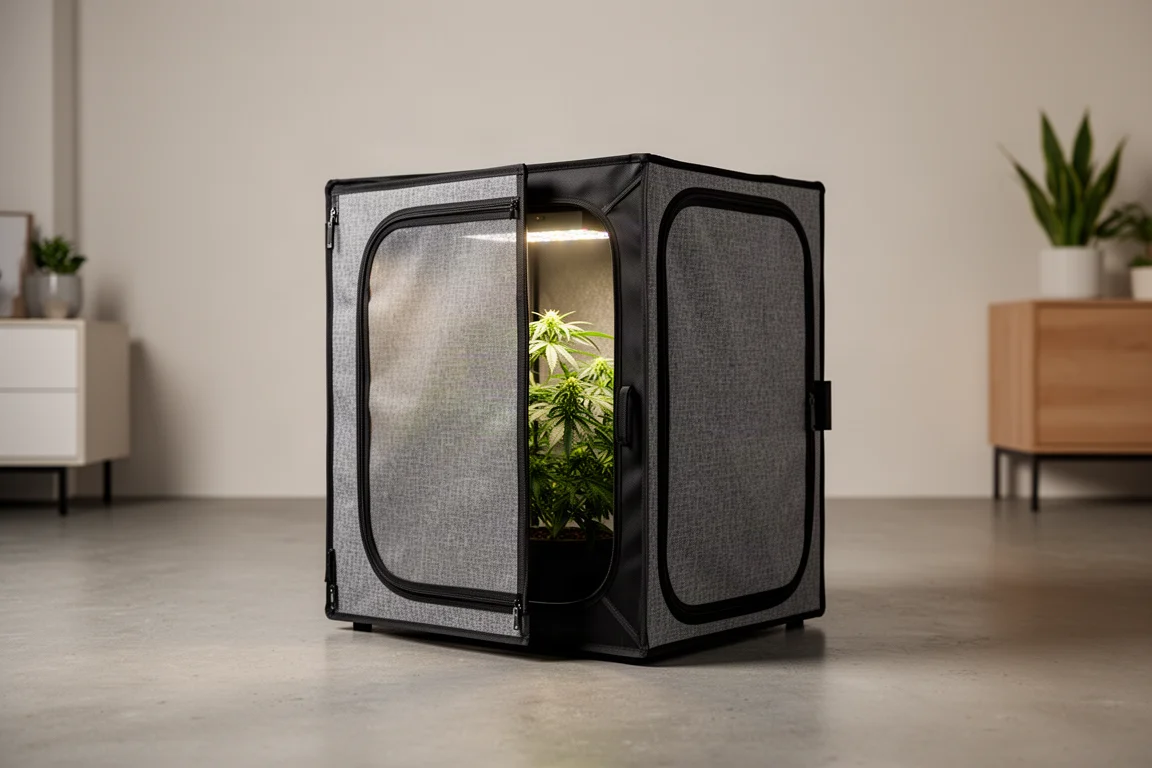
The Vivosun VGrow is an all-in-one grow box that bundles lighting, ventilation, irrigation, and app control into a single compact cabinet. To find out how it actually performs, one unit was run continuously for 25 days, from sprouting a seed through early veg and up to a topping, with the environment, water level, and plant health tracked at every step. This review covers what worked well, what required workarounds, and who this setup makes the most sense for.
Setting Up and Germination
Getting started is straightforward. A seed was sprouted directly in the medium with a humidity dome over it, and once the seedling broke through, the dome was cracked for airflow and removed a day later. Early light levels matter: the light started at 25 percent, which produced a stretchy seedling with roughly a two-inch stem. Bumping the intensity to 50 percent brought the plant to around 250 PPFD at the canopy, which suited that early stage well. In hindsight, starting at 50 percent or higher from day one looks like the better approach, and many growers run even higher without any light burn.
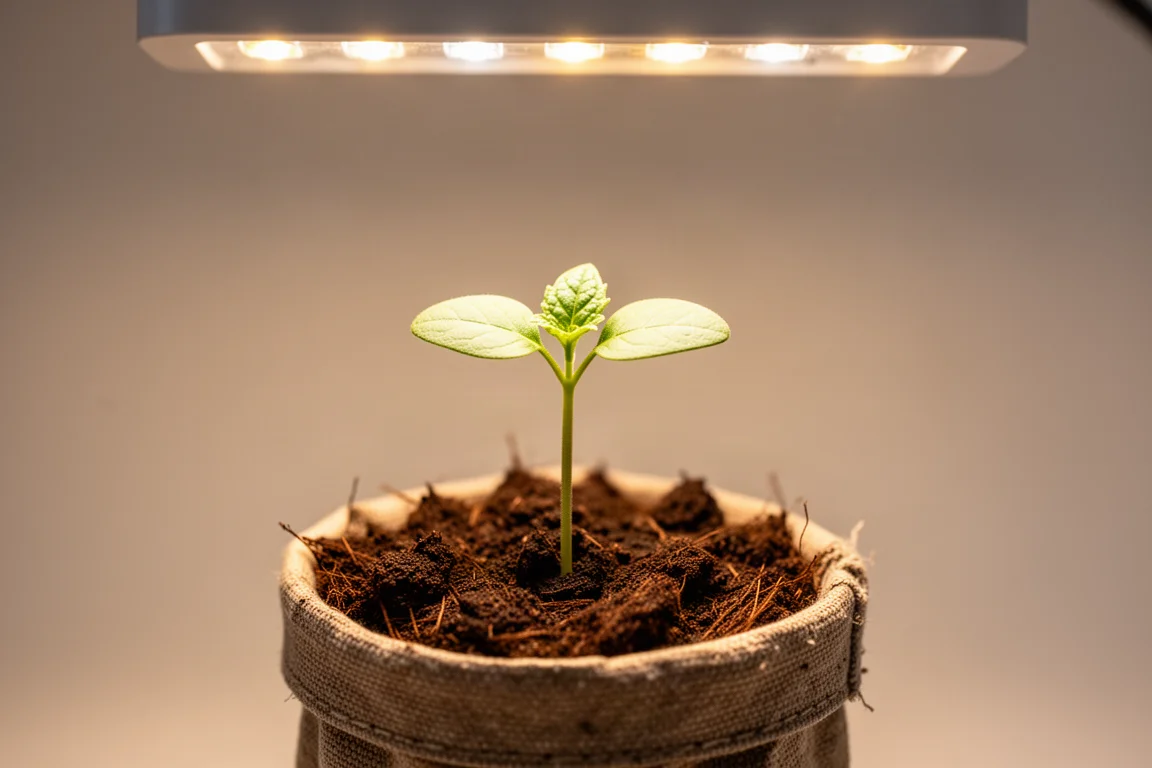
One preparation note worth flagging: the coco was rinsed rather than buffered, so a low dose of nutrients was worked in beforehand. The result was a uniformly green plant with no yellowing, which suggests the preparation did its job.
Day-to-Day Care and Feeding
The reservoir and wick system make watering easier, but coco still needs judgment. Even with a water tank below, coco can absolutely be overwatered, so the pot was allowed to dry back somewhat between fills, judged by weight and the moisture at the top of the medium. The real test came over a four-day long weekend away. After filling the reservoir with a light 2 ml per gallon A and B nutrient solution before leaving, the plant came through in great shape: upright, green, and visibly growing, with solution still remaining in the tank. That kind of buffer is genuinely reassuring for anyone who travels.
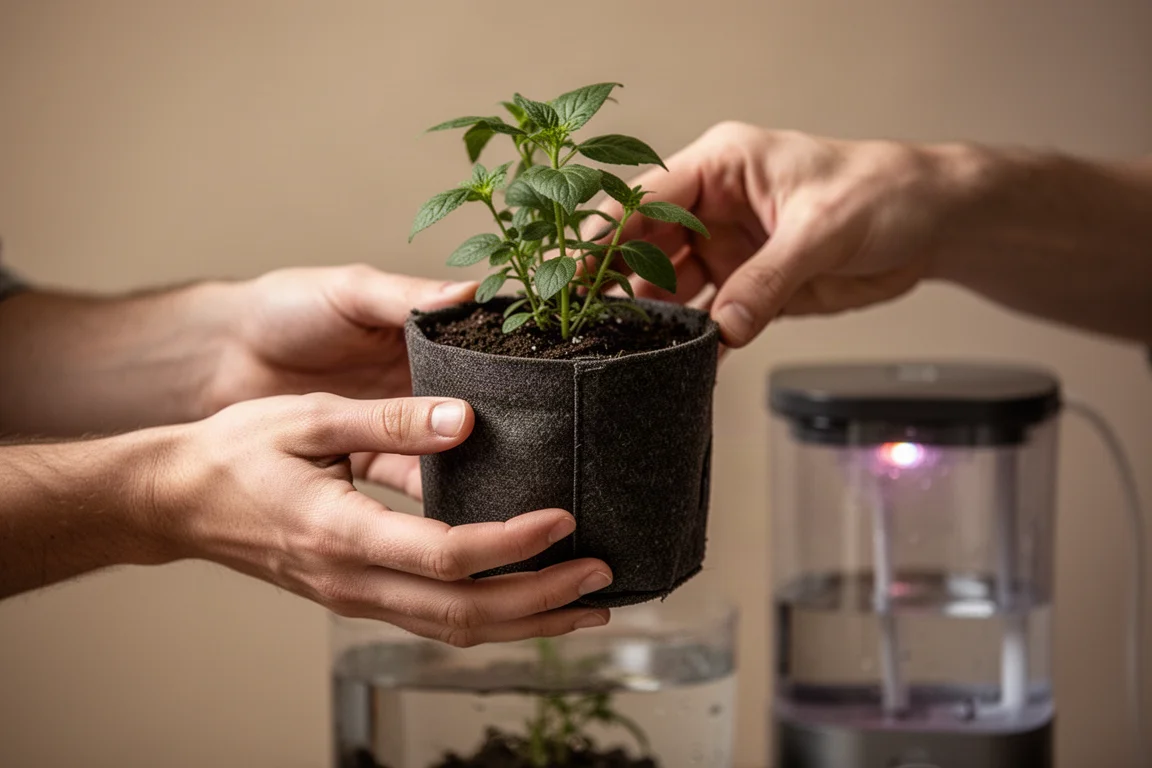
The humidifier is the one component that needs daily attention in dry climates. It has to be refilled roughly every 24 hours, and after each refill you must hold the M button for about three seconds for it to restart. Skip that step and it stays off, which is easy to learn the hard way. Growers in more humid climates may not need it at all, and a built-in humidifier would be a welcome improvement in a future version.
App and Smart Controls
The app ties the whole system together and it is genuinely convenient. Temperature, humidity, and VPD readings are visible at a glance, the light schedule is simple to set, and the duct fan runs on auto with temperature and humidity triggers. The setup used here ran a 75 percent light intensity in a veg spectrum on an 18-hour cycle, with the circulator fan on manual, the duct fan on auto with a temperature trigger around 82 degrees, and the humidifier on a USB port with a 70 percent humidity trigger.
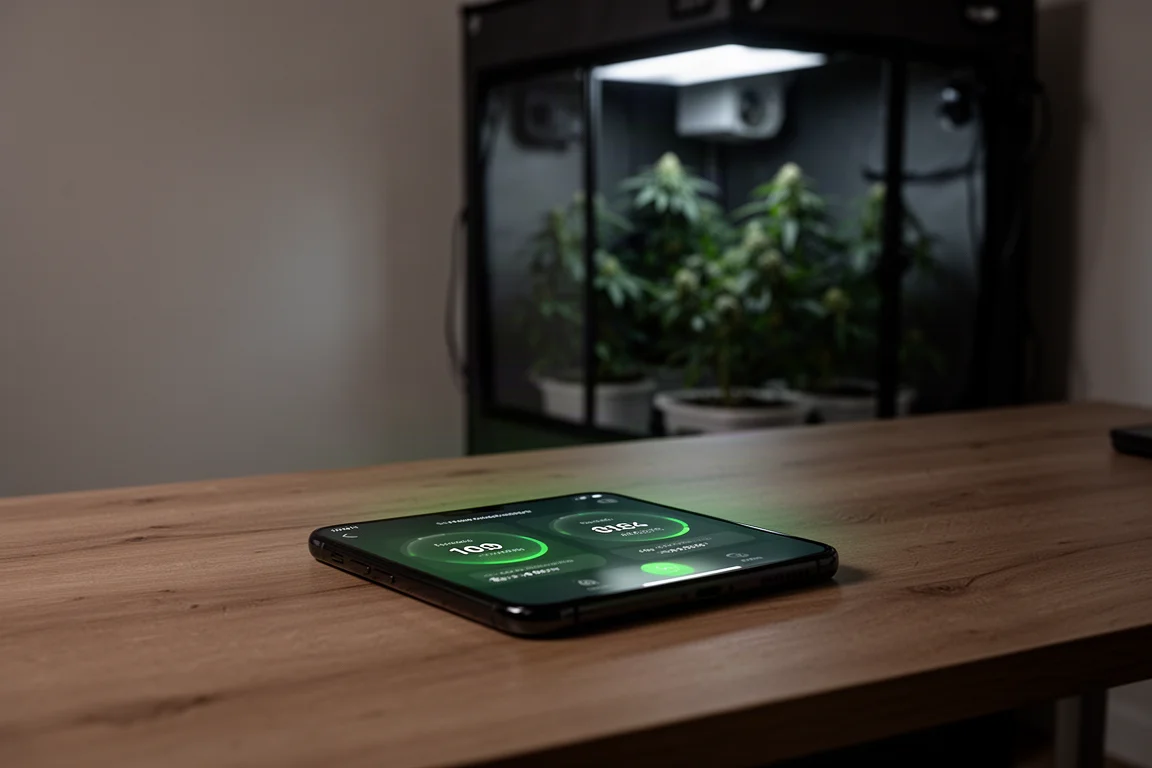
One limitation: there is no VPD-based control yet. Targeting a specific VPD so the humidifier toggles automatically would be a natural next step, and CO2 visibility or supplementation would be another worthwhile addition.
Plant Growth and Performance
From day 10 onward the plant looked consistently healthy, with no yellowing or deficiencies at any point. By day 18, with the seedling stage behind it, the light was moved to the veg spectrum and raised to 75 percent, delivering a little over 400 PPFD, with plans to climb toward the 400 to 600 PPFD range. On day 19 the intensity went to 100 percent for the rest of the grow. At day 25 the plant was topped down to the fifth node, opening the door for around ten potential branches to develop, with low stress training planned next to fill out the grow space. Through the temperature spike described below, growth never visibly slowed.
Adding the Grow Cam C4
The Grow Cam C4 adds remote monitoring and time-lapse recording to the setup. It mounts using a bracket from the supplied accessory kit, attaches to the side wall of the box, and plugs into one of the top USB ports. Pairing is simple: scan it from the app and the live feed appears. Recording a time-lapse requires a micro SD card, which is not included, so factor that small extra purchase in.
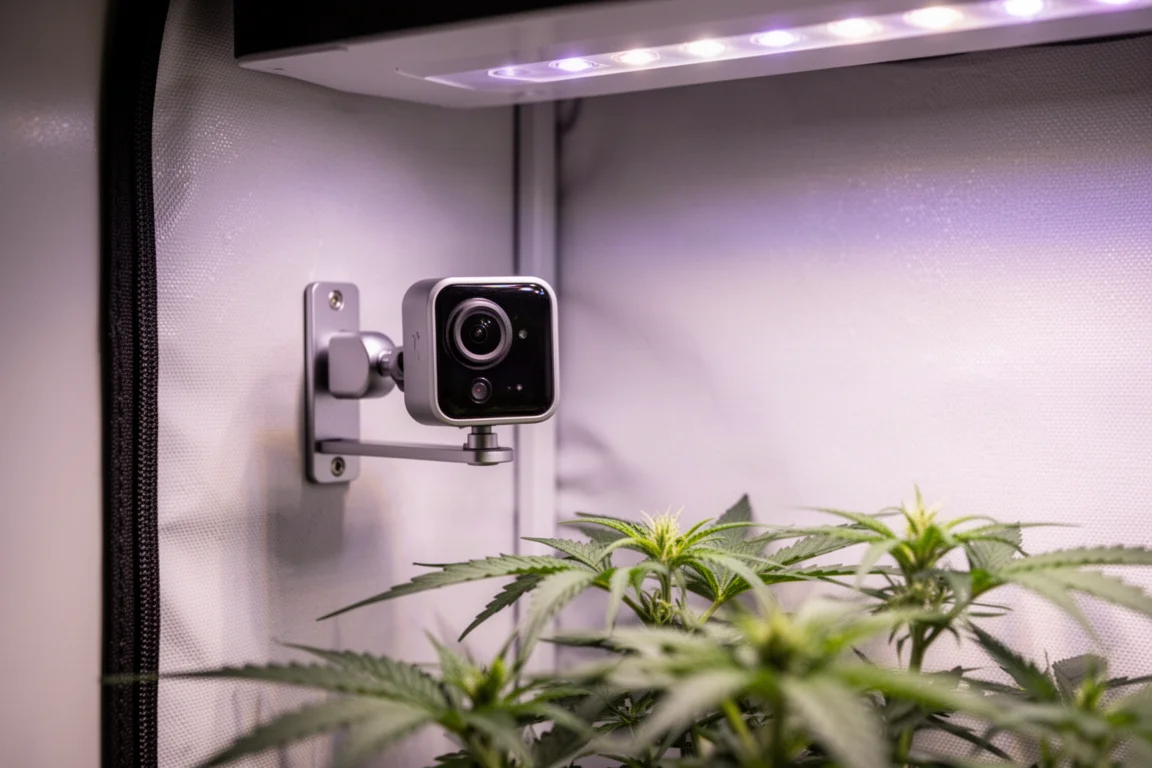
The included temperature and humidity sensor also deserves attention. The original top mounting let go, likely from heat, so it was repositioned on the side wall near canopy level. In a box this small, the difference between hanging positions is minimal, but keeping the probe off the ground is worth doing.
Temperature: The Main Thing to Watch
Heat is the honest weak spot. When the light was raised to 75 percent, the interior climbed to 93 degrees before it was noticed that the duct fan had switched off entirely; with the fan restored, temperatures eased back toward 86. The box has no compressor, so it cools only by pulling air from the room around it. In a warm room, especially in summer with other heat-producing equipment nearby, the interior can sit high, and there is no good cooling option short of a portable AC. In cooler seasons this is unlikely to be a problem, but buyers in hot climates or warm rooms should think about placement carefully.
Buying Advice
The VGrow makes the most sense for growers who want a tidy, self-managing cabinet that can forgive a long weekend away, handle the seedling-to-veg transition automatically through its presets, and keep feeding simple with the reservoir and wick system. The Grow Cam C4 is a natural companion if you want eyes on the plant from another room or want to build time-lapses of the whole cycle. If your grow room runs hot in summer, plan for placement and airflow before you buy. Vivosun has offered discount codes that work both on its own website and on Amazon, so it is worth checking for current offers before ordering.
Conclusion
Over 25 days, the Vivosun VGrow proved easy to live with: healthy growth from sprout to topping, a forgiving reservoir system that survived four days unattended, and app control that keeps adjustments simple. The trade-offs are real but manageable: watch your temperatures in warm rooms, remember the humidifier quirk, and pick up a micro SD card if you want time-lapses. For growers who want a compact all-in-one setup that mostly runs itself, it is an easy recommendation.
Product link
View more details for Vivosun VGrow Grow Box
This product is mentioned in the review. Check the specifications, options, and compatibility before buying.
View more details for Vivosun VGrow Grow BoxFurther reading
Related Reviews
Indoor Growing
Indoor Grow Equipment Guide: Tents, Ventilation, Lights, and Climate Gear Worth Buying
A practical rundown of the grow tents, inline fans, LED lights, monitors, pots, and climate equipment that hold up season after season.
Indoor Growing
Happy Leaf Grow Lights Review: A Microgreens Farm's Long-Term Favorite
After years of daily use in a busy indoor microgreens farm, Happy Leaf grow lights have proven themselves on growth quality, durability, and support.

Indoor Growing Equipment
VIVOSUN AeroGrow System Review: Complete Smart Grow Setup for Indoor Cultivation
A comprehensive look at VIVOSUN's integrated grow system combining the AeroLight, AeroZesh fan, and GrowHub Controller for customizable indoor plant cultivation.