Cycling Nutrition
Best Energy and Recovery Bars for Cycling: 17 Bars Compared
A practical comparison of 17 energy and recovery bars, covering how easily each wrapper opens one-handed, how it tastes, and how the nutrition profile fits a ride.
Introduction
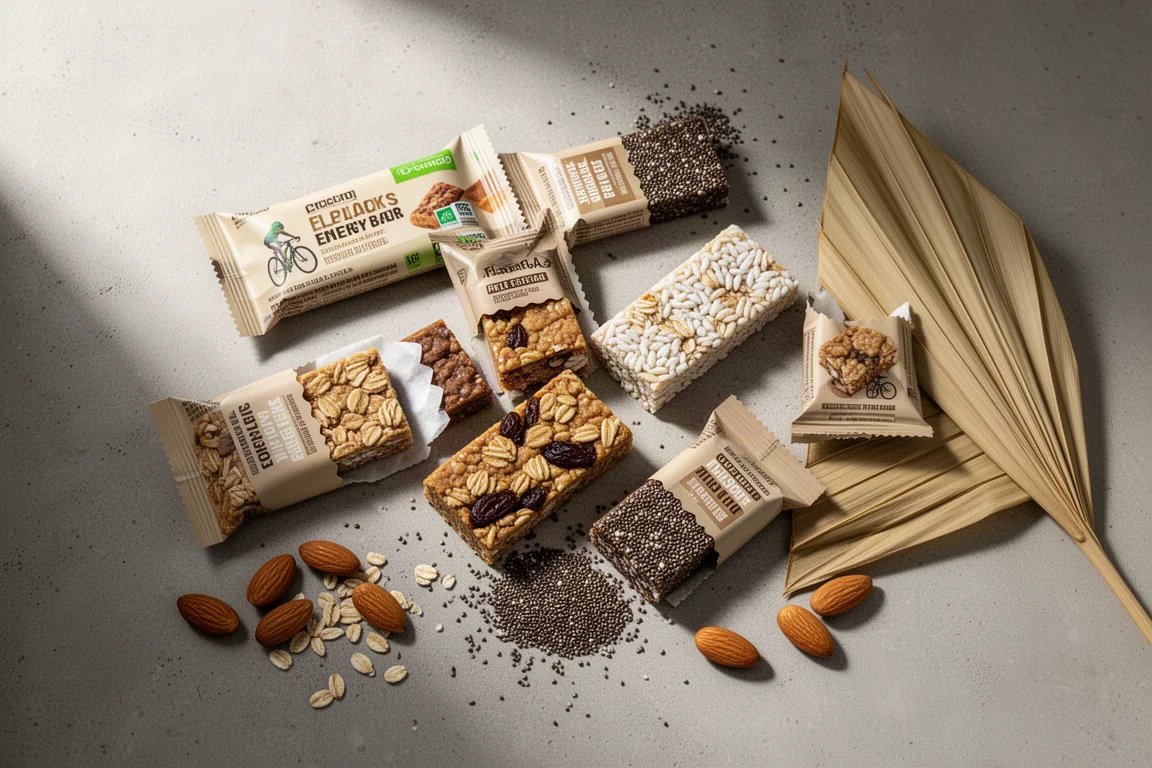
Energy bars sit in an awkward place in cycling. A bar can be scientifically excellent and still be unpleasant to eat on a climb, while a supermarket cereal bar can cost a fraction of the price and do much of the same job. This comparison covers 17 energy and recovery bars, from racing-focused carbohydrate bars to flapjacks, fruit cubes and protein bars, with the same three questions asked of each one: how easily the wrapper opens one-handed while riding, how it tastes, and how the nutrition profile actually supports a ride.
Prices run from £0.79 for a supermarket rice square to £2.99 for a chocolate-coated coconut protein bar. Boxes and multipacks bring the per-bar cost down, so the single-bar figures below are the worst case.
How These Bars Were Assessed
Opening was judged on a simple, practical test: can the wrapper be opened one-handed, ideally by pressing the bar against the bike’s stem while moving. Several wrappers handled this cleanly, a few were too soft or too tough, and one product skipped the question entirely by using a biodegradable palm leaf instead of plastic. Taste was judged on flavour and texture, with particular attention to whether a bar dries the mouth, because a bar that demands a bottle with every bite adds work to a ride.
The nutrition assessment looked at carbohydrate amount and ratio, then at fat and fibre, since both slow digestion and increase the risk of stomach problems. A practical ceiling for a bar eaten on the bike is around 5 g of fat, with under 3 g preferred. For recovery bars the focus shifts to protein: stimulating muscle protein synthesis needs an adequate total dose, roughly 20 g, or about 0.3 g per kilogram of body weight.
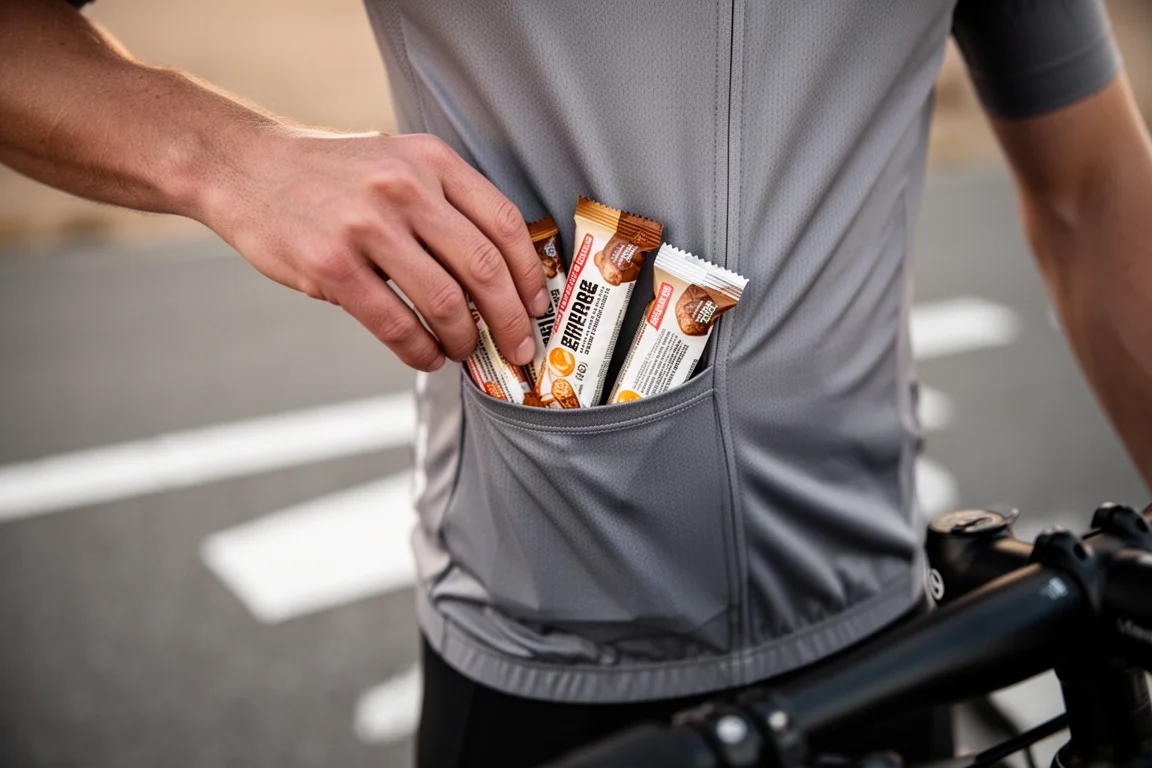
Cost is the other half of the picture. Fuelling at 60 g of carbohydrate an hour means roughly one bar plus something from a bottle every hour, and over three or four rides a week that spend adds up quickly.
Energy Bars for Riding
Energy bars are eaten during the ride, so the priorities are fast digestion, a workable amount of carbohydrate, and a texture that does not demand water with every bite.
PowerBar Energize Advanced Plus Magnesium
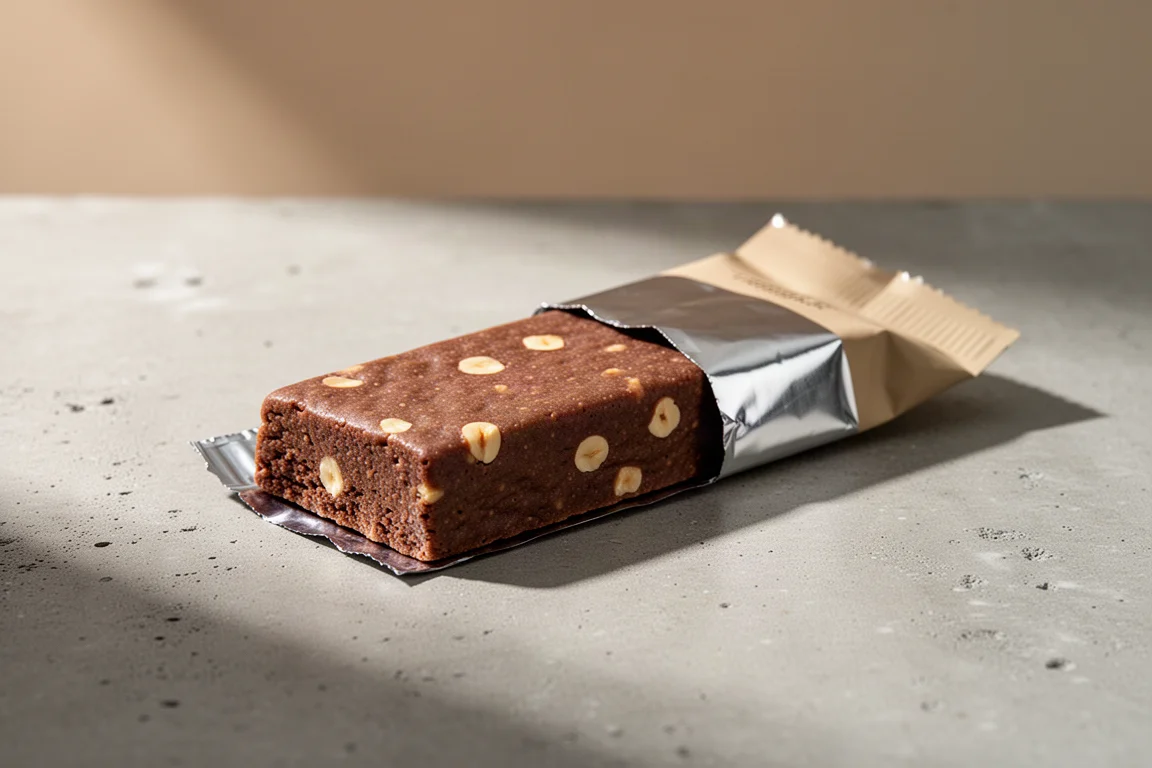
The Energize Advanced Plus Magnesium is the most overtly race-focused bar in this section. It uses a 2:1 carbohydrate blend and carries 40 g of carbohydrate with low fat and low fibre, which is the profile that keeps digestion quick during hard efforts. It scored 10 out of 10 for opening thanks to a wrapper that responds well to a stem press.
Taste was the weak point at 5.5 out of 10. The hazelnut chocolate flavour is palatable without being memorable, the texture is dry, and these bars harden noticeably in cold weather. Nutrition scored 7 out of 10, one of the better results in the whole comparison. At £2.29 per bar it sits in the middle of the price range.
Science in Sport GO Energy Bake
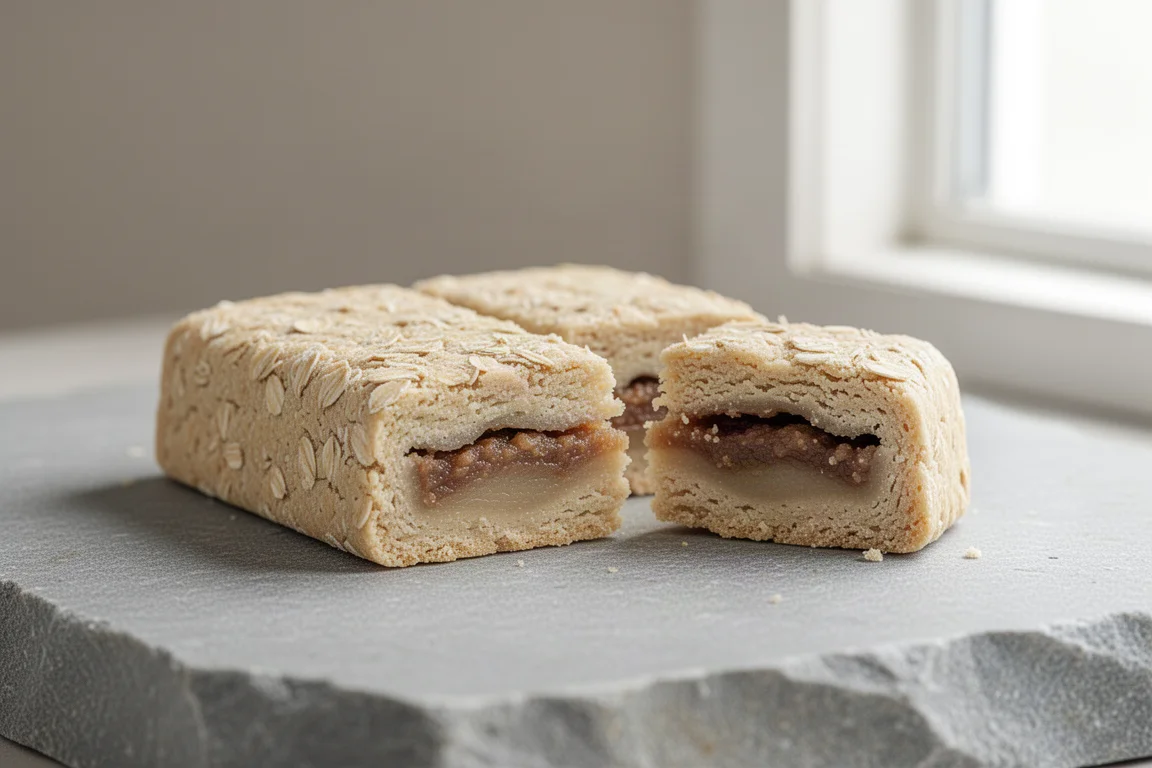
The GO Energy Bake takes a different approach: a soft filled bake rather than a pressed bar, with 30 g of carbohydrate in a 2:1 blend that includes 10 g of fructose. Opening scored 5 out of 10 because the bake is soft enough that the wrapper can open the whole way and the contents can escape before you get to them.
Taste scored 7 out of 10, with a clear caveat. The texture absorbs moisture from the mouth, so you need a decent mouthful of water after every bite, which is extra faff during a race. Nutrition scored 5 out of 10, with 5 g of fat and around 3.5 g of fibre. Expect to pay around £2 per bake, close to the average for this group.
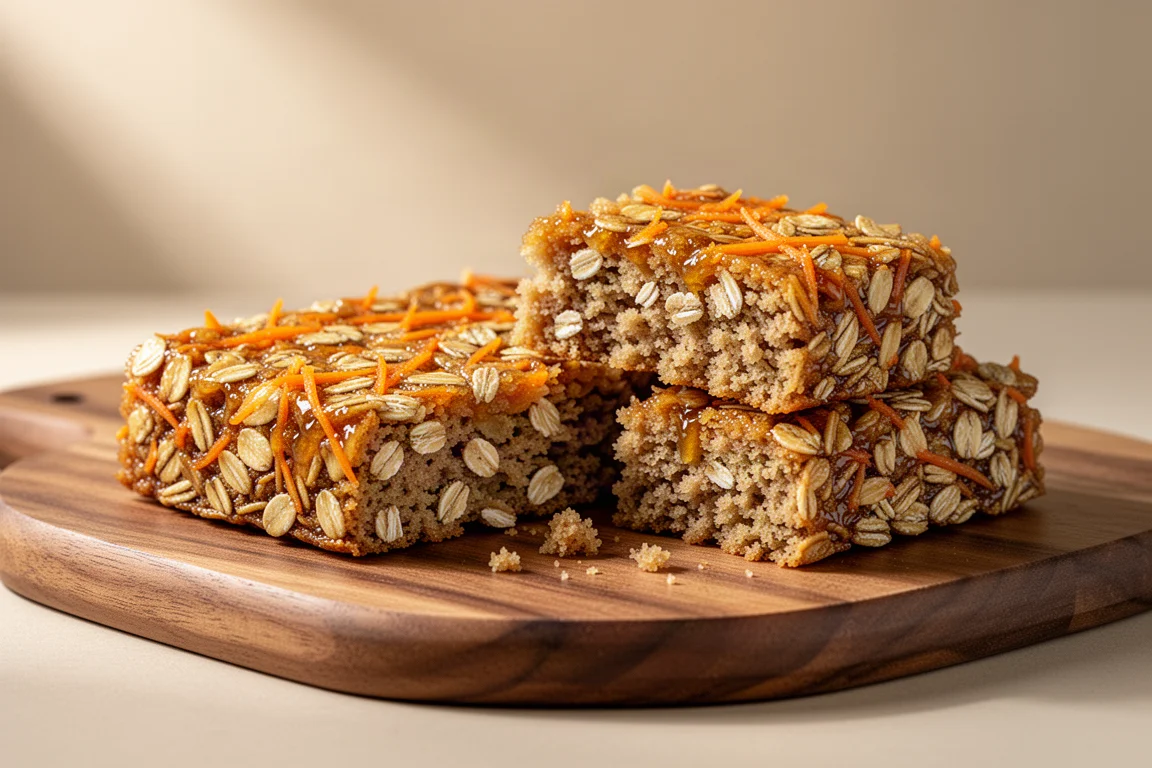
Torq Explore Flapjack Organic Carrot Cake
The Explore Flapjack is organic and vegan, flavoured like carrot cake, and carries 43 g of carbohydrate drawn from mixed sources rather than a set ratio. It scored 7 out of 10 for opening, though it leaves your hands sticky for the rest of the ride.
Taste was scored no higher than 6 out of 10. It is very sweet, dense and oily, closer to a heavy granola bar than a purpose-built energy product, and the stickiness is the kind that transfers to bar tape and gloves. Nutrition scored 4 out of 10: 8 g of fat is well above the ceiling for a bar meant to be eaten on the bike, and no carbohydrate ratio is stated.
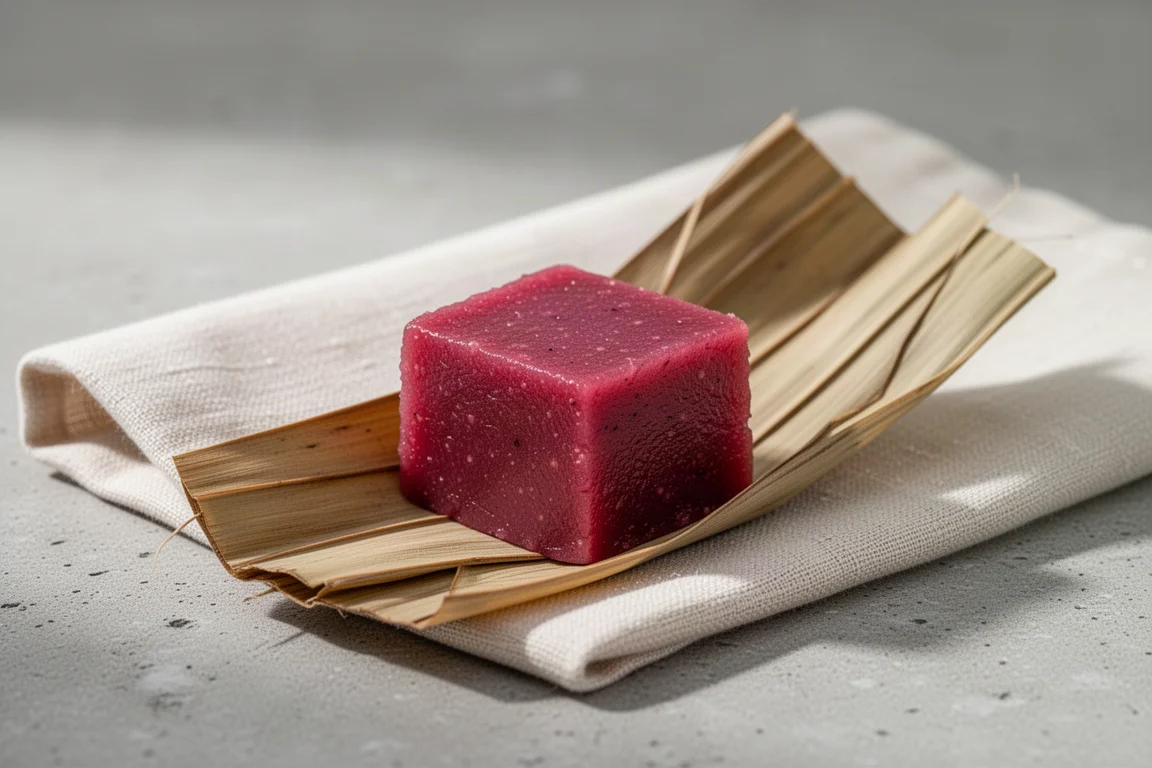
Luchos Guava and Raspberry
The Guava and Raspberry bar is the outlier of the group: a dense cube of fruit paste wrapped in a biodegradable palm leaf instead of plastic. That wrapper changes the opening question entirely, scoring 10 out of 10, because a dropped leaf is not litter and there is no plastic to pocket.
It carries 35 g of carbohydrate in a 1:1 blend with very little fat or fibre, which suits the high hourly carbohydrate intakes that long or fast rides demand, as long as it is taken with fluid to help transport it. Taste scored 10 out of 10, dissolving in the mouth somewhere between a bar and a chew. At £1.50 it is one of the cheapest options here.
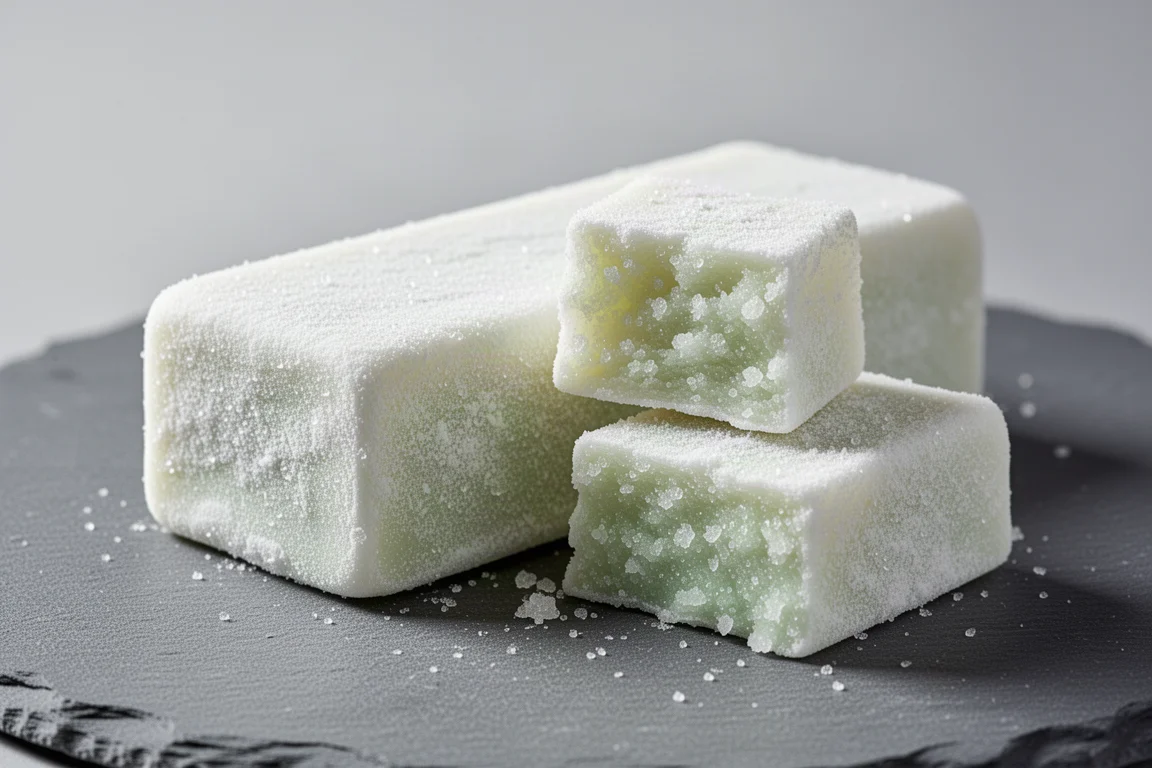
Kendal Mint Cake Energy Bar
Branded as an energy bar with electrolytes and vitamins, this is essentially a mint-flavoured sugar block: 35 g of carbohydrate in a 1:1 blend with zero fat and zero fibre, which makes it fast to empty from the stomach. Opening scored 7 out of 10 and taste 5 out of 10, with a single piece pleasant and a whole bar quickly becoming overwhelming.
There is also research on menthol and the perception of cooling, which may help on hot days by lowering how hard the effort feels. Nutrition scored 6 out of 10. At £1.65 it sits at the lower end of the price range.
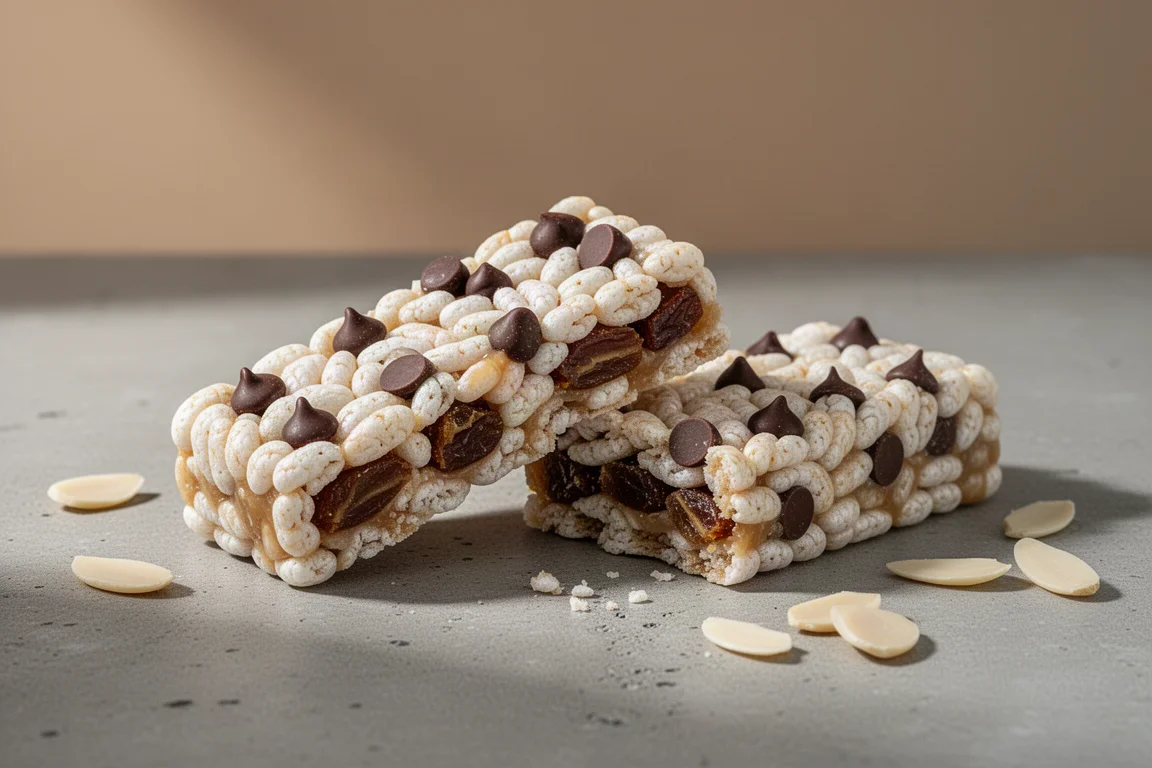
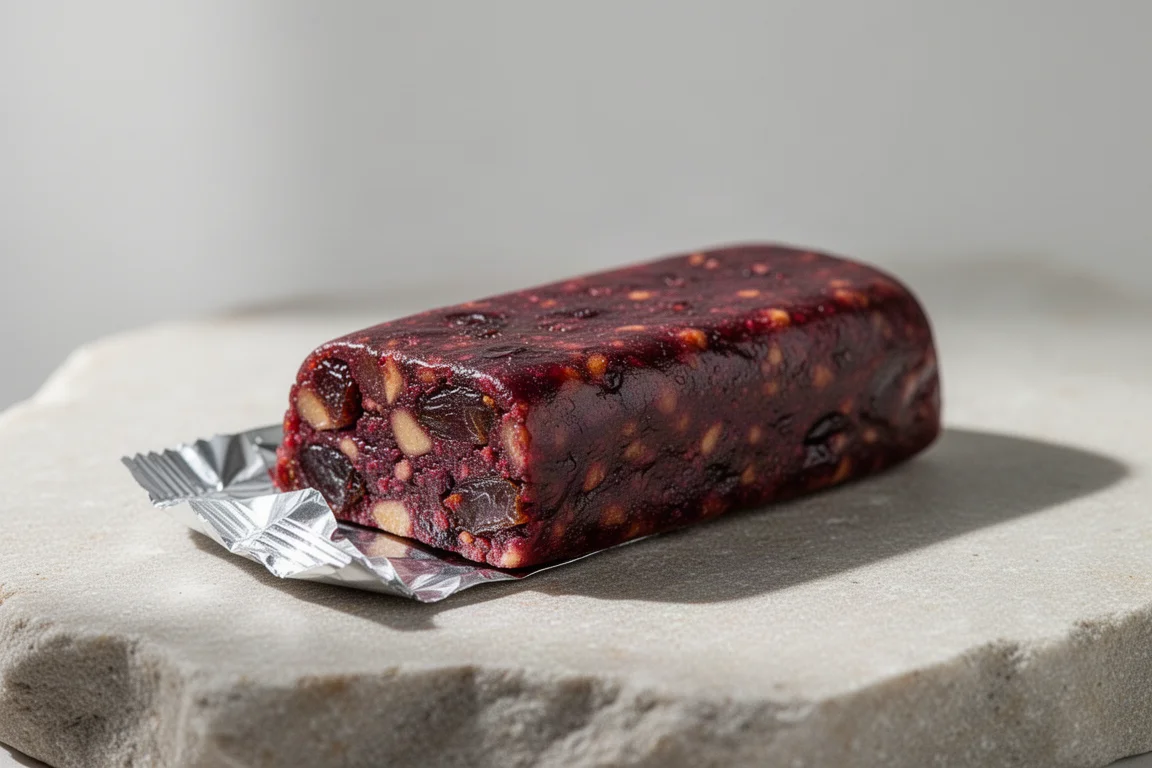
Styrkr Rice Bar Date Almond and Sea Salt
The Rice Bar in date, almond and sea salt is a sticky puffed rice bar with chocolate chips, and the wrapper states 50 g of carbohydrate in large type. That labelling matters more than it sounds: fuelling plans are built in grams per hour, and a bar that states its carbohydrate plainly removes mental arithmetic from a ride.
It scored 10 out of 10 for opening and 8 out of 10 for taste, one of the strongest flavour results in the energy section. Nutrition scored 5 out of 10 because 10 g of fat per bar is high for something eaten on the bike, and one bar an hour over a four-hour ride would add up to 40 g of fat. £2.75 per bar.
High5 Energy Bar Berry
The High5 Energy Bar in berry is a fruit and date bar with 40 g of carbohydrate, no stated carbohydrate ratio, and the unusual bonus of counting as one portion of fruit or vegetables. Opening scored 9 out of 10, with the wrapper giving way easily.
Taste scored 6 out of 10: pleasant enough, but close to a standard cereal bar in both flavour and texture, and there are many similar bars on the shelf. Nutrition scored 5 out of 10 for an unremarkable profile. At £2.20 per bar it is an expensive cereal bar.
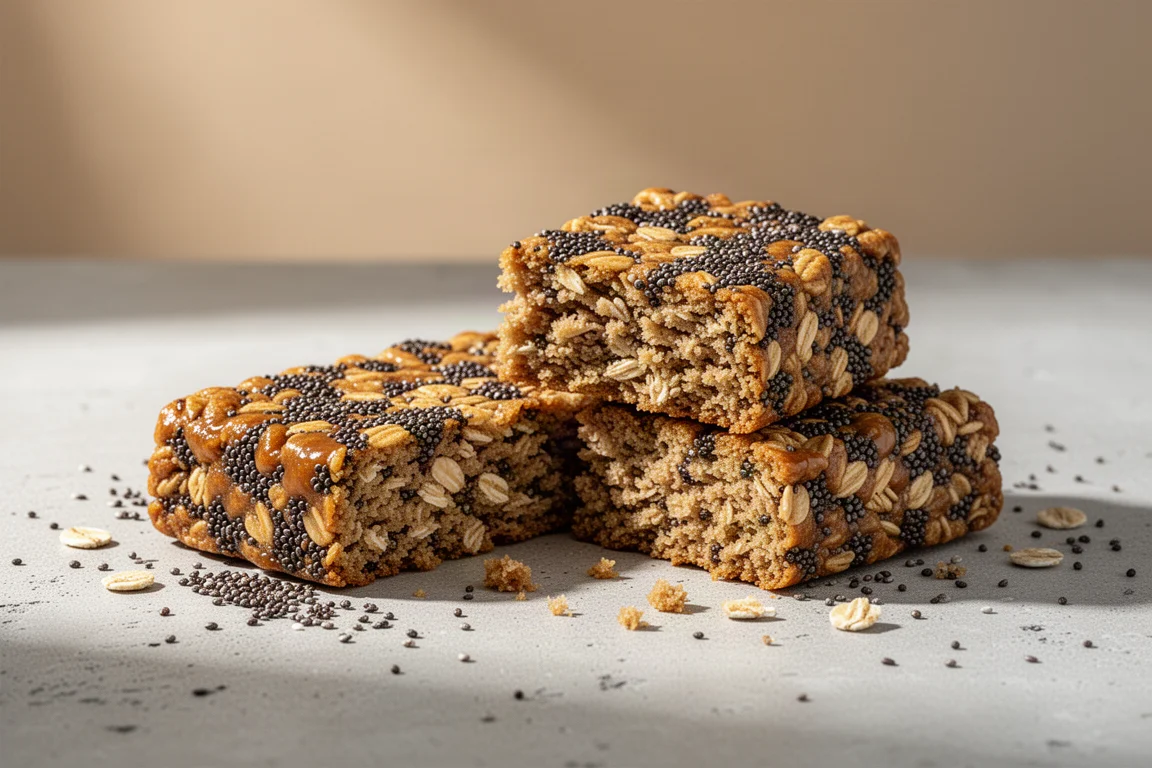
Chia Charge Energy and Endurance Salted Caramel Flapjack
The Chia Charge flapjack in salted caramel is the best-tasting energy bar in this comparison, scoring 10 out of 10, with a moist flapjack texture and chia seeds throughout. It scored 9 out of 10 for opening after needing two attempts at a stem press, and it carries an omega-3 claim on the wrapper.
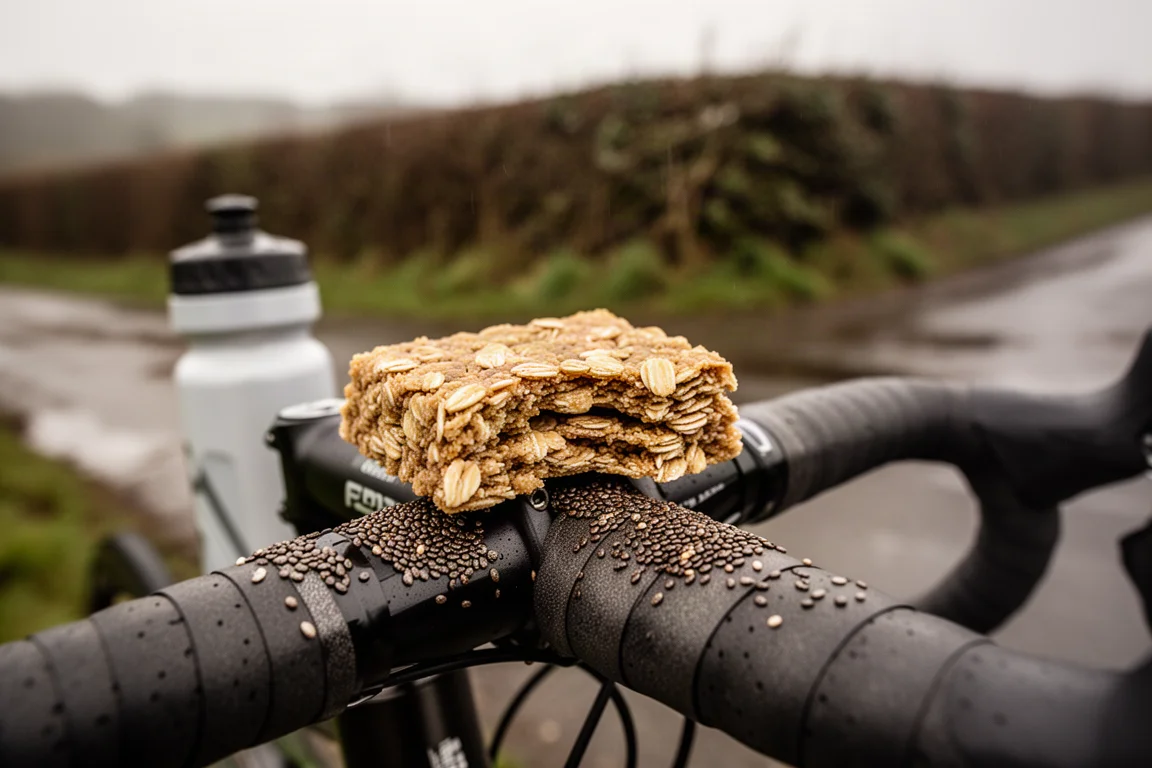
Nutrition is where it falls down. It provides 44 g of carbohydrate, but 20 g of fat, of which 11 g is saturated. That means more calories come from fat than from carbohydrate, and one bar an hour would deliver close to the entire daily recommended saturated fat intake in a single ride. It scored 2 out of 10, the lowest nutrition result here. £2.20 per flapjack.
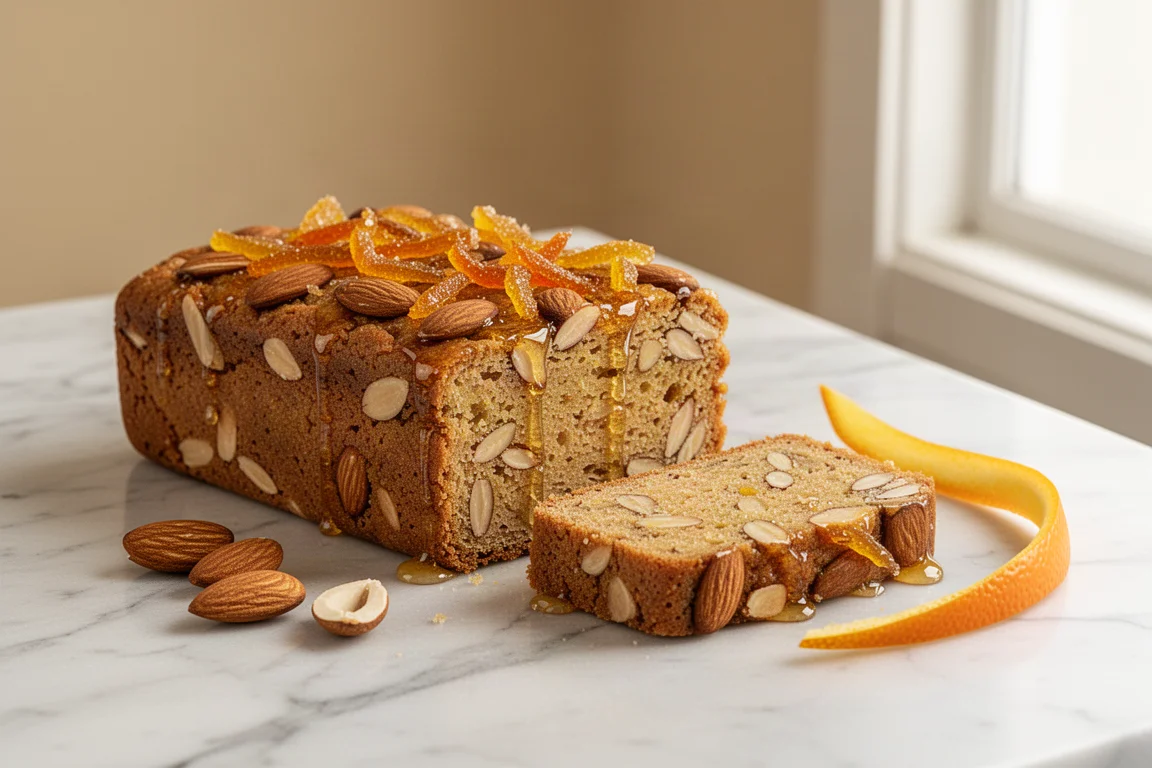
Veloforte Classico Citrus Fruits, Almonds and Honey
The Classico is hand-baked from citrus fruits, almonds and honey, described as 100% natural, and uses dual-source carbohydrate without stating an exact ratio. It scored 10 out of 10 for opening and 8 out of 10 for taste, melting in the mouth more than its dense appearance suggests.
Nutrition scored 5 out of 10. With 7 g of fat and 3 g of fibre it slows digestion, and natural ingredients are not automatically gentler on the stomach. A bar that slows gastric emptying will also slow down any gel taken afterwards, which defeats the purpose on a hard ride. £2.49 per bar, less when bought by the box.
Clif Bar Crunchy Peanut Butter
The Crunchy Peanut Butter Clif Bar is plant-based and provides 11 g of protein, 35 g of carbohydrate, 7.8 g of fat and 5 g of fibre. Opening scored 7 out of 10, with a wrapper that is workable but not effortless.
Taste scored 4 out of 10: dense, dry and closer to a spoonful of peanut butter than the gooey texture the flavour suggests, and the savoury edge divides opinion. Nutrition scored 4 out of 10 because fat, fibre and protein all slow the rate at which the bar leaves the stomach, and the energy it delivers is not matched by the amount of usable carbohydrate. £2.90 per bar.
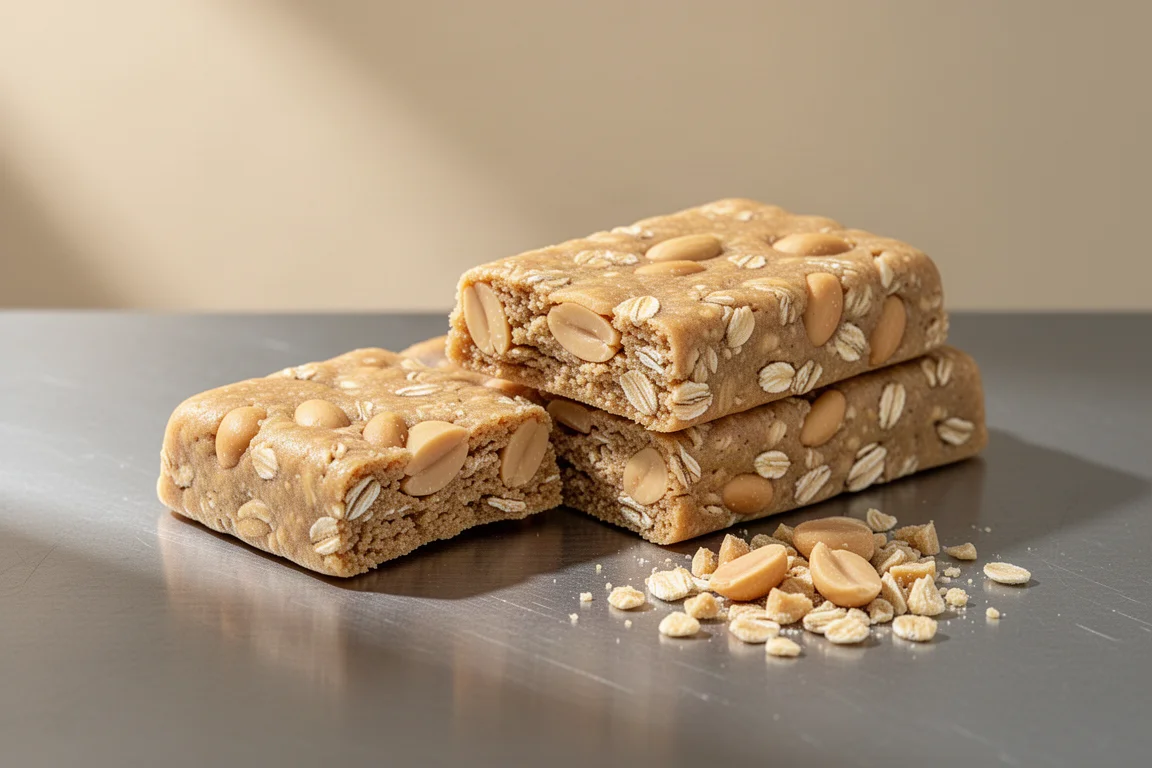
Kellogg’s Rice Krispies Squares Gooey Marshmallow
This is a supermarket rice square rather than a sports product. It costs 79p, or roughly £1 for four in a multipack, and carries 20 to 21 g of carbohydrate with 3 g of fat and less than 1 g of fibre. That combination is quick to digest and cheap enough to use regularly.
Opening scored 7 out of 10 and taste 9 out of 10, with a sticky, dissolving texture that is genuinely easy to eat mid-ride. Nutrition scored 5 to 6 out of 10, which puts it in the same range as several purpose-built bars costing three times as much. It contains milk, so it is not vegan.

Recovery Bars for After the Ride
Recovery bars are eaten after the ride rather than during it, so the priority shifts to protein. Stimulating muscle protein synthesis needs an adequate total dose, around 20 g, or roughly 0.3 g per kilogram of body weight. Bars that fall well short of that will not start the recovery process, however good they taste, and most of them are also more expensive than simply eating a proper meal once you are home.
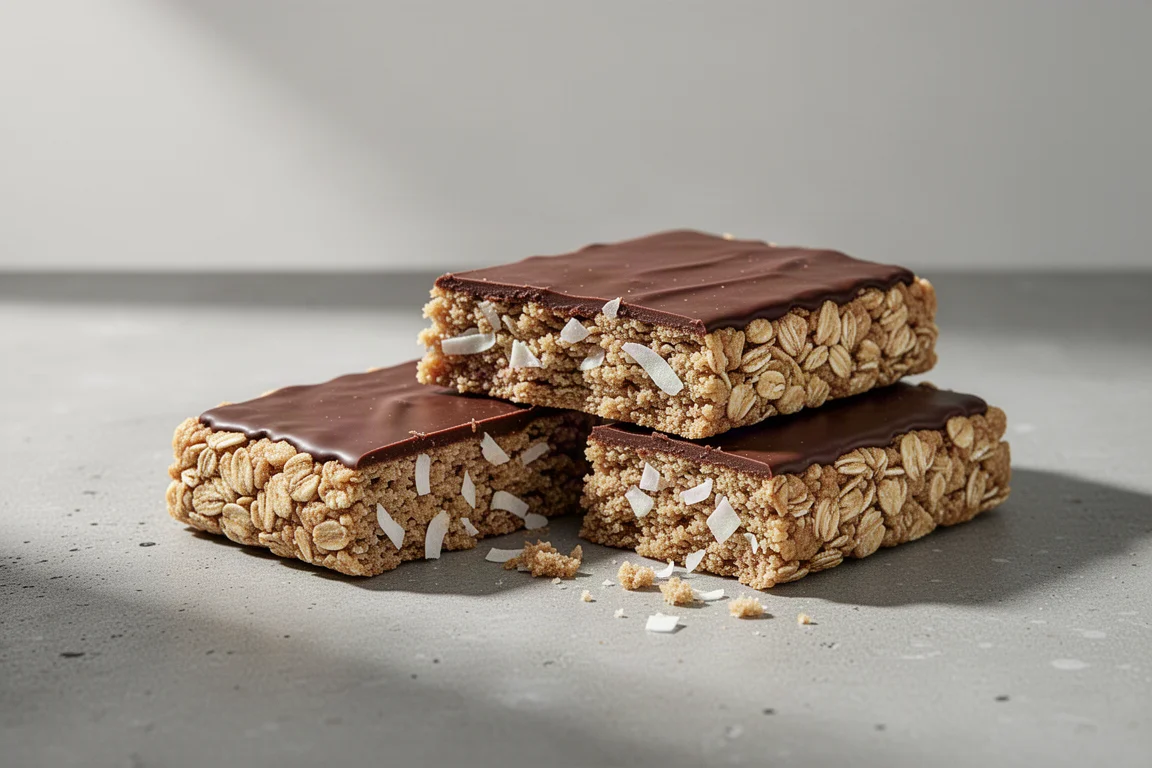
Trek Protein Flapjack Coco Oat
The Coco Oat flapjack is plant-based, provides 9 g of protein and a source of fibre, and comes with a chocolate layer across the top. Opening scored 10 out of 10 in the setting it is meant for, which is at home or at the car after a ride rather than on the bike.
Taste scored 4.5 out of 10 and the chocolate layer adds very little. Nutrition scored 3 out of 10: 9 g of protein is well below the roughly 20 g needed to stimulate muscle protein synthesis, and there are better and cheaper ways to hit a protein target once you are off the bike. £1.85 per bar.
Myprotein Layered Treat Triple Chocolate Fudge
This layered bar delivers 20 g of protein, mainly from hydrolysed whey, alongside 20 g of carbohydrate and 3 g of fibre. It scored 10 out of 10 for opening and 6 out of 10 for taste, eating much like a chocolate bar rather than a supplement.
Nutrition scored 6 out of 10. The 20 g protein dose is enough to stimulate the recovery process, but 20 g of carbohydrate is not enough on its own to restore muscle glycogen after a long ride. It works best as a protein top-up rather than a complete recovery product.
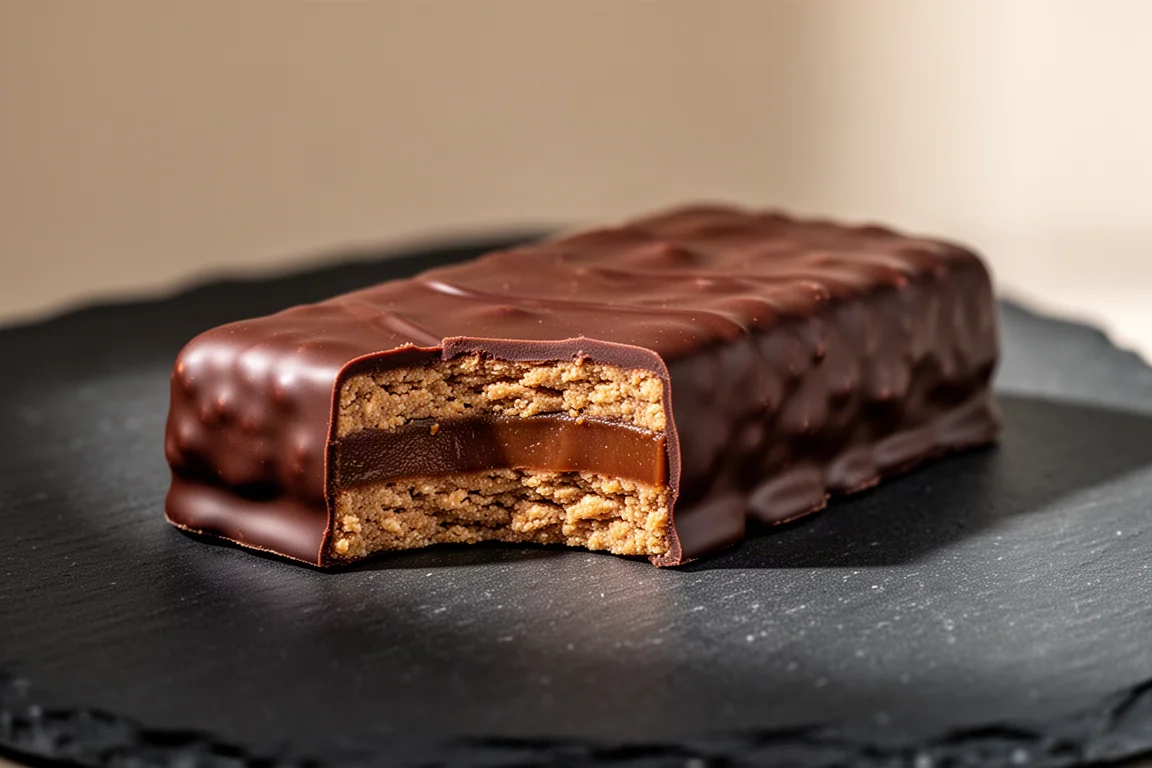
Myprotein Oat Bake White Chocolate Flavour
The Oat Bake carries 19 g of protein with slightly more carbohydrate and fat than the layered bar, under a no-added-sugar white chocolate flavour coating. The protein figure is in the right territory for recovery, and the wrapper opens without any effort.

Taste scored 3 out of 10. The coating does not deliver the chocolate flavour it promises, and the overall result is disappointing for a bar with a strong protein number. Nutrition scored 5 out of 10, so it will do a job if protein intake is the only consideration, but it is not a bar you would choose for enjoyment.
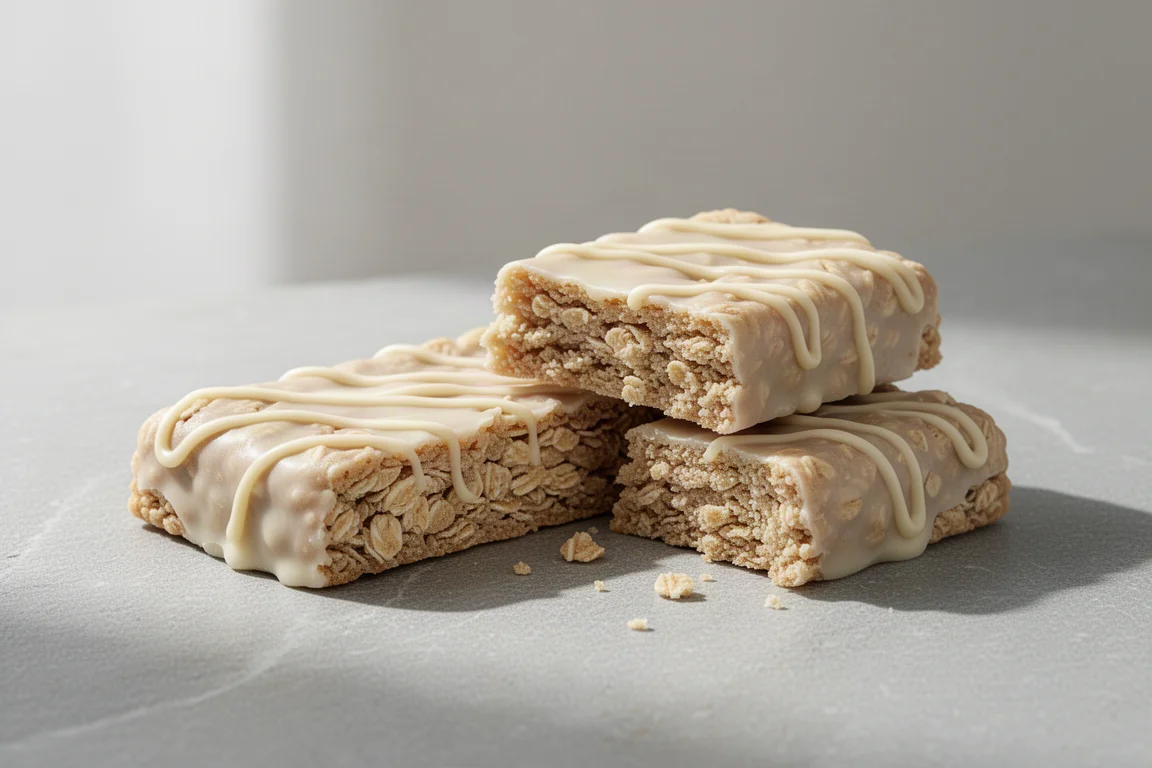
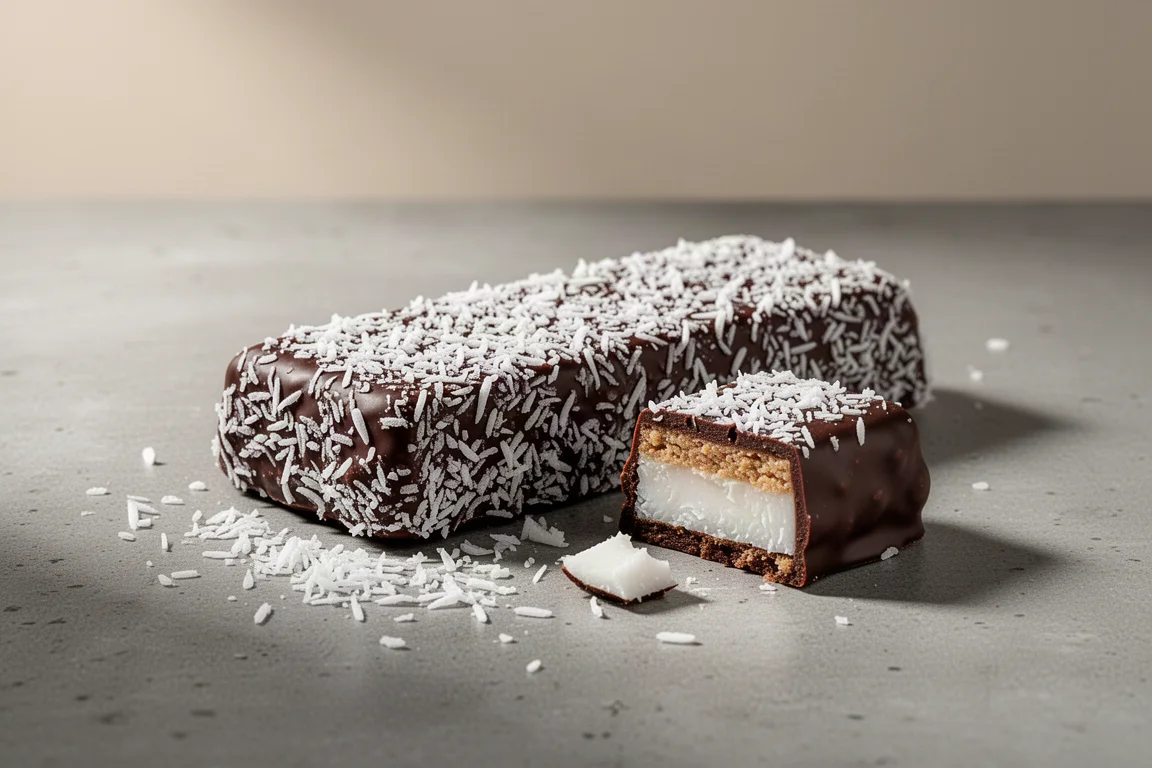
Optimum Nutrition Chocolate Sweet Coconut
This chocolate-coated coconut bar carries 18 g of protein and 9 g of fat, and scored the highest opening mark of the entire comparison, above 10 out of 10, because the wrapper comes away with no effort at all. Taste scored 9 out of 10: if you like coconut chocolate, this is the recovery bar to pick, and appetite tends to return quickly for it.
Nutrition scored 6 out of 10. The protein dose is adequate and will support recovery, but the fat content is high, partly from the coconut and partly from the chocolate coating. At £2.99 per bar it is the most expensive single bar here, and the flavour is what you are paying for.
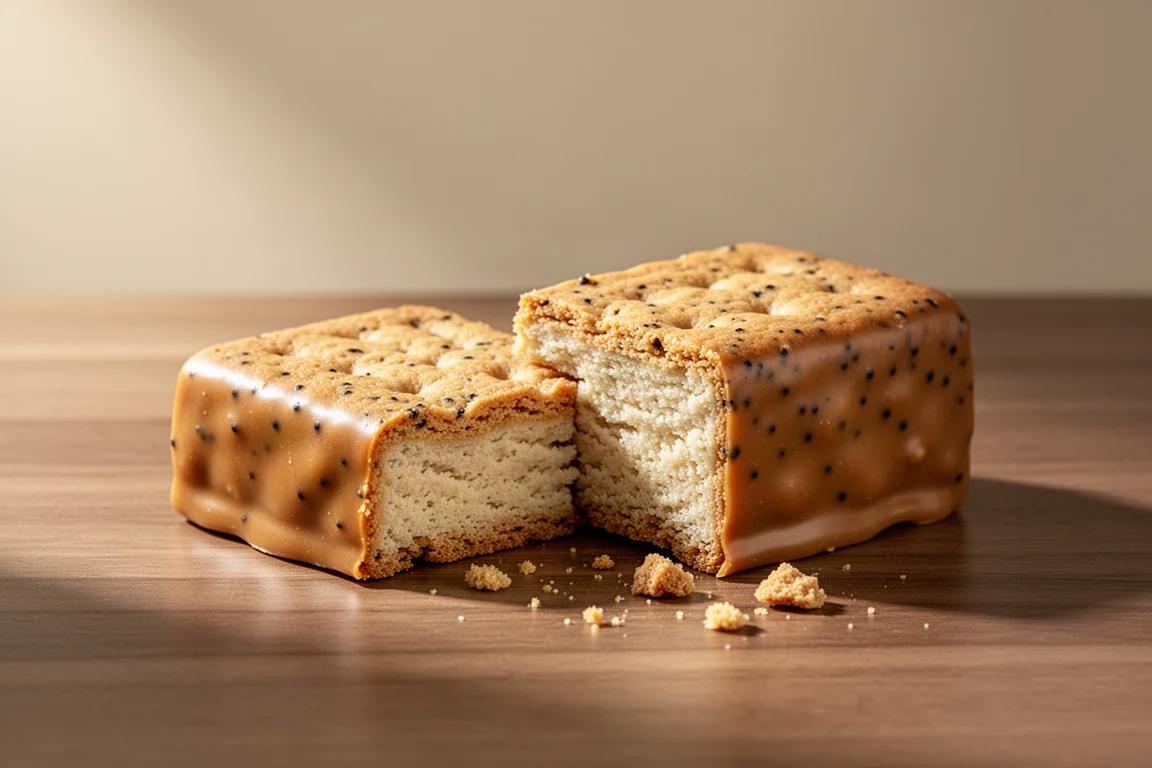
TR Power with Lotus Biscoff
This bar is high in fibre and provides 15 g of plant protein from soya protein isolate. Opening scored 10 out of 10, with a wrapper that comes away cleanly.
Taste scored 3 out of 10: dry, and the caramelised biscuit flavour does not come through well. Nutrition scored 3 out of 10, because 15 g of protein may be enough for a lighter rider but the bar does not state whether it supplies the amino acids needed to trigger recovery, and heavier riders will need more than this.
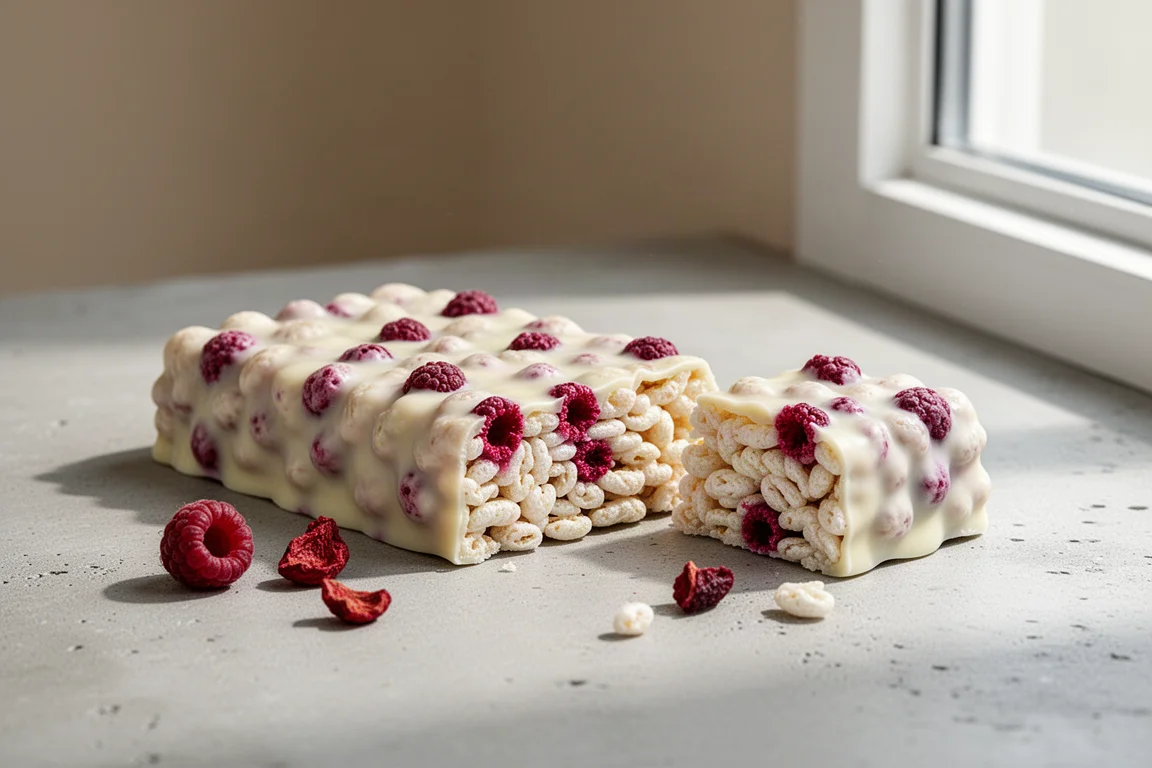
Styrkr Bar+ Raspberry White Chocolate Protein Rice Bar
The Bar+ is positioned as an advanced recovery bar, with 15 g of protein and 45 g of simple carbohydrate. Taste scored 8 out of 10, one of the better recovery results, with a rice bar texture and a raspberry and white chocolate flavour that works.
The carbohydrate load supports muscle glycogen replenishment, and combining protein with carbohydrate has been shown to enhance that process, with research pointing to a carbohydrate-to-protein ratio of around 3 to 1. The caveat is the protein dose: 15 g may be enough for a lighter rider but is unlikely to be enough for a heavier one, and two bars may be needed after a long ride. The bar does not state its amino acid content.
Overall Buying Advice
The clearest conclusion from comparing these bars is that price and performance do not move together. Several of the cheapest products here, including the supermarket rice square and the fruit cube in a palm leaf wrapper, scored as well as or better than bars costing three times as much. If you are riding for enjoyment rather than racing, ordinary supermarket cereal bars, oat bars and rice bars will support your riding without the premium.
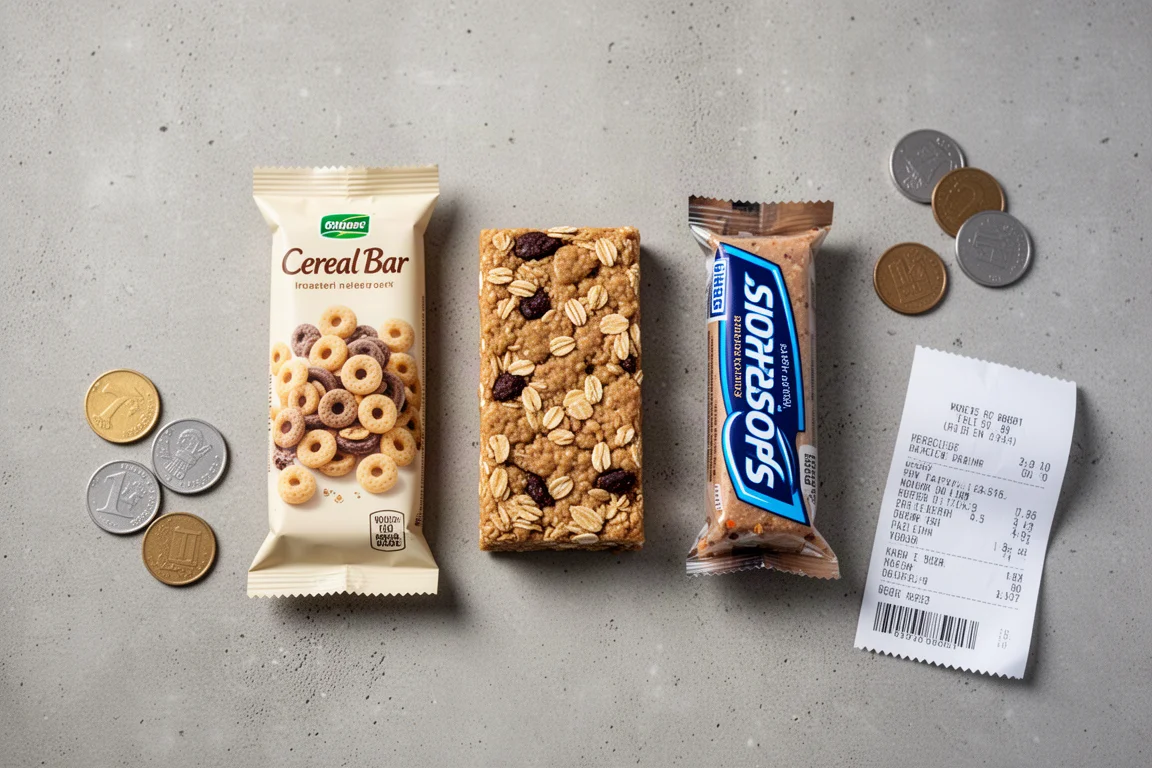
If you are training for an event, the two numbers worth checking on any wrapper are carbohydrate per bar and fat per bar. A fat content above 5 g slows digestion and raises the risk of stomach problems, and 10 g or more makes a bar a poor choice for anything eaten on the bike. For recovery, look for a total protein dose around 20 g, or about 0.3 g per kilogram of body weight, rather than assuming any protein bar will do. Fuelling at 60 g of carbohydrate an hour adds up fast in cost, so buying by the box, or mixing one sports bar with a cheaper supermarket option, keeps the weekly spend sensible.
Conclusion
Taste and fuelling needs rarely point to the same bar. The guava and raspberry fruit cube and the salted caramel chia flapjack were the standout flavours, though only the fruit cube combines that with a nutrition profile suited to hard riding. For racing and long efforts, the PowerBar Energize Advanced Plus Magnesium and the Styrkr Rice Bar offer the most predictable carbohydrate delivery, and the Styrkr wrapper states its 50 g of carbohydrate plainly.
For recovery, the Optimum Nutrition chocolate coconut bar is the one most likely to be eaten willingly, while the Myprotein Layered Treat delivers a full 20 g protein dose without tasting like a supplement. Cheaper supermarket bars remain a reasonable choice for everyday riding, and for many riders they will do the job just as well as a bar built for racing.
Further reading
Related Reviews
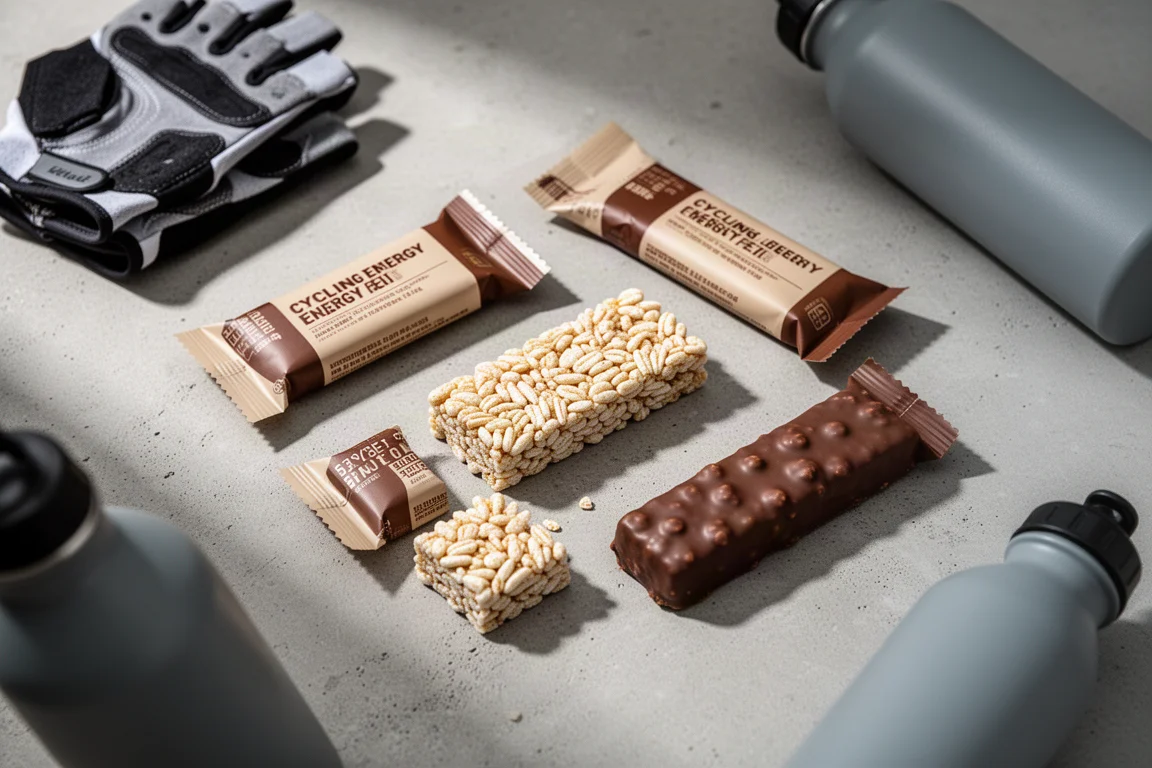
Cycling Nutrition
Best Cycling Energy and Recovery Bars: A Rider's Roundup for Race Day and Recovery
A practical look at energy and recovery bars for cyclists, covering how they open, how they taste, and whether the nutrition matches the job it claims to do.
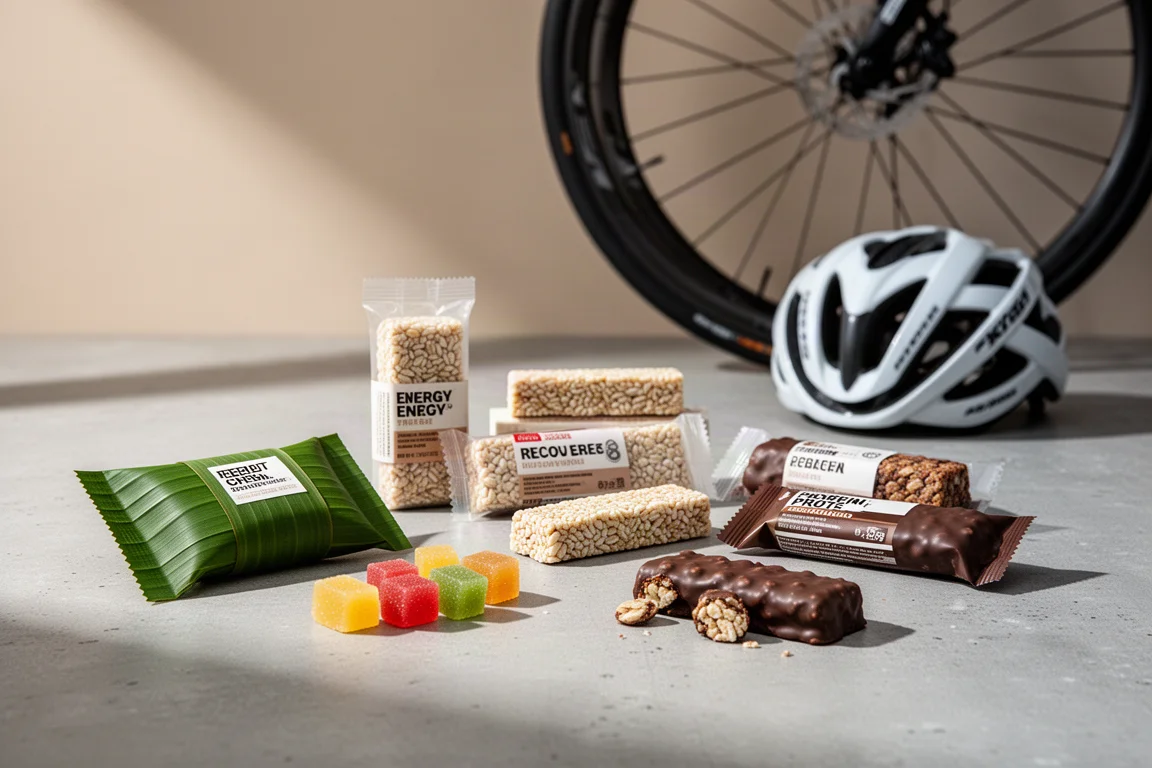
Cycling Nutrition
Best Cycling Energy Bars 2026: A Practical Guide to Fueling on the Bike
A practical guide to the best energy and recovery bars for cycling, evaluated on taste, opening ease, and sports science.
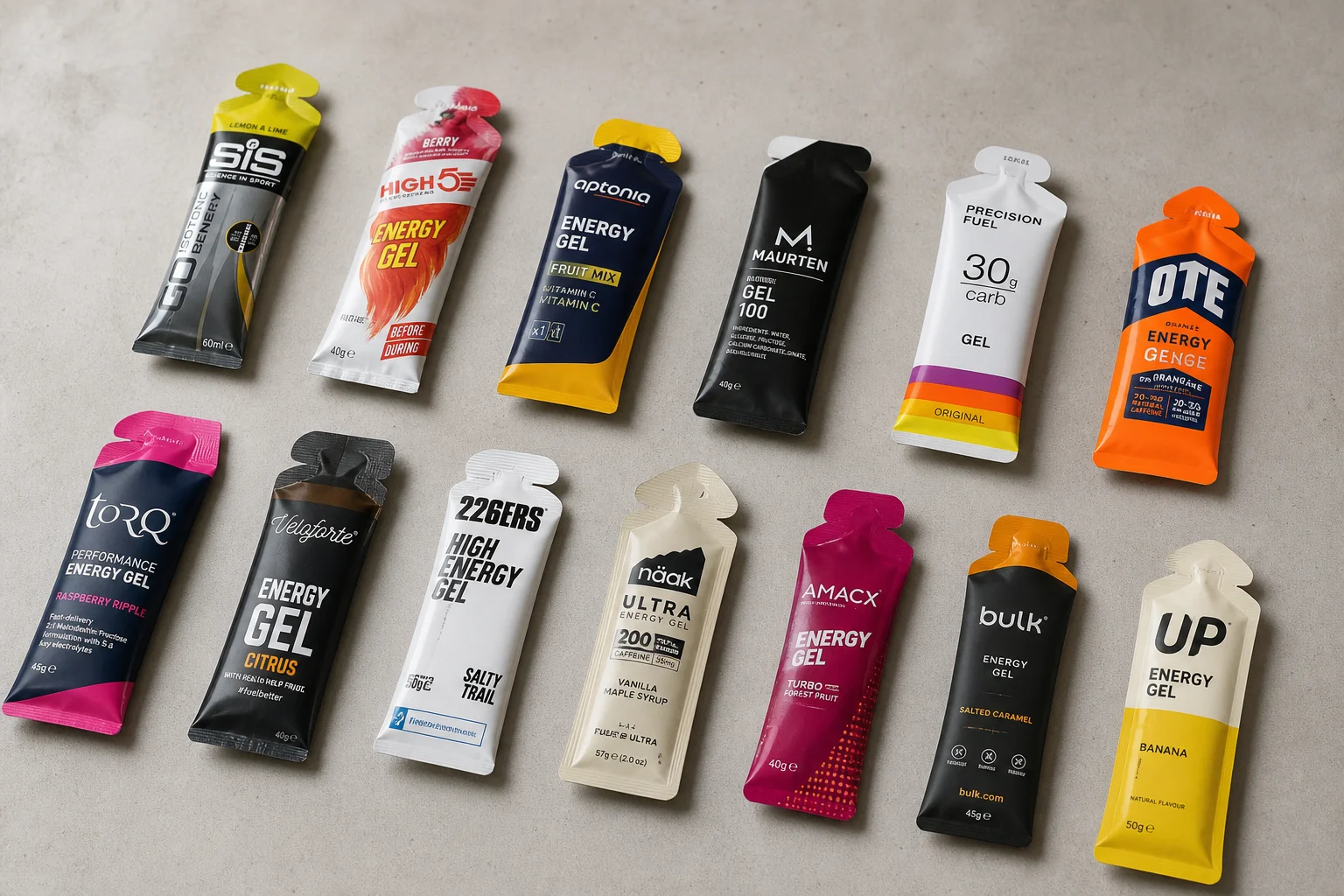
Cycling Nutrition
Best Energy Gels: Ten Options Ranked by Packaging, Taste, and Science
Ten widely available energy gels compared on how the packet opens, how the flavour holds up, and how the carbohydrate profile fits real fuelling targets.