Cycling
Best Endurance Bikes: Three Standout Machines for Long Days in the Saddle
Three endurance bikes that balance comfort, speed, and versatility, compared on weight, tire clearance, specification, and how they actually ride.

Introduction
Endurance bikes are having something of an identity crisis. Depending on who you ask, they are relaxed race bikes, gravel bikes with narrower tires, or simply the most practical drop-bar machine most riders can own. What they need to do is see you through the toughest long days in the saddle without becoming boring, and that means being comfortable while still feeling fun and efficient to ride.
These three machines take that brief in three different directions. One stays close to the classic template, one sharpens it toward pure road riding, and one stretches it toward gravel without giving up road manners. Each was ridden repeatedly across long hilly loops, shorter steeper climbs, and a stretch of notably wet weather, so wet-road confidence was part of the picture too.
How We Evaluated These Endurance Bikes
Every bike here was ridden multiple times rather than sampled once, on varied terrain that included long steady climbs, short sharp ramps, fast descents, and plenty of rough, wet tarmac. That matters because an endurance bike is a popular choice for riders tackling challenging sportives, where the bike has to stay comfortable deep into a long day and still respond when you ask for speed.
Frame construction, geometry, tire clearance, wheels, groupset, and finishing kit were all recorded, but the deciding factor was how each bike rides. Comfort, efficiency, steering feel, stability, and climbing response were weighed against each other rather than judged in isolation, because an endurance bike that is only comfortable is a bike you will not want to ride hard.

We also looked at practical ownership details, including mudguard clearance, cable routing, and how easily each bike could be maintained at home. Those small things matter more over years of riding than a single impressive number on a spec sheet.
Merida Scultura Endurance: The Classic Endurance Ride
The Merida Scultura Endurance sticks closely to the traditional endurance template. It pairs a taller stack with a shorter reach, producing the most relaxed riding position of the three, and it stays true to tarmac rather than chasing all-road capability. Tire clearance is a generous 35mm, dropping to 32mm if you run full-length mudguards.
The frame weighs a claimed 1,124g in a medium with paint, mounts, and hardware in place, and the fork adds 411g with an uncut steerer. That is not the lightest endurance platform around, but it is certainly no heavyweight either. Rather than adopting dropped seat stays, Merida kept a traditional diamond frame shape and claims the same compliance through material choices, layup, and the shaping of the seat stays, seat tube, and carbon seat post.
One interesting detail is the flat-mount disc brake hardware, which combines the mounts with CNC alloy cooling fins. Merida claims this reduces brake operating temperatures by up to 35 percent, which in theory lowers the chance of overheating over repeated heavy braking. The frame also runs full internal routing with a hidden seat clamp, and the seat tube is cut away to shield the rear wheel while the fork transitions smoothly into the head tube.
The build uses SRAM Rival AXS with 48/35 chainrings and a 10-36 cassette, along with alloy wheels, a solid alloy cockpit, and a carbon-shafted seat post. The short Merida Expert SL saddle and 32mm Continental GP5000 tires round out a sensible specification. Total weight came in at 9.14kg, the heaviest of the three, yet the bike climbs well and feels lively, with a steep head angle that keeps steering quick and almost race-bike responsive to hard pedaling inputs.
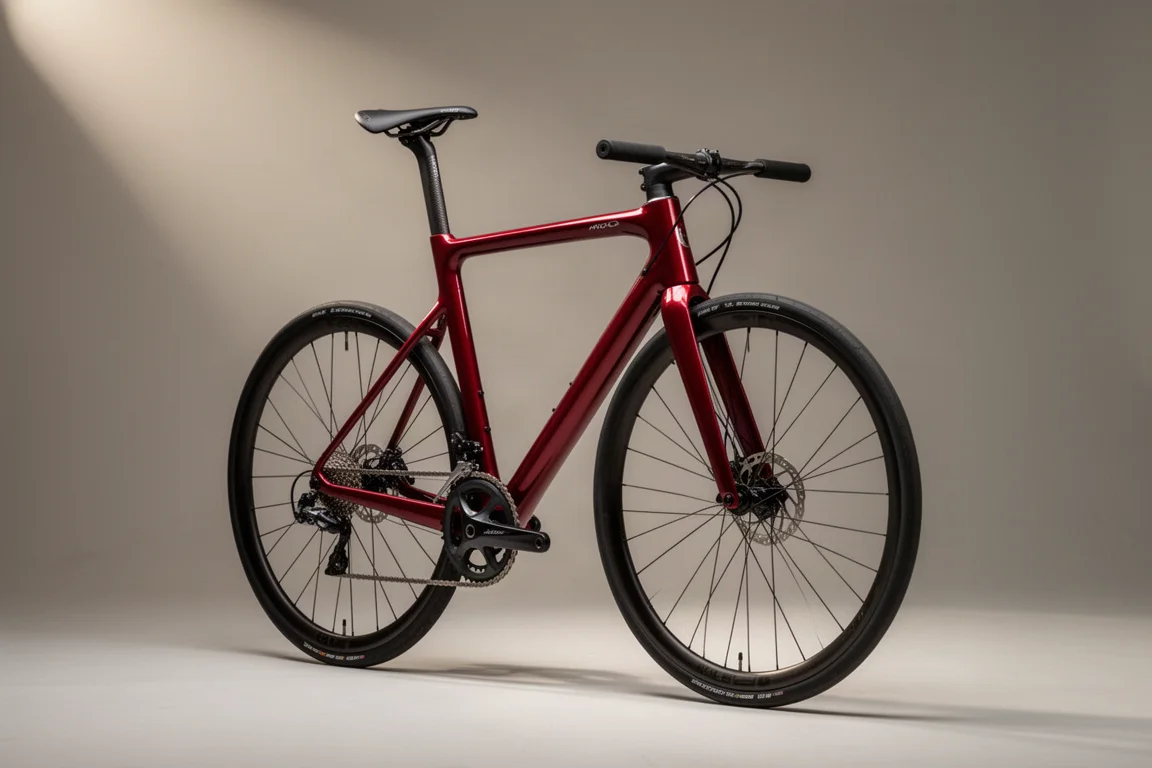
Cervélo Caledonia: Sporty Road Manners
The Cervélo Caledonia is the more affordable version of the Caledonia design, and it makes a few deliberate simplifications. The dedicated seat post of the top-end model gives way to a standard round post, and the cables are routed outside the head tube. That makes the bike simpler and arguably more practical to live with, and definitely cheaper. It came in at around 4,800 pounds as tested.
The design draws on Cervélo’s R Series, so the tubes use small-profile aero shapes. The frame weighs a claimed 1,031g and the fork 432g, both lighter than the Merida. Tire clearance matches the Merida at 35mm, dropping to 31mm if you fit full-length mudguards, which keeps the bike usable through the worst of the winter.

On the road, the Caledonia is exactly what you would expect a brand forged in racing to build as an endurance bike. The ride position is sportier than the Merida’s, the wheelbase keeps it feeling nimble, and the steering is edged toward stability at higher speeds. Handling is swift without being snappy, it cruises well, and it feels genuinely confident when you point it downhill. The frame and fork are stiff, so it feels more vibrant when you put power down, and the comfort levels are more than ample for steady seated high-cadence climbing on longer ascents.
Wheels are DT Swiss Endurance LN alloy items, shallow rims a little over 30mm deep with a wide 22mm internal width that suits larger road tires. They weigh 1,780g, which places them squarely in the middleweight road category, and they come wrapped in 30c Vittoria Zafiro Pro V G2 tires. The groupset is SRAM Rival AXS with 48/35 chainrings and a 10-36 cassette, and the finishing kit is a solid alloy cockpit paired with an alloy seat post. Cervélo’s own short saddle is well shaped and well padded without feeling squishy, which makes it a strong option for long rides. Total weight is 8.87kg.
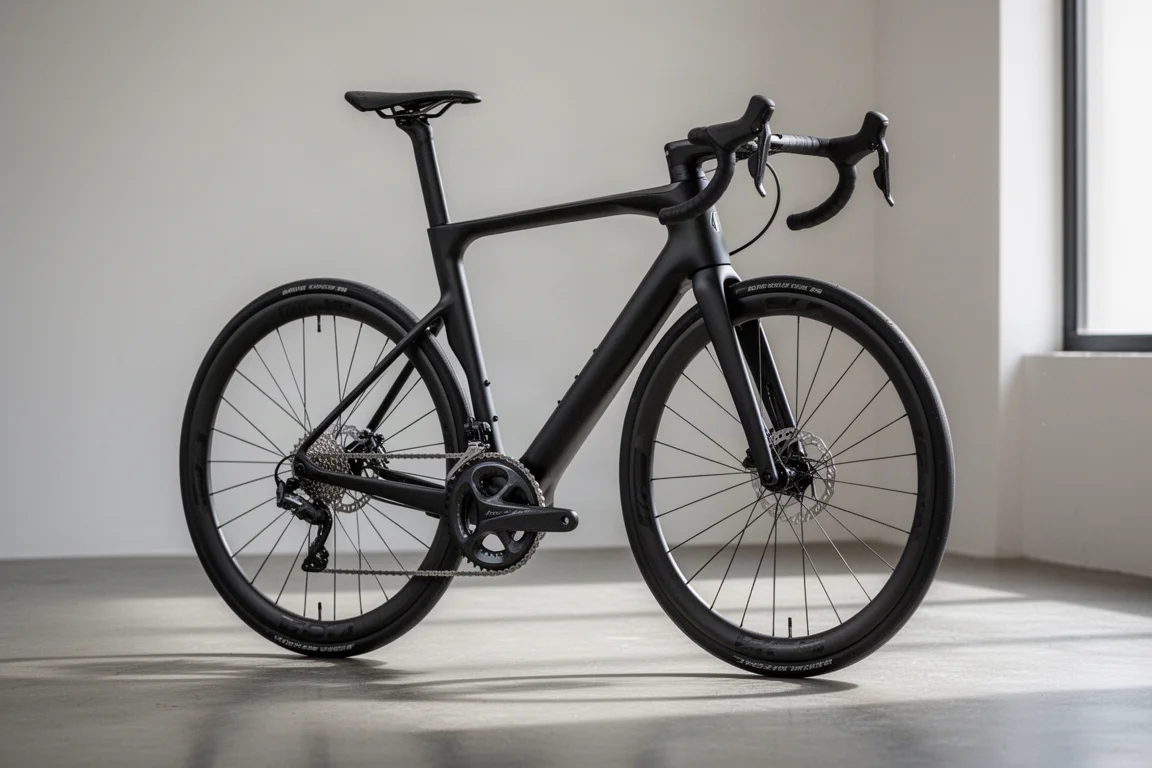
Vitus Venon Evo RS Aero: Versatility Without Compromise
The Vitus Venon Evo RS Aero is the newest design of the three, and the most versatile. Tire clearance is a huge 45mm, which means it can be pressed into service as a gravel bike whenever you want one. It ships in a road setup with 700x28c Michelin Power Cup tubeless tires, and there is a large amount of clearance left over. On the 23mm internal rim width, those tires measure closer to 30.9mm.
The frame combines more than a dozen aero tube profiles with a blend of unidirectional T700, T800, and T1000 carbon. That fiber mix is chosen to deliver stiffness from the head tube down to the bottom bracket, matching what the brand’s ZX1 aero race bike requires, while still allowing compliance in the seat stays, seat tube, and top tube for the comfort an endurance bike needs.
The approach pays off on the scales. At 8.19kg the Vitus is comfortably the lightest of the three, ahead of the Cervélo at 8.87kg and the Merida at 9.14kg. It rolls on the Prime Primavera 44 wheelset, a 44mm deep hookless carbon rim set with a generous 23mm internal width and a weight of 1,530g per pair including valves and tape, which is competitively light.
The groupset is SRAM Force AXS, a tier above the Rival AXS builds on the other two, with 46/33 chainrings and a 10-33 cassette. The one-to-one lowest gear makes steep slopes more manageable, while the 46/10 top end still leaves plenty of speed potential. The finishing kit is a standout: a great stem, an excellent carbon bar, quality bar tape, and a slick all-carbon seat post, plus a comfortable saddle that closely resembles traditional road shapes. Mudguard mounts add year-round practicality on top.
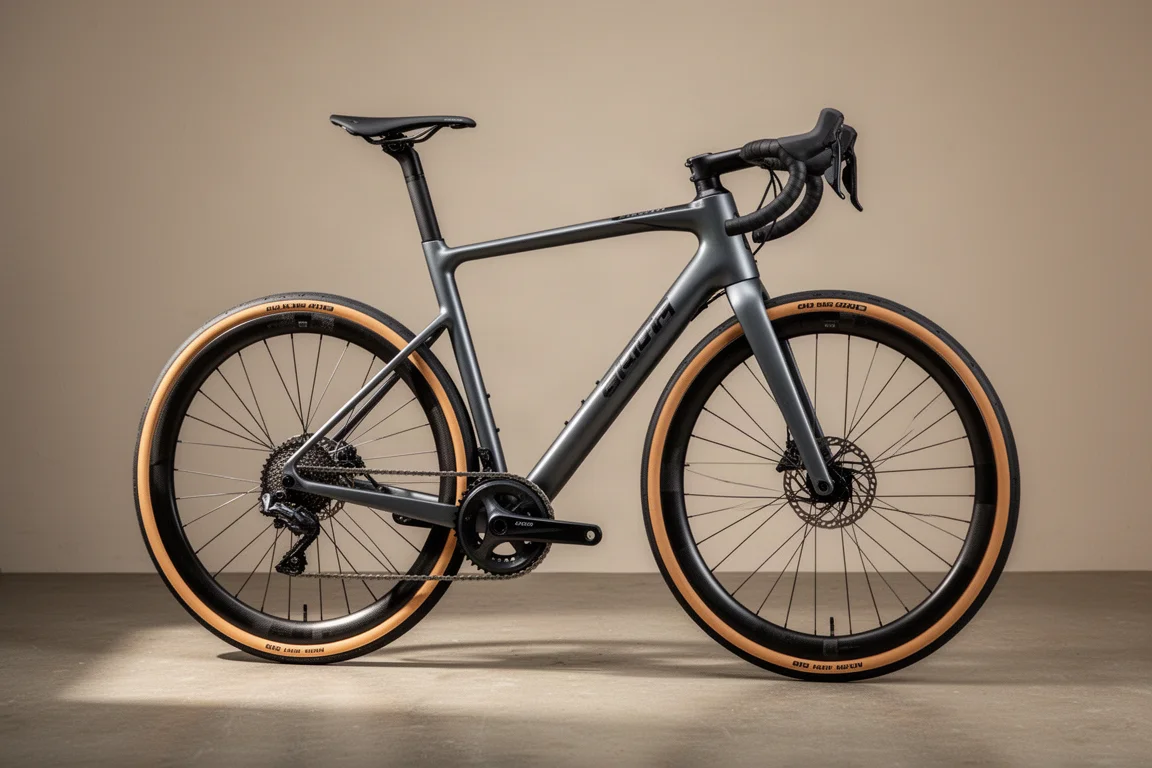
How They Compare on the Road
All three handle well, but they go about it differently. The Merida is the most upright of the group, and its steep head angle keeps steering lively enough to feel almost race-bike responsive to hard pedaling inputs. The trade-off is that the taller, shorter position makes it feel a little less immediate in quick sprints and short bursts of power than the other two.
The Cervélo sits between them. Its ride position is racier than the Merida’s, which gives it the feel of a more sporty bike, and its stiffer frame and fork make it feel that bit more vibrant when you stamp on the pedals. It is the raciest bike here, with no all-road dilution going on, and it swallows descents with a combination of stability and steering responses quick enough to react to unexpected obstacles with confidence.
The Vitus is in a different class once the road turns twisty. A long wheelbase paired with short trail sounds like it should not work on the road, yet it delivers stability and sharpness at the same time. Turn-in is quick, the bike reacts with real relish, and it feels as though it runs on rails through an apex, staying on course without a hint of drift or understeer. It is the most balanced of the three between fast and forgiving, and the most rewarding downhill.
Climbing is close between them. The Merida and Cervélo both feel solid under sustained effort, with the Cervélo’s frame solidity shining on steeper ramps, while the Vitus feels efficient thanks to a taut frame and fork and edges ahead on overall lower weight and lighter wheels. On outright speed, the Merida is quick enough and comfortable enough that you will ride faster for longer, the Cervélo feels more responsive to hard efforts, and the Vitus combines most of the Merida’s compliance with most of the Cervélo’s responsiveness, making it the most rapid of the three.
Weight, Specification, and Value
On paper the three are closer than the price tags suggest. The Vitus is lightest at 8.19kg, the Cervélo sits at 8.87kg, and the Merida at 9.14kg. Tire clearance is the clearest divider, with 35mm for the Merida, 35mm for the Cervélo, and 45mm for the Vitus, which is the only one of the three that can credibly double as a gravel bike.
Groupset tier is another divider. The Merida and Cervélo run SRAM Rival AXS, while the Vitus steps up to SRAM Force AXS. Wheel specification follows the same pattern, with alloy wheels on the Merida and Cervélo and a 44mm carbon wheelset on the Vitus. Finishing kit tells a similar story, with alloy cockpits on the Merida and Cervélo and a carbon bar and all-carbon seat post on the Vitus.
Value is where the Vitus makes its strongest case. Priced at around 4,699 pounds, it undercuts the Cervélo at around 4,800 pounds while offering a higher-tier groupset, a carbon wheelset, and a better finishing kit. The Merida, at around 3,400 pounds, is the least expensive of the three and still earned its place in this company by beating far pricier bikes. Comparable specifications from larger brands can cost considerably more than any of these three, which makes all of them look strong on value.
Overall Buying Advice
Choose the Merida if you want the most relaxed position and the lowest price of the three. It is a brilliant all-round machine that climbs well and makes smart specification choices, though there is room to upgrade a few key areas and bring the weight down if that matters to you.
Choose the Cervélo if you want a pure road endurance bike with racier manners and no all-road compromise. It is the sportiest of the three to ride, and it makes sense for riders who are perfectly happy without gravel riding in their lives and want a bike that stays usable all year.
Choose the Vitus if you want one bike to cover the widest range of riding. With 45mm clearance, mudguard mounts, a light carbon wheelset, and a Force AXS build, it can serve as a gravel bike, a winter road bike, and a big-event bike in one package, with no real need to upgrade anything. It is also the most fun of the three to ride quickly, and it costs less than its closest rival here.
Conclusion
The endurance bike may be having an identity crisis, but these three show how broad the category can be. The Merida stays closest to the classic template with the most comfortable position, the Cervélo sharpens it toward pure road riding, and the Vitus stretches it toward gravel without losing its road manners.
All three are comfortable, efficient, and genuinely fun to ride, which is exactly what the category should deliver. If you want the most versatile and most rewarding package of the three, the Vitus Venon Evo RS Aero is our pick, thanks to its class-leading specification, its low weight, and a price that very few rivals can match.
Further reading
Related Reviews
Cycling
2026 Bike of the Year and the Cycling Gear Worth Watching
A drop bar roundup for 2026 covering the Ridley Kanzo Fast 2.0, Shimano Dura-Ace Di2 R9300, Trek Checkpoint ALR Gen 3, Specialized Tarmac SL9, Garmin Fenix 9 and Insta360 X6.

Cycling
Best All-Road Bikes 2026: Six Versatile Endurance Road Bikes Worth Considering
A practical look at six all-road and endurance road bikes, from lightweight carbon speed machines to steel all-rounders and comfort-focused mile eaters.
Cycling
Best All-Road Bikes 2026: 8 Endurance Bikes for Road and Light Gravel
Eight all-road bikes that blur the line between endurance road and light gravel, compared on tire clearance, ride character, practicality, and value.