Cycling Accessories
Best Budget Electric Mini Bike Pumps: Airbank vs Enve Way vs Top Pump
Three affordable electric mini bike pumps tested for inflation speed, noise, accuracy, and packability, with a clear pick for most riders.
Introduction
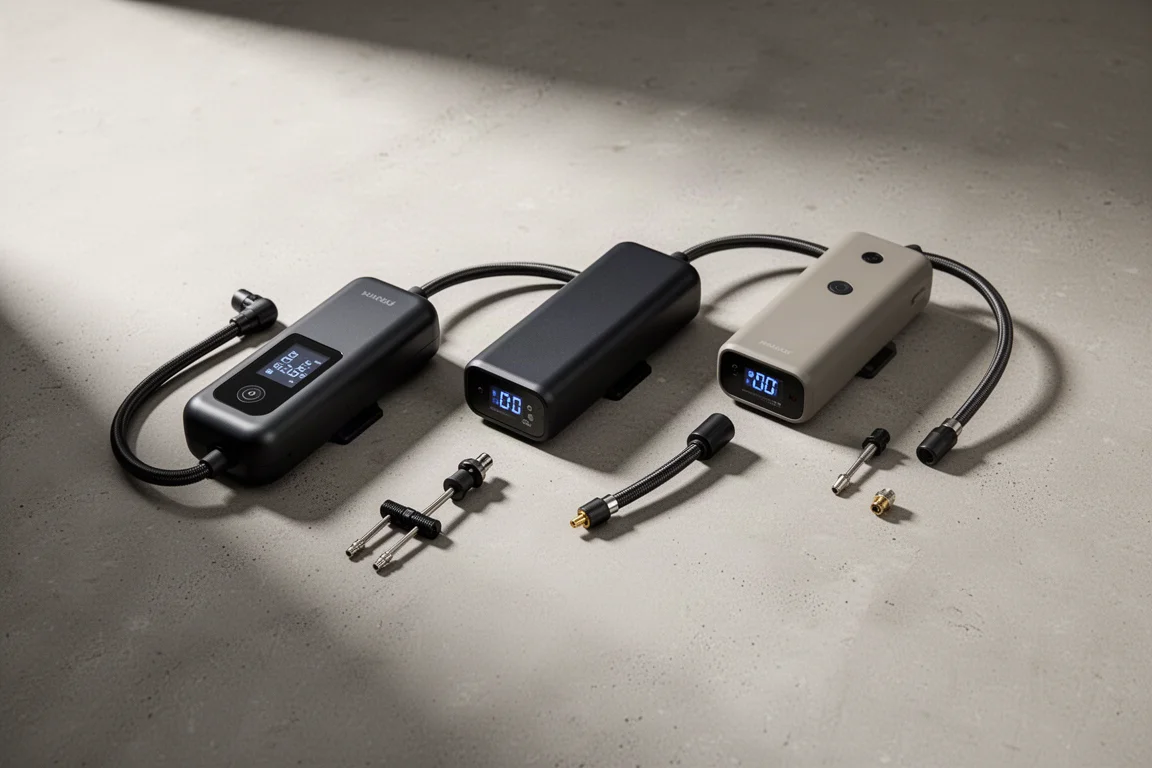
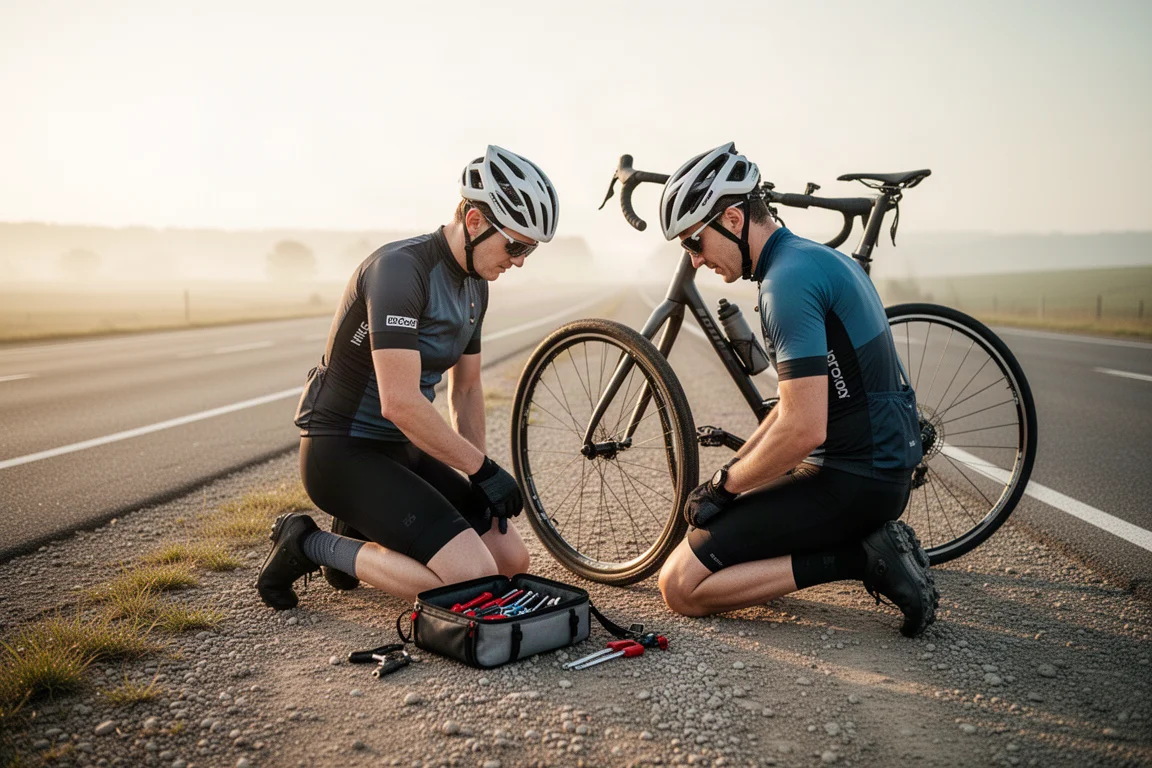
A small electric inflator pump takes the worst part out of a roadside repair. It is compact, easy to use, and it removes the strain of working a hand pump on the side of the road or trail. These pumps have grown genuinely popular over the last few years, and the appeal is easy to understand once you have used one.
The catch has always been price. Branded options can climb towards £150, which is a lot to spend on something that lives in a saddle bag. The three pumps here sit at the other end of the market, bought for between £15 and £25, and the real question is whether that saving costs you anything in practice.
To answer it, each pump was weighed, measured for noise, and timed inflating a 30 mm tyre on a deep-section rim from 0 to 50 psi, with the pressure readings compared against a smartphone app for accuracy. All three were also used over several weeks on road and gravel rides.
What Actually Matters in a Mini Pump
The single most important feature is a digital pressure gauge. It removes the guesswork from inflating a tyre, which is exactly the moment when you least want to be estimating. A pump without one is harder to trust, however light or quiet it happens to be.
Second on the list is water resistance. Electric pumps, batteries, and rain are a poor combination, and not every model includes protection. Some ship with a waterproof bag in the box, and in practice that bag is enough to keep a pump working through wet weather. Models that include one start with an advantage over those that do not.
Compactness matters just as much, because saddle bag space is limited. Some designs can be pressed straight onto the valve, while others insist on a screw-on hose extension before they will inflate anything. That protruding hose makes a pump noticeably bulkier to pack, even when the body itself is small.
Heat is the last consideration that is easy to overlook. These pumps warm up during use, and with TPU inner tubes the plastic valve can soften. A short hose or adapter between pump and valve keeps that heat away from the tube.
Airbank: The Lightest Option, With Caveats
The Airbank is the smallest and lightest pump in the group, and it is also the quietest. If low bulk and low noise are the priorities, nothing else here comes close on those two counts.
The trade-offs are real, though. It was the slowest to reach 50 psi, and it has no pressure gauge, so you inflate blind. Its body is tiny, but the nozzle still protrudes, which blunts some of the packaging advantage you would expect from the smallest pump of the three.
It is worth a look for riders who want the least weight and the quietest operation and are not in a hurry. Given that racing is usually about time, that combination will not suit everyone.
Enve Way: Fastest to Pressure
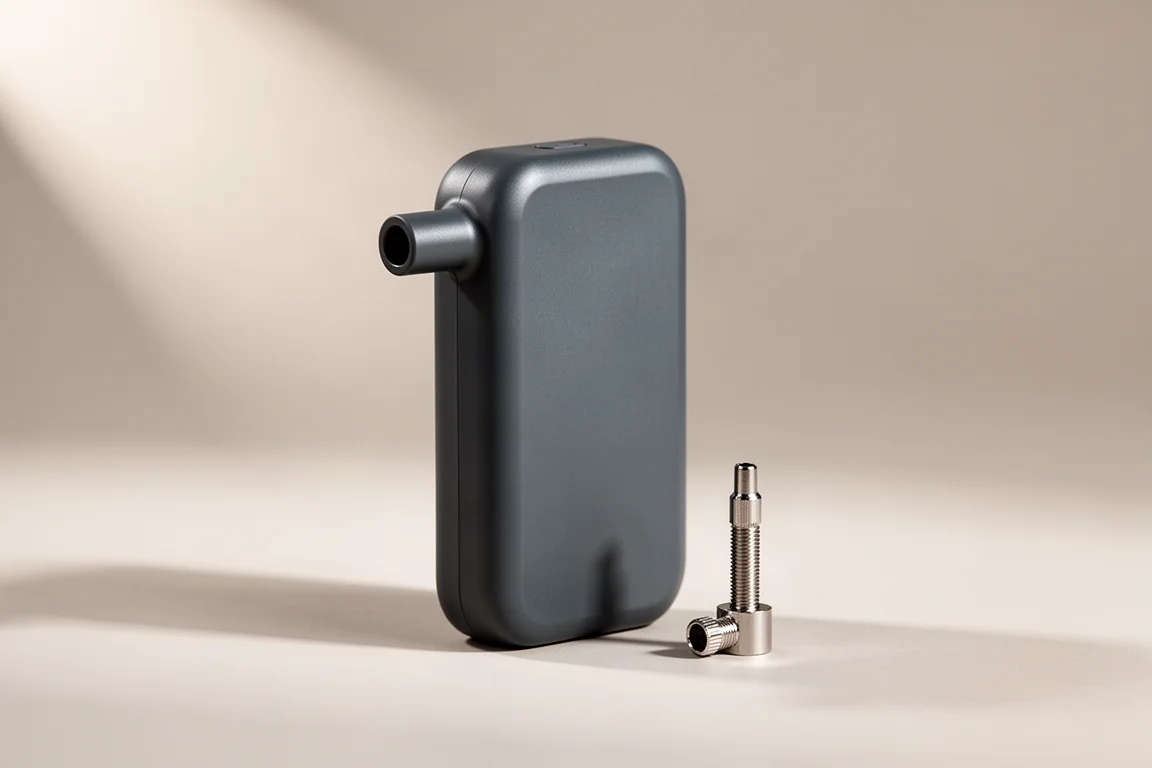
The Enve Way was the quickest pump in the test, reaching 50 psi in 46 seconds. On a cold, wet roadside that speed is genuinely useful.
Accuracy is where it gives ground. Its reading sat roughly 2 psi below what the pressure app reported was actually in the tyre, so the number on the display is a guide rather than a precise figure. It was also among the noisier pumps here.
Where it earns back ground is the silicone case. It reduces heat build-up in your hand, which makes the pump more comfortable to hold during a longer inflation. For riders who value outright speed and a more pleasant grip, this is the interesting option of the three.
Top Pump: The Most Complete Package
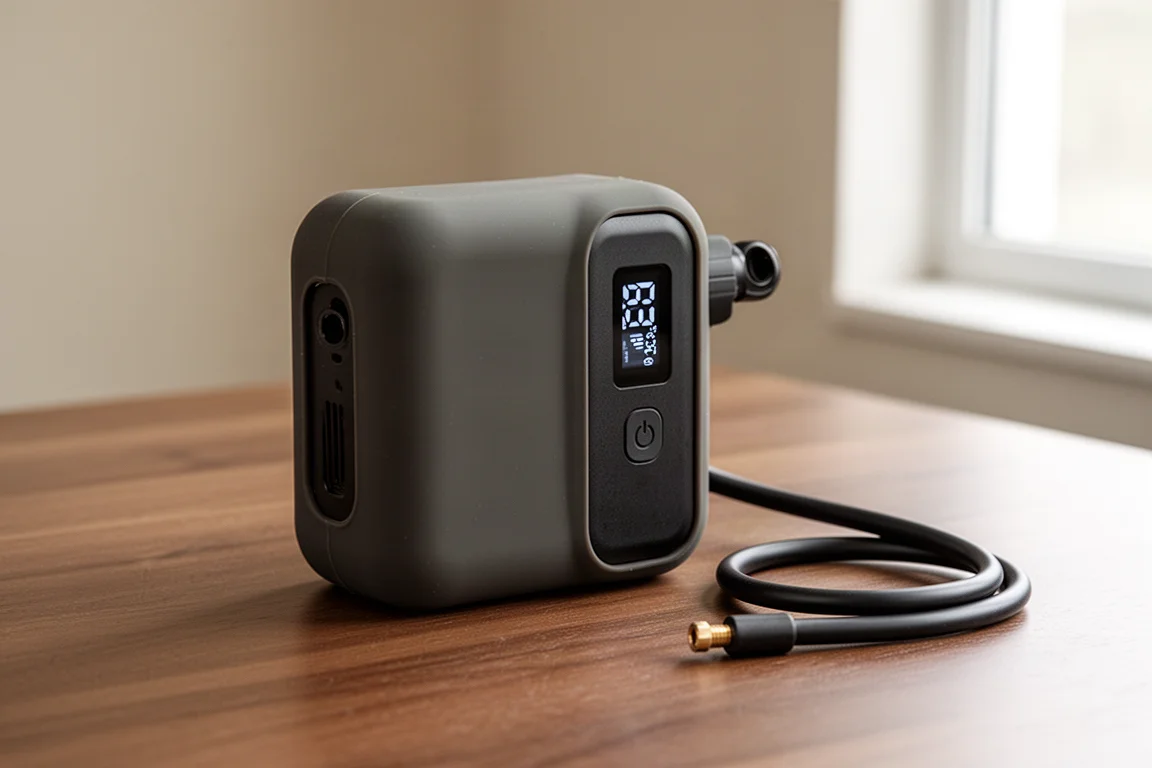
The Top Pump was three seconds slower than the fastest pump here, but it was quieter by a clear margin at around 92 decibels, and it was the most accurate of the group. A 50 psi reading on its display matched 50 psi on the app.
It is around 10 g heavier than its closest rival, though the difference in the hand is not really noticeable. It also arrives with a waterproof bag and a set of accessories, including valve adapters and a hose, so the essentials are in the box.
Build quality and reliability both feel sound, with no obvious shortcuts, and it holds up well against noticeably more expensive pumps. Speed, noise, accuracy, ergonomics, form factor, and price all land in a sensible place, which is why it takes the top spot in this group.
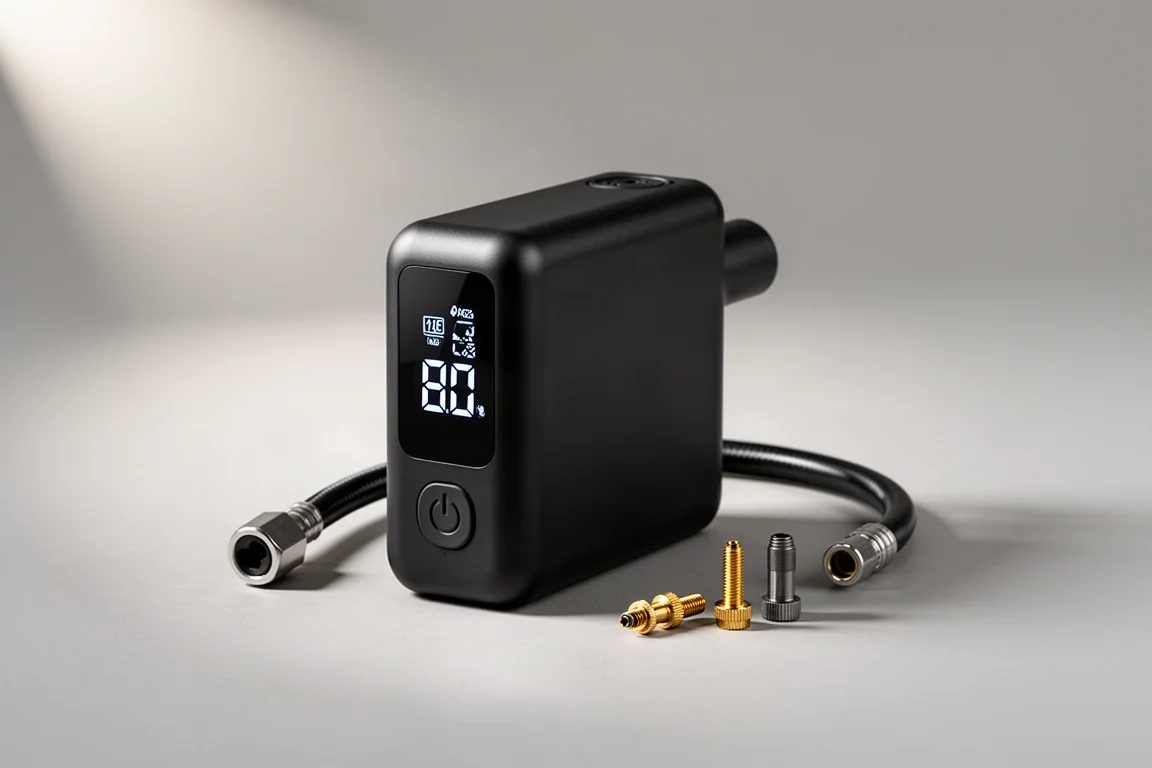
Ergonomics and Everyday Handling
The three pumps share a broadly similar rectangular form factor, but the details differ. Two of them have smooth, rounded edges that sit comfortably in the hand, which matters when you are holding a pump for up to a minute. One has more defined corners, and it is noticeably less pleasant to grip for that long.
Display and control placement also varies. On some pumps the controls sit on the same face as the valve, so the readout is visible while you hold the pump upright. On others they sit on the opposite side, which means holding the pump in a less natural orientation to see the numbers. It is the kind of difference you adapt to quickly, but it does shape which pump feels right in your hand.
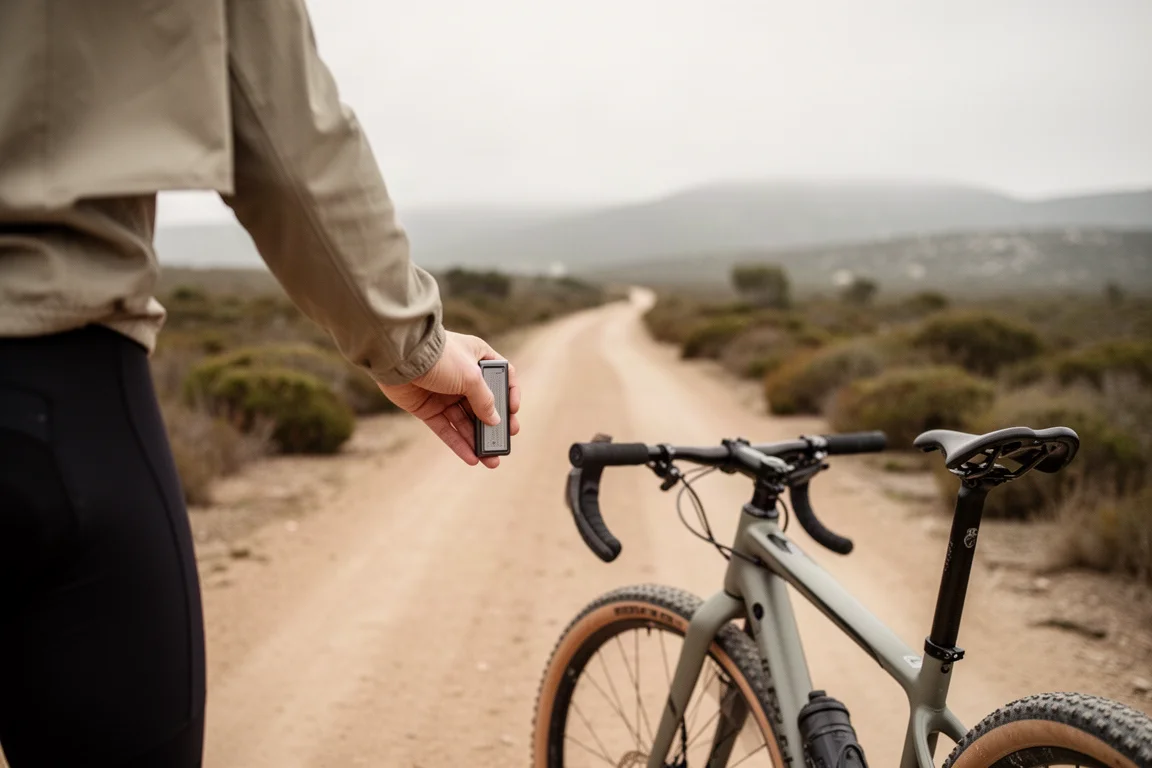
Noise is worth setting expectations on. All of these pumps are loud, sitting somewhere in the 90 to 100 decibel range, and they differ mainly in pitch rather than volume. Nothing here will let you inflate discreetly at a trailhead.
Battery Life, Longevity, and Backup Plans
The two strongest performers in this group run roughly comparable batteries of about 500 mAh, and each delivered between four and nearly five inflations from 0 to 50 psi in testing. The Airbank carries a smaller battery, which fits its lighter build.
Four or five inflations is more than most riders will ever need in a single ride. Two punctures is already an unlucky day, and one or two is the realistic scenario these pumps are built for. For weekend rides and short outings they are entirely sufficient, and they are a more reusable choice than a CO2 canister, which is spent after a single use and cannot be carried in useful numbers.
For unsupported multi-day trips, the sensible approach is a hybrid one: keep an electric pump in an easy-to-reach tool bag for everyday repairs, and carry a manual pump on the frame as a backup for the rare ride where everything goes wrong.
Buying Advice: Which Pump Suits Your Riding
Start with the gauge. If a pump cannot show you the pressure, you are guessing every time, and that alone is enough to rule a model out for most riders. From there, weigh speed against accuracy and noise.
If you want the fastest inflation and a comfortable silicone-wrapped grip, the Enve Way is the pick, provided you accept a slightly optimistic pressure reading and more noise. If you want the best balance of speed, quiet operation, accurate pressure, included accessories, and build quality, the Top Pump is the one to choose. The Airbank makes sense only if minimum weight, minimum size, and minimum noise outweigh everything else, and you are patient enough to wait for the gauge-free inflation to finish.
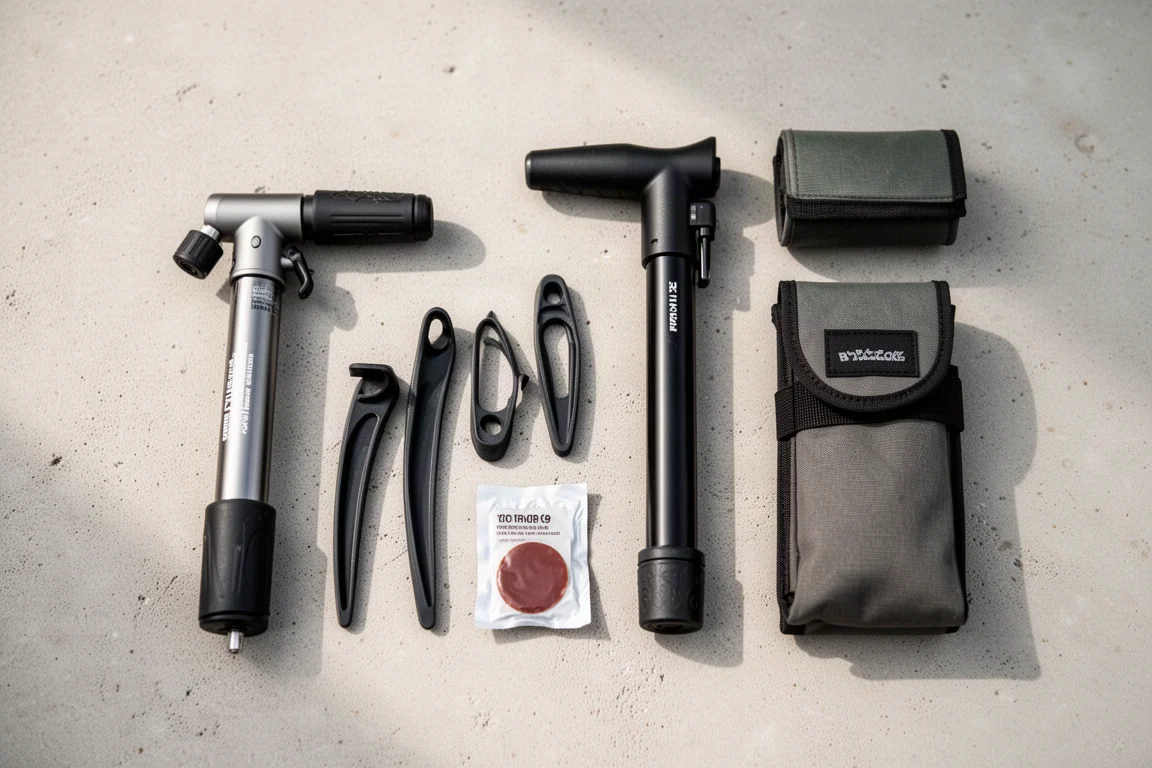
Packing is the other practical filter. If your saddle bag is already tight, favour a pump that connects directly to the valve rather than one that needs a screw-on hose extension.
Conclusion
At £15 to £25, these pumps undercut premium branded models by a wide margin without feeling compromised in daily use. The Top Pump is the most complete of the three, combining competitive speed with the best accuracy and the lowest noise, and it is the safest recommendation for most riders.
The Enve Way remains a strong alternative for anyone who prioritises inflation speed and hand comfort, and the Airbank fills a narrow but real niche for weight-conscious riders who can live without a pressure gauge.
Further reading
Related Reviews
Cycling Accessories
7 Inexpensive Everyday Products That Are Brilliant for Cyclists
Seven cheap household products that solve real problems for cyclists, from portable bike washing and dry shoes to clean bottles and protected paintwork.
Cycling Accessories
Amazon Cycling Accessories Worth Buying: Five Practical Picks
A basket of low-cost cycling accessories judged on real-world use, from a dash cam style camera and light combo to bone conduction headphones and one tool best left on the shelf.
Cycling Accessories
Electric Bike Pumps Compared: AS2 Pro Tiny Pump vs AS2 Pro Max
A practical look at two battery-powered bike pumps: what they do well, where they fall short, and which one suits which kind of rider.