Power Tool Lighting
Best Cordless Flashlights and Work Lights: Three Power Tool Lights That Actually Deliver
The Ryobi PCL660B, Milwaukee M12 2353, and DeWalt DCL050 put their big brand flashlights to shame with honest output, huge runtime, and real durability.
Introduction
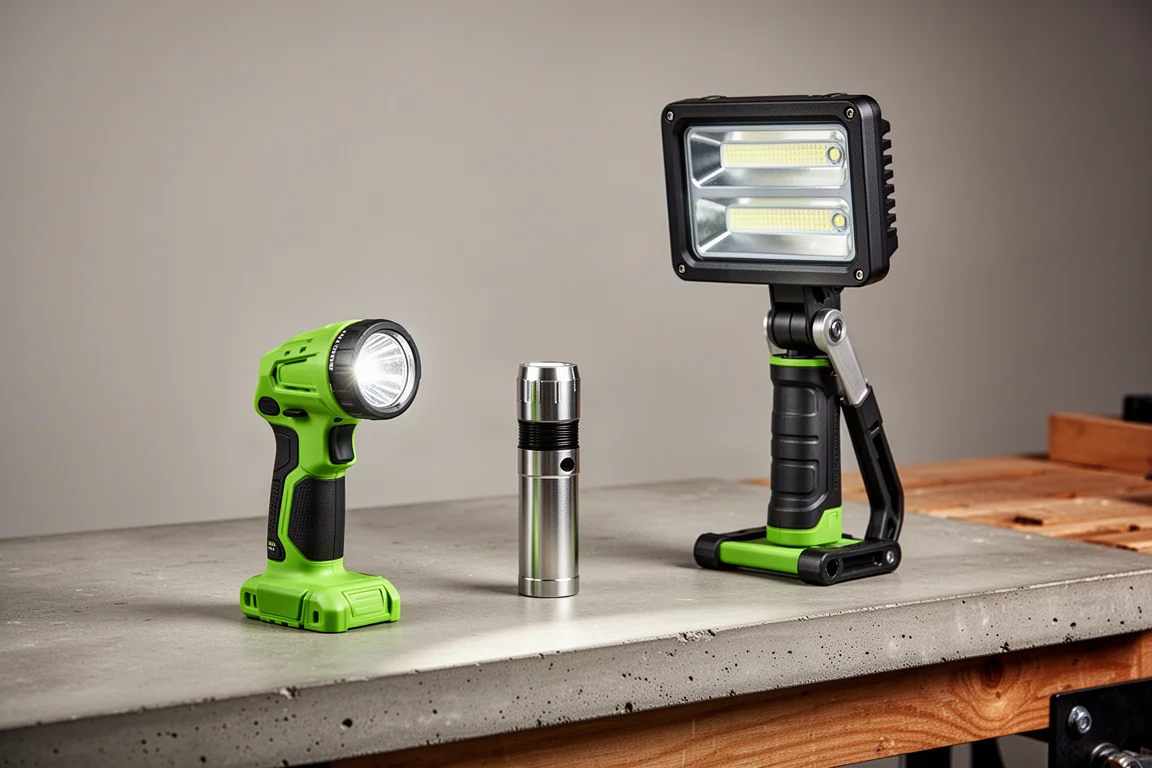
Most power tool brands sell flashlights that would have looked dated two decades ago: 100 to 200 lumen bodies living inside full-size tool shells, still shipped in kits as if nobody owns a phone with a bright LED. The names on this list are different. These are the lights worth owning because they post honest numbers, survive abuse, and run for absurd lengths of time on the batteries you already have.
How We Tested
Every light here was measured for real lumen output, candela, and beam distance, then run through runtime testing on high mode and a drop gauntlet with increasing heights up to 10 feet with a battery attached and 18 feet bare. The results separated the honest tools from the spec stretchers very quickly.
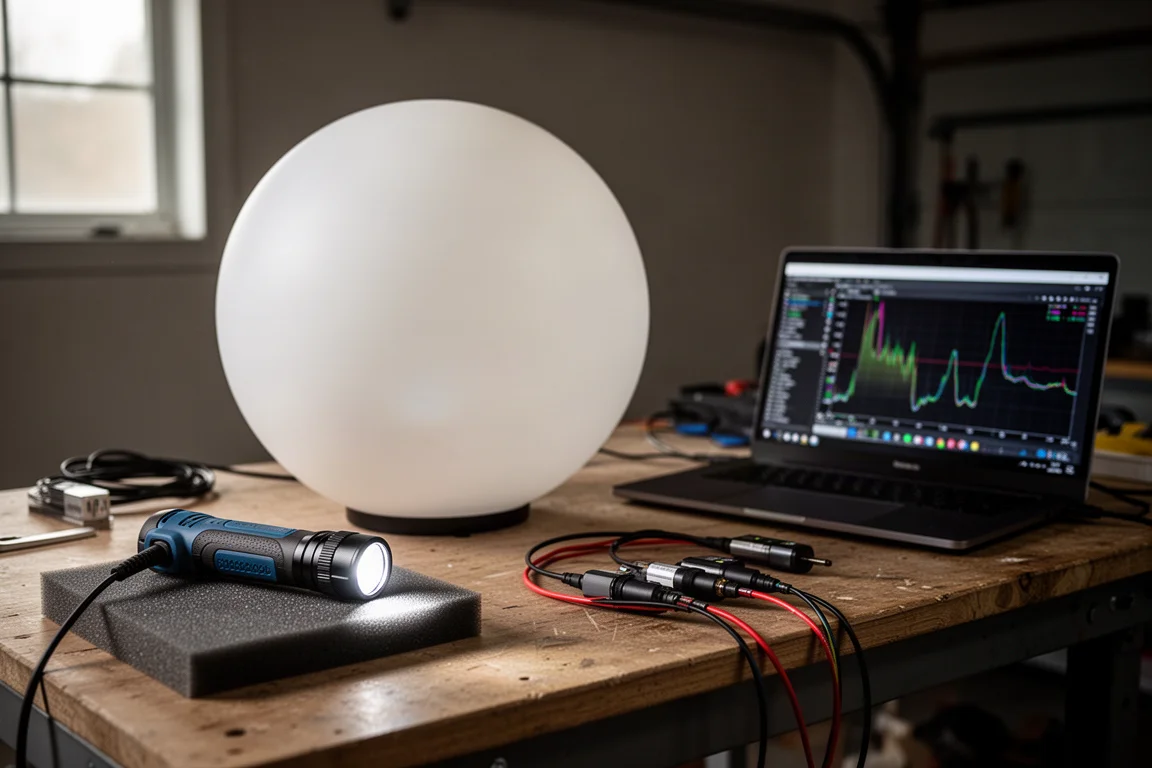
Runtime was the easiest win across the board: these lights sip power at their output levels, and with large multi-cell packs they simply run all day. Durability was where the field really split, and it is why the three standouts below earned their spots.
Ryobi PCL660B: The Budget All-Rounder
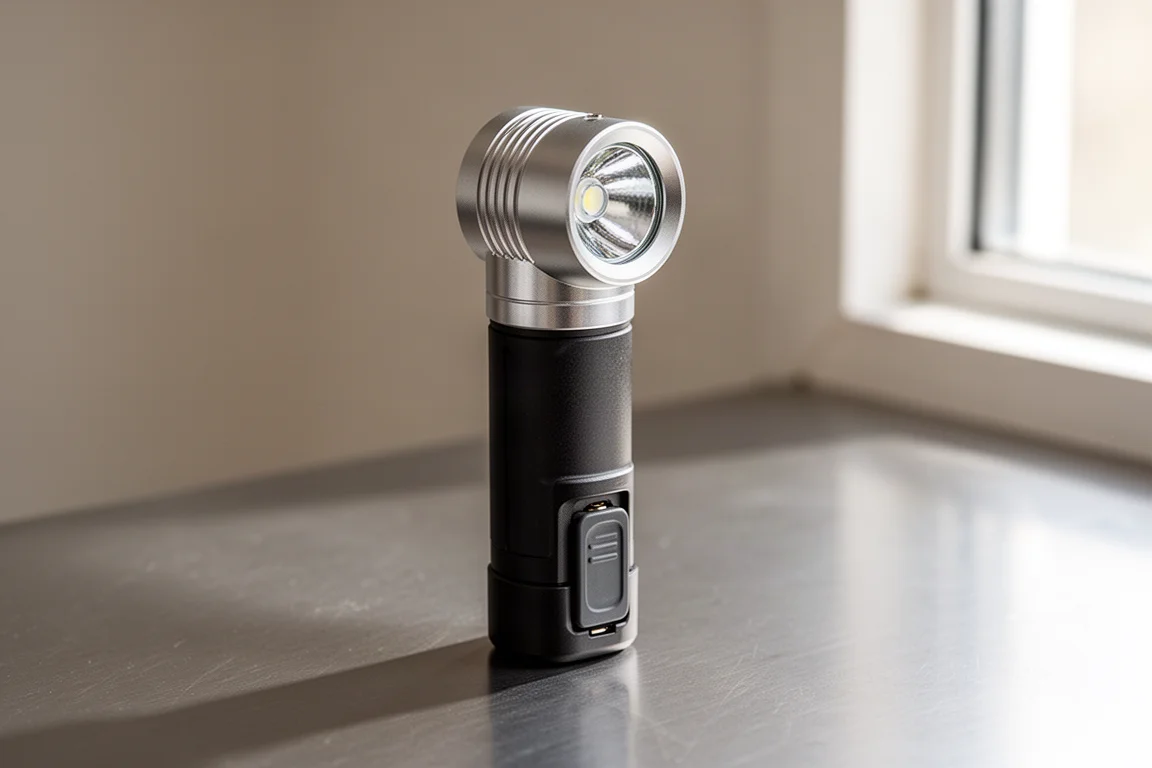
The Ryobi PCL660B costs around 20 dollars, is rated at 280 lumens, and actually delivered about 290 in testing. Its articulating head is handy for close-up work, and because the battery-to-watt-draw ratio is generous, the output essentially stays flat rather than sagging. Measured beam distance came out around 175 meters with roughly 7,700 candela, which is respectable for a flood-leaning beam.
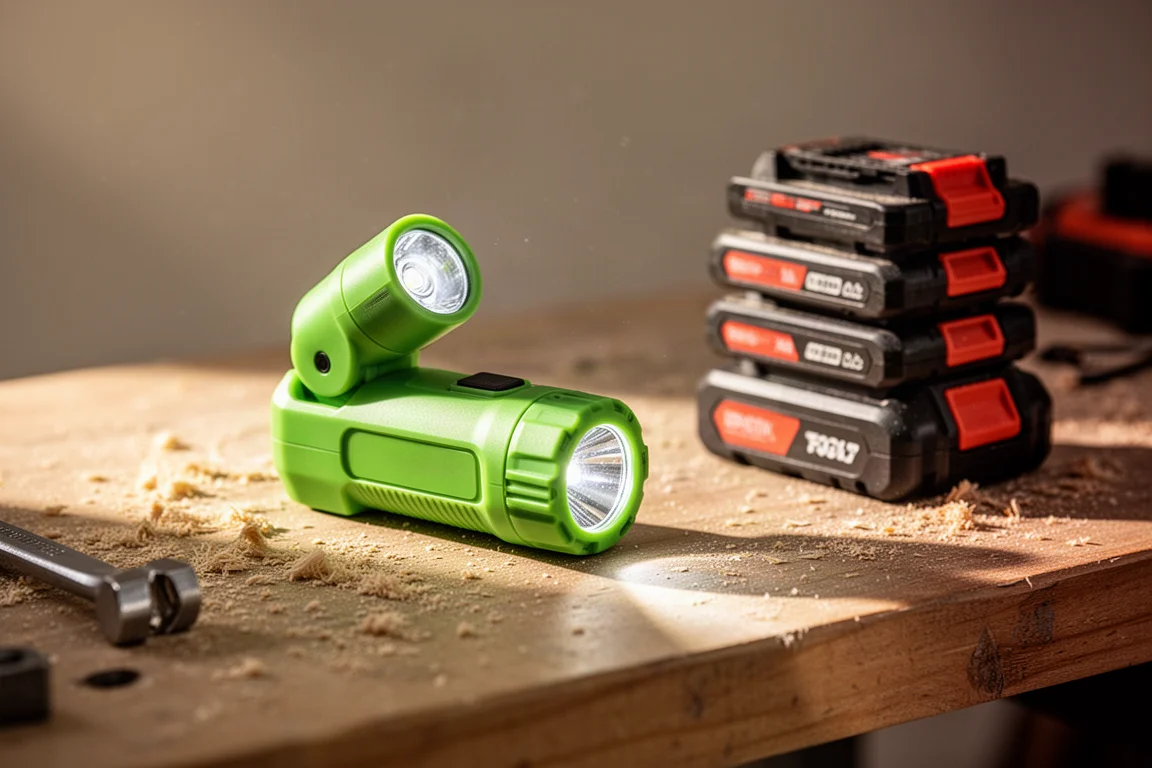
Durability was the surprise. Even with a battery attached it shrugged off drops from increasing heights up to 10 feet, and bare it survived 18-foot drops without issue, earning a 9 out of 10 with headroom left at the top. On a 4 amp hour battery it ran for a full 22 hours on high, nearly a complete day of continuous light.
Milwaukee M12 2353: The Long-Range Specialist
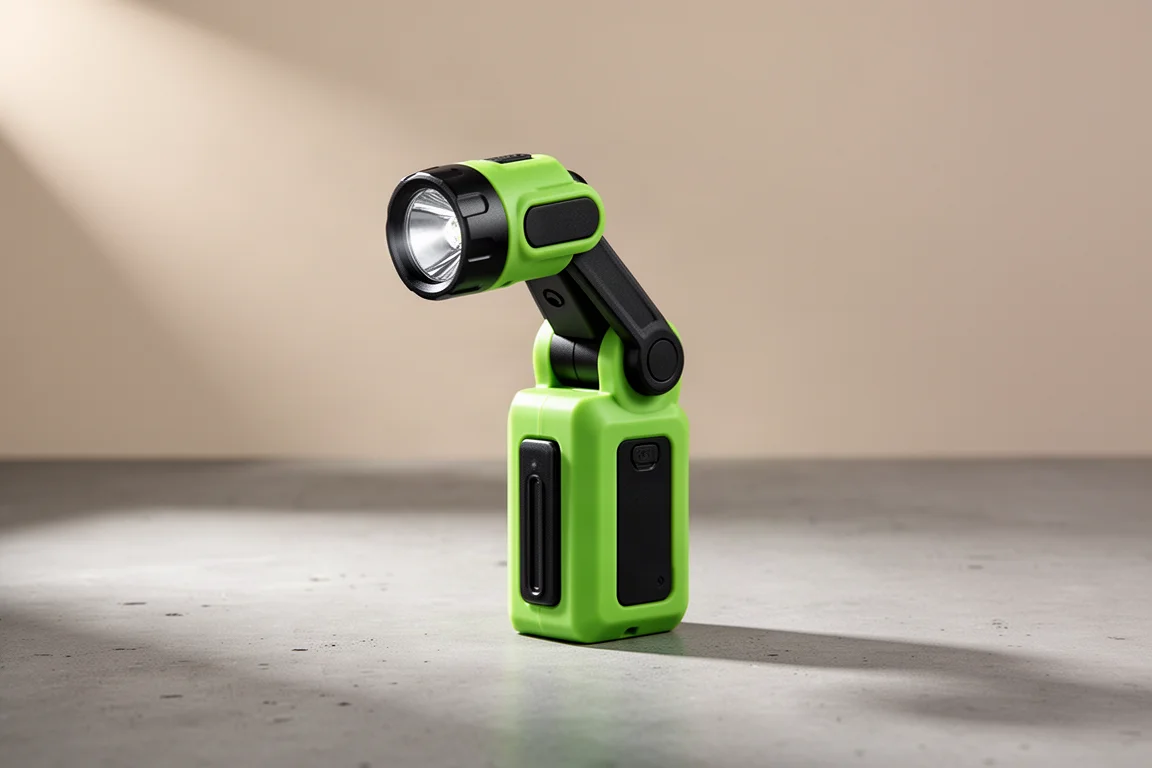
The Milwaukee M12 2353 steps things up dramatically. Rated at 750 lumens, it produced around 820 lumens in testing regardless of battery, whether a genuine 5 amp hour high-output pack or even a knockoff 6 amp hour battery, making it a sensible place to run cheap cells. Its real trick is throw: about 70,000 candela and roughly 580 meters of measured beam distance, which is a different league from every 18V or 20V flashlight here.
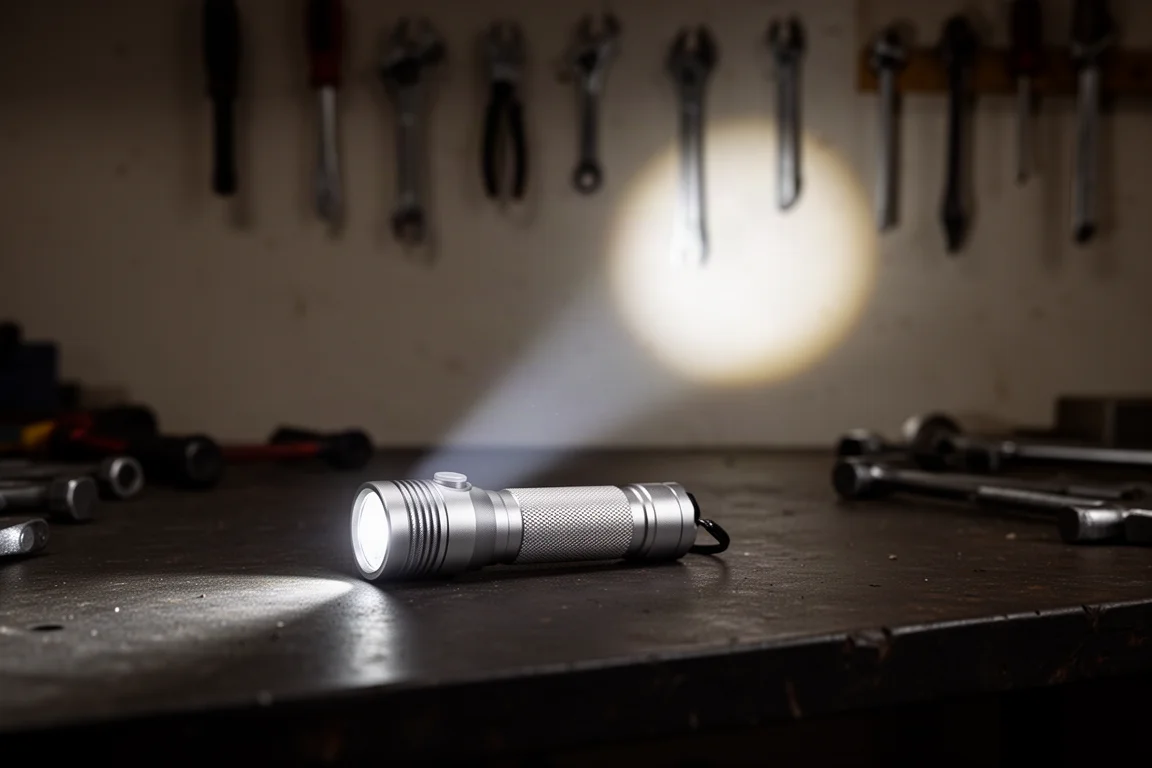
At around 70 dollars it is not cheap, but it is also extremely hard to kill. With an aluminum housing up front it took just as many hits as the toughest lights tested and kept working. The aluminum head does get noticeably hot during extended use, a byproduct of a genuinely high-power LED chip, and the usual M12 battery ejection quirk applies on hard drops. It still earned a 9 out of 10 and ran 5 hours and 45 minutes on a large pack, more than enough for a spotlight of this kind.
DeWalt DCL050: The Indestructible Flood Light
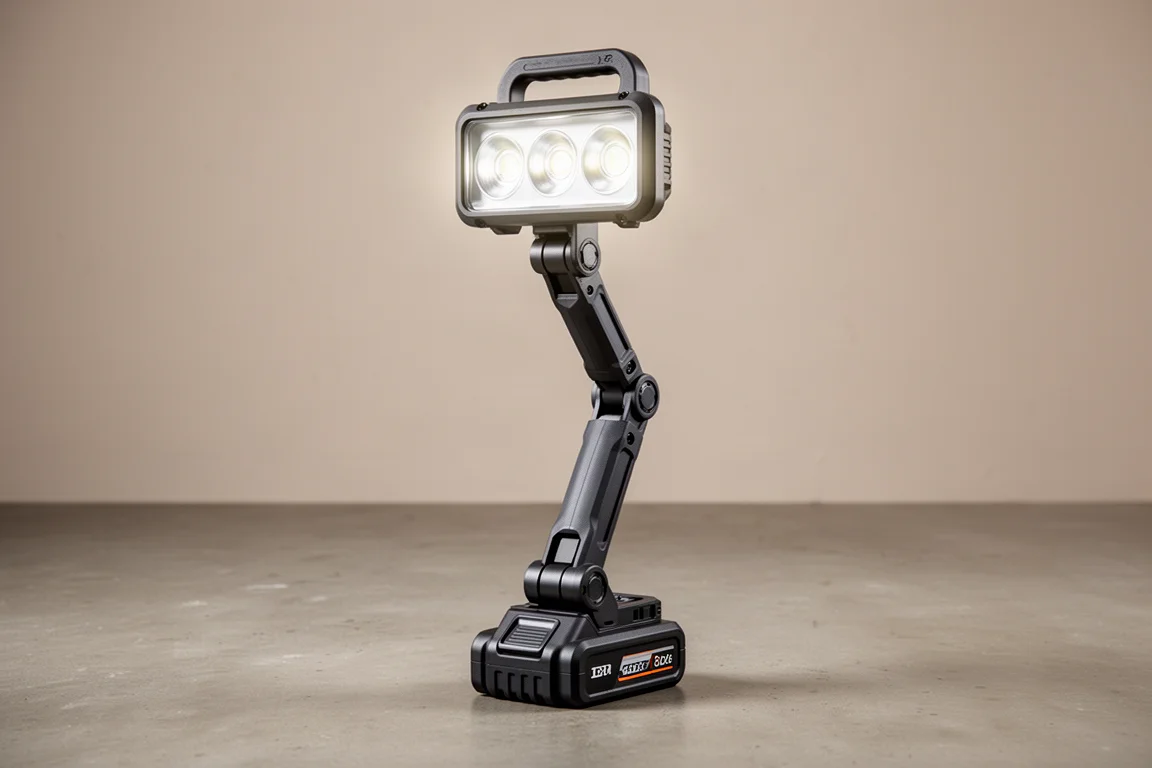
The DeWalt DCL050 is a 1,000-lumen-class flood work light at around 70 dollars, and it delivered about 930 lumens measured, rising to nearly 990 with more accurate test positioning. The battery weight doubles as a stable base, and the neck ratchets into multiple angles. One quirky detail found during teardown: a cast metal weight hidden in the handle, which partly explains the substantial feel though the weight does not stop it from tipping over on its own.
Durability is where the DCL050 set the bar. It was dropped again and again, heavier, longer, and more awkwardly shaped than the flashlights, with a hinge in the body, and it could not be killed or even meaningfully scuffed. The ratchet clicks and function remained exactly as new. It was the only light to earn a perfect 10, and it ran 10 and a half hours on a large pack, though it spent its final stretch in lower, less useful output levels.
Buying Advice
Among the flashlights, the strongest all-round value pick is the Ryobi PCL660B: 20 dollars, very durable, enormous runtime, and the highest output among the non-spotlight models. If you want a long-range spotlight, the Milwaukee M12 2353 is the obvious choice and was objectively excellent throughout, though not the cheapest. If your light regularly takes falls from a ladder, the extra money for the DeWalt DCL050 buys you a tool that simply will not break. The flood light category also has cheap unbranded clones that deliver surprisingly close output for a fraction of the price, worth considering if you rarely work off the ground.
A final note on the wider market: some big brands still ship 20V and 18V flashlight kits with only 100 to 200 lumens, which is hard to justify when lights like these exist. Check the measured numbers, not just the badge, before you buy any tool-brand light.
Conclusion
The Ryobi PCL660B wins on value and runtime, the Milwaukee M12 2353 wins on throw and toughness, and the DeWalt DCL050 is the work light you can beat on for years without consequence. Match the light to your job, and any of these three will outperform the sad 100-lumen kits still sitting on store shelves.
Further reading
Related Reviews
Power Tool Lighting
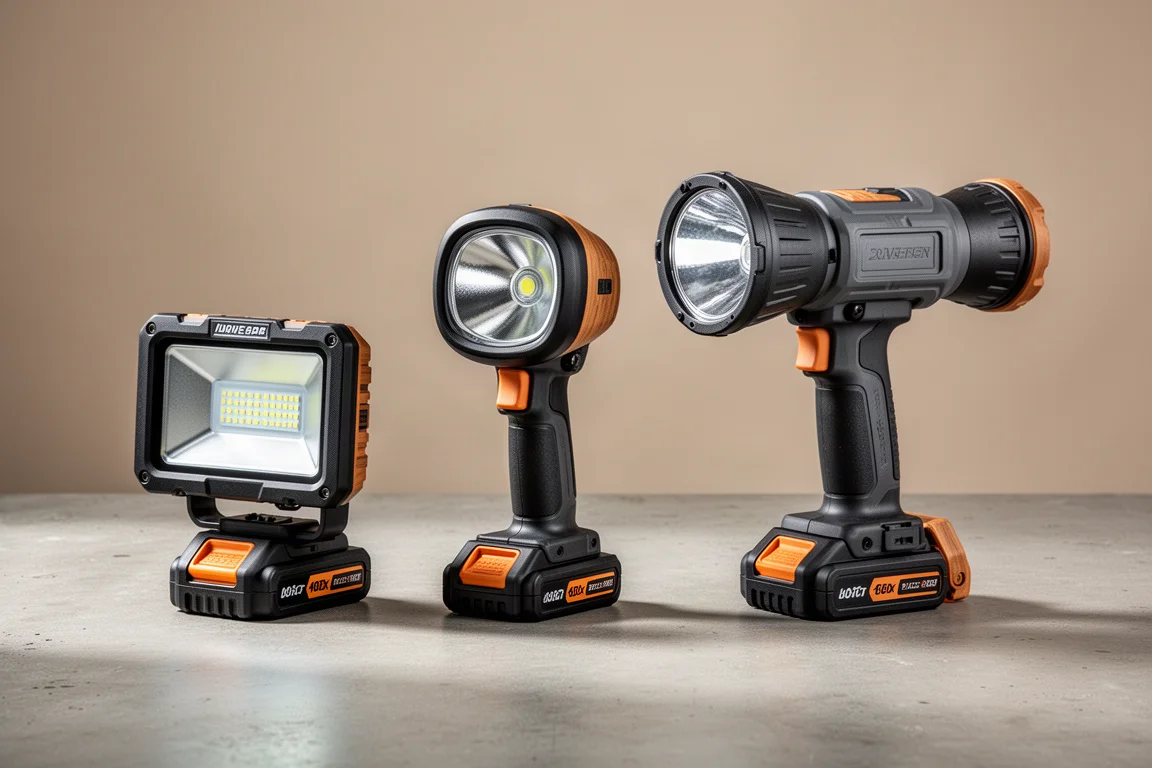
Best Cordless Work Lights: Why a $30 Flood Light Competes with Milwaukee
A budget battery-powered flood light goes head to head with the Milwaukee M18 Rover and M18 Search Light to see whether premium jobsite lighting is worth the price.

Backpacking Gear
Building a 10 lb Base Weight: An Ultralight Backpacking Gear List
A practical walkthrough of the ultralight pieces behind a 10 lb base weight, from a 765 g pack and a roomy one-person tent to a full camp chair and a dependable water filter.

Road Bikes
10 New Road Bikes Worth Watching: Aero, Titanium, Steel and Endurance Standouts
A practical roundup of 10 new road bikes, from aero flagships chasing single-watt gains to titanium, steel and endurance platforms built for real roads.