Aquarium Filtration
Best Carbon Reactors for Reef Tanks: Four Picks Worth Considering
A practical guide to carbon reactors for reef tanks, from compact kits for beginners to large-capacity models and the carbon media that makes them work.
Introduction
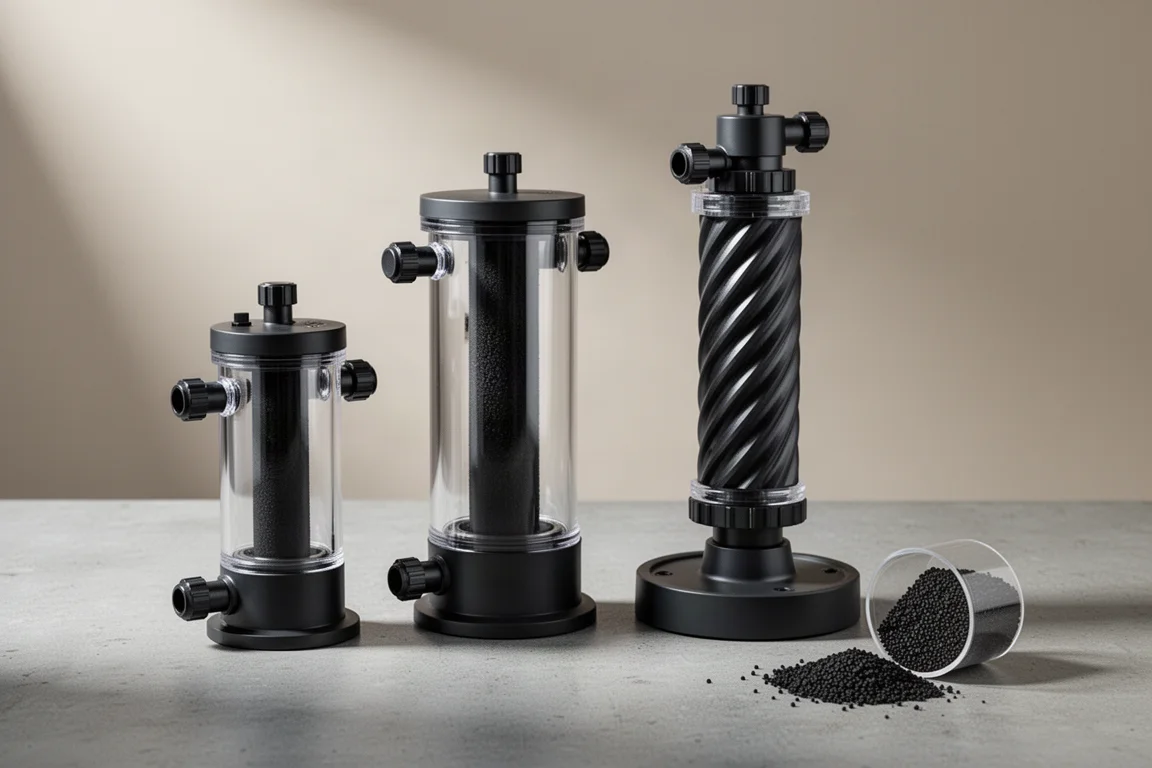
The word reactor sounds dramatic for a piece of aquarium gear, but the idea behind it is simple. A reactor is any canister that holds media, and water is pushed through that canister so it comes into close contact with whatever is inside. Fill it with activated carbon and you have a carbon reactor. Fill it with GFO and it becomes a GFO reactor. The same housing can hold biopellets, macroalgae, or even the air used in a CO2 scrubber.
For carbon specifically, the reaction at work is adsorption. Activated carbon traps colors, odors and certain dissolved chemicals inside its porous structure, and it can only do that when the entire water column is forced through the media. That is the difference a reactor makes compared with a mesh media bag sitting in a high-flow area of the sump. Media bags do work, but they are considerably less effective.
Choosing between the available models is where it gets interesting, because the selection is surprisingly wide for such a simple device. Four factors settle almost every decision: the size you need, where the reactor will live, whether you want a complete kit or prefer to source your own pump and plumbing, and how much work a media change involves.
What a Carbon Reactor Actually Does
Not every reactor runs the same reaction. In a carbon reactor the media adsorbs pigments and odors from the water. A biopellet reactor depends on beneficial bacteria consuming the pellets, and a calcium reactor works by dissolving its media into the water. The hardware can look almost identical, but the intended result changes with the contents.
Activated carbon is the usual starting point because the result is visible. Used properly, it can make aquarium water noticeably clearer and remove odors that would otherwise drift through the room.
The catch is contact time. Carbon only adsorbs what actually passes through it, so the goal is to push as much of the water column through the media as possible. A mesh bag placed in a high-flow area achieves that to a degree. A reactor achieves it far more consistently.
How to Choose the Right Carbon Reactor
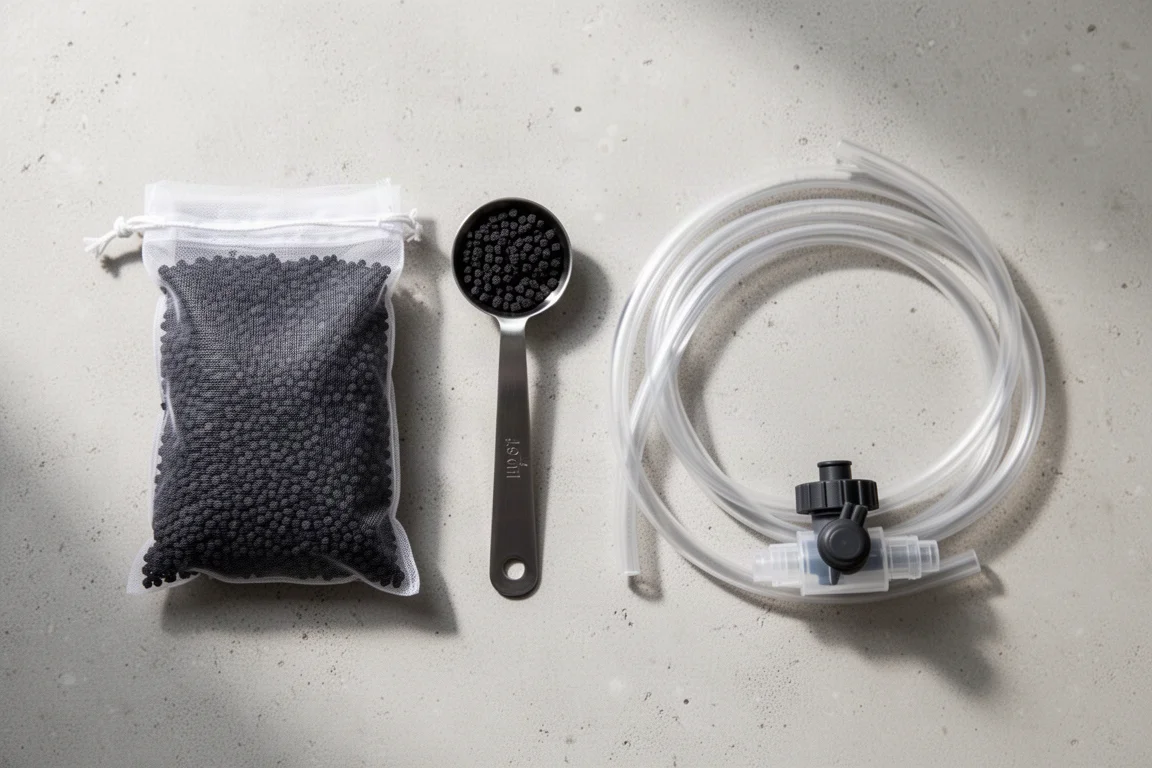
Size comes first, and it is easy to overbuy. The recommended dose of ROX 0.8 carbon is one tablespoon per 10 gallons of tank volume, so an 80 gallon system calls for eight tablespoons, which is half a cup. That happens to be exactly what the smallest reactor in this roundup holds. Using more carbon than the recommended dose does not improve the result; it just means going through media faster.
Location is the next question. A reactor can sit inside a sump, be plumbed externally, fit into a rear filtration chamber, or hang on the back of the tank. Knowing where yours will go narrows the field quickly, because not every model supports every position.
The third question is whether you want everything in one box. Complete kits include a correctly sized pump, flexible tubing, a valve for flow control and sponges that keep the media packed, which removes most of the guesswork. If your setup needs a hang-on-the-back reactor or one that fits a rear chamber, you will likely need to buy a pump and plumbing separately.
Maintenance deserves more attention than it usually gets. A media change can mean a canister wrench, wet hands, unplugging the reactor, carrying it to a sink, rinsing the media with RODI water and then reversing the whole routine. Designs that shorten that process are worth paying for. Some use thumb screws instead of a wrench, and others have detachable bases so the body lifts away without disturbing the plumbing.
Best for Most Beginners: BRS Mini Reactor Kit
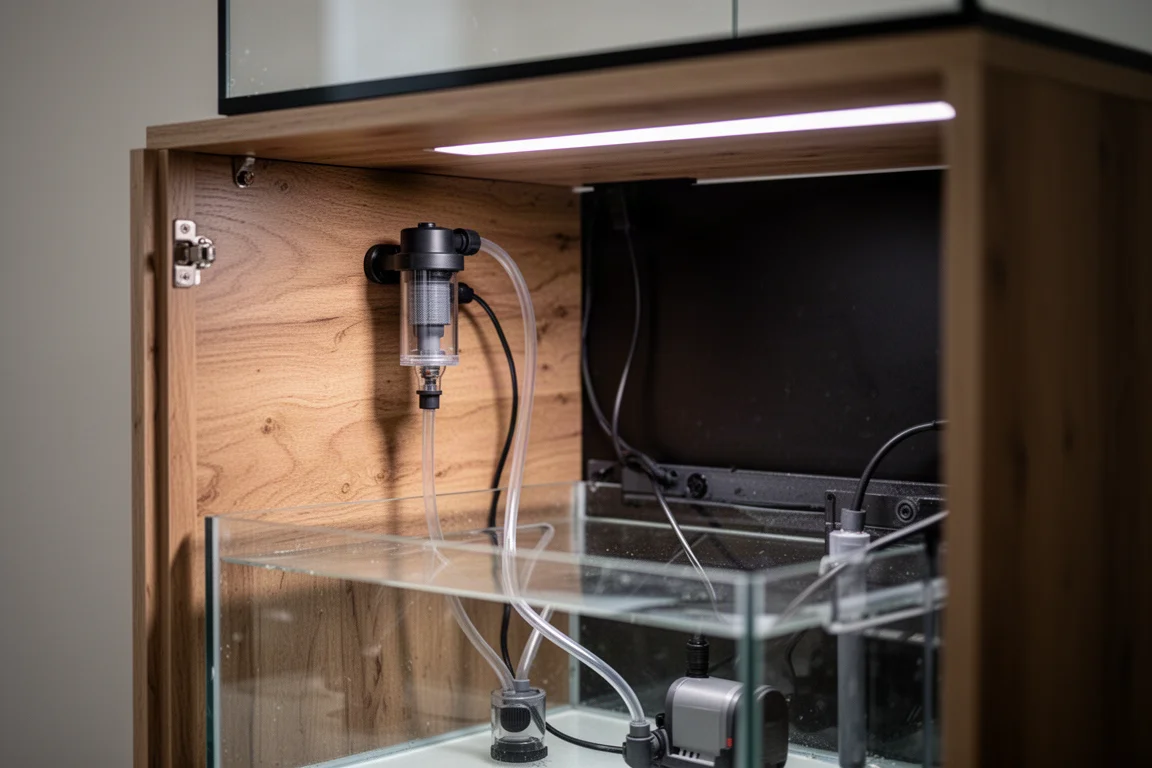
For the vast majority of beginners, the mini kit is the sensible starting point. It suits tanks up to 100 gallons, and its small size means it can sit inside a sump or be mounted externally to the inside of a wooden cabinet stand without taking over the space.
It arrives complete: reactor, pump, flexible tubing, a ball valve to control flow, and sponges that keep the carbon packed so it does not tumble. Because the kit is built around its own pump and plumbing, there is no uncertainty about whether the parts match.
Capacity is the main limitation. Half a cup of carbon is plenty for the tank sizes it targets, but it is not the right choice for a large system.
Best for Larger Systems: BRS Deluxe Reactor Kit
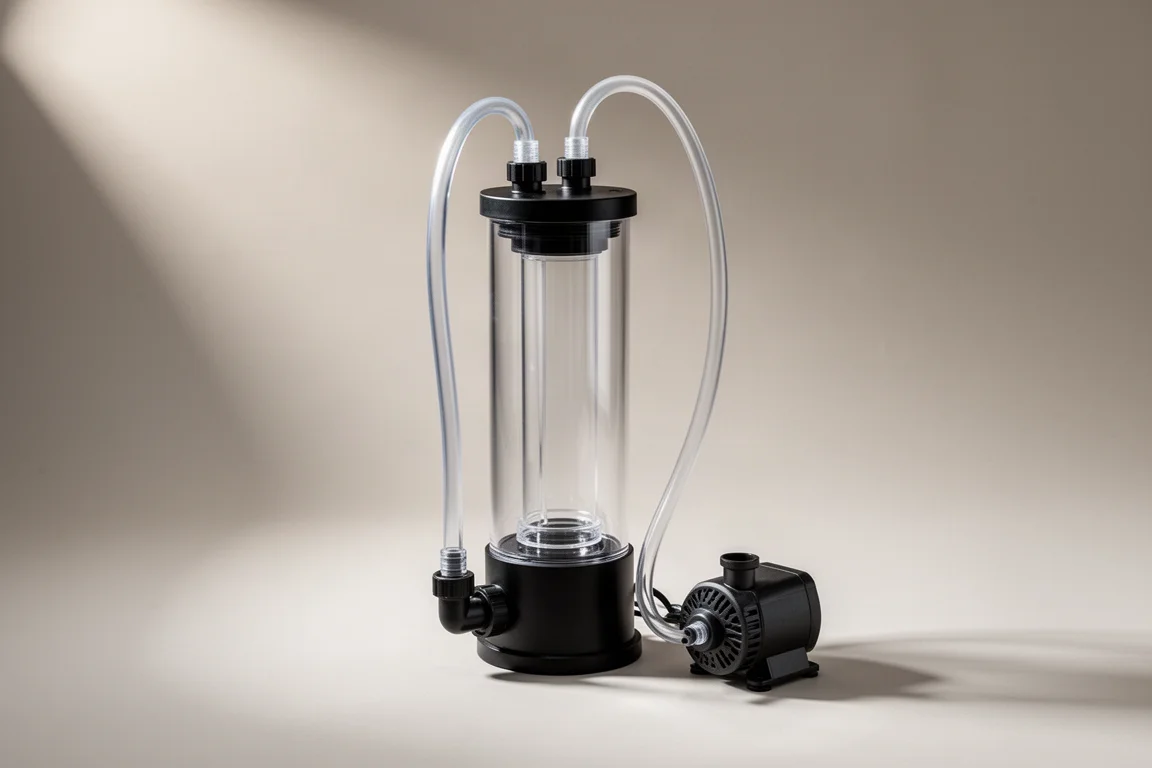
Systems above 100 gallons need somewhere for the carbon to go, and the deluxe kit is essentially a larger, more refined version of the mini. It holds up to three cups, or 48 tablespoons, of media, which makes it suitable for tanks up to 500 gallons.
Everything that makes the mini kit convenient carries over, including the supplied pump and plumbing. The trade-off is physical size, so it is worth checking the available room in your sump or cabinet before committing.
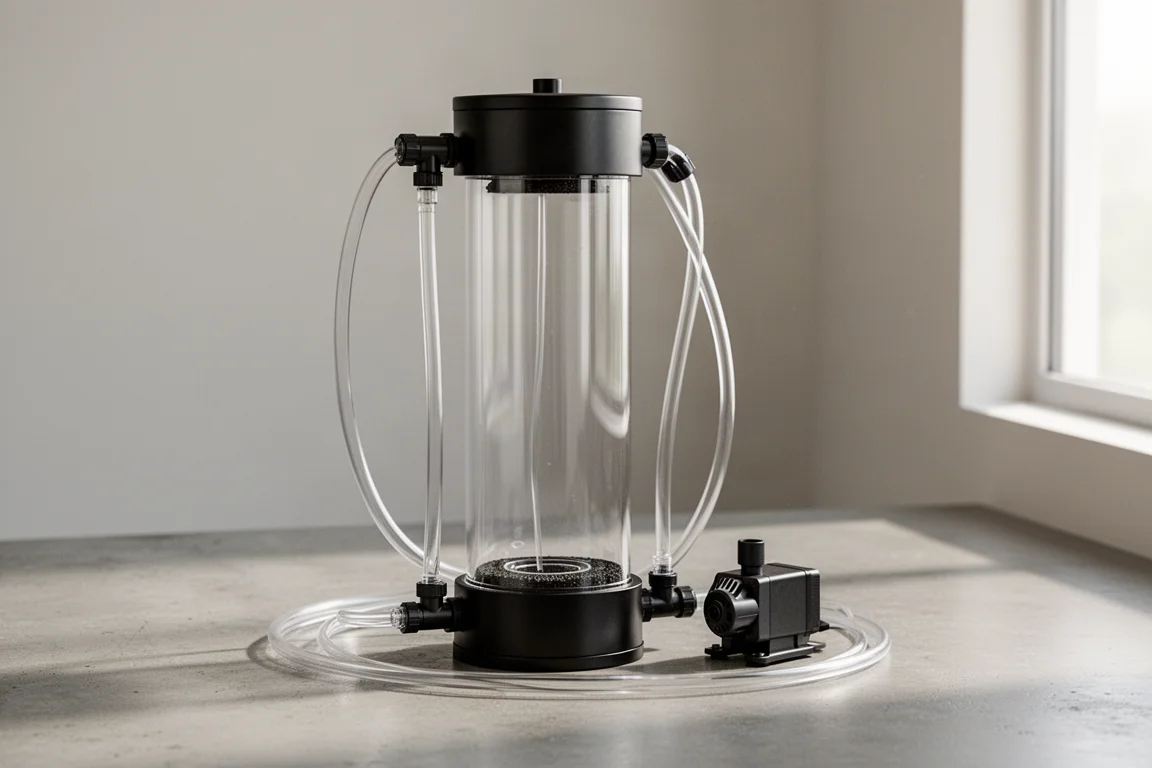
Easiest to Maintain: Aquamaxx Sigma-1
If media changes are the part of reactor ownership you dread most, start here. The Sigma-1 cannot be plumbed externally, so it belongs in a sump or a filtration chamber, but the way it handles adjustment and removal is what sets it apart.
Twisting the reactor body adjusts the flow rate, and that same body lifts off its detachable base when maintenance is due. The suction top comes away with a couple of turns, so there are no thumb screws and no canister wrench involved.
It suits keepers who want the routine to be quick rather than technical, provided there is space in the sump for it.
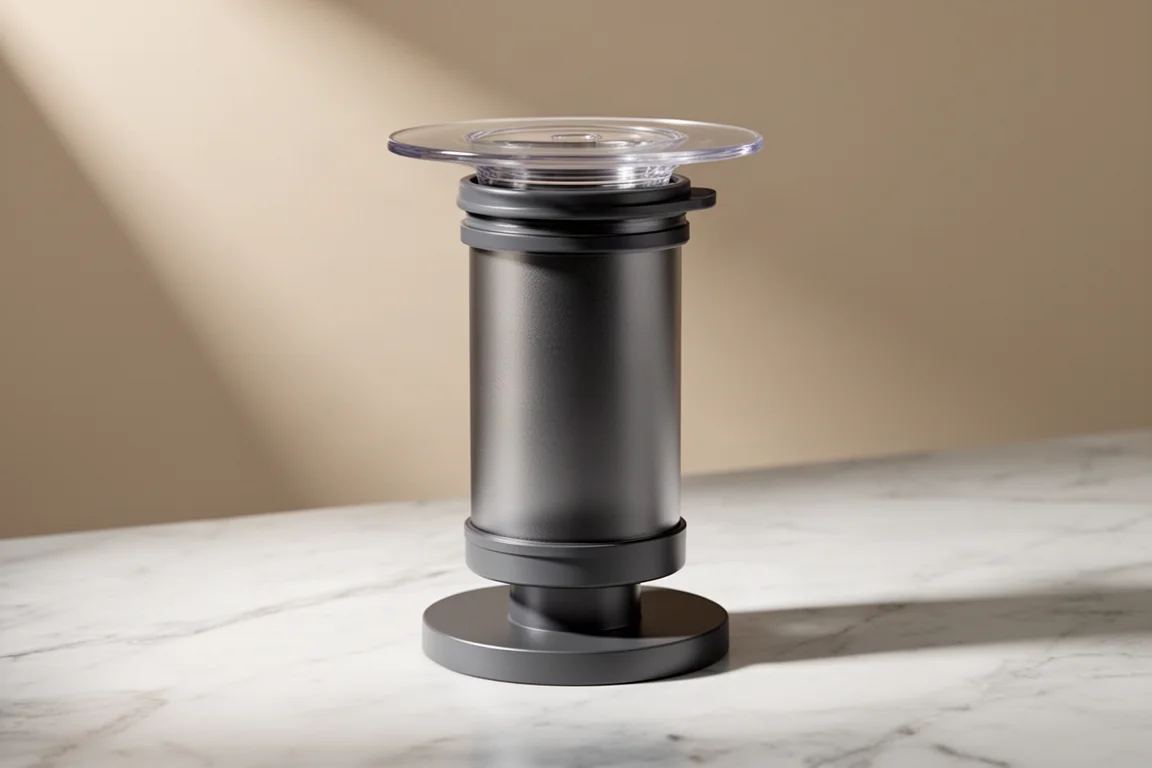
Best Carbon Media: BRS ROX 0.8 Carbon
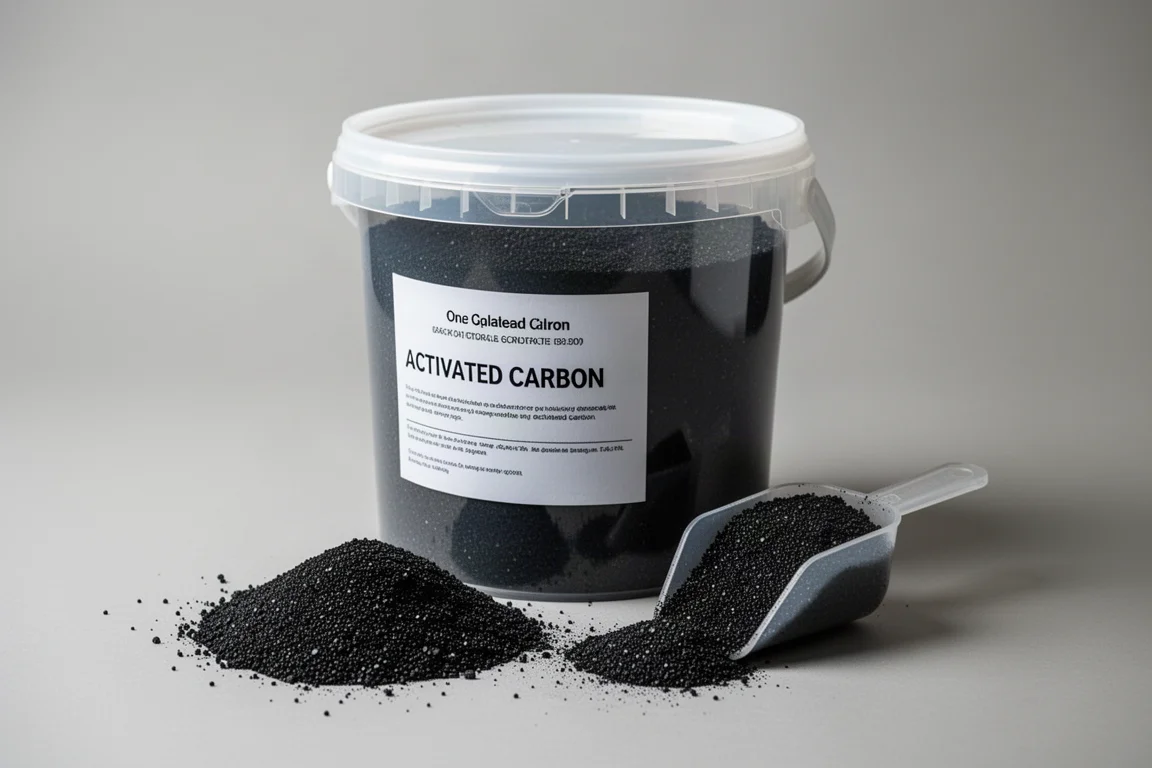
A reactor is only as good as what goes inside it, and this is the carbon to pair with any of the reactors above. It costs a little more than other carbons, but it does more per gram, so a smaller dose delivers the same result. It also has a track record of pulling more pigments out of the water than other carbon types.
Buying in bulk improves the value further. A one gallon container lasts most hobbyists a year or more, which spreads the cost across a long stretch of clear water.
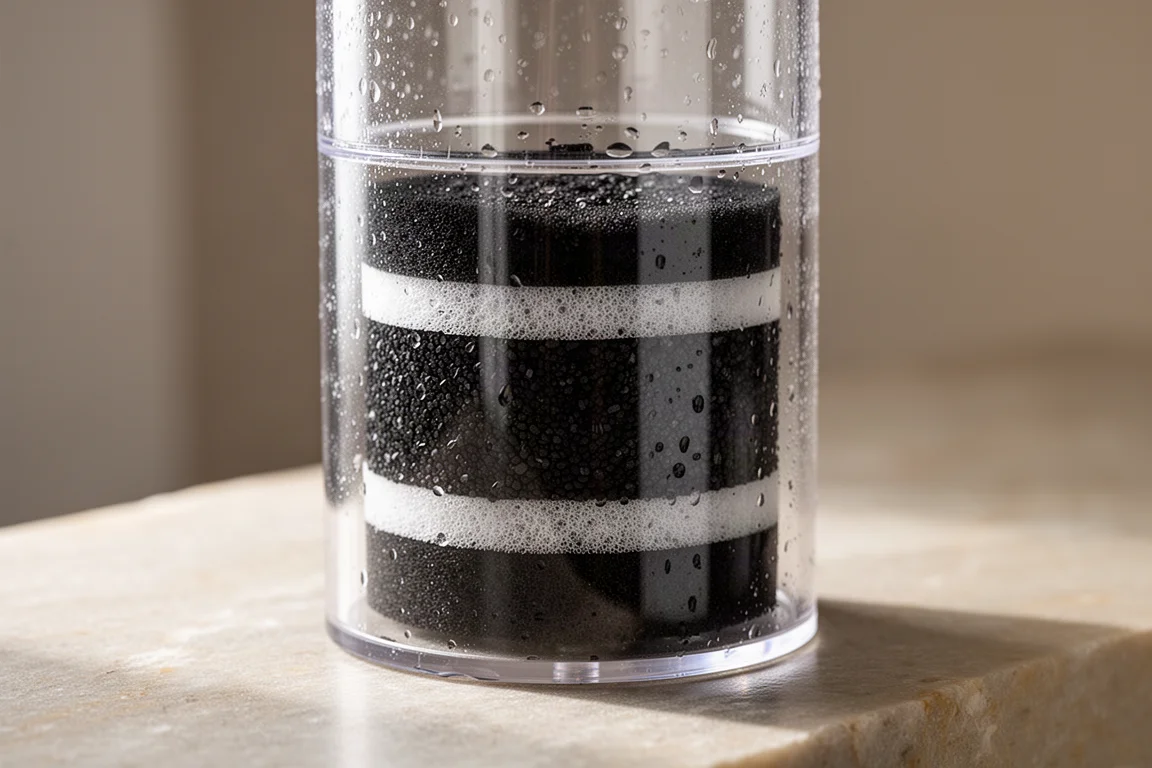
Setup follows three steps: measure the right amount of carbon for your tank volume, pack it tightly between sponges so it cannot tumble, and rinse it before the reactor goes back online.
Buying Advice: Matching a Reactor to Your Tank
The easiest way to choose is to work backwards from tank volume. Up to 100 gallons, the mini kit covers the recommended carbon dose with capacity to spare, and its small footprint keeps placement simple.
If your system is larger, the deluxe kit’s three-cup capacity means you are not refilling it constantly, and the included pump and plumbing keep the installation straightforward.
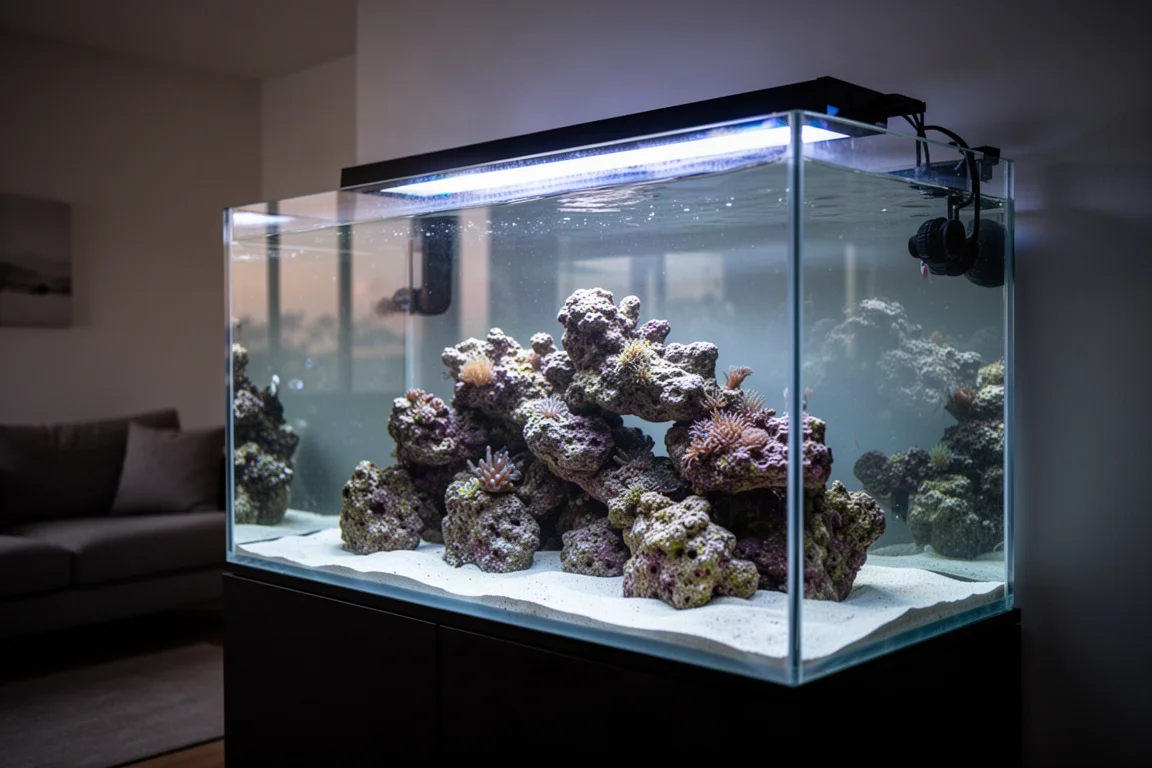
Maintenance tolerance is the second deciding factor. If you are comfortable with a wrench and a bit of mess, a standard canister design does the job. If not, a detachable-base model removes most of the friction. And if you would rather not source parts yourself, a complete kit with the pump and plumbing included leaves the least room for error.
One last point on dosing. More carbon does not mean cleaner water; it means more media used per change. Measure to the recommended rate and let the reactor do the work.
Conclusion
Carbon reactors are one of the rare pieces of reef equipment where the concept is genuinely simple and the decision comes down to practical details. Match the size to your water volume, choose a model that fits where you can actually put it, and pick a design whose maintenance routine you will keep up with.
For most beginners running up to 100 gallons, the mini kit is the straightforward answer. Larger systems are better served by the deluxe kit, and anyone who wants the simplest possible servicing should look at the Sigma-1. Pair whichever you choose with ROX 0.8 carbon to get the most clarity from every tablespoon.
Further reading
Related Reviews
Aquarium Filtration
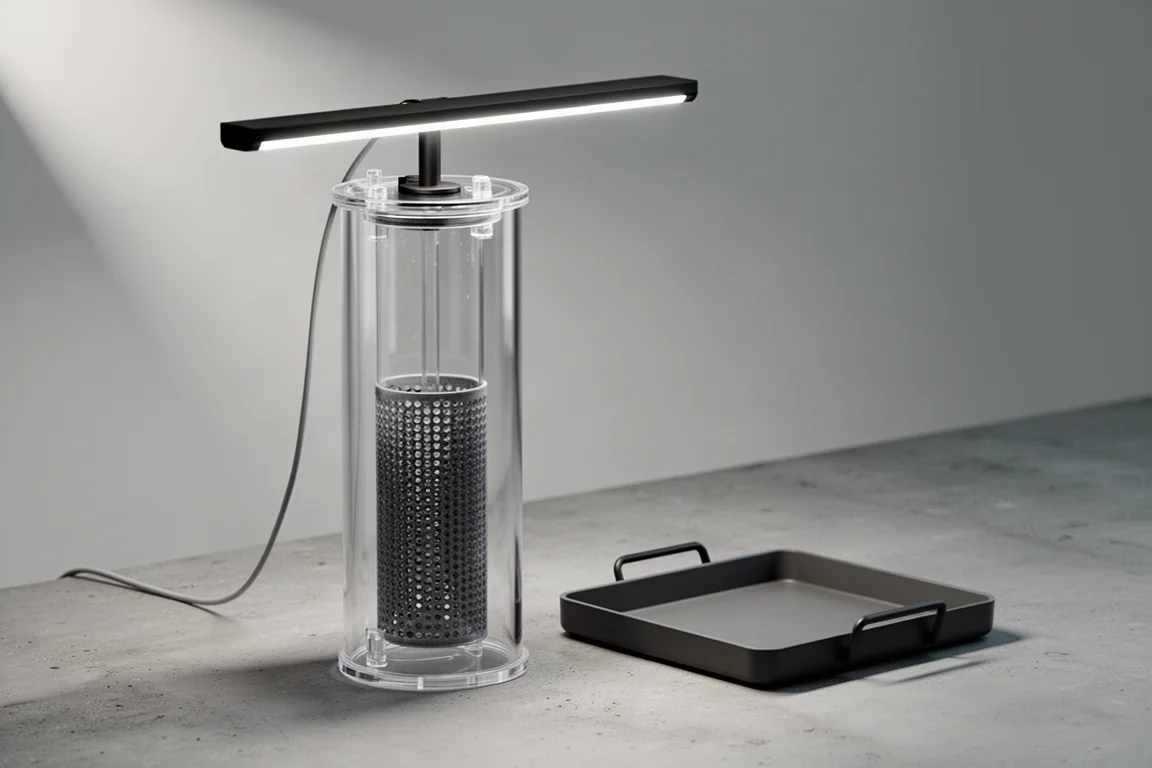
Adaptive Reef Refugium Reactor Review: A Simple Way to Grow Nuisance Algae Outside Your Display
A vessel designed to grow nuisance algae in a controlled space so it stops taking over the display tank, with an adjustable stand, a removable basket, and a single LED light on top.
Aquarium Filtration
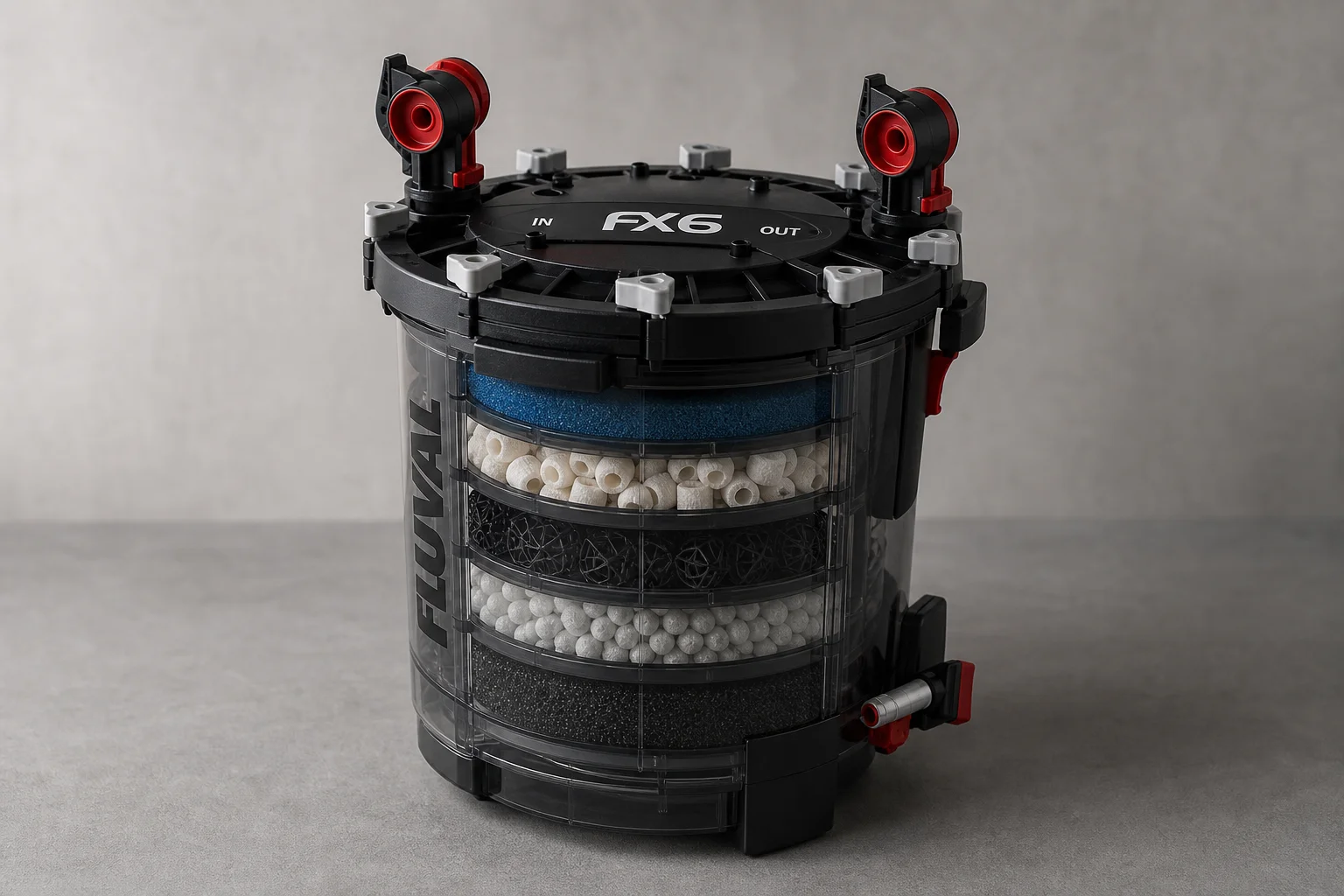
Affordable Aquarium Filter Media: Testing Budget Alternatives to Expensive Biomedia
Can cheap pot scrubbers replace expensive ceramic biomedia in a canister filter? One aquarist tests the theory on a heavily stocked 210-gallon tank.
Aquarium Filtration
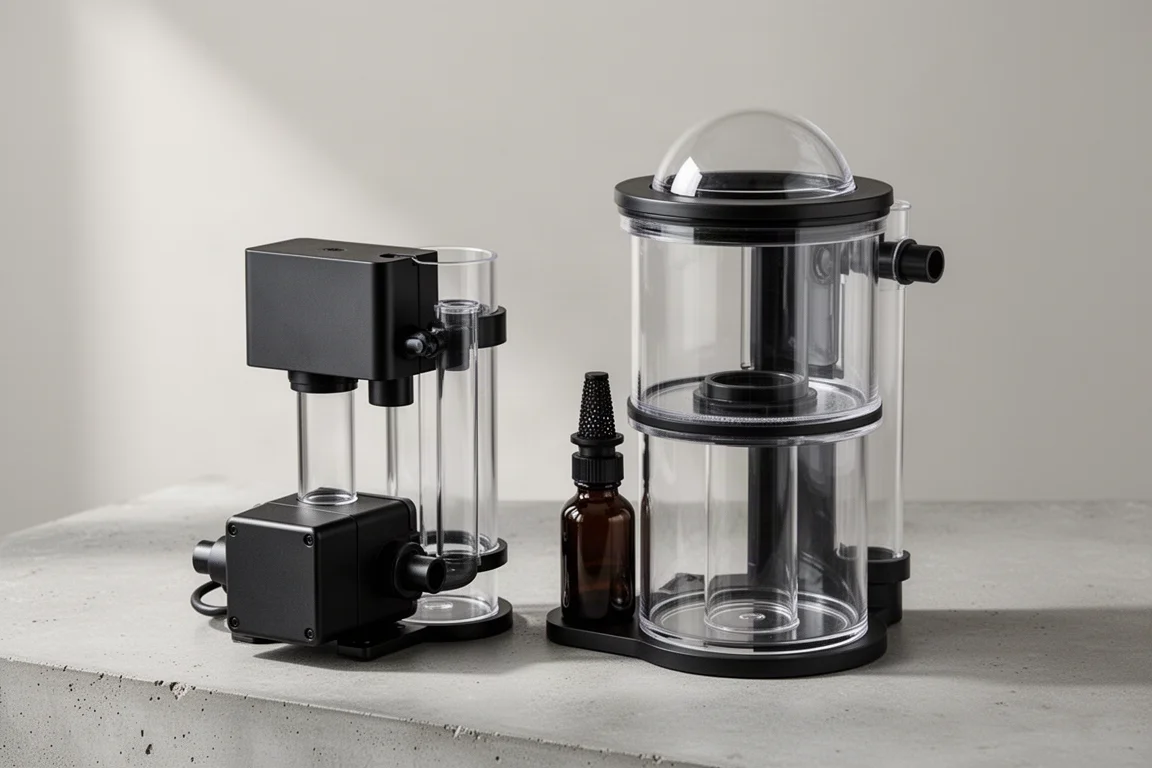
AquaMaxx Bullet 2 and Bullet 3 Review: Hang-On Protein Skimmers Compared
A closer look at two larger AquaMaxx hang-on protein skimmers, covering capacity ratings, clearance needs, and the design details that separate the Bullet 3 from the Bullet 2.