Camping Pillows
Best Camping Pillows for Backpacking: Eight Options Compared Across Four Categories
Eight inflatable camp pillows compared across ultra comfort, ultralight, budget, and super cushy categories, with weights, heights, and attachment systems explained.
Introduction
Ask a group of backpackers what matters most for a good night’s sleep in the backcountry and most will point at a sleeping bag or a sleeping pad. In practice, the pillow does more for how you feel at sunrise than either of them.
A camp pillow earns its place in your pack by doing three jobs. It supports your head and neck so your neck does not kink overnight. It relieves pressure on your shoulder by spreading some of that load across your neck and head, which cuts down on the numb-arm feeling that wakes people up. And it adds cushion, plus a comfortable surface for your ear and face, which matters most if you sleep on your side.
Every pillow in this comparison is inflatable. Inflatables offer the best balance between weight, support, and usable size. Build the same shapes out of foam and they would weigh four or five times as much, which stops making sense for a backpacking load.
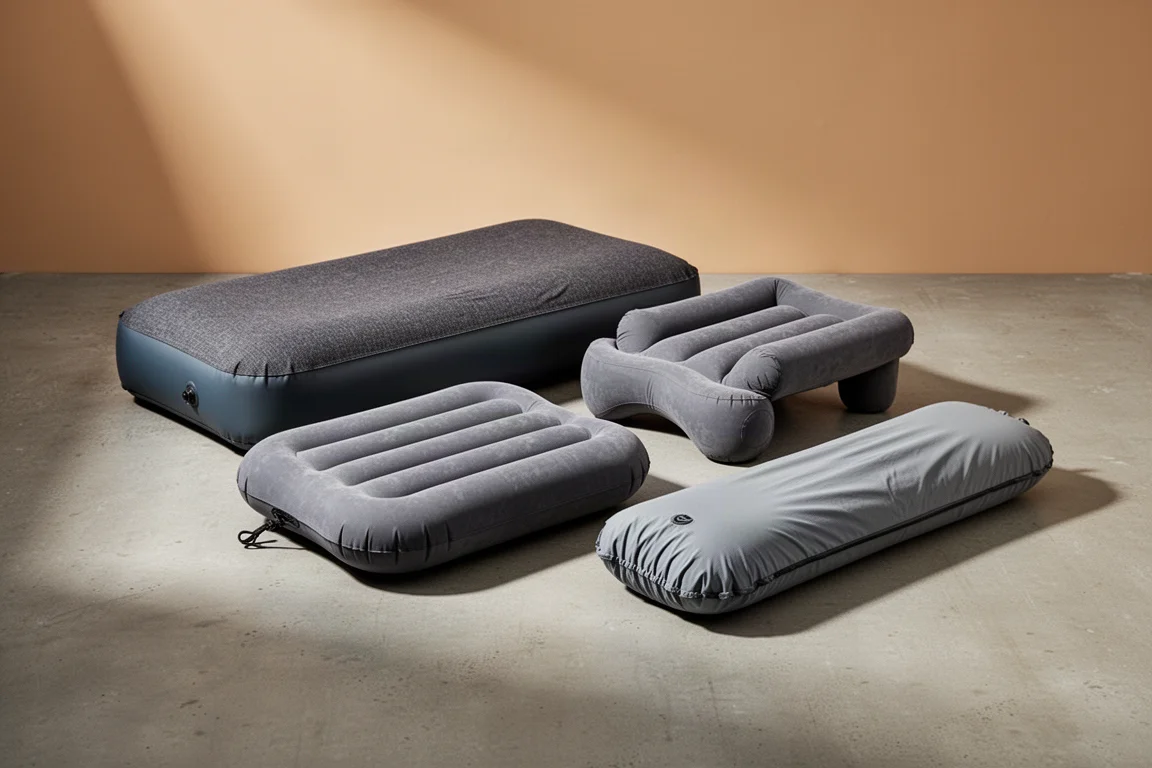
This guide covers eight pillows compared head to head across four categories: ultra comfort, ultralight, budget, and super cushy. Each category has a winner, or in one case a tie, so you can match a pillow to how you actually sleep.
How These Camping Pillows Were Compared
The eight pillows were judged on the same criteria: weight, footprint, height, baffling and support, surface feel, attachment method, and price. Height turned out to be the single biggest driver of comfort.
Anything above roughly 100 mm gives a side sleeper the shoulder relief and neck support a pillow is meant to provide, and both pillows in the ultra comfort category clear that bar comfortably. Drop below 100 mm and those benefits start to fade, although back sleepers may prefer a thinner pillow so their head is not tilted forward. It is also easier to let air out of a pillow than to add height to it, which is worth remembering if you are deciding between two sizes.
Baffling matters almost as much as height. Well-baffled inflatables stay stable and stop feeling like a balloon under your head. Surface material is the other half of the equation, particularly for side sleepers whose ear rests directly against the pillow all night.
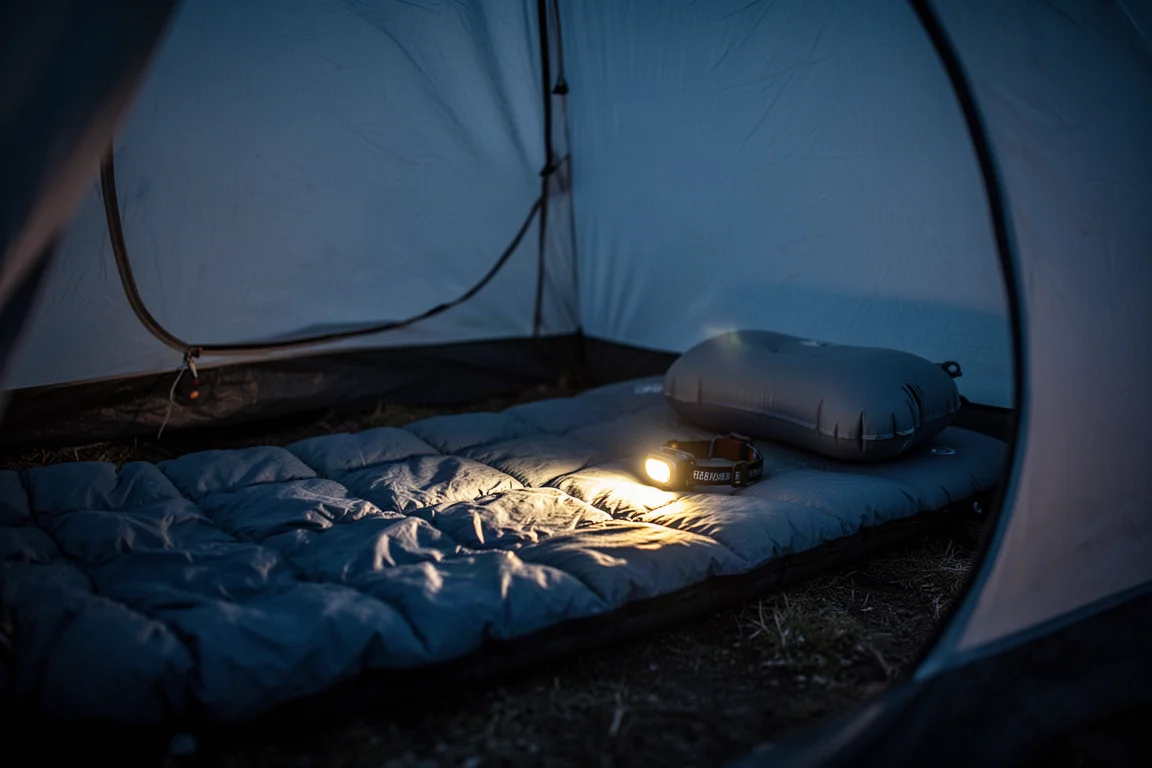
Attachment is the last piece of the puzzle. Every pillow here can be fixed to a sleeping pad in some way, which is a genuine quality-of-life feature, because a loose pillow gets launched off the pad as you turn over. Most use a pad strap, which is versatile across different pads. Sea to Summit’s pillow lock system uses Velcro strips that stay attached to one sleeping pad, with matching material on the base of the pillow. It works well, but it is less flexible if you rotate between several pads.
Ultra Comfort Category: Maximum Cushion, Maximum Weight
These two pillows deliver the most comfort in the group and ask you to carry the most weight in return. They also cost the same at $70 each, so price does not separate them.
Sea to Summit Aeros Premium XL
At 252 g the Aeros Premium XL is the heavier of the two, and it is also the bigger one. It is taller and wider than the Exped, close enough in size to a pillow you would use at home, and slightly thicker at 107 mm against 102 mm. Both are thick enough for side sleepers, including those with broader shoulders.
Support is where this pillow pulls ahead. The baffling is solid, the surface stays stable, and the flat top means you can sleep anywhere on it rather than being funnelled into a centre channel. Sea to Summit also adds a foam topper under the soft top fabric, and that layer makes a real difference to how the pillow feels against your ear and the side of your head. The extra footprint pairs naturally with a 25 or even 30 inch wide sleeping pad.
Two things are worth knowing before you buy. The pillow is deeper than it needs to be, so a narrower shape would still be comfortable. And the Velcro pillow lock system is effective but ties the pillow to one specific pad. If you want a curved bottom that lets your shoulder slot in, neither pillow in this category offers one.
Exped Mega Pillow
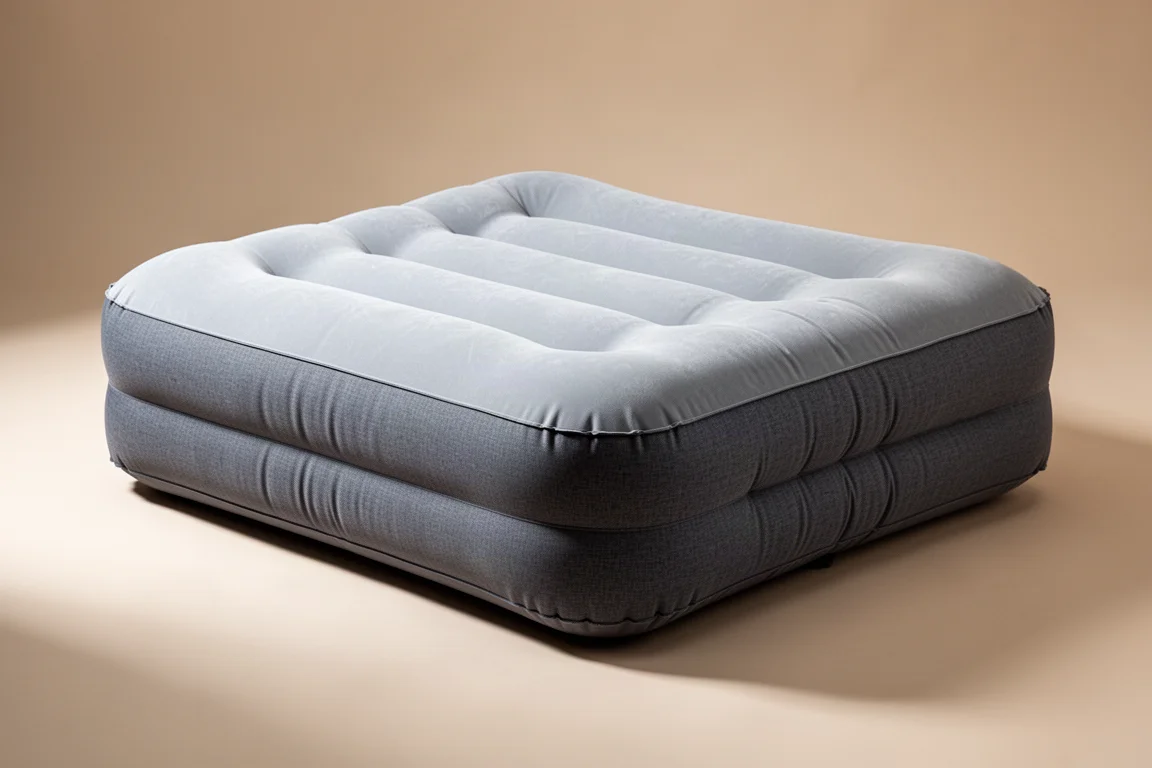
The Mega Pillow is the lighter option at 184 g, and it is 102 mm thick, which still clears the 100 mm mark side sleepers should look for. It uses a pad strap instead of Velcro, which makes it easier to move between sleeping pads.
The surface is flat, the baffling is stable, and the soft top material is pleasant to lie on, though it has less cushioning than the foam topper on the Sea to Summit. As with its category rival, a curved bottom would have been a welcome addition.
The category verdict goes to the Sea to Summit, on the strength of its larger footprint, soft top, and foam topper. The Exped remains the better choice if 68 g of saved pack weight matters more to you than the extra cushioning.
Ultralight Category: Minimal Weight Without Losing Support
Both pillows in this category weigh 50 g, which is about as light as camp pillows get. The differences are price and shape: the Big Sky Ultralight costs $30 and the Sea to Summit Aeros Ultralight costs $50.
Sea to Summit Aeros Ultralight Pillow
This pillow is the narrower of the two at roughly 32 cm wide, and it is 92 mm thick, so it sits below the 100 mm threshold where side sleepers start to lose shoulder relief. A little more height would be welcome here.
What it does well is stability. The baffling is excellent for a pillow this light, and the updated version no longer feels balloon-like even when you let some air out, which was a weakness of earlier Sea to Summit pillows. The soft top fabric means you are not sleeping directly on the bladder, and the curved bottom gives your shoulder somewhere to sit. Raised outer tubes cradle your head toward the centre, a feature that makes more sense on a smaller pillow like this one.
Big Sky Ultralight Pillow
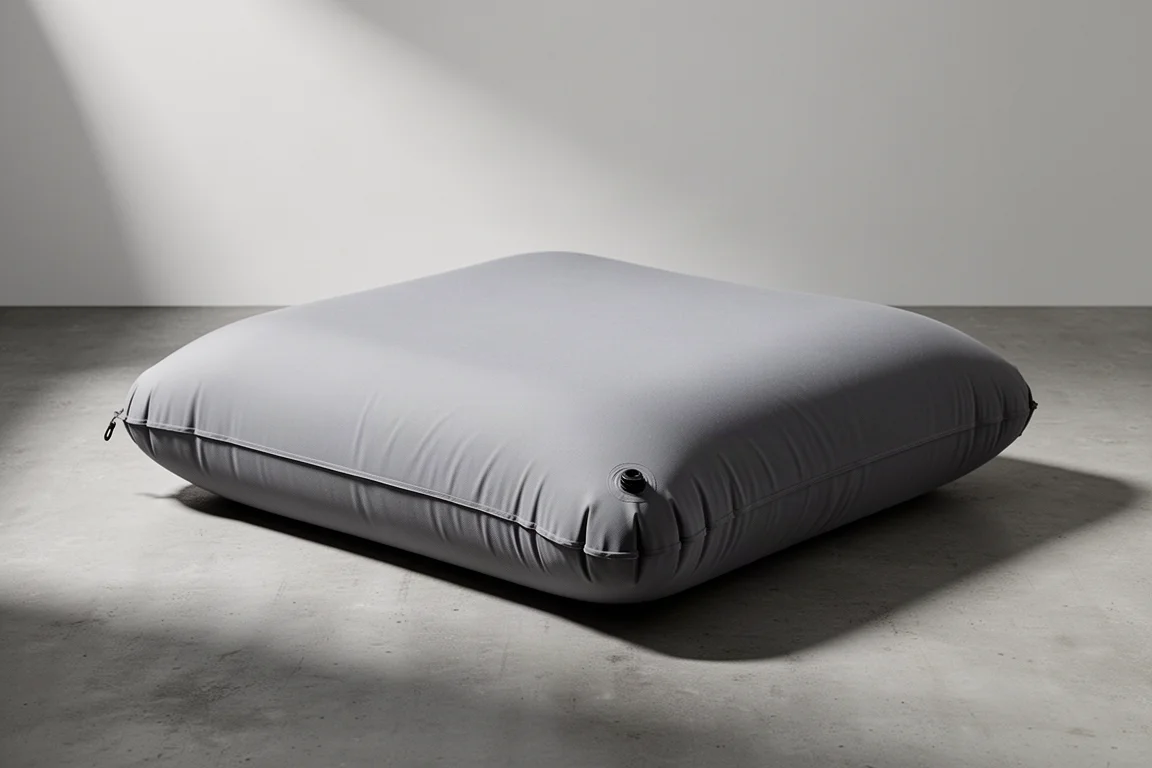
The Big Sky matches the Sea to Summit on weight at 50 g, costs $20 less, and is noticeably wider at just over 40 cm. It is 105 mm tall through the middle, with outer tubes that sit slightly higher again if you want more height and have broad shoulders.
The trade-off is feel. This is the most balloon-like pillow in the comparison, though the baffling is still good as long as you do not let too much air out. There is no cushioned top layer, so you are lying directly on the TPU bladder, and skin can stick to it. Sliding a buff over the pillow works well as a pillowcase and softens the surface, but it adds weight. The base is flat, with no shoulder curve.
This category ended in a tie. The Sea to Summit wins on baffling and surface material, while the Big Sky wins on height and price. If you sleep on your side, height is the difference you will notice most.
Budget Category: Solid Sleep for Around $20
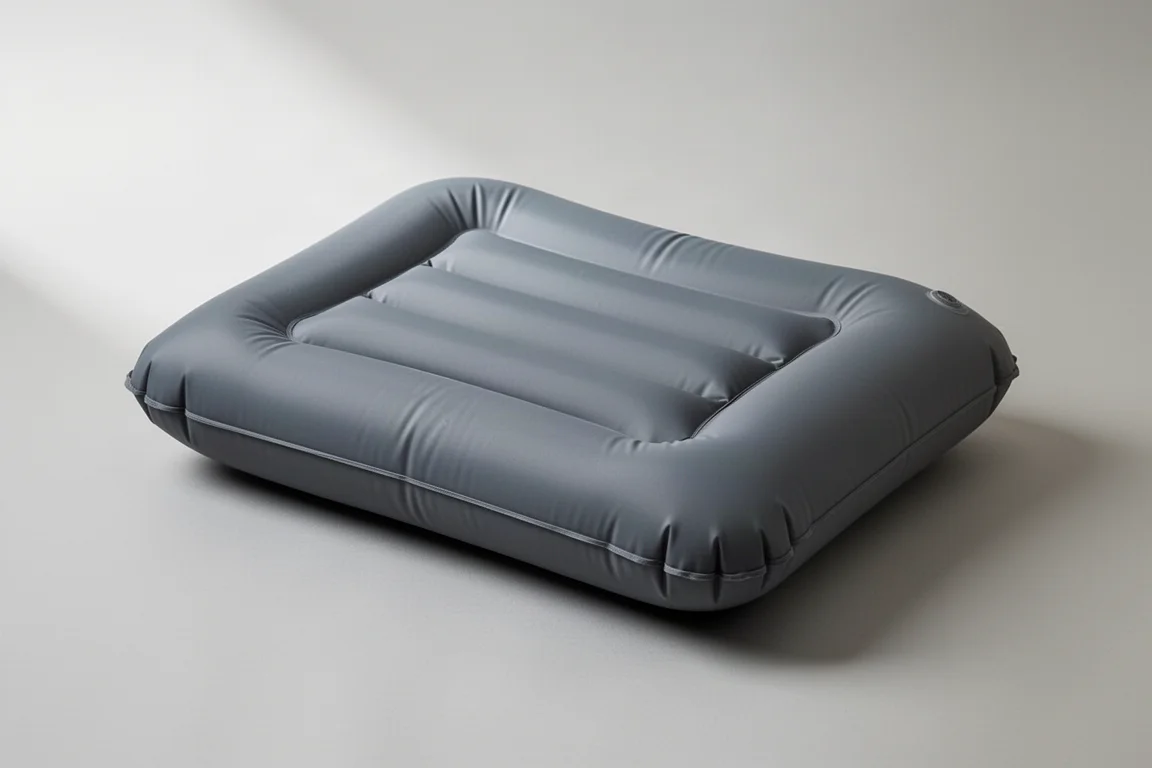
Both budget pillows cost about $20, with the Trekkology 2.0 at exactly $20 and the Hike Kicker at $23. They share the same 40 cm by 25 cm footprint, and both have slightly raised outer tubes.
Trekkology 2.0
At 90 g the Trekkology is the lighter of the two by a wide margin, and it is 92 mm thick. It has a curved bottom and a curved outer top, and the shape works well: the curve makes it easy to slide your head into place, and the sweet spot in the middle is bigger than the one on the Hike Kicker.
Support is genuinely good for the price. The baffling is solid and the pillow does not feel balloon-like. There is no cushioned topper, but the top material has a slight stretch that provides pressure relief. The base also has grippy dots, which combined with the pad strap keep the pillow locked to your sleeping pad through the night. It takes the category win, mostly on weight.
Hike Kicker
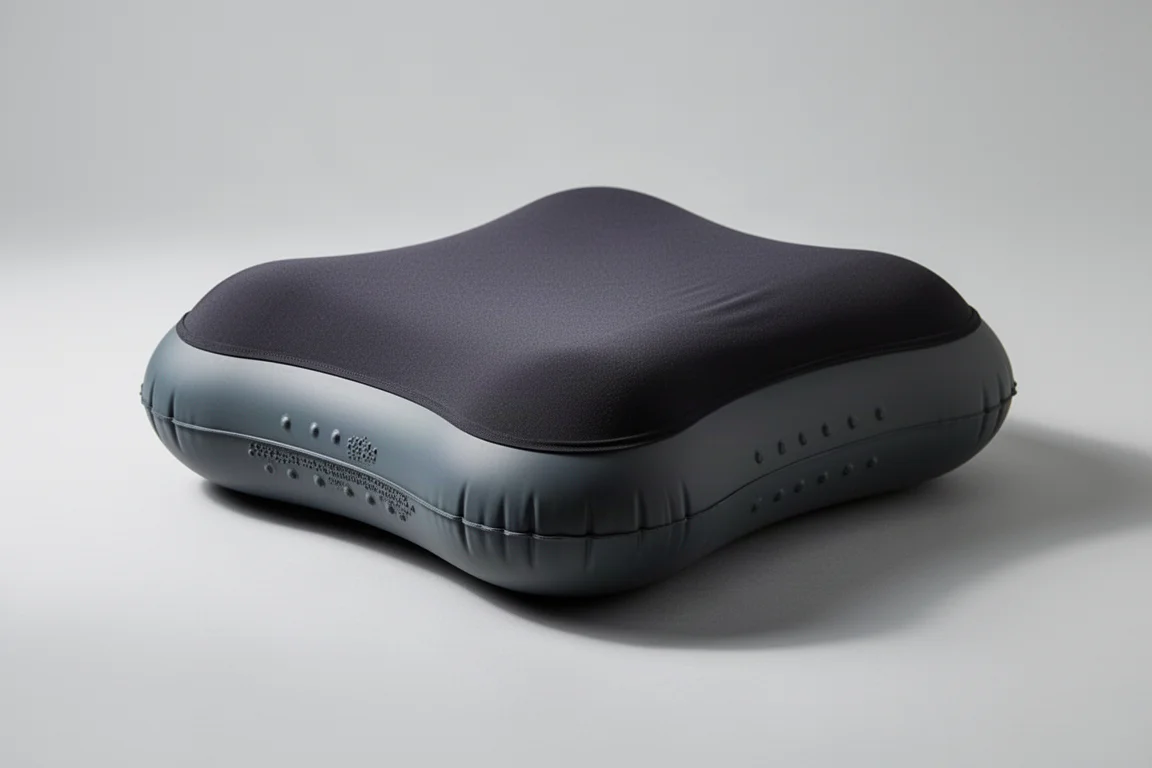
The Hike Kicker weighs 120 g and is 94 mm thick, so it is very close in height to the Trekkology. Support is good and the baffling is respectable, though it feels a little more balloon-like, closer in character to the Big Sky Ultralight.
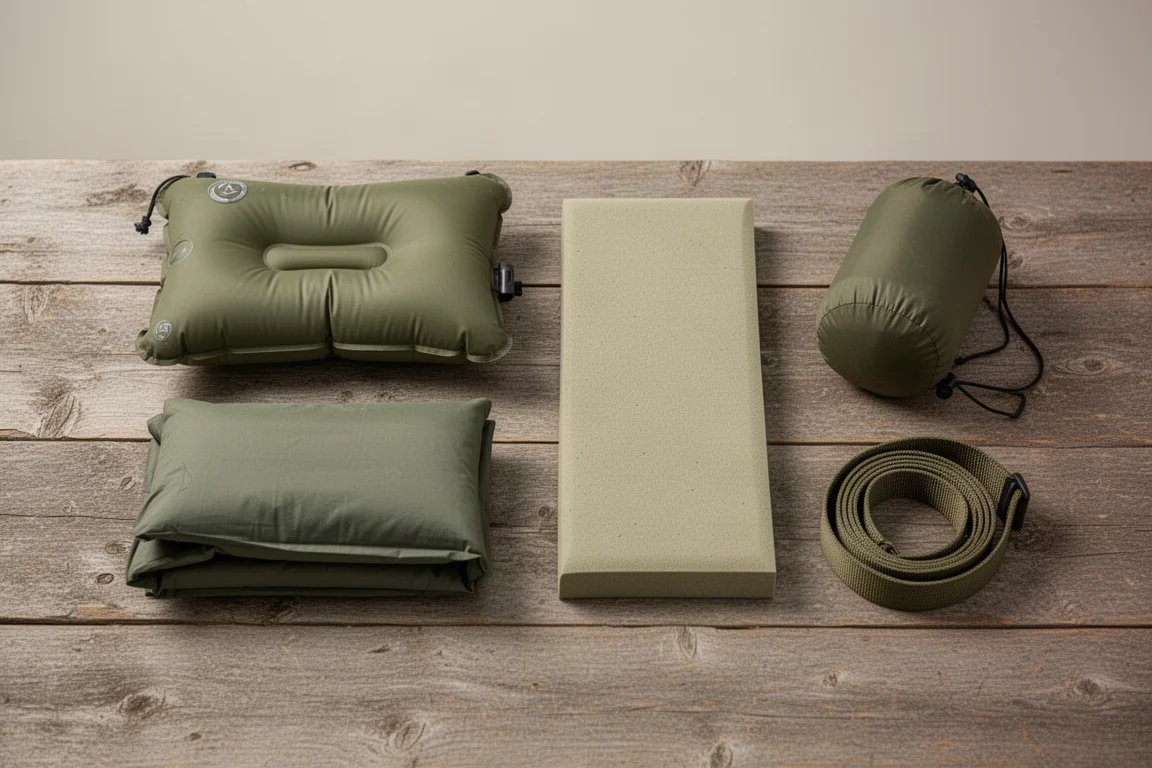
Its distinguishing feature is the included pillowcase, which has a soft topper and a bit of insulation. That adds real cushion and comfort for your head, and it is also what pushes the weight up. The pronounced outer tubes and the bottom curve leave a smaller sweet spot than the Trekkology, so it takes a little more adjusting to find a comfortable position.
Both pillows are supportive enough to justify their price, and the choice comes down to whether you would rather save 30 g or have a pillowcase included.
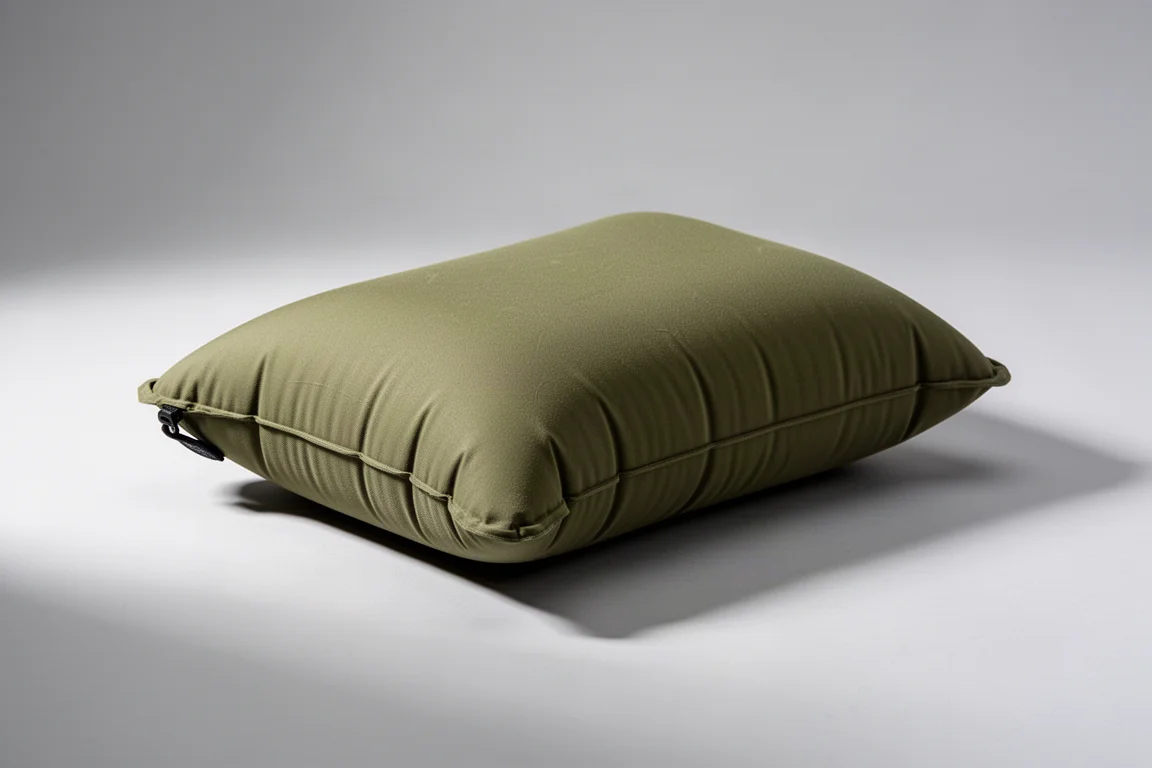
Super Cushy Category: Toppers That Change the Feel
These two pillows weigh almost the same, 260 g for the Nemo Fillo and 268 g for the Zen Bivy Soft Top, but they solve the cushioning problem in completely different ways. The Fillo costs $50 and the Soft Top costs $90.
Zen Bivy Soft Top Pillow
The Soft Top is a three-part system: an air bladder, a down topper, and a pillowcase that holds both. It is the bigger of the two at 46 cm by 26 cm. Set up fully it measures 128 mm tall, but down compresses, and once you settle onto it the height drops to about 97 mm.
The air bladder has good baffling, the flat top feels supportive, and the size helps distribute your head and shoulders. The down topper is very comfortable at first contact, but it compresses under a stationary position and can create a little pressure on your ear. Shifting position a few times during the night solves that, and the pressure is never severe. Down also runs warm, and in hot desert conditions the topper had to come off entirely, leaving you on the bare bladder.
Attachment is the other consideration. Two clips make the pillow highly compatible with a Zen Bivy bed, where it clips into the sheet that attaches to your sleeping pad. On any other pad you need to tie a cord around the pad and clip into that. It takes the category win on the strength of its flat top and stable support, as long as the temperature suits down.
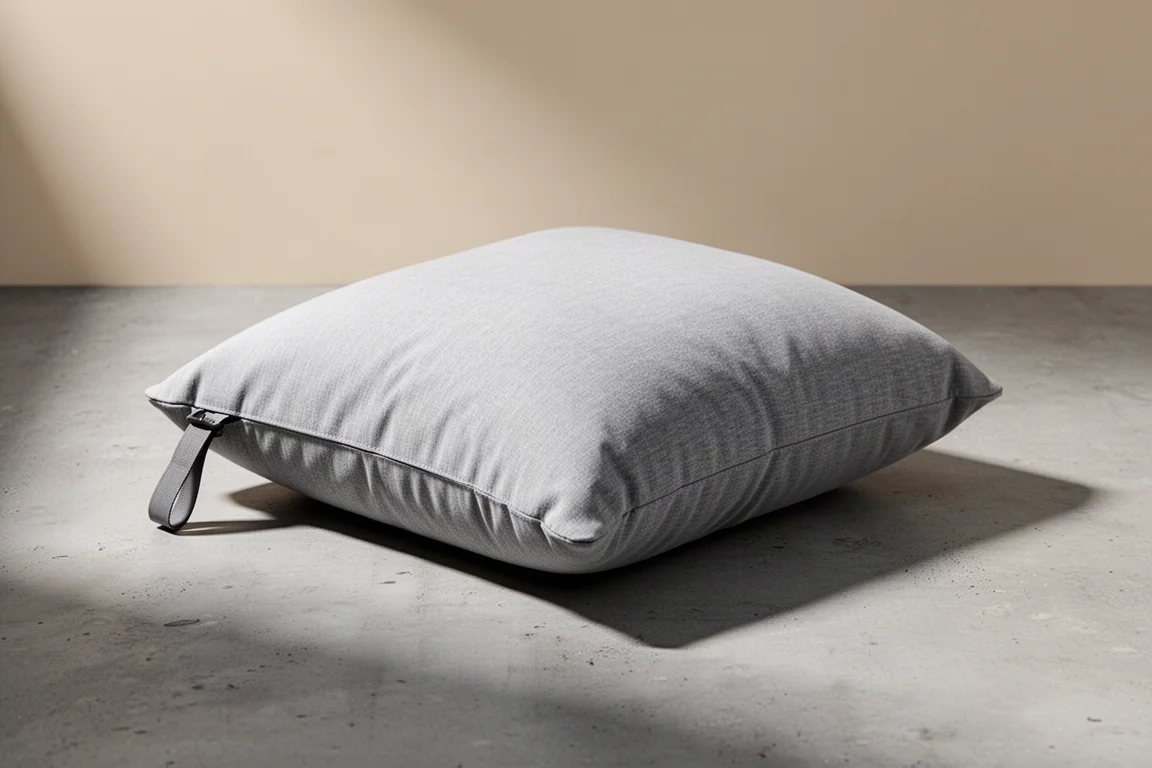
Nemo Fillo
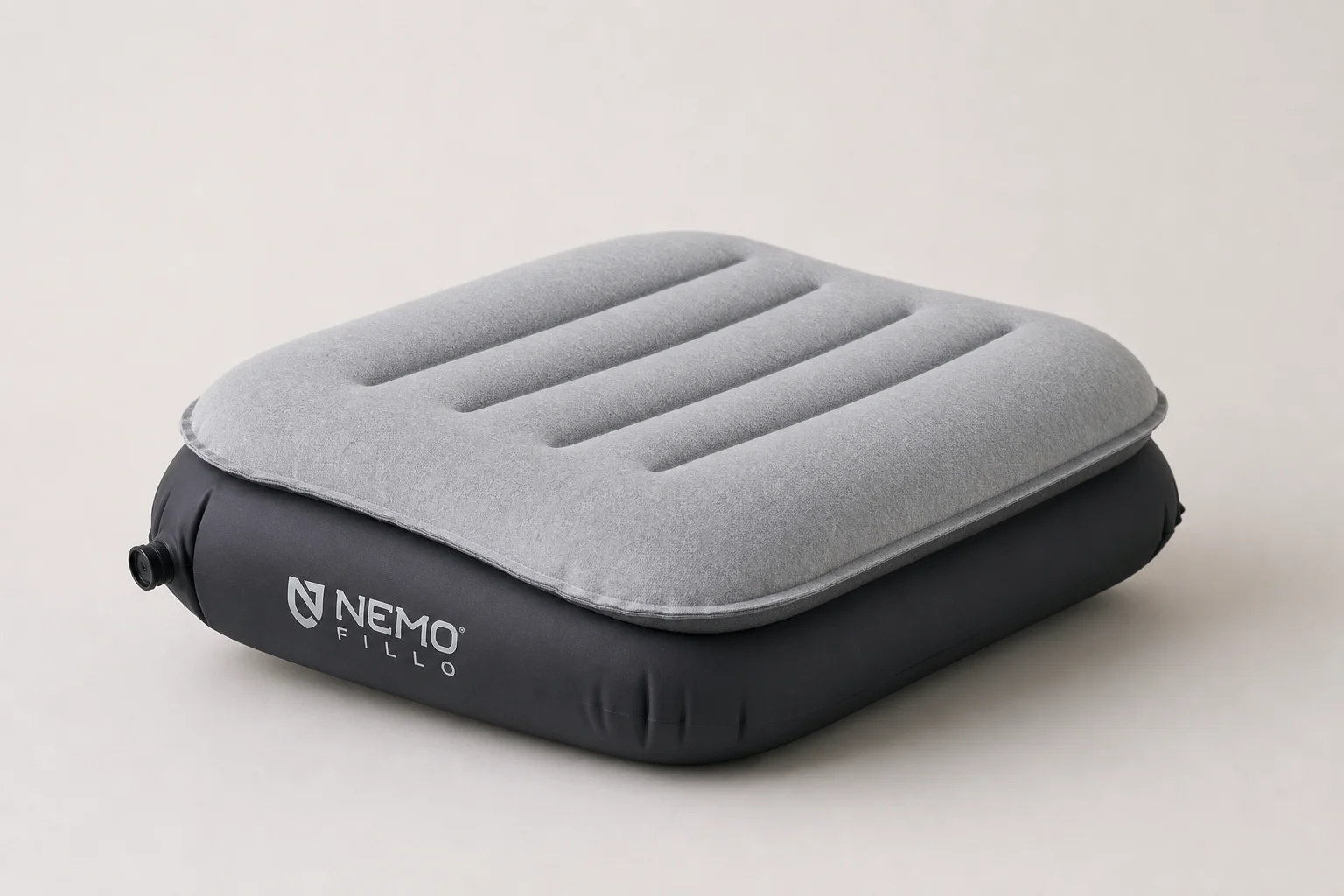
The Fillo costs $50 and measures 38 cm by 22 cm at 100 mm tall. It uses a foam topper rather than down, and foam does not stay compressed, so the pillow keeps its shape and cushioning night after night. The soft topper sits over thick foam, and the pressure relief is excellent.
The weakness is the profile. The top curves outward rather than cradling toward the middle, so it can feel like you are sliding off the pillow, especially if you lie toward the outer edge. A flatter or more cradling top would suit it better. Attachment is by pad strap, which is simple and works with any sleeping pad.
Buying Advice: Matching a Pillow to Your Sleep Style
If you sleep on your side, start with height. Look for 100 mm or more, because that is the range where a pillow can take pressure off your shoulder and keep your neck in a neutral line. The Sea to Summit Aeros Premium XL, the Exped Mega Pillow, and the Big Sky Ultralight all clear that mark, and both budget pillows come close.
If you sleep on your back, a thinner pillow is often more comfortable, since it keeps your head from tilting forward. The Sea to Summit Aeros Ultralight is the obvious starting point, and any inflatable can be softened simply by letting a little air out.
Weight is the second decision. The two ultralight pillows save well over 100 g against the comfort picks and roughly 200 g against the super cushy pair. If you count grams, that is a meaningful trade, and the budget options sit in the middle at 90 g and 120 g.
Surface material is the third. If your ear rests against the pillow all night, a foam or down topper makes a noticeable difference, and a soft top fabric is the next best thing. If you sleep in hot conditions, think twice about a down topper.
Finally, check how the pillow attaches. A pad strap works across any pad you own. Velcro pillow lock systems are excellent but tie the pillow to one pad, and the Zen Bivy clips are at their best on a Zen Bivy bed.
Practical Tips for Better Sleep on Any Pillow
Sea to Summit’s pillow lock system ships with four stickers, and the practical move is to use two per sleeping pad. That way one pillow can serve two different pads without you hunting for spare stickers later.
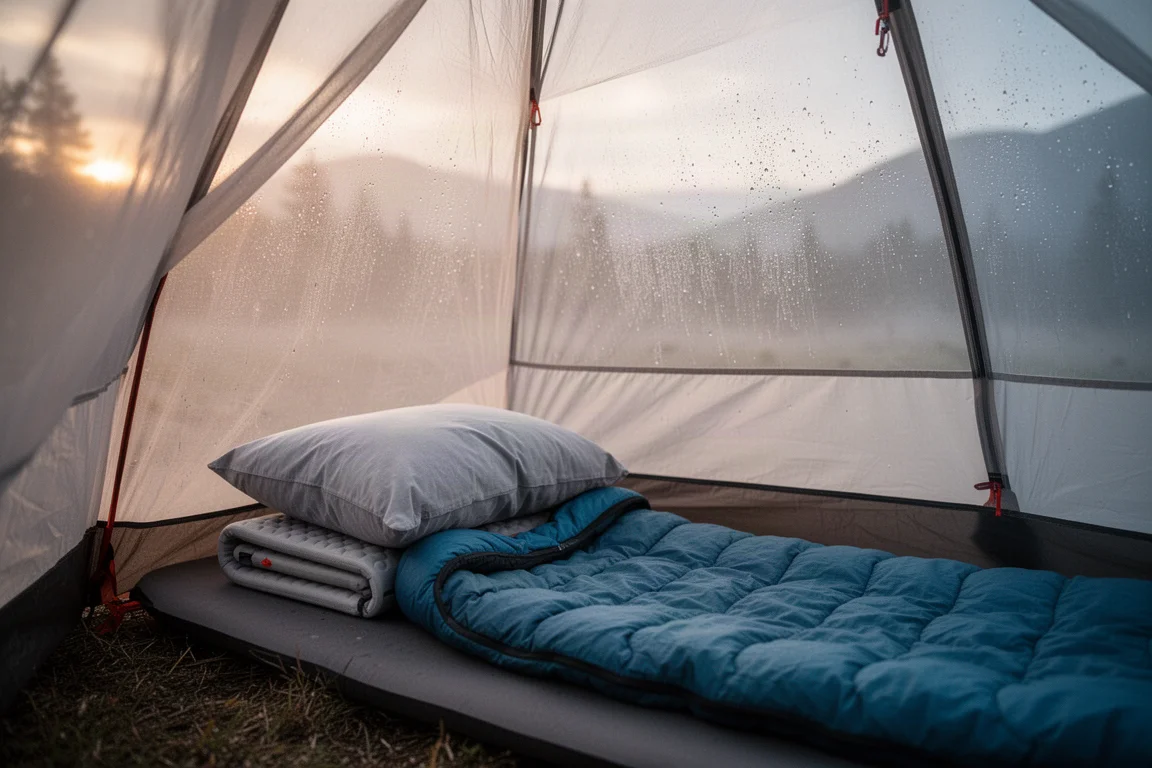
If your pillow is on the shorter side, such as the Trekkology 2.0 or the Hike Kicker, and you want more height, tuck something underneath it. A sit pad or a folded layer of spare clothing works well, especially if the pillow has a pad strap to hold it in place. This is also the simplest fix for broad-shouldered side sleepers.
The last trick adds cushion to any pillow: a modular foam topper that attaches over the pillow surface. It is essentially the foam layer from the Nemo Fillo made removable, so you can carry one topper and use it with whichever pillow you brought along. It adds comfort for a small weight penalty.
Conclusion
Eight pillows, four categories, and one clear theme: the right choice depends far more on how you sleep than on which pillow is objectively best. Side sleepers should chase height first. Weight-conscious backpackers should start with the 50 g options. Anyone who wants a familiar, cushioned feel should look at the foam and down toppers, provided the temperature suits them.
The winners by category were the Sea to Summit Aeros Premium XL for ultra comfort, a tie between the Sea to Summit Aeros Ultralight and the Big Sky Ultralight for ultralight, the Trekkology 2.0 for budget, and the Zen Bivy Soft Top for super cushy. Any of them will do more for your morning mood than an extra few hundred grams of sleeping bag ever will.
Further reading
Related Reviews
Camping Pillows
Best Camping and Backpacking Pillows 2026: Five Inflatable Options Compared
Five inflatable camping pillows compared by width, cushioning, weight, height, warmth, and pad attachment, so you can choose the one that matches how you sleep outdoors.
Camping Pillows
Camp Pillows Compared: Which Are Worth Buying and Which to Skip
A practical comparison of six popular camp pillows, covering air stability, pad attachment, height, weight, packed size, and value.
Camping Pillows
Teton Sports Camp Pillow Review: Comfort and Value for Car Campers
An affordable camping pillow with a soft flannel cover, a compressible fill, and a lifetime warranty, plus one clear trade-off to weigh before buying.