Speakers
Best Bookshelf Speakers 2026: Six Neutral-First Options From Value to Premium
Six standmount speakers with strong neutrality, closely matched on-axis and off-axis behaviour, and clear guidance on placement, room size, and bass extension.
Introduction
Six standmount speakers, ordered here from the lower price points up to the higher ones. All of them are good to great designs, and all of them are reasonably neutral, but they are not identical in character. One leans a little warm through the midrange, another pushes the treble on axis, a third rolls off early at the bottom. Those differences look small in isolation and become quite audible once wall reflections join the mix.
This guide skips the specification sheet. Driver count, cabinet volume, and weight are easy to find elsewhere, and none of them tells you how a speaker will behave in your room. What follows is about the things you cannot look up: directivity, placement tolerance, and real in-room bass extension. Every speaker in this group can also benefit from a subwoofer, which is worth keeping in mind as you read.
What Matters Most: Directivity, Placement, and Bass
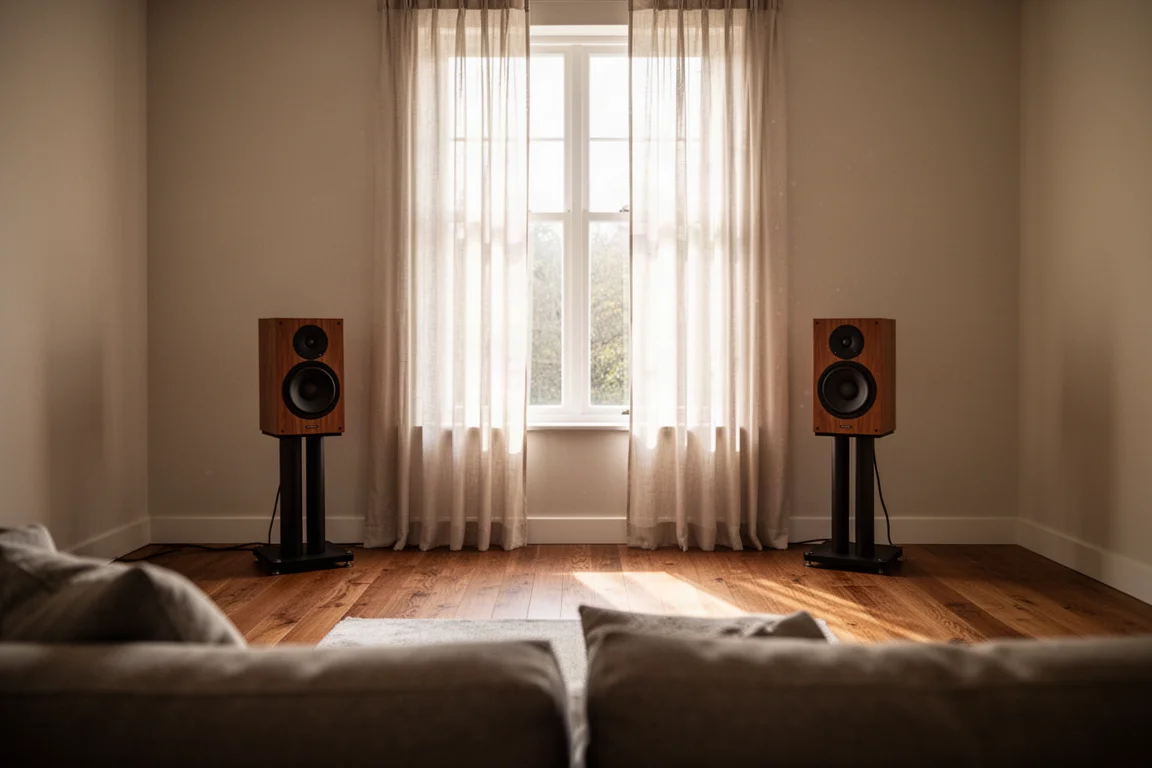
A few terms make the rest of this guide easier to follow. On axis means the speaker is pointed directly at the listening position. Off axis means any angle away from that line. Toe out means the speakers are angled away from the listener toward the side walls, while toe in means they cross in front of the listening position. Distance from the wall is measured from the back of the speaker cabinet to the wall behind it.
Reflected sound matters as much as direct sound. Off-axis energy travels to the walls, bounces, and arrives at your ears a moment later. When that reflected energy has a similar tonal balance to the direct sound, the result holds together. When the two diverge, the mismatch usually shows up in the crossover region somewhere between roughly 2 and 4 kHz, heard either as a subdued patch through the lower treble or as a bright bump that makes sibilants sound sharp. A poor match also tends to shrink the soundstage at the far end of the room.
Horizontal radiation width shapes how much energy reaches the side walls. A pattern of about 60 to 70 degrees to each side tends to produce a wider sense of space, while a narrower pattern of around 50 degrees is common and can actually help in a small, reflective room. Vertical behaviour matters just as much. Speakers with a coaxial driver array keep their tonal balance as you sit up, sit down, or stand, while conventional designs ask you to keep your ears at tweeter height.
At the bottom end, an in-room extension of about 40 Hz is the practical benchmark across this group. Anything that stops well above that point will leave low-frequency dynamic range on the table, and a subwoofer becomes part of the plan rather than an optional extra.
KEF Q Concerto Meta: The Value Standout
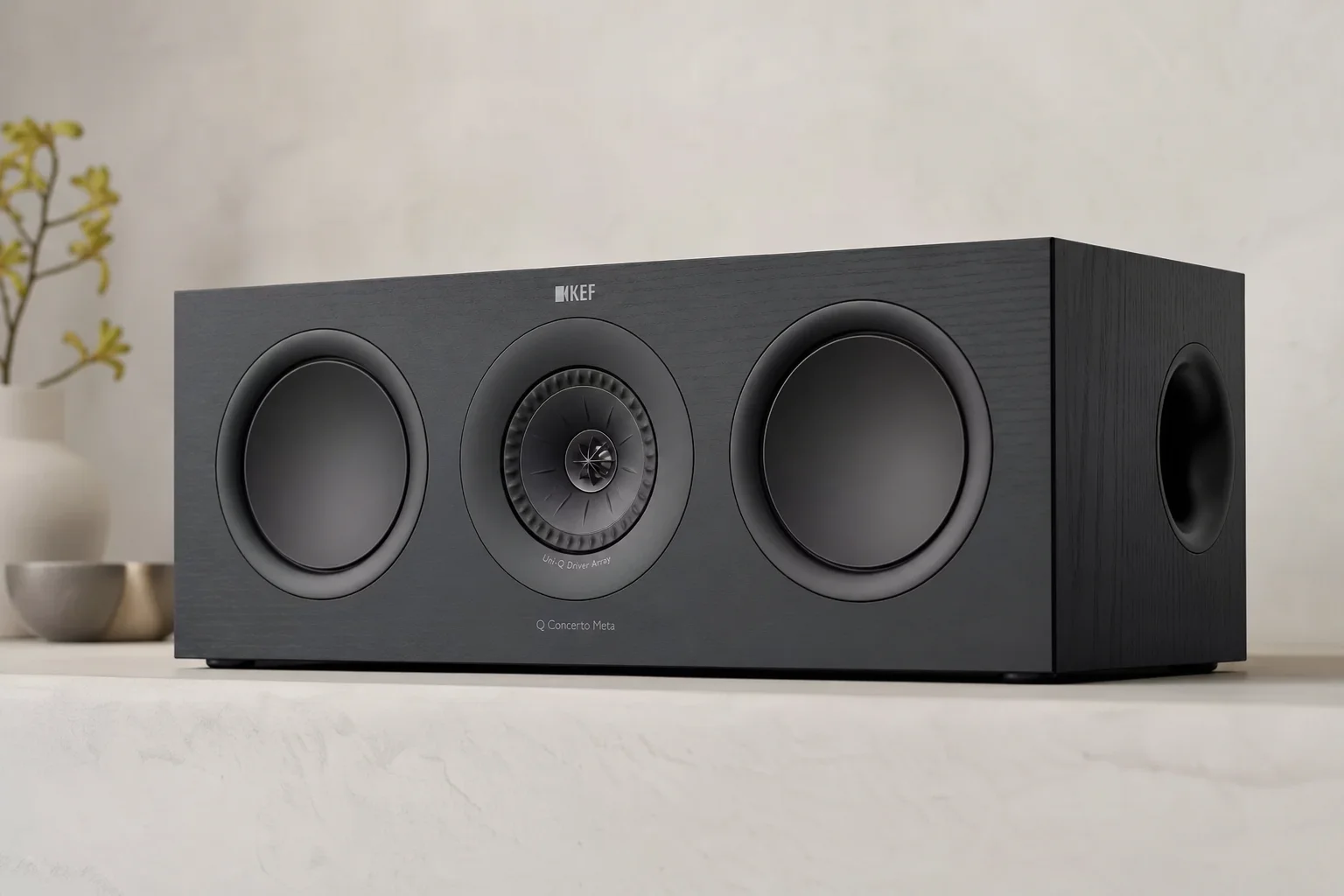
The Q Concerto Meta is the value pick of this group. Sensitivity is rated at about 84.2 dB at 2.83 volts at one meter, and its on-axis and off-axis responses track closely enough that it holds its tonality in a smaller, more reflective room where reflected energy arrives from every direction. It is a coaxial design, and the payoff is a generous listening window rather than one fixed sweet spot.
Horizontal radiation sits at roughly 50 degrees to each side, a touch narrower than the 60 to 70 degrees that produces the widest sense of space, and the vertical pattern is similarly open, so you can sit up, lean back, or stand without losing the tonal balance. Through the lower frequencies there is a mild lift around 100 Hz that adds a little weight to kick drum, balanced by a mild dip in the upper mid-bass around 200 Hz that takes some of that punch back. In-room bass extension lands around 40 to 50 Hz.
Placement is straightforward but not boundary friendly. Unlike the R3 Meta further down this list, the Q Concerto Meta has no bass shelf built in, so it wants some space from the wall behind it. Aim it directly at the listening position, or toe it out by about 10 degrees, and keep your ears roughly level with the tweeter.
Wharfedale Linton 85: Warm, Relaxed, and Grille-On
The Linton 85 is priced at about $1,500 per pair with its stand, and it comes with one firm rule: listen with the grille on. The speaker was designed that way, and removing the grille changes the response, adding a lift in the sibilance region instead of the smoother top end the grille provides.
Its character is warm and easy going. There is a dip in the midrange centred around 1 kHz, possibly a little lower at roughly 900 Hz, and roughly 3 to 4 dB deep. That dip softens the sense of attack, dynamics, and presence, which many listeners find relaxing over long sessions and others find a little polite.
Bass extension reaches about 40 Hz in room, and the speaker rewards being pulled out from the wall by roughly two to three feet, or about 0.6 to 1 meter, because of the way its low end rolls off. Horizontal radiation is wide at roughly 70 degrees, but vertical forgiveness is limited to about plus or minus 10 degrees, so ear height at the tweeter is worth getting right.
Wharfedale Aura 2: Wide Midrange With a Bright On-Axis Top
At about $2,000 per pair with a rated sensitivity of roughly 87 dB, the Aura 2 is the most room dependent speaker in this group. Its vertical radiation is narrow, and its high frequencies are energetic directly on axis. Pointed straight at the listening position in a larger room with few nearby reflections, that top end can sound bright. In a small to medium room with side walls within a couple of meters, the added reflections fill in that region and the speaker sounds considerably more neutral.
Bass is slightly subdued compared with the rest of the list. Rather than rising through the mid-bass and then rolling off gradually, the Aura 2 flattens near 100 Hz and falls away from there. There is a lift in the 1 to 2 kHz region, which gives the speaker a sense of attack and drive that offsets some of that leanness lower down. In-room extension reaches about 40 Hz.
Horizontal radiation is wide at roughly 70 degrees, though it narrows quickly in the treble, so the midrange will sound wider than the top end. Plan on half a meter to a meter of space behind the speaker. If you want more weight in the 50 to 80 Hz region, either move the speaker closer to the wall or use tonal balance controls to lift the bass.
MoFi SourcePoint 8: Coaxial Consistency With Limited Low End
The SourcePoint 8 sells for about $2,100 and shares the coaxial approach that makes the Q Concerto Meta and R3 Meta so placement tolerant. Direct and reflected sound stay closely matched, so it works well in a smaller room with nearby side walls, and its radiation pattern extends about 60 degrees to each side and vertically as well, which means you can move around the room without the tonality falling apart.
The limitation is at the bottom. Below about 50 Hz the response falls away quickly, and with it goes low-frequency dynamic range. A subwoofer is effectively part of the system for any content that reaches below that point, though listeners whose music is mostly rock or pop may find they can live without one. There is also a small cut around 500 Hz that could take a little fullness out of the lower midrange, though it is subtle enough that it may not register at all.
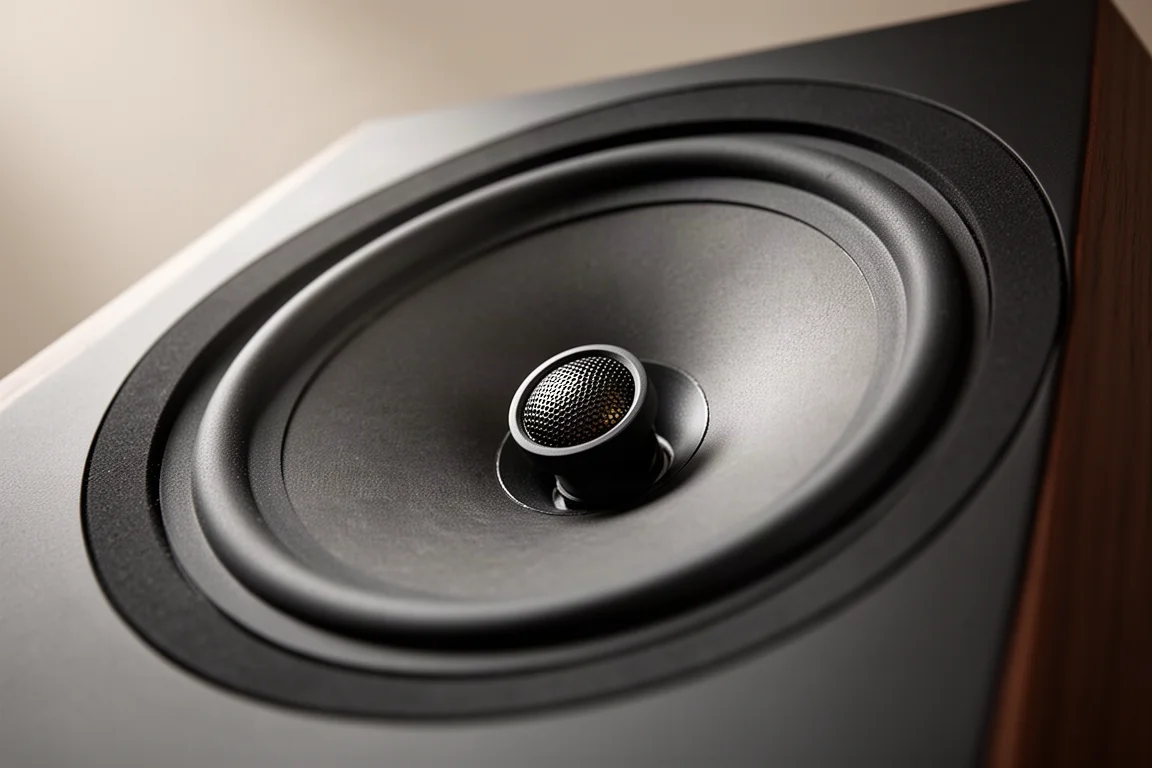
Taken as a whole, the SourcePoint 8 is a strong performer whose only real compromises are low-frequency output and maximum output level. If you want the same character with deeper bass, the larger tower version of this design reaches down toward 30 Hz.
KEF R3 Meta: Built to Sit Closer to the Wall
The R3 Meta is about $2,200 per pair with a rated sensitivity of roughly 86 dB, and its defining feature is an extended bass shelf profile. The low end rolls off, picks back up, and then rolls off steeply again. That shape exists so the speaker can be placed close to a wall without the mid-bass turning boomy or resonant, which is exactly what happens when a conventionally tuned speaker is pushed against a boundary.
Placed well out into the room, the way many listeners prefer, the R3 Meta will sound thin at the bottom. Placed near a wall, it reaches roughly 40 to 50 Hz in room. Neutrality is otherwise very good, though pointing the speaker directly at the listening position can sound a little hot in the treble, so a 10 degree toe out is a sensible starting point. Horizontal and vertical radiation both sit at roughly 50 degrees to each side.
Wharfedale Super Linton: More Sensitivity and More Placement Freedom
The Super Linton is a recent addition at about $2,500 with its stands, described as an introductory price that is expected to move toward $3,000 with stands. Like the standard Linton, it is designed to be used with the grille on for critical listening.
Sensitivity is rated at roughly 88 dB, about 3 dB higher than the regular Linton at around 85 dB, which makes it easier to drive. It also borrows the extended bass shelf approach, so it can sit closer to a wall than the standard Linton, though not right against one. Roughly a foot, or about a third of a meter, of space behind the cabinet is a reasonable target.
The midrange is still slightly recessed, around 2 dB, so the presentation is a touch pulled back rather than forward, but overall it is more neutral than the standard Linton. Bass extension reaches about 40 Hz in room, though it can sound less full through the mid-bass when it is placed away from the wall. Horizontal radiation is wide at roughly 70 degrees, while vertical forgiveness is limited to about plus or minus 10 degrees, so tweeter height matters.
Placement, Room Size, and Subwoofer Support: Buying Advice
The right choice depends less on which speaker is best in the abstract and more on the room and the placement you can actually give it. In a small, reflective room where the speakers sit relatively close to side walls, the coaxial designs are the safer bet: the Q Concerto Meta, the SourcePoint 8, and the R3 Meta all keep their direct and reflected sound closely matched, and the Q Concerto Meta and SourcePoint 8 in particular hold together in rooms that bounce a lot of energy back at the listener.
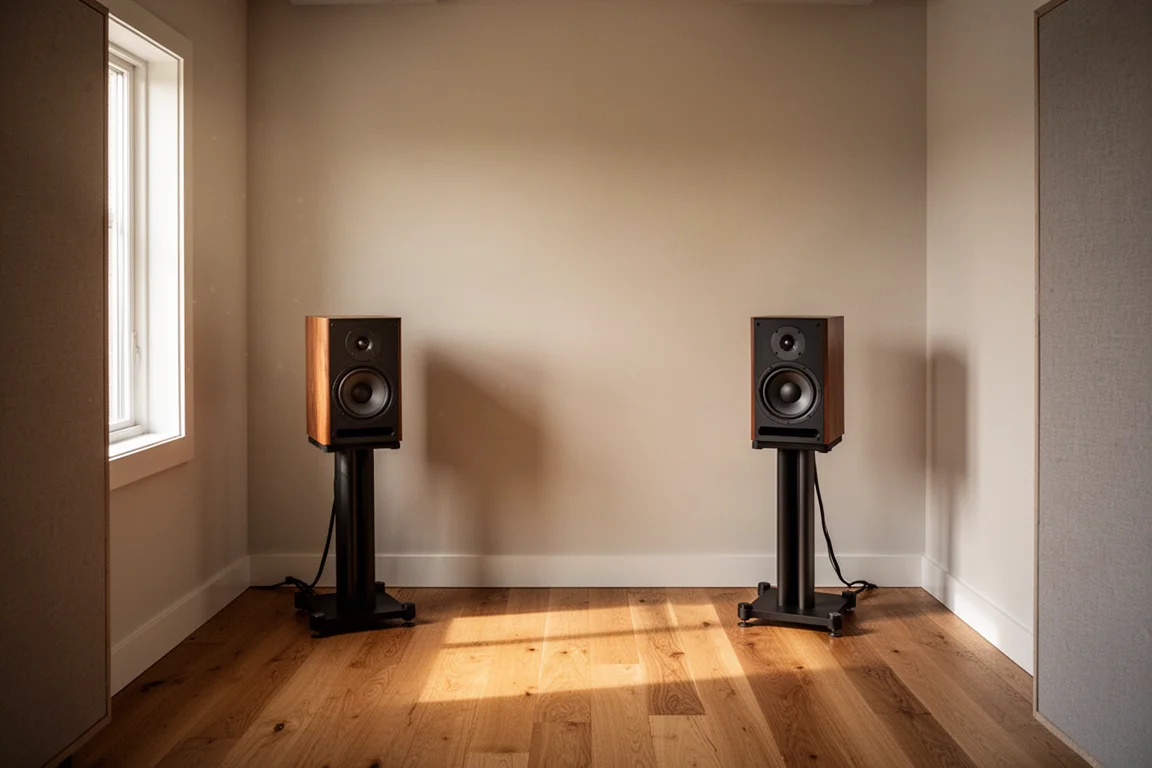
If the speakers have to sit near a wall, the R3 Meta and the Super Linton are the two that were designed for it, thanks to their extended bass shelf profiles. If you prefer a warmer, more relaxed presentation and can give the speaker 0.6 to 1 meter of space behind it, the Linton 85 delivers that character with the grille left on. If you want a wide midrange with a bit more attack and you are willing to work with placement and tonal controls, the Aura 2 rewards a small to medium room with nearby side walls.
Two practical points apply across the board. First, the non-coaxial designs here, which means the Linton 85, the Aura 2, and the Super Linton, want your ears at tweeter height, while the coaxial models are far more forgiving of head movement. Second, every speaker in this group benefits from a subwoofer. Those that reach about 40 Hz in room can stand alone for most music, while the SourcePoint 8, which falls off below about 50 Hz, is the one most likely to need a subwoofer from day one.
Conclusion
All six of these speakers are good to great, and all six are fundamentally neutral, with the differences showing up as a gentle midrange scoop, a treble lift, or an early low-frequency rolloff rather than anything dramatic. Match the speaker to your room size, the distance you can give it from the wall, and whether a subwoofer is part of your plan, and any of them will serve well for years.
Further reading
Related Reviews
Speakers
13 Under-the-Radar Speakers Still Worth Buying
Thirteen speakers that quietly stayed in production while newer models took the spotlight, from budget bookshelf pairs to a full-size tower.
Speakers
Arendal 1528 Monitor 8 Review: A Three-Way Standmount With Serious Dynamic Headroom
A three-way standmount speaker with extremely low distortion, high output capability, and deep bass for its size, plus the setup details worth knowing before buying.
Speakers
Arendal 1723 Monitor S Review: A Compact Monitor With Serious Ambition
A close look at the Arendal 1723 Monitor S, a compact MTM monitor with a waveguide-loaded tweeter, an HDF cabinet, and flexible ported or sealed operation for music and home theater.