Aquarium Equipment
Best Automatic Fish Feeders: Five Options for Consistent Feeding
A practical look at five automatic aquarium feeders, from a budget battery-powered starter to a refrigerated unit built for frozen foods.
Introduction
An automatic feeder is one of those additions that quietly changes how a tank is run. Fish that need several small meals a day, such as anthias, are far easier to keep when feeding happens on a schedule rather than whenever someone is in the room. Feeders also cover weekends away and longer trips, so the tank keeps its routine while the house stays empty.
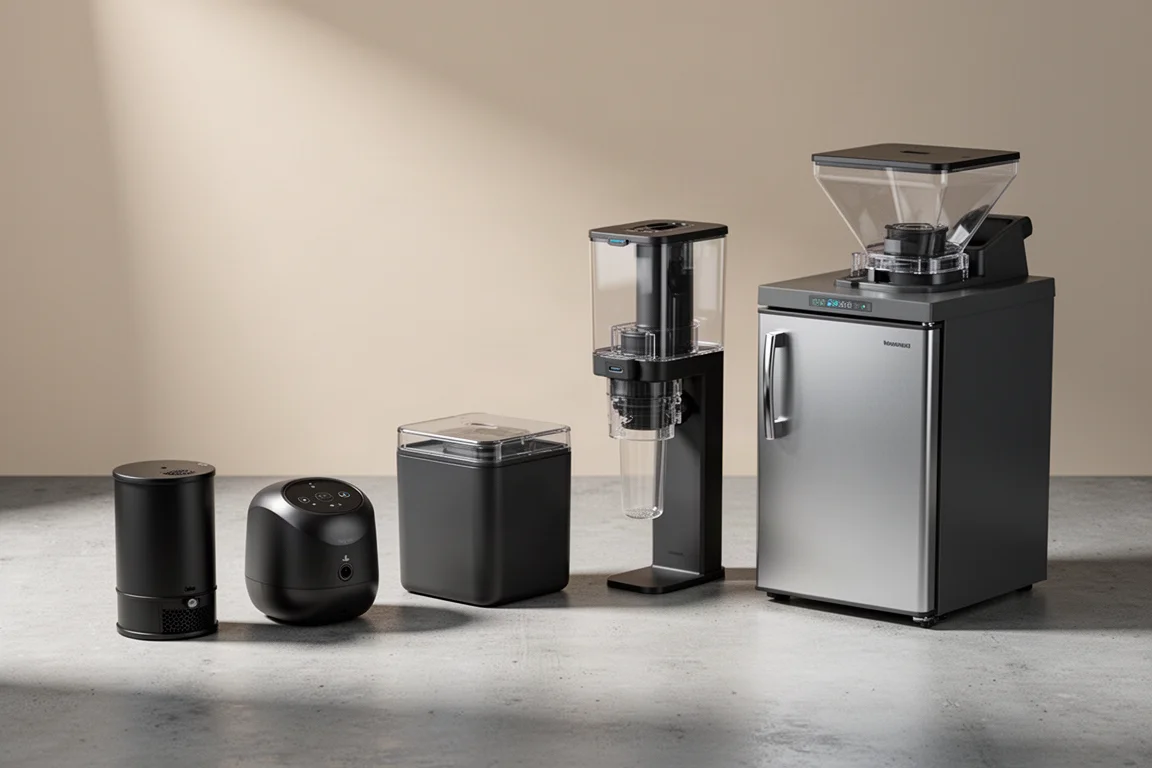
The five feeders below cover a wide range of needs, from a simple battery-powered starter to a refrigerated unit designed for frozen foods.
What to Look For in an Automatic Feeder
The right choice usually comes down to three things: what you are feeding, how the feeder is controlled, and the environment it sits in.
Dry foods such as pellets and flakes are the simplest to automate. Frozen and refrigerated foods need a different design entirely, and only a small number of feeders handle them.
Control matters too. A standalone feeder with its own timer is fine on its own. A feeder that integrates with a controller can pause pumps and skimmers during feeding, so less food ends up in the overflow.
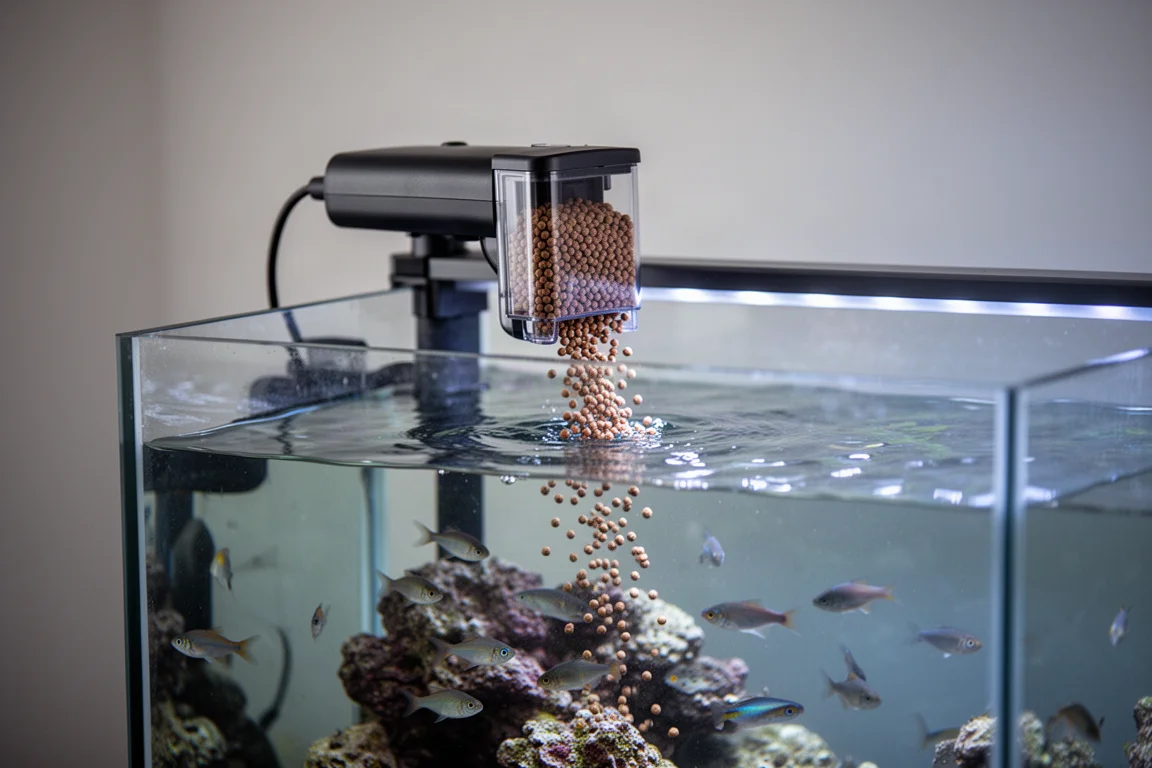
Humidity is the last piece. Feeders installed inside a canopy sit in warm, moist air, and a sealed or fan-ventilated food chamber keeps the contents from clumping. Where power is unreliable, a battery-powered unit removes one more thing to worry about.
Best Budget Starter: Eheim Everyday Auto Feeder
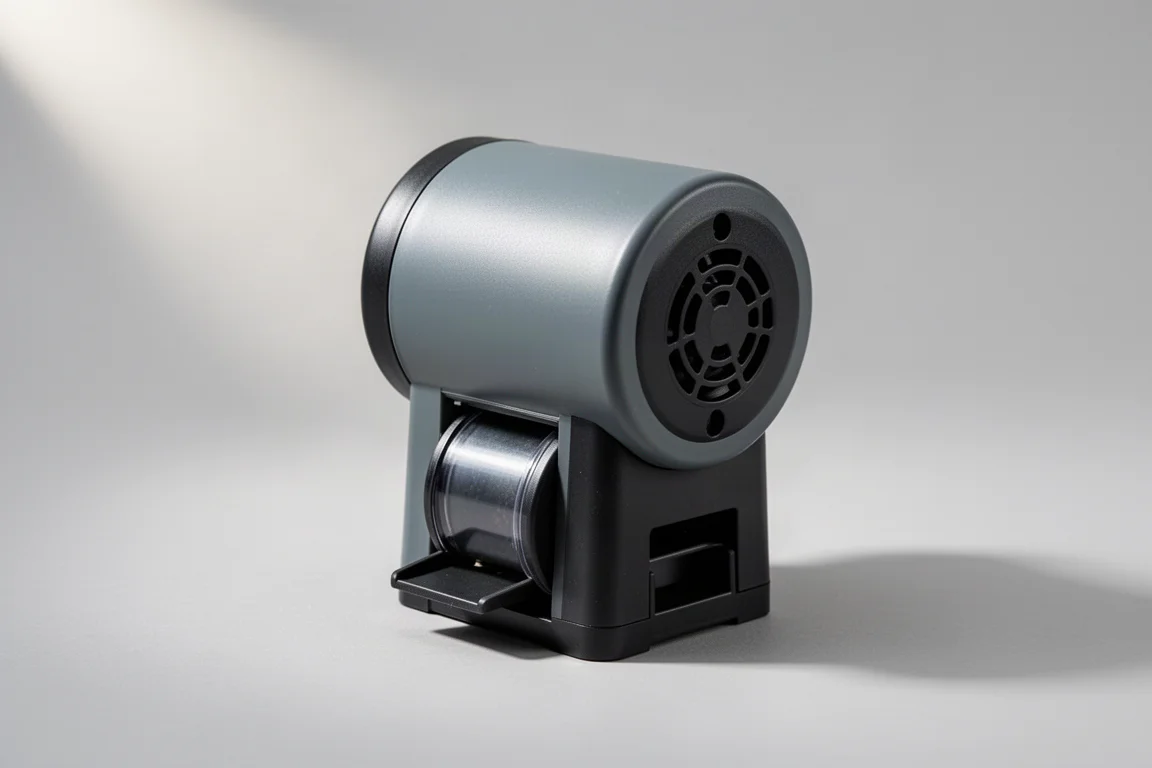
The Eheim Everyday Auto Feeder is the simplest way into automatic feeding. It runs on a battery and rotates a couple of times a day, which is enough for most basic schedules.
Two details make it more useful than its price suggests. A small fan keeps the food dry over long periods, which matters in canopies where humidity is high. Because it runs on battery power, it also keeps working through outages without being tied to a wall outlet or a controller.
The feeding port is adjustable, so the amount released with each rotation can be tuned up or down. For anyone who wants a basic, affordable feeder without extra complexity, this is a sensible first step.
Best Everyday Rechargeable Option: Lifeguard Feeder
The Lifeguard Feeder is a step up in convenience. It charges over USB rather than running on disposable batteries, so it can stay mounted on the tank permanently and simply be recharged when the charge runs low.
That makes it a natural choice as a daily feeder rather than an occasional travel solution. It sits at a higher price than the Eheim, but remains relatively affordable for the added convenience.
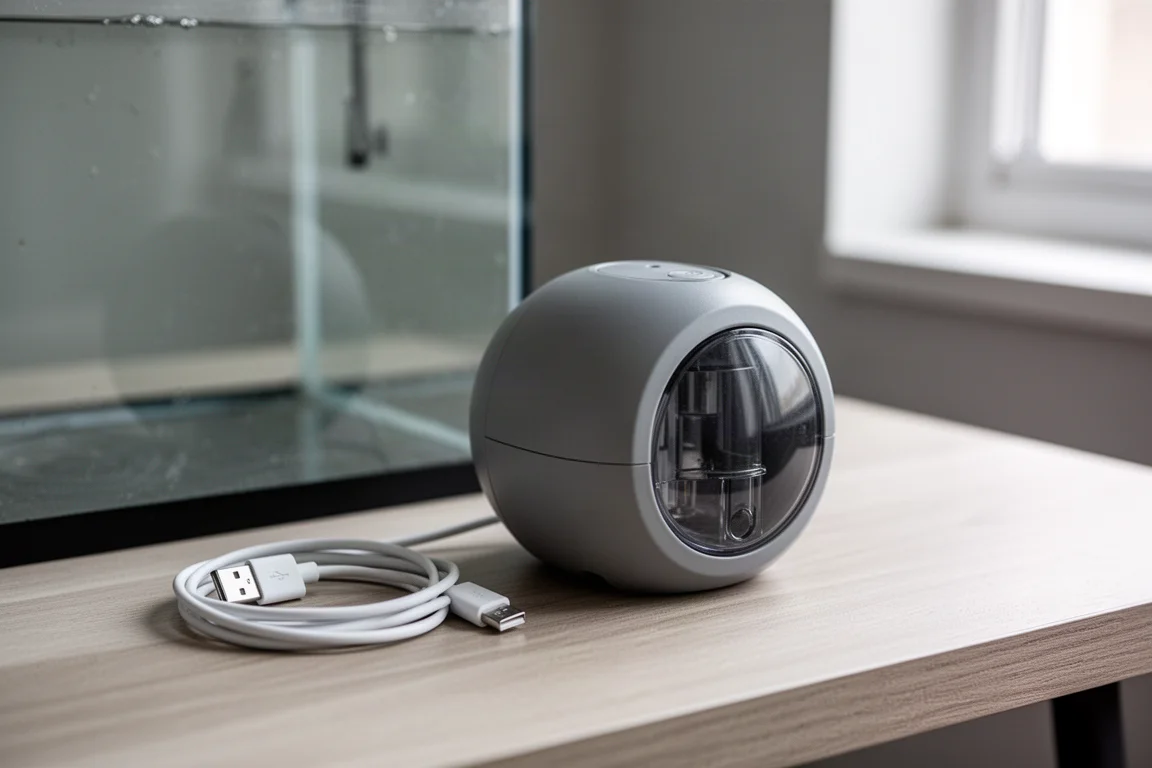
For anyone who wants more capability than a basic battery unit without moving into controller-based setups, this is the middle ground.
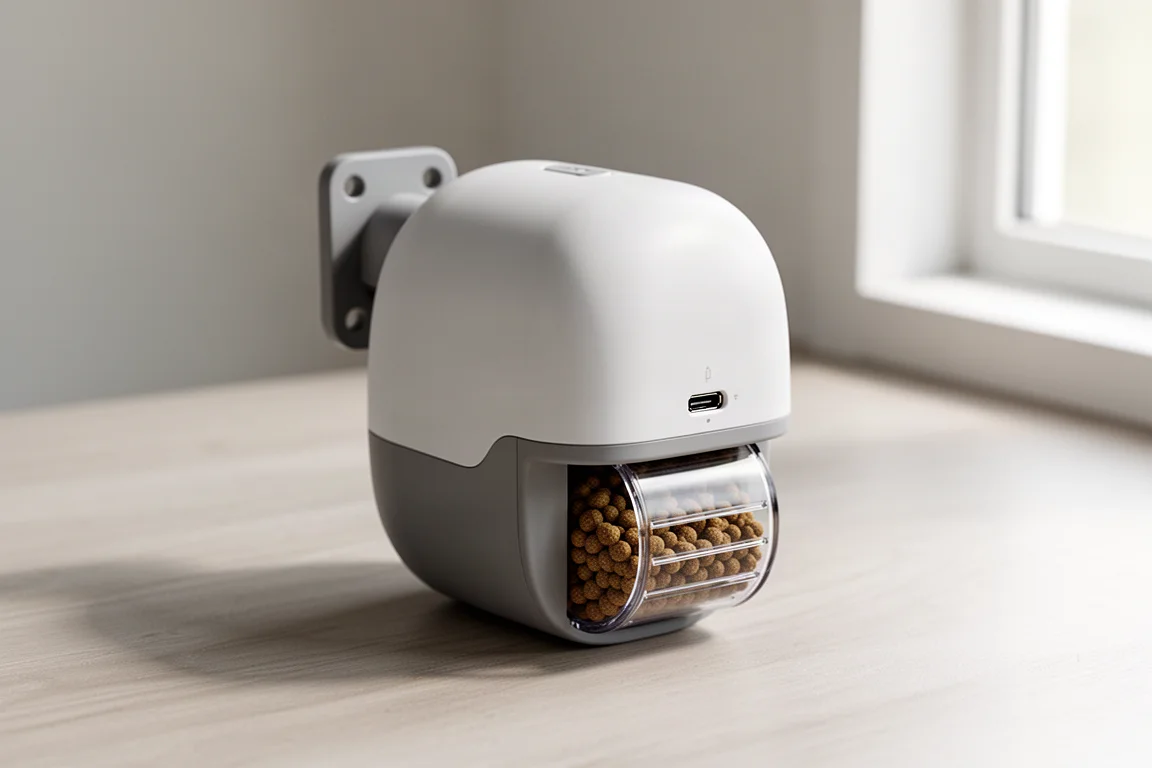
Best for Controller Integration: Neptune Systems AFS
The Neptune Systems AFS is built for tanks already running an Apex. Connected to the controller, it joins the same programming that manages pumps, lights, and skimmers.
The practical benefit is a proper feed mode. Pumps can be paused and the skimmer switched off while food is added, so less of it is lost to the overflow. Feeding becomes one coordinated event instead of several manual steps.
The food chamber sits inside the housing and is sealed, which keeps contents drier than most designs. The trade-off is noise: because the chamber has to move out and back, the mechanism is louder than the alternatives. Some aquarists treat that as an advantage, since the sound confirms the feeder is actually running on schedule.
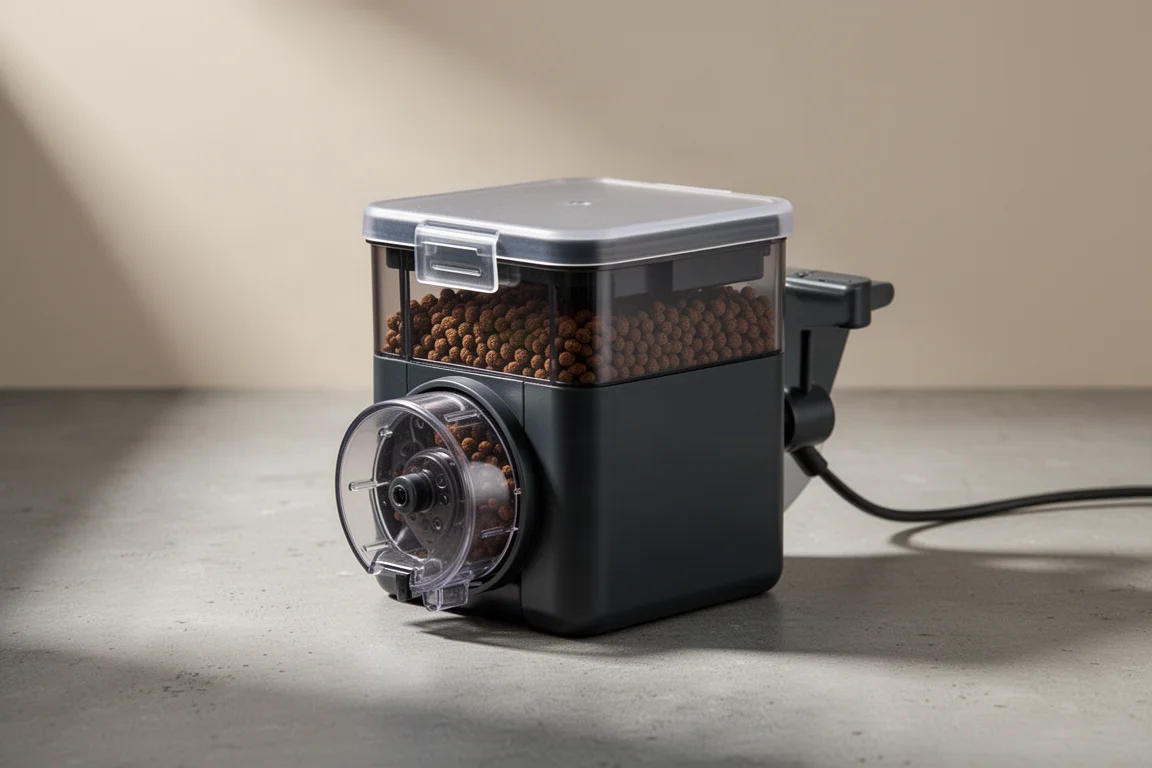
Best for Precise Feeding: Avast Marine Plank
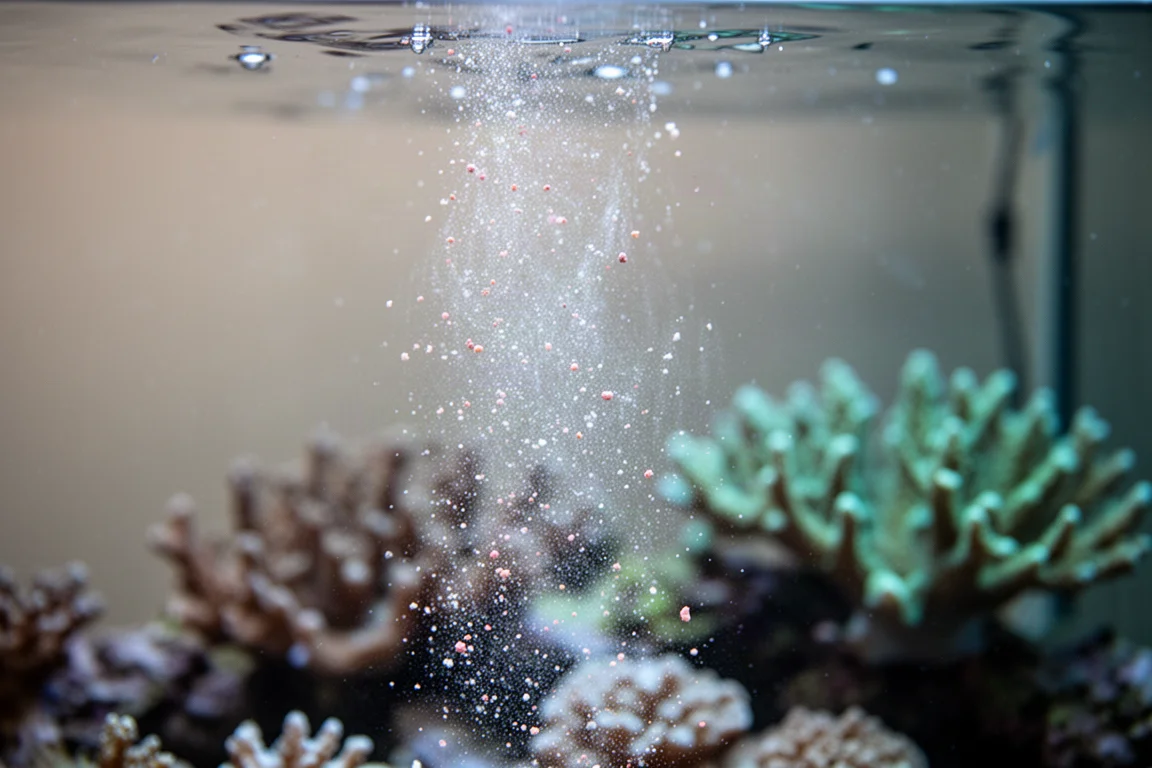
The Avast Marine Plank is a large feeder with a feature set to match. Its most distinctive element is a wide mixing tube that blends food into water before releasing it, so it enters the water column instead of floating on the surface toward the overflow.
An auger delivers small, controlled amounts, making the Plank unusually precise. It handles a broad range of foods, including freeze-dried krill and small coral foods.
Control is flexible. Two plugs allow it to be driven by a controller such as an Apex, and a digital timer can be used if you do not run a full controller. To get the most from it, controller integration is the better route, since the feeder can then work alongside pumps, skimmer, and return pump.
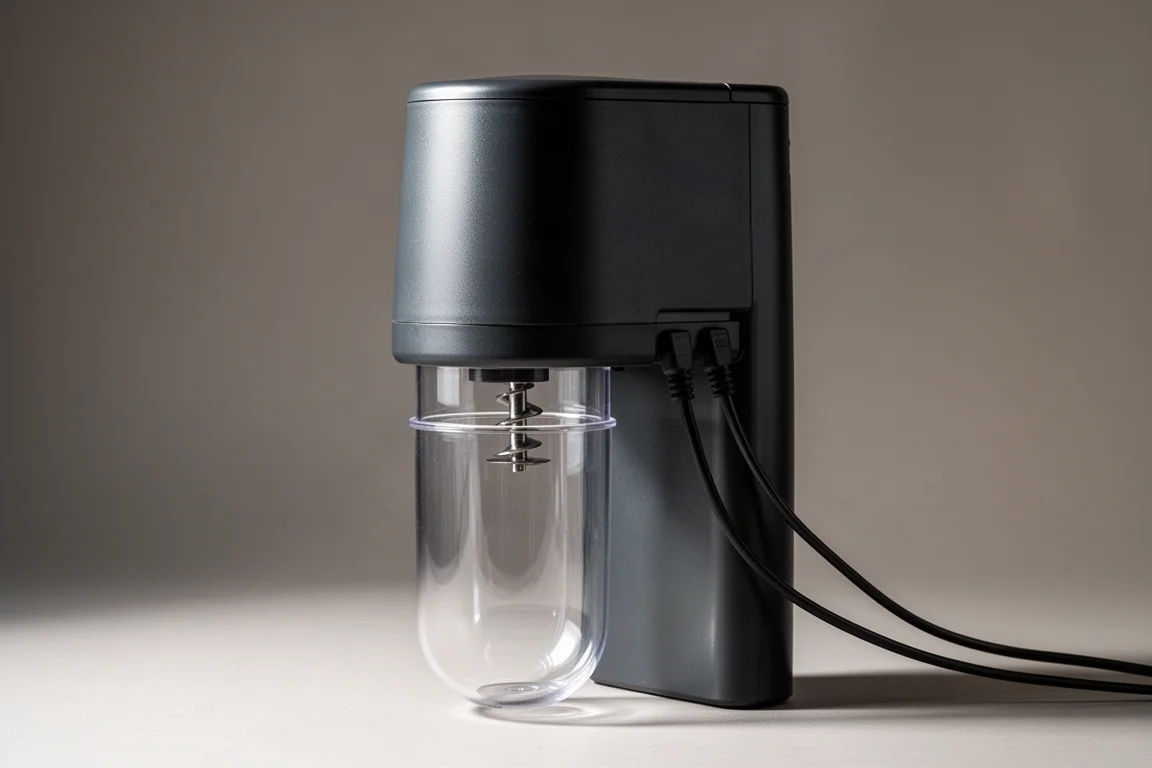
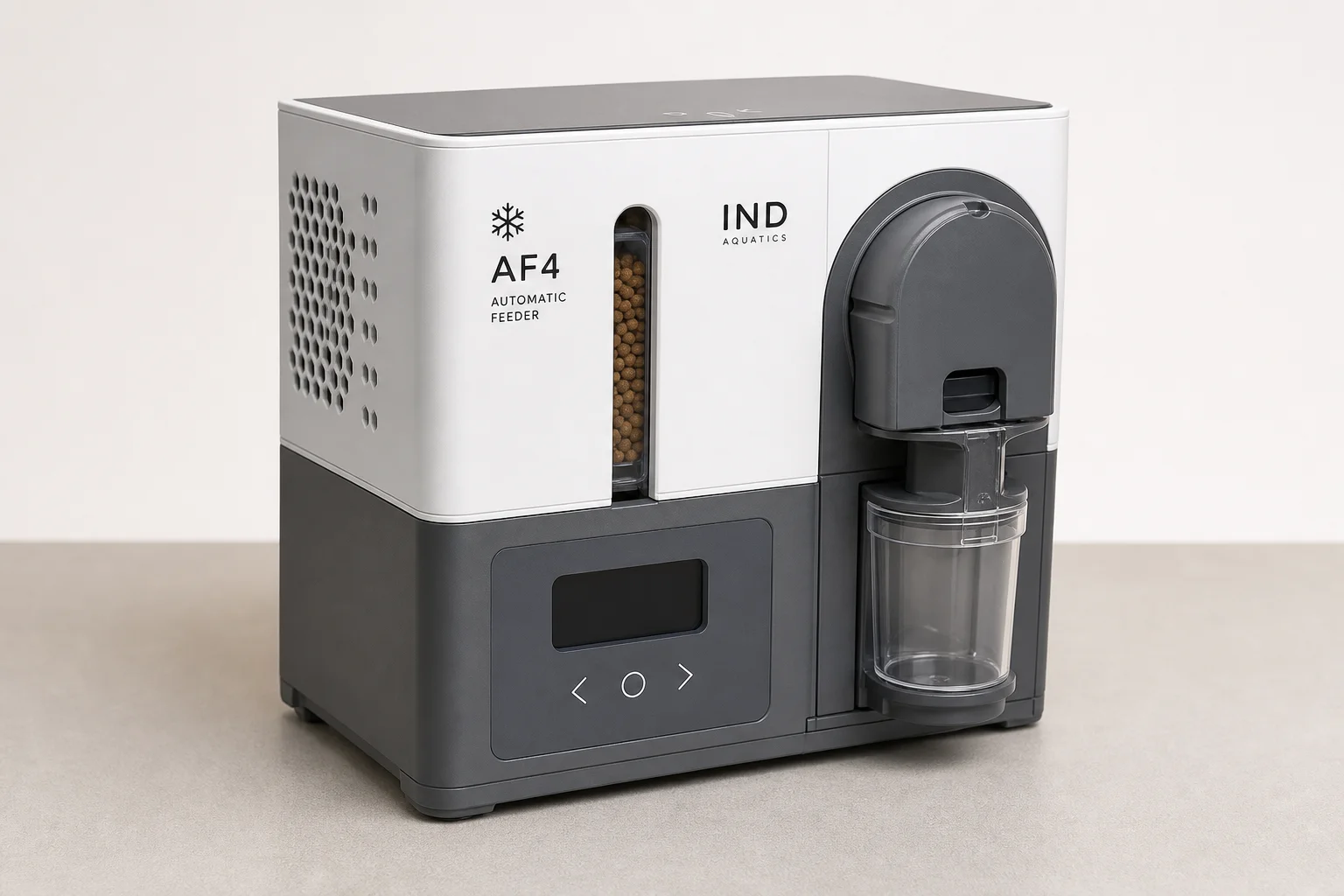
Best for Frozen Foods: IND Aquatics AF4
Some fish will not take pellets or flakes, at least not at first. For those tanks, the IND Aquatics AF4 feeds frozen or refrigerated foods automatically, which makes it possible to keep a live-food style diet going through weekends away and longer trips.
It connects to an Apex or any controller through a 0-10V connection, and a Wi-Fi version allows app control if you would rather run it standalone. Capacity is generous, with room for roughly 50 cubes.
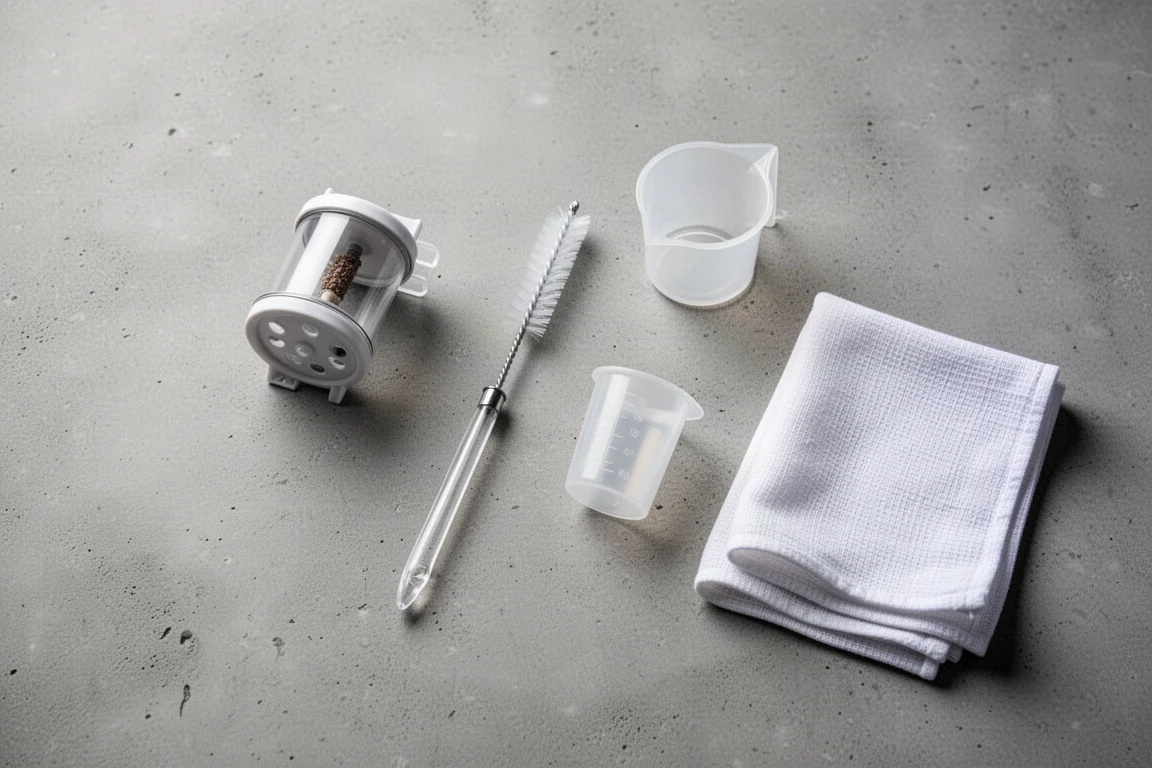
The one commitment is maintenance. Because it holds defrosting food at refrigerator temperatures, the unit needs regular cleaning, and weekly cleaning is recommended. A cleaning kit is included, which makes the job straightforward, but staying on that schedule matters.
Buying Advice
Match the feeder to the food first. If the tank runs on pellets and flakes, a simple battery or USB unit covers daily feeding and time away. If it needs frozen or refrigerated food, the AF4 is the option here built for that job.
Second, decide how much control you want. Standalone feeders with their own timers keep things simple. A controller-integrated feeder adds feed mode, pausing pumps and skimmers so less food is wasted.
Third, think about where the feeder will sit. Inside a canopy, humidity is the enemy, and a sealed or fan-cooled chamber protects dry food from clumping.
None of these choices is permanent, and many tanks end up running two feeders side by side: one for daily dry food and one for specialty foods. Starting with the simplest design that covers your routine is usually the safest route, and it leaves room to add a more advanced unit later if the tank’s needs change.
Conclusion
Automatic feeders are less about convenience and more about consistency. A tank fed on a reliable schedule is easier to keep stable, and a feeder keeps that schedule going whether someone is home or not.
For a first feeder, the Eheim Everyday Auto Feeder is the low-risk starting point. The Lifeguard Feeder suits daily use with USB recharging. The Neptune Systems AFS rewards tanks already running an Apex, the Avast Marine Plank is the precise choice for mixed and coral foods, and the IND Aquatics AF4 opens up frozen and refrigerated feeding for fish that will not take dry food.
Further reading
Related Reviews
Aquarium Equipment
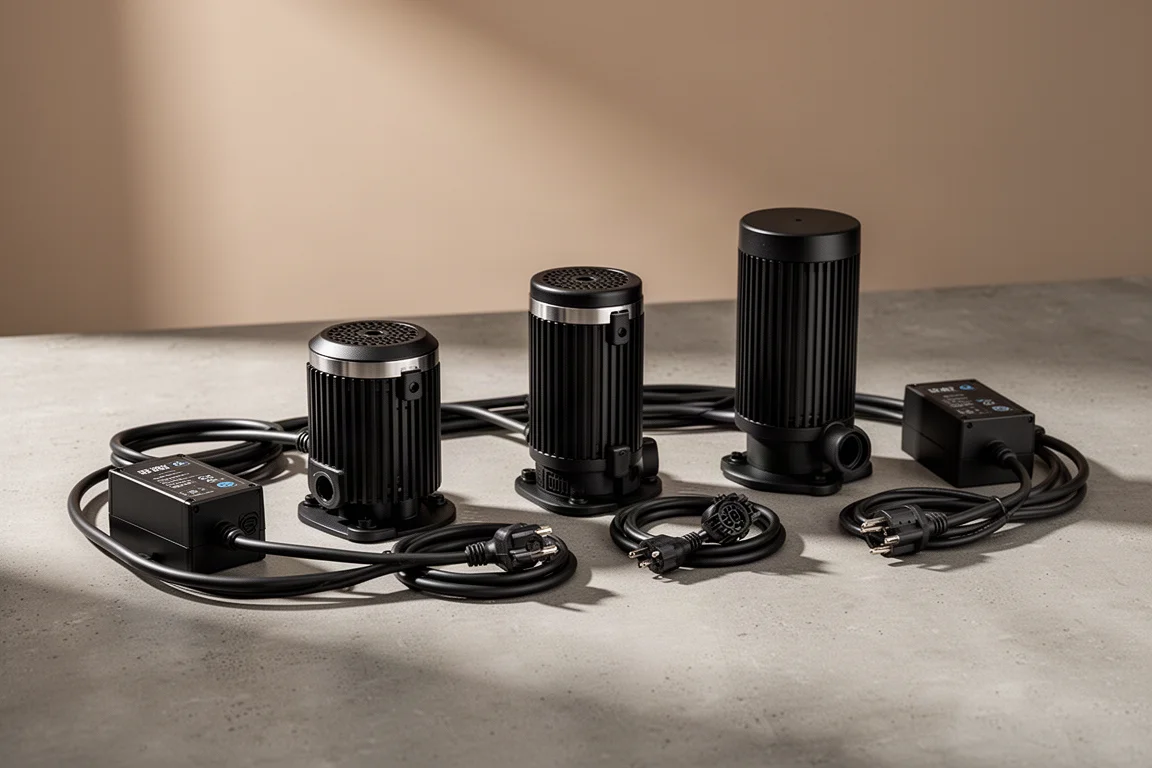
Abyzz Professional DC Pumps: A100, A200, and A400 Reviewed
A closer look at three German-made DC return pumps built for large reef systems, with titanium internals, fine flow control, and a 10-year warranty.
Aquarium Equipment
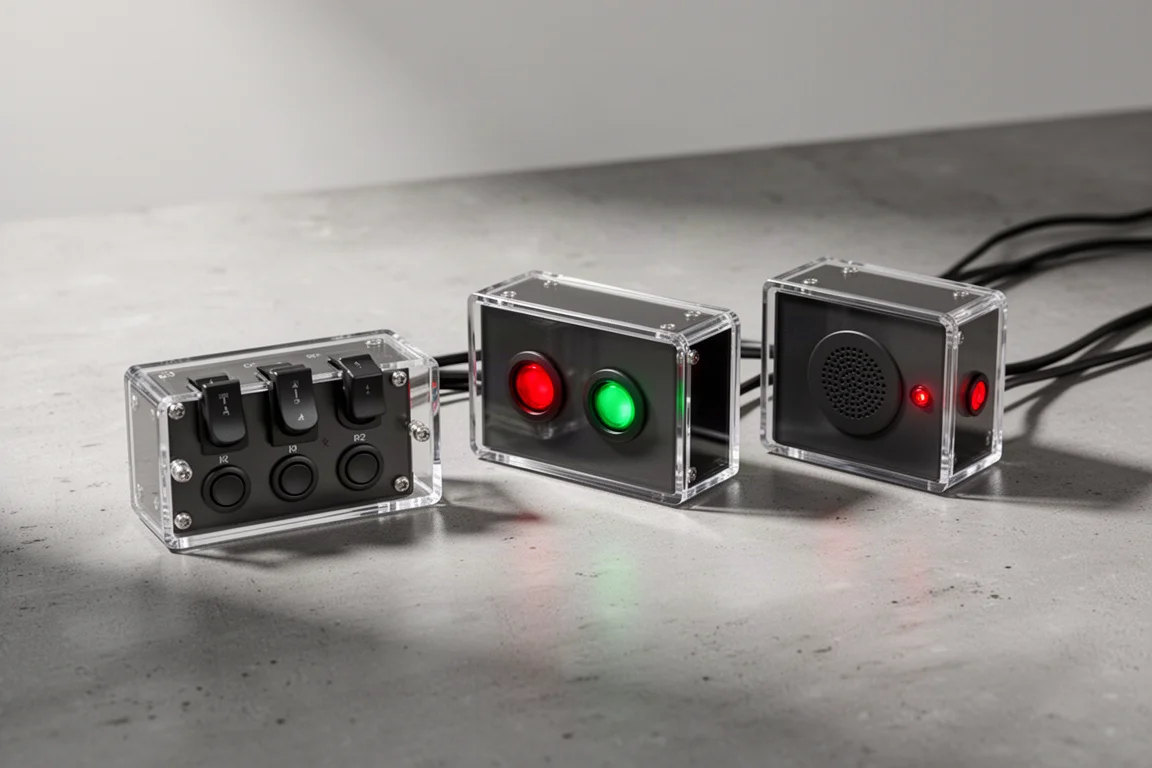
AdaptiveReef Controller Accessories: Three Tactile Upgrades for Your Reef Controller
A practical look at three AdaptiveReef add-ons that put physical switches, at-a-glance status lights, and a loud alarm within arm's reach of your reef tank.
Aquarium Equipment
Adaptive Reef Controller Boards: Basic vs Deluxe for Cleaner Aquarium Gear
A practical look at the Adaptive Reef Basic and Deluxe controller boards, what each one includes, and how to choose the right size for your tank gear.