Aquarium Equipment
Best Auto Top Off Units (ATO) for Reef Tanks: Four Options Compared
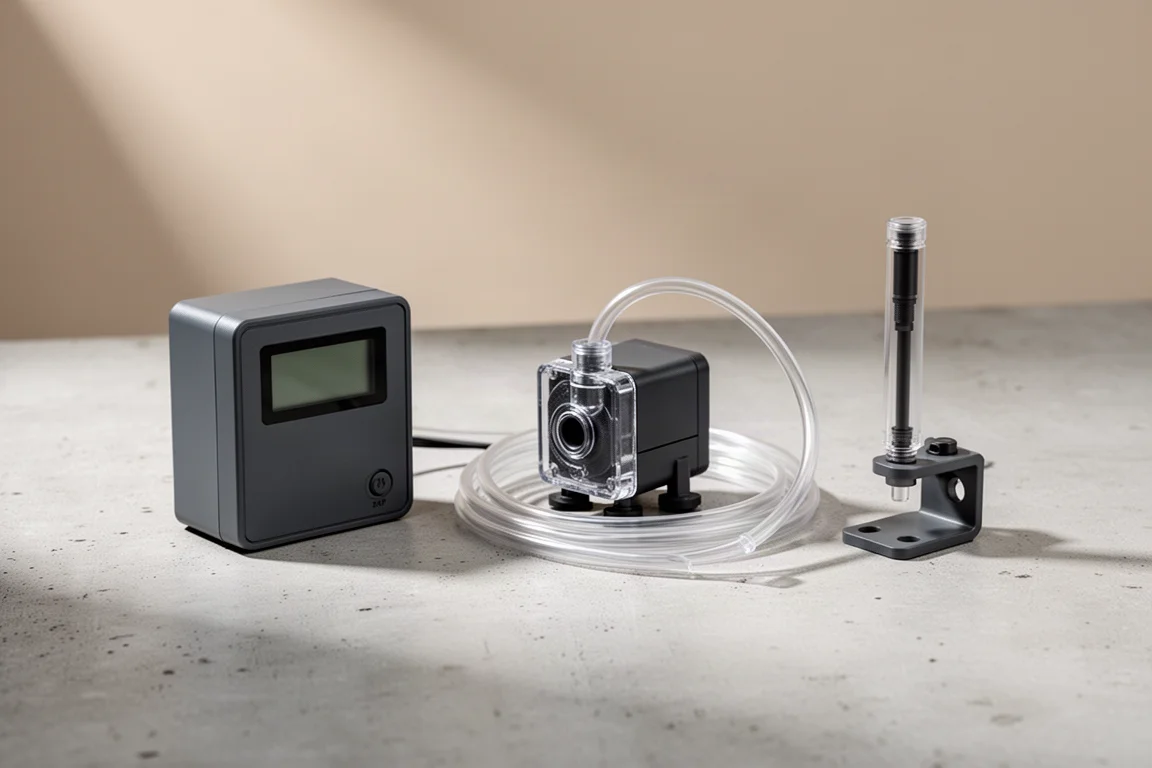
A practical comparison of four auto top off units for reef tanks, from the long-running TUNZE Osmolator to the compact Reef Breeders Prism and EXO.
Introduction
Two things tend to happen to every reef keeper eventually. Either the daily routine of topping the tank up with RODI water becomes tiring, or a few days away from home makes it impossible. Both situations lead to the same purchase: an auto top off unit, usually shortened to ATO.
An ATO is a combination of float valves, sensors, and a small pump. It detects the drop in water level caused by everyday evaporation and switches the pump on to replace what was lost with RODI water. One beginner point is worth stating plainly: salt does not evaporate, only water does, so anything added to compensate for evaporation should be RODI water and never saltwater.
Strictly speaking, an ATO is optional. In practice, very few hobbyists who stay with a reef tank for more than a year go without one, because the only alternative is a manual top up every single day.
How to Choose an Auto Top Off Unit
Three sensing approaches cover almost every unit on the market. The simplest is a gravity-fed float valve: as the water level drops, the valve opens and lets RODI water flow in, and as the level rises the float mechanically closes it again. This type needs no electricity at all.
A float switch is mechanical too, but it depends on power, switching a small pump on and off as the float rises and falls. Basic units may use a single float switch, while more elaborate models add a second or third switch purely for redundancy.
Optical sensors use an infrared eye and have no moving parts. They sound foolproof, yet they can still fail, and in real systems they have a habit of failing long before a float switch does. That is why the safest designs combine optical and mechanical sensing rather than relying on either one alone.
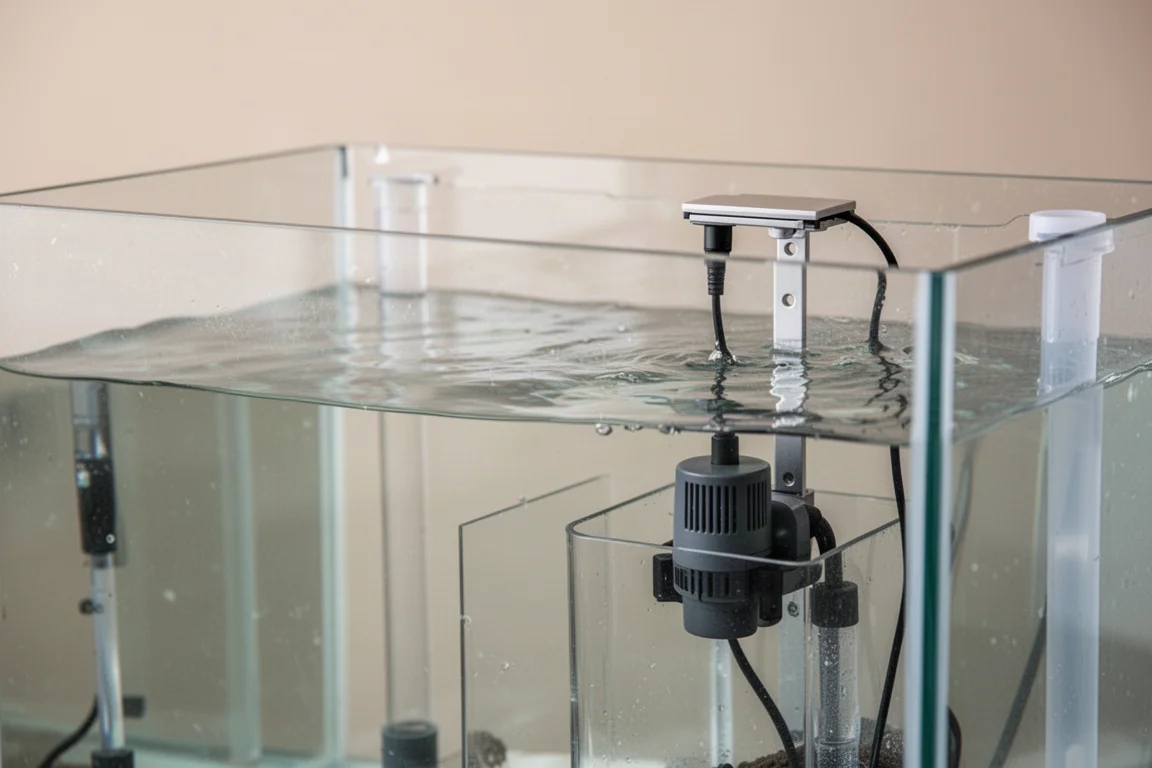
Before buying, run three practical checks. The unit has to fit in the same compartment as the return pump, so measure first. It also has to be able to work in that spot: a unit that reads the water level through glass will not function on a black rear filtration chamber or on a colored sump, because the sensor has to see the level through the glass. Finally, look at the pump. ATO pumps are tiny and many have limited head pressure, sometimes struggling to push water vertically beyond three feet. Some units also include a fail-safe timer, and a small pump in a large tank may take so long to reach the correct level that the timer shuts it down before the water ever catches up.
TUNZE Osmolator: Reliability That Has Lasted Since 2013
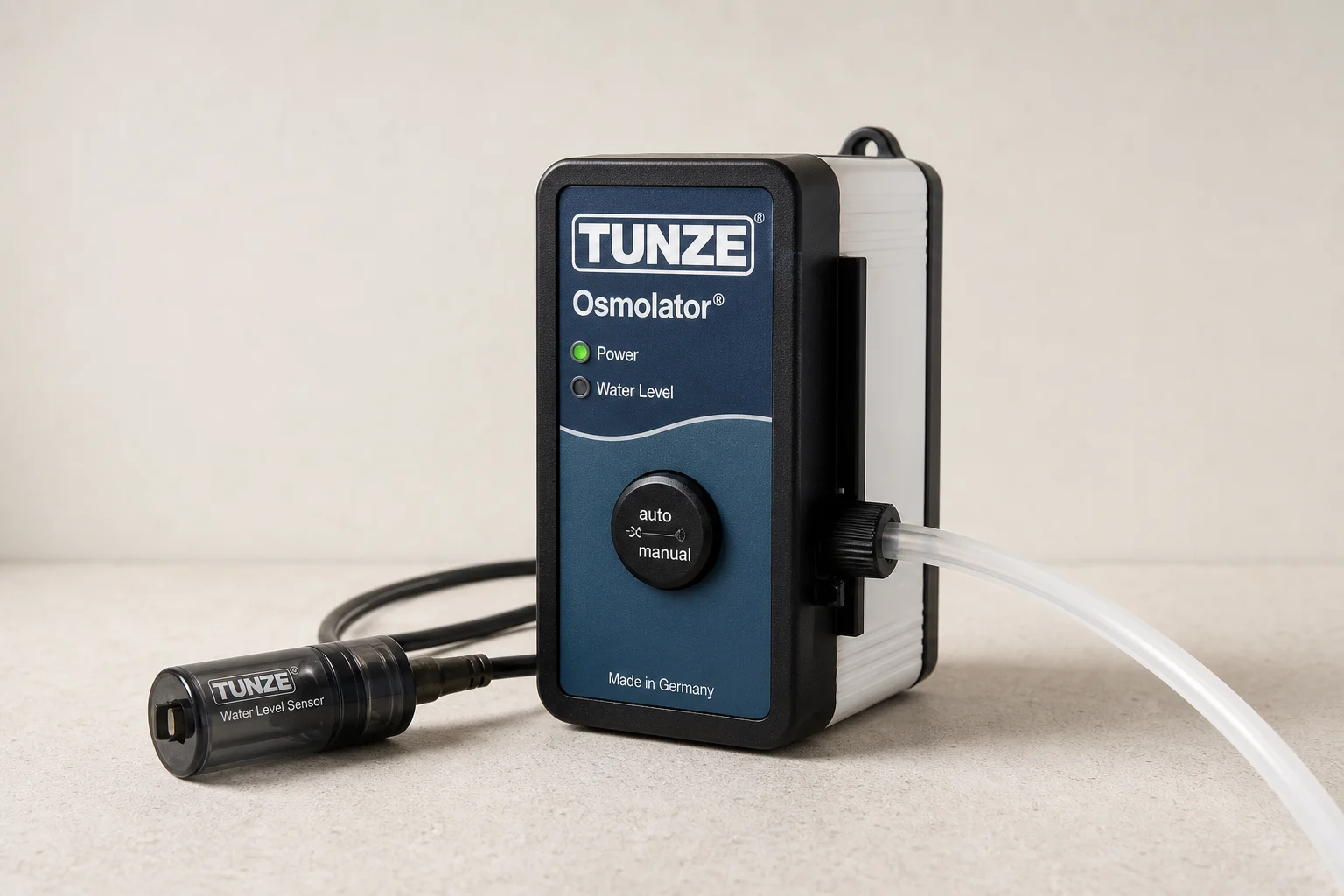
The Osmolator is the reference point in this category. It pairs a highly accurate optical sensor with a backup float valve, so two independent methods monitor the same water level. A smart controller reports problems through an LED display and an optional alarm, and a built-in fail safe detects when the pump is running dry and switches it off.
It is expensive, and the price reflects a track record that is difficult to match. This is the unit that has stayed in continuous service since 2013 on its original pump without a single failure.
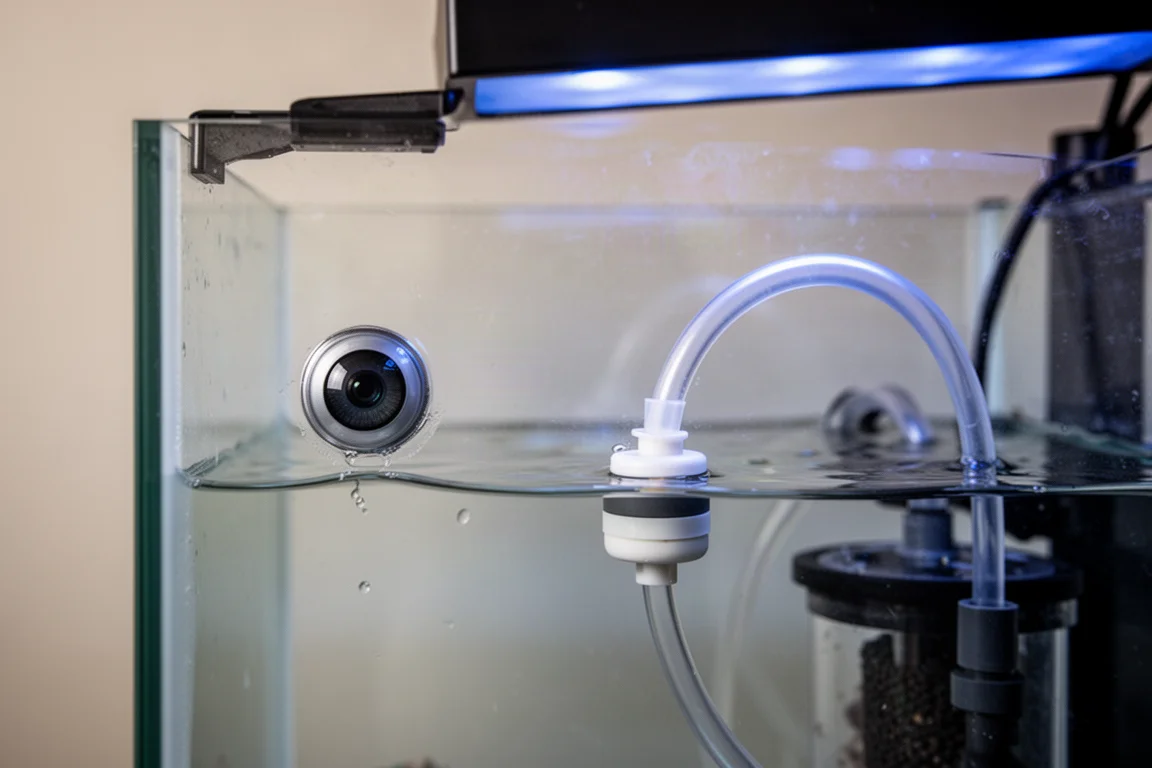
For anyone who wants to install an ATO once and stop thinking about it, the optical plus float valve combination is the most conservative choice available, and the long service history supports that confidence.
TUNZE Osmolator Nano: Simple Coverage for Smaller Tanks
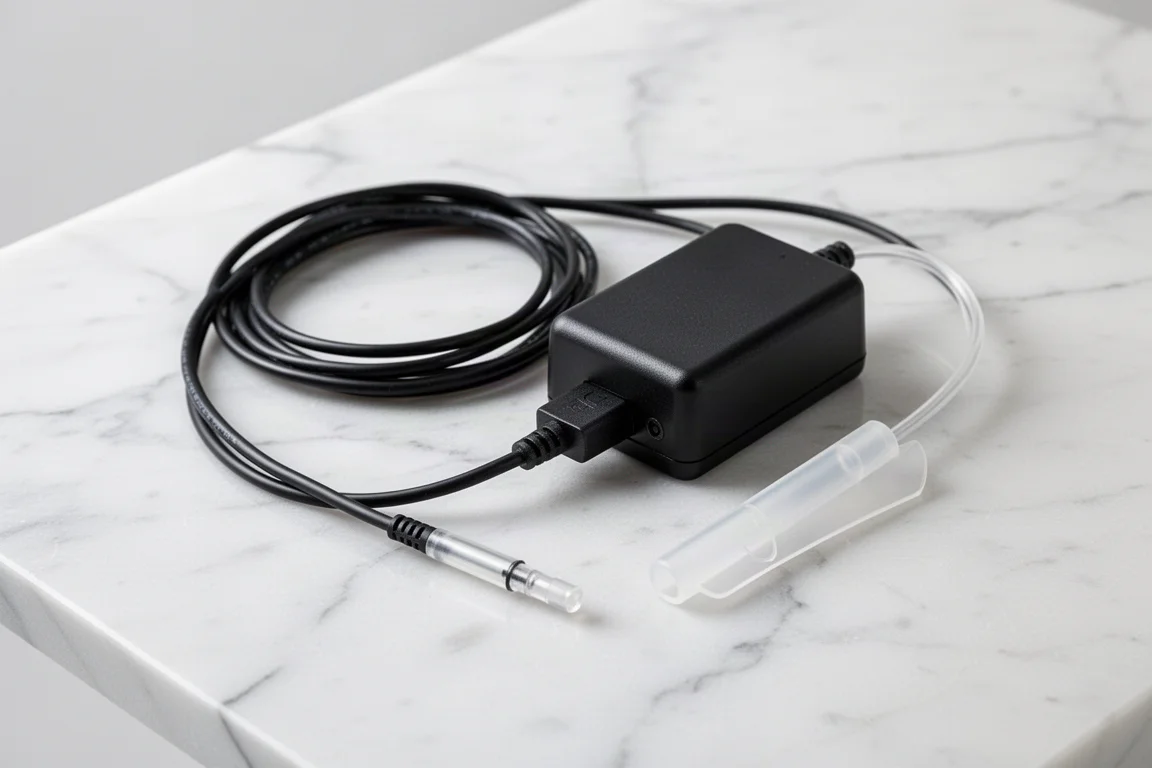
The Nano is the compact version of the same design, intended for tanks under 50 gallons. It uses a single float switch, so it does not offer the redundancy of its larger sibling. On a small, stable system that simplicity is often enough, and the smaller footprint fits tighter filtration compartments where a bulkier controller will not go.
Reef Breeders Prism: Redundant Sensing at a Lower Cost
The Prism is the option for reef keepers who either do not have the space or are not ready to spend as much. Its all-in-one sensor contains three separate infrared sensors: one switches the pump on, one switches it off, and a third provides backup in case the pump fails to turn off.
That third sensor earns its place. A pump stuck in the on position is how ATOs end up flooding a room or diluting salinity, so an automatic second line of defense against that specific failure is genuinely useful.
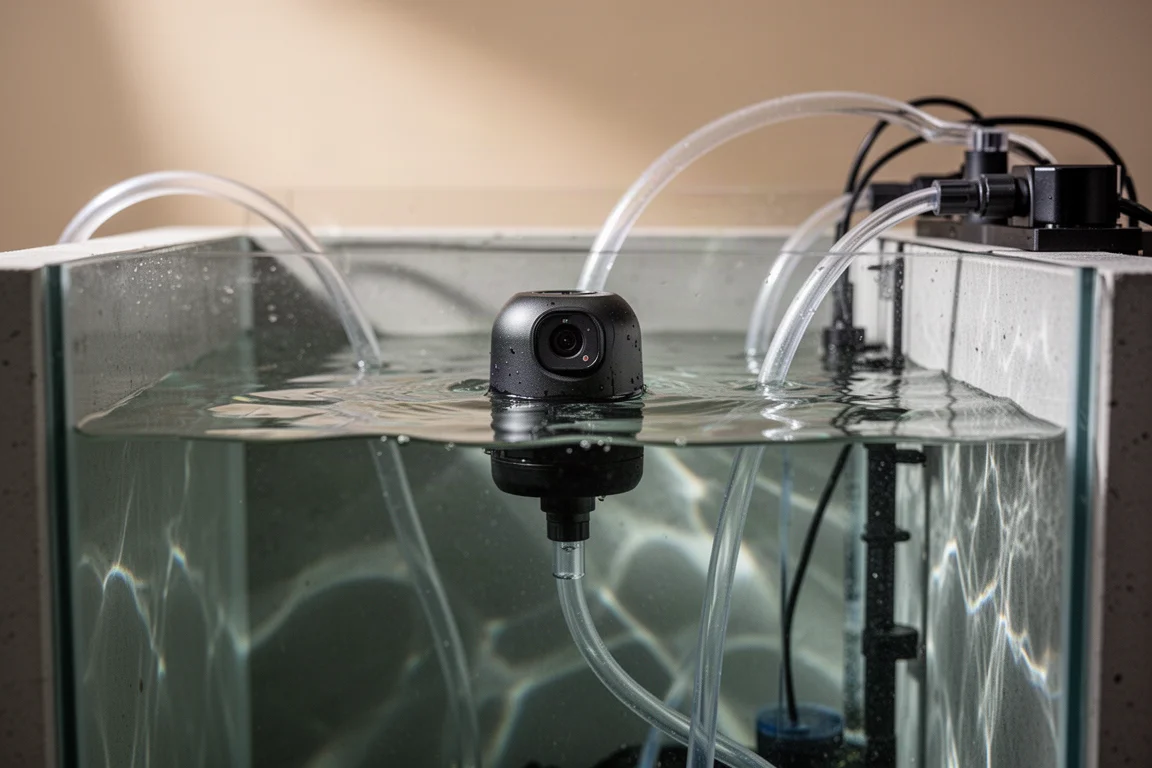
Compared with the Osmolator, the Prism gives up the mechanical float backup and has a shorter track record, but its internal redundancy covers the most likely failure mode. It is also easier to fit into a tight sump compartment.
Reef Breeders EXO: A Clear Glass Requirement to Check First
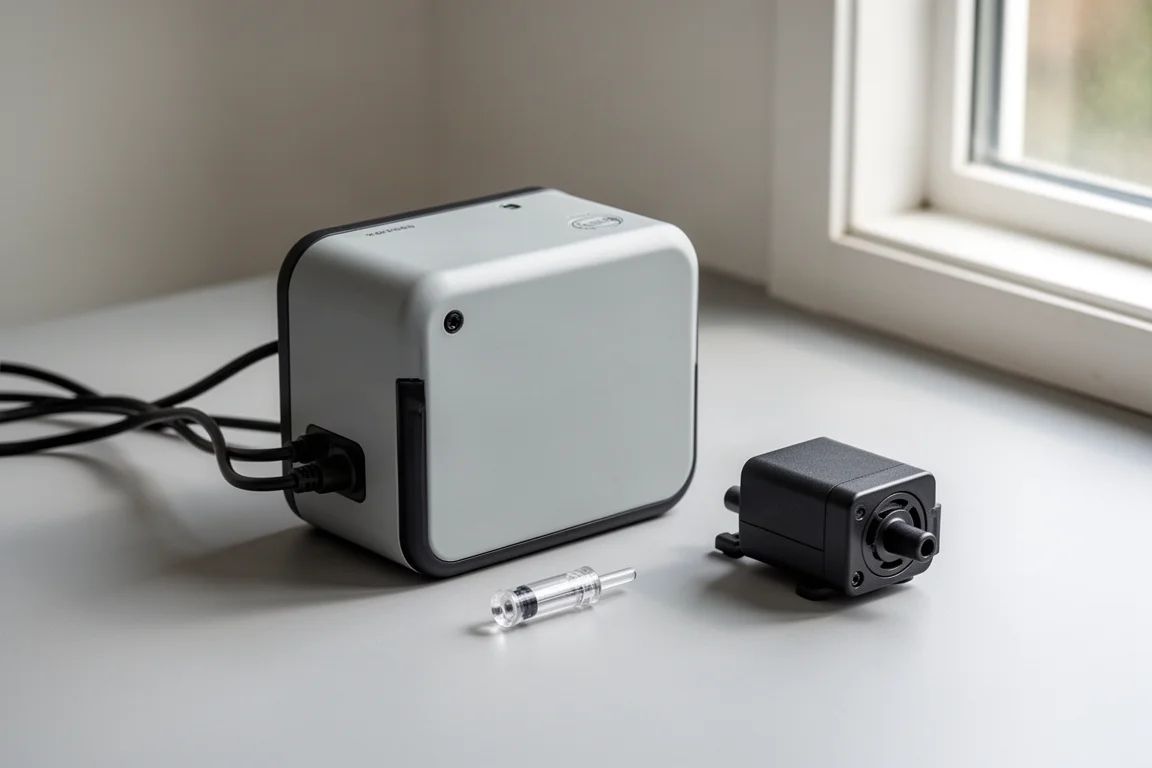
The EXO is the more expensive of the two Reef Breeders units, and it comes with one installation condition that cannot be worked around. Its sensor has to read the water level through the glass, so the unit can only function through clear glass. Mounted against a black rear filtration chamber or inside a colored sump, it will not read the level at all. Confirm the mounting surface before ordering.
Setting Up an ATO Correctly
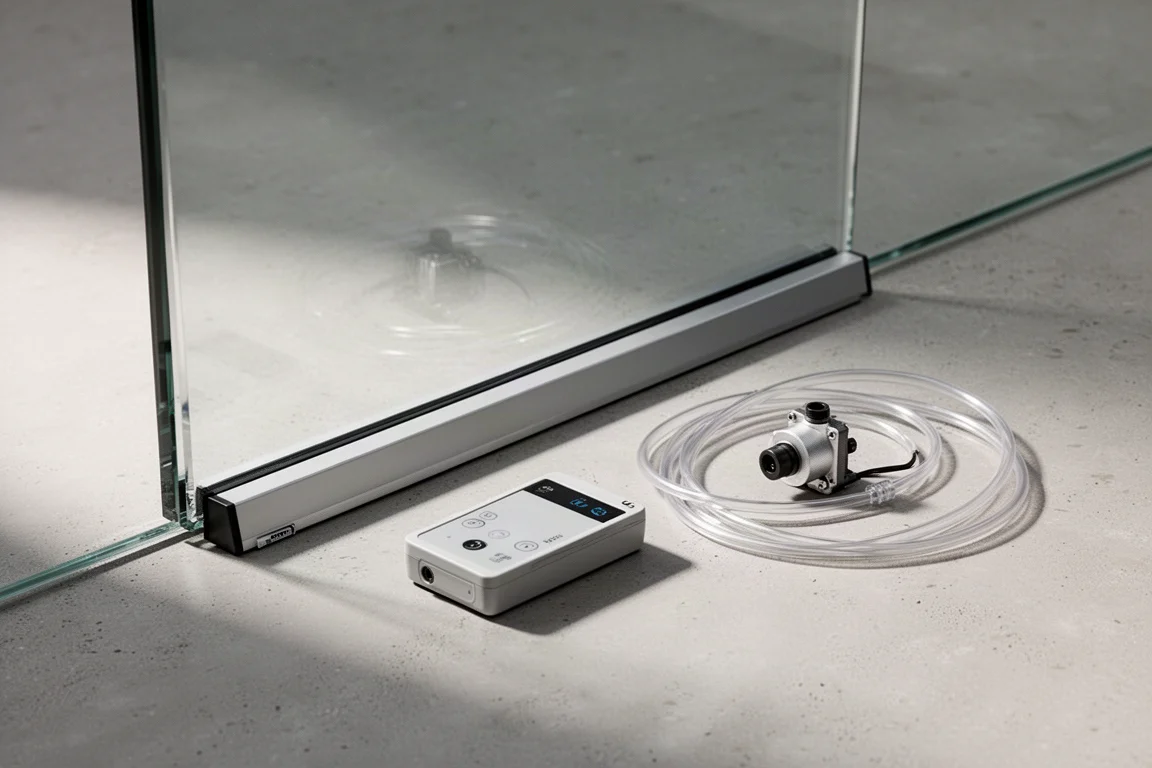
Placement is the easy part, because there is only one correct answer: the ATO belongs in the same compartment as the return pump. That is the only compartment in the tank with a variable water height, and it is the level the unit needs to read.
Reservoir sizing deserves more thought than it usually gets, and roughly 10% of total system volume is a sensible target. A 50 gallon tank calls for a 5 gallon reservoir, while a 100 gallon tank calls for a 10 gallon one. Too small and the reservoir needs refilling every other day, which defeats the purpose. Too large and a unit stuck in the on position can either overflow the tank and flood the room or dilute the saltwater far enough to endanger livestock. At 35 parts per thousand salinity, a 10% dilution brings the water down to about 31.5, which livestock should tolerate in the short term.
The flexible tubing from the pump should sit above the water level in the reservoir. If it is left below that line, switching the pump off will not stop the flow: a siphon keeps pulling water into the tank by gravity.
Buying Advice
Matching the unit to the system matters more than chasing features. A small tank under 50 gallons is served well by a single float switch design such as the Osmolator Nano, though a redundant sensor is still the safer configuration. Where space is tight or the budget is firmer, the Reef Breeders Prism covers the most common failure mode with its three infrared sensors. The EXO only makes sense when the mounting surface is clear glass. For the widest safety margin and the longest service record, the TUNZE Osmolator remains the unit to beat despite its price.
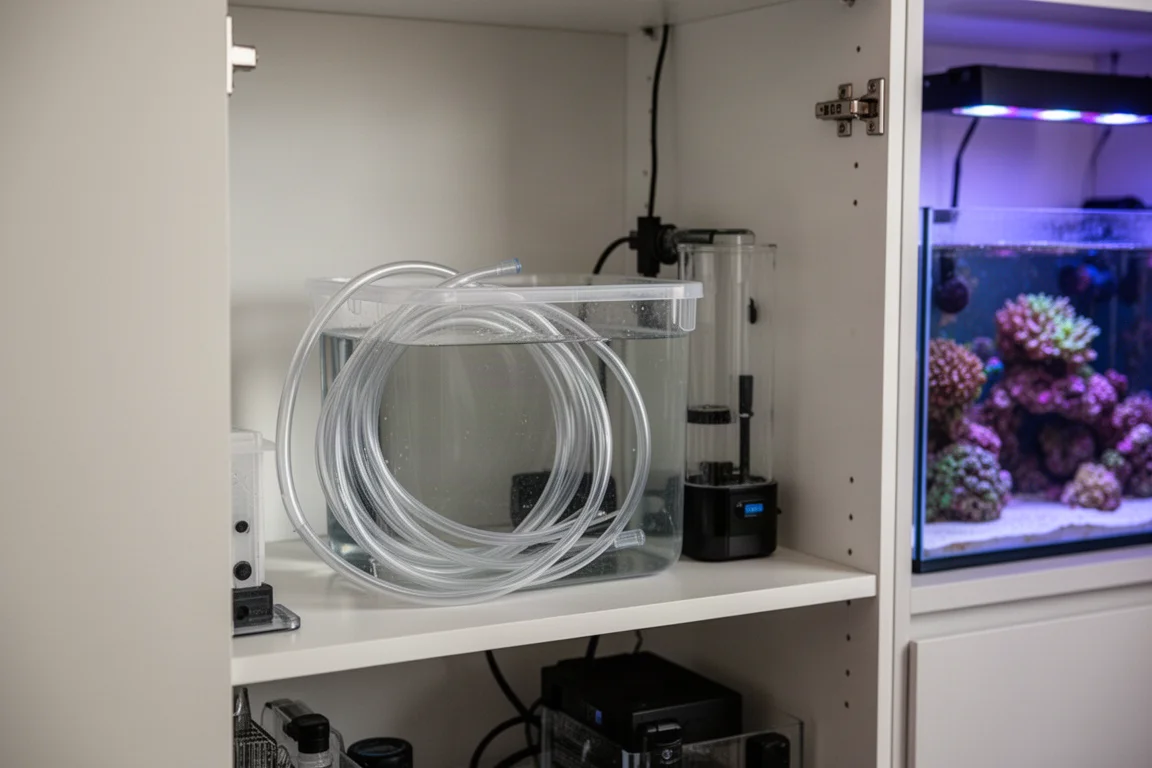
Because an ATO is made of mechanical and electrical parts, it has a lifespan, and a failure while you are at home is usually caught quickly. A failure while you are away is a different matter. Three steps reduce the risk: lower the evaporation rate of the tank, build redundancy into the setup, and connect the RODI unit directly to the reservoir so the supply never runs dry.
Conclusion
An auto top off unit removes one of the few genuinely tedious jobs in reef keeping, and the right choice comes down to fit, sensing method, and how much redundancy the system warrants. Any of these four units will hold the water level steady; the differences show up in how many independent checks stand between a stuck pump and a wet floor.
Further reading
Related Reviews
Aquarium Equipment
Abyzz Professional DC Pumps: A100, A200, and A400 Reviewed
A closer look at three German-made DC return pumps built for large reef systems, with titanium internals, fine flow control, and a 10-year warranty.
Aquarium Equipment
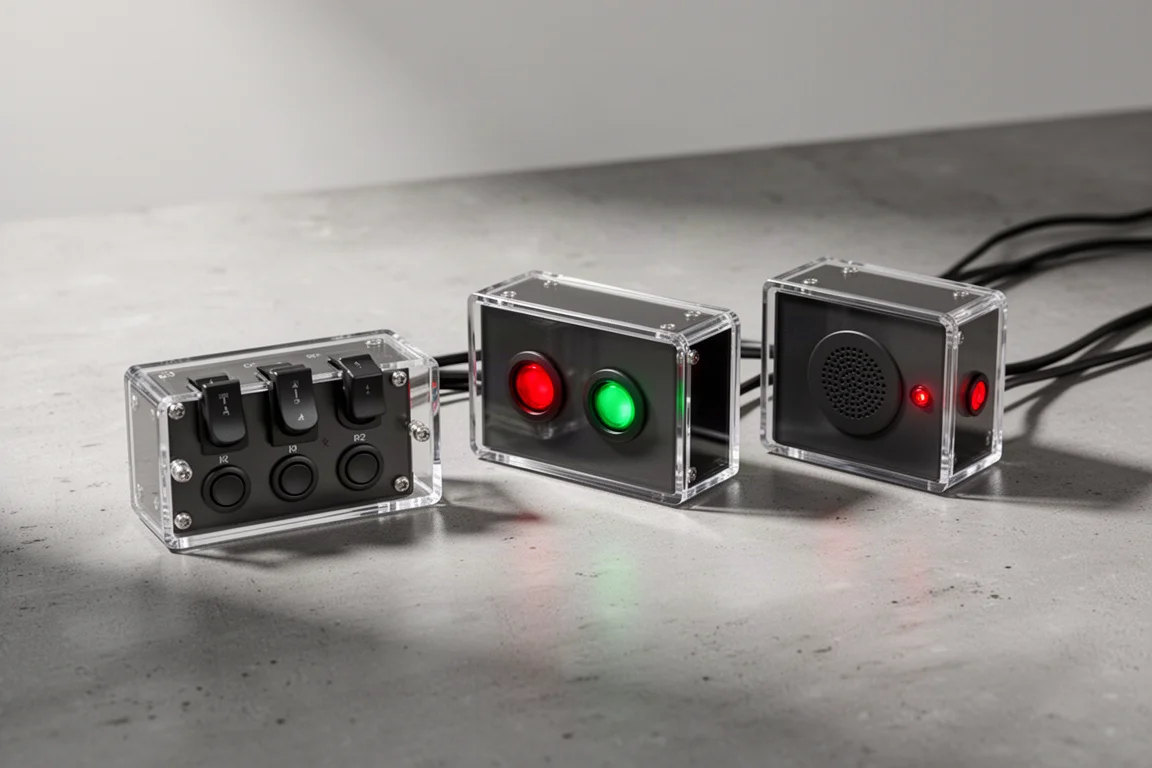
AdaptiveReef Controller Accessories: Three Tactile Upgrades for Your Reef Controller
A practical look at three AdaptiveReef add-ons that put physical switches, at-a-glance status lights, and a loud alarm within arm's reach of your reef tank.

Aquarium Equipment
Adaptive Reef Controller Boards: Basic vs Deluxe for Cleaner Aquarium Gear
A practical look at the Adaptive Reef Basic and Deluxe controller boards, what each one includes, and how to choose the right size for your tank gear.