Astronomy Accessories
Best Astronomy Binoviewers: Three Options Compared for Any Telescope Budget
We tested three binoviewers across a refractor, a Maksutov-Cassegrain, and an 8-inch Dobsonian. Here is how they compare on focus, optics, and value.
Introduction
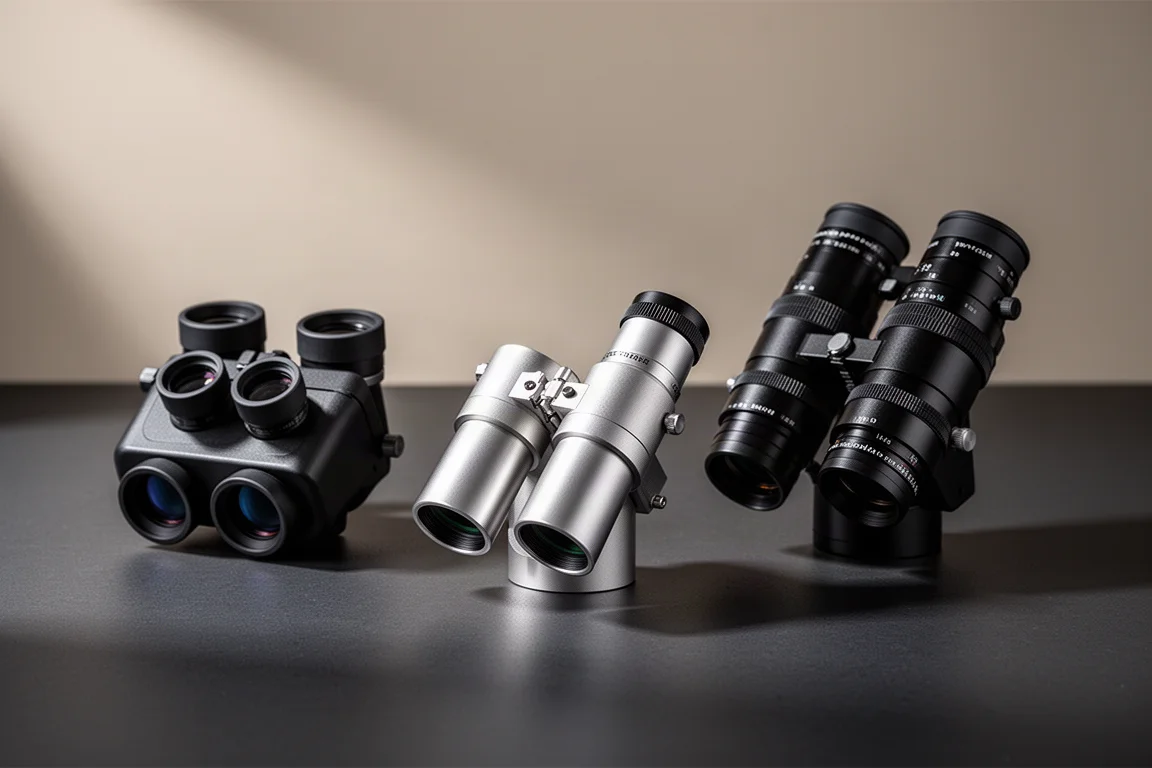
Binoculars are a great way into astronomy. Even a $50 pair of 10x50s can be a lot of fun, and bigger models can magnify up to 25 times. But large astronomical binoculars are heavy, need a tripod, and top out in magnification. If you want to push well past 25x and still view with both eyes, whether that is lunar craters or the brighter planets, a binoviewer is the tool for the job.
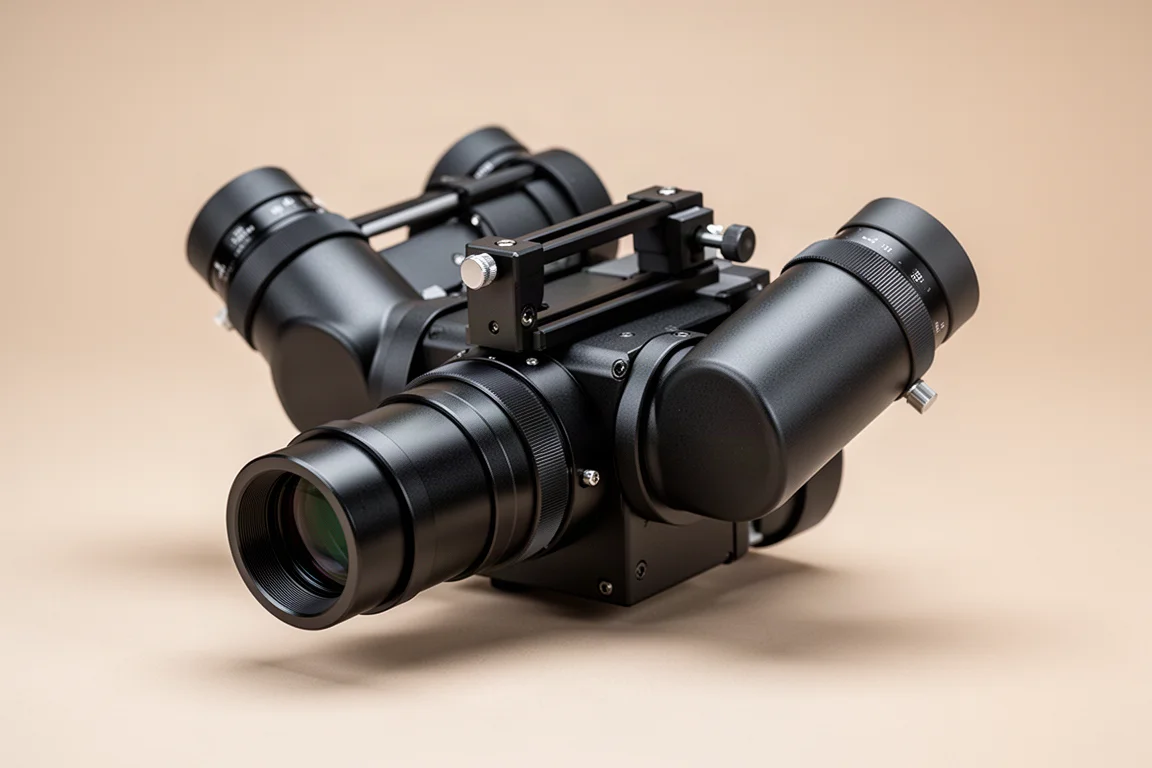
A binoviewer looks similar to binoculars, except it has only one tube coming out the front. That tube slides into a telescope, which splits the incoming light and feeds half to each eye. To find out how the main options actually behave, three binoviewers were tested across three very different telescopes: a GSkyer refractor with a 600mm focal length, an Intes Maksutov-Cassegrain with a 1500mm focal length, and an Orion 8-inch Dobsonian reflector with a 1200mm focal length.
Binoviewer Basics: Six Common Questions
Before the comparisons, a quick grounding in how these devices behave.
Does using a binoviewer halve the brightness? Physically, yes. Half the light goes to each eyepiece. But the images get partially recombined in the visual cortex, so the perceived brightness ends up somewhat similar, though slightly dimmer, to viewing the full image with one eye.
Do you get a 3D effect? Technically no, since both eyes receive the same image. That said, many users report that the Moon takes on a ball-like quality when viewed this way.
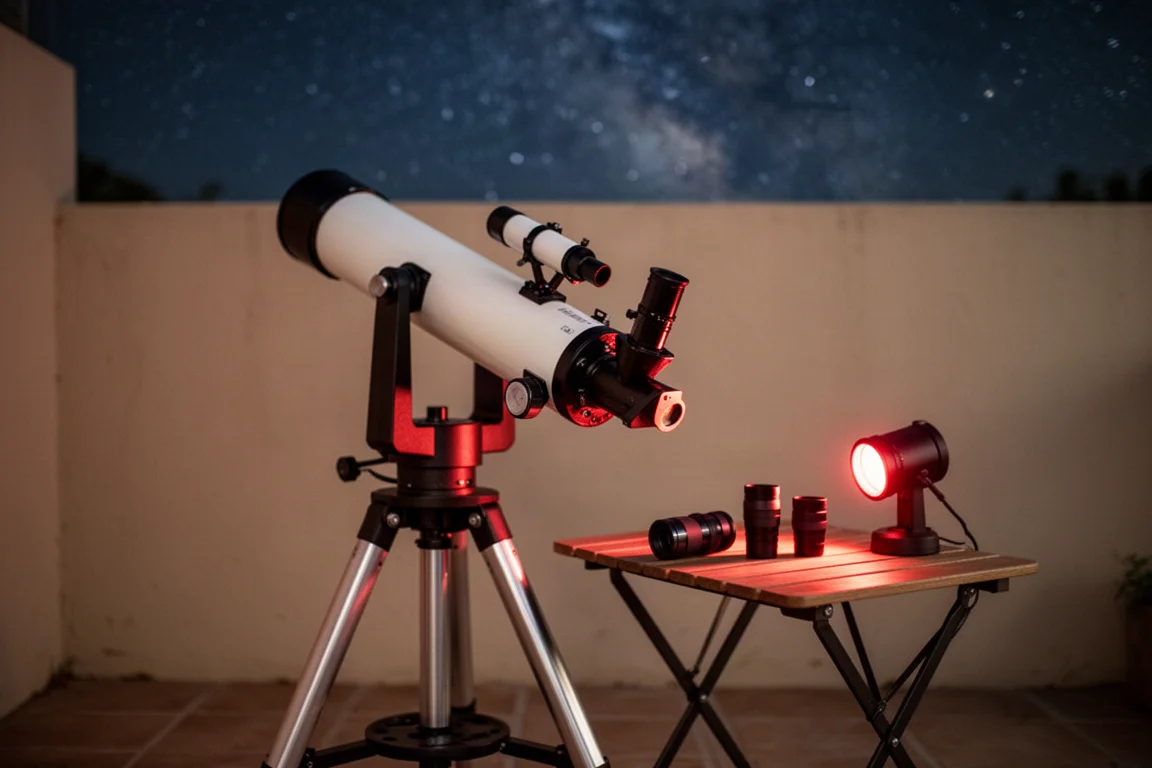
Do they need counterweights? Yes. Binoviewers are heavy, especially with two large, high-quality eyepieces loaded in. Plan for plenty of counterweight, and if you use one in a diagonal on the back of a refractor, make sure the diagonal is seated very tight so the whole assembly cannot slowly rotate and fall out.
Do you need special eyepieces? You need two identical eyepieces. Some binoviewers come with a pair, some do not, and that can add up quickly.
Do two eyes really show more detail? Many users, including this test, find that they do. Because of stereo vision, combining two views of the same target can seem to reveal more detail than either view alone. A simple stereogram test with two lunar images taken 30 seconds apart often shows a noticeably more detailed merged image at the center.
How Binoviewers Work, and Why Focus Distance Matters
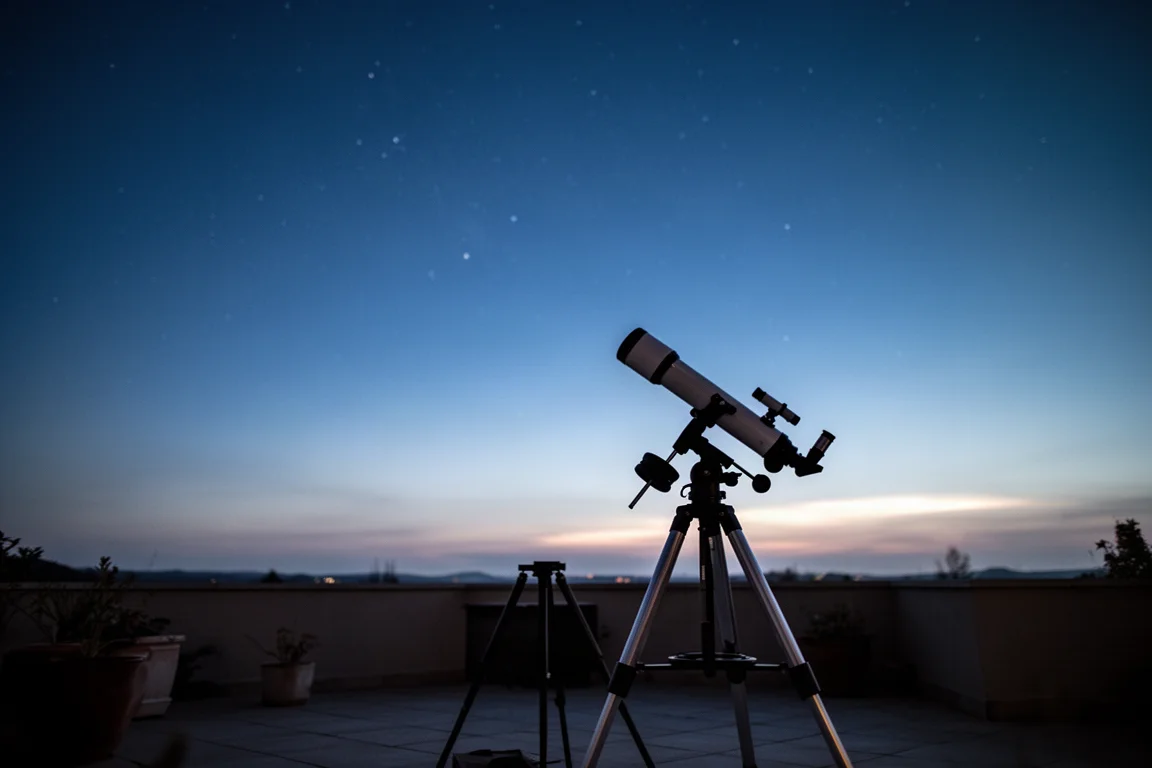
The core lesson from this comparison: some binoviewers will work in some telescopes, but not all. Inside a binoviewer, prisms, mirrors, and lenses split the incoming light between two eyepieces. The biggest challenge is physical: the eyepieces end up roughly 4 to 6 inches further out than they would be in the focuser tube directly, depending on the model. That extra optical path is real, and for most reflectors, pushing the eyepiece that far above the focuser makes reaching focus impossible.
Refractors, with their long-travel focusers, usually handle this without trouble. Reflectors generally need one of three workarounds. The most drastic is moving the primary mirror forward several inches, which means modifying the mirror cell and turning the telescope into a special-purpose instrument. An easier route is a Barlow lens, often just the end cell unscrewed and threaded onto the front of the binoviewer, though that changes magnification. Some telescopes with extendable struts can also be shortened by a few inches, which works for some and not others.
There is one clean exception: parfocal binoviewers, like the Explore Scientific set below, are designed so the extra optical path simply does not exist. You focus with a single eyepiece, swap in the binoviewer with two eyepieces, and it lands in focus automatically.
GSkyer Binoviewer: The Budget Option
The GSkyer binoviewer sells for around $140, available from multiple sources including secondhand marketplaces and Amazon. It does not come with eyepieces. The build feels cheap, but the box includes three attachments: a hollow 1.25-inch straight-through barrel threaded for accessories, plus 1.85x and 3x Barlow lenses.
Out of the box, the straight-through barrel did not reach focus in any of the three test telescopes. With the 1.85x Barlow attached, using 20mm eyepieces, it worked in the refractor and the 8-inch Dobsonian, but never in the Mak-Cass, even with the 3x Barlow. The included Barlows are cheaply made and produced noticeable chromatic aberration on the Moon.
There were other frustrations. A partial focus issue left half the Moon blurry at times and was never fully resolved. One of the internal prisms arrived yellow with spots on it, while the other was clear. The two eyepiece lines of sight are not perfectly parallel, so the view subtly cycles in and out of alignment as you turn the focuser tube; a usable sweet spot exists, but eye alignment takes patience. Like regular binoculars, the barrels bend to adjust interpupillary distance.

As a low-cost entry point, it can work, and it may behave differently with your telescope, but overall this set proved somewhat frustrating to use.
William Optics Binoviewer: Solid Build, Complicated Setup
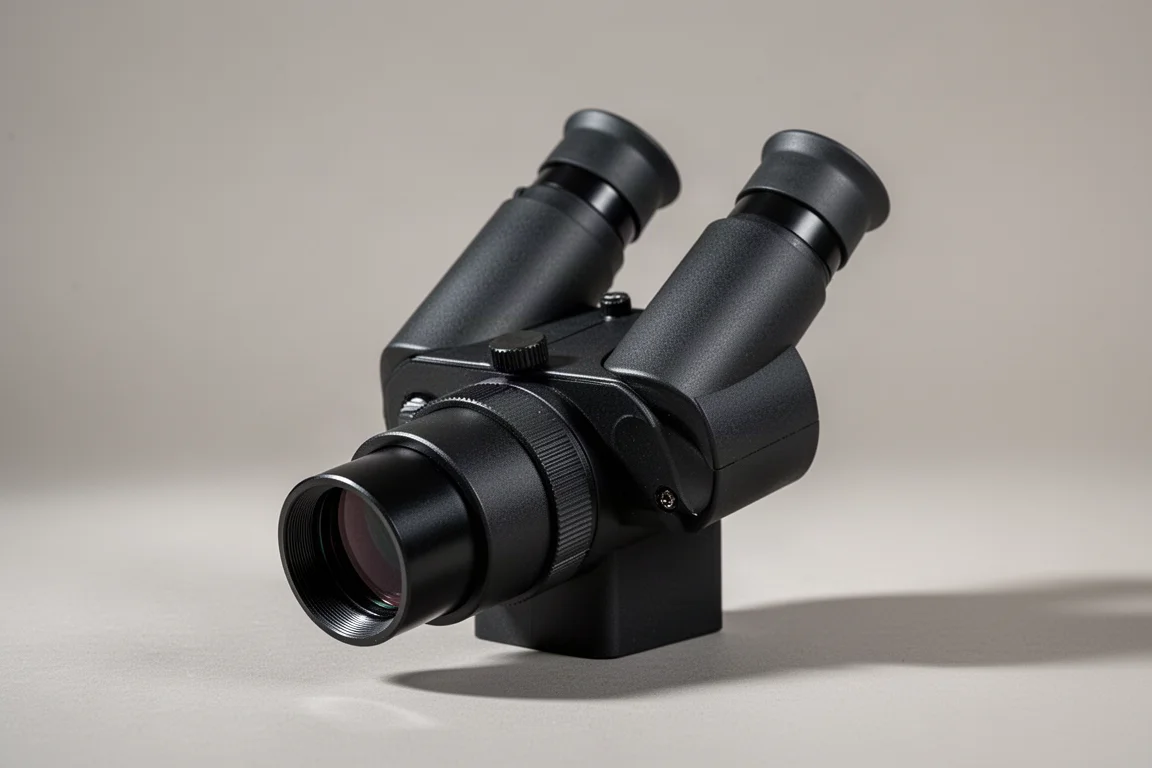
The William Optics binoviewer retails for about $310 new; this one was bought used for roughly half that. It comes with a pair of 20mm 66-degree eyepieces that seem high quality, plus a hollow 1.25-inch barrel and a 1.6x Barlow that screws onto the front using proprietary threads.
The catch: stock, out of the box, this binoviewer would not reach focus in any of the three test telescopes. It required an extra Barlow lens bought separately to work at all, reaching focus in the refractor and the 8-inch Dobsonian once a 2x Barlow cell was threaded on. William Optics sells a dedicated Barlow for this unit, but it was sold out at the time of testing. A substitute Barlow of lower quality did hamper the optics somewhat, so the genuine William Optics Barlow would likely make this a solid set.
The build itself is rock solid, with the familiar hinged eyepiece barrels for eye distance adjustment. Plenty of owners report it works fine in their telescopes, so it pays to research your specific setup or contact support before buying.
Explore Scientific Parfocal Binoviewer: The Clear Winner
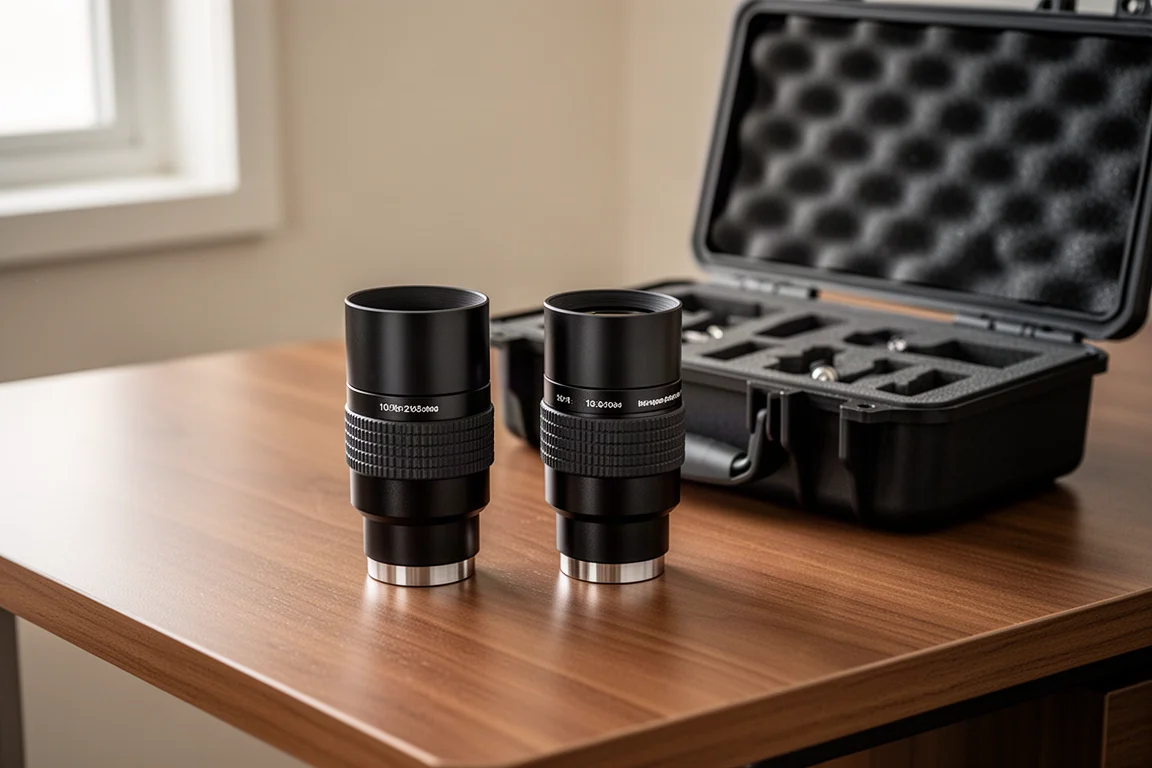
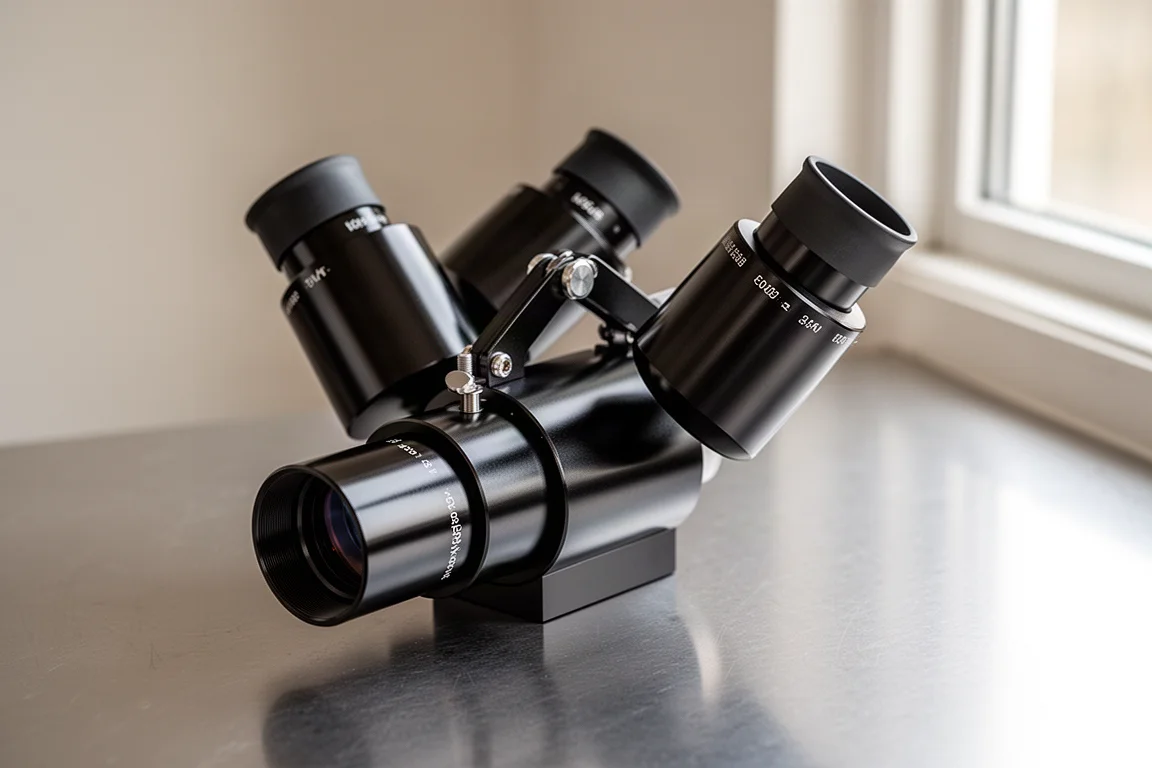
Despite a retail price of $499, the Explore Scientific parfocal binoviewer was by far the favorite of the three. The main reason: being parfocal, it eliminates the extra optical path entirely, so it works in any telescope in which a standard eyepiece can reach focus. In testing, it worked in all three telescopes with no Barlows, no adapters, and no fuss. It was also the sharpest of the three by a clear margin: the Moon was crisp across the entire disc with no visible chromatic aberration.
Two things to know before buying. First, it does not include eyepieces, so budget for a matched pair. Second, instead of the hinged barrels the others use, it has a sliding interpupillary adjustment with a stiff, viscous feel that holds its setting wherever you leave it. The premium packaging includes a very nice foam-lined case, and the parfocal design requires fairly sophisticated internal optics, which is where the money goes.
If you want the no-fuss, super-sharp solution, this is the one.
Which Binoviewer Should You Buy?
These three are a good representative spread of what is available between roughly $140 and $500, and there are more expensive options beyond that. If budget is the deciding factor and you accept some alignment quirks and mediocre Barlows, the GSkyer can work, especially in refractors and Dobsonians. The William Optics is well built and well loved by many owners, but verify compatibility with your telescope first, since it needed an additional Barlow here. If the budget allows, the Explore Scientific parfocal is the recommendation: it simply works in any telescope that accepts an eyepiece, and it delivers the sharpest, cleanest view of the three.
Conclusion
Binoviewers can transform lunar and planetary viewing into a comfortable, detail-rich two-eyed experience, but telescope compatibility is the make-or-break factor. Parfocal designs remove that uncertainty entirely. Match the purchase to your telescope and budget, and the night sky rewards you with crisp, comfortable views.
Further reading
Related Reviews
Astronomy Accessories
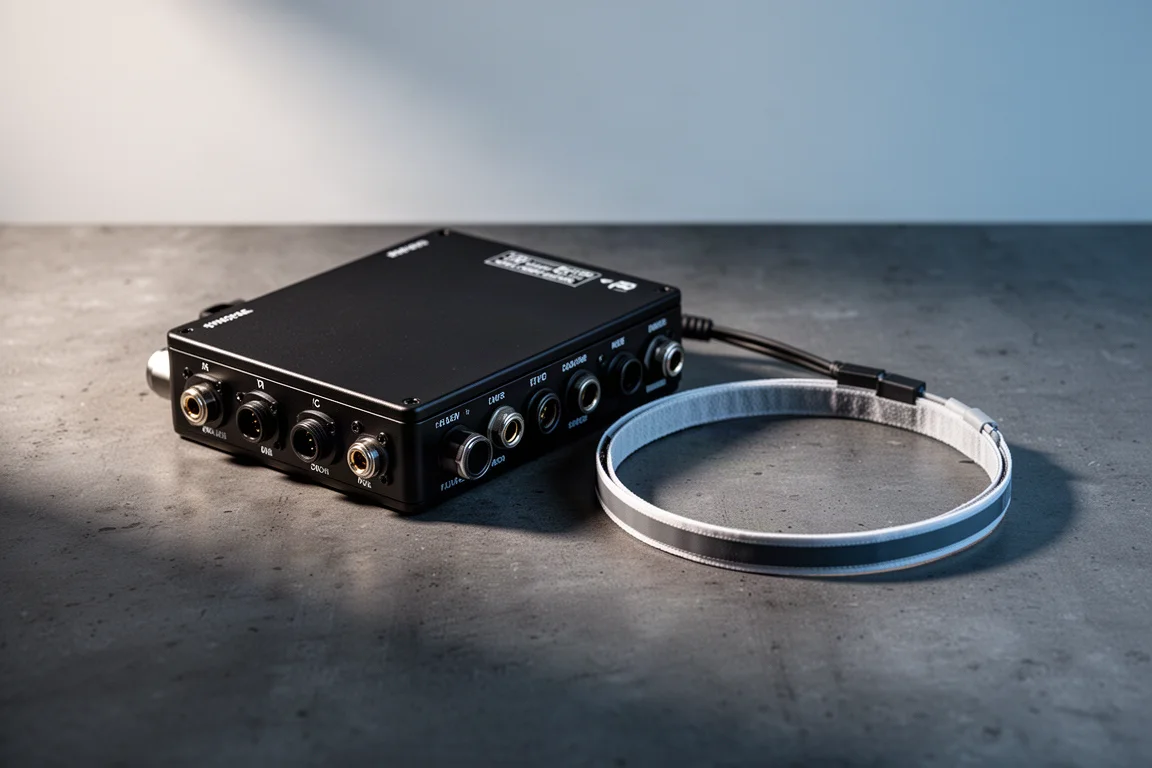
Apertura Premium Dew Strips Review: The All-Inclusive Dew-Heater Kit
A complete dew-strip solution with built-in controller, USB power, and adapters for nearly any visual or imaging telescope setup.
Astronomy Accessories
Celestron Dew Controller and 8-inch Dew Heater Ring Review: Smarter Dew Control for Schmidt-Cassegrains
A close look at Celestron's dew controller and 8-inch dew heater ring, covering setup, hand controller and software control, and where this system makes the most sense.
Astronomy Accessories
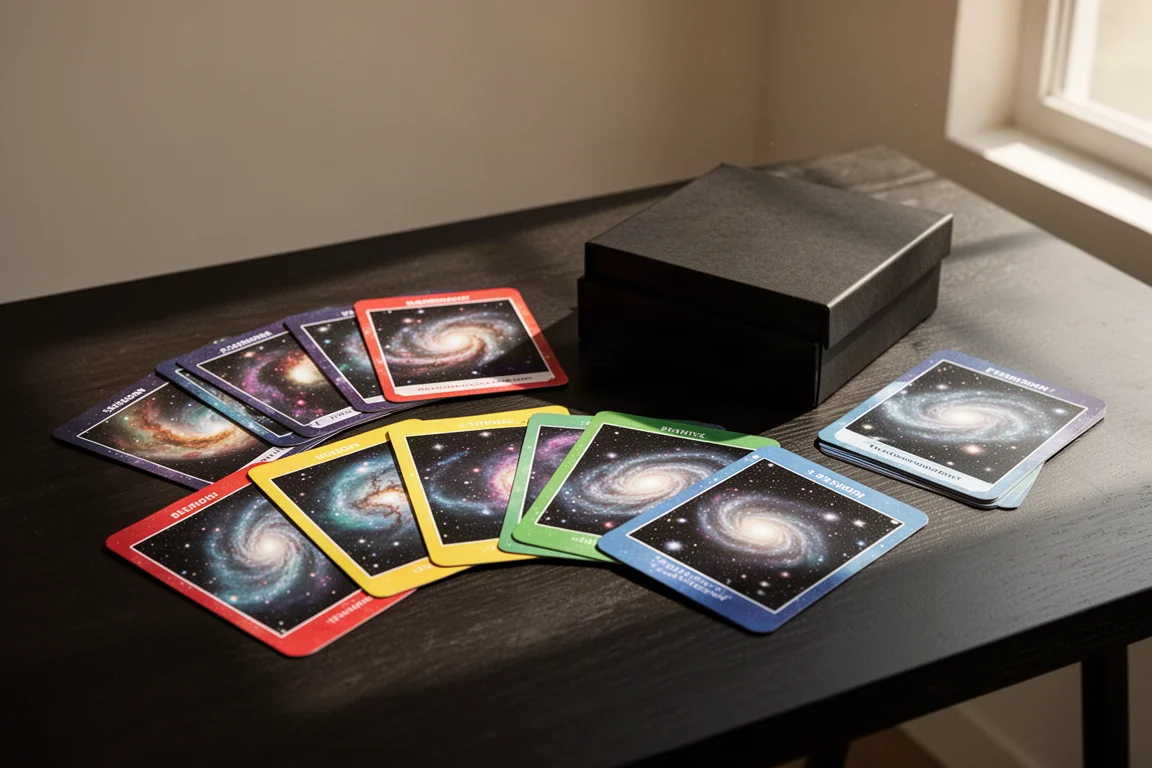
Cosmic Shards Messier Deep Sky Objects Card Set: A Handy Field Reference for Stargazers
A 110-card boxed set covering the full Messier catalog, color-coded by season and packed with practical observing info for beginners and seasoned amateur astronomers alike.