Aero Road Bikes
Best Aero Road Bikes From the 2025 Tour: Five Race Machines Compared
Five aero road bikes raced at the 2025 Tour de France Grand Départ, compared on build weight, measured tyre width and cockpit design.
Introduction
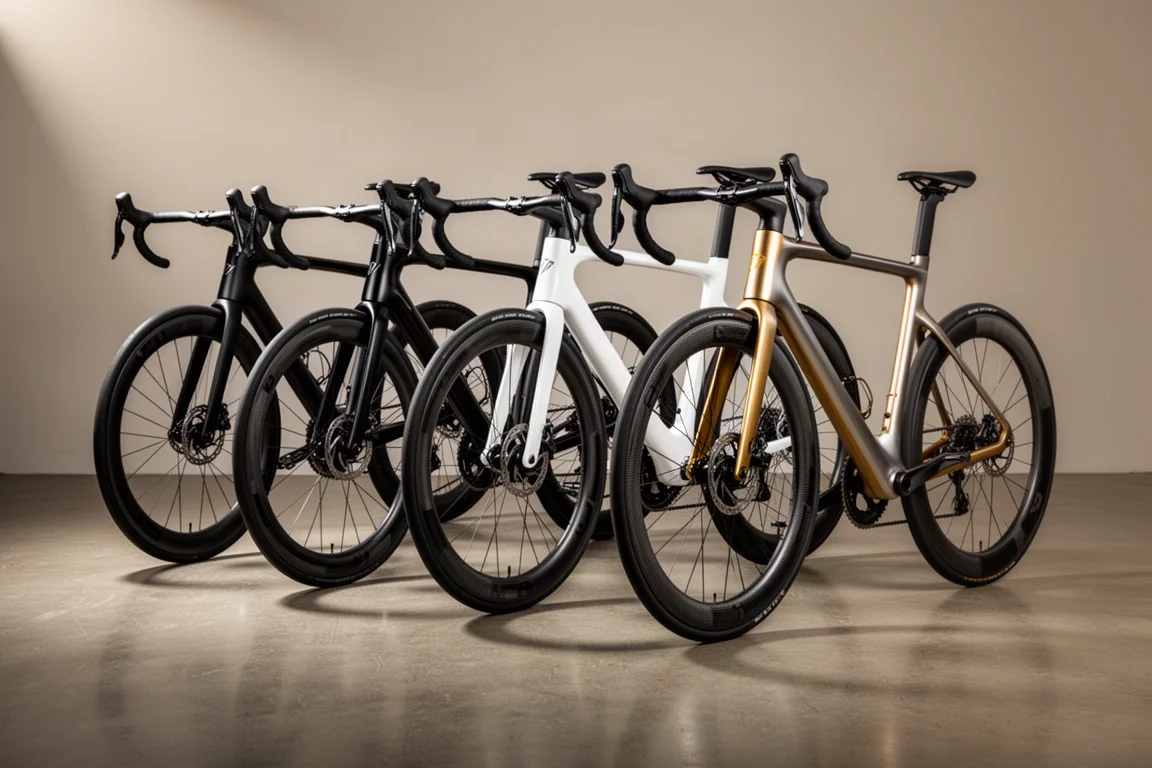
The 2025 Tour de France Grand Départ put a fresh generation of aero road bikes on display, and the machines at the start line show exactly where race bike design is heading: deeper tube profiles, narrower cockpits, wider tyres, and front ends that are more integrated than ever.
This roundup covers five aero road bikes raced in the opening week: the Colnago Y1 RS, Van Rysel RCR-F, Canyon Aeroad CFR, Orbea Orca Aero, and Specialized Tarmac SL8. Each takes a different route to the same goal, and the differences matter if you are shopping for a fast road bike of your own.
How These Race Bikes Were Assessed
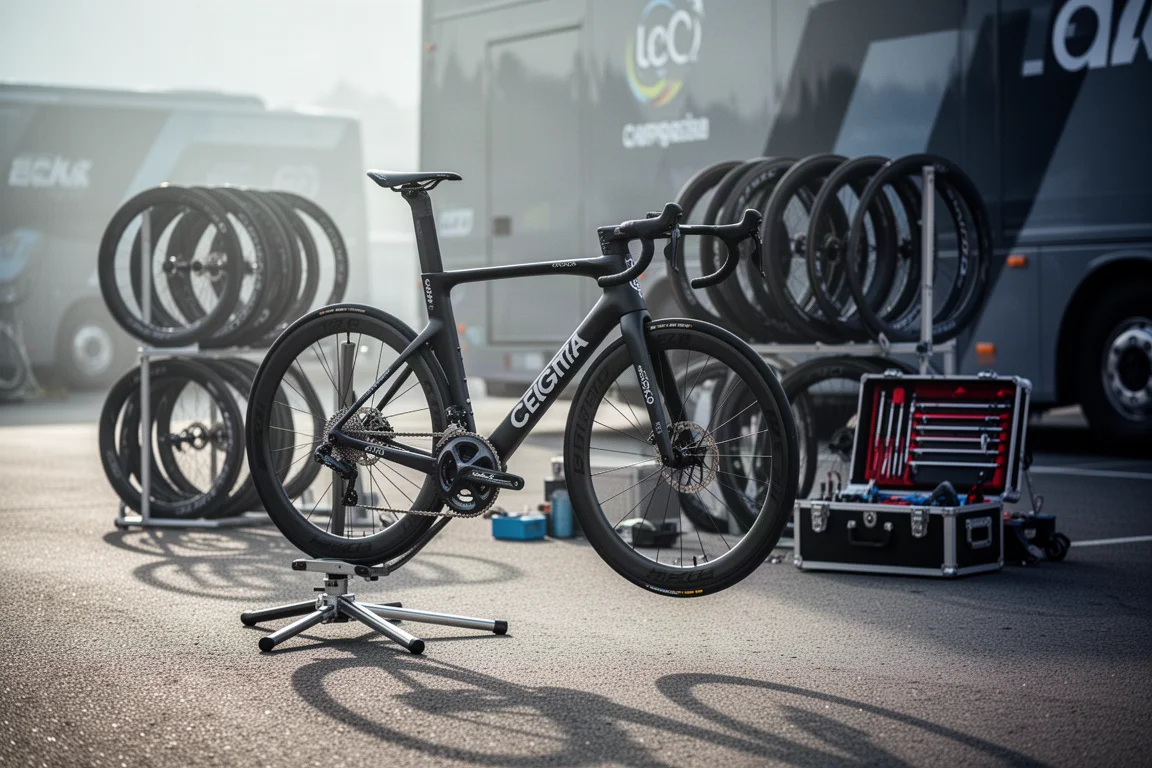
Every bike here was checked in the same way: total build weight without bottles or a computer, measured tyre width on the rim, and cockpit dimensions at the hoods and the drops. Those numbers matter because pro builds often look very different from the bikes sold in shops, and because they reveal how each brand is balancing aerodynamics against weight and adjustability.
Two regulatory changes are worth knowing about. From 1 January 2026, the UCI will limit rim height to 65 mm, which puts 68 mm wheelsets such as the one on the Van Rysel at risk. Minimum handlebar width rules also tighten, and several cockpits in this group measure narrower than the new limits.
The other useful benchmark is tyre width. Nominal sizes of 28C, 29C and 30C all measured wider on the rim than their labels suggest, and one bike in this group ran tyres measuring over 33 mm.
Colnago Y1 RS: The Aero Flagship
The Y1 RS is Colnago’s aero road bike and the machine the reigning world champion, Tadej Pogačar, uses on flat and rolling stages. At launch, Colnago claimed it was the fastest bike in the world and more aerodynamic than anything else on the market, a claim that has as much to do with the rider as the frame but still sets the tone for the design.
The front end is the most distinctive part. A bayonet fork runs up through the head tube, with a small fairing out front that tapers into a very narrow leading edge, and the fork legs are deep with straight cut-offs at the tips. A deep down tube flows into an aero bottle cage, while the seat tube hugs the rear wheel and the seat stays sweep forward to meet the horizontal top tube. It is a divisive shape, but a coherent one.
The cockpit is a one-piece G-wing design with two separated forward extensions and a slight rise from the top tube. Pogačar runs a single 5 mm spacer and a 3D printed integrated mount for a Wahoo Elemnt Bolt. The bar measures 36 cm centre to centre with a stem of roughly 130 mm.
The drivetrain is Shimano Dura-Ace Di2 R9200 with carbon-Ti chainrings, sprint shifters inside the bar, 55/40T chainrings, an 11-34T cassette and 165 mm cranks. Deep-section carbon wheels in their wider standard form carry Continental Archetype 30C tyres that measured 33.4 mm at the rear and 33.6 mm at the front, the widest tyres seen at this year’s race. A 3D printed Fizik saddle, a Bikone bottom bracket and a direct mount derailleur hanger complete the build.
Total weight was 7.57 kg without a computer or bottles, which is notable for an aero bike running tyres and wheels this substantial.
Van Rysel RCR-F: Sprint-Focused Speed
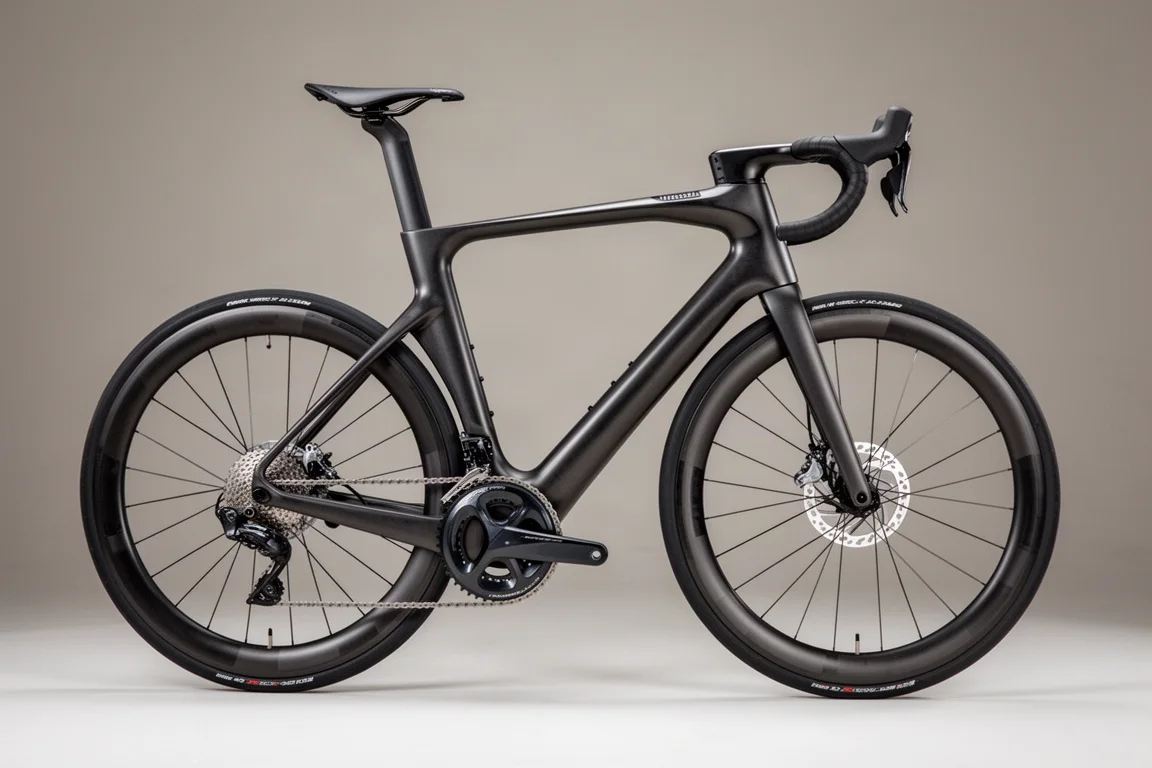
When Van Rysel arrived in the WorldTour with the RCR Pro, it brought an all-rounder in the lightweight aero mould. The RCR-F is a different animal: a full aero makeover with a deep fork, a deep head tube and deep profiles throughout the frame. The brand claims a saving of around 13 watts at 45 km/h, which is a meaningful gain at the speeds riders hold in the opening week of a Grand Tour.
The bike is aimed at sprinters and classics specialists, and Van Rysel claims 7% more front-end stiffness than the RCR Pro. The chunky, deep-section cockpit is the clearest sign of that intent. The bar measures about 35 cm centre to centre at the brake hoods, 28 cm between the hoods, and flares out to roughly 40 cm at the drops for a more stable sprinting position. The stem is a long, aggressive 140 mm.
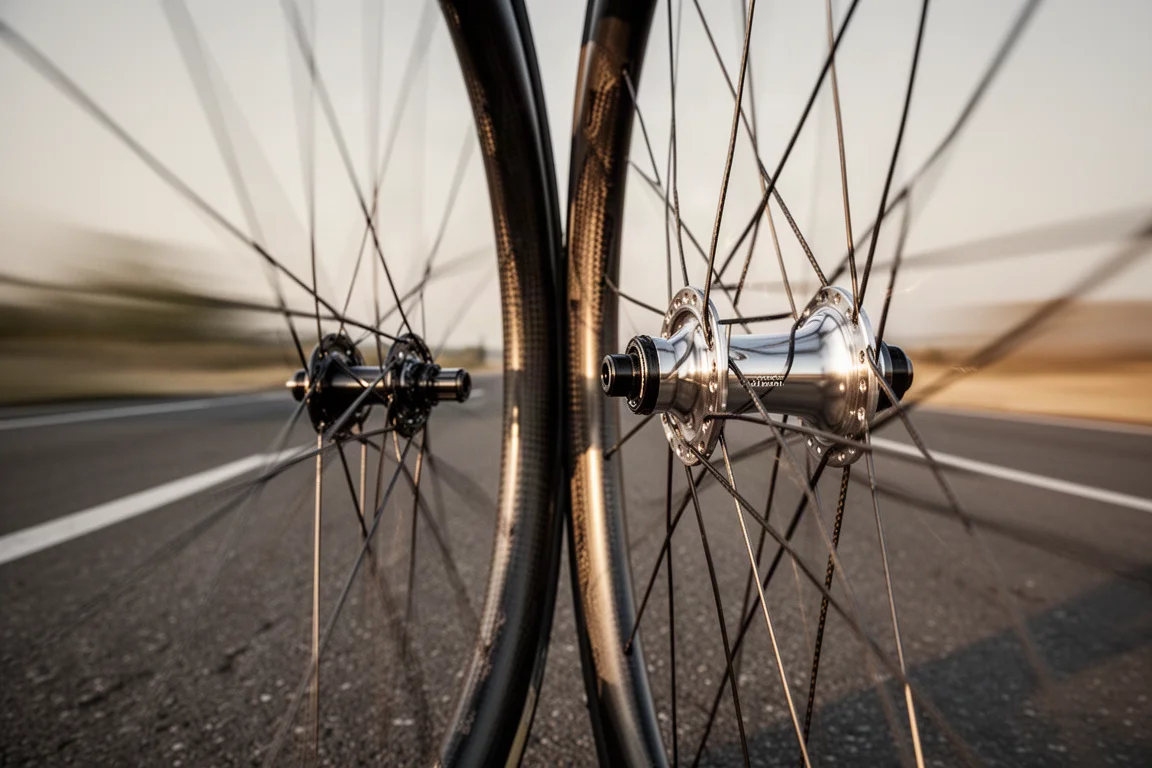
Wheels are Swiss Side Hadron 680s with 68 mm deep rims, which may fall foul of the new 65 mm UCI rim height limit from 1 January 2026. Tyres are a Continental 1111 Aero at the front and a GP5000 S TR at the rear, with time trial rubber reserved for specific stages and riders. The rear tyre measured 31 mm and the front 30 mm.
The rest of the build is Shimano Dura-Ace R9200 with a 56T chainring and an 11-34T cassette, Look Keo Blade carbon pedals, DT Swiss 180 hubs with ceramic bearings, a K-Edge chain catcher that doubles as a power meter magnet, and a 3D printed Fizik Argo saddle.
At 8.065 kg in a size large, it is the heaviest bike in this group, which is a fair trade for a machine built around raw speed.
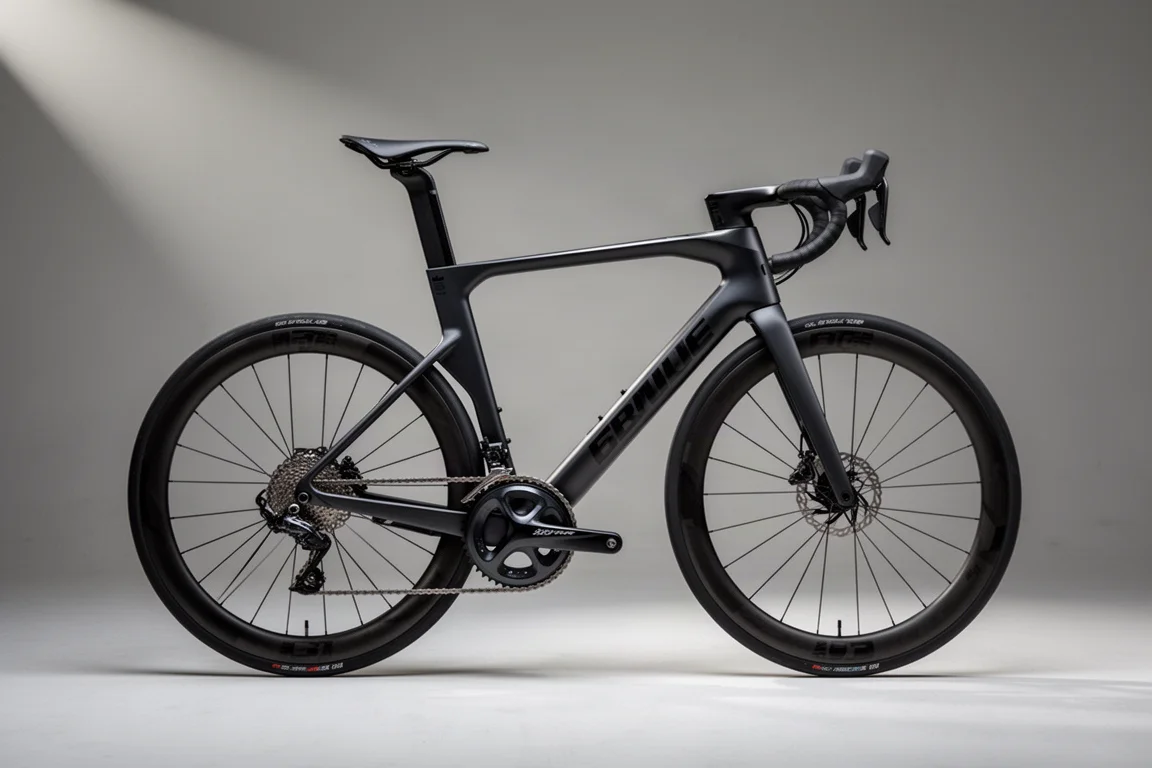
Canyon Aeroad CFR: The Customizable Race Machine
The Aeroad CFR is the bike multiple world champion Mathieu van der Poel raced, finished here in a white and sparkly gold MyCanyon paint scheme. MyCanyon is Canyon’s customisation programme, which lets buyers choose from a range of paint finishes and spec changes when ordering, with an upcharge depending on the option selected.
One detail customers cannot buy is the pro-only negative 17 degree stem. Retail Aeroads come with a stem closer to minus 8 degrees, which is a reminder that factory-team positions are rarely replicated in a shop build. Everything else on this bike is close to stock.
The drivetrain is Shimano Dura-Ace Di2 R9200 with 54/40T chainrings, an 11-30T cassette and 172.5 mm cranks, so no short cranks here. Dura-Ace C60 wheels add deeper rims and slightly thicker spokes than the C50 for more sprint rigidity. Pirelli P Zero Race RS TLR tyres in 30C are set up tubeless and measured just over 31 mm at the rear and around 31.5 mm at the front. The chain is waxed, and a white Selle Italia Flite SLR saddle, a race number holder bonded to the seat post, Elite bottle cages and a 3D printed computer mount finish it off.
The cockpit measures 40 cm centre to centre with 33 cm between the hoods and a 120 mm stem. Total weight came in at exactly 8 kg.
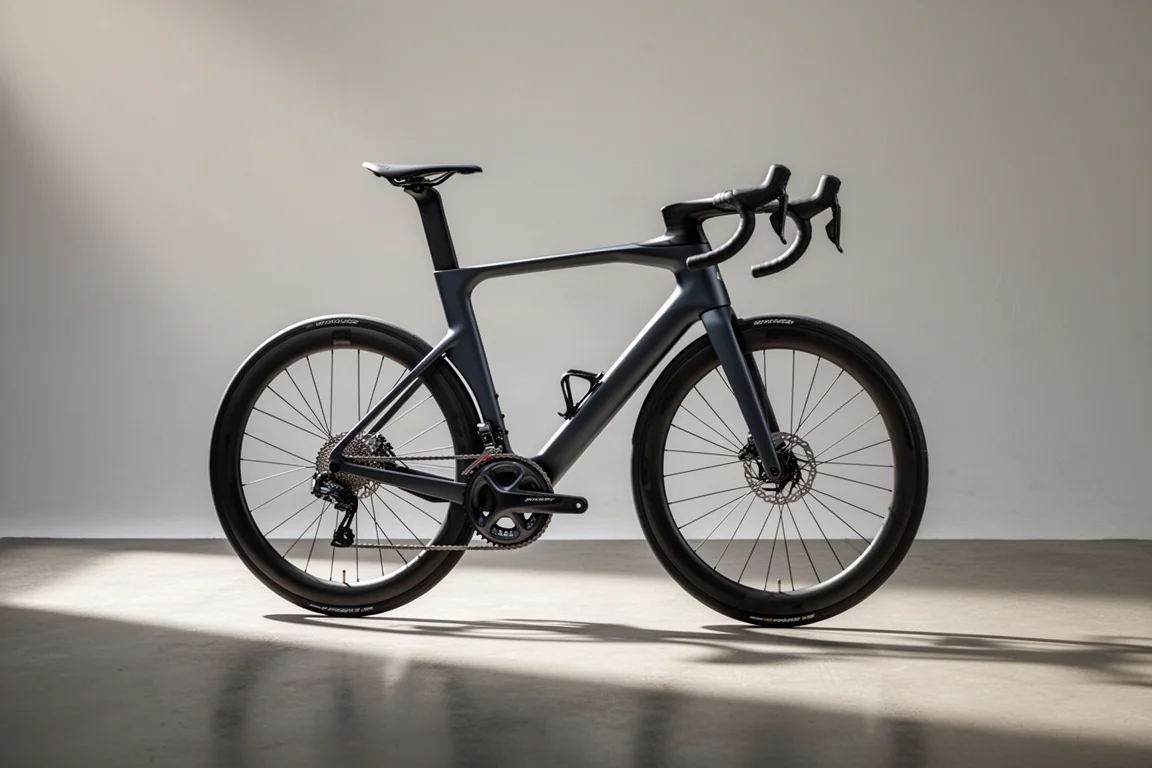
Orbea Orca Aero: Time Trial DNA
Orbea’s dedicated aero road bike sits alongside the standard Orca climbing bike in the range, and it is the machine Belgian sprinter Arnaud De Lie raced in the opening week. The tube profiles are deep and foil-shaped, and the fork is notably narrow head-on before the legs bow out towards the brake calipers and dropouts.
The design draws directly on Orbea’s Ordu time trial bike, which explains the horizontal top tube, the deep down tube that hugs the front wheel, and the deep seat stays flowing out of the seat tube. Orbea also designed an integrated bottle and storage unit for the frame, but neither is legal in UCI road races because they are considered fairings, and both are impractical for a race where riders need fresh bottles throughout a stage.
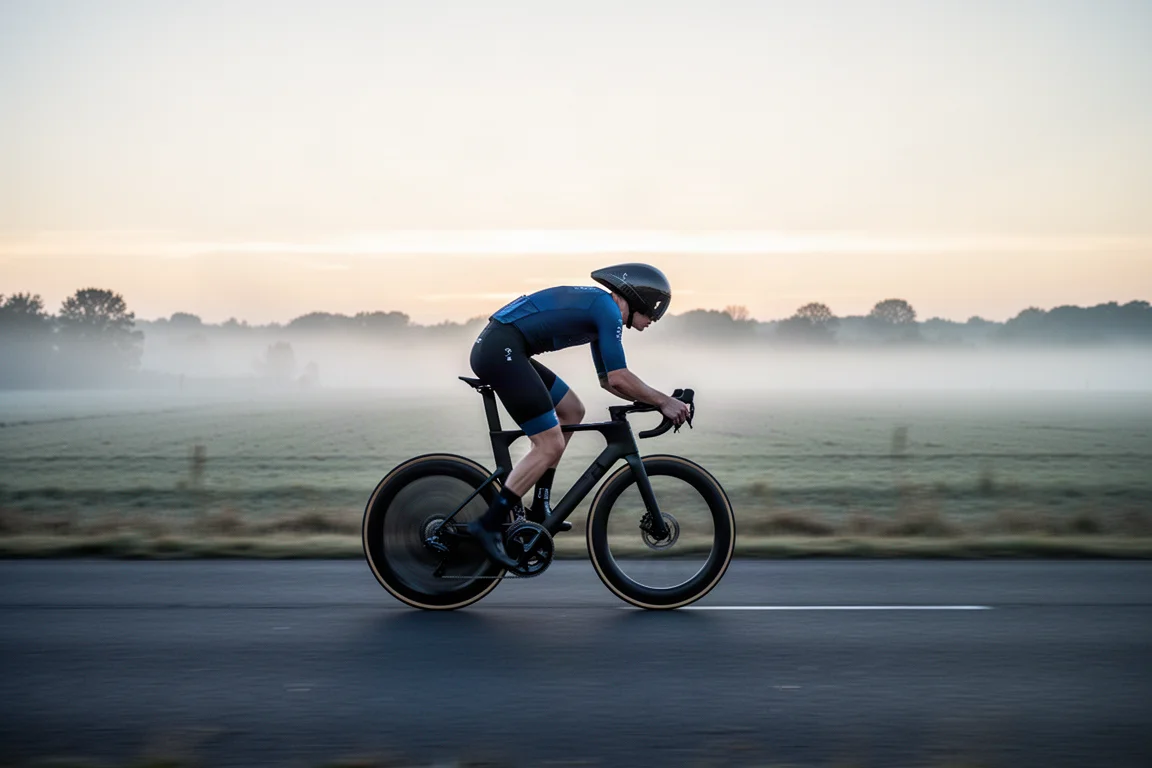
A new one-piece cockpit replaces the earlier two-piece design, saving weight and improving aerodynamics, and the tops come with a moulded grip so no bar tape is needed. It measures roughly 375 to 380 mm centre to centre at the hoods, about 31 cm between the hoods, and 41 to 42 cm at the drops, with a 12 cm stem. That 31 cm hood measurement will not meet the tighter UCI minimum width rules from the start of 2026.
The wheels are Oquo RA 57 Limited items wrapped in Vittoria Corsa Pro 29C tyres designed for wide rims, and the hubs have a titanium-look finish. Lightweight Galfer rotors save a little more weight. Shimano Dura-Ace R9200 handles shifting, but the cranks come from an FSA Powerbox Team Edition power meter with 54T chainrings and a rare 11-30T cassette. Cranks are 172.5 mm, tyres measured 28.5 mm front and rear, and the complete bike weighed 7.89 kg.
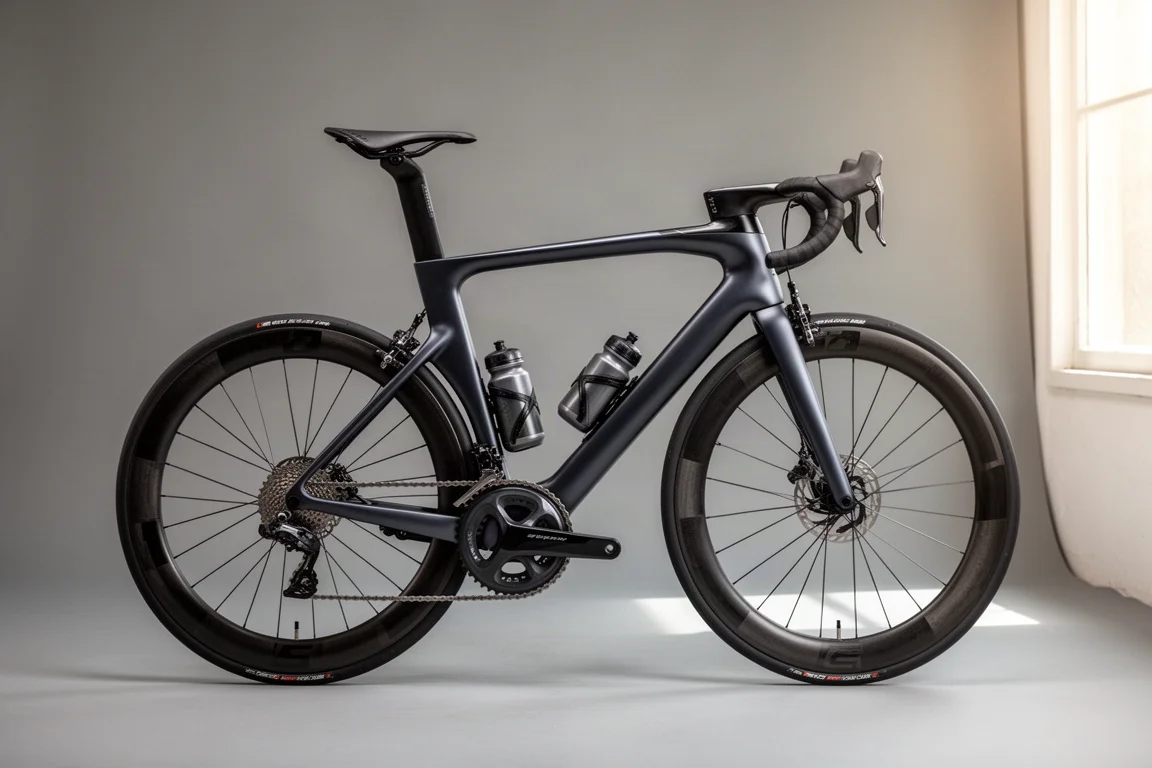
Specialized Tarmac SL8: The Lightest of the Group
The Tarmac SL8 is the platform double Olympic champion Remco Evenepoel has raced for a couple of seasons, and this gold example carries matching gold details: a gold seat post, a gold computer mount out front and a gold saddle. That saddle is new, and it is the Specialized S-Works Power Evo with Mirror, the brand’s 3D printed construction. Specialized claims around 28% less soft tissue pressure on the nose than the standard foam Power saddle, which is a meaningful difference over three weeks of racing.
The wheels are new Roval Rapide CLX III items with a 51 mm front rim and a 48 mm rear rim. Specialized’s reasoning is that the front wheel carries most of the aerodynamic benefit while the rear can be shallower to save weight. New lighter hubs and carbon spokes cut around 200 g from the previous version, bringing the set to roughly 1,300 g, which is impressive for a mid-depth wheelset.
Tyres are Specialized Turbo Cotton TLR in 30 mm, measuring just under 29.5 mm on these rims. They mark a notable shift, since this is one of the first times these teams have moved away from the older Turbo Cotton clincher. The drivetrain is Shimano Dura-Ace Di2 R9200 with carbon-Ti chainrings, their branding removed, running 56/44T with an 11-34T cassette and 165 mm cranks.
The bar measures 36 cm centre to centre with 30 cm between the hoods and a 120 mm stem. At 7.18 kg, this is comfortably the lightest build here. Evenepoel has also used a black Tarmac SL8, which may be a lighter paint option for mountain stages.
Buying Advice: Which Aero Road Bike Makes Sense
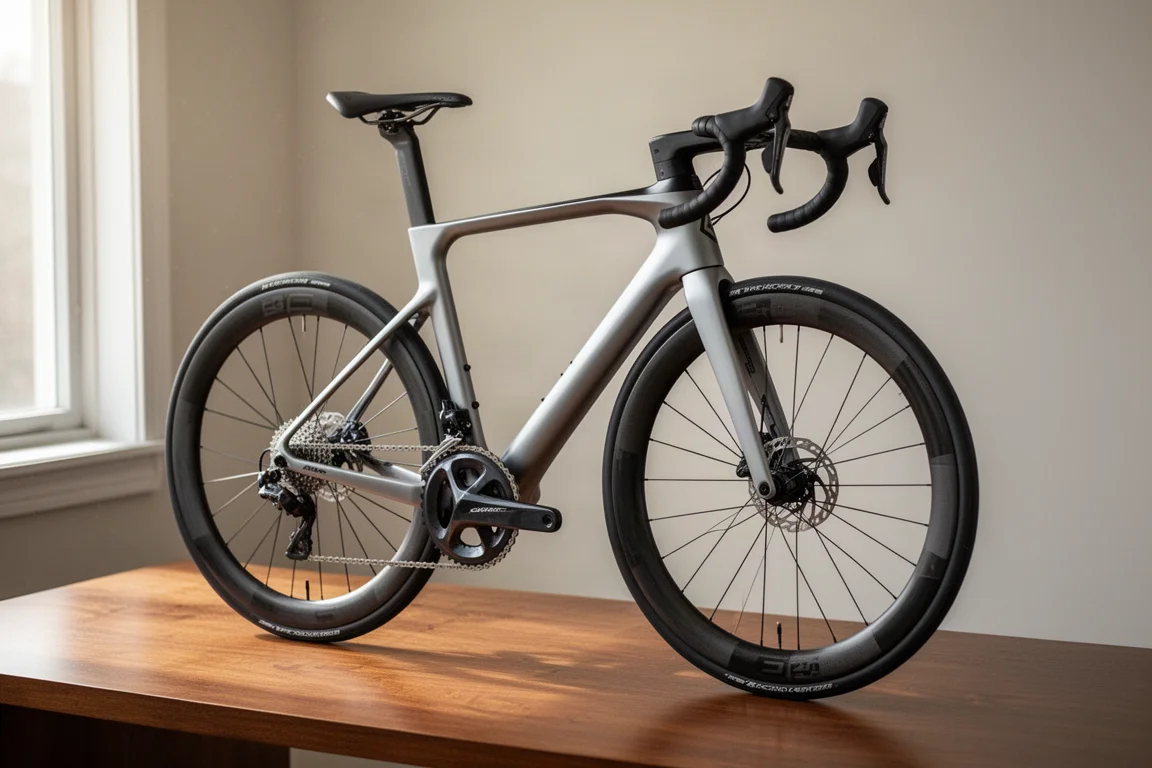
None of these builds can be bought exactly as they are raced. Team bikes run pro-only stems, custom 3D printed saddles, unreleased tyre combinations and paint schemes that may never reach customers. What transfers to a retail bike is the frame platform, the geometry and the general design philosophy.
The most practical question is what kind of speed you actually want. A bike like the RCR-F is built around straight-line pace and sprint stiffness, and it carries the weight to match. The Tarmac SL8 shows the opposite approach, keeping aero tube shapes while staying light enough for climbing. The Y1 RS sits closer to the aero end, with a deep front end and very wide rubber, and the Orca Aero brings time trial thinking to a road frame.
It is also worth checking rim depth against the new UCI limits if you race, handlebar width and whether an integrated cockpit can be adjusted to your position, and tyre clearance, since several bikes here run tyres measuring well above their nominal size. A frame that fits you well will always be faster than one that does not, regardless of what the wind tunnel says.
Conclusion
These five bikes show five different answers to the same question of how to go fast on tarmac. The Colnago Y1 RS pushes integration and aero depth furthest, the Van Rysel RCR-F chases raw sprint speed, the Canyon Aeroad CFR adds customisation to a proven platform, the Orbea Orca Aero borrows from time trialling, and the Specialized Tarmac SL8 keeps the weight down without giving up aero shapes. Match the philosophy to the riding you actually do, and any of them will feel like a serious step up.
Further reading
Related Reviews
Aero Road Bikes
Best Aero Bikes 2026: Six Picks for Speed, Value and All-Round Performance
A practical guide to the best aero road bikes for 2026, covering outright speed, stability, all-round balance and the strongest value options.
Aero Road Bikes
Best Aero Road Bikes 2025: Five Race-Proven Platforms
Five aero road bikes that shaped the category, from a team favourite with a distinctive front end to designs that blur the line between aero and all-round race machines.
Aero Road Bikes
Cervélo S5 Review: A Closer Look at the Updated Aero Road Bike
The updated Cervélo S5 brings a one-piece cockpit, revised tube shapes and a new Reserve 57/64 wheelset. Here is what changed and who the build suits.