Hiking Backpacks
Best 65L Hiking Backpacks: Osprey Rook 65, Atmos AG 65 and Decathlon MT100 70 Compared
Three 65-litre hiking backpacks at very different price points, compared on features, fit, carrying comfort and overall value.
Introduction
Most name-brand 65-litre hiking backpacks now sit at or above the $300 mark, so a well-known brand offering a full-size pack below that threshold deserves a closer look. The Osprey Rook 65 L is priced at $190, and it appears to be the least expensive 65-litre pack in the Osprey range.
For context, the Osprey Atmos AG 65 L costs $325, and the Decathlon MT100 70 L, a long-standing value benchmark, costs $120. All three carry comparable volumes, but they are built for different budgets and different kinds of trips.
This guide walks through what each pack offers, where the compromises sit, and which one makes the most sense for the way you actually hike.
Osprey Rook 65 L: What You Get at This Price
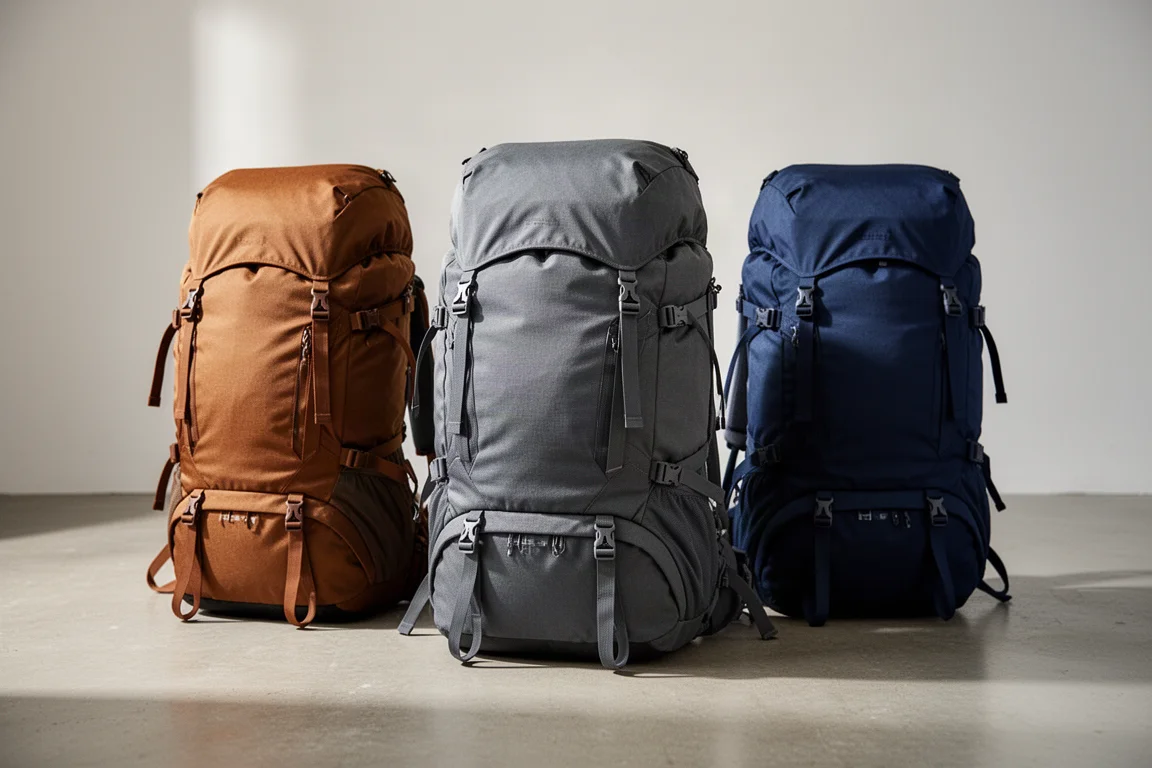
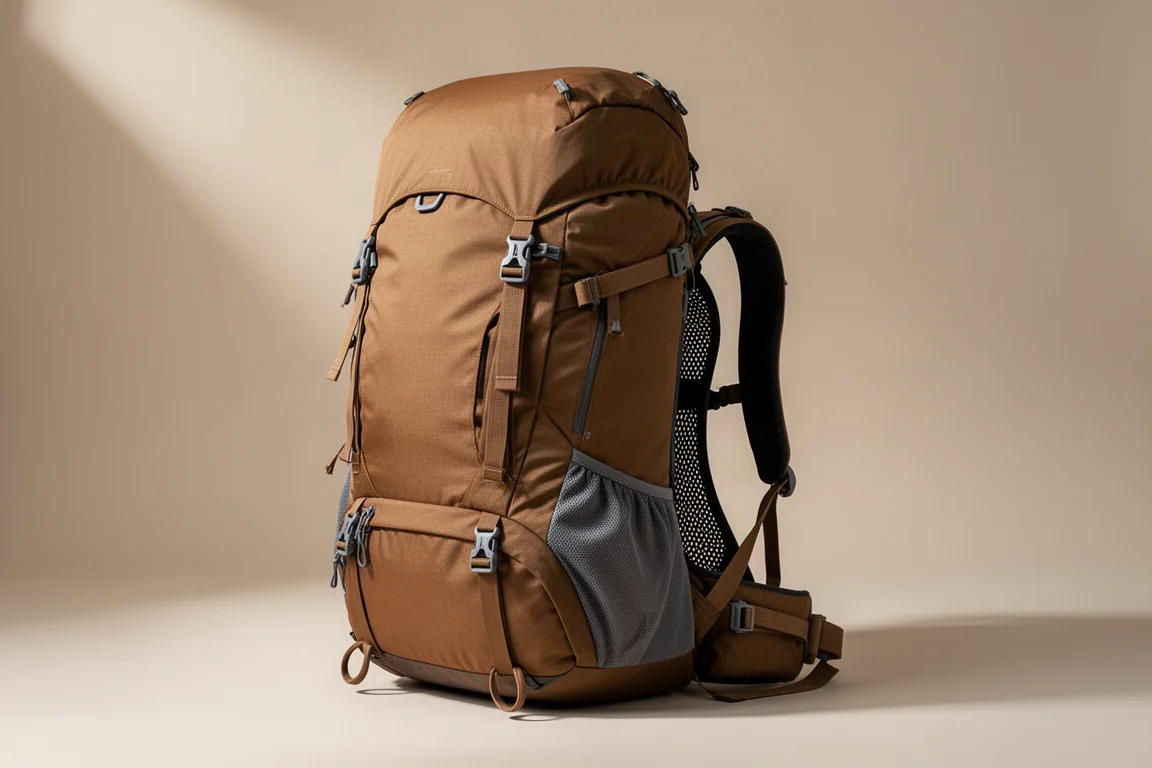
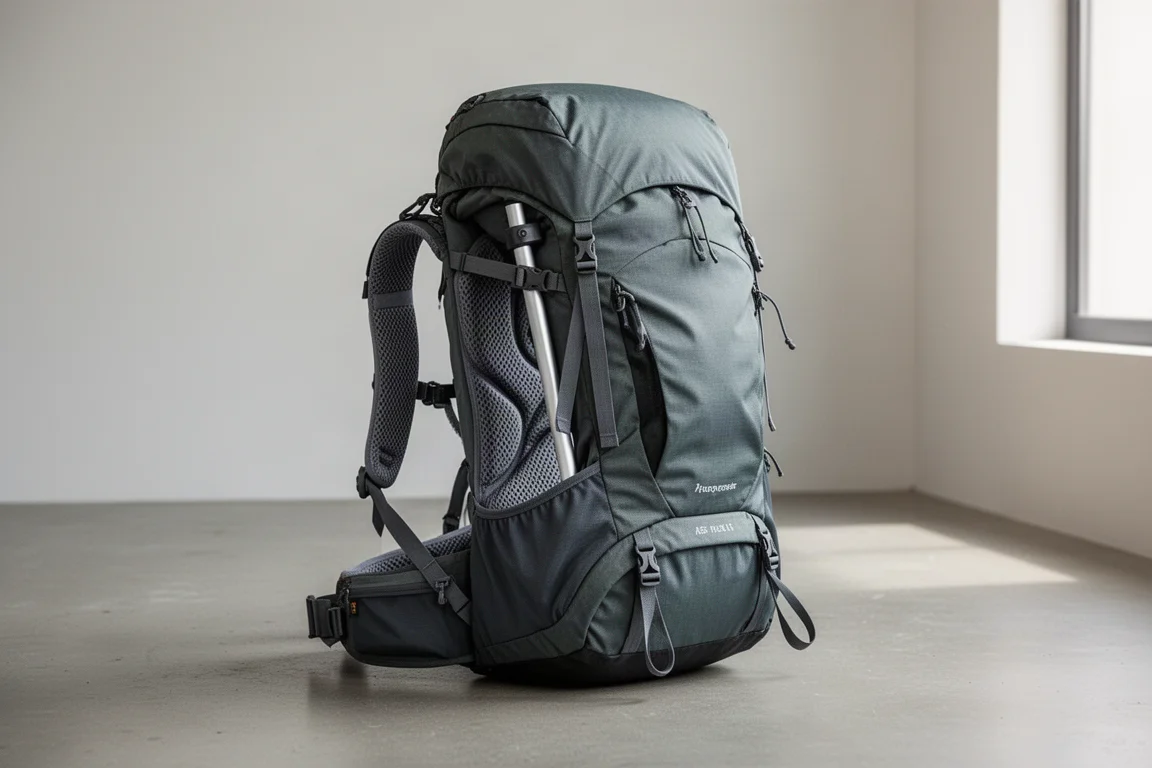
The Rook 65 L keeps its look deliberately simple. The pack is finished in a single solid coyote brown with grey hardware and no contrasting panels or accent colours, while the back panel is black. It is one of the sharpest-looking packs in the Osprey line precisely because there is so little going on.
The most noticeable omission is the front zippered pocket found on most Osprey hiking packs. Instead, the front carries four attachment loops around the lid area and two compression straps, which gives you a place to rig shock cord or lash extra gear.
Up top, the lid is secured with two adjustable buckles and holds a good-sized zippered pocket inside with a clip for keys. The lid is fixed rather than floating, and it has no interior pockets of its own.
Below the lid, the sleeping bag compartment is generous and includes a divider that can be detached if you would rather run the pack as one open space. Two additional attachment loops sit beside the compartment. At the very bottom, a pocket marked with a raindrop icon holds the included rain cover, which comes in green.
Each side of the pack has two compression straps that cannot be unbuckled, plus very large stretchy mesh pockets that swallow a 48 oz bottle with room to spare, and would likely take two.
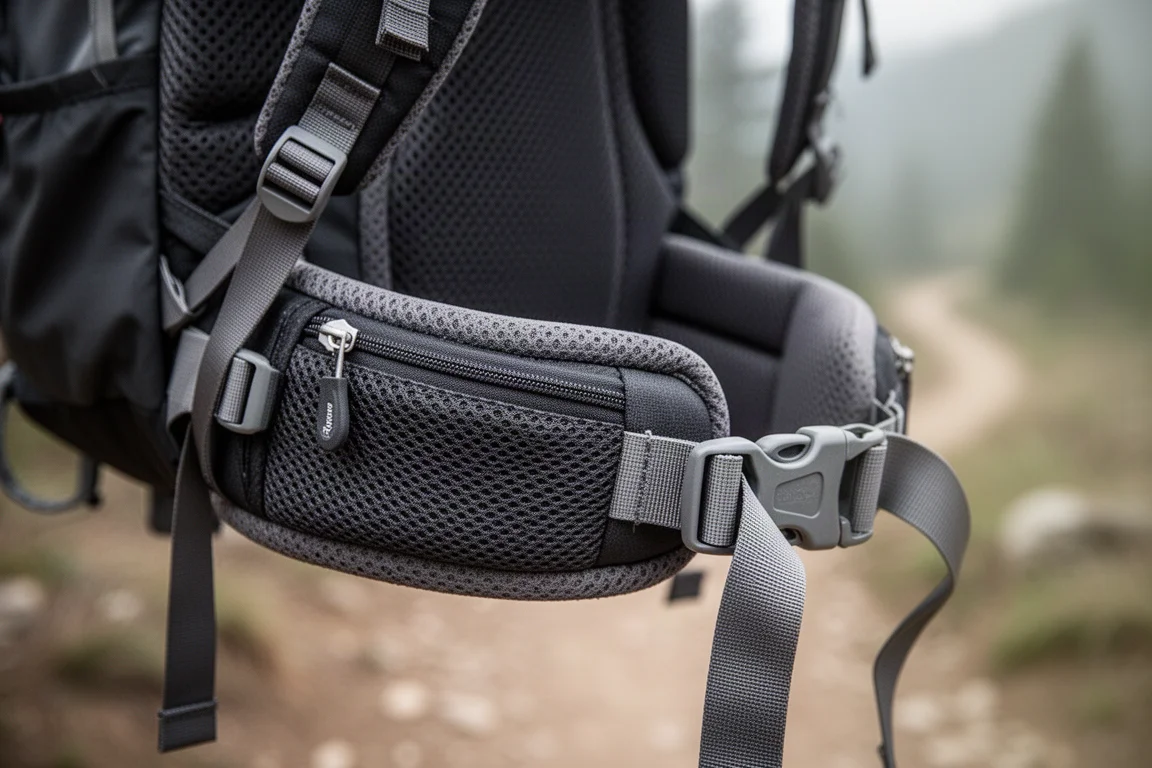
The carry system is where the Rook does its most interesting work. The back panel uses Osprey’s AirSpeed mesh suspension, built over two aluminium stays and a plastic frame sheet, which gives the pack its rigidity and moves a lot of air across your back. The harness uses 3D mesh, the sternum strap slides on rails and includes an integrated emergency whistle, and load lifters sit at the top of the shoulders.
Torso length is set with Osprey’s ladder lock system: four adjustment positions give four inches of total range, one inch per rung, which is enough to fit most torso lengths. The waist belt uses the same 3D mesh, is fully adjustable, and has a zippered pocket with its own pull on each half.
Inside, a drawstring closure seals the main compartment, and there is a hydration sleeve with a clip plus a port for the hose. Otherwise the interior is one large space with no smaller organisation pockets, and a compression strap runs over the top of the load.
Carrying the Rook 65 L: Comfort, Ventilation, and Open Questions
At 3.7 lb, the Rook 65 L is remarkably light for a 65-litre pack with a full frame and suspension system, and that figure is one of the strongest arguments in its favour. The pack measures 29.5 inches tall and 14.9 inches wide, and it is built from 600D polyester in the body and the base with a 210D nylon lining, all treated with a DWR finish for water resistance.
Ventilation is a genuine strength. The mesh back panel keeps the pack off your back and manages moisture well, though the harness itself will still build up sweat on long, hard climbs, which is normal for any padded harness.
The trade-offs show up in the padding. The harness and the waist belt cushioning are noticeably thinner than those on the Atmos AG, and that difference is likely to show once loads get heavy. Thinner padding usually means less comfort at higher weights, so the Rook’s comfortable range is probably narrower than its premium sibling’s.
There is also one design detail worth knowing before you buy. When the load lifters are pulled tight to bring a heavy load close to your back, the top of the frame can contact the back of your head when you look up. Loosening the lifters pushes the frame away and clears the problem, but it also moves weight further from your back.
Osprey does not publish a stated load limit for the Rook 65 L, so the pack’s designed carrying range is not documented. That is worth keeping in mind if you plan to load it heavily, since the padding suggests it will be happiest with moderate loads rather than maximum ones.
Osprey Atmos AG 65 L: The Premium Alternative
The Atmos AG 65 L is the reference point for what Osprey can do at the top of the range, and it costs $325. It is an excellent pack, but the price is a serious consideration when the Rook offers the same 65-litre capacity for $190.
The difference you feel on the trail is the padding. The Atmos AG uses thicker foam in the harness and a thicker cushion in the waist belt, and that extra material translates into better weight transfer and more comfort once the pack is heavy.
If your trips involve long days with substantial loads, that additional cushioning is the main reason to spend the extra money. If your loads stay moderate, the gap narrows considerably and the Rook becomes the more sensible purchase.
Both packs share Osprey’s attention to build quality, adjustable torso fit and ventilation-first design, so the decision comes down to how much weight you plan to carry rather than which pack is better made.
Decathlon MT100 70 L: The Budget Benchmark
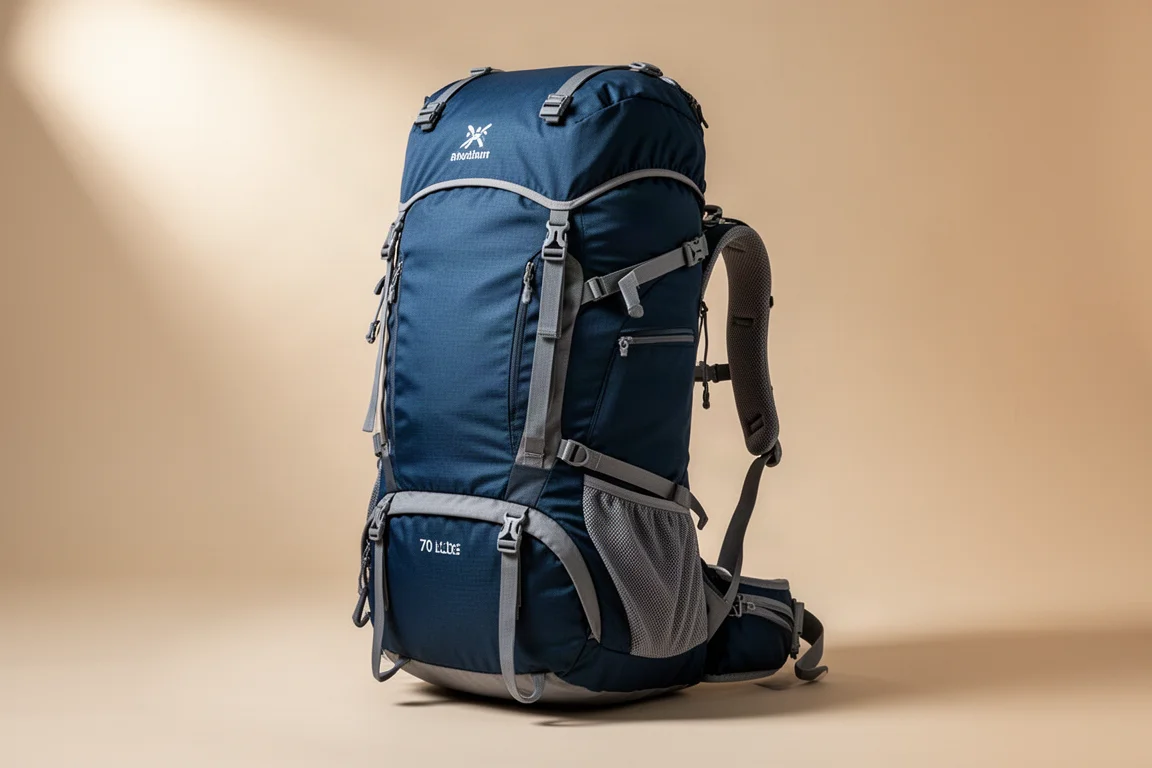
The Decathlon MT100 70 L is the pack that sets the value benchmark in this category. At $120 it undercuts both Osprey options by a wide margin, and it does so without feeling like a compromise in the ways that matter most on the trail.
Its standout feature is a fully adjustable torso system that can be adjusted while the pack is on your back. You do not need to take the pack off, loosen anything or fiddle with the frame: put it on, make the adjustment and keep walking.
The pack is large at 70 litres, comfortable and highly adjustable, and it carries far better than its price suggests. It is a strong option for anyone who wants maximum capacity and fit flexibility for the least money.
How to Compare 65L Backpacks Before You Buy
Price is the clearest dividing line. The Decathlon MT100 70 L sits at $120, the Osprey Rook 65 L at $190, and the Osprey Atmos AG 65 L at $325. That spread covers three genuinely different propositions rather than three versions of the same pack.
Weight and cushioning trade off against each other. The Rook keeps its weight to 3.7 lb by simplifying pockets and thinning the padding, while the Atmos AG spends more material on comfort under load. The Decathlon leans on adjustability instead, letting you tune the fit while wearing it.
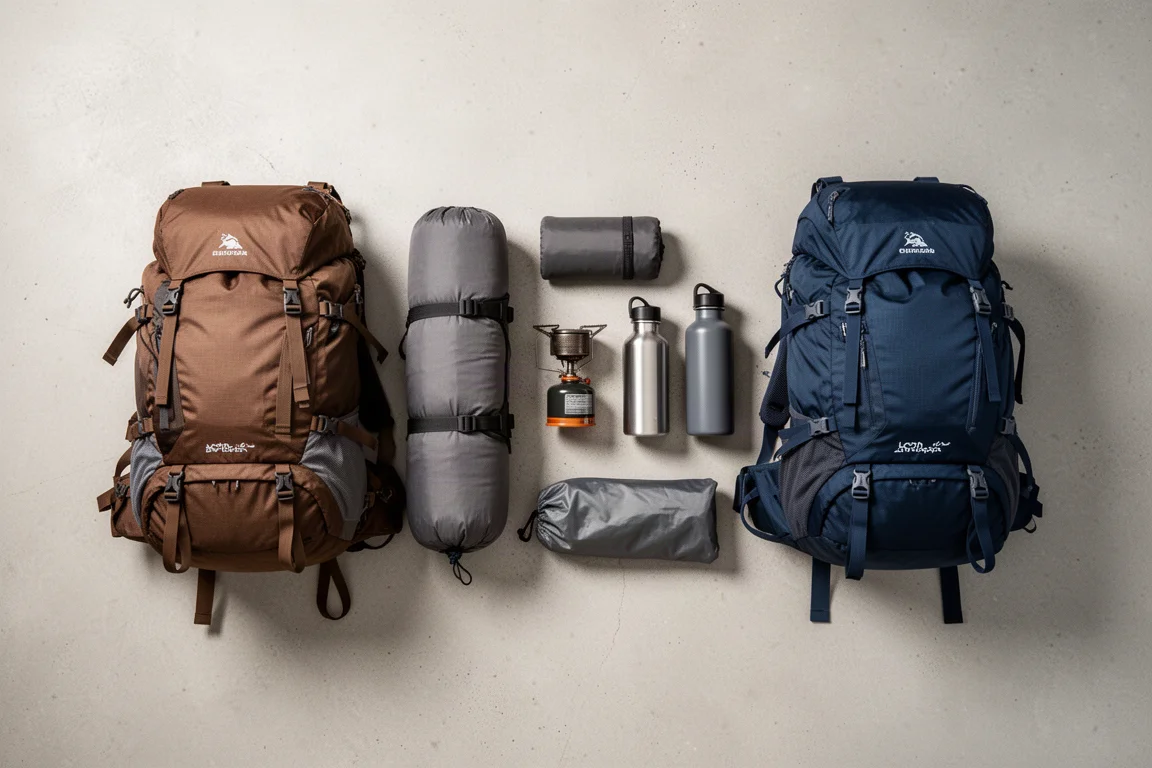
Feature layouts also differ in ways you notice daily. The Rook has no front zippered pocket but plenty of attachment loops and compression straps. The MT100’s on-the-fly torso adjustment is a real convenience if you share the pack or want to fine-tune fit mid-hike. The Atmos AG concentrates its advantages in the suspension and padding.
Think about the loads you actually carry, how often you get out, and how much you value pocket organisation versus low weight. Those answers usually point to one pack clearly.
Sizing, Colors, and Load Planning Notes
The Rook 65 L comes in three sizes: 50 litres, 65 litres and a 65-litre extended version built for larger frames. It is available in coyote brown, blue and grey, and there is a men’s version and a women’s version.
Its dimensions are 29.5 inches tall by 14.9 inches wide, and the torso adjustment gives four inches of range across four positions. If your torso length falls outside that window, the fit will not be ideal regardless of how good the rest of the pack is.
Fit matters more than features here. The MT100’s adjustable torso system is the most flexible of the three because it can be changed while wearing the pack, while the Rook’s ladder lock system needs a quick stop and a re-thread.
When planning loads, treat the Rook as a moderate-load pack. The absence of a published load limit means you will need to judge the comfortable ceiling yourself, and the thinner padding suggests it will sit lower than the Atmos AG’s. The Atmos AG is the safer choice if you regularly carry heavy loads, and the MT100 is the value pick if capacity and adjustability matter most.
Buying Advice: Which Pack Suits Your Trip
Choose the Decathlon MT100 70 L if price is the priority. At $120 it delivers 70 litres, a comfortable carry and the most flexible torso adjustment of the three, and it is a genuine bargain rather than a stopgap.
Choose the Osprey Rook 65 L if you want Osprey construction and design at the lowest price in the 65-litre range. At $190 it is light, well ventilated and easy to live with, and it makes the most sense for moderate loads where the thinner padding is not a limitation.
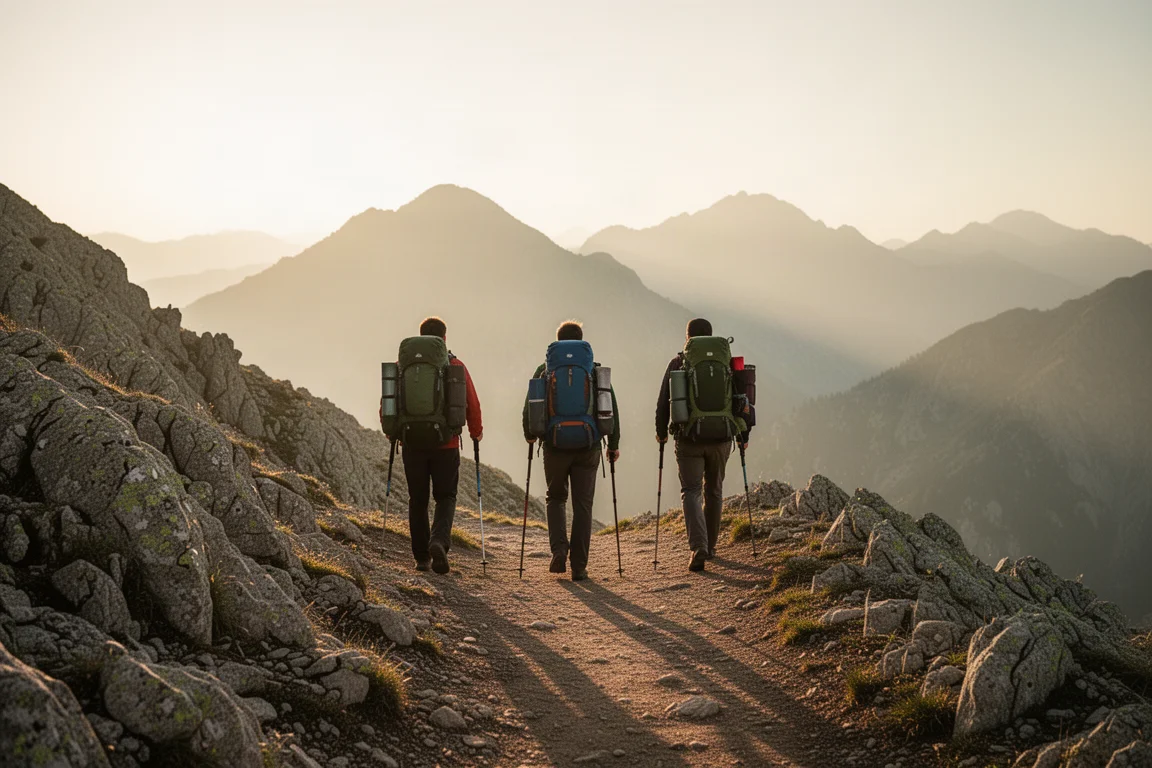
Choose the Osprey Atmos AG 65 L if you regularly carry heavier loads and want the thicker harness and waist belt padding that come with the $325 price. It is the pack to buy when comfort under weight matters more than saving money.
Whichever you pick, check the torso fit range first, then match the pack to the loads you carry most often. That single decision matters more than any feature list.
Conclusion
The Osprey Rook 65 L is a genuinely appealing pack at $190, particularly for anyone who wants Osprey build quality without paying premium prices. It is light, well ventilated and well equipped with attachment points, and its main compromises are thinner padding and the absence of a front pocket.
The Atmos AG 65 L remains the stronger choice for heavy loads at $325, and the Decathlon MT100 70 L remains the value benchmark at $120 with its on-the-fly torso adjustment. Match the pack to your typical load and your budget, and any of the three can serve you well.
Further reading
Related Reviews
Hiking Backpacks
Decathlon MT 900 70+10 Backpack Review: Big Capacity, Heavy Weight, High Price
A feature-dense 80-liter hiking backpack with excellent build quality, ten pockets, and dual loading, held back by a six-pound weight and a $210 price.
Hiking Backpacks
Martingtop 65L MOLLE Hiking Backpack Review: Capacity and Value, Undone by Hardware
A 65-liter tactical-style internal frame pack with MOLLE webbing, an adjustable torso, and a rain cover, held back by slipping hardware and a flexible frame.
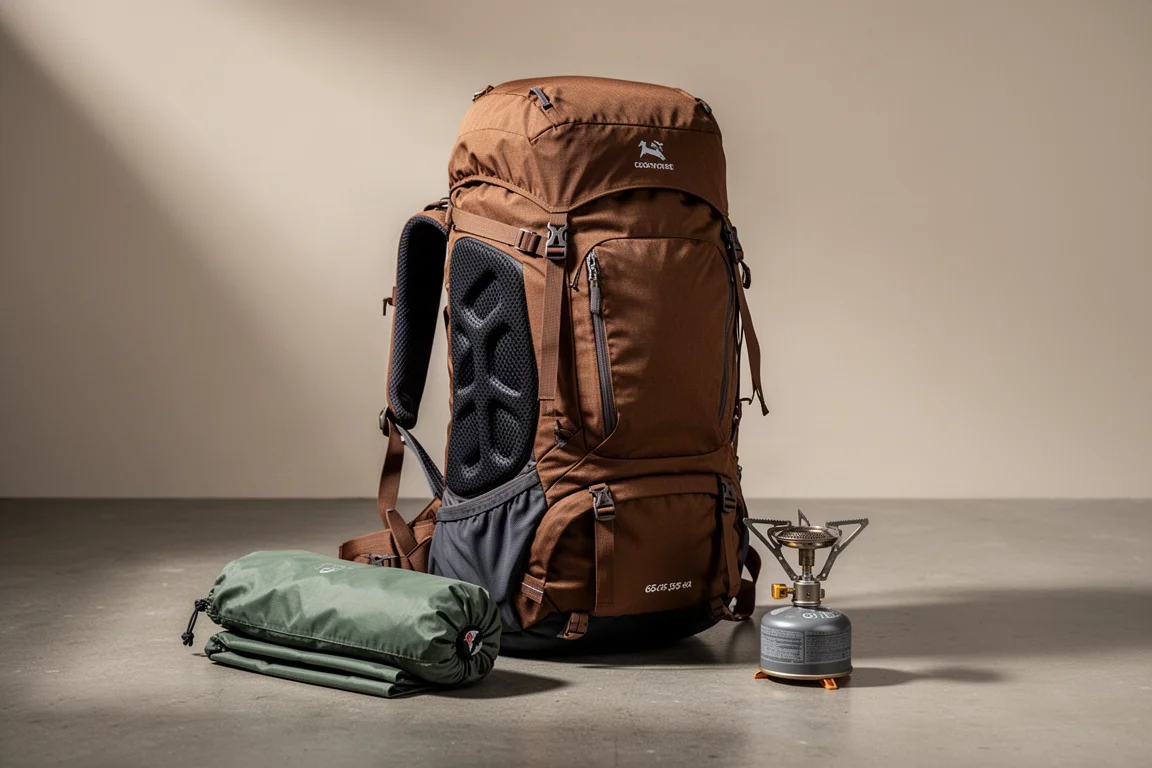
Hiking Backpacks
Osprey Rook 65L First Look: Osprey's Most Affordable 65L Backpack
A detailed first look at the Osprey Rook 65L, the least expensive 65-litre pack Osprey makes at $190, covering its suspension, storage layout, weight, materials, and the trade-offs to weigh before buying.