3D Printing
Best 3D Printers for the Shop: Four Machines Worth Your Money
A practical breakdown of four enclosed and capable 3D printers for shop use, with honest trade-offs on price, multi-material printing, and upgrade paths.
Introduction
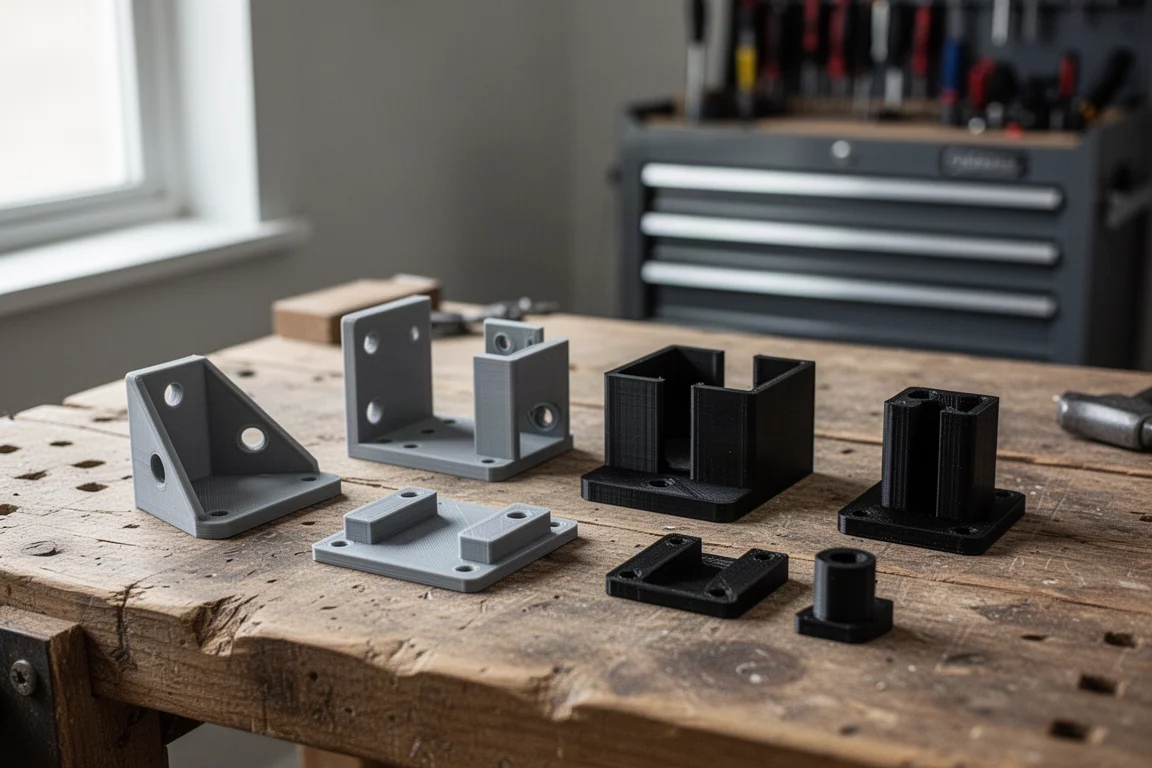
If you run a shop, a 3D printer stops being a hobby toy and starts being a tool. Brackets, jigs, risers for toolboxes, ATV fairings, replacement parts for the car: this is the kind of work most tool-minded people actually want from a printer, not fidget spinners and flexi dragons.
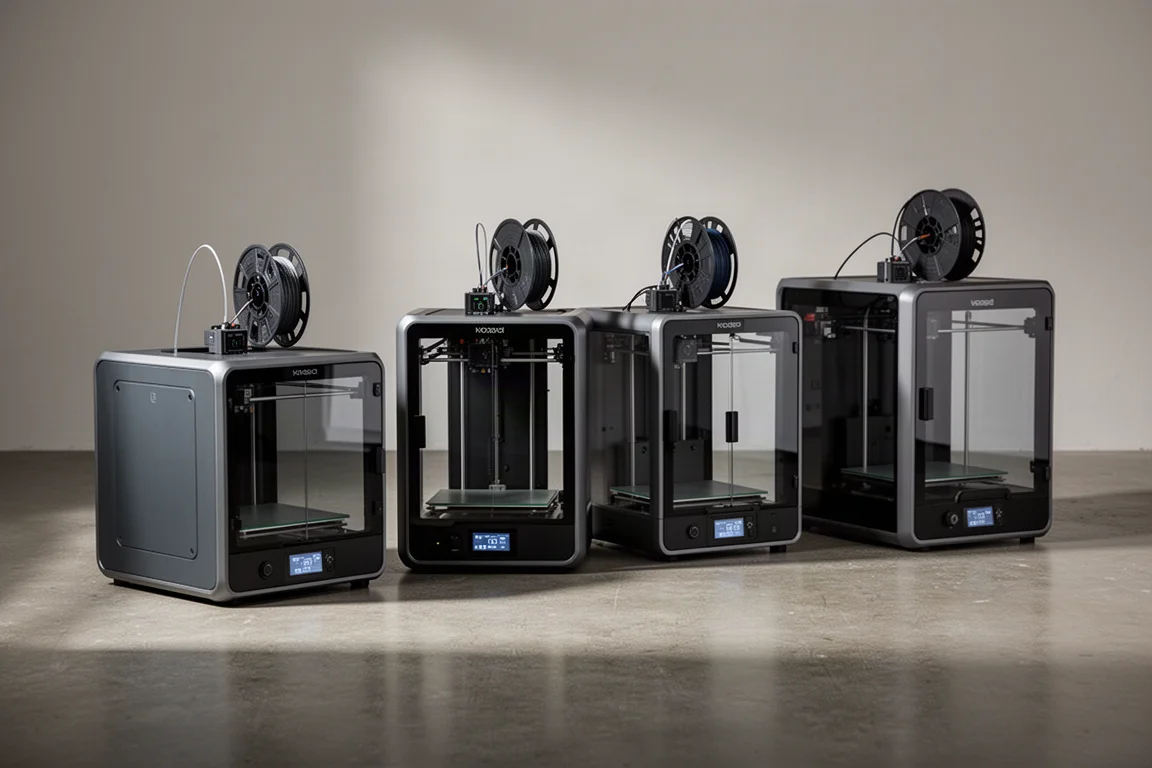
The problem is the market is crowded. This guide narrows it down to four machines that make sense in a shoplike environment, from a budget workhorse to a fully stacked multi-material machine.
What Matters in a Shop Printer
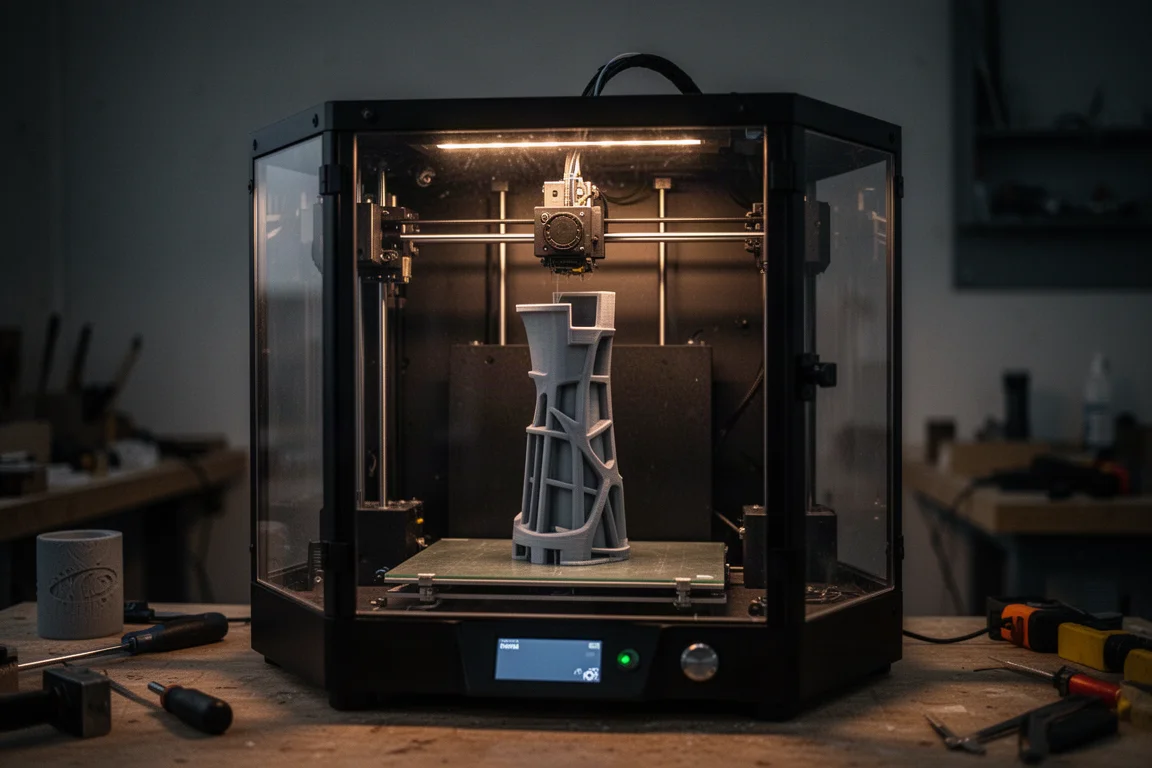
The first thing to understand is that an open-frame printer and a shop do not mix well. If a big garage door opens on a 14-degree winter day and a gust hits your print, the part cures unevenly line by line, leaving visible layer defects and real weakness in the finished part. That is why every machine worth considering here has a fully enclosed build chamber.
The second thing is reliability. Most people do not want to spend time working on their printer. They want to spend time working with their prints. A machine that just works, with a controlled environment and app control from your phone, is worth more in a shop than a cheap box that needs constant tinkering.
A note on the ecosystem: one brand, Bambu Lab, takes a curated, Apple-style approach to the consumer experience rather than throwing everything at you and letting you sort it out. Some people online call that anti-consumer. For anyone just getting started, it is genuinely the easier path, and the company’s machines dominated this list for a reason: they simply work.
Bambu Lab P2S: The Goldilocks Pick
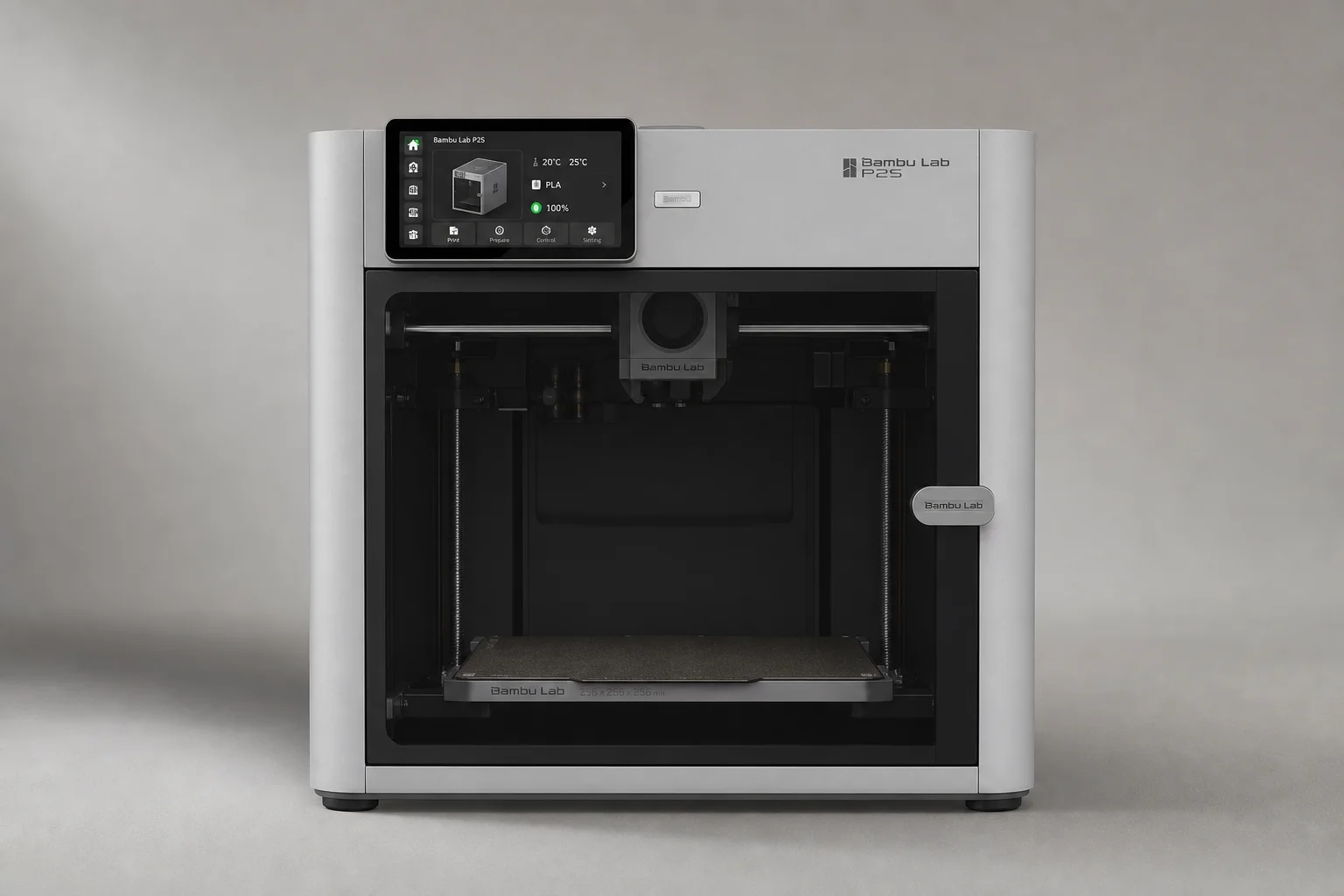
For most shop users, the Bambu Lab P2S is the middle-of-the-road, future-proof choice. It is the successor to the well-regarded X1 Carbon, which handled engineering-grade materials and all the bells and whistles in a moderate-sized box before being discontinued.
The P2S ships with the improved AMS 2 Pro multi-filament system, a better chamber environment with smarter fan and temperature control that holds heat for some plastics and actively cools for others like PLA, AI failure detection, a large color touchscreen, and a standard mid-size 256mm build plate. It handles carbon fiber and similar abrasive materials out of the box, and it has been running carbon fiber filament without issue.
Honest caveat: early test print quality was not quite on par with the older X1 Carbon, most likely because the firmware is still being dialed in on a brand-new machine. The good news is that most of this is fixable with firmware updates rather than physical repairs.
At $800 with the AMS 2 Pro combo, it costs $150 more than a P1S combo, and it is the machine to pick if you want headroom for the next two to five years. It is shipping now.
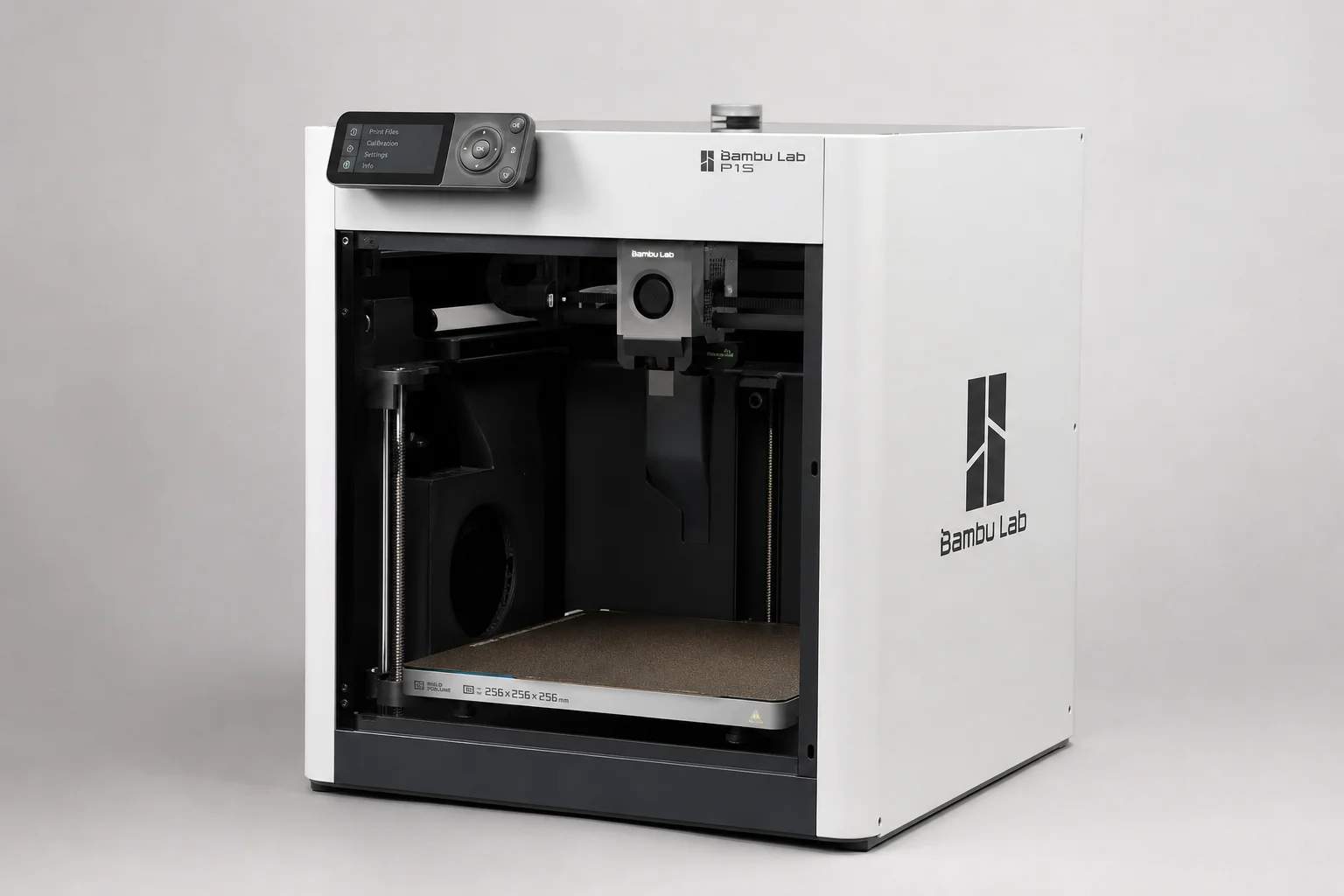
Bambu Lab P1S: The Budget Workhorse
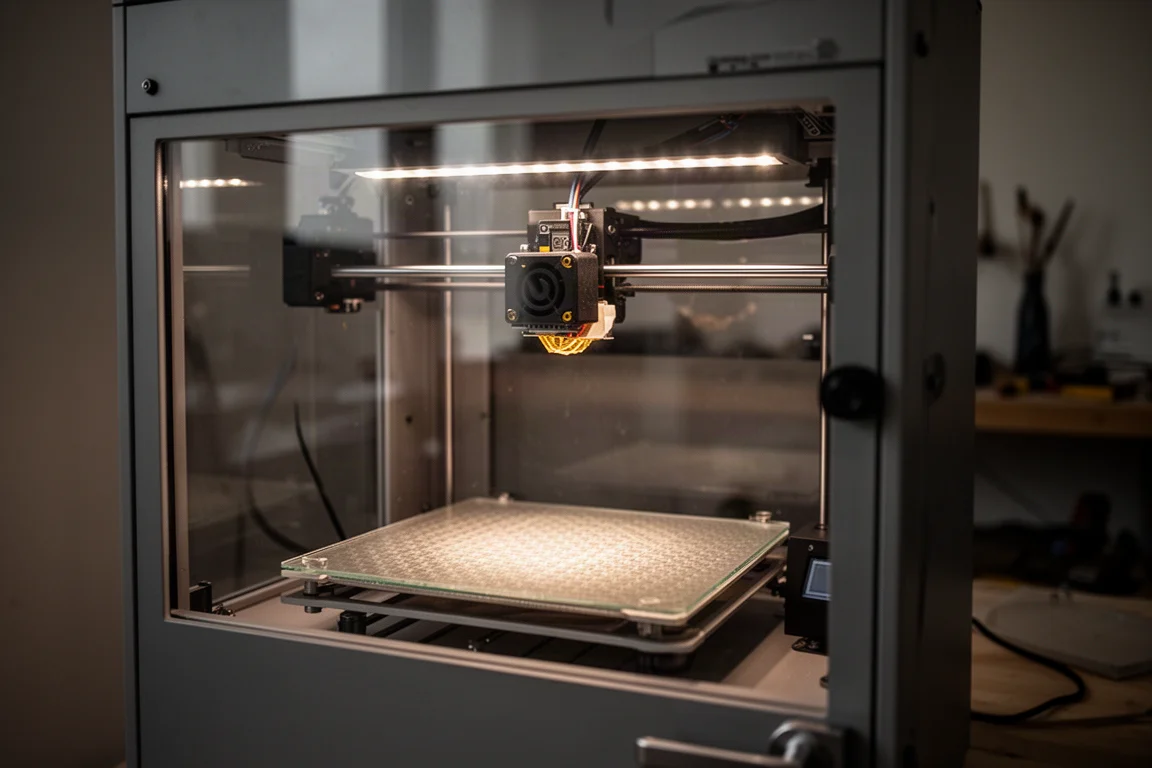
If you are on a tight budget, the P1S is the deal to beat. At $400 without an AMS, you get a fully enclosed 3D printer that can do all the serious work. This is the machine that earned real money votes: nine of them were bought personally for shop use, and that says more than any spec sheet.
The trade-off is the onboard screen, which is genuinely terrible, something like a 1987 calculator display. The workaround is easy, though: the companion app and the web interface handle almost everything, so once the printers are set up, the screen barely matters.
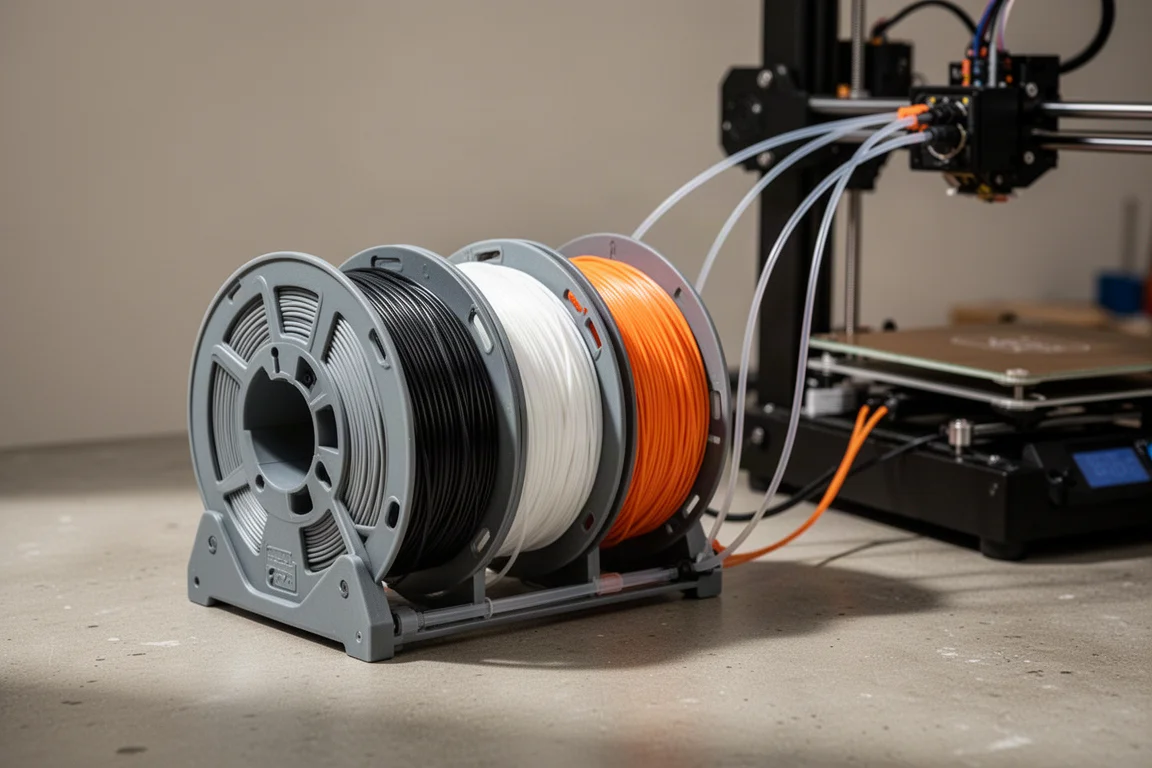
Adding filament capacity is straightforward. The basic AMS brings the total to $550, and the AMS 2 Pro brings it to $620. Even if you never print multicolor, having several filaments preloaded so you can switch materials between jobs is a real quality-of-life upgrade.
One thing to plan for: if you want to run abrasive filaments such as carbon fiber, glass-filled, wood, or glow-in-the-dark, you will need the $30 hardened steel upgrade kit. It is a slightly fiddly install, but well within the abilities of anyone comfortable with basic shop work. With the upgrade and an AMS 2 Pro, you land around $650, still $150 below stepping up to the P2S, and print quality between the two is not distinguishable in practice.
For a super budget, get the P1S. If you can stretch, the P2S buys you the better screen, better temperature control, and longer relevance.
Bambu Lab H2S: The Serious Shop Machine
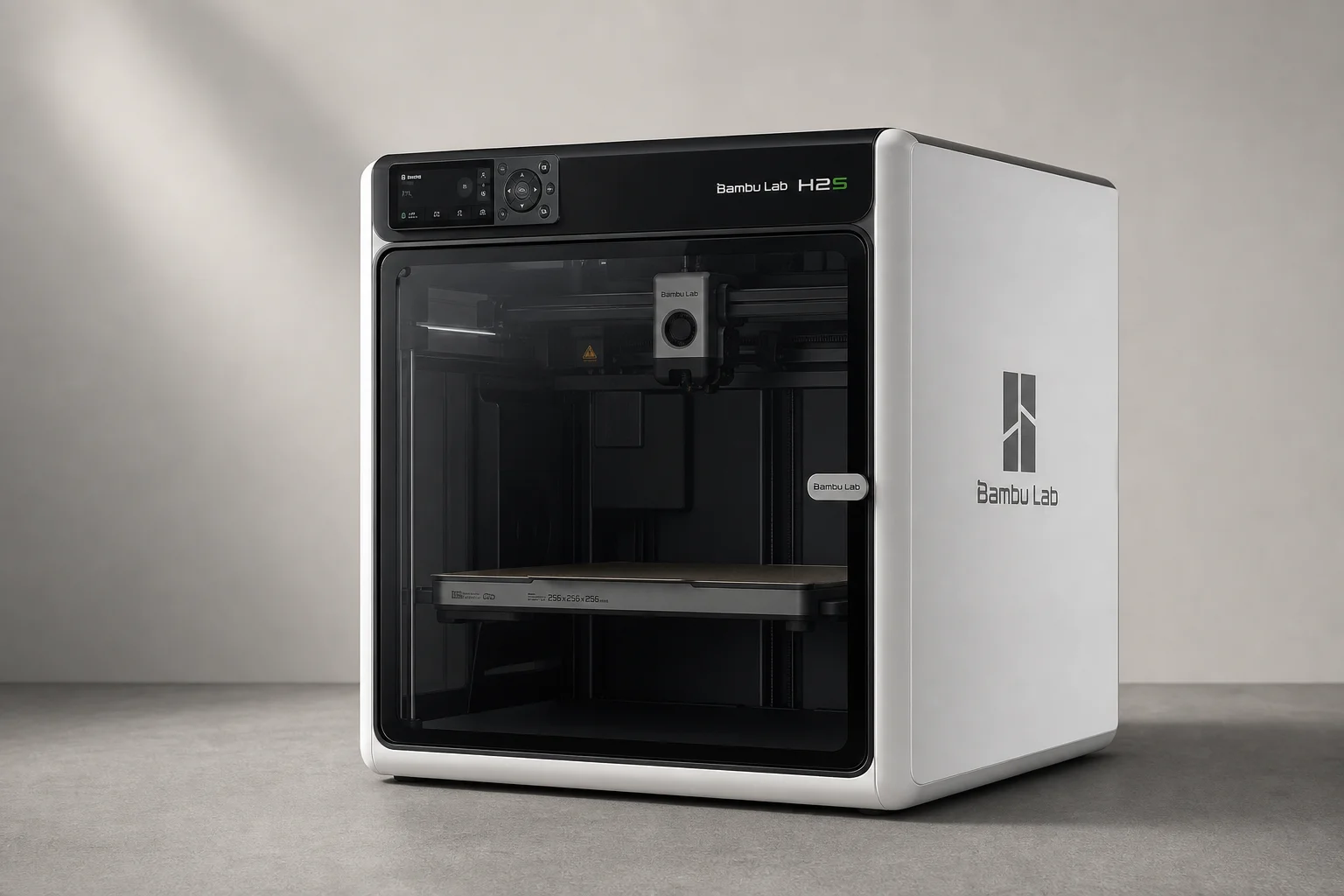
If you want to go hard, skip the two-nozzle H2D and go straight to the H2S. This is the single-nozzle, full-size machine with a build plate in the 350mm-plus range, and it is a genuinely big printer. With the AMS ready to go, you are looking at around $1,500 for the full kit.
This is not an inexpensive machine, but in a serious shop doing constant work, printing accessories, fixtures, and replacement parts, it can realistically pay for itself within a year. There is also money to be made printing and selling models through MakerWorld, which doubles as a free library of thousands of downloadable models.
One thing worth knowing for tool-minded buyers: there is an upgrade path from the H2S to the H2C, the multi-nozzle top-line machine. It requires tearing a lot of the machine apart to do it, which would be too much for most newcomers. Anyone comfortable around tools can handle it, and buying the parts later, possibly on sale, works out to roughly the same price as buying it fully built up front. That makes the H2S a practical starting point rather than a dead end.
Plan around availability, though. The H2S is currently backordered and will not ship until December 21.
Bambu Lab H2C: The Top of the Hill
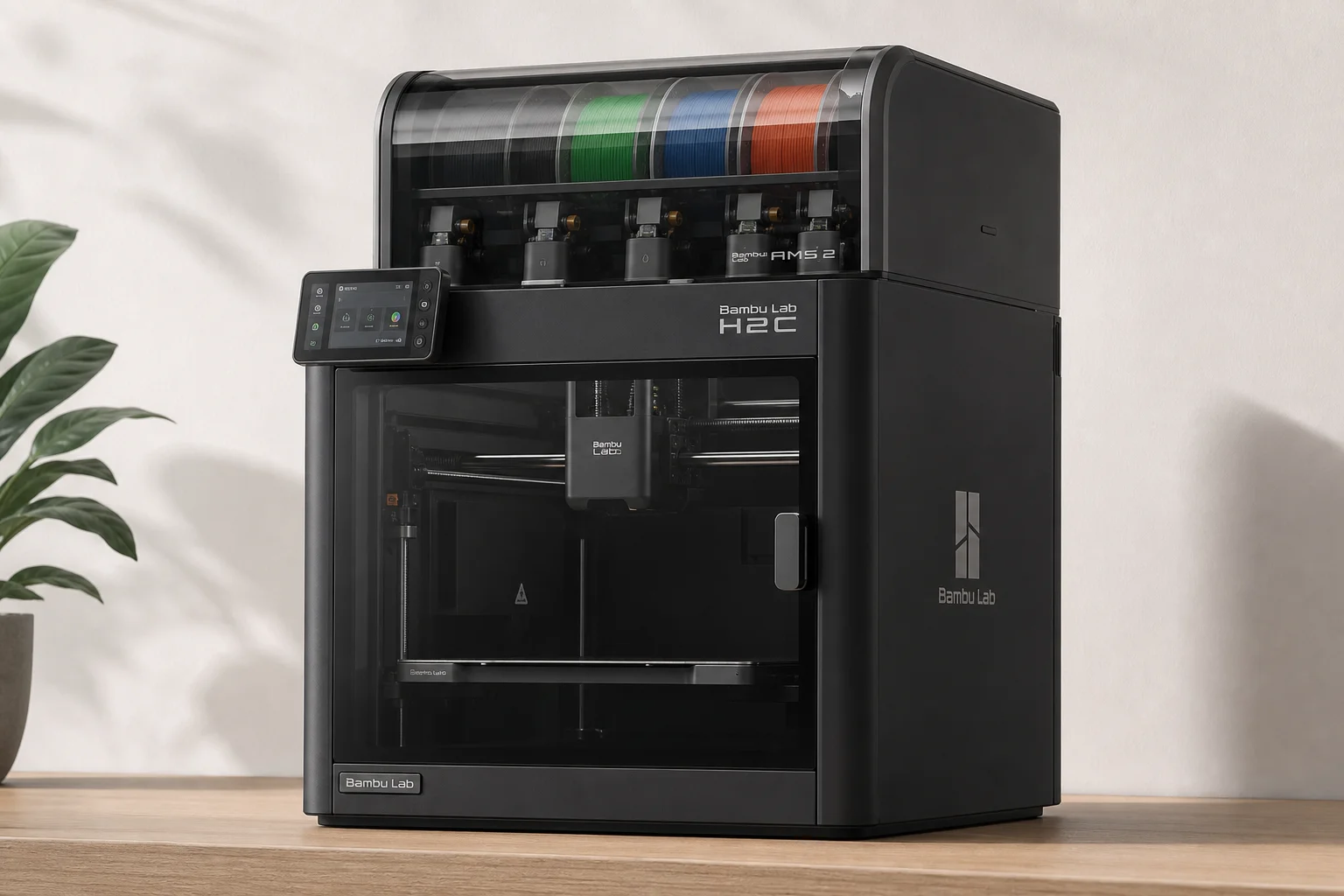
The H2C is the full nine yards: multiple tool heads, full multi-color and multi-material capability, and the ability to print support filaments that break away cleanly from the main part. It is also hella expensive, with a fully loaded configuration getting close to $3,000.
Here is the honest verdict: this is a spectacular machine, but it is the wrong recommendation for most people. If you are just getting started, or you mostly plan to do basic single-filament engineering prints, paying flagship money for capability you will not use makes no sense. And if you are going to go that far anyway, you should genuinely want the whole package, because at this level there is no point stopping short.
For shops with real production ambitions, mixed-material work, or the budget to skip every intermediate step, the H2C is the top of the hill, and nothing above it exists in this lineup.
What About the Budget Alternatives?
Two cheaper options come up often and deserve a mention. The Qidi Q2 does what it is supposed to do, but it has enough rough edges that it is hard to recommend to someone new to printing. The Elegoo Centauri Carbon is a nice idea in the same vein, but it does not displace the P1S as the value pick for enclosed, dependable shop printing. The open-frame Bambu Lab A1 is a fine inexpensive starter at $400, with a $150 multicolor option and a $30 hardened upgrade for abrasive filaments, but an open body is the wrong fit for a shop environment, which is why those machines were phased out of daily use here.
Buying Advice
The decision tree is simple. If money is the constraint, the P1S at $400 is a fully enclosed workhorse that just works, and the $30 hardened upgrade plus an AMS gets you to around $650 fully equipped. If you can swing $800, the P2S is the Goldilocks machine that will stay relevant for years. If printing is becoming part of how the shop makes money, the H2S at around $1,500 is the serious machine, with the H2C as its ultimate end state.
Whatever you pick, do not skip the AMS if you can afford it. Even without multicolor printing, having multiple filaments preloaded and switchable between jobs makes daily use noticeably easier.
Conclusion
A 3D printer earns its place in a shop the same way any other tool does: by supporting everything else you do, whether you weld, work wood, tinker, or just fix things around the house. Any of these four machines will do that. Pick by budget, plan for the filaments you will actually run, and you will have a tool that pays for itself rather than another hobby that collects dust.
Further reading
Related Reviews
3D Printing
3D Printer Wishlist 2026: Industry Hopes and Manufacturer-Specific Improvements
A comprehensive review of what the 3D printing industry needs in 2026, from universal standards to manufacturer-specific feature requests across leading brands.
3D Printing
3D Printing Trends 2026: Multi-Material Systems, Stronger Filaments, and Desktop Metal Casting
FormNext 2025 revealed the direction of 3D printing in 2026: accessible multi-material printers, high-strength filaments, and innovative software solutions that bring industrial capabilities to the desktop.
3D Printing
Bambu Lab 3D Printer Lineup 2025: Which Model Fits Your Needs
A comprehensive breakdown of Bambu Lab's current printer lineup, from mid-range workhorse models to flagship multifunction machines, with honest trade-offs for each.