Stationery
Bayga Obscura Artisanal Journal Review: Handmade Bookbinding at Its Finest
A hand-tooled leather journal with marbled page edges, custom Gothic monogramming, and construction that feels built to outlast its owner.
Introduction
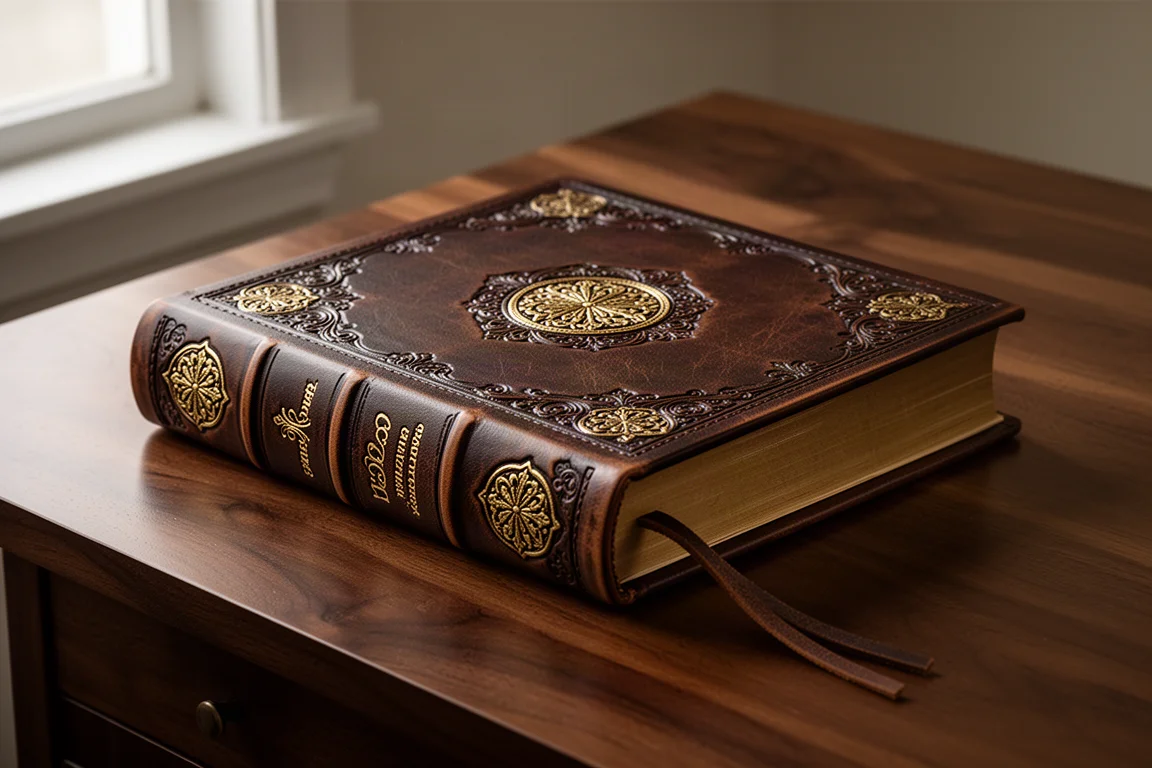
Most journals are commodities. A few are objects. The artisanal journal from Bayga Obscura, made by a single bookbinder named Nicolo, belongs firmly in the second category: a hand-tooled leather journal that looks like it has spent five centuries in a Gothic library, and is built as if it could spend five more there.
First Impressions and Unboxing
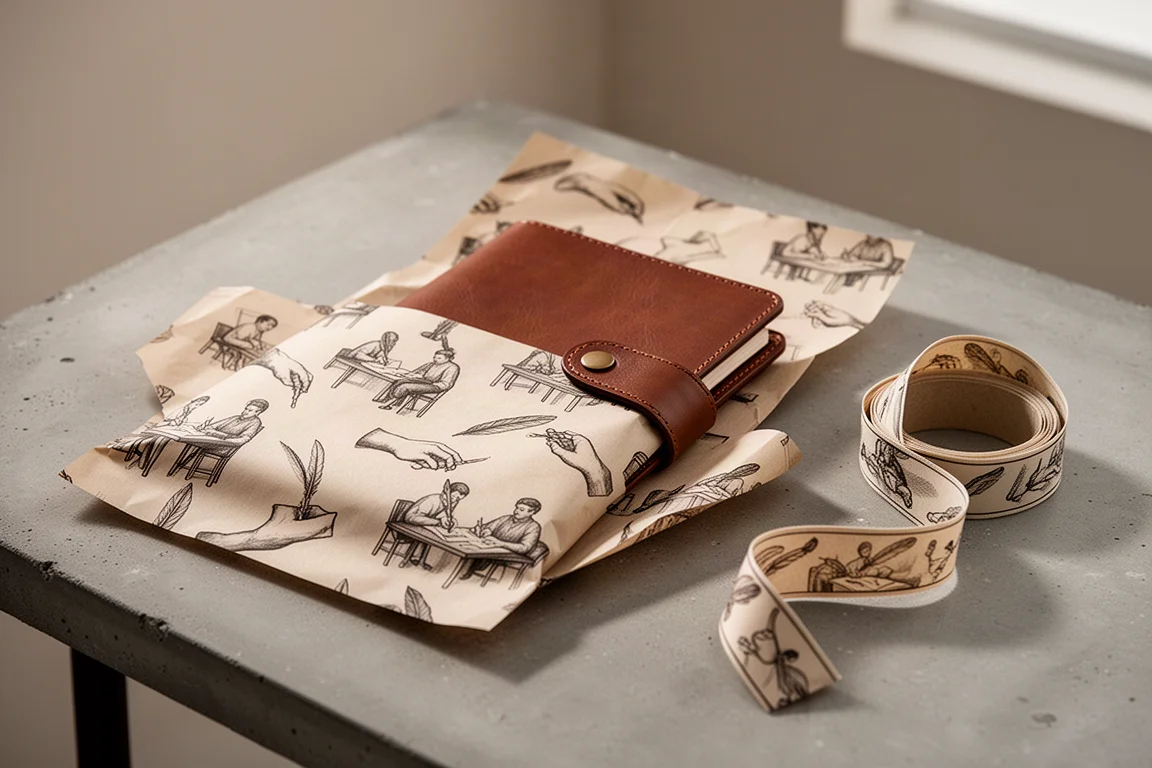
The presentation starts before you touch the book. The journal arrives wrapped with a decorative printed ribbon and heavy patterned paper featuring a repeating motif of hands, quills, and figures writing together at a shared desk. It is the kind of packaging worth keeping for crafting rather than discarding.
The cover itself is dark leather with an ornate gold-tooled design, gold highlights on each medallion, flourished borders, and a small amount of deliberate aging that gives the whole thing a dark academia character. The back cover mirrors the front in full detail, which is rare: mass-produced journals typically leave the rear panel plain or stamped with a barcode. Because each book is made by one person from start to finish, both sides are equally finished.
Craftsmanship and Design
The spine is the standout feature. Raised ribs give it structure, gold medallions run down its length, and custom initials can be tooled in Gothic script framed by laurel wreaths. It reads like a volume from a private antiquarian collection rather than a new purchase.
Everything is tight and precise. Edges are cleanly glued, the tooling is crisp, and the intentional patina is controlled rather than sloppy. This is a book designed to be handled, carried, and aged by its owner over years of use.
Marbled Page Edges and End Papers
The page edges are marbled in a deep green that resembles exotic stone, and the marbling is applied to all three sides, top, bottom, and fore-edge, not just one. The same pattern carries into the end papers, creating the illusion that the book is carved from a single block of marble.
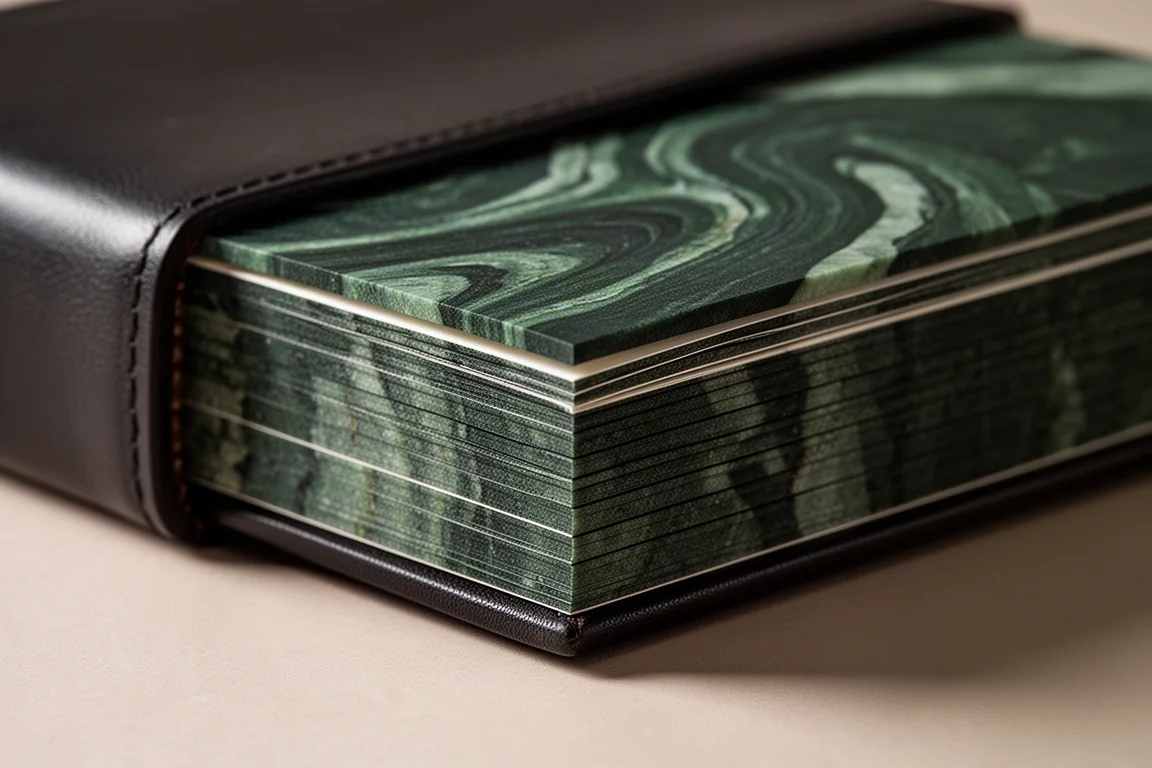
It is a small detail that separates this from nearly everything else on the market, and it is applied before binding so none of the pigment touches the leather.
Paper Quality and Writing Experience
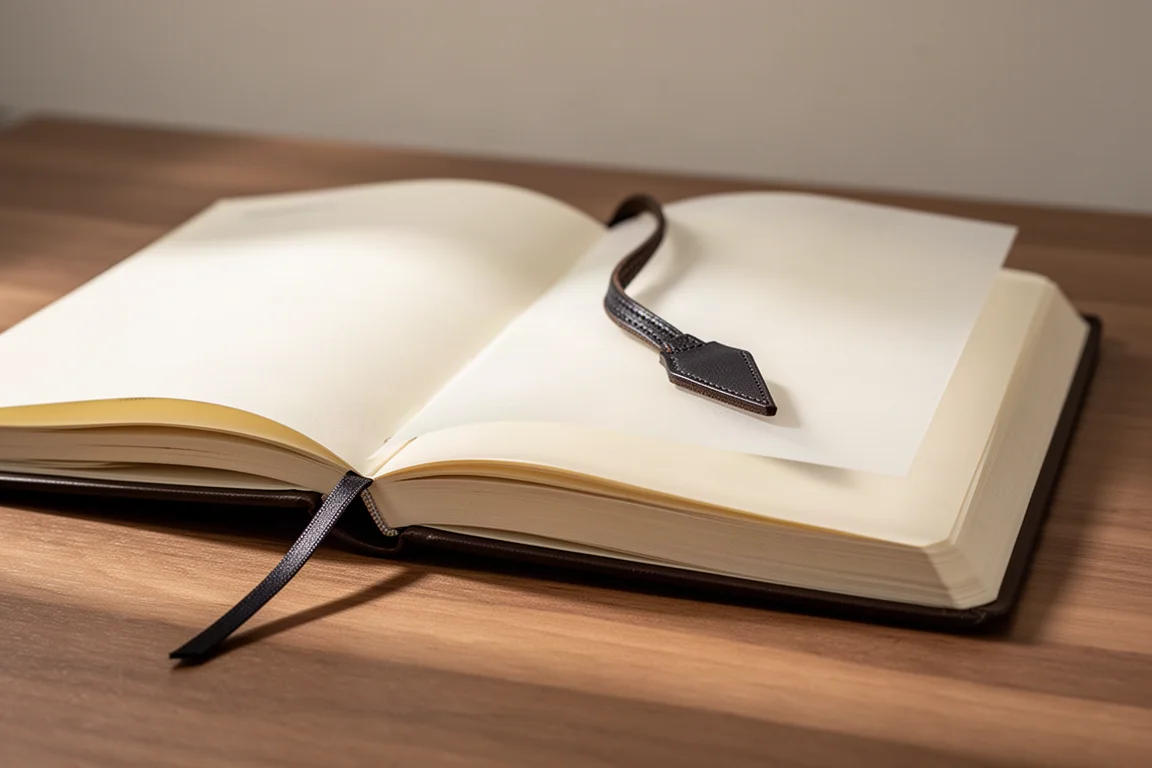
The paper stock has a creamy tone with an almost vellum-like finish, closer in feel to the stock a diploma might be printed on than to ordinary notebook paper. In regular use it performs reliably: no bleed-through and no feathering, even with fountain pens.
Bayga Obscura offers different paper options, including a brighter white stock, so it is worth confirming paper preferences when ordering. The binding is exceptionally tight, and the hinge sits high on the cover block, leaving generous clearance so the cover is unlikely to fail over time. An attached leather bookmark with a tapered tip completes the old-world feel.
Things to Consider Before Buying
This is not an inexpensive journal, and availability is part of the equation. Nicolo works alone, stock is limited, and listings tend to sell out quickly when they appear. He now sells through his own website, baygaobscura.com, where he binds journals as well as literature and religious books. If a specific design matters to you, keeping an eye on the shop is essential.
Think of the cost in terms of lifespan rather than upfront price. Filling a journal like this can take years of regular writing, and the construction clearly supports long-term use. For anyone who values what goes into the book as much as what comes out of it, the value case is easier to make.
How It Compares to Other Journals
Compared side by side with other leather journals, the difference in execution is obvious. An earlier Bayga Obscura journal with a Celtic cross and medieval scenes is nearly as impressive, though the newer spine work is on another level. A smaller Bayga Obscura journal with gold tooling and green marbling is more portable and easier to fill, still excellent, though the edge marbling is less continuous.
A decorative journal bought near the Duomo in Florence has charming raised figures but far simpler artistry, mostly decorative pages with limited writing space. Another Italian purchase, with a fleur-de-lis and padded cover, has noticeably lighter tooling, a weaker binding, and what appears to be a generic insert under a decorative cover, the kind of journal commonly found in mainstream bookstores.
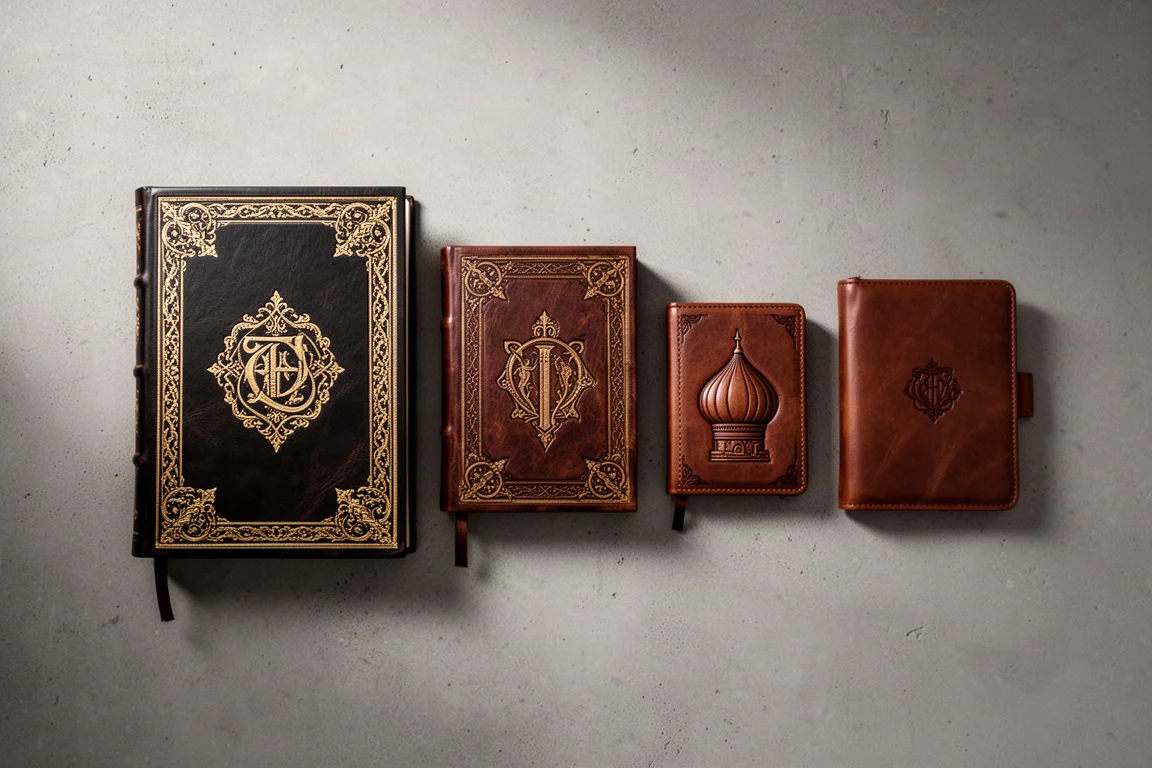
None of those alternatives are bad, but the Bayga Obscura journals operate at a different standard of finish and durability.
Buying Advice
Buy this journal if you write regularly, want a book that will physically last for decades, and value true handcraft over brand names. The custom monogramming, full marbling, and mirrored cover tooling make it feel personal in a way mass-market leather journals do not. Skip it if you need something cheap, immediately available, or disposable; this is a long-term companion, not a quick purchase.
Conclusion
The Bayga Obscura artisanal journal is a genuine luxury object in the original sense of the word: made by one hand, built to endure, and beautiful from every angle including the spine. For writers who treat their journal as an extension of their thinking, it is one of the most compelling options available today.
Product link
View more details for Bayga Obscura Artisanal Journal
This product is mentioned in the review. Check the specifications, options, and compatibility before buying.
View more details for Bayga Obscura Artisanal JournalFurther reading
Related Reviews
Stationery
Musgrave Pencils Review: Four Classic Pencils from Tennessee's Last Pencil Factory
We put four Musgrave pencils to paper, from the classic Harvest to the Unigraph 1200 drawing pencil, to see what a century-old Tennessee workshop can still do.
Stationery
Fountain Pen Tiers Explained: From Starter Pens to Luxury Grails
A practical overview of the different levels of fountain pens and inks, from a sub-$20 starter setup to Italian piston fillers and retractable gold-nib everyday carries.
Stationery
HP Premium 32 lb Copy Paper Review: A Fountain Pen Friendly Everyday Printer Paper
A heavy, smooth 120 GSM copy paper that handles fountain pens far better than standard printer stock, with only minor trade-offs in shading and sheen.