3D Printing
Bambu Lab X1C Review: Can a Modern 3D Printer Actually Make Carryable EDC Gear?
A hands-on look at printing wallets, key organizers, carabiners, utility knives, and more with the Bambu Lab X1C, and whether the results hold up in real-world use.
Introduction
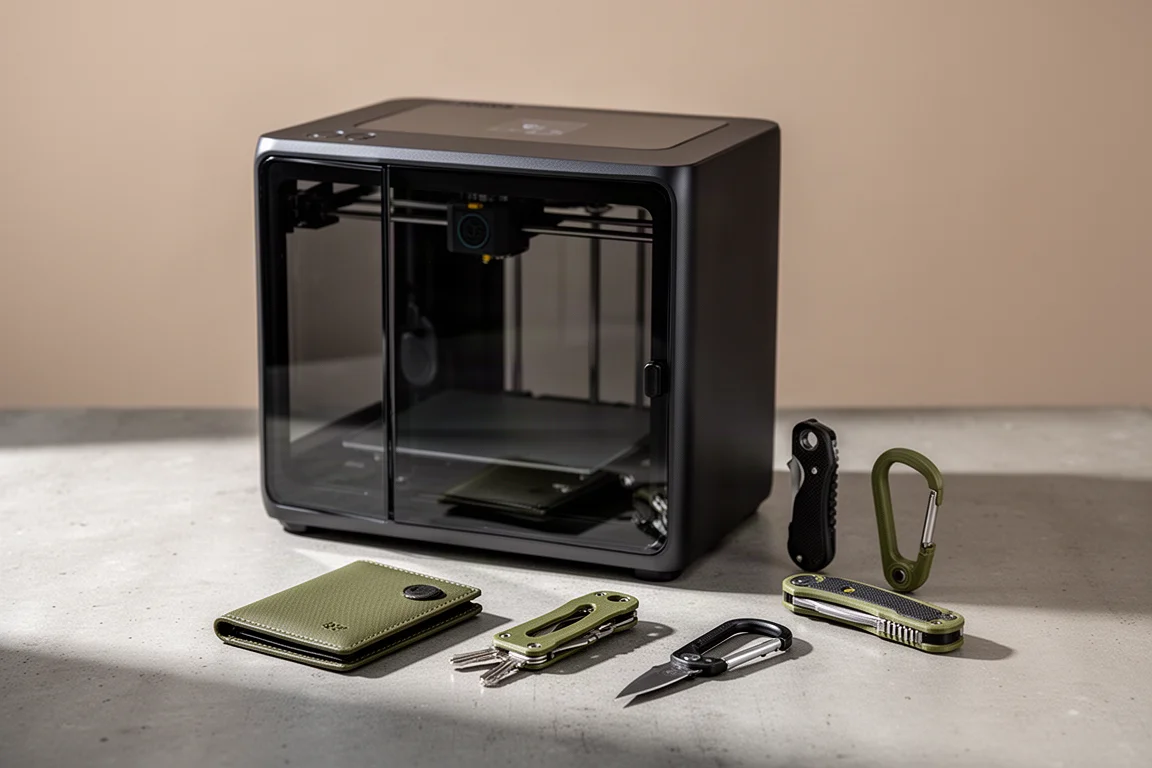
A few years back, printing an entire everyday carry kit was mostly a gimmick. The gear worked on a desk, but it was flimsy, rough around the edges, and not something you would actually want in your pocket. Today the hardware has caught up, the community is bigger, and the designs are far better. That raises a real question: how good is 3D printed EDC gear now?
To find out, we put a Bambu Lab X1C to work printing a full set of EDC items from modern print-in-place designs, using better materials and better files, then tested each piece for real-world capability. The results were more convincing than expected, with a few clear misses.
Why 3D Printed EDC Is Worth a Second Look
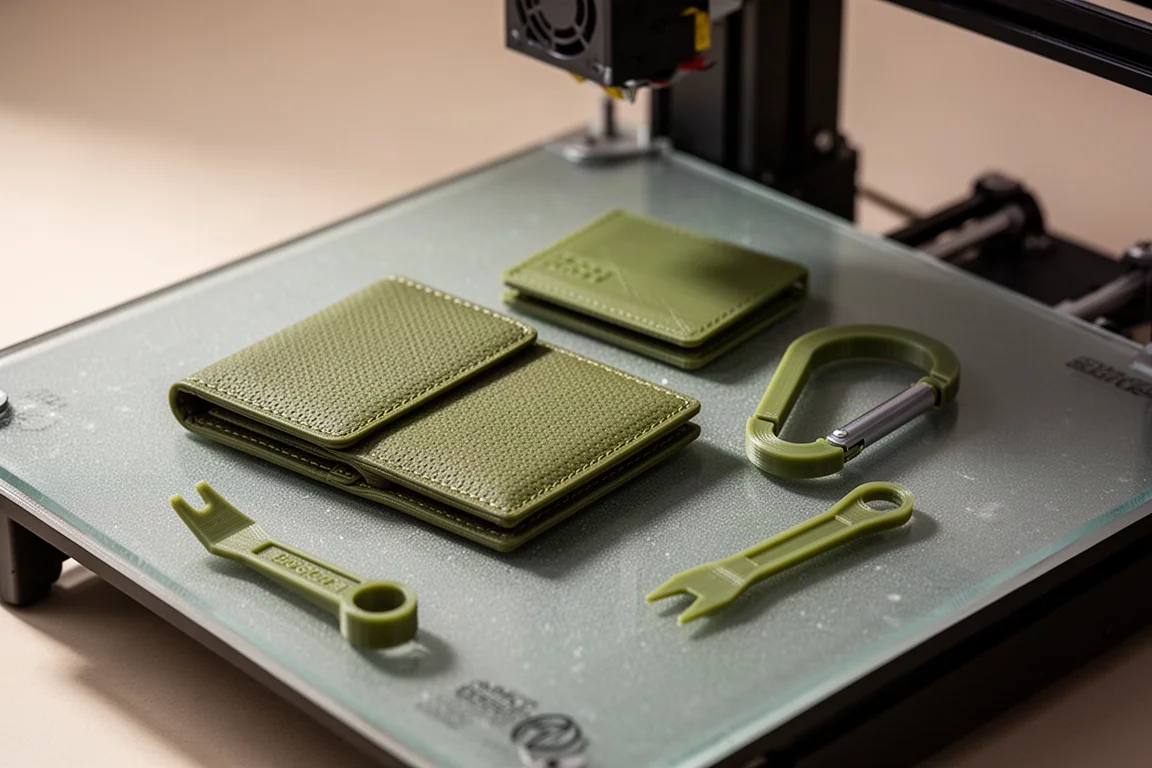
The Bambu Lab X1C makes the process remarkably approachable. Print-in-place files, like a slim wallet, simply download and print with no assembly required. That wallet finished in under two hours, and the quality was genuinely impressive: textured surfaces that hide individual layer lines, with only a few small imperfect spots. For a click-and-print item, that is a strong result.
One efficiency tip worth learning early: organize plates by color. Printing everything on one plate with three colors switching back and forth by layer took over four hours. Separating each color onto its own plate cut the total print time to roughly a quarter of that.
Wallets: Print-in-Place Wins
The standout wallet printed in place in about an hour and a half with zero assembly. It holds cards in a sliding mechanism that gets smoother with use, and a cash pocket at the back keeps bills in place. Cards slide up one at a time with a simple push. It does not hold an entire card load, but it works well enough that carrying it for a week felt natural. It is not a replacement for a leather wallet, but as a functional print it succeeds.
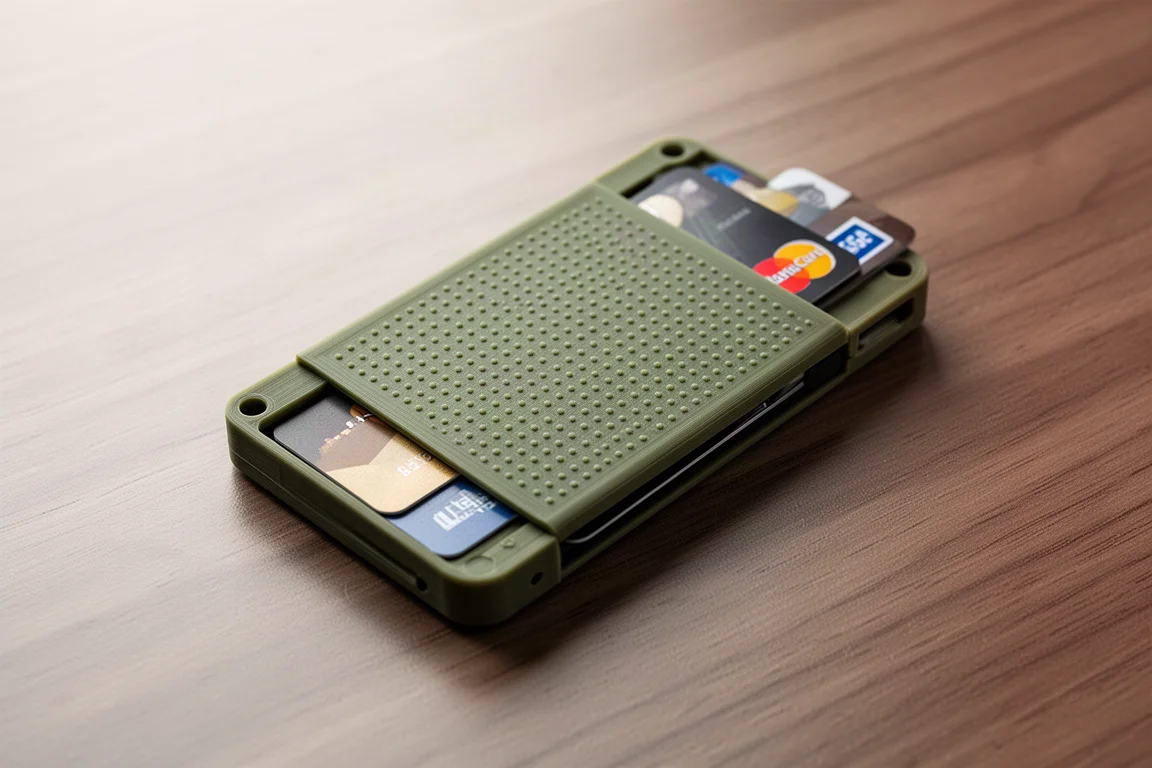
A second, more complex tech-mech style wallet was also printed, taking about an hour and a half and requiring five M3 screws plus one M4 screw for card tension adjustment. It is a great showcase of how intricate printed designs can get, but it falls short as a wallet: fewer cards, no cash storage, and it needs two hands to operate comfortably. The simpler print-in-place design is the better carry.
Key Organizer: Genuinely Useful
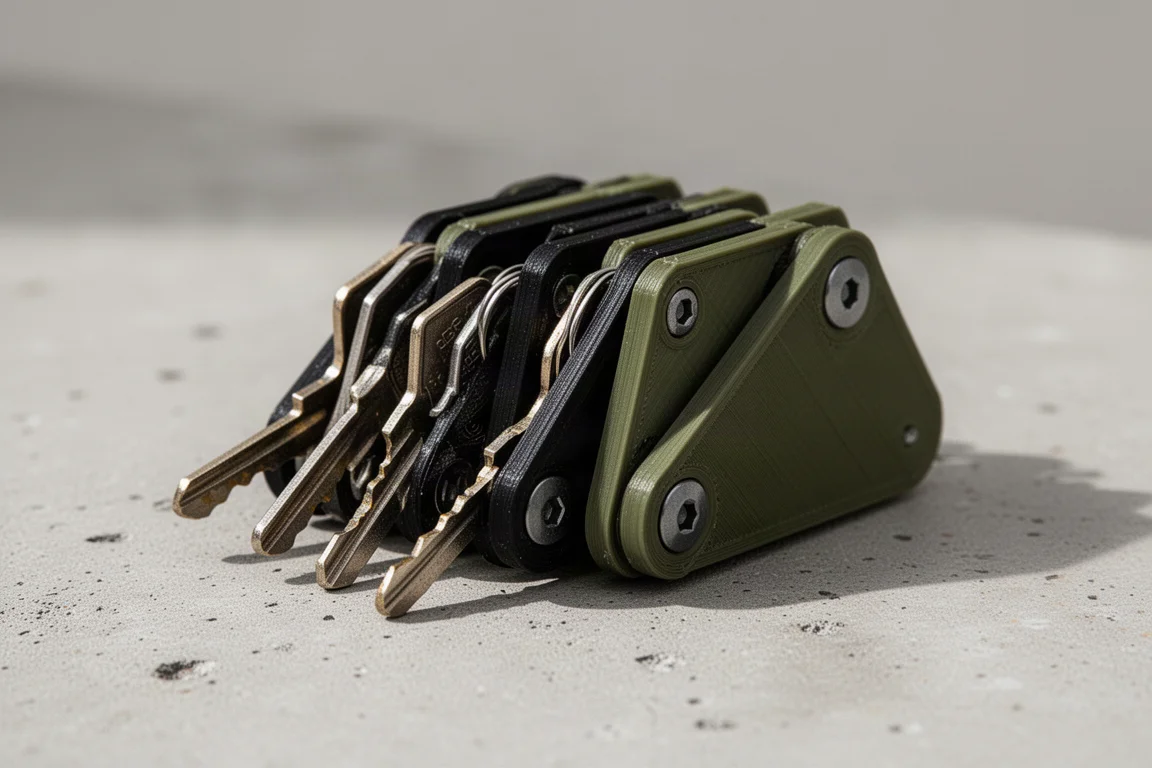
The printed key organizer looks like a commercial KeyBar or KeySmart and holds up well under use. Its hex nut side nests keys with a captive pivot and a small notch that releases keys one at a time. It is strong, and you can add a longer screw for more keys or print it thinner. Compatible setup tools from brands like KeySmart and KeyBar work with it too.
It is less convenient for quick one-handed access than a magnetic quick release, which is why it suits a spare key set kept in a bag rather than a daily carry. As that spare-set solution, though, it is a genuinely smart print.
Utility Knives: Useful in a Pinch, With Caveats
Two utility knife styles were tested, and they split the verdict. The smaller sliding knife is clearly meant for breaking down boxes and light tasks. It holds and actuates the blade fine, with slightly stiff action that may break in over time. It weighs almost nothing, works well for small jobs, and printed in about half an hour. It is easy to trust, and no catastrophic failure concerns surfaced across multiple prints.
The larger full-grip version, styled like a big Milwaukee Fastback, looked more capable but felt sketchier in use. During cutting tests on drywall and hose it stayed together initially, but creaking under pressure, a super-glued handle that started separating, and a pocket clip that would not survive two minutes of real carry all added up. The action requires a hard flick and does not fully retract the blade. Since a Milwaukee Fastback costs around ten dollars and is safer and easier to load, the large printed knife is a cool concept more than a practical tool.
Screwdriver and Carabiner: One Star, One Miss
The printed screwdriver with clever built-in bit storage failed almost immediately, twisting apart on the first hand-tight turn. The shaft held; the infill did not. Higher infill settings would likely fix it, and the bit storage concept itself is well thought out, but as printed it only suits very light duty tasks like disassembling a knife without Loctite on the screws.
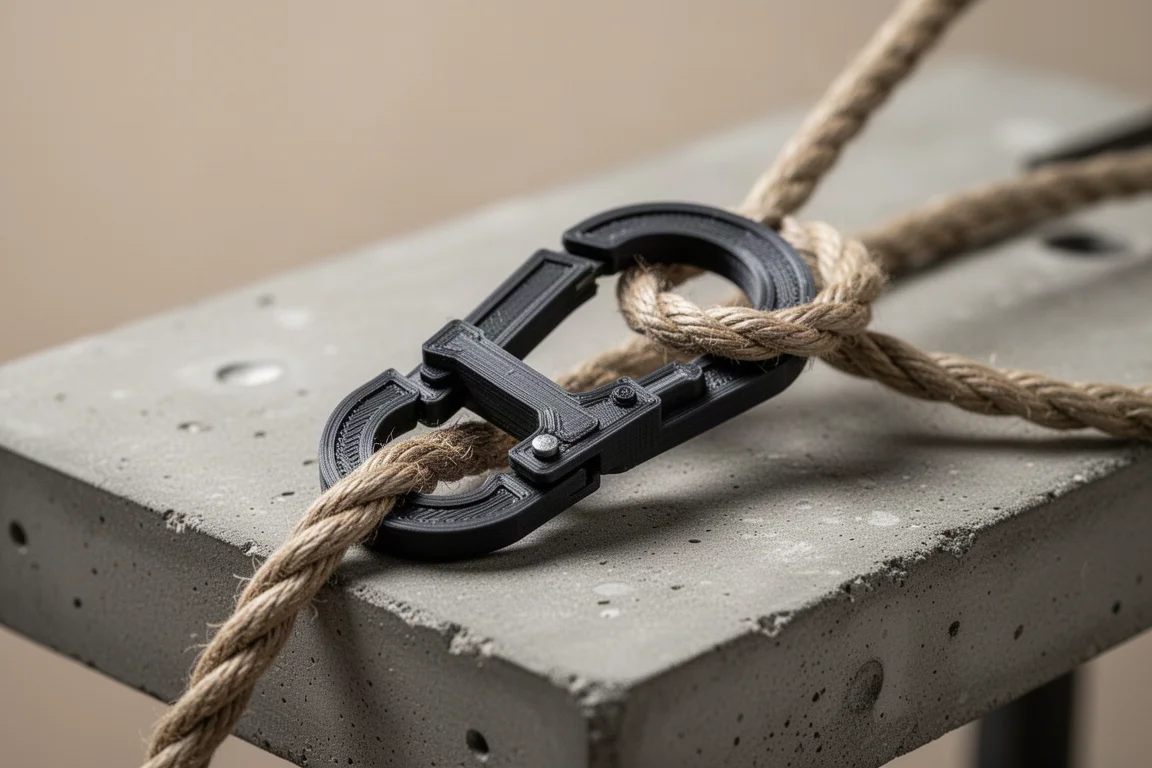
The carabiner was the surprise of the test. Tied to a truck hitch with rope and loaded with full body weight, it refused to snap on the first several yanks, eventually giving way only after repeated full-force pulls. A different printed style snapped much easier under lateral torque, but this design was dramatically stronger than expected. For a printed plastic part, that is genuinely impressive.
Buying Advice
If you are considering a 3D printer for EDC-adjacent projects, the realistic picture is this. Some printed items, like the print-in-place wallet, key organizer, small utility knife, and carabiner, are close to or genuinely as good as purchased equivalents, and cheap to produce in small batches. Others, like the large full-grip utility knife and the light-duty screwdriver, are better appreciated as concepts than as daily tools.
The Bambu Lab X1C makes all of this accessible: reliable print-in-place results, easy multicolor printing once you learn the color-plate trick, and fast turnarounds, with many items done in 30 to 90 minutes. As a first serious printer for experimenting with functional prints, it is an easy recommendation.
Conclusion
3D printing has come a long way, and printed EDC gear is now legitimately usable. Will it fully replace bought gear? Probably not, and for some items that is the right call. But for spare key organization, quick utility knives, surprisingly strong carabiners, and fun flex prints, the results are real. The Bambu Lab X1C proves the modern hardware is finally up to the task.
Product link
View more details for Bambu Lab X1C
This product is mentioned in the review. Check the specifications, options, and compatibility before buying.
View more details for Bambu Lab X1CFurther reading
Related Reviews
3D Printing
3D Printer Wishlist 2026: Industry Hopes and Manufacturer-Specific Improvements
A comprehensive review of what the 3D printing industry needs in 2026, from universal standards to manufacturer-specific feature requests across leading brands.
3D Printing
3D Printing Trends 2026: Multi-Material Systems, Stronger Filaments, and Desktop Metal Casting
FormNext 2025 revealed the direction of 3D printing in 2026: accessible multi-material printers, high-strength filaments, and innovative software solutions that bring industrial capabilities to the desktop.
3D Printing
Bambu Lab 3D Printer Lineup 2025: Which Model Fits Your Needs
A comprehensive breakdown of Bambu Lab's current printer lineup, from mid-range workhorse models to flagship multifunction machines, with honest trade-offs for each.