Stationery
Aurora Hastil Review: A 1970s Design Icon That Still Writes Better Than It Should
A discontinued Aurora ballpoint pen designed by Marco Zanuso, held in MoMA's permanent collection, and far more usable than its flat metal body suggests.
Introduction
Some pens are bought to be used. The Aurora Hastil is a pen you want simply because it exists. Its story begins with Aurora, a luxury writing instrument manufacturer founded in 1919 in Turin, northern Italy, and widely considered Italy’s first fountain pen maker. Aurora collaborated with leading 20th-century architects and industrial designers, and it remains one of the few manufacturers in the world that produces everything in-house, from the nib to the clip and body.
The Hastil sits at the enthusiast end of that lineup. Designed in the 1970s by the Italian architect and industrial designer Marco Zanuso, it is a ballpoint pen that looks like pure sculpture, yet it turned out to be far easier to use than its minimalist body suggests. It has been discontinued, so it is now mainly found as a used item or dead stock, but it is still findable if you look.
A Pen With a Design History
If the Hastil’s silhouette looks familiar to stationery lovers, there is a reason. It predates the Lamy Dialogue, which arrived in 2003 and was clearly influenced by this design language. The standard Hastil model is silver, with limited sterling silver versions also existing, but the version reviewed here is the black-gold edition: a black body paired with gold-colored parts, giving it a distinctly different character from the more common silver model.
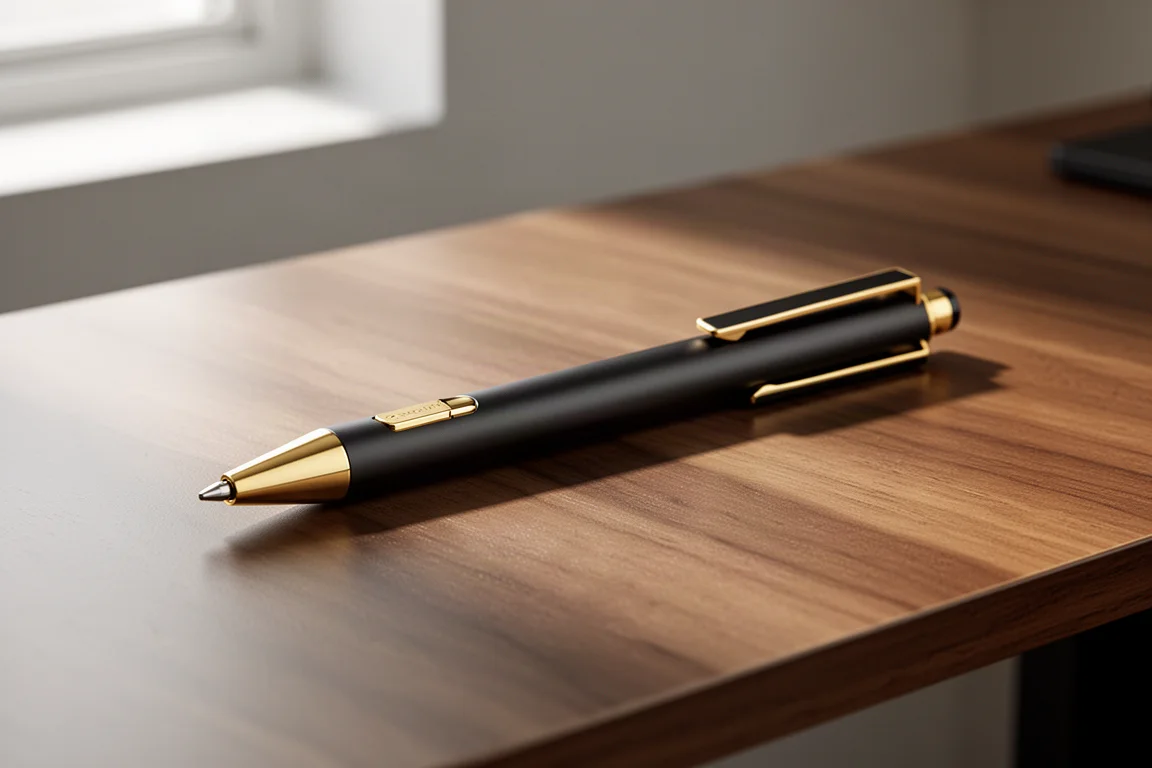
The Hastil was selected in 1975 for the permanent collection at the Museum of Modern Art in New York, and one look explains why. Instead of the typical cylindrical barrel, it is a thin, flat metal body that strips away everything unnecessary. The barrel carries only the manufacturer’s name, with no other markings at all. The tip is cut at an angle, with that cross-section accented in gold, and the pen point emerges directly from it with no nose cone. It is a wonderfully straightforward piece of industrial design.
Design and Mechanism
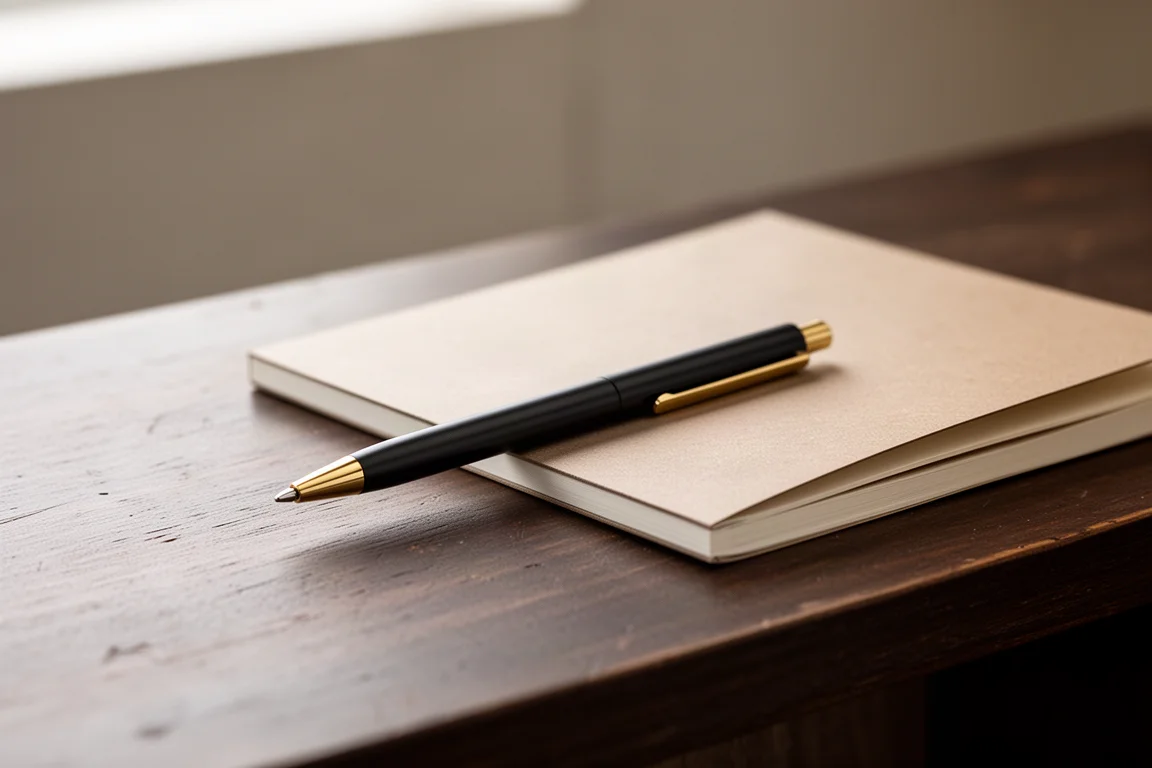
The knock mechanism is where the Hastil gets genuinely clever. It uses a side-slide type: you slide a small gold slider toward the tip to extend the point. To retract it, you press a release button, and here is the detail that makes it special: when the tip is retracted, that button disappears entirely from view. It only appears once the pen is extended. It is a small touch, but a very stylish one.
The clip is equally minimal. It is very small and thin, gold-colored with a black border, and it is a movable clip that opens when you press the top. Despite its slimness, it does not get in the way at all while writing. The center of gravity sits near the middle of the barrel, giving it a balanced feel in hand.
How It Writes
This is where expectations get flipped. A pen with this design should not be comfortable to write with, and yet it is easier to use than it has any right to be. The surface of the barrel is slightly textured, so while the grip is not aggressive, there is a slight sense of friction against the fingers that helps you hold it.
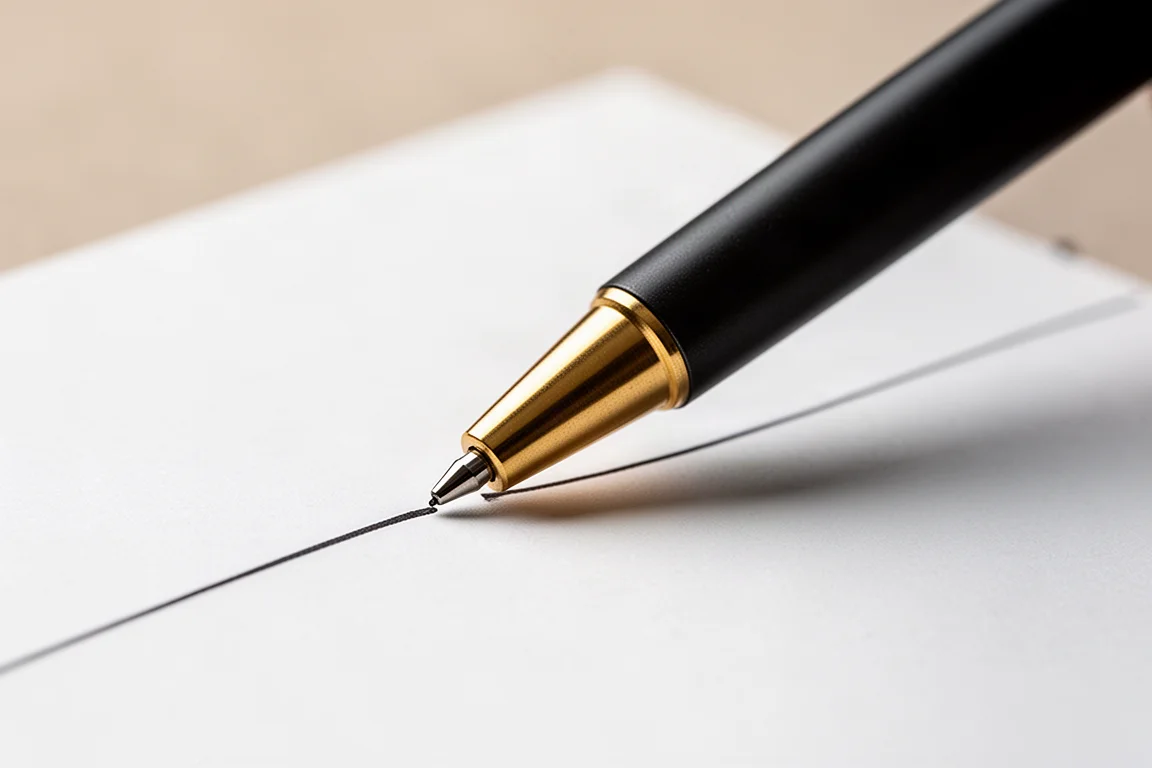
On paper, the tip is stable with no wobble, and the ink runs on the firmer side rather than smooth or runny, which suits people who prefer that drier writing feel. Because the tip is long, visibility issues are mitigated to some extent, though the flat body still hides a fair amount of your view of the page. It does not quite surpass the writing feel of a standard ballpoint, but that unpredictability is part of its charm.
Refills and Everyday Practicality
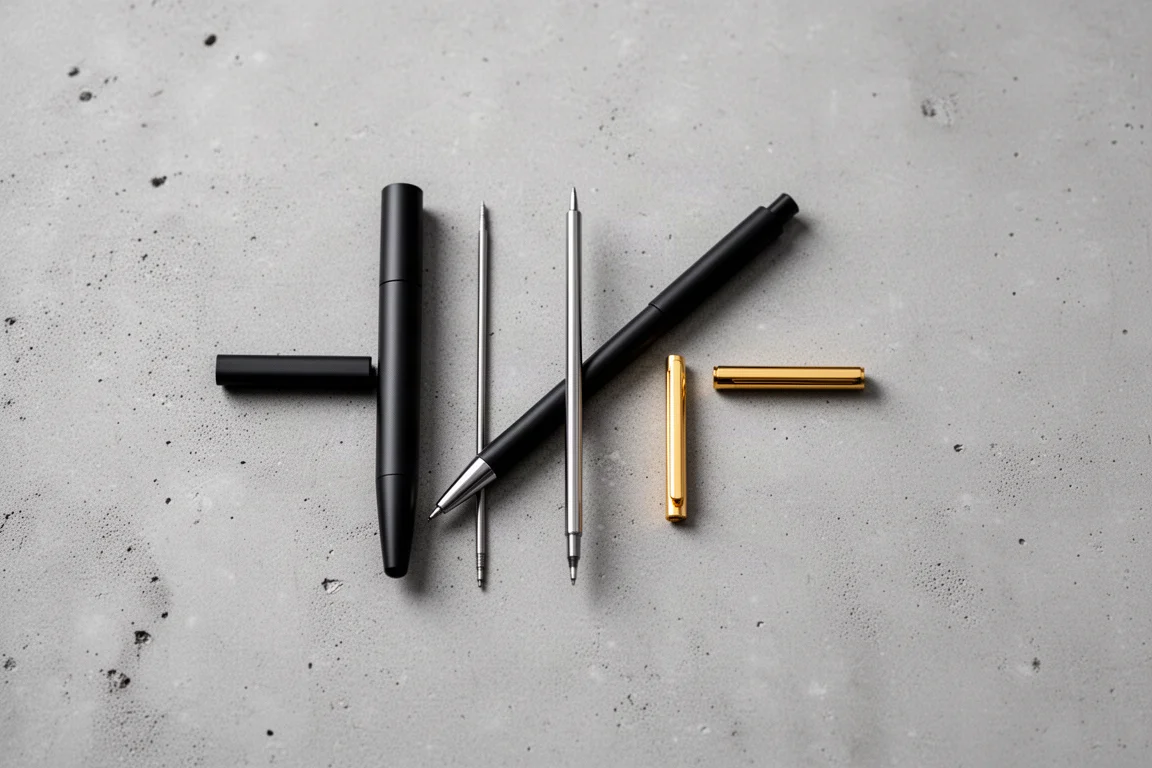
Refill replacement involves a one-of-a-kind disassembly method with a bit of a trick to it. With the pen tip extended, you push in the cross-section part and, while sliding your finger from below, press the release button so the tip unit pops out. It takes practice, and it is oddly easier to do with one hand than two. The original refill is no longer available, but the pen uses the A2-size format, which is long overall with a distinctive long tip, and a Schmidt refill in the same format still works and can still be purchased.
The unique design does come with trade-offs. It will not fit most pen holders, the mechanism means you want to carry it carefully, and even with the clip, its thin body does not stay especially secure in a pocket or case.
Things to Consider Before Buying
The list of drawbacks is short but worth knowing. Visibility of the tip is poor, since the flat body hides much of the page even though the long refill point helps. Carry security is limited. And finding one takes effort, since the Hastil is discontinued and circulates mainly as used or dead stock, with list prices that historically ranged from 27,500 to 52,800 yen depending on the model, and the black-gold version here purchased for 18,800 yen including tax.
Against that, you get a pen that earned its place in MoMA’s permanent collection, writes more comfortably than its form implies, and rewards the kind of owner who enjoys unusual mechanics as much as appearance.
Buying Advice
The Hastil is not for everyone. If you want a pure utility daily writer, a standard cylindrical ballpoint will serve you better and cause less fuss. But if you care about design history, distinctive mechanics, and owning something that almost no one else at the table will have, this is exactly the kind of pen worth hunting for. Since it is discontinued, availability varies, but units do surface on the market if you look patiently.

Conclusion
The Aurora Hastil is a rare case of a design-first pen that does not completely sacrifice the writing experience. The eccentric, un-ballpoint-pen-like shape, the disappearing release button, and the balanced writing feel make it a genuinely satisfying piece to own, even if carrying it requires a little care. For enthusiasts, it is easy to see why this pen has been worth waiting for.
Product link
View more details for Aurora Hastil
This product is mentioned in the review. Check the specifications, options, and compatibility before buying.
View more details for Aurora HastilFurther reading
Related Reviews
Stationery
Musgrave Pencils Review: Four Classic Pencils from Tennessee's Last Pencil Factory
We put four Musgrave pencils to paper, from the classic Harvest to the Unigraph 1200 drawing pencil, to see what a century-old Tennessee workshop can still do.
Stationery
Fountain Pen Tiers Explained: From Starter Pens to Luxury Grails
A practical overview of the different levels of fountain pens and inks, from a sub-$20 starter setup to Italian piston fillers and retractable gold-nib everyday carries.
Stationery
HP Premium 32 lb Copy Paper Review: A Fountain Pen Friendly Everyday Printer Paper
A heavy, smooth 120 GSM copy paper that handles fountain pens far better than standard printer stock, with only minor trade-offs in shading and sheen.