Backpacking Packs
Atom Packs Mo EP50 Review: Three Years With a Handmade Ultralight Pack
A close look at the Atom Packs Mo EP50, a handmade 50-litre ultralight backpacking pack, covering comfort, durability, storage, customization, and the price trade-off.
Introduction
Some packs are bought for a season and quietly retired. Others become the one you reach for without thinking. The Atom Packs Mo EP50 belongs firmly in the second group. After more than three years of long-distance trails, multi-day routes, and dozens of overnight trips, it remains the most comfortable and most durable backpack its owner has used.
Atom Packs is a small British maker based in Keswick, in the Lake District. The company grew out of a practical problem. Its founder, a long-distance hiker with roughly 12,000 miles of trail behind him, could not find a pack that fitted his tall frame, so he set out to build something more adjustable. Starting with a borrowed sewing machine and no previous sewing experience, he taught himself the craft. Today a small team of machinists produces handmade packs in the northwest of England, working toward a stated goal of building outdoor equipment that lasts a lifetime.
This particular model has since been revised, with the Prospector now filling the same place in the range. What follows is a detailed look at what the Mo EP50 gets right, where the compromises sit, and whether this kind of money makes sense for your own trips.
Who this product is for
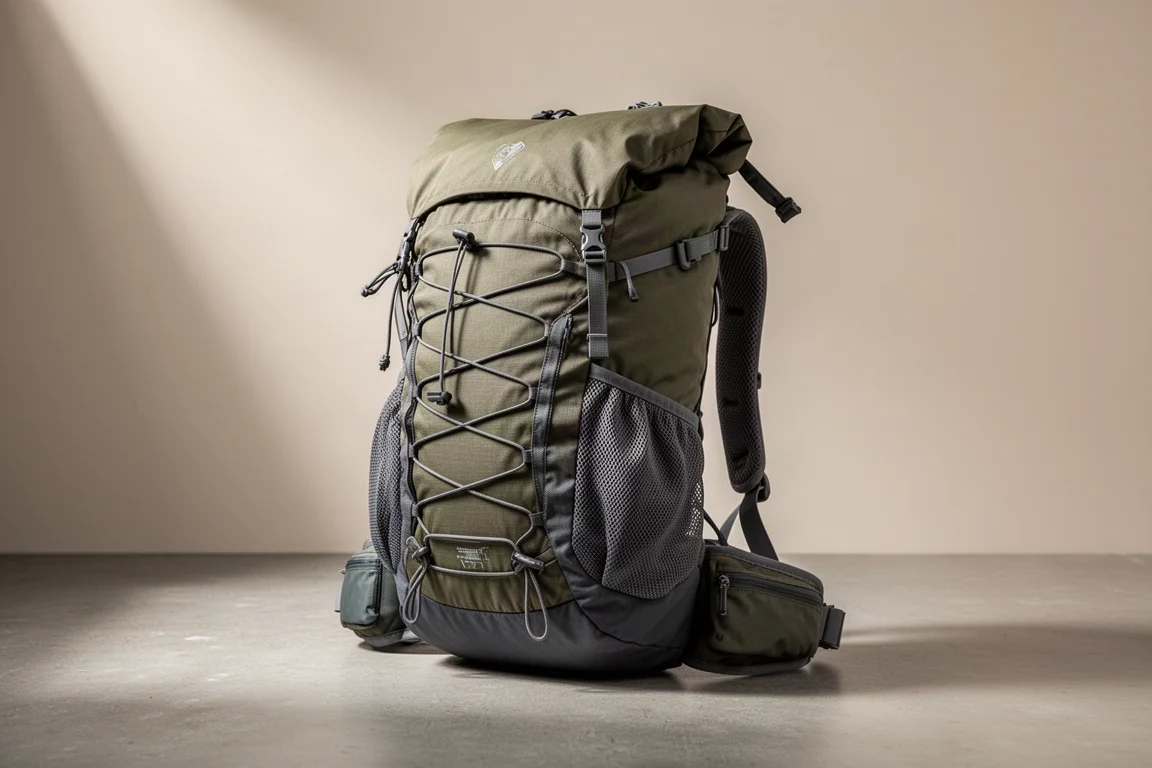
The Mo EP50 is a 50-litre ultralight backpacking pack. The main compartment holds around 40 litres in a single simple cylinder, with the rest of the capacity spread across the top strap, the side pockets, and the front pocket. It is built for backpackers who carry their own gear over several days and want that load to feel lighter than the number on the scale.
It rewards hikers who care about fit and configurability. The pack is customized at the point of order, so torso length, panel colours, bungee cord colours, closure style, and a long list of optional extras are all chosen by the buyer. Torso frame lengths are offered in different sizes, and the model in use here is a 17 to 19 inch frame. Because the hip belt pockets are removable and interchangeable with other packs in the range, including a 60-litre version, the same accessories can move between packs rather than being bought twice.
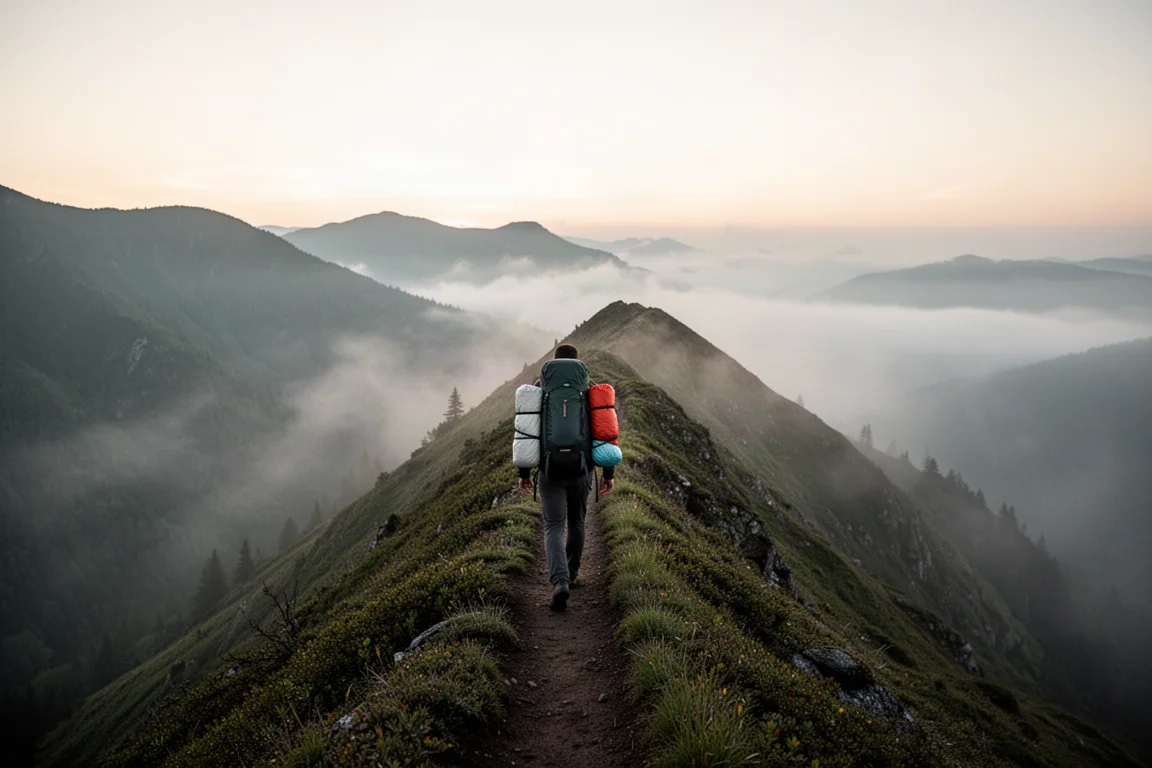
The pack also suits anyone who dislikes stopping to dig through a top-loader. Shoulder strap pockets are sewn directly into the straps and hold a decent-sized water bottle on one side, with room for a water filter on the other. A concealed pocket on the hip belt keeps waterproof trousers, a map, or snack wrappers within reach without taking the pack off. Those small conveniences matter more than they sound on a wet, long day.
It is a less obvious choice for anyone chasing the lowest possible weight. This is an ultralight design, but not the lightest pack on the market, and that gap is a deliberate trade for durability. Buyers who want a pack to be tuned over years of use, rather than replaced, will get the most from it.
Main strengths
Two qualities separate this pack from the alternatives: how it carries a load, and how little it has aged.
Comfort that holds up over long days
Inside the pack sits an aluminium frame running down the middle of a plastic sheet. It can be bent by hand to follow the contour of your own back, which is a meaningful difference on a long descent when a straight frame starts to dig in. Combined with the lumbar-supported hip belt, it transfers weight onto the hips instead of the shoulders. Even with winter gear packed, the carry stays stable.
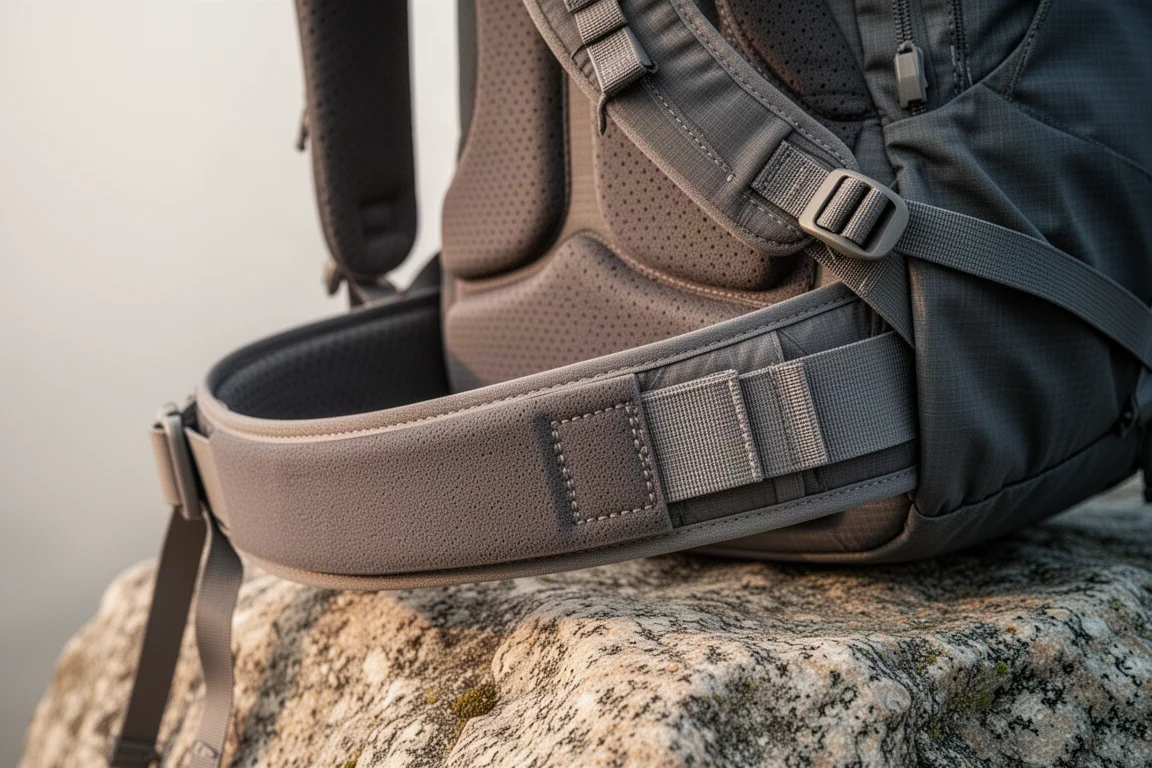
The shoulder strap padding uses a high-quality foam that has not broken down or flattened over years of use, which is unusual for a well-used pack. Hip belt adjustment runs on both sides, so the fit can be fine-tuned top and bottom rather than tightened as a single unit. The sternum strap is adjustable too, with a small amount of bungee stretch so it is not an all-or-nothing tension. For this wearer the strap sits slightly higher than ideal, though it still allows easy access to everything on the straps.
The practical result is a pack that is comfortable enough to leave on during a break. On multi-day routes, that comfort translated into no aching shoulders at the end of the day, which is the clearest endorsement a backpack can earn.
Durability that survives real use
This pack has covered a lot of ground: the West Highland Way at over 100 miles, the Cumbria Way at around 75 miles, the Derwent Watershed, the Edale Skyline, three days in the Cairngorms in Scotland, and dozens of overnight trips. It has been set down on rock, thrown on the ground, and scraped through gates.
The result is remarkably little to report. The base panel uses a tough fabric and has no meaningful wear despite constant ground contact. The shoulder strap attachment points, the area most likely to tear on a heavily loaded pack, show no sign of failure. All the buckles still work. There is a tiny amount of loose stitching visible and some light scuffing where a water bottle catches on gates, both of which are cosmetic. The bungee cords still hold tension rather than going slack and flappy as they often do on lighter hardware.
At 1 kg and 30 g, including the removable hip belt pockets, the pack sits in ultralight territory without feeling fragile. Materials include X-Pac with some Dyneema content, and the stitching is reinforced anywhere it needs to take strain. The one recurring annoyance is that a buckle can pop out if a strap is adjusted too far, which requires rethreading, though that is a user error rather than a fault.
Storage, access, and modular details
The layout is simple and purposeful. A roll closure with a couple of press studs makes the main compartment quick to open and close, and it can be rolled tighter or left looser depending on how much you are carrying. Two side straps tension everything down neatly, or can be clipped over the top if you prefer. A strap across the top takes a bear canister or a tent when travelling abroad.
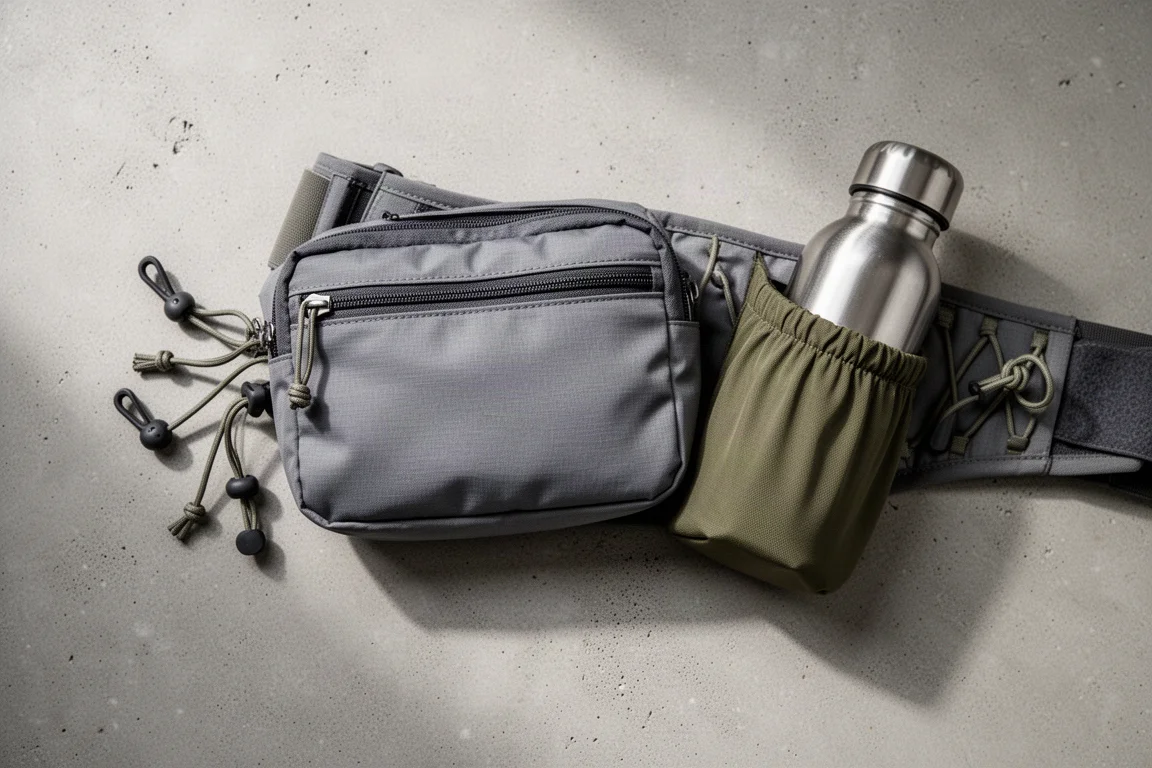
Two large elasticated side pockets each swallow a wide-mouth water bottle comfortably, with bungee cord to cinch them in. A front pocket in stretch fabric takes waterproofs or a wet tent fly that needs to dry during the day, and a larger version of that pocket adds around 5 litres for those who want it. Bungee cords throughout are fitted with small cinch toggles, so nothing flaps loose.
The pack is modular by design. Hip belt pockets unclip with a short elastic loop and a small hook, and the hip belt itself can be removed entirely if you do not want it. A loop and bungee arrangement handles an ice axe or trekking poles. What it does not include as standard is a quick-deploy trekking pole holder. The owner added one using a length of power cord, a bungee, a small piece of rubber tubing, and a carabiner, with no sewing required, and it now holds a pole ready to grab without removing the pack.
Things to consider before buying
The price is the biggest hurdle. A new Mo EP50 cost around £270, and that figure does not include extras. Hip belt pockets, for example, are roughly £20 to £30 each, and a fully specified build with customizations can pass £300. That is a serious sum for a backpack, even a handmade one.
The pack is not fully waterproof. The seams are not taped, so some moisture can work its way through the stitching in sustained rain. In practice, a simple liner keeps the contents completely dry, and the roll closure and fabric do the rest, but it is not a submersible design.
Finally, consider how you use trekking poles. If you want them deployable without stopping, you will need to add a holder yourself or look at packs that include one. If you only use poles occasionally, the existing loop and bungee system is perfectly adequate.
Buying advice
Buy this pack if comfort and longevity matter more to you than the lowest possible weight or the lowest possible price. It is a piece of equipment designed and built by someone who has spent a great deal of time carrying a loaded pack, and that shows in details like the bendable frame, the sewn-in shoulder strap pockets, and the hidden hip belt pocket.
It is also worth buying if you want a pack that can be tailored to your body rather than the other way round. Custom torso lengths, colour choices, and swappable accessories make it a long-term platform rather than a single purchase. Against that, cheaper packs exist that will do the job for a few seasons, and the Mo EP50 is not the answer if you want the absolute lightest option available.
On balance, the owner’s verdict after three and a half years is straightforward: if this pack ever wore out, another one would be ordered immediately. That kind of confidence comes from hundreds of miles of real use, not from a spec sheet.
Conclusion
The Atom Packs Mo EP50 is a handmade, customizable 50-litre ultralight pack that carries heavy loads comfortably and has shrugged off years of trail abuse. Its limitations are honest ones: a premium price, untaped seams, and no standard quick-deploy pole holder. For backpackers who value fit, durability, and a pack they can tune to themselves, it is an easy recommendation. For anyone shopping purely on price or minimum weight, there are simpler options.
Product link
View more details for Atom Packs Mo EP50
This product is mentioned in the review. Check the specifications, options, and compatibility before buying.
View more details for Atom Packs Mo EP50Further reading
Related Reviews
Backpacking Packs
Backpacking Pack Types Compared: Traditional, Ultralight, Frameless, and Hybrid
Four pack categories, four representative packs, and a practical way to decide which kind of backpacking pack matches the weight of your gear.
Backpacking Packs
Best Backpacking Packs 2026: Six Picks for Every Style of Trip
Six backpacking packs that earned their place by weight class and purpose, with the real strengths and trade-offs to weigh before you buy.
Backpacking Packs
Big Agnes Prospector 50 Review: A Hybrid Pack That Sits Between Two Worlds
A 50-liter backpacking pack that mixes ultralight features with traditional padding and panel access. Here is who it suits and where it falls short.